My Son Passed Away at Age 4
AI features
- Views
- 32.8M
- Likes
- 19.7K
- Reposts
- 2.8K
- Comments
- 259
- Bookmarks
- 7.2K
TL;DR
After a 4-year-old boy's leukemia treatment fails, his parents face the heart-wrenching decision to stop medical intervention and honor his wish to spend his final days at home.
Reading the 日本語 translation
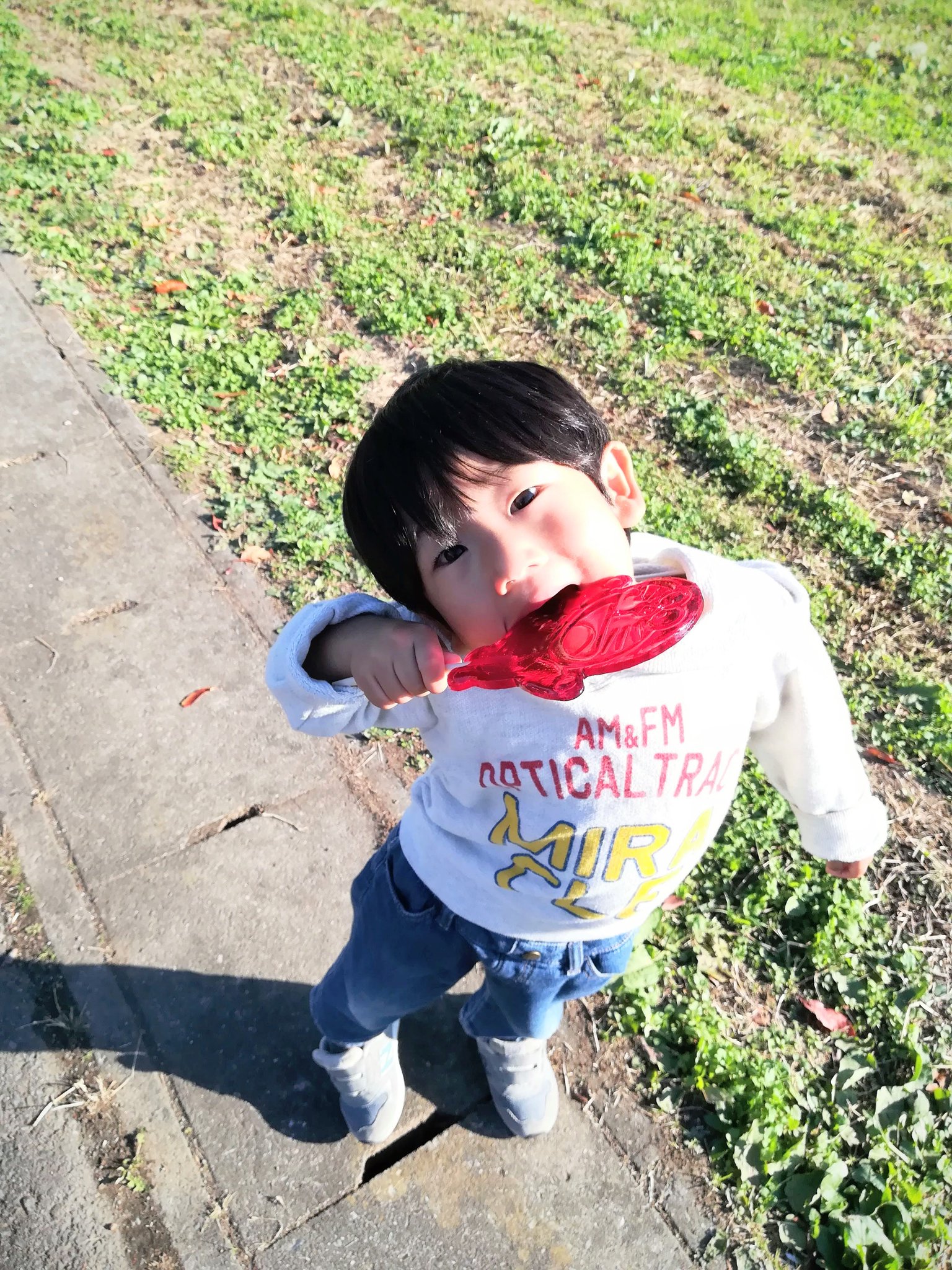
My eldest son, Kazuma.
To put it in one word, he was a "ball of sociability."
Whenever we went to the park, he would approach anyone, saying, "I'm Kazuma. Want to play together?" and make adults laugh with his jokes.
He was a bright boy who ran around like a wild horse, just like his name suggests.
That daily life came crashing down when he was 3 years and 9 months old.
The diagnosis was "Pre-B cell acute lymphoblastic leukemia."
Inpatient Treatment Starts. And So Does the Caregiver Stay.
"80 to 90% will be cured."
The doctor said this during the initial announcement.
He said leukemia had become a curable disease.
Believing those words, our hospital life began.
Kazuma was only 3. Naturally, the hospital told us, "Please stay with him."
Since we also had a 1-year-old daughter, my wife stayed with him while our daughter was at daycare, and I took the night shifts, sleeping at the hospital.
It meant our family was living apart.
I realized then that a family being together was not something to be taken for granted.
Chemotherapy lowers immunity.
While his immunity was low, he often had to spend his time on the bed.
For Kazuma, who was at an age where he wanted to move around, I think it was painful.
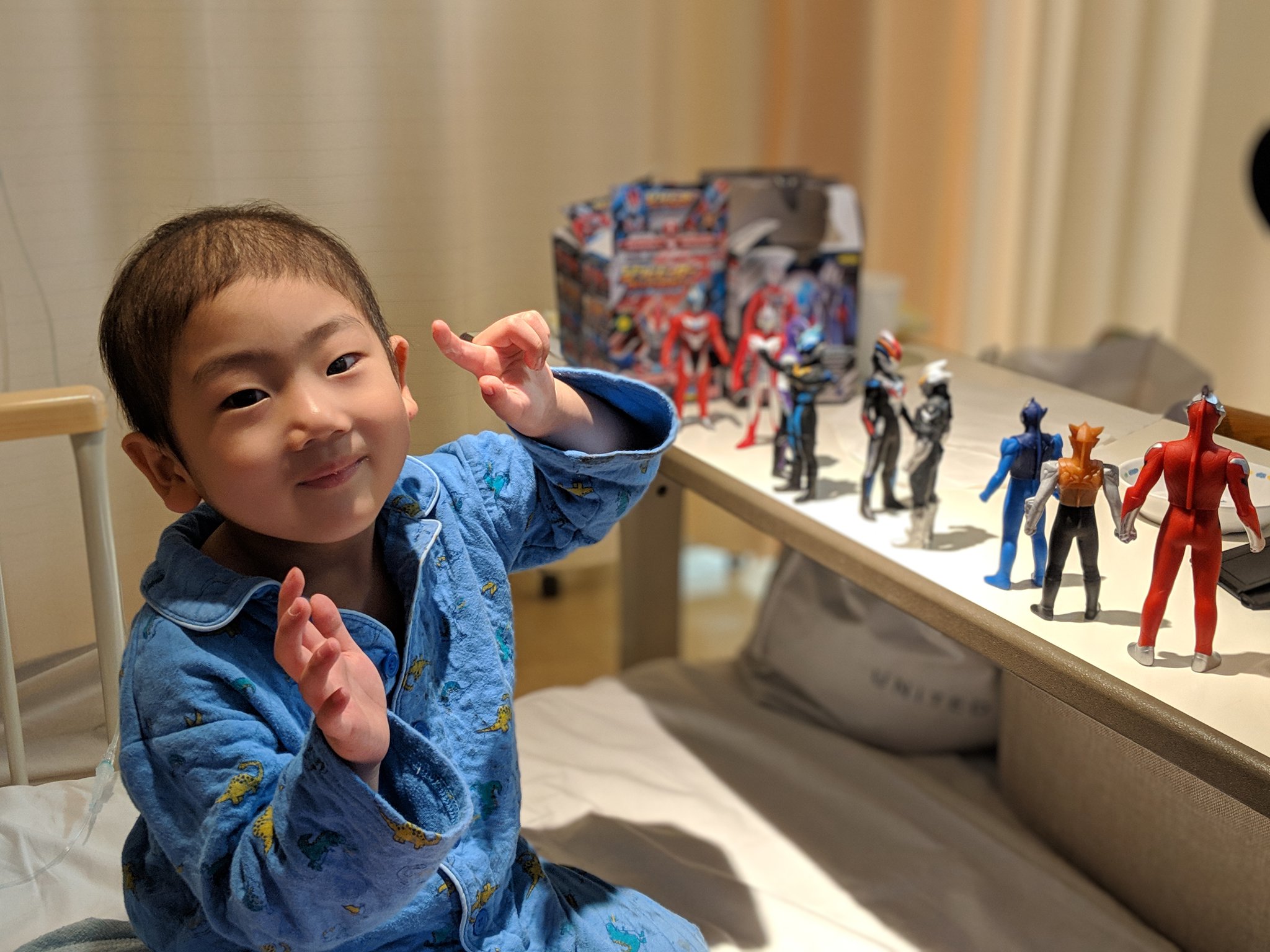
Even when his hair fell out, and even when nausea and lethargy continued, Kazuma kept fighting in his hospital room with his favorite Ultraman figures in hand.
Very Early Relapse.
"Everything is going very well."
The words from the doctor during our regular meetings were very comforting.
"We can do this."
We told ourselves we could handle a year of staying at the hospital and worked hard at it.
However, fate was cruel.
Just when we thought treatment was progressing smoothly, he suffered a very early relapse.
A very early relapse is a refractory recurrence with an extremely poor prognosis.
"There is nothing more we can do at this hospital."
I remember being told this by the doctor and feeling a shock hundreds of times greater than when he was first diagnosed.
I remember the world literally turning dark, wondering why Kazuma couldn't be among the "80 to 90% who are cured."
It was impossible to believe, and seeing us like that, the doctor recommended a second opinion.
Transfer to the National Cancer Center. The "Lifelines" Snapping One by One.
The second opinion was held at the National Cancer Center in Tsukiji, Tokyo.
Looking at the information from the Gunma Children's Medical Center, the doctor said:
"There is no mistake that it is a very early relapse."
But he continued:
"Here, we can use clinical trial drugs that cannot be used in the Gunma hospital. In my estimation, four clinical trial drugs are applicable, and I believe one of them might work for about 60% of cases."
Those words were a ray of hope for us as a couple who were in complete despair.
The clinical trial drugs became our lifeline.
Seeking that lifeline, we transferred to the National Cancer Center in Tokyo.
We immediately started using the drug that was estimated to have a 60% chance of working.
However, at the meeting two weeks later, the doctor said:
"Unfortunately, the drug does not seem to be working."
It was despair.
"We will use the next clinical trial drug we think might work. I think there's a 30% chance it will work."
We said, "Please do," and left the meeting room.
Tears flowed. I couldn't hold them back.
I couldn't go back to the room where Kazuma was like this.
So, in a corner of the hallway, my wife and I cried in hushed voices.
We managed to stop the tears, wiped them away, and stayed with Kazuma with a smile, even though our eyes were red.
Two weeks later, another meeting was scheduled. It was to announce the effect of the next clinical trial drug.
Just having a meeting scheduled made me feel like my heart was being gripped by something.
At the meeting:
"Unfortunately, it doesn't seem to be working. We will use the next drug."
The content was almost the same as the last time. But the next drug had an even lower chance of working.
The lifelines were snapping one by one, starting from the thickest.
We were falling toward the bottom of despair, snap, snap.
And finally,
"I'm sorry, but there are no more treatment options."
My son had endured painful side effects, lethargy, suffering, and pain, and had worked so hard, but that's what the doctor told us.
When asked if we would return to Gunma, we said:
"We don't want to go back because new drugs or treatments might be found."
We talked about wanting to stay at this hospital.
But the doctor said:
"I don't mind you staying at this hospital. But is that for Kazuma's sake?"
We asked, "Can't we use CAR-T?"
At that time, we wanted CAR-T cell therapy, which was advanced medicine. But the doctor said:
"He is eligible, but there is a long line. Currently, only one or two people are selected each month to go to America to have it done."
Seeing that we still couldn't give up, he continued:
"In Kazuma's case, if we did it, inflammation would occur throughout his body, and there is a 99% chance he would die in dozens of times more pain and suffering than now. Do you still want to do it?"
"I'm sorry I couldn't cure Kazuma."
In front of the doctor who said this while crying regretfully,
behind him, the nurse who had been in charge of him was sobbing loudly,
and looking to my side, there was my wife, crying until her bangs were soaking wet.
At that moment, for the first time, I thought:
"Oh, Kazuma is going to die."
That reality, which I had absolutely avoided looking at until now, was carved into my heart, and I was just so frustrated, pained, and suffering that tears overflowed.
"We'll go back to Gunma."
After saying that, my wife and I held each other and cried until our tears ran dry.
With swollen eyes, we returned to Kazuma and said:
"Kazuma, we can go back to Gunma."
And Kazuma was there, rejoicing, "Yay!"
Meeting Dr. Manda and "Parental Ego"
A few days passed after returning to the original hospital in Gunma.
Kazuma was unable to eat almost anything and was often in pain or irritated.
"I want to go home."
I knew Kazuma felt that way, but I felt that if I stopped the chemotherapy he was receiving at the hospital now, the leukemia cells would increase all at once and he would die, so I couldn't bring myself to let him be discharged.
Seeing the conflict between us, the doctor scheduled a meeting with a home care doctor.
That home care doctor was Dr. Ryohei Manda.
(He is a home palliative care doctor who has recently become a best-selling author with over 100,000 copies of his book sold.)
Meeting Dr. Manda changed our fate significantly.
To me, who was at the bottom of despair, Dr. Manda asked:
"It's a natural feeling for a parent to want their child to live even a minute or a second longer. But what about the person himself? Isn't it time to respond to his wishes with all your might?"
We came back from Tokyo to Gunma thinking Kazuma would be happy.
But I really knew that he wanted to go home from the hospital.
"Wanting him to live even a little longer" was my ego; wasn't Kazuma's wish more about going home?
"If you make living a minute or a second longer the goal, the family says 'Keep fighting.' And the end results in a failure called 'Unfortunately.' But if you make fulfilling the person's wishes the goal, the words change to 'Thank you, I love you.' That makes for a happier end for both the person and the family."
Being told that by Dr. Manda, we said:
"We will try to fulfill Kazuma's wishes as much as possible. We'll go back to the hospital and ask him what he wants."
With that, we returned to the hospital.
"I'm going home!"
I went back to the hospital room and asked Kazuma:
"Kazuma, they say you don't have to come to the hospital anymore. What do you want to do?"
Kazuma replied immediately:
"I'm going home! I'm not coming to the hospital anymore!"
That was the powerful "answer" given by our 4-year-old son.
We decided to provide end-of-life care at home to make our farewell with Kazuma a happy end.
From here, the "10 miraculous days" spent by Kazuma and our family begin.
There were happy times, along with deep regrets as a parent.
To be continued in the next part, "10 Miraculous Days and 3 Regrets."
※ A request from Aoki.
During the hospitalization, my wife stayed with our son,
hospital life continued without being able to leave.
Convenience store meals, loneliness, anxiety about an uncertain future—
There are tens of thousands of such "caregiver families" across the country.
I wanted to deliver warm meals and the feeling that "there is someone thinking of you" to those people, so I started a kitchen car.
━━━━━━━━━━━━━━━
🎗️ Support Ticket
━━━━━━━━━━━━━━━
The ticket you buy
will directly become a 300-yen voucher for a caregiver family.
It is support that reaches them directly.
▼ Purchase here