
Як швидко зрозуміти галузь
Розбір галузі за 8 критеріями зі звітом
Опис
Рекомендовано
淡苍
Чому нам подобається ця навичка
Цей навик — суть галузевого дослідження в стилі McKinsey, через «спочатку пошук, потім судження» та восьмивимірну структуру, гарантує, що кожен звіт базується на найновіших даних, надає глибокі інсайти та рекомендації, а не загальні слова.
📋 Інструкція з використання Цей навик є двигуном дослідження галузі, заснованим на методології McKinsey та восьмивимірній структурі з книги 肖璟 «Як швидко зрозуміти галузь». Ви називаєте назву галузі, і він створює систематизований звіт про дослідження галузі. —————————————————————————————— 🚀 Базове використання Просто скажіть мені, яку галузь ви хочете дослідити, чим конкретніше, тим краще: a. "Допоможіть проаналізувати галузь твердотільних акумуляторів" b. "Подивіться на ланцюг постачання гуманоїдних роботів з точки зору стартапу" c. "Чи варто зараз інвестувати у фотоелектричну галузь?" Ви можете додати три додаткові відомості (не обов'язково, якщо не вказано, я використаю значення за замовчуванням): 1. Назва галузі: чим конкретніше, тим краще, наприклад, «перовскітові фотоелементи» замість «відновлювана енергія», це обов'язково; 2. Мета: інвестування / працевлаштування / стартап / аналіз конкурентів / науково-популярне, за замовчуванням: інвестування; 3. Регіон: ринок Китаю / світ / США / Південно-Східна Азія..., за замовчуванням: ринок Китаю; —————————————————————————————— ⚙️ Що він робить автоматично? Весь процес складається з 4 етапів: 1. Багаторазовий пошук в Інтернеті для збору даних про розмір ринку/темпи зростання/проникнення, ланцюг постачання, конкурентний ландшафт, докази економічного рову, політику, оцінку — кожен висновок має джерело та час, жодних вигадок; 2. Визначення стадії життєвого циклу за допомогою показника проникнення: стадія впровадження/зростання/зрілості/спаду, на різних стадіях фокус дослідження повністю відрізняється; 3. Поглиблений аналіз за восьми вимірами: бізнес-модель → розмір ринку → економічний рів (обов'язкове поглиблене вивчення динамічних тенденцій) → конкурентний ландшафт (обов'язкове поелементне оцінювання п'яти сил) → оцінка → PEST → кон'юнктура; 4. Антиконсенсусна перевірка: розрізнення загальновідомих фактів, які вже враховані ринком, і ігнорованих справжніх проблем, надання рекомендацій щодо рішень; —————————————————————————————— 📊 Що виходить? Професійний звіт про дослідження галузі у форматі Markdown з такою структурою: 1. ⚡ 30-секундний швидкий висновок — стадія / основна логіка заробітку / найбільша можливість / найбільший ризик / висновок одним реченням; 2. Об'єкт дослідження, визначення меж; 3. Визначення стадії життєвого циклу (з даними про проникнення); 4. Послементний аналіз за восьми вимірами (економічний рів з таблицею динамічних тенденцій, таблиця поелементної оцінки п'яти сил Портера); 5. Антиконсенсусна перевірка; 6. Висновки та рекомендації щодо рішень; 7. Перелік ключових ризиків; 8. Джерела даних та зазначення часу; —————————————————————————————— 🔑 Дві ключові переваги 1. Обов'язкове поглиблене вивчення економічного рову: не лише типи бар'єрів, але й обов'язкова відповідь на питання «чи став рів ширшим або вужчим за останні 2-3 роки», використовуючи дані про частку ринку/рентабельність/цінову владу; 2. Поелементна оцінка п'яти сил Портера: всі п'ять сил оцінюються повністю, без можливості уникнення, визначається, хто зараз має найсильнішу переговорну силу, чи є структура сприятливою або несприятливою для лідерів; —————————————————————————————— ⏱️ Час виконання Приблизно 2-4 хвилини, оскільки потрібні багаторазові пошуки + аналіз за кожним виміром + написання звіту —————————————————————————————— 🧩 Подальше розширення Після створення звіту можна продовжити двома спеціалізованими аналізами (потрібне ваше підтвердження вручну, не виконується автоматично): 1. «Розірвати ланцюг, знайти вузьке місце»: визначити фізичні вузькі місця в ланцюзі постачання, які неможливо обійти при зростанні тренду, і визначити справжніх виграшних гравців; 2. «Оцінка DCF»: провести повну модель дисконтованих грошових потоків для конкретної компанії в галузі; —————————————————————————————— ▶️ Хочете спробувати? Просто скажіть мені назву галузі, наприклад, «Подивіться на галузь AI Agent з точки зору стартапу» або «Яка ситуація зараз з ланцюгом постачання водню?»
Схожі навички
Переглянути всі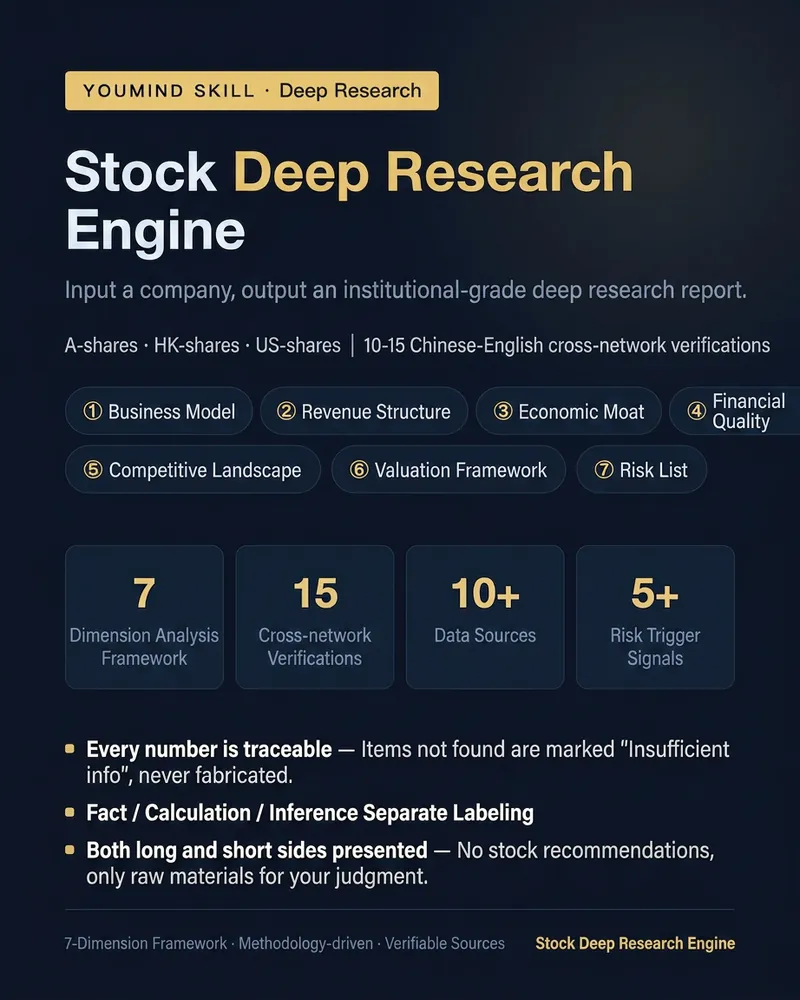
Аналіз акцій:вивчення компанії
Не збирання новин, а звіт про акції з методологічним скелетом. Введіть назву компанії або код (A-акції/Гонконг/США), і він виконає 10-15 пошуків китайською та англійською мовами, а потім створить звіт за семивимірною рамкою: ① Бізнес-модель — звідки надходять гроші та куди вони йдуть, з версією "перекладом людською мовою" ② Структура доходів — розбивка за бізнесами + рушії зростання та стримуючі фактори ③ Рів — обов'язкова відповідь "розширюється чи звужується", з використанням частки ринку/маржі/цінової влади ④ Фінансова якість — відповідність грошового потоку та прибутку, аномалії дебіторської заборгованості, запасів, гудвілу ⑤ Конкурентний ландшафт — порівняльна таблиця конкурентів + напрямок концентрації ⑥ Оціночна рамка — лише дані та розрахункова рамка, без судження про переоцінку/недооцінку ⑦ Список ризиків — відсортований за впливом, кожен пункт з перевіреним сигналом тригера Кожен звіт включає: одно сторінку "бичачий/ведмежий" (обидві сторони з фактичними доказами), контрольний список на наступний квартал, джерела кожного пункту даних. Три залізні правила: · Кожне ключове число можна простежити до офіційного повідомлення чи авторитетного ЗМІ; якщо не знайдено, позначається "недостатньо інформації" — ніколи не вигадувати · Факти, розрахунки та висновки позначаються окремо · Не прогнозувати ціну акцій, не давати цільову ціну, не давати рекомендації щодо купівлі/продажу — навіть на запитання "чи варто купувати" надаються лише докази за та проти Підтримується три точки зору: розуміння бізнесу (за замовчуванням) / фінансовий огляд / порівняння двох компаній. Підходить для інвестиційних дослідників, творців фінансового контенту та серйозних інвесторів, які хочуть систематично зрозуміти компанію.

Дослідження галузі без суджень
Необхідний інструмент для інвесторів. Глибоке дослідження, допомагає у прийнятті рішень, але «не робить суджень», дуже важливо, хто розуміє, той зрозуміє. Автор: колишній інженер/підприємець, нині інвестор на первинному ринку, переглянув десятки тисяч BP, провів глибокі розмови з понад 1000 компаній. Спосіб використання: Запускається через пряму розмову. Наприклад: Допоможіть дослідити галузь триацетату целюлози (плівка TAC). → Я автоматично розпізнаю та викличу навичку. Що робить: 1. Автоматично визначає тип вводу, окреслює обсяг дослідження 2. Етап 1: 3-5 раундів пошуку, видає швидке панорамне сканування на 1500 слів (таблиця даних + ланцюг постачання + гравці + рушійні сили/вузькі місця + інформаційні прогалини) 3. Етап 2: після вашої відповіді «продовжити» видає повний звіт, що охоплює 7 частин та 21 вимір (5000-15000 слів) 4. Весь час чисто фактичний вивід, без суджень на кшталт «чи варто інвестувати» --- # industry-research — Глибоке дослідження галузі ## Основні принципи ## Розподіл обов'язків ## Крок 1: Визначення та окреслення обсягу ## Крок 2: Етап 1 — Швидке панорамне сканування ### Структура виводу Етапу 1 ## Крок 3: Етап 2 — Повний глибокий звіт ### Структура виводу Першого етапу #### Частина 1: Макроогляд #### Частина 2: Ринок та масштаби #### Частина 3: Панорама ланцюга постачання #### Частина 4: Глобальна перспектива #### Частина 5: Політика та регулювання #### Частина 6: Капітал та ринок #### Частина 7: Глибоке розуміння ## Позначки якості даних ## Стратегія паралельного пошуку для Етапу 2 (необов'язково) ## Перевірка перед виводом
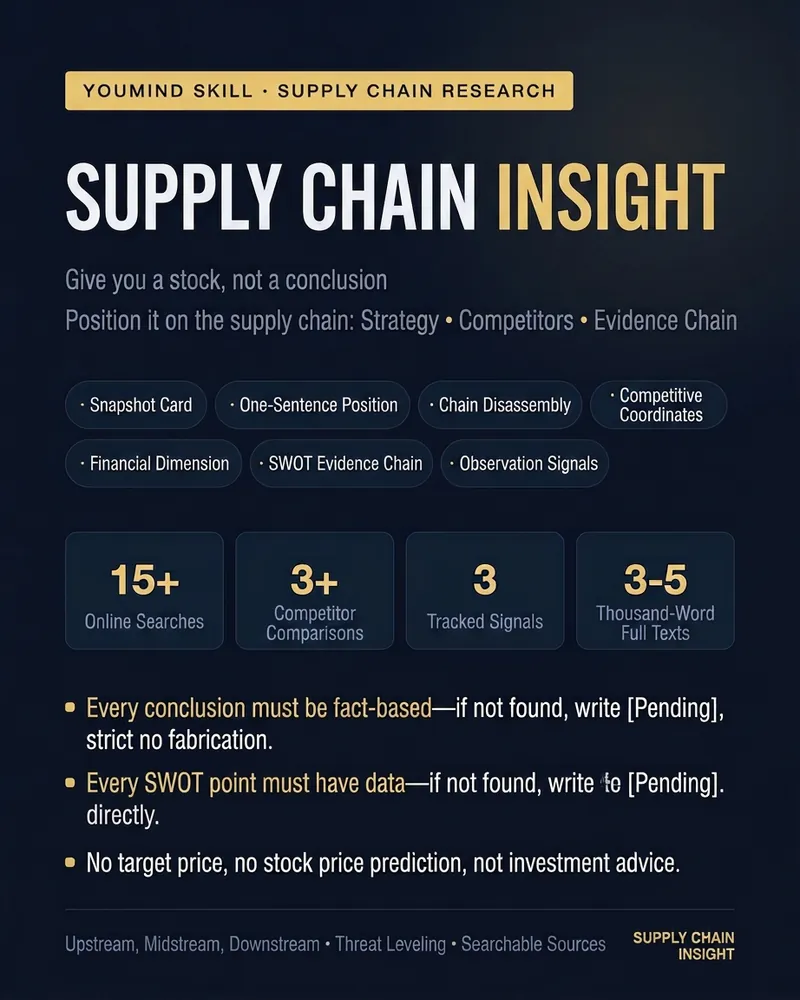
Аналіз ланцюга | Акція + SWOT
Введіть акцію — не отримаєте висновку, а отримаєте її координати в ланцюгу. Цей навик виконує понад 10 онлайн-запитів і створює звіт з п'ятирівневою структурою аналізу ланцюга: одноречене позиціонування (де вона знаходиться і чому), розбивка верхньої, середньої та нижньої ланок (кожна з конкретними назвами компаній), конкурентні координати (хто може змінити ситуацію), доказовий ланцюг SWOT (кожен пункт з даними, без порожніх тверджень) та 3 перевірні сигнали для відстеження. Підходить для тих, хто хоче зрозуміти, "на чому компанія заробляє і чи працюють її бар'єри". Усі ключові цифри мають джерела, якщо дані недоступні — чесно зазначено "тимчасово відсутні". Весь текст не є інвестиційною рекомендацією.
Як швидко зрозуміти галузь
Розбір галузі за 8 критеріями зі звітом
Опис
Рекомендовано
淡苍
Чому нам подобається ця навичка
Цей навик — суть галузевого дослідження в стилі McKinsey, через «спочатку пошук, потім судження» та восьмивимірну структуру, гарантує, що кожен звіт базується на найновіших даних, надає глибокі інсайти та рекомендації, а не загальні слова.
📋 Інструкція з використання Цей навик є двигуном дослідження галузі, заснованим на методології McKinsey та восьмивимірній структурі з книги 肖璟 «Як швидко зрозуміти галузь». Ви називаєте назву галузі, і він створює систематизований звіт про дослідження галузі. —————————————————————————————— 🚀 Базове використання Просто скажіть мені, яку галузь ви хочете дослідити, чим конкретніше, тим краще: a. "Допоможіть проаналізувати галузь твердотільних акумуляторів" b. "Подивіться на ланцюг постачання гуманоїдних роботів з точки зору стартапу" c. "Чи варто зараз інвестувати у фотоелектричну галузь?" Ви можете додати три додаткові відомості (не обов'язково, якщо не вказано, я використаю значення за замовчуванням): 1. Назва галузі: чим конкретніше, тим краще, наприклад, «перовскітові фотоелементи» замість «відновлювана енергія», це обов'язково; 2. Мета: інвестування / працевлаштування / стартап / аналіз конкурентів / науково-популярне, за замовчуванням: інвестування; 3. Регіон: ринок Китаю / світ / США / Південно-Східна Азія..., за замовчуванням: ринок Китаю; —————————————————————————————— ⚙️ Що він робить автоматично? Весь процес складається з 4 етапів: 1. Багаторазовий пошук в Інтернеті для збору даних про розмір ринку/темпи зростання/проникнення, ланцюг постачання, конкурентний ландшафт, докази економічного рову, політику, оцінку — кожен висновок має джерело та час, жодних вигадок; 2. Визначення стадії життєвого циклу за допомогою показника проникнення: стадія впровадження/зростання/зрілості/спаду, на різних стадіях фокус дослідження повністю відрізняється; 3. Поглиблений аналіз за восьми вимірами: бізнес-модель → розмір ринку → економічний рів (обов'язкове поглиблене вивчення динамічних тенденцій) → конкурентний ландшафт (обов'язкове поелементне оцінювання п'яти сил) → оцінка → PEST → кон'юнктура; 4. Антиконсенсусна перевірка: розрізнення загальновідомих фактів, які вже враховані ринком, і ігнорованих справжніх проблем, надання рекомендацій щодо рішень; —————————————————————————————— 📊 Що виходить? Професійний звіт про дослідження галузі у форматі Markdown з такою структурою: 1. ⚡ 30-секундний швидкий висновок — стадія / основна логіка заробітку / найбільша можливість / найбільший ризик / висновок одним реченням; 2. Об'єкт дослідження, визначення меж; 3. Визначення стадії життєвого циклу (з даними про проникнення); 4. Послементний аналіз за восьми вимірами (економічний рів з таблицею динамічних тенденцій, таблиця поелементної оцінки п'яти сил Портера); 5. Антиконсенсусна перевірка; 6. Висновки та рекомендації щодо рішень; 7. Перелік ключових ризиків; 8. Джерела даних та зазначення часу; —————————————————————————————— 🔑 Дві ключові переваги 1. Обов'язкове поглиблене вивчення економічного рову: не лише типи бар'єрів, але й обов'язкова відповідь на питання «чи став рів ширшим або вужчим за останні 2-3 роки», використовуючи дані про частку ринку/рентабельність/цінову владу; 2. Поелементна оцінка п'яти сил Портера: всі п'ять сил оцінюються повністю, без можливості уникнення, визначається, хто зараз має найсильнішу переговорну силу, чи є структура сприятливою або несприятливою для лідерів; —————————————————————————————— ⏱️ Час виконання Приблизно 2-4 хвилини, оскільки потрібні багаторазові пошуки + аналіз за кожним виміром + написання звіту —————————————————————————————— 🧩 Подальше розширення Після створення звіту можна продовжити двома спеціалізованими аналізами (потрібне ваше підтвердження вручну, не виконується автоматично): 1. «Розірвати ланцюг, знайти вузьке місце»: визначити фізичні вузькі місця в ланцюзі постачання, які неможливо обійти при зростанні тренду, і визначити справжніх виграшних гравців; 2. «Оцінка DCF»: провести повну модель дисконтованих грошових потоків для конкретної компанії в галузі; —————————————————————————————— ▶️ Хочете спробувати? Просто скажіть мені назву галузі, наприклад, «Подивіться на галузь AI Agent з точки зору стартапу» або «Яка ситуація зараз з ланцюгом постачання водню?»
Схожі навички
Переглянути всіАналіз акцій:вивчення компанії
Не збирання новин, а звіт про акції з методологічним скелетом. Введіть назву компанії або код (A-акції/Гонконг/США), і він виконає 10-15 пошуків китайською та англійською мовами, а потім створить звіт за семивимірною рамкою: ① Бізнес-модель — звідки надходять гроші та куди вони йдуть, з версією "перекладом людською мовою" ② Структура доходів — розбивка за бізнесами + рушії зростання та стримуючі фактори ③ Рів — обов'язкова відповідь "розширюється чи звужується", з використанням частки ринку/маржі/цінової влади ④ Фінансова якість — відповідність грошового потоку та прибутку, аномалії дебіторської заборгованості, запасів, гудвілу ⑤ Конкурентний ландшафт — порівняльна таблиця конкурентів + напрямок концентрації ⑥ Оціночна рамка — лише дані та розрахункова рамка, без судження про переоцінку/недооцінку ⑦ Список ризиків — відсортований за впливом, кожен пункт з перевіреним сигналом тригера Кожен звіт включає: одно сторінку "бичачий/ведмежий" (обидві сторони з фактичними доказами), контрольний список на наступний квартал, джерела кожного пункту даних. Три залізні правила: · Кожне ключове число можна простежити до офіційного повідомлення чи авторитетного ЗМІ; якщо не знайдено, позначається "недостатньо інформації" — ніколи не вигадувати · Факти, розрахунки та висновки позначаються окремо · Не прогнозувати ціну акцій, не давати цільову ціну, не давати рекомендації щодо купівлі/продажу — навіть на запитання "чи варто купувати" надаються лише докази за та проти Підтримується три точки зору: розуміння бізнесу (за замовчуванням) / фінансовий огляд / порівняння двох компаній. Підходить для інвестиційних дослідників, творців фінансового контенту та серйозних інвесторів, які хочуть систематично зрозуміти компанію.
Дослідження галузі без суджень
Необхідний інструмент для інвесторів. Глибоке дослідження, допомагає у прийнятті рішень, але «не робить суджень», дуже важливо, хто розуміє, той зрозуміє. Автор: колишній інженер/підприємець, нині інвестор на первинному ринку, переглянув десятки тисяч BP, провів глибокі розмови з понад 1000 компаній. Спосіб використання: Запускається через пряму розмову. Наприклад: Допоможіть дослідити галузь триацетату целюлози (плівка TAC). → Я автоматично розпізнаю та викличу навичку. Що робить: 1. Автоматично визначає тип вводу, окреслює обсяг дослідження 2. Етап 1: 3-5 раундів пошуку, видає швидке панорамне сканування на 1500 слів (таблиця даних + ланцюг постачання + гравці + рушійні сили/вузькі місця + інформаційні прогалини) 3. Етап 2: після вашої відповіді «продовжити» видає повний звіт, що охоплює 7 частин та 21 вимір (5000-15000 слів) 4. Весь час чисто фактичний вивід, без суджень на кшталт «чи варто інвестувати» --- # industry-research — Глибоке дослідження галузі ## Основні принципи ## Розподіл обов'язків ## Крок 1: Визначення та окреслення обсягу ## Крок 2: Етап 1 — Швидке панорамне сканування ### Структура виводу Етапу 1 ## Крок 3: Етап 2 — Повний глибокий звіт ### Структура виводу Першого етапу #### Частина 1: Макроогляд #### Частина 2: Ринок та масштаби #### Частина 3: Панорама ланцюга постачання #### Частина 4: Глобальна перспектива #### Частина 5: Політика та регулювання #### Частина 6: Капітал та ринок #### Частина 7: Глибоке розуміння ## Позначки якості даних ## Стратегія паралельного пошуку для Етапу 2 (необов'язково) ## Перевірка перед виводом
Аналіз ланцюга | Акція + SWOT
Введіть акцію — не отримаєте висновку, а отримаєте її координати в ланцюгу. Цей навик виконує понад 10 онлайн-запитів і створює звіт з п'ятирівневою структурою аналізу ланцюга: одноречене позиціонування (де вона знаходиться і чому), розбивка верхньої, середньої та нижньої ланок (кожна з конкретними назвами компаній), конкурентні координати (хто може змінити ситуацію), доказовий ланцюг SWOT (кожен пункт з даними, без порожніх тверджень) та 3 перевірні сигнали для відстеження. Підходить для тих, хто хоче зрозуміти, "на чому компанія заробляє і чи працюють її бар'єри". Усі ключові цифри мають джерела, якщо дані недоступні — чесно зазначено "тимчасово відсутні". Весь текст не є інвестиційною рекомендацією.
Знайдіть свою наступну улюблену навичку
Досліджуйте більше підібраних AI-навичок для досліджень, творчості та повсякденної роботи.