STROBE Methods Writer
Produces a STROBE-compliant draft from study data
STROBE Methods Writer
Produces a STROBE-compliant draft from study data
展示內容
描述
Based on your cross-sectional, cohort, or case-control study design; when you enter your participant selection method, variables, sample size rationale, and statistical methods, it produces a complete Methods and Results draft with implicit reference to all 22 items of the STROBE (Strengthening the Reporting of Observational Studies in Epidemiology) checklist. It also provides a mapping table at the end showing which paragraph corresponds to which STROBE item — ready to answer a journal's "please complete the STROBE checklist" request. Avoids causal language (uses "is associated with" rather than "causes" for observational studies) and explicitly discusses sources of bias/confounding. Suitable for academics working in epidemiology, public health, and clinical research.
為什麼我們推薦這個技能
An editor’s pick for turning raw observational study details into a publication-ready Methods and Results draft. It stands out by mapping every section to the STROBE checklist while explicitly addressing bias, confounding, participant flow, and appropriately cautious association language.
相關技能
查看全部 研究
STROBE/CONSORT Methods-Results Writer
Produces a complete Methods + Results section following the reporting standard that fits your study design (STROBE for observational studies, CONSORT for randomized controlled trials); then audits which checklist items are missing or weakly reported without concealment, and suggests how to complete them. Who it's for: researchers seeking reporting robustness before journal submission and graduate students writing a thesis.
 研究
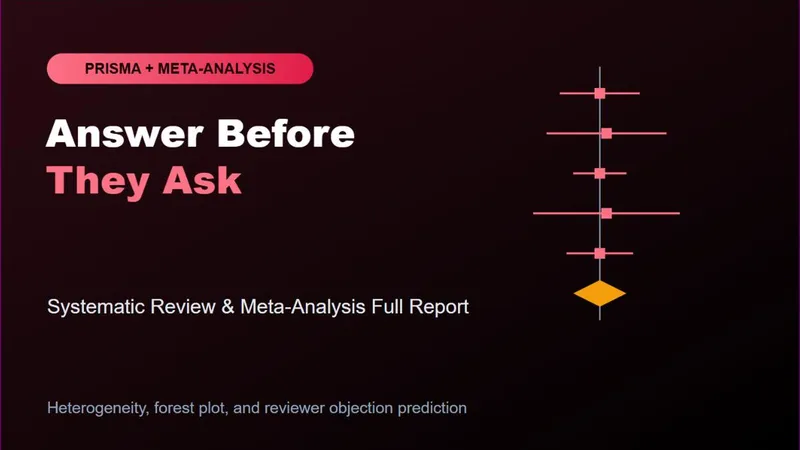
Meta-Analysis Full Report Writer
Produces a complete Methods + Results + Limitations text compliant with PRISMA 2020 and the Cochrane Handbook from your meta-analysis statistics (pooled effect size, I², Q, tau², publication bias indicators). Never misinterprets the I² value (including the "percentage of variance" framing); avoids overstated causal language (uses cautious phrasing like "findings are consistent with..." instead of "evidence demonstrates that"). At the end, it also offers at least 3 questions a reviewer might ask along with defense sentences. Suitable for: researchers writing a meta-analysis paper who want to strengthen the methods section before journal submission. What it does not do: it does not perform statistical calculations from raw data (you must already have your R/RevMan/CMA output) — it only converts and interprets your results into academic text.
 研究
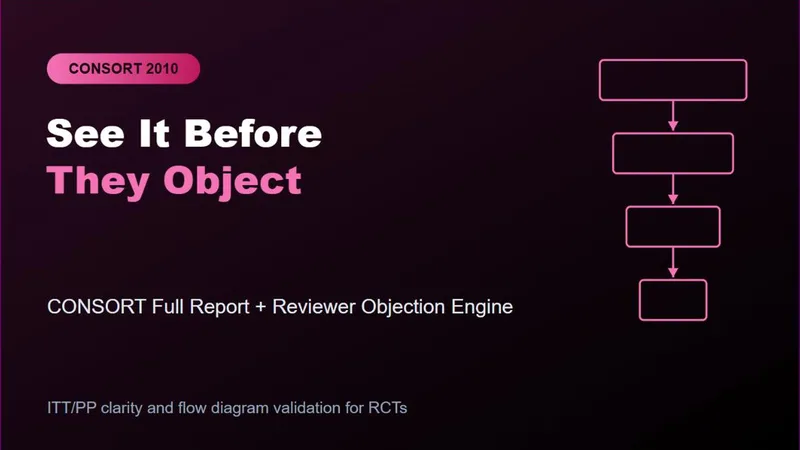
CONSORT 2010 Report Writer
From your randomized controlled trial (RCT) data — randomization method, blinding status, power analysis, CONSORT flow numbers (screened/randomized/allocated/analyzed), ITT/PP analysis approach — it produces a complete Abstract + Methods + Results draft compliant with all 25 items of CONSORT 2010. It never confuses ITT/PP; it checks the consistency of flow diagram numbers (randomized ≥ allocated ≥ followed-up ≥ analyzed). It also pre-identifies at least 4 objections journal reviewers frequently raise (e.g., "why wasn't an ITT analysis reported," "was blinding success tested," "was there outcome switching") and suggests a defense sentence for each. Designed for clinical researchers in medicine/nursing/pharmacy conducting RCTs who want methodological robustness before journal submission. What it does not do: it does not perform statistical analysis or generate data — it only converts results you already have into a CONSORT-standard report.
