أقوى كتابة مقالات SEO عامة
التعليمات
# Universal SEO Batch Writing Skill (English Version)
## Skill Overview
This Skill is designed to generate **high-quality, original, E-E-A-T-compliant SEO articles** for **any product or service**, using a competitor article library in the current Board.
It can:
* Automatically select **10 best competitor SEO articles** from the current Board as references
* Intelligently avoid **topic overlap** with your existing articles
* Deeply integrate **your product’s unique features, data, and positioning**
* Follow **Google E-E-A-T** principles and pass originality checks
* Run a built-in **Quality Assurance system** to ensure each article meets standards
* Output **WordPress-ready HTML** (copy-paste into WP backend)
---
# Required Inputs (You Provide)
## Input A: Product Information (Required)
Provide a structured product brief including:
* Product name / brand name
* What it is (category + use case)
* Target audience
* Core value proposition (3–5 bullets)
* Key features (5–10 bullets)
* Pricing model (ranges, plans, tiers)
* Coverage / availability (countries, channels, platforms, industries, etc.)
* Proof/data (metrics, user growth, savings, performance, NPS, case studies, testimonials)
* Competitive advantages vs alternatives
* Limitations / constraints / best-fit scenarios (for trustworthiness)
* Internal pages you want to link to (pricing page, product page, blog posts, etc.)
> If not fully provided, the Skill should use `searchBoards` or `googleSearch` to supplement.
## Input B: Competitor SEO Library (Required)
Your current Board should contain competitor SEO articles as materials.
---
# PHASE 1: Competitor Article Intelligence Selection
## STEP 1.1: Scan All Articles in the Board
Actions:
1. Use `listBoard` to retrieve all materials in the current Board
2. Use `read` to read key information from each article (first 500 lines)
3. Extract:
* Topic / keywords
* Content type (Guide / Comparison / Review / Tutorial, etc.)
* Word count
* Structure quality (H2/H3 hierarchy, data density, table usage)
* Target audience
* Unique angle
* Search intent (Informational / Commercial / Transactional)
## STEP 1.2: Article Quality Scoring (0–100)
**Content Quality (40)**
* Depth and completeness (15)
* Data/examples richness (10)
* Structural clarity (10)
* Actionability (5)
**SEO Optimization (30)**
* Clear keyword strategy (10)
* Title + structure optimization (10)
* Internal/external links usage (5)
* Readability/UX (5)
**Uniqueness (20)**
* Unique insights, data, framing (10)
* Potential to be rewritten into “product-aware” content (10)
**Fit (10)**
* Ease of integrating product value naturally (10)
## STEP 1.3: Select Top 10 Articles (Balanced Coverage)
Selection rules:
1. Take top 15 by score
2. Filter down to 10 while ensuring:
* Topic diversity (max 2 per broad topic cluster)
* Search intent coverage:
* 3–4 informational
* 4–5 commercial
* 1–2 transactional
* Strong relevance to the product’s core use cases
* Natural opportunities to integrate product value
## STEP 1.4: Topic Duplication Check (Avoid Existing Topics)
If the Board already contains articles about your product:
1. Use `searchBoards` with keywords:
* product name, brand name
* category keyword(s)
* primary use-case keyword(s)
2. Extract existing topics and keywords
3. Remove overlapping topics from Top 10
4. Replace with new topics from the candidate pool
**Output:**
**Top 10 competitor article list** + **why they were selected**
---
# PHASE 2: Deep Product Analysis (Generic Template)
## STEP 2.1: Extract Product Core Assets
From product info (or via `searchBoards` / `googleSearch`):
**Positioning**
* What the product is (category + function)
* Core value proposition
* Target users
**Features**
* Key feature set
* Onboarding / setup flow
* Compatibility / requirements
* Support / SLA
* Unique differentiators (features competitors don’t have)
**Proof & Data (E-E-A-T critical)**
* Users / growth metrics
* Satisfaction metrics (NPS, rating, churn)
* Performance metrics (speed, uptime, results, ROI)
* Cost-saving % or time-saving metrics
* Case studies / testimonials (at least 2)
**Competitive Landscape**
Compare against:
* The default alternative (do nothing/manual)
* Traditional solutions in the category
* Direct competitors
* DIY substitute tools / free methods
## STEP 2.2: Build a Use-Case Library (10+ Scenarios)
Create 10+ “user scenarios” relevant to any product.
Example universal scenario patterns:
1. Beginners onboarding (first-time user)
2. Budget-conscious user
3. Power users / advanced workflows
4. Teams and collaboration
5. Enterprise compliance / security needs
6. High-frequency usage / scalability
7. Multi-region / multi-platform usage
8. Time-sensitive / emergency need
9. Switching from an incumbent competitor
10. Seasonal or campaign-based usage
11. Integration with other tools
12. Performance optimization / cost reduction
Each scenario must include:
* Pain point
* Product solution
* Supporting data (pricing, ROI, benchmark, time saved, etc.)
---
# PHASE 3: 10-Article Strategy Matrix Generation
Use the selected competitor articles to create a rewrite plan:
```plaintext
| # | Source Topic | New Topic (Product-Aware Angle) | Primary Keyword | Secondary Keywords | Search Intent | Unique Angle | Product Integration Points | E-E-A-T Plan | Word Count |
|---|-------------|----------------------------------|----------------|-------------------|--------------|-------------|----------------------------|------------|-----------|
| 1 | [topic] | [rewritten topic] | [keyword] | [5 keywords] | INFO | [angle] | [2-3 scenarios] | [strategy] | 2000 |
```
Each article must explicitly define:
1. **Topic transformation logic**
Example: “Best Travel Apps” → “Best Travel Apps for [specific product users]”
or “How to do X” → “How to do X with [product] (with alternatives comparison)”
2. **Unique angle to prevent plagiarism**
* Add product-exclusive data + examples
* Reframe content from the user’s perspective
* Add missing scenarios/pain points
* Provide actionable steps/checklists
* Introduce a proprietary framework (e.g., “3-layer decision model”)
3. **Product integration points** (2–3 natural placements)
* In the solution section
* In the comparison table
* In user story / case study
* Do NOT hard-sell in intro and conclusion
4. **E-E-A-T plan**
* Experience: real cases, hands-on results
* Expertise: technical explanation, best practices
* Authority: cite credible sources
* Trust: transparent comparisons + limitations
---
# PHASE 4: Batch Writing (10 Articles)
## Anti-Plagiarism Rules
### 🚫 Forbidden
* Direct translation of sentences
* Keeping unique metaphors/phrases from competitor content
* Copying paragraph order and section flow
* Reusing competitor headline phrasing
* Copying competitor private data
### ✅ Mandatory
* Re-think from the product user perspective
* Rebuild structure and order from scratch
* Add product-exclusive proof/data (min 3)
* Add 3+ new scenarios/examples not in source
* Use different headline logic and phrasing
* Provide step-by-step guides/checklists
## Universal WordPress HTML Article Template
(保留你原模板,替换 RedEX 为 [PRODUCT_NAME],并把 eSIM-specific 语义改成 product-aware 语义)
* `esim-content` → `product-content`
* “eSIM users” → “[product] users” / “users in this category”
* 表格列:RedEX eSIM → `[PRODUCT_NAME]`
> 你原 HTML 模板可以直接沿用,仅做变量替换 + 文案语义泛化。
---
# PHASE 5: Built-in QA System (Universal)
After each article, run:
## ✅ Originality (Anti-Plagiarism)
* H2/H3 fully rewritten
* Structure order redesigned
* Adds 3+ new scenarios
* No 5 consecutive words match competitor (except public data)
* Adds ≥3 product-exclusive data points
* Adds ≥2 missing subtopics (H3) not present in competitor
## ✅ E-E-A-T Score (≥85/100)
Same scoring logic as your original(Experience/Expertise/Authority/Trust)
## ✅ Technical SEO Checklist
Same as your original(Title/meta/url/h1/h2/kw density/links/FAQ/table/readability)
## ✅ Product Integration Check
* Product mentions ≤3 times (excluding FAQ)
* Every mention solves a concrete problem
* Includes specific proof/data
* No pushy promotion in intro/conclusion
* Mentions limitations honestly
---
# PHASE 6: Output Format
## Output Strategy Matrix First (For Approval)
```markdown
# Universal SEO Batch Production Strategy
## Selected 10 Competitor Articles
| # | Source Title | Quality Score | Reason |
|---|-------------|--------------|--------|
| 1 | [Title] | 92/100 | [Reason] |
...
## 10-Article Strategy Matrix
[Full table]
## E-E-A-T Implementation Strategy
- Experience: ...
- Expertise: ...
- Authoritativeness: ...
- Trustworthiness: ...
## Originality Safeguards
1. ...
2. ...
---
**Proceed to writing?** (Type "Start writing" or suggest edits)
```
## After Approval: Output 10 Full WordPress HTML Articles + QA Report
(Keep your existing “Article + QA report” packaging exactly.)
الوصف
موصى بها من قبل
nene@YouMind
لماذا نحب هذه المهارة
تحلل هذه المهارة مقالات منافسيك لتوليد مقالات SEO عالية الجودة متوافقة مع E-E-A-T، مع دمج ميزات منتجك. تصفي تلقائيًا أفضل المحتوى، تتجنب التكرار، وتنتج HTML جاهز لووردبريس، مثالية للإنتاج الكمي.
هذه ربما تكون أفضل مهارة لكتابة مقالات SEO. من خلال هذه المهارة، يمكنك التأكد من أن المقالات التي تنتجها تتوافق مع إطار EEAT، ولا تحتوي على معلومات مختلقة، وتحتاج إلى تقديم معلومات المنتج ومقالات المنافسين. (التالي هو وصف تفصيلي كتبه الذكاء الاصطناعي) تساعدك مهارة الكتابة الجماعية لتحسين محركات البحث (SEO) العامة هذه على تحويل مكتبة مقالات المنافسين إلى 10 منشورات أصلية وعالية الجودة لتحسين محركات البحث لأي منتج أو خدمة: تقوم تلقائيًا بمسح وتقييم جميع المقالات في القسم الحالي، واختيار أفضل المراجع، وتجنب تكرار المواضيع المنشورة، وبناء مصفوفة استراتيجية واضحة لعشر مقالات (بما في ذلك الكلمات المفتاحية، النية، الزاوية الفريدة، والأماكن التي يُذكر فيها المنتج بشكل طبيعي)، ثم إنشاء مقالات HTML جاهزة للاستخدام في ووردبريس، تتبع هذه المقالات مبادئ E-E-A-T من جوجل وأفضل ممارسات SEO على الصفحة — كل مقالة تنتهي بتقرير تقييم جودة مدمج.
مهارات ذات صلة
عرض الكل كتابة
كتابةكتابة مقالات WeChat الرائجة2.0
يُعنى بمساعدة الكتّاب على إنتاج مقالات حسابات WeChat بكفاءة. سواء أكان الأمر مشاركة محتوى قيّم، أو طرح آراء معمّقة، أو سرد قصص عاطفية، أو ترويج منتجات، توفّر لك هذه المهارة دعمًا كاملًا من وضع العنوان حتى كتابة المحتوى، لتصبح نصوصك أكثر جاذبية عند القراءة على الأجهزة المحمولة. أثناء عملية الكتابة، تقدم لك مجموعة من صيغ العناوين الرائجة بأنماط متعددة، مثل العناوين الرقمية، والتشويقية، والمتباينة، كما تقترح الإطار الهيكلي الأنسب لموضوع المقال. سواء كنت تكتب ملخصًا يعتمد على المنطق أو سردًا قصصيًا يعتمد على التأثير العاطفي، تضمن المهارة أن يكون المقال منظمًا ومترابطًا، ليصل إلى الجمهور المستهدف بدقة. علاوة على ذلك، تتضمن هذه المهارة نصائح احترافية لتحسين التنسيق وفحص الجودة. فمن خلال ضبط طول الفقرات، وتحسين إيقاع الجمل، وزيادة وضوح المعلومات الأساسية، ترتقي بالجودة العامة للمقال. كما تساعد في توزيع الكلمات المفتاحية لمحركات البحث وتوجيه أهداف التحويل، بحيث لا يكون المحتوى سهل القراءة فحسب، بل يحقق أيضًا نتائج الانتشار والتحويل المرجوة.
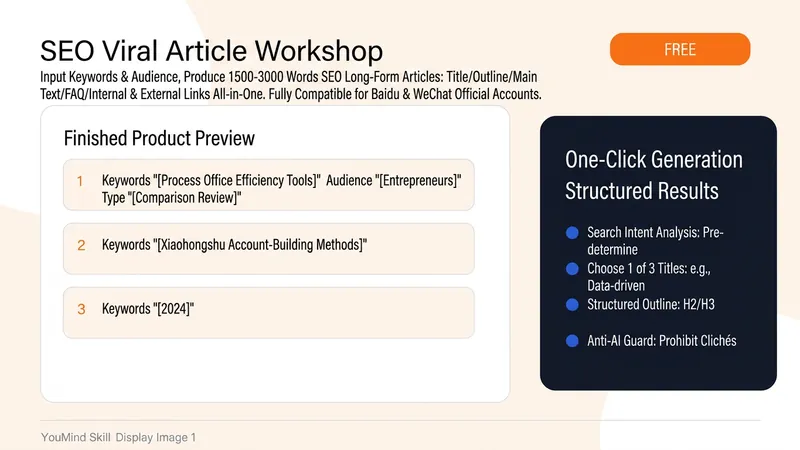
ورشة مقالات SEO الرائجة
قضيت بعد الظهر في البحث، وكتبت مقالة قيمة، لكن عدد القراءات كان ثلاثي الأرقام — ليس لأن المحتوى سيء، بل لأن أحدًا لم يجده عبر البحث. من اليوم،只需 تقديم كلمة مفتاحية وجملة تصف الجمهور، والباقي عليها — اختر عنوانًا من 3، مخطط تلقائي، نص يحتوي على كثافة الكلمات المفتاحية وأسئلة شائعة، وانشر مباشرة. ✨ القدرات الأساسية 1. تحليل نية البحث: أولاً يحدد ما يريده المستخدم عند البحث عن هذه الكلمة، ثم يعالج المشكلة وفقًا لذلك. 2. اختر عنوانًا من 3: نمط إحصائي/نمط ألم/نمط تجنب المخاطر، جميعها تحتوي على الكلمة المفتاحية، ≤30 حرفًا. 3. مخطط منظم: ترتيب تلقائي للعناوين H2/H3، 4-6 أقسام رئيسية + أسئلة شائعة + دعوة لاتخاذ إجراء. 4. حاجز ضد الطابع الاصطناعي: يمنع المقدمات العامة، التكرار الفارغ، النهايات النمطية، ويجبر على استخدام أرقام وأمثلة محددة. 5. متوافق مع بايدو وWeChat: محتوى كثيف المعلومات مقابل قابلية القراءة والانتشار، يغير الأسلوب حسب السياق. 6. إضافة بيانات وصفية: وصف ميتا، اقتراحات روابط داخلية وخارجية، جاهز للنشر. 📱 حالات الاستخدام - مدونو SEO/أصحاب المواقع: إنتاج مقالات طويلة تتصدر نتائج البحث بكميات. - مشغلو حسابات WeChat: كتابة مقالات عميقة ذات حركة بحث. - المطورون المستقلون/مؤسسو SaaS: كتابة دروس منتجات ومقارنات للحصول على زوار عبر SEO. - معلمو المحتوى المدفوع: كتابة مقالات جذب مع الاهتمام بترتيب البحث. المحتوى الجيد لا يستحق أن يُدفن — اجعله مرئيًا لمحركات البحث.
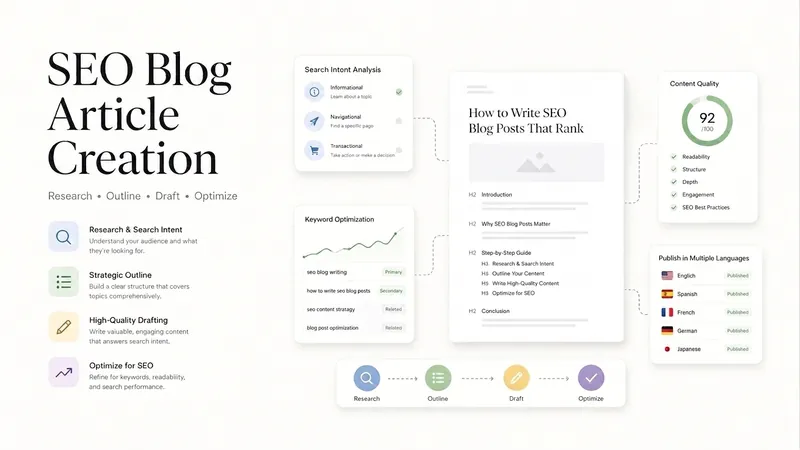 كتابة
كتابةأفضل كتابة مقالات SEO للمدونات
إنشاء مقالات مدونة عالية الجودة وموجهة لتحسين محركات البحث (SEO) للمنتجات. مناسبة للمستخدمين الذين يحتاجون إلى إنشاء مسودات مصدر باللغة الإنجليزية بناءً على كلمات مفتاحية أو مواضيع، مع التركيز على القيمة المضافة، والحاجة إلى البحث عن أحدث الحقائق عبر الإنترنت، والحاجة إلى إنشاء صور غلاف وصور نصية افتراضية.
أقوى كتابة مقالات SEO عامة
التعليمات
# Universal SEO Batch Writing Skill (English Version)
## Skill Overview
This Skill is designed to generate **high-quality, original, E-E-A-T-compliant SEO articles** for **any product or service**, using a competitor article library in the current Board.
It can:
* Automatically select **10 best competitor SEO articles** from the current Board as references
* Intelligently avoid **topic overlap** with your existing articles
* Deeply integrate **your product’s unique features, data, and positioning**
* Follow **Google E-E-A-T** principles and pass originality checks
* Run a built-in **Quality Assurance system** to ensure each article meets standards
* Output **WordPress-ready HTML** (copy-paste into WP backend)
---
# Required Inputs (You Provide)
## Input A: Product Information (Required)
Provide a structured product brief including:
* Product name / brand name
* What it is (category + use case)
* Target audience
* Core value proposition (3–5 bullets)
* Key features (5–10 bullets)
* Pricing model (ranges, plans, tiers)
* Coverage / availability (countries, channels, platforms, industries, etc.)
* Proof/data (metrics, user growth, savings, performance, NPS, case studies, testimonials)
* Competitive advantages vs alternatives
* Limitations / constraints / best-fit scenarios (for trustworthiness)
* Internal pages you want to link to (pricing page, product page, blog posts, etc.)
> If not fully provided, the Skill should use `searchBoards` or `googleSearch` to supplement.
## Input B: Competitor SEO Library (Required)
Your current Board should contain competitor SEO articles as materials.
---
# PHASE 1: Competitor Article Intelligence Selection
## STEP 1.1: Scan All Articles in the Board
Actions:
1. Use `listBoard` to retrieve all materials in the current Board
2. Use `read` to read key information from each article (first 500 lines)
3. Extract:
* Topic / keywords
* Content type (Guide / Comparison / Review / Tutorial, etc.)
* Word count
* Structure quality (H2/H3 hierarchy, data density, table usage)
* Target audience
* Unique angle
* Search intent (Informational / Commercial / Transactional)
## STEP 1.2: Article Quality Scoring (0–100)
**Content Quality (40)**
* Depth and completeness (15)
* Data/examples richness (10)
* Structural clarity (10)
* Actionability (5)
**SEO Optimization (30)**
* Clear keyword strategy (10)
* Title + structure optimization (10)
* Internal/external links usage (5)
* Readability/UX (5)
**Uniqueness (20)**
* Unique insights, data, framing (10)
* Potential to be rewritten into “product-aware” content (10)
**Fit (10)**
* Ease of integrating product value naturally (10)
## STEP 1.3: Select Top 10 Articles (Balanced Coverage)
Selection rules:
1. Take top 15 by score
2. Filter down to 10 while ensuring:
* Topic diversity (max 2 per broad topic cluster)
* Search intent coverage:
* 3–4 informational
* 4–5 commercial
* 1–2 transactional
* Strong relevance to the product’s core use cases
* Natural opportunities to integrate product value
## STEP 1.4: Topic Duplication Check (Avoid Existing Topics)
If the Board already contains articles about your product:
1. Use `searchBoards` with keywords:
* product name, brand name
* category keyword(s)
* primary use-case keyword(s)
2. Extract existing topics and keywords
3. Remove overlapping topics from Top 10
4. Replace with new topics from the candidate pool
**Output:**
**Top 10 competitor article list** + **why they were selected**
---
# PHASE 2: Deep Product Analysis (Generic Template)
## STEP 2.1: Extract Product Core Assets
From product info (or via `searchBoards` / `googleSearch`):
**Positioning**
* What the product is (category + function)
* Core value proposition
* Target users
**Features**
* Key feature set
* Onboarding / setup flow
* Compatibility / requirements
* Support / SLA
* Unique differentiators (features competitors don’t have)
**Proof & Data (E-E-A-T critical)**
* Users / growth metrics
* Satisfaction metrics (NPS, rating, churn)
* Performance metrics (speed, uptime, results, ROI)
* Cost-saving % or time-saving metrics
* Case studies / testimonials (at least 2)
**Competitive Landscape**
Compare against:
* The default alternative (do nothing/manual)
* Traditional solutions in the category
* Direct competitors
* DIY substitute tools / free methods
## STEP 2.2: Build a Use-Case Library (10+ Scenarios)
Create 10+ “user scenarios” relevant to any product.
Example universal scenario patterns:
1. Beginners onboarding (first-time user)
2. Budget-conscious user
3. Power users / advanced workflows
4. Teams and collaboration
5. Enterprise compliance / security needs
6. High-frequency usage / scalability
7. Multi-region / multi-platform usage
8. Time-sensitive / emergency need
9. Switching from an incumbent competitor
10. Seasonal or campaign-based usage
11. Integration with other tools
12. Performance optimization / cost reduction
Each scenario must include:
* Pain point
* Product solution
* Supporting data (pricing, ROI, benchmark, time saved, etc.)
---
# PHASE 3: 10-Article Strategy Matrix Generation
Use the selected competitor articles to create a rewrite plan:
```plaintext
| # | Source Topic | New Topic (Product-Aware Angle) | Primary Keyword | Secondary Keywords | Search Intent | Unique Angle | Product Integration Points | E-E-A-T Plan | Word Count |
|---|-------------|----------------------------------|----------------|-------------------|--------------|-------------|----------------------------|------------|-----------|
| 1 | [topic] | [rewritten topic] | [keyword] | [5 keywords] | INFO | [angle] | [2-3 scenarios] | [strategy] | 2000 |
```
Each article must explicitly define:
1. **Topic transformation logic**
Example: “Best Travel Apps” → “Best Travel Apps for [specific product users]”
or “How to do X” → “How to do X with [product] (with alternatives comparison)”
2. **Unique angle to prevent plagiarism**
* Add product-exclusive data + examples
* Reframe content from the user’s perspective
* Add missing scenarios/pain points
* Provide actionable steps/checklists
* Introduce a proprietary framework (e.g., “3-layer decision model”)
3. **Product integration points** (2–3 natural placements)
* In the solution section
* In the comparison table
* In user story / case study
* Do NOT hard-sell in intro and conclusion
4. **E-E-A-T plan**
* Experience: real cases, hands-on results
* Expertise: technical explanation, best practices
* Authority: cite credible sources
* Trust: transparent comparisons + limitations
---
# PHASE 4: Batch Writing (10 Articles)
## Anti-Plagiarism Rules
### 🚫 Forbidden
* Direct translation of sentences
* Keeping unique metaphors/phrases from competitor content
* Copying paragraph order and section flow
* Reusing competitor headline phrasing
* Copying competitor private data
### ✅ Mandatory
* Re-think from the product user perspective
* Rebuild structure and order from scratch
* Add product-exclusive proof/data (min 3)
* Add 3+ new scenarios/examples not in source
* Use different headline logic and phrasing
* Provide step-by-step guides/checklists
## Universal WordPress HTML Article Template
(保留你原模板,替换 RedEX 为 [PRODUCT_NAME],并把 eSIM-specific 语义改成 product-aware 语义)
* `esim-content` → `product-content`
* “eSIM users” → “[product] users” / “users in this category”
* 表格列:RedEX eSIM → `[PRODUCT_NAME]`
> 你原 HTML 模板可以直接沿用,仅做变量替换 + 文案语义泛化。
---
# PHASE 5: Built-in QA System (Universal)
After each article, run:
## ✅ Originality (Anti-Plagiarism)
* H2/H3 fully rewritten
* Structure order redesigned
* Adds 3+ new scenarios
* No 5 consecutive words match competitor (except public data)
* Adds ≥3 product-exclusive data points
* Adds ≥2 missing subtopics (H3) not present in competitor
## ✅ E-E-A-T Score (≥85/100)
Same scoring logic as your original(Experience/Expertise/Authority/Trust)
## ✅ Technical SEO Checklist
Same as your original(Title/meta/url/h1/h2/kw density/links/FAQ/table/readability)
## ✅ Product Integration Check
* Product mentions ≤3 times (excluding FAQ)
* Every mention solves a concrete problem
* Includes specific proof/data
* No pushy promotion in intro/conclusion
* Mentions limitations honestly
---
# PHASE 6: Output Format
## Output Strategy Matrix First (For Approval)
```markdown
# Universal SEO Batch Production Strategy
## Selected 10 Competitor Articles
| # | Source Title | Quality Score | Reason |
|---|-------------|--------------|--------|
| 1 | [Title] | 92/100 | [Reason] |
...
## 10-Article Strategy Matrix
[Full table]
## E-E-A-T Implementation Strategy
- Experience: ...
- Expertise: ...
- Authoritativeness: ...
- Trustworthiness: ...
## Originality Safeguards
1. ...
2. ...
---
**Proceed to writing?** (Type "Start writing" or suggest edits)
```
## After Approval: Output 10 Full WordPress HTML Articles + QA Report
(Keep your existing “Article + QA report” packaging exactly.)
الوصف
موصى بها من قبل
nene@YouMind
لماذا نحب هذه المهارة
تحلل هذه المهارة مقالات منافسيك لتوليد مقالات SEO عالية الجودة متوافقة مع E-E-A-T، مع دمج ميزات منتجك. تصفي تلقائيًا أفضل المحتوى، تتجنب التكرار، وتنتج HTML جاهز لووردبريس، مثالية للإنتاج الكمي.
هذه ربما تكون أفضل مهارة لكتابة مقالات SEO. من خلال هذه المهارة، يمكنك التأكد من أن المقالات التي تنتجها تتوافق مع إطار EEAT، ولا تحتوي على معلومات مختلقة، وتحتاج إلى تقديم معلومات المنتج ومقالات المنافسين. (التالي هو وصف تفصيلي كتبه الذكاء الاصطناعي) تساعدك مهارة الكتابة الجماعية لتحسين محركات البحث (SEO) العامة هذه على تحويل مكتبة مقالات المنافسين إلى 10 منشورات أصلية وعالية الجودة لتحسين محركات البحث لأي منتج أو خدمة: تقوم تلقائيًا بمسح وتقييم جميع المقالات في القسم الحالي، واختيار أفضل المراجع، وتجنب تكرار المواضيع المنشورة، وبناء مصفوفة استراتيجية واضحة لعشر مقالات (بما في ذلك الكلمات المفتاحية، النية، الزاوية الفريدة، والأماكن التي يُذكر فيها المنتج بشكل طبيعي)، ثم إنشاء مقالات HTML جاهزة للاستخدام في ووردبريس، تتبع هذه المقالات مبادئ E-E-A-T من جوجل وأفضل ممارسات SEO على الصفحة — كل مقالة تنتهي بتقرير تقييم جودة مدمج.
مهارات ذات صلة
عرض الكلكتابةكتابة مقالات WeChat الرائجة2.0
يُعنى بمساعدة الكتّاب على إنتاج مقالات حسابات WeChat بكفاءة. سواء أكان الأمر مشاركة محتوى قيّم، أو طرح آراء معمّقة، أو سرد قصص عاطفية، أو ترويج منتجات، توفّر لك هذه المهارة دعمًا كاملًا من وضع العنوان حتى كتابة المحتوى، لتصبح نصوصك أكثر جاذبية عند القراءة على الأجهزة المحمولة. أثناء عملية الكتابة، تقدم لك مجموعة من صيغ العناوين الرائجة بأنماط متعددة، مثل العناوين الرقمية، والتشويقية، والمتباينة، كما تقترح الإطار الهيكلي الأنسب لموضوع المقال. سواء كنت تكتب ملخصًا يعتمد على المنطق أو سردًا قصصيًا يعتمد على التأثير العاطفي، تضمن المهارة أن يكون المقال منظمًا ومترابطًا، ليصل إلى الجمهور المستهدف بدقة. علاوة على ذلك، تتضمن هذه المهارة نصائح احترافية لتحسين التنسيق وفحص الجودة. فمن خلال ضبط طول الفقرات، وتحسين إيقاع الجمل، وزيادة وضوح المعلومات الأساسية، ترتقي بالجودة العامة للمقال. كما تساعد في توزيع الكلمات المفتاحية لمحركات البحث وتوجيه أهداف التحويل، بحيث لا يكون المحتوى سهل القراءة فحسب، بل يحقق أيضًا نتائج الانتشار والتحويل المرجوة.
ورشة مقالات SEO الرائجة
قضيت بعد الظهر في البحث، وكتبت مقالة قيمة، لكن عدد القراءات كان ثلاثي الأرقام — ليس لأن المحتوى سيء، بل لأن أحدًا لم يجده عبر البحث. من اليوم،只需 تقديم كلمة مفتاحية وجملة تصف الجمهور، والباقي عليها — اختر عنوانًا من 3، مخطط تلقائي، نص يحتوي على كثافة الكلمات المفتاحية وأسئلة شائعة، وانشر مباشرة. ✨ القدرات الأساسية 1. تحليل نية البحث: أولاً يحدد ما يريده المستخدم عند البحث عن هذه الكلمة، ثم يعالج المشكلة وفقًا لذلك. 2. اختر عنوانًا من 3: نمط إحصائي/نمط ألم/نمط تجنب المخاطر، جميعها تحتوي على الكلمة المفتاحية، ≤30 حرفًا. 3. مخطط منظم: ترتيب تلقائي للعناوين H2/H3، 4-6 أقسام رئيسية + أسئلة شائعة + دعوة لاتخاذ إجراء. 4. حاجز ضد الطابع الاصطناعي: يمنع المقدمات العامة، التكرار الفارغ، النهايات النمطية، ويجبر على استخدام أرقام وأمثلة محددة. 5. متوافق مع بايدو وWeChat: محتوى كثيف المعلومات مقابل قابلية القراءة والانتشار، يغير الأسلوب حسب السياق. 6. إضافة بيانات وصفية: وصف ميتا، اقتراحات روابط داخلية وخارجية، جاهز للنشر. 📱 حالات الاستخدام - مدونو SEO/أصحاب المواقع: إنتاج مقالات طويلة تتصدر نتائج البحث بكميات. - مشغلو حسابات WeChat: كتابة مقالات عميقة ذات حركة بحث. - المطورون المستقلون/مؤسسو SaaS: كتابة دروس منتجات ومقارنات للحصول على زوار عبر SEO. - معلمو المحتوى المدفوع: كتابة مقالات جذب مع الاهتمام بترتيب البحث. المحتوى الجيد لا يستحق أن يُدفن — اجعله مرئيًا لمحركات البحث.
كتابةأفضل كتابة مقالات SEO للمدونات
إنشاء مقالات مدونة عالية الجودة وموجهة لتحسين محركات البحث (SEO) للمنتجات. مناسبة للمستخدمين الذين يحتاجون إلى إنشاء مسودات مصدر باللغة الإنجليزية بناءً على كلمات مفتاحية أو مواضيع، مع التركيز على القيمة المضافة، والحاجة إلى البحث عن أحدث الحقائق عبر الإنترنت، والحاجة إلى إنشاء صور غلاف وصور نصية افتراضية.
اعثر على مهارتك المفضلة التالية
استكشف مزيدًا من مهارات الذكاء الاصطناعي المنتقاة للبحث والإبداع والعمل اليومي.