Actualisation en un clic des signes de ponctuation chinois
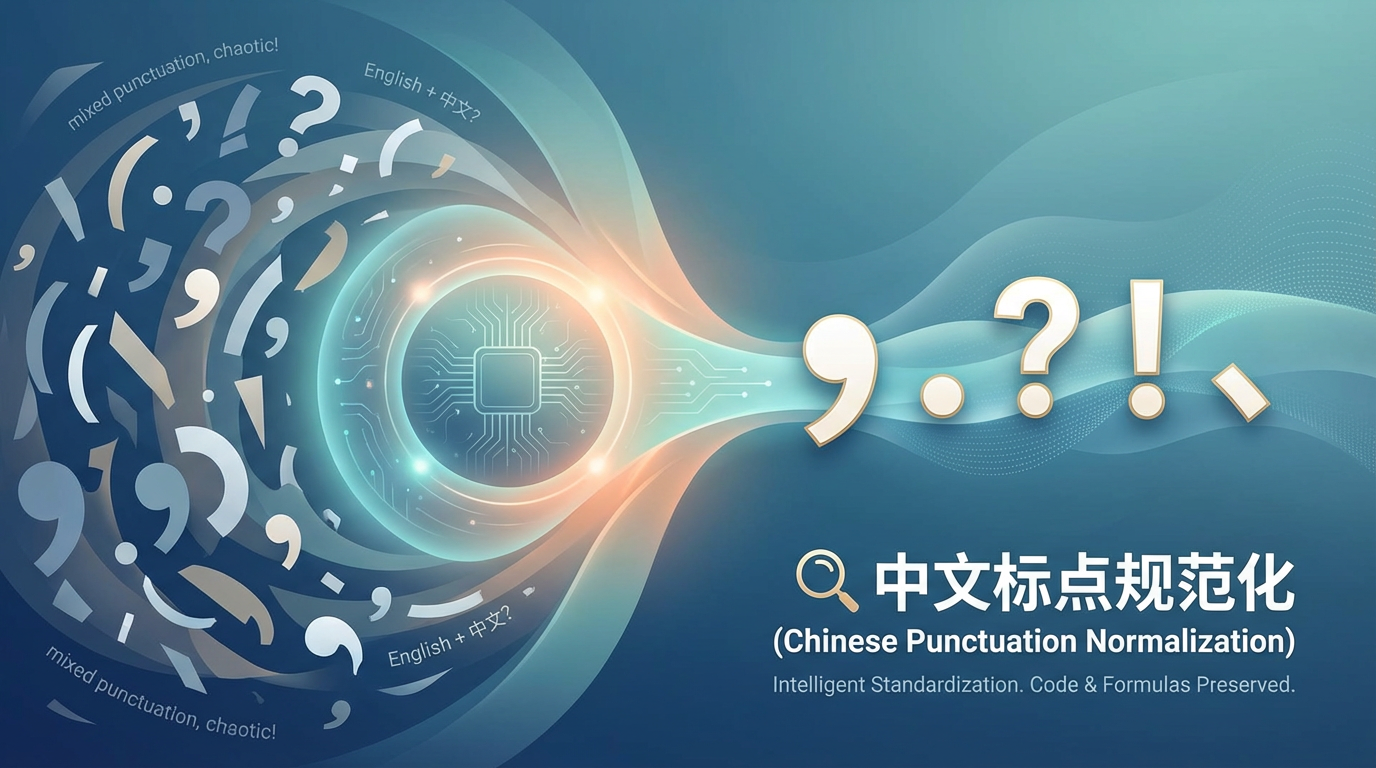
Les articles générés par l'IA utilisent la ponctuation anglaise, facilement identifiable dans les textes chinois. Il est donc nécessaire de maîtriser la mise en forme des textes chinois de manière plus réaliste, correcte et appropriée, et ce, en une seule étape. Ceci serait très utile aux communautés qui produisent des cours en masse et aux éditeurs qui doivent corriger par lots les problèmes de mise en forme des textes originaux.
Auteur
KiteoLab
Instructions
Veuillez uniformiser tous les signes de ponctuation du document suivant en utilisant la ponctuation chinoise, conformément aux règles suivantes :
【Règles de base】
1. En contexte chinois, la ponctuation doit uniformément utiliser des signes de ponctuation chinois pleine largeur :
- Remplacez la virgule anglaise par une virgule chinoise.
- Remplacez le point anglais par un point chinois.
- Remplacez le deux-points anglais par un deux-points chinois :
- Remplacez le point d'interrogation anglais « ? » par le point d'interrogation chinois « ? ».
- Remplacez le point d'exclamation anglais ! par un point d'exclamation chinois !
- Remplacez le point-virgule anglais par un point-virgule chinois ;
- Remplacez les guillemets anglais "" par des guillemets chinois "".
- Remplacez les parenthèses anglaises () par des parenthèses chinoises ().
- Remplacez le tiret anglais par un tiret chinois.
- Remplacez les points de suspension anglais par des points de suspension chinois...
2. Utilisez un signe de pause (、) au lieu d'une virgule (、) entre les mots parallèles.
[La situation reste inchangée]
1. Tous les signes de ponctuation à l'intérieur d'un bloc de code (encadré par des guillemets) doivent être modifiés si plus de 80 % du contenu d'une phrase est identifié comme étant en chinois. Sinon, ils restent inchangés.
2. Les signes de ponctuation à l'intérieur du code en ligne (contenu entouré d'accents graves) restent inchangés.
3. La ponctuation dans les formules et les fonctions doit être en anglais.
4. Utilisez la ponctuation anglaise dans les liens URL.
5. La ponctuation des phrases anglaises doit respecter les normes de l'anglais.
6. La ponctuation des noms propres et des marques commerciales doit rester inchangée.
7. Utilisez la ponctuation anglaise pour la virgule décimale et le chiffre des milliers.
8. Les balises de formatage Markdown (telles que | et --- pour les tableaux) restent inchangées.
[Traitement spécial]
1. Utilisez le deux-points chinois après les titres et les sous-titres :
2. Symboles suivant les numéros des éléments de la liste :
- Si la numérotation est purement numérique (1. 2.), conservez le point.
- S'il s'agit d'un numéro de série chinois (par exemple, premier, deuxième), il doit être suivi d'une virgule ou d'un deux-points chinois.
3. Utilisez la ponctuation chinoise pour les caractères chinois dans les espaces réservés aux images et aux captures d'écran.
[Points clés d'inspection]
- Assurez-vous que la mise en forme fixe telle que « Description de la fonction : », « Format de syntaxe : » et « Explication des paramètres : » utilise des deux-points chinois.
- Assurez-vous que « Cas pratique : xxx » utilise bien le deux-points chinois.
- Veillez à ce que le texte descriptif situé en dehors du tableau utilise la ponctuation chinoise.
- Les commentaires et explications situés en dehors des exemples de code utilisent la ponctuation chinoise.
Veuillez respecter scrupuleusement les règles ci-dessus lors de toute modification. Ne modifiez ni la structure, ni le format, ni le contenu du document ; ajustez uniquement la ponctuation.
Actualisation en un clic des signes de ponctuation chinois
Les articles générés par l'IA utilisent la ponctuation anglaise, facilement identifiable dans les textes chinois. Il est donc nécessaire de maîtriser la mise en forme des textes chinois de manière plus réaliste, correcte et appropriée, et ce, en une seule étape. Ceci serait très utile aux communautés qui produisent des cours en masse et aux éditeurs qui doivent corriger par lots les problèmes de mise en forme des textes originaux.
Auteur
KiteoLab
Instructions
Veuillez uniformiser tous les signes de ponctuation du document suivant en utilisant la ponctuation chinoise, conformément aux règles suivantes :
【Règles de base】
1. En contexte chinois, la ponctuation doit uniformément utiliser des signes de ponctuation chinois pleine largeur :
- Remplacez la virgule anglaise par une virgule chinoise.
- Remplacez le point anglais par un point chinois.
- Remplacez le deux-points anglais par un deux-points chinois :
- Remplacez le point d'interrogation anglais « ? » par le point d'interrogation chinois « ? ».
- Remplacez le point d'exclamation anglais ! par un point d'exclamation chinois !
- Remplacez le point-virgule anglais par un point-virgule chinois ;
- Remplacez les guillemets anglais "" par des guillemets chinois "".
- Remplacez les parenthèses anglaises () par des parenthèses chinoises ().
- Remplacez le tiret anglais par un tiret chinois.
- Remplacez les points de suspension anglais par des points de suspension chinois...
2. Utilisez un signe de pause (、) au lieu d'une virgule (、) entre les mots parallèles.
[La situation reste inchangée]
1. Tous les signes de ponctuation à l'intérieur d'un bloc de code (encadré par des guillemets) doivent être modifiés si plus de 80 % du contenu d'une phrase est identifié comme étant en chinois. Sinon, ils restent inchangés.
2. Les signes de ponctuation à l'intérieur du code en ligne (contenu entouré d'accents graves) restent inchangés.
3. La ponctuation dans les formules et les fonctions doit être en anglais.
4. Utilisez la ponctuation anglaise dans les liens URL.
5. La ponctuation des phrases anglaises doit respecter les normes de l'anglais.
6. La ponctuation des noms propres et des marques commerciales doit rester inchangée.
7. Utilisez la ponctuation anglaise pour la virgule décimale et le chiffre des milliers.
8. Les balises de formatage Markdown (telles que | et --- pour les tableaux) restent inchangées.
[Traitement spécial]
1. Utilisez le deux-points chinois après les titres et les sous-titres :
2. Symboles suivant les numéros des éléments de la liste :
- Si la numérotation est purement numérique (1. 2.), conservez le point.
- S'il s'agit d'un numéro de série chinois (par exemple, premier, deuxième), il doit être suivi d'une virgule ou d'un deux-points chinois.
3. Utilisez la ponctuation chinoise pour les caractères chinois dans les espaces réservés aux images et aux captures d'écran.
[Points clés d'inspection]
- Assurez-vous que la mise en forme fixe telle que « Description de la fonction : », « Format de syntaxe : » et « Explication des paramètres : » utilise des deux-points chinois.
- Assurez-vous que « Cas pratique : xxx » utilise bien le deux-points chinois.
- Veillez à ce que le texte descriptif situé en dehors du tableau utilise la ponctuation chinoise.
- Les commentaires et explications situés en dehors des exemples de code utilisent la ponctuation chinoise.
Veuillez respecter scrupuleusement les règles ci-dessus lors de toute modification. Ne modifiez ni la structure, ni le format, ni le contenu du document ; ajustez uniquement la ponctuation.
Find your next favorite skill
Explore more curated AI skills for research, creation, and everyday work.