
Carte mentale multi-source 2.0
Carte mentale en un clic depuis vos sources
Description
Recommandé par
nene@YouMind
Pourquoi nous recommandons cette compétence
Transforme documents et pages web en cartes mentales structurées en un clic, propose des arborescences pédagogiques professionnelles et plusieurs formats de code source. Un outil efficace pour organiser ses révisions et construire des systèmes de connaissances.
Transformez en un clic des documents complexes, des pages web ou de longs textes en une carte mentale visuelle et clairement structurée. Qu'il s'agisse de mémoires académiques, de supports de cours ou de documentations techniques, cet outil extrait intelligemment les thèmes centraux et les points clés à plusieurs niveaux pour vous aider à clarifier rapidement la logique et l'enchaînement des idées. Grâce à une analyse approfondie du contenu des sources, il identifie automatiquement la structure des chapitres et les détails essentiels, générant ainsi un système de connaissances bien hiérarchisé. Cet outil prend en charge la génération de cartes de styles variés, notamment des arbres pédagogiques professionnels (format PlantUML) et des diagrammes radiaux intuitifs (format Mermaid). Vous obtenez directement une image SVG consultable dans votre navigateur, ainsi que le fichier source correspondant. Vous pouvez ainsi prévisualiser rapidement le résultat, mais aussi importer le code source dans XMind, FreeMind ou un éditeur Markdown pour le retravailler et l'approfondir. Il vous suffit de téléverser un PDF, un document Word, un fichier texte ou de fournir un lien web pour passer en un clic d'une masse d'informations à une carte de connaissances visuelle. Cet outil est idéal pour organiser des notes d'étude, la lecture structurée de mémoires ou des présentations de brainstorming, rendant l'organisation et le partage des connaissances plus efficaces et plus professionnels.
Compétences associées
Tout voir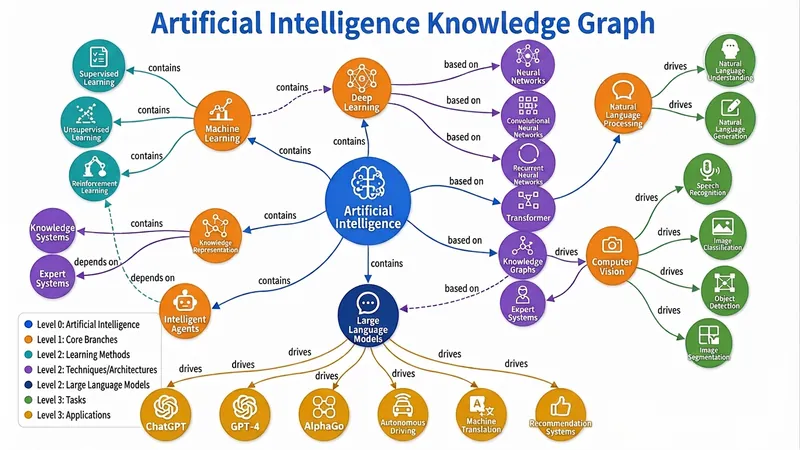
Moteur de graphe de connaissances
Construisez automatiquement cinq types de graphes (graphe de connaissances, mind map, graphe conceptuel, diagramme de flux/architecture, graphe relationnel) à partir de texte, fichiers ou sujets. Obtenez le meilleur des trois formats : page web interactive, image statique et code de visualisation. Alliant les bonnes pratiques de l'ingénierie des graphes de connaissances et de la visualisation d'information, il offre un contrôle dynamique de la granularité, la désambiguïsation et la déduplication, ainsi que la validation croisée multi-sources. Transformez votre texte, fichier ou même une simple idée en un graphe de connaissances interactif, déplaçable, zoomable et rechercheable, puis exportez-le en une seule image haute définition et en code prêt à l'emploi — c'est le moteur « trois-en-un » de visualisation des connaissances que vous n'avez jamais expérimenté. 🧠 Qu'est-ce que le « Moteur de graphe de connaissances » ? Ce n'est pas un simple outil de dessin, mais un ingénieur de la connaissance + expert en visualisation caché dans votre navigateur. Donnez-lui un manuel, un article, un PDF, ou même un mot-clé, et il fera automatiquement : 🔍 Extraire les entités clés, clarifier les relations profondes 🧱 Construire un graphe JSON structuré (graphe de connaissances / mind map / graphe conceptuel / diagramme de flux / graphe relationnel) 🎨 Produire trois formes de pointe : page web interactive + image statique HD + code Markdown/Mermaid/Graphviz Fini le dessin manuel des boîtes, fini les images mortes pour présenter les connaissances. ⚡ Pourquoi est-il « de pointe » ? 1. Pipeline entièrement automatisé « du texte au graphe » Inutile d'apprendre un langage de modélisation ou de définir manuellement des nœuds et des liens. Il suffit d'entrer le contenu, le moteur détermine automatiquement le type de graphe : Système de connaissances disciplinaires ? → Graphe de connaissances sémantique riche Notes de lecture à décomposer ? → Mind map hiérarchique claire Processus et décisions ? → Diagramme de flux/architecture avec branches Réseau de relations entre personnes ? → Graphe relationnel multidimensionnel Même en donnant un seul sujet, il collecte des informations de manière autonome, complète le contenu puis génère le graphe. 2. Sortie trois-en-un pour tous les cas d'utilisation 🖱️ Page web interactive D3.js : nœuds déplaçables, zoom molette, clic pour afficher les détails, mise en évidence des chemins associés, recherche par mot-clé… comme manipuler une carte vivante. Fichier HTML autonome, sans backend, directement intégrable dans n'importe quelle page ou envoyable à quiconque. 🖼️ Graphe statique HD : disposition en force, couleurs par entité, directement utilisable pour illustrations de thèse, présentations PPT, matériel pédagogique — chaque étiquette est nette et lisible. 📜 Code de visualisation : génère simultanément du code source Mermaid et Graphviz, les développeurs peuvent l'intégrer directement dans leur documentation, wiki, Notion, et le modifier à l'infini. 3. Expérience utilisateur optimale 🎨 Couleurs automatiquement attribuées par type d'entité, hiérarchie exprimée par la taille des nœuds 🔗 Étiquettes de relations directement affichées sur les courbes, pour comprendre immédiatement « contient », « entraîne », « soutient » 💡 Cliquez sur un nœud : les parties non liées s'estompent automatiquement, pour se concentrer sur le chemin de pensée 🔄 Réinitialiser la disposition, rechercher et localiser, zoomer/déplacer… toutes les actions sont fluides 4. Intelligence technique alliant « largeur » et « profondeur » De la désambiguïsation et déduplication des entités à la validation croisée multi-sources ; du contrôle de la granularité hiérarchique aux liens en pointillés pour les relations inter-domaines – derrière tout cela se trouvent les meilleures pratiques de l'ingénierie des graphes de connaissances. Ce n'est pas un jouet, c'est un outil de productivité. 👥 Qui en a le plus besoin ? Enseignants et créateurs de contenu éducatif Transformez un chapitre entier de manuel en une carte de connaissances interactive : les élèves comprennent d'un coup les liens entre concepts. Chercheurs et étudiants Fini la revue de littérature uniquement textuelle : une image clarifie le réseau théorique de dizaines d'articles. Chefs de produit et architectes d'entreprise Architecture système, processus métier, décomposition fonctionnelle : générez instantanément des diagrammes d'architecture, doublez l'efficacité de la communication. Lecteurs et apprenants tout au long de la vie Les notes ne sont plus de simples plans, mais un réseau de pensée explorable, où les connaissances sont vraiment « liées ». 🚀 Maintenant, faites « vivre » vos connaissances Donnez du contenu, il donne des perspectives. Donnez un sujet, il donne un système. Donnez un besoin, il donne une livraison complète : page web, image, code. Ce n'est pas une fonctionnalité, c'est un flux de travail qui élève l'information en cognition. Laissez le « Moteur de graphe de connaissances » devenir le prolongement de votre pensée, visualisez votre expertise, et déclenchez le « aha moment » chez chaque destinataire. — Dès aujourd'hui, ne « dessinez » plus de graphes, mais « générez »-les.
 Image
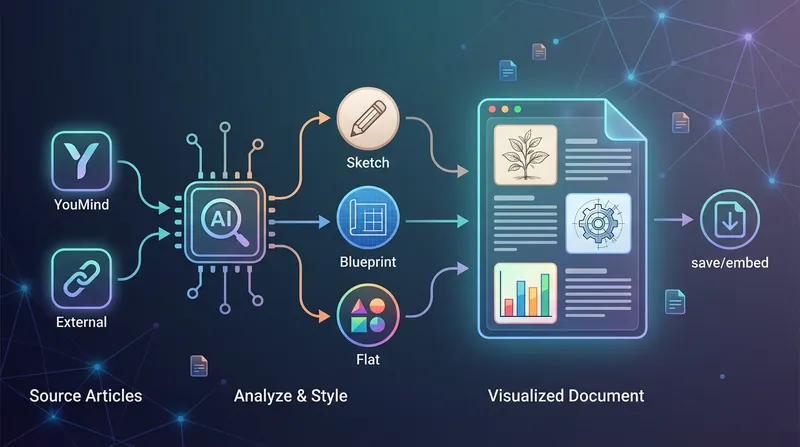
ImageIllustrateur d'articles 2.0
Cet outil intelligent d'enrichissement visuel, conçu pour les créateurs de contenu, analyse en profondeur le fil de votre texte et crée automatiquement des illustrations de haute qualité pour les paragraphes clés de vos articles. Que votre contenu soit stocké dans une base de connaissances personnelle ou que vous ayez besoin de traiter de longs articles importés de l'extérieur, il identifie précisément les concepts essentiels et transforme les mots abstraits en langage visuel concret, améliorant considérablement l'expérience de lecture et la diffusion de votre contenu. L'outil propose trois styles visuels distincts pour s'adapter à différents scénarios de création : un style dessiné à la main, épuré et vivant, adapté aux essais et à la vulgarisation scientifique ; un style plan d'architecture, rigoureux et professionnel, idéal pour les documents techniques et les rapports de recherche ; et un style d'illustration plat, très moderne, qui correspond parfaitement aux besoins esthétiques des comptes de médias personnels et des notes de connaissances. Pour les contenus longs, il suggère aussi intelligemment des plans d'illustration afin de garantir une répartition visuelle équilibrée et de mettre en évidence les points essentiels. Pendant la génération, vous pouvez choisir librement le mode de sortie des images. Vous pouvez demander que les illustrations générées soient directement intégrées, en toute transparence, dans les paragraphes du document d'origine, pour une mise en page automatisée ; ou vous pouvez choisir de recevoir un pack d'images distinct pour une distribution manuelle. Cette collaboration de bout en bout, de l'analyse du contenu à la génération visuelle, rend votre expression écrite plus percutante et rend les idées complexes limpides.
 Recherche
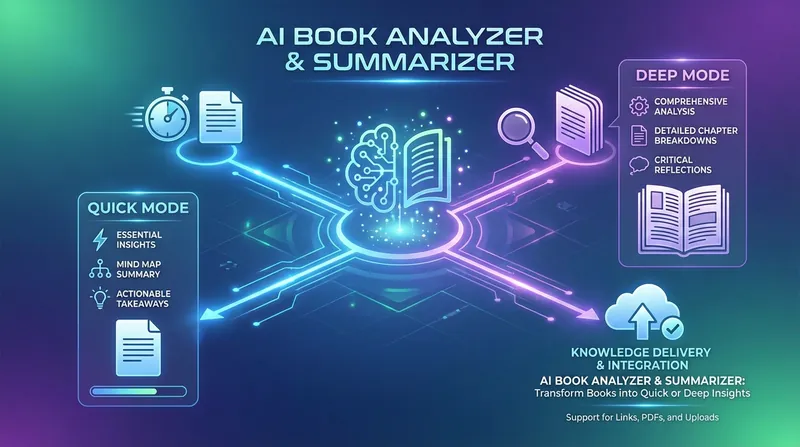
Exploiter un livre à fond 2.0
Expert en lecture approfondie qui vous aide à assimiler efficacement les connaissances, cette compétence transforme les longs livres ou documents en rapports structurés sur l'essentiel. Que vous cherchiez à maîtriser rapidement l'idée principale d'un livre ou à adopter une approche d'apprentissage systématique, elle analyse finement le contenu original pour en extraire les arguments clés, les cadres méthodologiques et des pistes d'action concrètes et inspirantes. Cette compétence propose deux modes de lecture personnalisés : le mode rapide génère un résumé concis avec une structure de carte mentale, idéal pour revoir les points clés en peu de temps ; le mode approfondi fournit des notes de lecture détaillées, comprenant une analyse approfondie des chapitres, une analyse des idées centrales et des citations marquantes, pour vous aider à bâtir une base de connaissances personnelle complète. Elle peut non seulement traiter les fichiers PDF ou Word que vous importez, mais aussi analyser directement le contenu de pages web, afin de ne manquer aucun détail important pendant la lecture. En plus de produire des notes de haute qualité, elle extrait des recommandations d'action immédiatement exécutables, transformant les théories des livres en guides pratiques pour la vie ou le travail. Que vous fassiez de la recherche académique, que vous exploriez le monde des affaires ou que vous poursuiviez votre développement personnel, elle sera votre partenaire le plus fiable pour internaliser les connaissances, en veillant à ce que chaque livre soit pleinement exploité.
Carte mentale multi-source 2.0
Carte mentale en un clic depuis vos sources
Description
Recommandé par
nene@YouMind
Pourquoi nous recommandons cette compétence
Transforme documents et pages web en cartes mentales structurées en un clic, propose des arborescences pédagogiques professionnelles et plusieurs formats de code source. Un outil efficace pour organiser ses révisions et construire des systèmes de connaissances.
Transformez en un clic des documents complexes, des pages web ou de longs textes en une carte mentale visuelle et clairement structurée. Qu'il s'agisse de mémoires académiques, de supports de cours ou de documentations techniques, cet outil extrait intelligemment les thèmes centraux et les points clés à plusieurs niveaux pour vous aider à clarifier rapidement la logique et l'enchaînement des idées. Grâce à une analyse approfondie du contenu des sources, il identifie automatiquement la structure des chapitres et les détails essentiels, générant ainsi un système de connaissances bien hiérarchisé. Cet outil prend en charge la génération de cartes de styles variés, notamment des arbres pédagogiques professionnels (format PlantUML) et des diagrammes radiaux intuitifs (format Mermaid). Vous obtenez directement une image SVG consultable dans votre navigateur, ainsi que le fichier source correspondant. Vous pouvez ainsi prévisualiser rapidement le résultat, mais aussi importer le code source dans XMind, FreeMind ou un éditeur Markdown pour le retravailler et l'approfondir. Il vous suffit de téléverser un PDF, un document Word, un fichier texte ou de fournir un lien web pour passer en un clic d'une masse d'informations à une carte de connaissances visuelle. Cet outil est idéal pour organiser des notes d'étude, la lecture structurée de mémoires ou des présentations de brainstorming, rendant l'organisation et le partage des connaissances plus efficaces et plus professionnels.
Compétences associées
Tout voirMoteur de graphe de connaissances
Construisez automatiquement cinq types de graphes (graphe de connaissances, mind map, graphe conceptuel, diagramme de flux/architecture, graphe relationnel) à partir de texte, fichiers ou sujets. Obtenez le meilleur des trois formats : page web interactive, image statique et code de visualisation. Alliant les bonnes pratiques de l'ingénierie des graphes de connaissances et de la visualisation d'information, il offre un contrôle dynamique de la granularité, la désambiguïsation et la déduplication, ainsi que la validation croisée multi-sources. Transformez votre texte, fichier ou même une simple idée en un graphe de connaissances interactif, déplaçable, zoomable et rechercheable, puis exportez-le en une seule image haute définition et en code prêt à l'emploi — c'est le moteur « trois-en-un » de visualisation des connaissances que vous n'avez jamais expérimenté. 🧠 Qu'est-ce que le « Moteur de graphe de connaissances » ? Ce n'est pas un simple outil de dessin, mais un ingénieur de la connaissance + expert en visualisation caché dans votre navigateur. Donnez-lui un manuel, un article, un PDF, ou même un mot-clé, et il fera automatiquement : 🔍 Extraire les entités clés, clarifier les relations profondes 🧱 Construire un graphe JSON structuré (graphe de connaissances / mind map / graphe conceptuel / diagramme de flux / graphe relationnel) 🎨 Produire trois formes de pointe : page web interactive + image statique HD + code Markdown/Mermaid/Graphviz Fini le dessin manuel des boîtes, fini les images mortes pour présenter les connaissances. ⚡ Pourquoi est-il « de pointe » ? 1. Pipeline entièrement automatisé « du texte au graphe » Inutile d'apprendre un langage de modélisation ou de définir manuellement des nœuds et des liens. Il suffit d'entrer le contenu, le moteur détermine automatiquement le type de graphe : Système de connaissances disciplinaires ? → Graphe de connaissances sémantique riche Notes de lecture à décomposer ? → Mind map hiérarchique claire Processus et décisions ? → Diagramme de flux/architecture avec branches Réseau de relations entre personnes ? → Graphe relationnel multidimensionnel Même en donnant un seul sujet, il collecte des informations de manière autonome, complète le contenu puis génère le graphe. 2. Sortie trois-en-un pour tous les cas d'utilisation 🖱️ Page web interactive D3.js : nœuds déplaçables, zoom molette, clic pour afficher les détails, mise en évidence des chemins associés, recherche par mot-clé… comme manipuler une carte vivante. Fichier HTML autonome, sans backend, directement intégrable dans n'importe quelle page ou envoyable à quiconque. 🖼️ Graphe statique HD : disposition en force, couleurs par entité, directement utilisable pour illustrations de thèse, présentations PPT, matériel pédagogique — chaque étiquette est nette et lisible. 📜 Code de visualisation : génère simultanément du code source Mermaid et Graphviz, les développeurs peuvent l'intégrer directement dans leur documentation, wiki, Notion, et le modifier à l'infini. 3. Expérience utilisateur optimale 🎨 Couleurs automatiquement attribuées par type d'entité, hiérarchie exprimée par la taille des nœuds 🔗 Étiquettes de relations directement affichées sur les courbes, pour comprendre immédiatement « contient », « entraîne », « soutient » 💡 Cliquez sur un nœud : les parties non liées s'estompent automatiquement, pour se concentrer sur le chemin de pensée 🔄 Réinitialiser la disposition, rechercher et localiser, zoomer/déplacer… toutes les actions sont fluides 4. Intelligence technique alliant « largeur » et « profondeur » De la désambiguïsation et déduplication des entités à la validation croisée multi-sources ; du contrôle de la granularité hiérarchique aux liens en pointillés pour les relations inter-domaines – derrière tout cela se trouvent les meilleures pratiques de l'ingénierie des graphes de connaissances. Ce n'est pas un jouet, c'est un outil de productivité. 👥 Qui en a le plus besoin ? Enseignants et créateurs de contenu éducatif Transformez un chapitre entier de manuel en une carte de connaissances interactive : les élèves comprennent d'un coup les liens entre concepts. Chercheurs et étudiants Fini la revue de littérature uniquement textuelle : une image clarifie le réseau théorique de dizaines d'articles. Chefs de produit et architectes d'entreprise Architecture système, processus métier, décomposition fonctionnelle : générez instantanément des diagrammes d'architecture, doublez l'efficacité de la communication. Lecteurs et apprenants tout au long de la vie Les notes ne sont plus de simples plans, mais un réseau de pensée explorable, où les connaissances sont vraiment « liées ». 🚀 Maintenant, faites « vivre » vos connaissances Donnez du contenu, il donne des perspectives. Donnez un sujet, il donne un système. Donnez un besoin, il donne une livraison complète : page web, image, code. Ce n'est pas une fonctionnalité, c'est un flux de travail qui élève l'information en cognition. Laissez le « Moteur de graphe de connaissances » devenir le prolongement de votre pensée, visualisez votre expertise, et déclenchez le « aha moment » chez chaque destinataire. — Dès aujourd'hui, ne « dessinez » plus de graphes, mais « générez »-les.
ImageIllustrateur d'articles 2.0
Cet outil intelligent d'enrichissement visuel, conçu pour les créateurs de contenu, analyse en profondeur le fil de votre texte et crée automatiquement des illustrations de haute qualité pour les paragraphes clés de vos articles. Que votre contenu soit stocké dans une base de connaissances personnelle ou que vous ayez besoin de traiter de longs articles importés de l'extérieur, il identifie précisément les concepts essentiels et transforme les mots abstraits en langage visuel concret, améliorant considérablement l'expérience de lecture et la diffusion de votre contenu. L'outil propose trois styles visuels distincts pour s'adapter à différents scénarios de création : un style dessiné à la main, épuré et vivant, adapté aux essais et à la vulgarisation scientifique ; un style plan d'architecture, rigoureux et professionnel, idéal pour les documents techniques et les rapports de recherche ; et un style d'illustration plat, très moderne, qui correspond parfaitement aux besoins esthétiques des comptes de médias personnels et des notes de connaissances. Pour les contenus longs, il suggère aussi intelligemment des plans d'illustration afin de garantir une répartition visuelle équilibrée et de mettre en évidence les points essentiels. Pendant la génération, vous pouvez choisir librement le mode de sortie des images. Vous pouvez demander que les illustrations générées soient directement intégrées, en toute transparence, dans les paragraphes du document d'origine, pour une mise en page automatisée ; ou vous pouvez choisir de recevoir un pack d'images distinct pour une distribution manuelle. Cette collaboration de bout en bout, de l'analyse du contenu à la génération visuelle, rend votre expression écrite plus percutante et rend les idées complexes limpides.
RechercheExploiter un livre à fond 2.0
Expert en lecture approfondie qui vous aide à assimiler efficacement les connaissances, cette compétence transforme les longs livres ou documents en rapports structurés sur l'essentiel. Que vous cherchiez à maîtriser rapidement l'idée principale d'un livre ou à adopter une approche d'apprentissage systématique, elle analyse finement le contenu original pour en extraire les arguments clés, les cadres méthodologiques et des pistes d'action concrètes et inspirantes. Cette compétence propose deux modes de lecture personnalisés : le mode rapide génère un résumé concis avec une structure de carte mentale, idéal pour revoir les points clés en peu de temps ; le mode approfondi fournit des notes de lecture détaillées, comprenant une analyse approfondie des chapitres, une analyse des idées centrales et des citations marquantes, pour vous aider à bâtir une base de connaissances personnelle complète. Elle peut non seulement traiter les fichiers PDF ou Word que vous importez, mais aussi analyser directement le contenu de pages web, afin de ne manquer aucun détail important pendant la lecture. En plus de produire des notes de haute qualité, elle extrait des recommandations d'action immédiatement exécutables, transformant les théories des livres en guides pratiques pour la vie ou le travail. Que vous fassiez de la recherche académique, que vous exploriez le monde des affaires ou que vous poursuiviez votre développement personnel, elle sera votre partenaire le plus fiable pour internaliser les connaissances, en veillant à ce que chaque livre soit pleinement exploité.
Trouve ta prochaine compétence préférée
Explore d'autres compétences IA sélectionnées pour la recherche, la création et le travail quotidien.