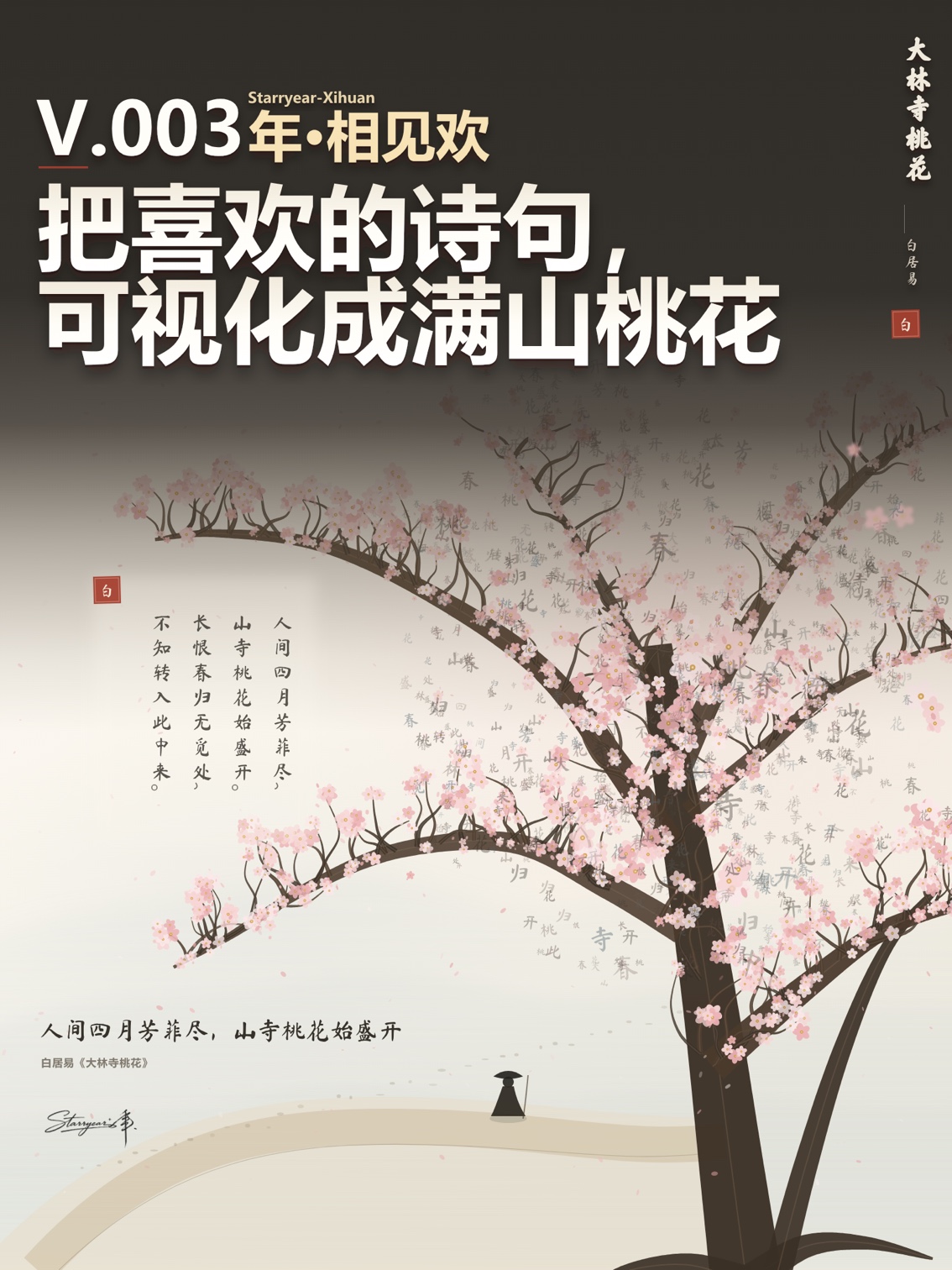
Starryear-Xihuan
Blue and pink watercolor poetry art for Chinese verse
Starryear-Xihuan
Blue and pink watercolor poetry art for Chinese verse
Showcase
Description
Transform Chinese poetry into a recognizable, readable 3:4 vertical poetic word-art painting. You can provide the original poem, title, author, or core imagery, or ask the agent to help select a work. Focusing on the actions and scenes within the verses, it arranges real Chinese characters into poetic visual forms such as swirling, cascading, converging, spreading, traveling, or blooming, rather than simply overlaying text onto an illustration. The artwork uses light blue and light pink watercolors against a warm, paper-white background, combined with delicate washes, ink character groups, generous negative space, vertical inscriptions, a small red seal, and tiny figures to create a refined and subtle classical Chinese aesthetic. The poem title, author, and selected verses are integrated into the left or center-left composition while remaining clearly legible, allowing the piece to read as scenery from afar and poetry up close. Great for creating classical poetry posters, personal poetry art collections, literature-themed visuals, and matching watercolor word-art series. By default, it outputs a single high-definition poetry painting without mockup covers, serial numbers, brand footers, watermarks, or extra notes. If a title or tune name is ambiguous, it will clarify the specific work beforehand to prevent misattributions or unreadable pseudo-text.
Recommended by
Dancang
Why we love this skill
Transforms verified Chinese poetry into recognizable blue and pink watercolor word art where Chinese characters form the main visual subjects. It uniquely blends literary accuracy with visual generation through strict 3:4 compositions, paper-white negative space, and translucent watercolors.
Best for
Ideal for creators, literature enthusiasts, and collectors who want to turn classical Chinese poetry into poetic visual art.
How to use this Skill
Provide your input
Provide the original text, title, author, or core imagery of a Chinese poem; or ask for help selecting one. Clarify any ambiguous titles to confirm the correct work.
Run the Skill
Transforms poetic actions and imagery into visual forms made of real Chinese characters, combining blue and pink watercolor, white space, vertical inscriptions, and subtle poetic elements.
Review your result
Generates a 3:4 vertical poetic word-art painting: legible text that forms scenery from a distance, conveying a clear and subtle classical Chinese artistic temperament.
Related Skills
View all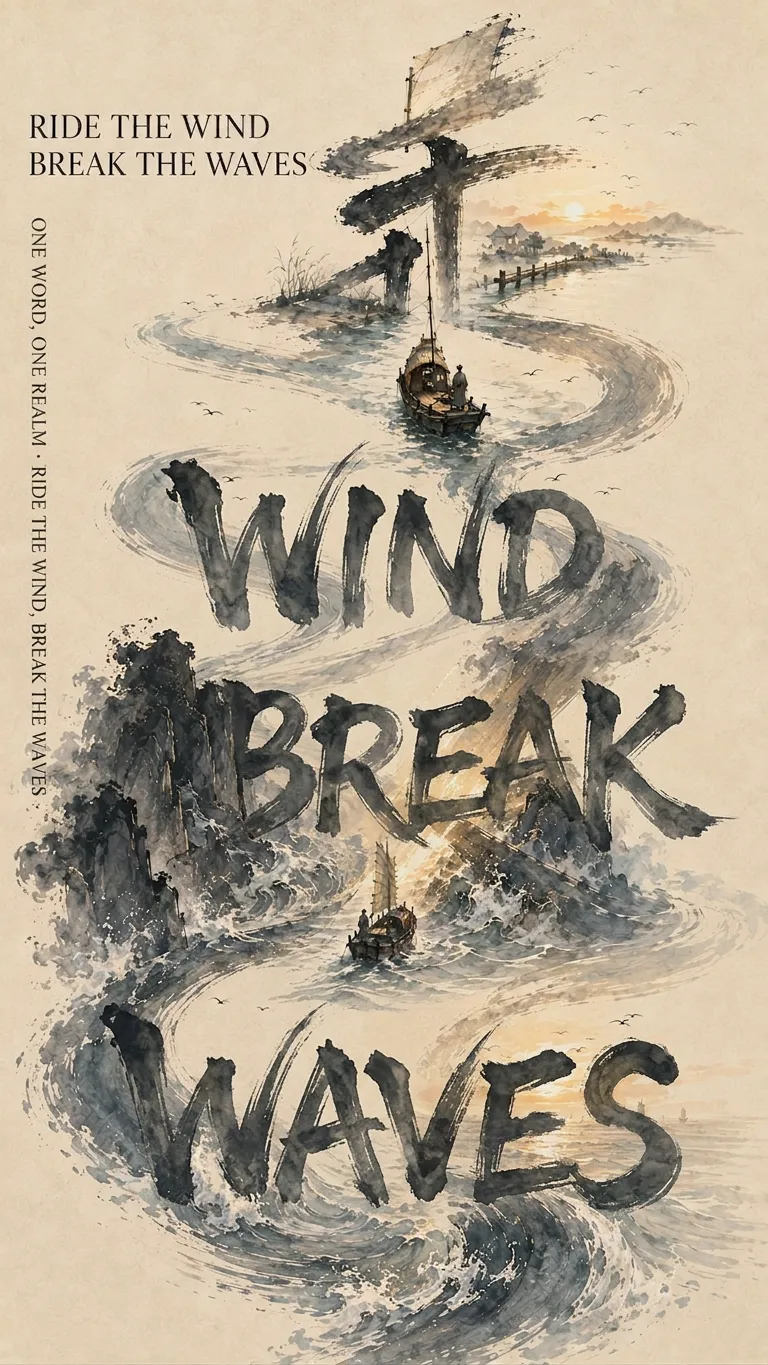 Image
One Character, One World
This Skill does not simply apply an ink-wash filter to Chinese characters. It first understands the core meaning of the text in its full context, then determines how the imagery, calligraphy, and layout should work together. Give it a Chinese character, name, place name, idiom, line of poetry, or public-domain classical Chinese poem or prose passage. It first interprets the meaning, then transforms the character’s strokes into mountains, rivers, bridges, figures, architecture, or narrative paths, making the calligraphy itself the framework of the composition. Different meanings automatically call for different brush movements, colors, and compositions, rather than being forced into a fixed template. It supports single-character posters, multi-character series, combined-character compositions, and storyboard sequences based on classical poetry and prose. Names, place names, and idioms can be turned into sequential series with one character per poster, or idioms, poetic lines, and parallel phrases can be combined into a single poster. Classical poetry and prose can be divided into 6–12 consecutive posters according to the original order and emotional arc, with nine posters by default for WeChat Moments, while naturally incorporating the corresponding original text into the imagery. The Skill actively avoids common failures: illegible characters, calligraphy that looks like a computer font, misinterpretations caused by checking characters one by one, forcing the entire image into a character-shaped mask, changing only the text while leaving the narrative unchanged across a series, placing the main text in an awkward standalone white box, and presenting garbled small text as a finished design. It is suited to Chinese posters, urban cultural visuals, name-based gifts, idiom and poetry projects, nine-image WeChat Moments posts, Xiaohongshu graphics, and collectible Eastern editorial design. The final result is influenced by YouMind’s current image model. When long text must be accurate character by character, the Skill prioritizes editable text layers for typesetting; when that is not possible, it clearly labels the result as a conceptual base and provides accurate typesetting specifications.
 Image
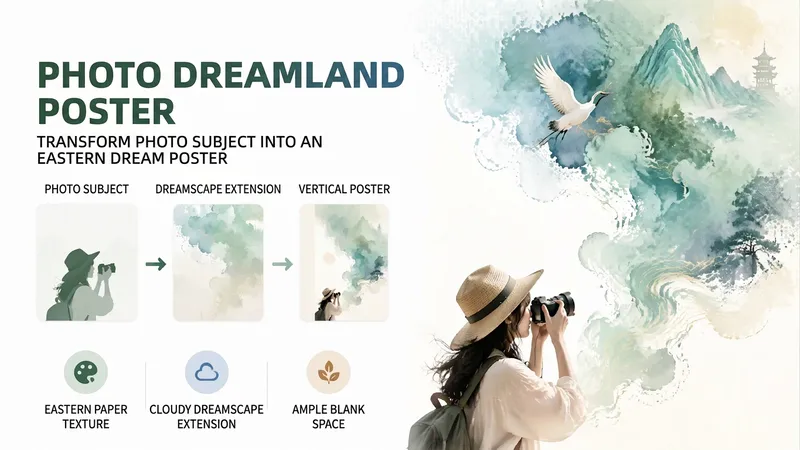
S.034 · Starryear Photo Dream
Transform a user photo into a vertical dreamlike poster with an Eastern paper-like texture. Preserve the subject’s outline, details, and identifying features, place it in the lower left, and extend grand cloud-and-mist forms into the upper right that relate to the subject’s shape, material, or texture, naturally connecting the real object with an imagined space. Draw colors and atmosphere from the subject and its lighting. Use ink tones, watercolor, pigment, and soft mist to create delicate visual layers while retaining generous clean negative space and a subtle printed-paper texture. Keep the subject clear and recognizable, create a striking contrast in scale with the clouds and mist, and use organic flowing lines to connect the two visual anchors. Ideal for turning photographs of people, animals, plants, objects, or subjects with distinctive textures into art posters, personal visual pieces, and image series. You can add a simple, restrained English title related to the image in the open space. The result is a clearly composed 9:16 vertical poster with a photo-based subject, documentary recognizability, and a dreamlike atmosphere.
 Image
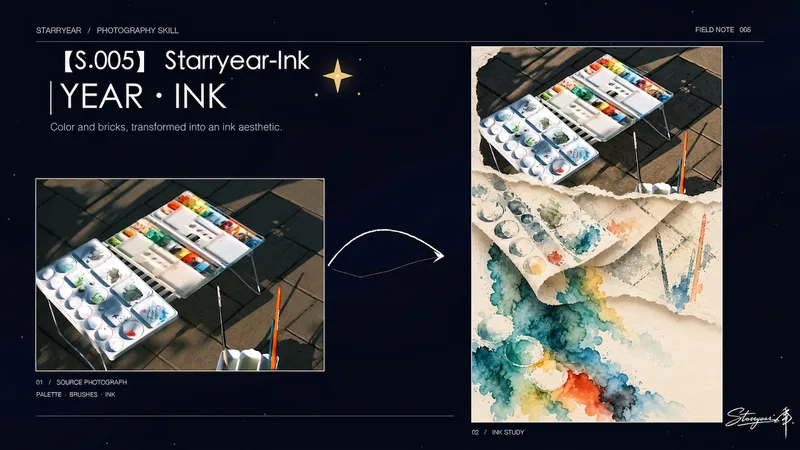
【S.005】Photo Ink · Starryear
Transform a single photo into a vertical artwork with tactile quality and narrative depth: the top preserves the source photo as real visual evidence, the middle presents a three-dimensional memory of the photo through lifted, curled, and layered warm ivory handmade paper, and the bottom releases a moist, translucent, diffused afterimage in colored ink. It is suited to creating Starryear ink, torn-paper photo ink, and three-dimensional turning-page ink works with the “original image above, flowing ink released below” structure. It is especially suitable for photos of people, animals, buildings, or landscapes where the original identity, number, direction, and spatial relationships need to remain intact. The finished piece emphasizes one complete vertical composition rather than a simple filter or evenly divided collage. The photo area remains clear and recognizable, while the paper layers carry the rhythm, contours, reflections, or negative space of the scene, using natural paper thickness, deckled fibers, overlaps, and soft shadows to create a convincing page-turning effect. The lower ink section uses a small number of related color families to show water-driven blooming, layered color, backflow, pooling, and seepage, creating a clear spatial transformation as the image moves between materials. The overall design centers on matte warm ivory paper and negative space, avoiding a second complete person, unrelated fantasy elements, decorative paper strips, imitation traditional Chinese painting, or overly saturated visual noise. The final output is a polished vertical artwork.
Information
- Version
- v3
- Last updated
- Runtime credits
- Usage-based
- Models
- Auto
- Use cases
- Images & design
- What you get
- Image
- Visual styles
- WatercolorTraditional Chinese
