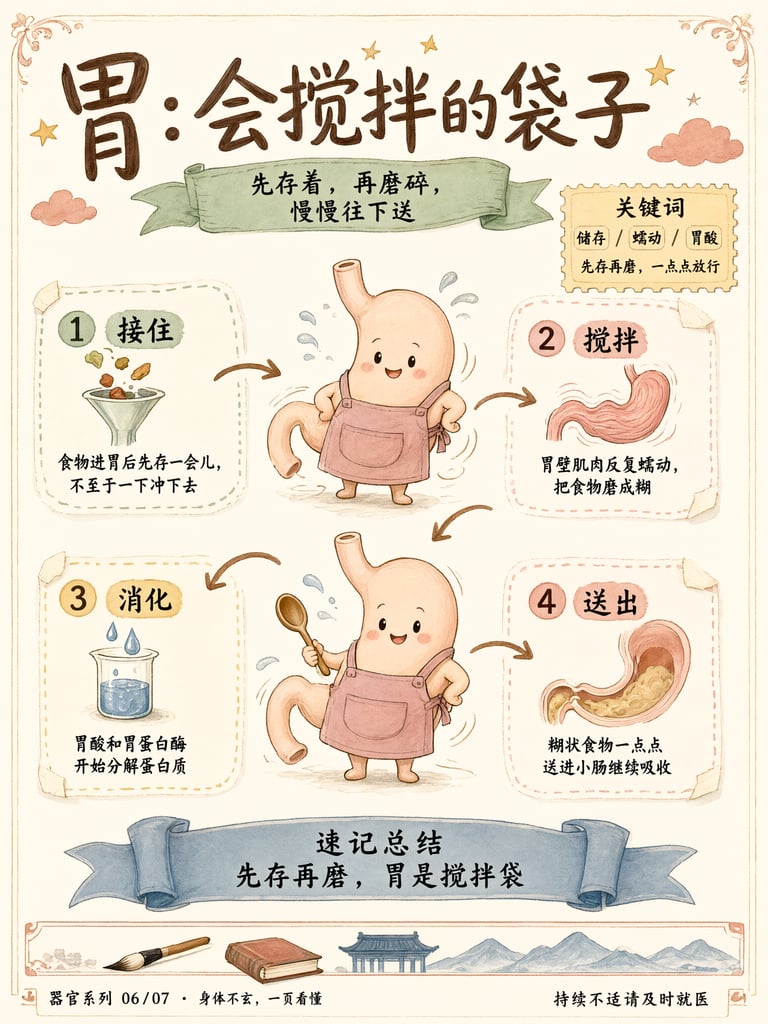
Health Card Studio
One organ, one card, made clear
Health Card Studio
One organ, one card, made clear
Showcase
Description
Can't make sense of a medical checkup report? Having trouble explaining it to someone else? Enter a health topic—kidneys, neck care, the three highs, or uric acid—to generate a vintage hand-drawn knowledge card with a bold title, sectioned explanations, keywords, and a mnemonic that explains one key point clearly on a single page. Four card types are available: mechanism cards (why this happens), comparison cards (healthy fats vs. unhealthy fats), habit cards (5 ways to care for your neck), and self-test cards (printable as flashcards). No diagnoses or dosages; every card includes a key-fact checklist, taking a cautious approach to health information. Create a series, such as 7 cards on organs, 6 cards on the three highs, or 12 cards on medical checkup indicators. Default format: 3:4 portrait (customizable).
Recommended by
Dancang
Why we love this skill
Turns complex health topics into vintage hand-drawn cards with four learning formats, series support, and item-by-item fact checks—clear, memorable, and careful about medical boundaries.
Best for
Learners, science communicators, and health educators who want to organize health knowledge into easy-to-read cards.
How to use this Skill
Provide your input
Enter a health topic and optionally specify a mechanism, comparison, habit, or self-test card. You can also request a series of cards.
Run the Skill
The system organizes the topic into vintage hand-drawn cards with balanced information density, then checks health boundaries and key facts.
Review your result
Get a Chinese knowledge card for health education and learning, along with a corresponding key-fact checklist.
Related Skills
View all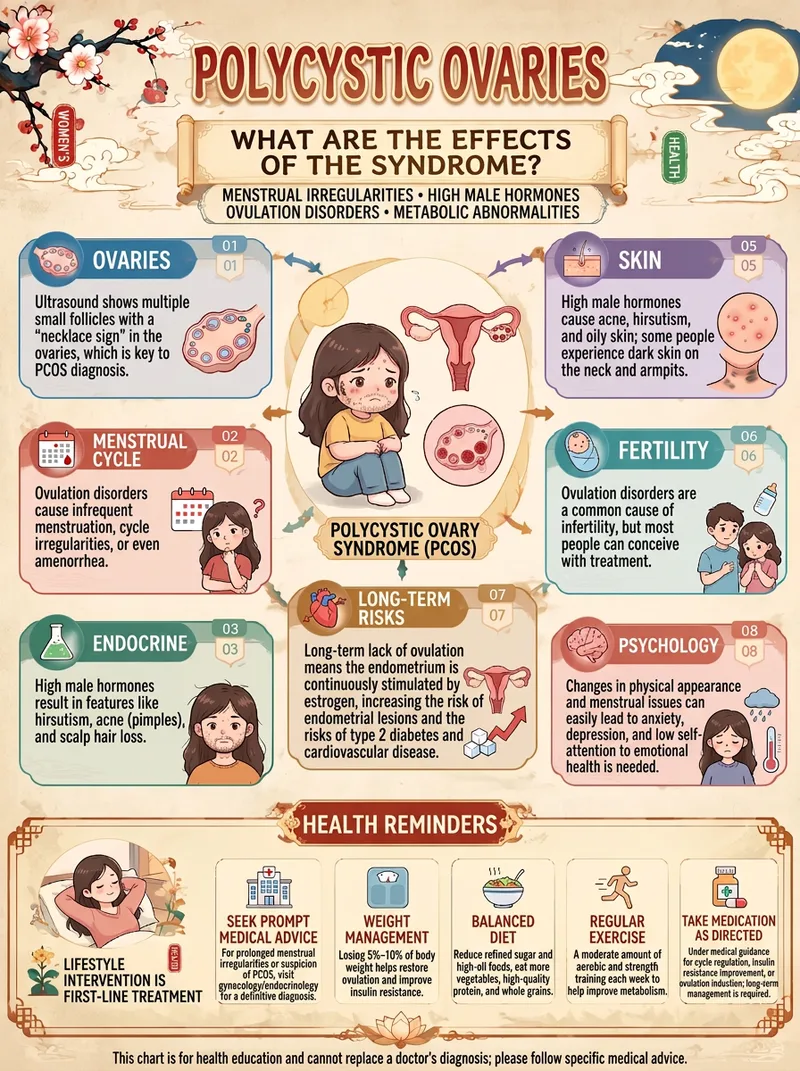
One-Click Health Infographic
Enter just one topic to transform complex health knowledge into an elegant Chinese-style educational infographic. You can use it to create: • Guides to the five internal organs, other body organs, and their physiological functions • Explainers on bodily changes caused by staying up late, insomnia, fatigue, and more • Guides to hydration, diet, nutrition, and healthy lifestyle habits • Everyday health knowledge about exercise, prolonged sitting, and weight management • Visual explainers on seasonal wellness, traditional Chinese medicine theories, and health culture Default: a distinctive modern Chinese visual style Rice-paper-inspired off-white backgrounds, traditional Chinese plaques, auspicious clouds, plum blossoms, seals, refined borders, cartoon organ illustrations, and modular knowledge cards create cohesive, polished visuals with a strong series identity. More than just attractive—the focus is also on knowledge quality It prioritizes the most representative knowledge from each topic and avoids piling on irrelevant information. Modern medical evidence is distinguished from traditional Chinese medicine theories, and health claims are not invented just to fill the layout. Flexible for different creative needs The default format is a 3:4 portrait layout. You can also specify 9:16, 4:5, 1:1, or 16:9, making it suitable for health education accounts, social media posts, short-video visuals, and series content. How to use it: Enter a topic → Extract key knowledge → Design the layout → Generate the image. No need to design from scratch—give every health topic its own visual guide. Note: Generated content is for health education and does not replace professional medical diagnosis or treatment advice. Medical content and text in images should still be verified before publication.
 Image
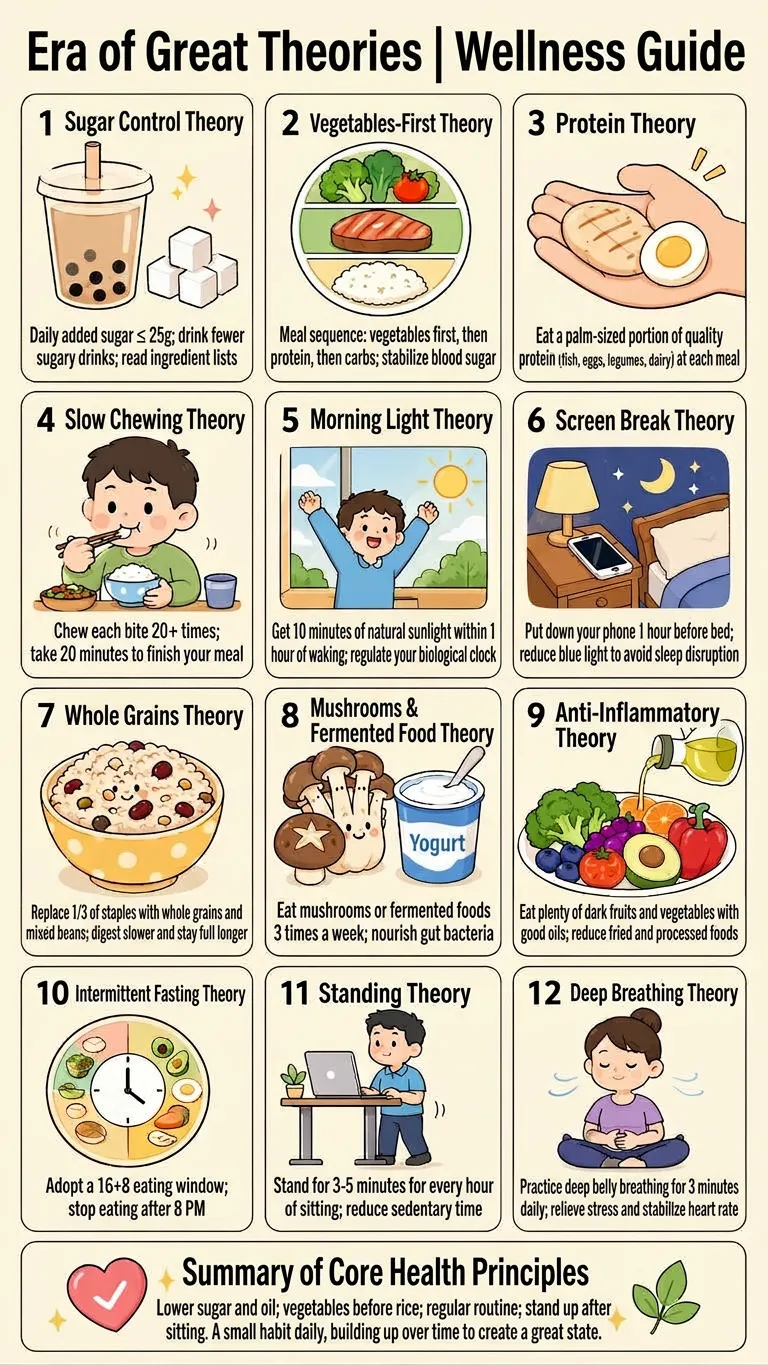
Viral Health Theory Slides
Just say “generate an image” to get a vertical health infographic suited for Xiaohongshu and Douyin. You can also specify the number of images and topics such as fat loss, sleep routines, diet, or office-worker health. Content is planned around current health and wellness trends to help you consistently create memorable, easy-to-understand “XX theory”-style educational content. Each image includes 12 distinct health theories covering everyday areas such as food, hydration, sleep, exercise, sun exposure, and bowel movements. Each point comes with a concise, positive, actionable suggestion that includes a number or frequency, along with a matching cute flat cartoon illustration. The content avoids medical diagnoses, claims of effectiveness, and absolute statements, making it better suited for sharing everyday health knowledge. The finished images use a 9:16 vertical mobile infographic layout, with a light beige background, rounded cards with thin black borders, and bright, soft pastel cartoon illustrations. Each includes a prominent topic title, 12 core content panels, and a summary panel at the bottom. When you need multiple images, each one uses a different combination of theories, illustrations, and colors, making it convenient for daily health content, launching an account, and preparing posts in batches.
 Image
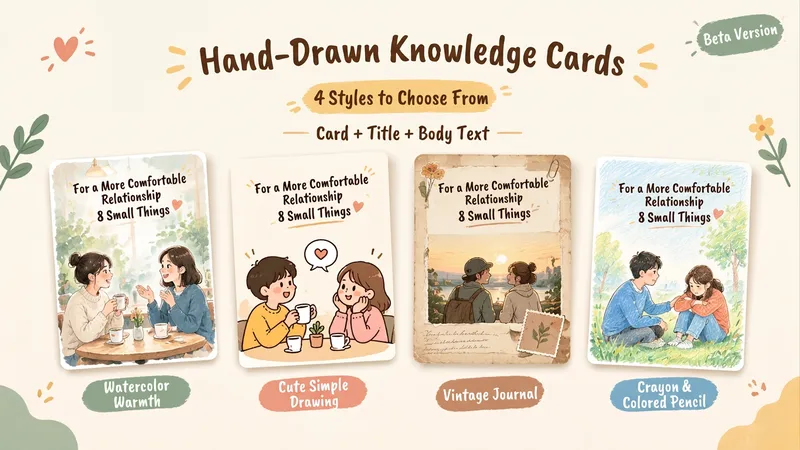
Hand-Drawn Knowledge Cards | 4 Styles
This Skill helps you turn a topic and reference content into a 2:3 vertical Chinese hand-drawn knowledge card, complete with a title, body copy, and hashtags for posting. Choose from four visual styles: warm watercolor, cute simple line art, vintage journal, or crayon and colored pencil. It first shows sample images for you to choose from. Once selected, you can reuse the same series settings for the next card and continue with a new topic. Ideal for visual-content creators who regularly share knowledge about relationships, emotions, personal growth, and everyday life. You’ll receive a card PNG, post copy, editable text, series settings, and records of checks for text, content, and layout readability.
Information
- Version
- v2
- Last updated
- Runtime credits
- Usage-based
- Models
- Auto
- Use cases
- Images & designLearning & education
- What you get
- DocumentImage
- Visual styles
- Hand-drawnRetroPaper art
