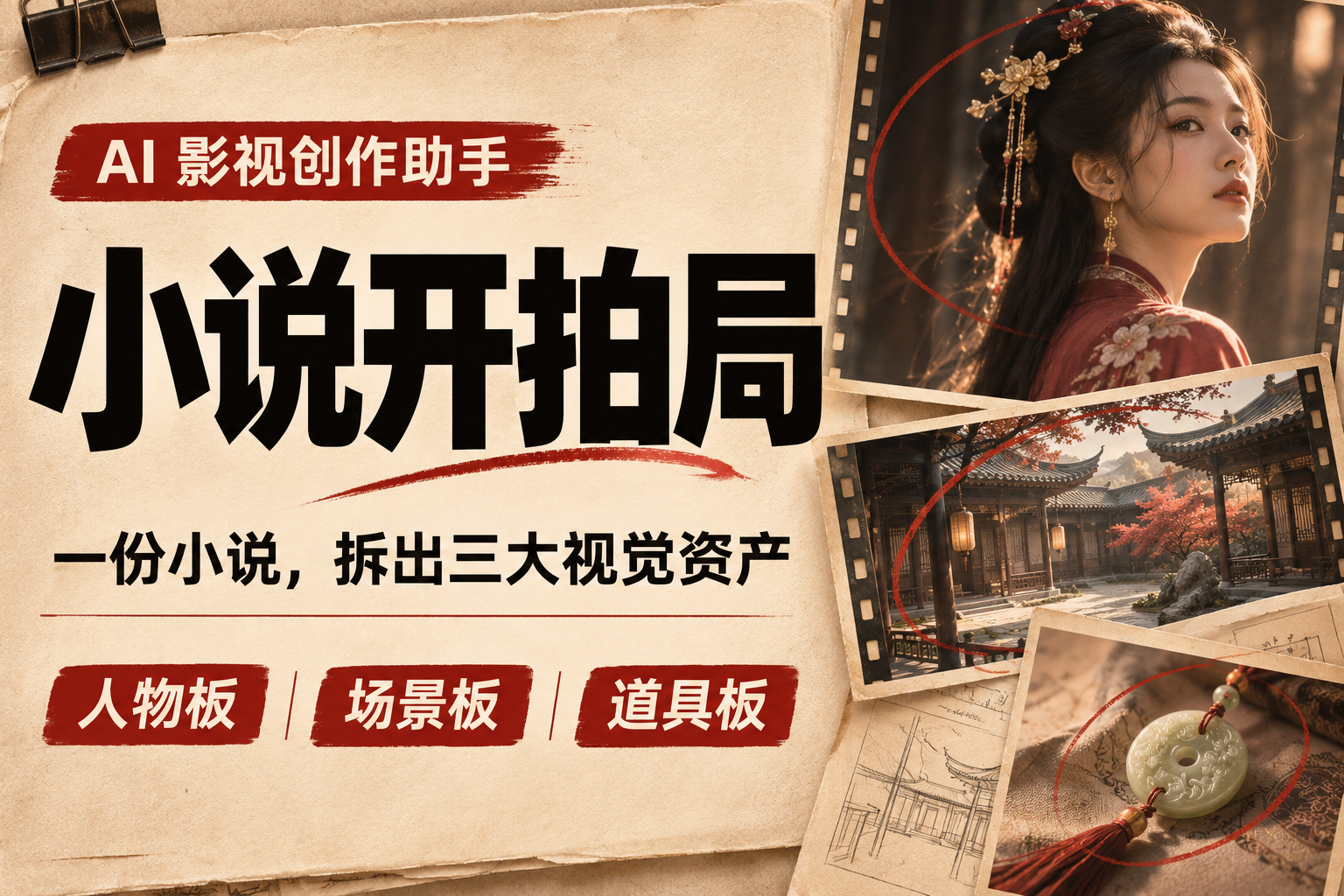
Pudding Novel Adaptation
Break down a novel into character, scene, and prop visual assets.
Pudding Novel Adaptation
Break down a novel into character, scene, and prop visual assets.
Showcase
Description
Finished reading a novel, but still lack a clear production checklist for how characters look, how scenes are built, and how props are made? Hand your novel over to the Novel Adaptation Studio to sort out character identities and styling, scene spaces and atmospheres, and the appearance and plot functions of key props. It generates three detailed asset tables and provides Chinese text-to-image prompts for each item. Every description and prompt is at least 200 words, covering style, lighting, materials, composition, and atmosphere. At the same time, it distinguishes original facts from suggested settings, reviewing for omissions, conflicts, and visual consistency. Ideal for pre-production preparation for AI short dramas, comic strips, and novel-to-film adaptations. Outputs text settings and prompts; images and videos need to be generated separately. Long works are processed batch by batch per chapter.
Related Skills
View all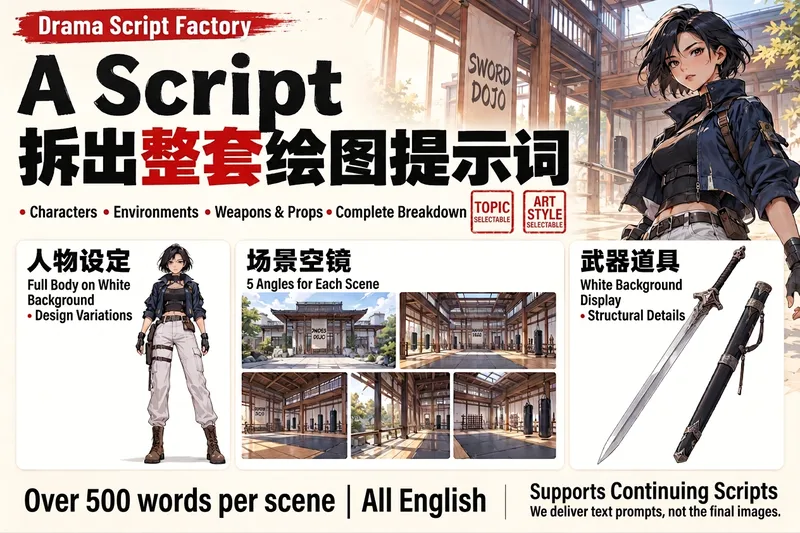 Video
Drama Asset Factory
Finished your script, but still wondering what the characters look like, how to draw the scenes, and how to design the props? Hand your script over to the Drama Asset Factory. Based on your chosen genre and art style, it organizes characters, scenes, weapons, and props, outputting ready-to-copy Chinese drawing prompts. Characters: Full-body on a white background, standing facing the camera, with detailed facial features, hairstyles, clothing, and footwear to make each character distinct. You can modify them as needed, and once the character is set, generate a three-view reference sheet. Includes three-view prompt templates: full-body three-view plus a facial close-up (the leftmost third features an oversized head close-up, while the right two-thirds show front, side, and rear views), on a pure white background. Scenes: Five perspectives per scene, covering different angles and shot sizes, all empty shots with no people, maintaining a consistent spatial layout. Weapons and props: Independent display on a white background, detailing shape, structure, material, and wear and tear. Supports genres such as urban high-martial arts, fantasy xianxia, historical wuxia, modern romance, suspense, doomsday, and sci-fi; and styles like 2D animation, Chinese national style, cel shading, watercolor, 3D animation, or realistic live-action. Each prompt is at least 500 characters, with long scripts supporting batch delivery and continuation. Ideal for short drama and motion comic creators building visual asset prompt libraries. This Skill delivers Chinese drawing prompts, does not directly generate images, and does not rewrite scripts.
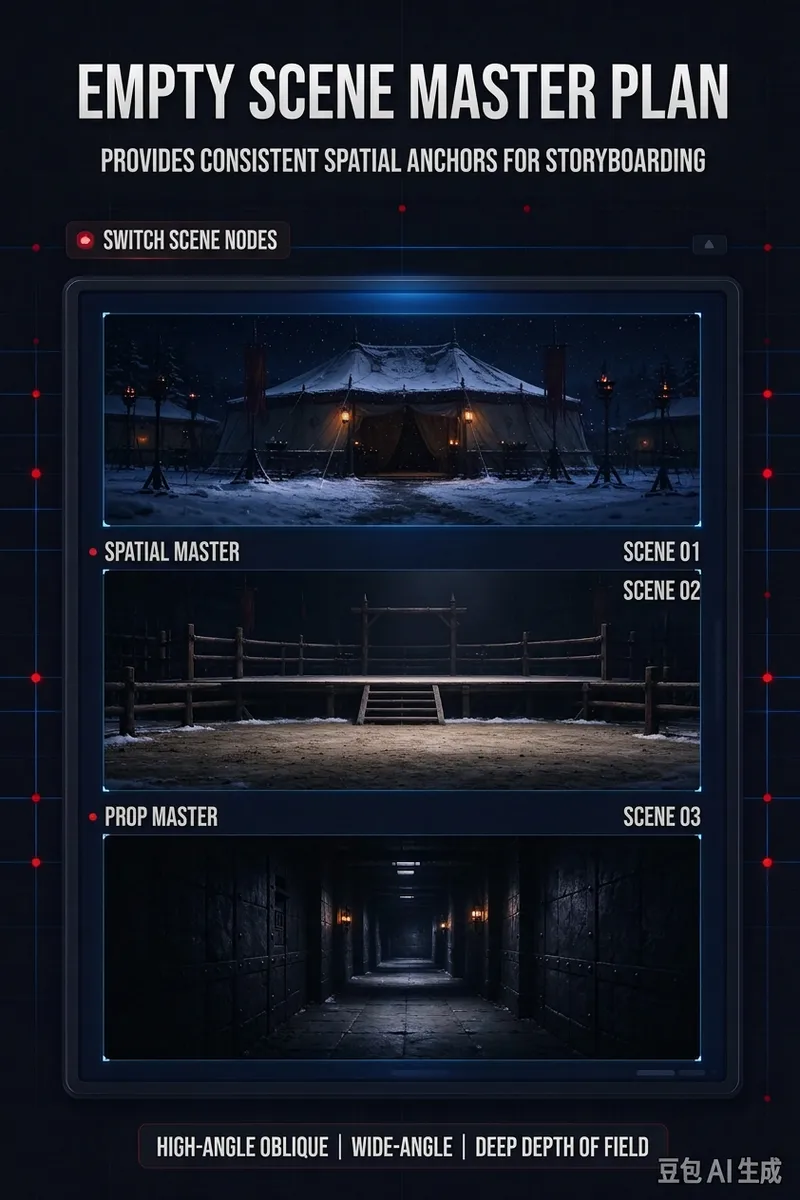
Novel Scene Image Prompts
Extract actual scene cuts one by one from novels, scripts, text storyboards, or plot outlines, transforming them into Chinese empty-scene reference prompts ready for AI image generation. Whether dealing with changes in location, time, weather, or the reappearance of the same location in different plot segments, scenes are independently organized in story order to prevent omissions or mismergers, establishing a stable spatial reference for subsequent comic storyboards. Each scene undergoes specific art design tailored to its narrative function, detailing spatial structure, entrances and exits, movement paths, foreground-midground-background layers, key props, visual focus, lighting relationships, materials, colors, and narrative traces, while classifying them as indoor, outdoor, vehicle, or special spaces. Even with limited source text, necessary visual scene information is supplemented. The final output includes a scene overview, overall visual tone, individual scene designs, Chinese image generation prompts, and Chinese negative prompts. Prompts emphasize cinematic high-angle oblique shots, high-angle wide-angle panoramas, 18mm-24mm lenses, deep depth of field, and complete spatial layouts, strictly maintaining empty scenes without characters or animals, making them ideal for cinematic establishing reference images rather than character storyboards, architectural floor plans, or ordinary interior renderings.
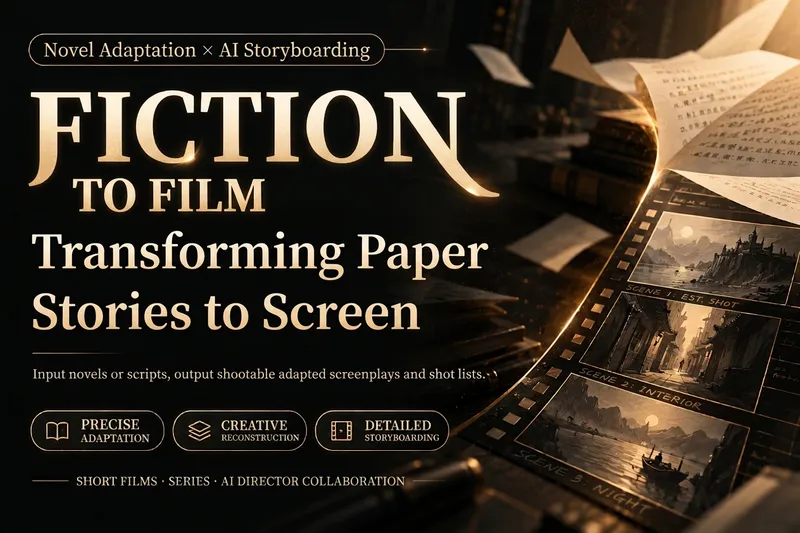
Fiction to Screenplay
Have a story but not sure how to turn it into a script? Fiction to Screenplay helps you transform novels, web fiction excerpts, and existing scripts into content ready for shooting, editing, or handing over to an AI director. Supports precise adaptation, original reconstruction, and shot-by-shot storyboarding. From text diagnosis, character analysis, and plot segmentation to shot design, duration estimation, and continuity verification, it completes tasks step by step according to your target specifications. Suitable for short dramas, mid-form videos, and standard series.
Information
- Version
- v3
- Last updated
- Runtime credits
- Usage-based
- Models
- Auto
