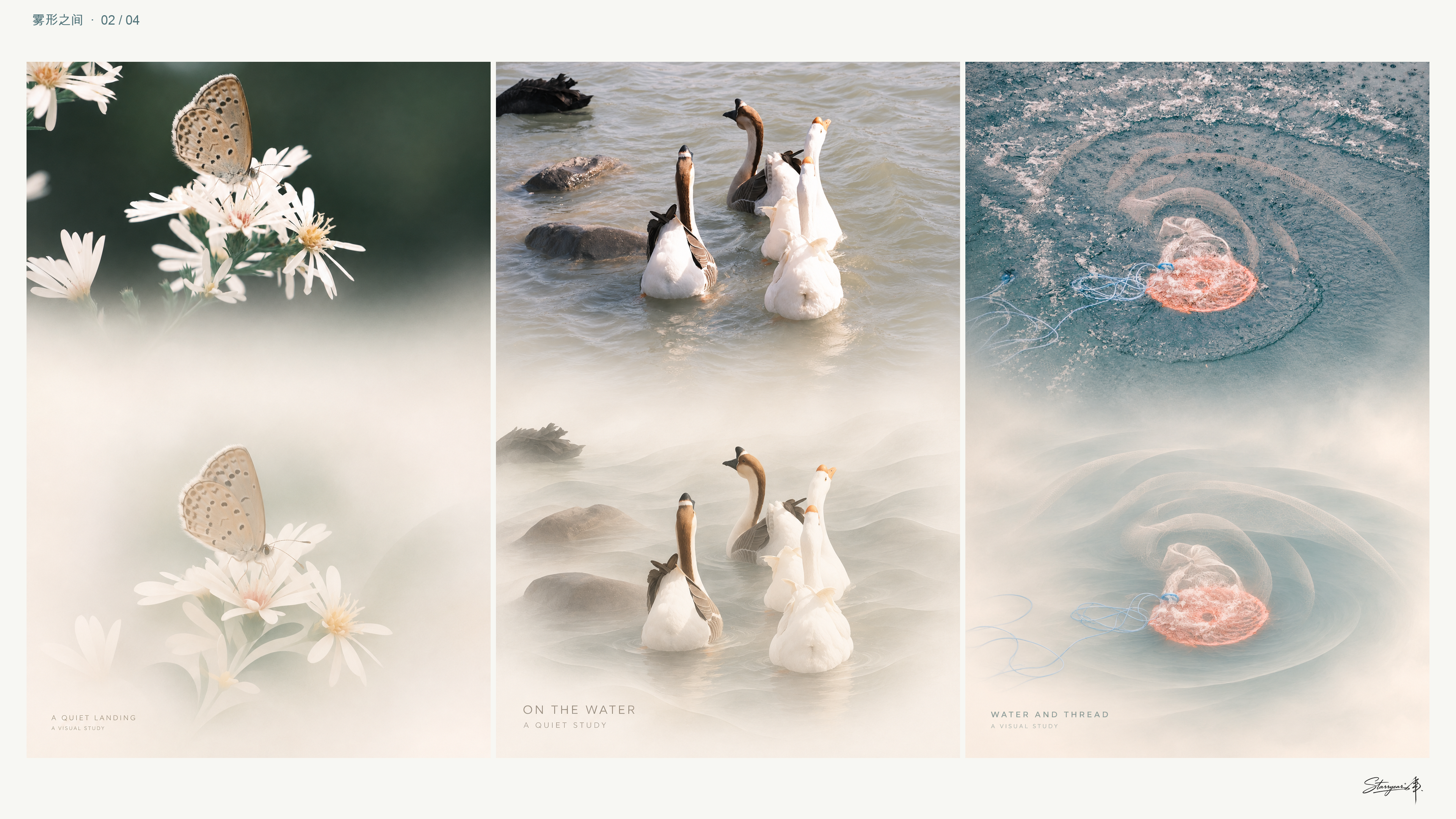
Starryear-Between Forms
Convert photos into realistic and hazy geometric posters
Starryear-Between Forms
Convert photos into realistic and hazy geometric posters
Showcase
Description
Translates a user-provided photo into a split poster with real photography on top and a hazy geometric illustration on the bottom, featuring a natural light mist transition in the center. Ideal for visual style transitions and same-scene photo adaptations, but not intended for source-free creative works or promotional covers.
Related Skills
View all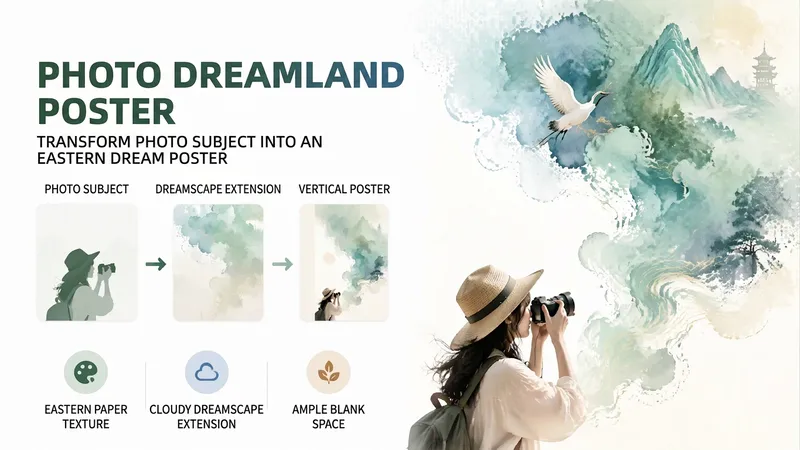 Image
S.034 · Starryear Photo Dream
Transform a user photo into a vertical dreamlike poster with an Eastern paper-like texture. Preserve the subject’s outline, details, and identifying features, place it in the lower left, and extend grand cloud-and-mist forms into the upper right that relate to the subject’s shape, material, or texture, naturally connecting the real object with an imagined space. Draw colors and atmosphere from the subject and its lighting. Use ink tones, watercolor, pigment, and soft mist to create delicate visual layers while retaining generous clean negative space and a subtle printed-paper texture. Keep the subject clear and recognizable, create a striking contrast in scale with the clouds and mist, and use organic flowing lines to connect the two visual anchors. Ideal for turning photographs of people, animals, plants, objects, or subjects with distinctive textures into art posters, personal visual pieces, and image series. You can add a simple, restrained English title related to the image in the open space. The result is a clearly composed 9:16 vertical poster with a photo-based subject, documentary recognizability, and a dreamlike atmosphere.
 Image
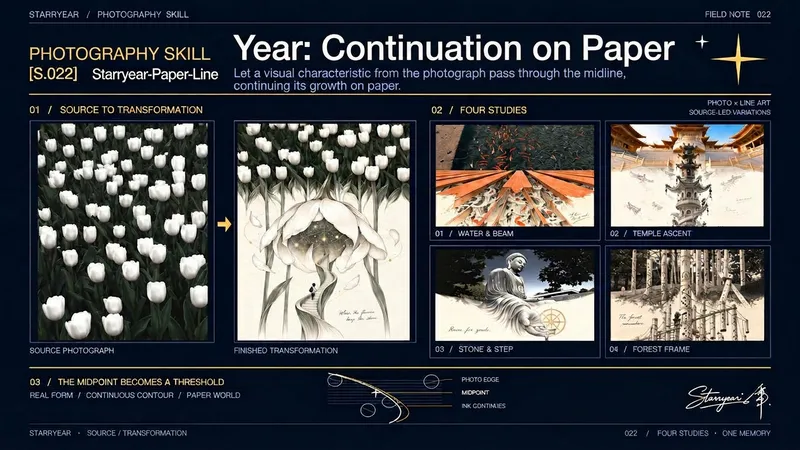
【S.022】Starryear · Photo
【Featured】Starryear featured photography Skill Extend a real photo into a 2:3 vertical “photo × line art” narrative poster: preserve the subject, lighting, colors, and spatial cues in the photo, while allowing one real form to naturally cross the middle of the frame and develop into a uniquely functional line-art world on warm white paper. The photo and hand-drawn section are not simply spliced together; continuous contours, materials, and shadows create a visual extension that can be entered, walked through, or activated. The lower section centers on the main transformation, adding a few thematic details drawn from the original photo and placing a small faceless figure rendered in pen lines within it. The figure has a clear action relationship with the line-art scene, strengthening the sense of scale and narrative. Depending on the photo’s atmosphere, subtle star-like points or glimmers may be carefully incorporated, but no fixed starry-sky, flower, or architectural template is applied. Brief handwritten English annotations add a light editorial touch. Ideal for scene-extending line-art posters, photo-and-illustration fusion posters, photographic art narrative posters, and visual works that bring a touch of fantasy to real scenes. The goal is to keep the photo believable, make the line-art world bold enough, and maintain a clear central focus and coherent material transitions both at thumbnail size and up close.
 Image
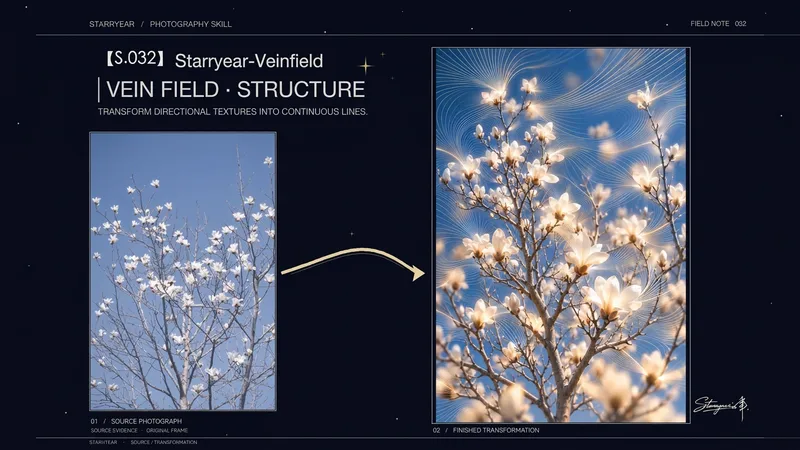
S.031 Year-Vein · Starryear
Reconstruct a photo into a distinctive 2:3 portrait artwork that naturally blends photographic details, the subject’s form, and continuous colorful line fields. The work is based on the original subject identity, composition, perspective, lighting, and color relationships, preserving key photographic details as recognition anchors while extending structured line fields from real textures such as radiating patterns, branches, folds, twigs, flowing water, architectural lines, or directions of movement found in the photo. Colorful lines grow along the original forms, spatial relationships, and lighting, creating gradient transitions within the subject, along its edges, and between the subject and background—not simply adding decorative lines or collaging abstract areas. The original image’s dark foundation, subject colors, lit colors, and environmental colors carry through the photographic anchors, reconstructed forms, and line fields, preserving the source image’s warm-cool relationships and spatial depth. This is suited to translating photos of nature, people, architecture, cities, or other subjects with directional textures into portrait artworks that combine photographic texture with a linear visual language. By default, no text, logos, watermarks, or promotional elements are added.
Information
- Version
- v3
- Last updated
- Runtime credits
- Usage-based
- Models
- Auto
