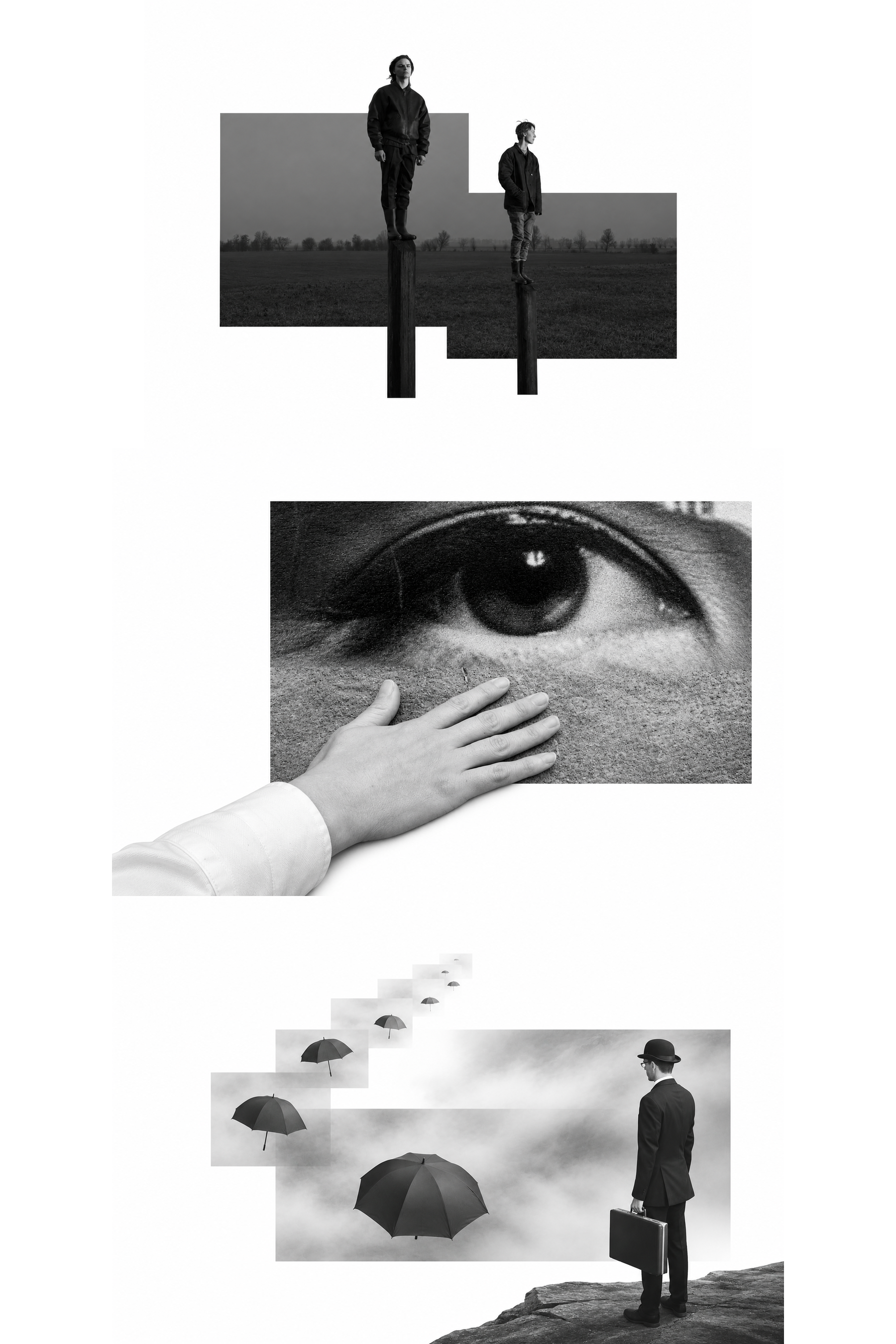
Whitespace Art Photo
Turn photos into art with whitespace and framing
Whitespace Art Photo
Turn photos into art with whitespace and framing
Showcase
Description
Transform your photos into single-panel art pieces featuring large rectangular whitespace, out-of-bounds effects, and displaced space, creating a dynamic relationship between the subject and the environment through white cutouts, rectangular borders, reflections, or light and shadow. The creative concept is based on the original photo, customizing the composition according to figures, animals, scene structures, color, and visual cues without using fixed horizontal bars or uniform layouts. While preserving subject recognizability and the original narrative connection, the image can exhibit a photographic, abstract, or restrained surreal aesthetic. Character identities, animal counts, actions, and relative positions correspond to the source photo as closely as possible, avoiding unrelated subjects; for needs requiring precise pixel retention, real photo cropping, mask layout, and AI image generation effects are clearly distinguished. Ideal for turning travel photos, portraits, pet photos, natural scenery, or daily moments into spatial photographic art. By default, it focuses on the artwork itself without adding text, watermarks, numbers, or promotional cover designs; multiple photos can also be composited or created individually according to your intent.
Recommended by
Dancang
Why we love this skill
Transforms photos into unique negative-space art rather than applying fixed templates. It lets frame-breaking, displacement, and white space respond to subject poses, scene cues, and lighting, creating restrained yet visually striking photographic expression while preserving the original story and recognizability.
Related Skills
View all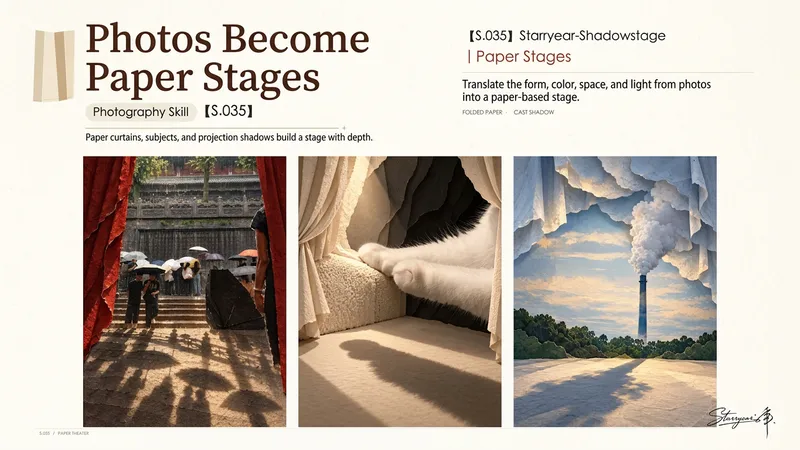 Image
S.035 Year Stage · Starryear
Turn a photograph into a vertical paper-art stage poster with a projection of the subject integrated into the scene. People, plants, buildings, patterns, or other key forms from the photo naturally extend across paper curtains, a paper floor, and layered scenery to create a visually deep world. The work uses the original subject, colors, composition, spatial relationships, and lighting to generate an organically growing paper stage structure, rather than simply applying a photo frame or collage-card layout. The paper curtains, background, and stage floor connect with one another, while the folds, thickness, and occlusion of handmade paper create a convincing sense of depth. The projection derived from the photo becomes a key focal point, using side or backlighting to create dramatic light and shadow. It stretches across the paper floor and scene edges, reinforcing the sense of scale and stage atmosphere. Ideal for transforming documentary photography, travel photos, portraits, nature imagery, or scenes with distinctive textures into photographic posters with a paper-art texture and narrative quality. The default output is one complete vertical 3:4 poster that preserves the original subject’s identity and key visual facts, and typically adds no text, watermark, or decorative elements without a source in the image.
 Image
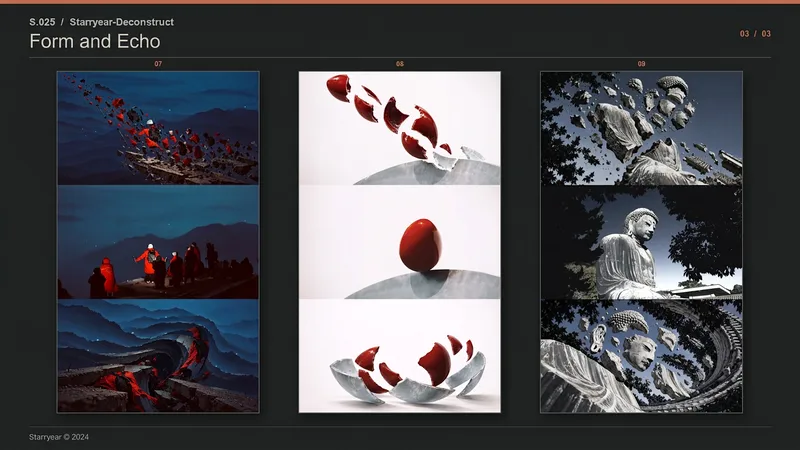
【S.025】Year · Deconstructed | Photo Skill · Starryear
Transform a single photo into a unified-tone triptych that deconstructs its source subject, suited to architecture, sculptures, natural landscapes, objects, and other subjects with distinctive contours and material qualities. The final piece uses a 16:27 vertical canvas composed of three equal-sized horizontal panels joined vertically, with a default output of 1920×3240 pixels and no added text, borders, or decorative elements. The top panel captures the moment the subject bursts outward from a clearly defined point of force, forming an orderly explosive deconstruction through separated primary fragments, a shared direction of motion, and ample negative space. The middle panel preserves a centered 16:9 crop of the input photo, serving as the only original color reference in the composition. The bottom panel develops the forms and environment in the photo into a more intense, source-specific surreal spatial echo, continuing the deconstruction with a different center of gravity, viewpoint, and motion relationship from the top panel. Changes in materials, environment, and space across the top and bottom panels remain traceable to the original photo while avoiding the addition of unrelated subjects. All three panels maintain continuity in white balance, dominant colors, saturation, tonal contrast, and overall brightness, allowing the creative transformations to connect naturally with the original image’s color identity. Suitable for visual posters, art imagery, and serialized creative work that calls for a narrative of “photographic original + explosive deconstruction + surreal afterecho.”
 Image
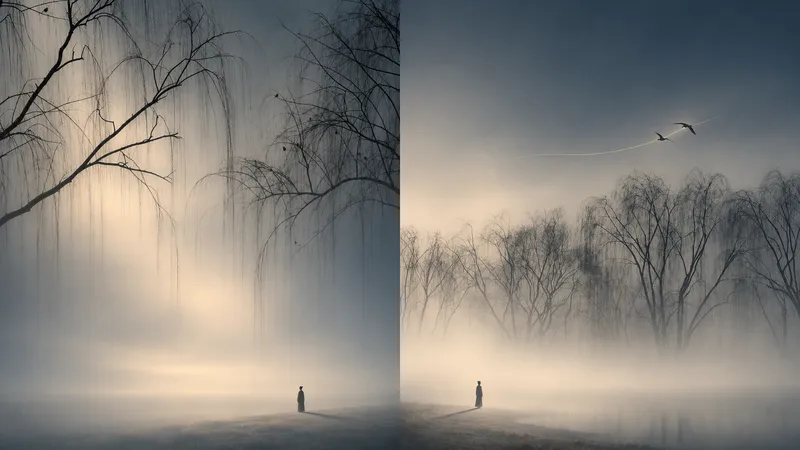
Mist and Warm Light Photo
Transforms a real photo into a surreal, poetic image blending deep blue shadows and warm white misty light, while preserving the identity clues and core narrative relationships of people, animals, objects, or scenes. Whether it is a portrait, travel record, natural landscape, or daily life photo, you can achieve a more atmospheric and imaginative visual expression based on the original content, rather than arbitrarily applying fixed lakeside, architectural, or character elements. The final product creates a serene and dreamy sense of space through layered mist, cool and warm lighting, and primary-secondary scale variations. It typically outputs as a vertical image suitable for display, embedding the user's original photo as a small reference thumbnail to clearly show the image source. If composite conditions are less than ideal, the reconstructed work and original photo are delivered separately. Ideal for creating poetic photography, atmospheric portraits, travel imagery, and visual works with an Eastern aesthetic. This is an AI reconstruction based on the original image, not pixel-level restoration, and it will not add subjects or promotional text unrelated to the original photo.
Information
- Version
- v2
- Last updated
- Runtime credits
- Usage-based
- Models
- Auto
