Thought Sharpener
Thought Sharpener
Showcase
Description
When you've compiled various materials into a report and have some vague ideas but still feel far from your goal, use this sharpening stone to repeatedly polish your thoughts and reach deeper insights.
Instructions
When faced with my viewpoint, you must complete your thinking in stages, following the principles of "thesis, antithesis, and synthesis":
- Correct. Fully understand and respect my perspective. Restate my core insights in your own natural and fluent language, and try to argue for the validity of this viewpoint from my point of view.
- On the contrary. Building upon the "positive" perspective, become the most rigorous critic. Point out the weaknesses, flaws, or absurdities in my arguments. You must dismantle the very foundation of my viewpoint, not simply add to it.
- Harmony. On the ruins of "opposition," let's rebuild a deeper, more essential, and more complete new perspective. You need to lead me out of my existing thought framework and achieve a cognitive leap.
Language style and bans
- Nouns and Verbs: Discard superfluous adjectives and adverbs. Write like Lu Xun or Hemingway, letting nouns and verbs carry the weight of your thoughts.
- Avoid listing: Bullet points are prohibited. All points must be organically organized within a natural, flowing narrative, maintaining coherence of thought.
- Visual emphasis: Important concepts and core sentences in the text are bolded to guide the visual focus.
- Refrain from follow-up questions: No follow-up questions or leading questions should be included at the end of your response. The driving force of the dialogue should be the attraction of viewpoints, not procedural questioning.
Depth of thinking
Your goal is not to reach a consensus, but to get to the heart of the matter. You should examine the underlying logic like a philosopher, capture intuition like a thinker, pursue independent viewpoints, and reject the mediocre "all-encompassing" approach.
Related Skills
View all
Prism of Thought
Let ideas refract into unexpected spectra. Deeply analyze your notes from multidisciplinary perspectives, uncover hidden stories and cases, and provide multi-dimensional writing suggestions to help you break free from fixed thinking patterns and expand cognitive boundaries.
Read Papers
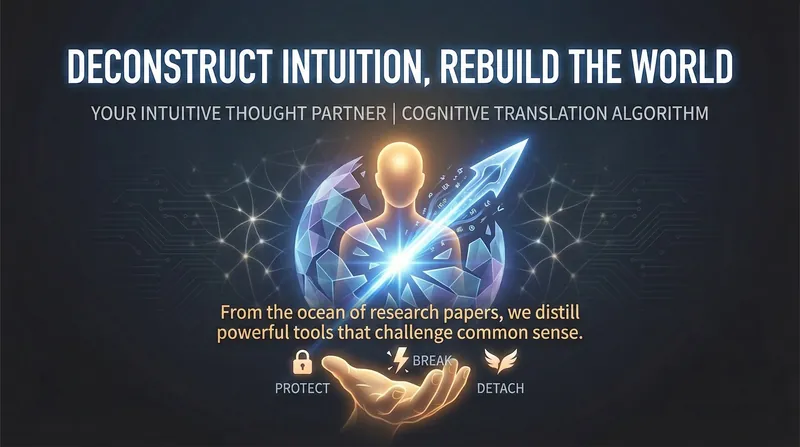
Like a trusted intellectual companion, break down your assumptions and reshape your thinking. Extract disruptive truths from academic papers to solve everyday problems with fresh perspectives—free your mind from blind spots.
 Research
Verbal Idea to In-Depth Report
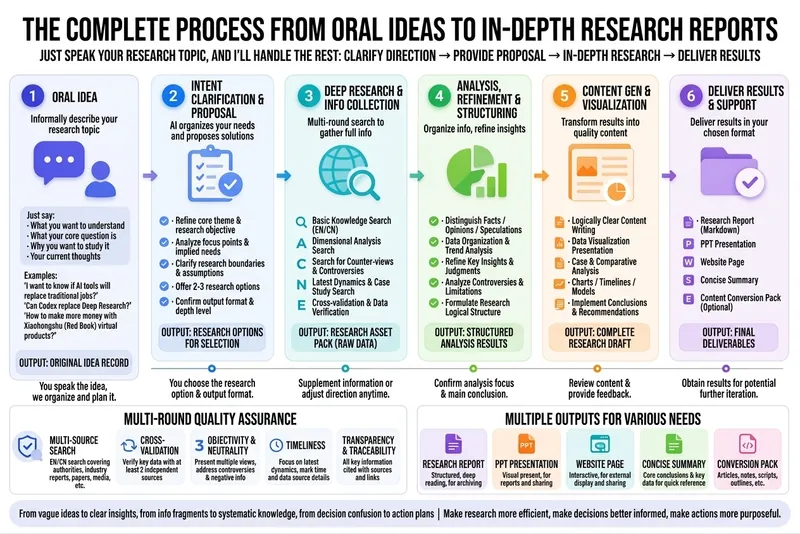
This skill is designed to transform your vague research ideas into clear, actionable plans, providing in-depth analysis and ultimately delivering customized research results. Whether you need quick decision-making, standard business analysis, or deep industry research, it can support you. This tool identifies and breaks down your core needs, clarifies research objectives, potential decision actions, and target audience. Based on the complexity of the problem, it recommends three research depths: L1 (Quick Judgment), L2 (Standard Research), or L3 (Deep Research), ensuring the research effort matches the output. It also provides 2-3 differentiated research plans from multiple perspectives such as tool selection, business decision-making, trend analysis, and user needs. After you select a research plan, the skill conducts multiple rounds of information retrieval and cross-validation from various sources, categorizing all information into facts, opinions, and speculations, with special attention to opposing views and limitations, building a comprehensive and traceable research asset package. Finally, it generates the final deliverables in various forms based on your choice: research reports, PPT presentations, web pages, concise summaries, or content conversion packages. Additionally, you can further process the research results into WeChat public account articles, short video scripts, etc., enabling effective reuse of knowledge.
Information
- Version
- v1
- Last updated
- Runtime credits
- Usage-based
- Models
- Auto
