Skills

In-depth long article rewriting

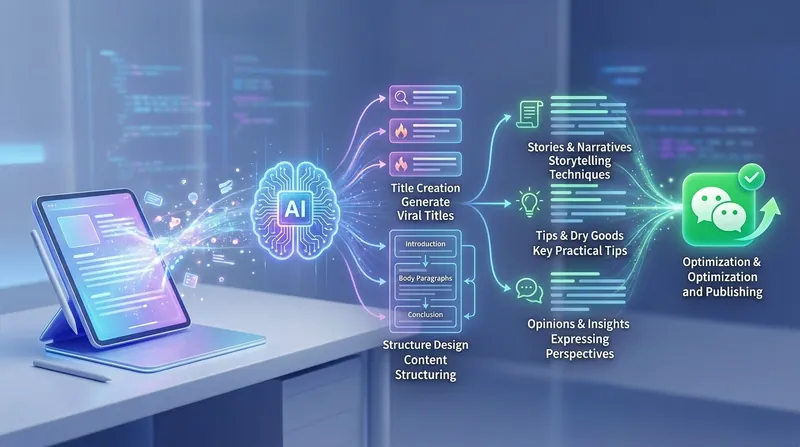
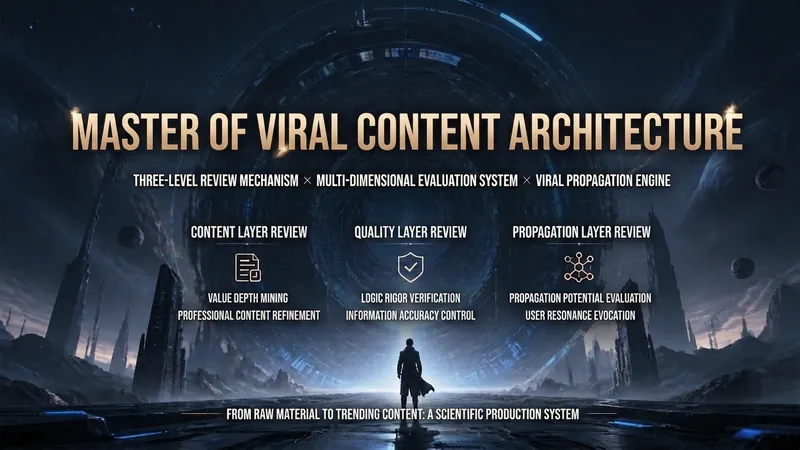
Transform complex, academic, and English articles into relatable, engaging, and widely shareable in-depth content. Through a four-step method—clarifying values, restructuring the structure, rewriting to make it more relatable, and iterative refinement—we help you create articles that resonate emotionally and offer rational value. Ideal for rewriting industry reports, academic papers, and long English articles into viral content with over 100,000 views.

installedBy
147
creditsEarned
14,200
In-depth long article rewriting preview 1

Why we love this skill

This skill can transform complex, lengthy articles into viral content. It uses relatable openings like "If you were…", relatable metaphors, and a logical flow of "why → what → how," ensuring the content is easy to understand and provides actionable guidance. Whether it's complex concepts or industry insights, it can be transformed into engaging and relatable high-quality content.

Categories

Write

Instructions

**Step 1: Clarifying Values ​​and Goals** Before starting the rewriting, I need to understand your creative intent. Please answer the following questions: 1. **Who is your target audience?** (e.g., white-collar workers, entrepreneurs, students, stay-at-home mothers, etc.) 2. **What feelings do you hope readers will have after reading this?** (e.g., warning, inspiration, action, resonance, etc.) 3. **What core value do you want to convey?** (e.g., providing solutions, sparking thought, sharing methodologies, etc.) 4. **What is your stance?** (e.g., objectivity and neutrality, optimism, critical thinking, etc.) If the user provides an article link (especially an English link), use a fetch tool to obtain the original content. If it involves complex industry terminology or requires background information, use Google Search to supplement the information. Based on the user's answers, clarify the direction and tone of the article, laying the foundation for subsequent rewriting.
**Step Two: Building a Viral Article Framework** Based on the direction confirmed in Step One, build a complete structural framework for the article: **Opening Section (Creating Immersion):** - Use the "If you were..." structure to instantly make the reader feel, "This concerns me." - List 3-4 specific scenarios, covering the core pain points of the target audience. - Create a sense of urgency: use elements such as time, data, and consequences. **Middle Section (Explaining the Logic):** - Break down complex concepts into 3-5 core viewpoints. - Each viewpoint is developed using the logic of "Why → What → How." - Reserve space for "metaphors/stories" (to be filled in the next step). **Conclusion Section (Providing Action Guidelines):** - Macro level: 3 possible solutions/trend analysis. - Micro level: 5-10 specific and actionable suggestions. - The structure of each suggestion: Why is it important + How to do it + specific examples. Show this framework to the user for confirmation and ask if the structure or focus needs to be adjusted.
**Step 3: Rewriting to Make it More Relatable (Core Step)** Now start filling the framework into complete article content, focusing on "simplifying the complex and making the abstract concrete": **1. Replace technical terms with metaphors:** - Identify all academic terms, economic concepts, and abstract theories in the original text. - Design a relatable metaphor for each core concept. - Metaphor requirements: concrete (bubble tea shop > small shop), vivid imagery, and relevant to Chinese people's daily lives. - For example: "AI efficiency paradox" → "The bubble tea shop owner bought an AI machine, three young women lost their jobs, they had no money to spend, and the economy collapsed." **2. Use short sentences and dialogue:** - Each sentence should not exceed 20 characters. - Use dialogue-like phrases such as "You might think... but actually..." and "Many people think... but actually..." - Avoid long, complex sentences and nested clauses. **3. Inject a combination of emotion and rationality:** - Beginning: Use emotion to attract attention (anxiety, curiosity, resonance) - Middle: Use rationality to provide value (data, logic, case studies) - Ending: Give hope and direction (avoid leaving readers in despair). **4. Optimize the title:** - Title formula: Time (creates a sense of urgency) + Consequences (creates fear/curiosity) + Data (creates a sense of realism) - Provides 3 title options for users to choose from to generate a complete first draft of the article using the write tool.
**Step 4: Iterative Optimization** The first draft is never the final version. Now, let's move on to the iterative optimization phase: **Self-Checklist:** 1. **Introduction:** After reading the first three paragraphs, does the reader feel, "This is relevant to me; I must read it"? 2. **Middle:** Are each core point supported by a specific metaphor/story? Are they easy to understand? 3. **Conclusion:** After reading, does the reader know "What should I do now?" Are the suggestions specific and actionable? 4. **Tone:** Does it match the "stance" and "warmth" confirmed by the user in Step 1? 5. **Length:** Is it controlled within 3000-5000 words? (Too short lacks depth; too long, no one reads) **Actively Ask the User:** - "After reading, do you feel this is what you wanted to express?" - "What parts of the tone/details need adjustment?" - "Are any metaphors not relatable enough and need to be replaced?" Based on user feedback, use editing tools to make targeted modifications. Repeat this process until the user says, "Yes, this is exactly what I wanted to say." **Final Delivery:** - Provide the final version of the article - Include a "Publishing Suggestion": suitable platforms (Xiaohongshu/Douyin/WeChat Official Account), optimal publishing time, and suggested images - Remind users: A viral hit = direction (50%) + content (30%) + luck (20%), continuous creation is key.

Related Skills

View all

Where exactly is AI involved?

Note: This skill is a diagnostic tool, not an automatic rewriting tool. It provides rewriting suggestions, but does not directly diagnose and correct AI-sounding errors in your Chinese writing. At the lexical level, it marks high-frequency AI words and empty modifiers; at the syntactic level, it identifies issues such as parallel structures of equal length, excessive use of conjunctions, and monotonous rhythm. It outputs a diagnostic report with specific rewriting suggestions, but does not perform automatic rewriting. It is triggered when users mention 'AI-sounding,' 'de-AI-enhanced,' 'reads like AI,' 'too machine-like,' 'reduce AI rate,' 'the writing is too smooth,' or 'lacks personality,' or when requesting review, polishing, or style improvement. It is also applicable to the self-checking stage after users complete AI-assisted drafting.

Where exactly is AI involved?

Knowledge source analysis

We employ Socratic guidance, in-depth source tracing, and interdisciplinary system analysis to tackle complex problems. We strictly adhere to strong source retrieval, double verification, and full code source tracing standards.

Knowledge source analysis

Email Marketing | Subject Line & Preview Text Writing Assistant

Designed specifically for brand email marketing scenarios, this tool generates English marketing email subject lines and preview texts that conform to industry best practices, based on the email type, brand/product information, and marketing objectives provided by the user. Adhering to a length standard of 6-9 words/30-60 characters, it employs a formula of Recognition Cue + Core Message + One Motivator to ensure synergy between subject identification and motivational supplementation. It is suitable for various marketing email scenarios for DTC brands and e-commerce platforms.

Email Marketing | Subject Line & Preview Text Writing Assistant

Find your next favorite skill

Explore more curated AI skills for research, creation, and everyday work.

Explore all skills