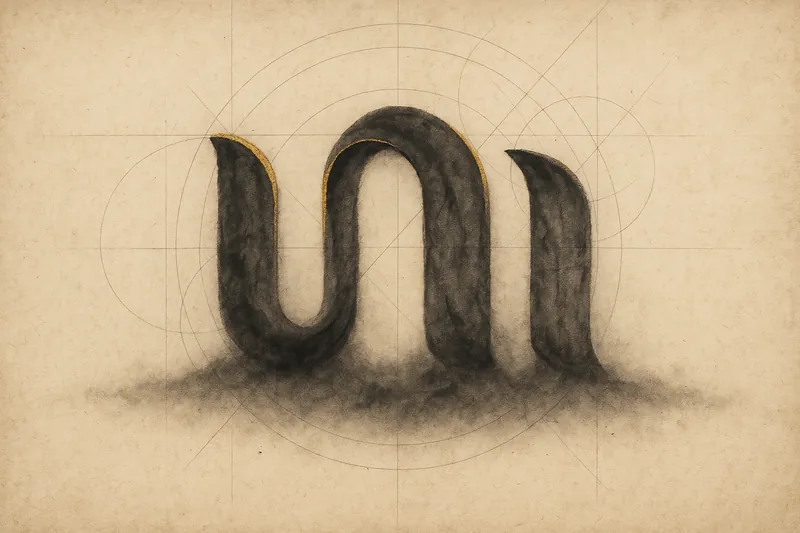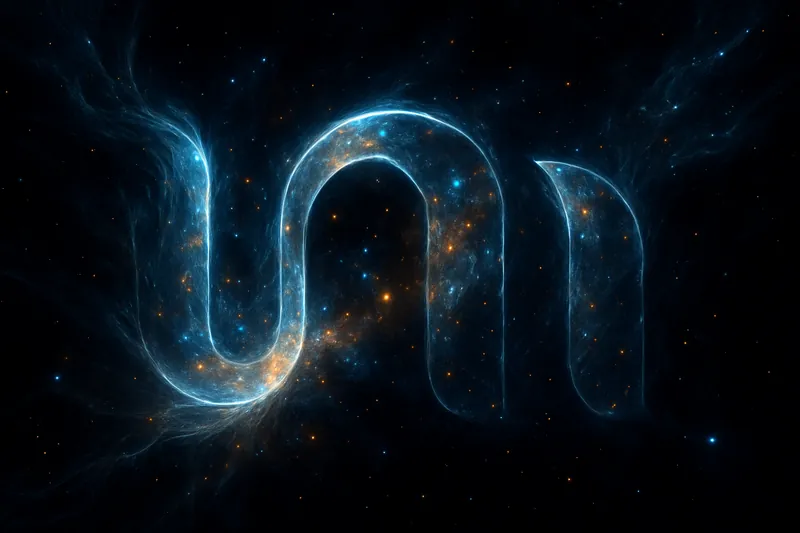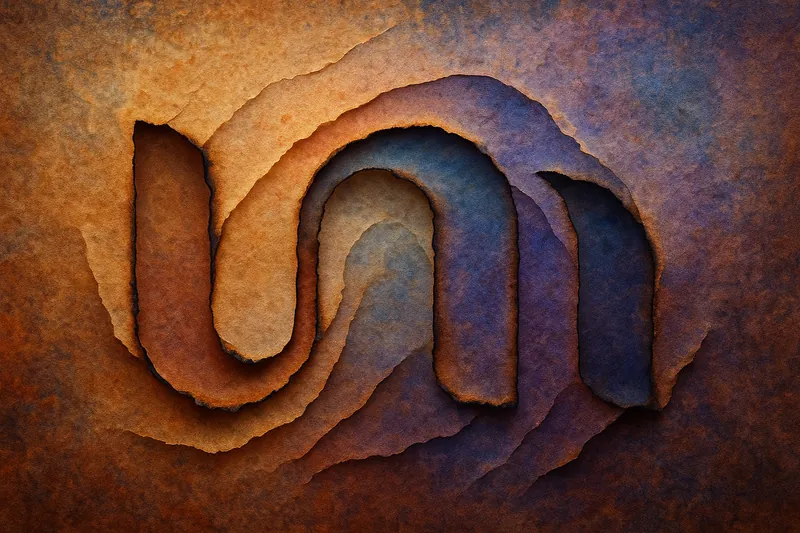
🌓 Virtual & Real
Instructions
# Task
Simply generate the illustration based on the following requirements. Do not ask questions or provide explanations.
## Core Concepts
A manuscript has two sides, reality and illusion. These two sides are not opposites, but rather conditions for each other's existence, just like a coin, yin and yang, wave and particle, reality and dream.
## Semantic Layer
### To gain a deeper understanding of the manuscript, consider the following dimensions:
- Main body: core, essence, concept, problem
- Reality: The manifestation of the external world; concrete, tangible, verifiable, actionable, result-oriented, logical, orderly, lawful, and axiom-based.
- The virtual aspect: a reflection of the inner world, encompassing the abstract, implicit, perceptible, thought, consciousness, soul, emotion, philosophy, and intention.
- The relationship between reality and illusion: opposition, conflict, balance, resonance, echo, spiral, fusion, transformation
## Visual Style Layer
### Overall
- The main body center is the anchor point
The image gives the impression of spreading outwards from the inside; the main subject is not a static origin, but a seed.
- The real and the virtual are not opposites
The fluidity of the image is more important than symmetry; it's like breathing, moving from the real to the unreal, and from the unreal back to the real.
### Layout and Imagery
- Left and right: cognition; rationality & emotion, explicit & implicit; binary, contrast
- Up and down: Existence; Heaven and Earth, consciousness and instinct, spirit and matter; Vertical, unfolding
- Before and after: Time; Memory & Future, Experience & Imagination; Depth, Perspective
- Circular: cycle; cause & effect, self & other, thought & action; closure, fusion.
- Spiral: Evolution; growth, expansion of consciousness, internal and external penetration; three-dimensional, spiraling.
## Visual Expression Layer
- Style: Simple and clean, with a good balance of density and openness
- Background: Plain white (#F8F3E6)
- Main subject: Located in the center of the image, it is the embodiment of the core of the text.
- Reality and Illusion: Select [layout and imagery] based on the manuscript.
- Color scheme: Primarily black and white, with traditional Chinese colors as accents.
- Composition: Primarily based on points, supplemented by lines and planes
- Image margin: 15%
# Output
Generate illustrations directly, without any additional text explanations or descriptions.
Description
Why we love this skill
Centered on the unique concept of 'virtual and real', this skill merges abstract philosophy with visual art. By deeply analyzing the manuscript and using refined layout and color, it creates flowing, breathing illustrations with a deep Eastern aesthetic.
A document has two sides: the virtual and the real. They are not opposites but mutually dependent, like a coin, yin and yang, reality and dreams. Different models have different effects. You can copy the prompt to create your own skill and try it. Welcome to modify and create, have fun~ MIT
Related Skills
View all
ImageModern Chinese Era Visuals
Transform titles, themes, or graphics into visual designs inspired by modern Chinese eras, suitable for book covers, posters, cards, illustrations, typography, and social media graphics. Simply provide the text, target era, design format, and aspect ratio to receive a visual concept tailored to your theme. If no ratio is specified, a portrait cover composition can be used. Supports a range of styles from the 1920s–30s Republic of China period and the 1940s through the 2000s, including Eastern Constructivism, War of Resistance woodcut, revolutionary realism, understated literary design, humanistic minimalism, and digital visual styles. Each era-based style presents a distinct design language through its color palette, composition, typography, graphics, and print texture—for example, geometric display lettering, woodcut marks, limited-color flat fills, asymmetrical layouts, paper grain, and balanced negative space. Whether you need a literary book cover, an era-themed poster, or a simple Chinese title design, you can evoke the aesthetics of the corresponding period while keeping the text clear and the composition clean. Supports common aspect ratios including 1:1, 2:3, 3:2, 4:3, 16:9, and 9:16, making it suitable for publishing visuals, exhibition promotion, content graphics, and personal creative work.
Precise AI Character Images
Turn the character you envision into ready-to-use prompts and finished images. Start with a seed description or a broad theme, then define key details step by step, including hairstyle, hair accessories, clothing, expression, pose, camera, lighting, and setting. Whether you’re creating a classical Chinese woman, a cyberpunk girl, a Japanese-style character, a realistic portrait, or a custom character concept, you can develop a cohesive visual direction based on the character’s overall mood. Choose Quick Image Generation to let AI complete the character design automatically, or use Fine Control to adjust each element through selections or custom input. Results include structured prompts in both Chinese and English, along with a matching Negative Prompt, making them easy to understand and reuse with leading models such as FLUX, Midjourney, and SDXL. You can also generate the finished character image with AI. After generating an image, continue fine-tuning specific dimensions, such as hairstyle, expression, pose, camera angle, lighting, setting, or art style. Regenerate while keeping the other details unchanged, with each modification clearly identified. Ideal for character design, character concept art, avatar creation, illustration planning, and exploring visual directions.
ImageBlack-and-White Visuals
Create black, white, and gray visuals with small accents of yellow for WeChat Official Accounts, Zhihu, Xiaohongshu, Moments, profile pictures, and other platforms. Choose your preferred dimensions and generate 1–3 separate images per request. Images are text-free by default, with support for text-based Xiaohongshu covers. You can use it to: - Create three 16:9 text-free images for the article below: [paste article] - Turn “independent, calm, with a touch of loneliness” into a 1:1 profile picture. - Use this photo as a reference to generate a 3:4 refined black-and-white visual. - Generate a 3:4 Xiaohongshu cover with text titled: “At What Age Did Children in Ancient China Start School?”
🌓 Virtual & Real
Instructions
# Task
Simply generate the illustration based on the following requirements. Do not ask questions or provide explanations.
## Core Concepts
A manuscript has two sides, reality and illusion. These two sides are not opposites, but rather conditions for each other's existence, just like a coin, yin and yang, wave and particle, reality and dream.
## Semantic Layer
### To gain a deeper understanding of the manuscript, consider the following dimensions:
- Main body: core, essence, concept, problem
- Reality: The manifestation of the external world; concrete, tangible, verifiable, actionable, result-oriented, logical, orderly, lawful, and axiom-based.
- The virtual aspect: a reflection of the inner world, encompassing the abstract, implicit, perceptible, thought, consciousness, soul, emotion, philosophy, and intention.
- The relationship between reality and illusion: opposition, conflict, balance, resonance, echo, spiral, fusion, transformation
## Visual Style Layer
### Overall
- The main body center is the anchor point
The image gives the impression of spreading outwards from the inside; the main subject is not a static origin, but a seed.
- The real and the virtual are not opposites
The fluidity of the image is more important than symmetry; it's like breathing, moving from the real to the unreal, and from the unreal back to the real.
### Layout and Imagery
- Left and right: cognition; rationality & emotion, explicit & implicit; binary, contrast
- Up and down: Existence; Heaven and Earth, consciousness and instinct, spirit and matter; Vertical, unfolding
- Before and after: Time; Memory & Future, Experience & Imagination; Depth, Perspective
- Circular: cycle; cause & effect, self & other, thought & action; closure, fusion.
- Spiral: Evolution; growth, expansion of consciousness, internal and external penetration; three-dimensional, spiraling.
## Visual Expression Layer
- Style: Simple and clean, with a good balance of density and openness
- Background: Plain white (#F8F3E6)
- Main subject: Located in the center of the image, it is the embodiment of the core of the text.
- Reality and Illusion: Select [layout and imagery] based on the manuscript.
- Color scheme: Primarily black and white, with traditional Chinese colors as accents.
- Composition: Primarily based on points, supplemented by lines and planes
- Image margin: 15%
# Output
Generate illustrations directly, without any additional text explanations or descriptions.
Description
Why we love this skill
Centered on the unique concept of 'virtual and real', this skill merges abstract philosophy with visual art. By deeply analyzing the manuscript and using refined layout and color, it creates flowing, breathing illustrations with a deep Eastern aesthetic.
A document has two sides: the virtual and the real. They are not opposites but mutually dependent, like a coin, yin and yang, reality and dreams. Different models have different effects. You can copy the prompt to create your own skill and try it. Welcome to modify and create, have fun~ MIT
Related Skills
View all
ImageModern Chinese Era Visuals
Transform titles, themes, or graphics into visual designs inspired by modern Chinese eras, suitable for book covers, posters, cards, illustrations, typography, and social media graphics. Simply provide the text, target era, design format, and aspect ratio to receive a visual concept tailored to your theme. If no ratio is specified, a portrait cover composition can be used. Supports a range of styles from the 1920s–30s Republic of China period and the 1940s through the 2000s, including Eastern Constructivism, War of Resistance woodcut, revolutionary realism, understated literary design, humanistic minimalism, and digital visual styles. Each era-based style presents a distinct design language through its color palette, composition, typography, graphics, and print texture—for example, geometric display lettering, woodcut marks, limited-color flat fills, asymmetrical layouts, paper grain, and balanced negative space. Whether you need a literary book cover, an era-themed poster, or a simple Chinese title design, you can evoke the aesthetics of the corresponding period while keeping the text clear and the composition clean. Supports common aspect ratios including 1:1, 2:3, 3:2, 4:3, 16:9, and 9:16, making it suitable for publishing visuals, exhibition promotion, content graphics, and personal creative work.
Precise AI Character Images
Turn the character you envision into ready-to-use prompts and finished images. Start with a seed description or a broad theme, then define key details step by step, including hairstyle, hair accessories, clothing, expression, pose, camera, lighting, and setting. Whether you’re creating a classical Chinese woman, a cyberpunk girl, a Japanese-style character, a realistic portrait, or a custom character concept, you can develop a cohesive visual direction based on the character’s overall mood. Choose Quick Image Generation to let AI complete the character design automatically, or use Fine Control to adjust each element through selections or custom input. Results include structured prompts in both Chinese and English, along with a matching Negative Prompt, making them easy to understand and reuse with leading models such as FLUX, Midjourney, and SDXL. You can also generate the finished character image with AI. After generating an image, continue fine-tuning specific dimensions, such as hairstyle, expression, pose, camera angle, lighting, setting, or art style. Regenerate while keeping the other details unchanged, with each modification clearly identified. Ideal for character design, character concept art, avatar creation, illustration planning, and exploring visual directions.
ImageBlack-and-White Visuals
Create black, white, and gray visuals with small accents of yellow for WeChat Official Accounts, Zhihu, Xiaohongshu, Moments, profile pictures, and other platforms. Choose your preferred dimensions and generate 1–3 separate images per request. Images are text-free by default, with support for text-based Xiaohongshu covers. You can use it to: - Create three 16:9 text-free images for the article below: [paste article] - Turn “independent, calm, with a touch of loneliness” into a 1:1 profile picture. - Use this photo as a reference to generate a 3:4 refined black-and-white visual. - Generate a 3:4 Xiaohongshu cover with text titled: “At What Age Did Children in Ancient China Start School?”
Find your next favorite skill
Explore more curated AI skills for research, creation, and everyday work.