Alıntı Kartı
Metinden çok dilli tipo baskı alıntı kartları
Açıklama
Öneren
Shuting@YouMind
Bu beceriyi neden öneriyoruz
Metinleri ve makaleleri zarif letterpress alıntı kartlarına dönüştürün. Kendine özgü vintage estetiği, yarı ton dağ manzaralarını özel çok dilli tipografiyle birleştirerek en etkili içgörüleriniz için sofistike, baskı kalitesinde görseller oluşturur.
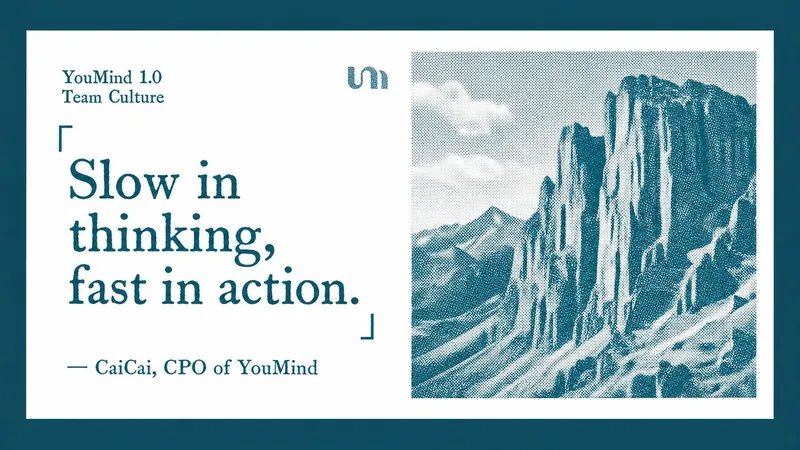
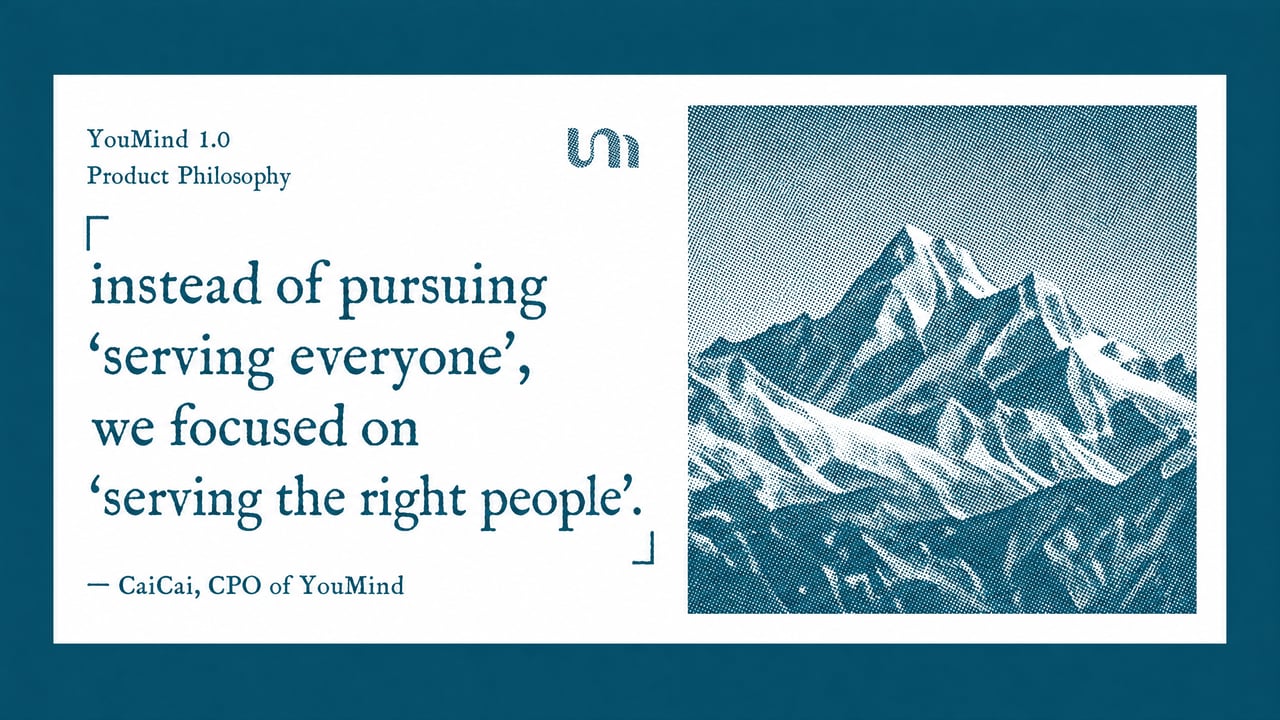
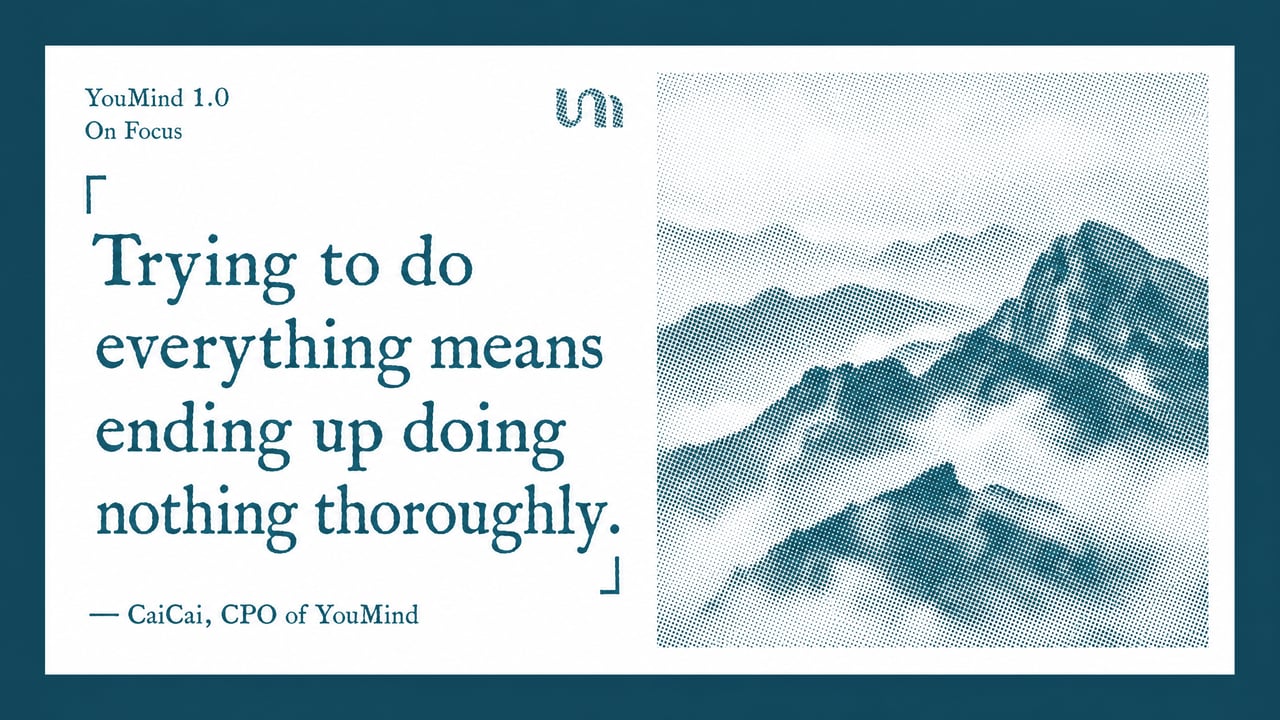
En sevdiğiniz alıntıları ve anlamlı pasajları özenle hazırlanmış tipo baskı tarzı kartlara dönüştürün. Bu beceri, sağladığınız herhangi bir makale metninden, web sayfası URL'sinden veya belgeden "altın alıntılar" çıkarma ve ardından nostaljik bir baskı estetiğine sahip bir dizi zarif, yatay alıntı kartı oluşturma konusunda uzmanlaşmıştır. Her kart, saf beyaz bir arka plana sahiptir; seçtiğiniz alıntıyı solda, mürekkep boşlukları ve düzensiz vuruşlar gibi gerçek tipo baskı kusurlarıyla sergiler. Sağda, sisli dağ sırtlarından karla kaplı zirvelere kadar uzanan kendine özgü bir yarım tonlu manzara fotoğrafı—doğal bir huzur katar—tamamı zarif bir vurgu rengiyle renklendirilmiştir. İster uzun bir rapordan bilgelik derleyin ister çevrimiçi bir makaleden önemli noktaları vurgulayın, bu araç her kartın tutarlı ve zarif bir tasarıma sahip olmasını sağlar. Oluşturulan her alıntı kartını, belgenizdeki veya yeni oluşturulmuş bir makaledeki orijinal bağlamına özenle yerleştirir; derin fikirleri zamansız bir görsel çekicilikle paylaşmayı veya yeniden ziyaret etmeyi kolaylaştırır.
İlgili beceriler
Tümünü gör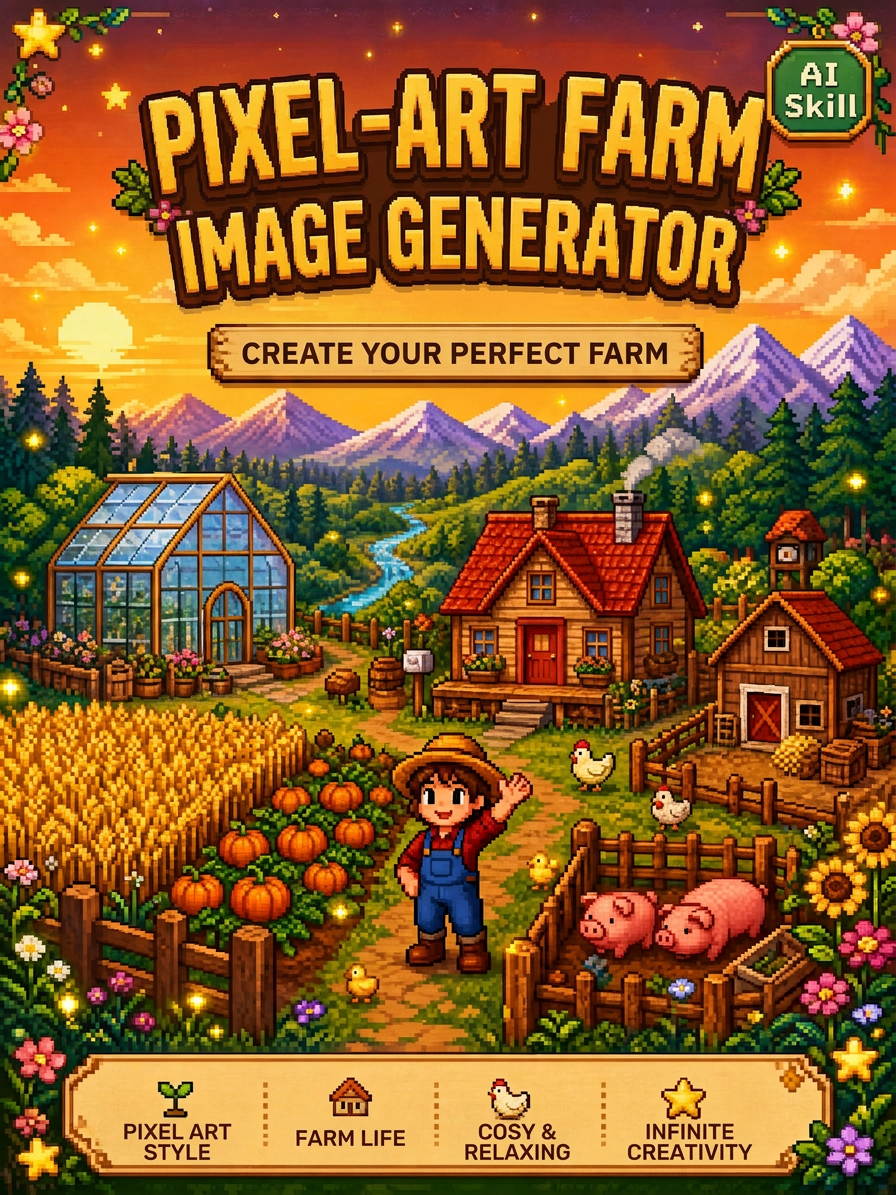 Görsel
Stardew Valley tarzı görsel
Bir görsel yükleyerek Stardew Valley piksel sanatı tarzında görseller oluşturun. Tek bir önden portre, önden portreyle birlikte klasik pozlardan oluşan birden fazla görsel veya özel talepler desteklenir. Arka plan olarak düz bir renk ya da Stardew Valley kırsal manzarası seçebilirsiniz.
 Görsel
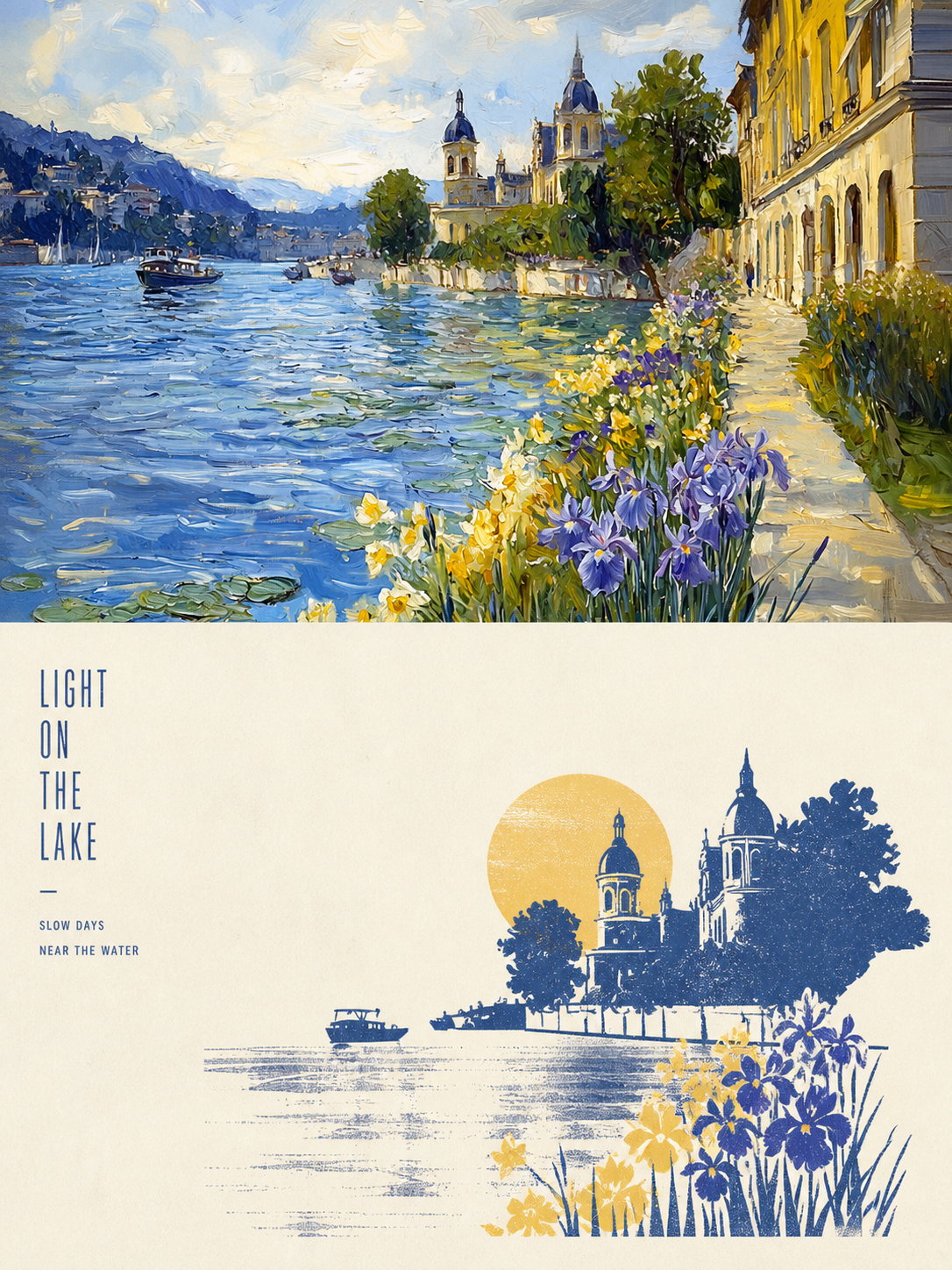
Xiaoxiaodong x Serigrafi P086
Panel 086, görüntüyü güçlü kılan yalnızca 3–5 görsel bilgiyi korur. Ana özneyi silüetler, geometrik şekiller ve yalın renk bloklarıyla yeniden kurar; ardından fotoğraftan türetilen 2–4 özel renk ile dry-brush, brayer texture, dragged ink, broken ink ve uneven coverage kullanarak ortaçağ modernizmi esintili bir serigrafi baskı oluşturur. Kompozisyon her zaman net bir odak, baskın bir yön ve anlamlı bir boşluk arar. Şu durumlar için uygundur Fotoğraflarınıza daha fazla görsel düzen kazandırmak istediğinizde: Yalnızca 3–5 temel görsel bilgiyi koruyarak silüetler, geometrik şekiller ve renk bloklarıyla net bir odak oluşturur. Gerçek bir baskı dokusu istediğinizde: Kuru fırça, merdane dokusu, sürüklenmiş mürekkep, kesintili mürekkep ve düzensiz kaplamayı görsel dilin parçası hâline getirir. Renklerin canlı ama ölçülü olmasını istediğinizde: Orijinal görseldeki en güçlü renk ilişkisini 2–4 özel renge indirger; kâğıt zemininin ve boşlukların kompozisyona gerçekten katılmasını sağlar. Esnek çıktı seçeneklerine ihtiyaç duyduğunuzda: Üst-alt, sağ-sol, yalnızca tasarım, farklı en-boy oranları ve dört kenarlı duvar kâğıdı seçeneklerini destekler; ayrıca görsel klasörlerini toplu olarak işleyebilir.
 Görsel
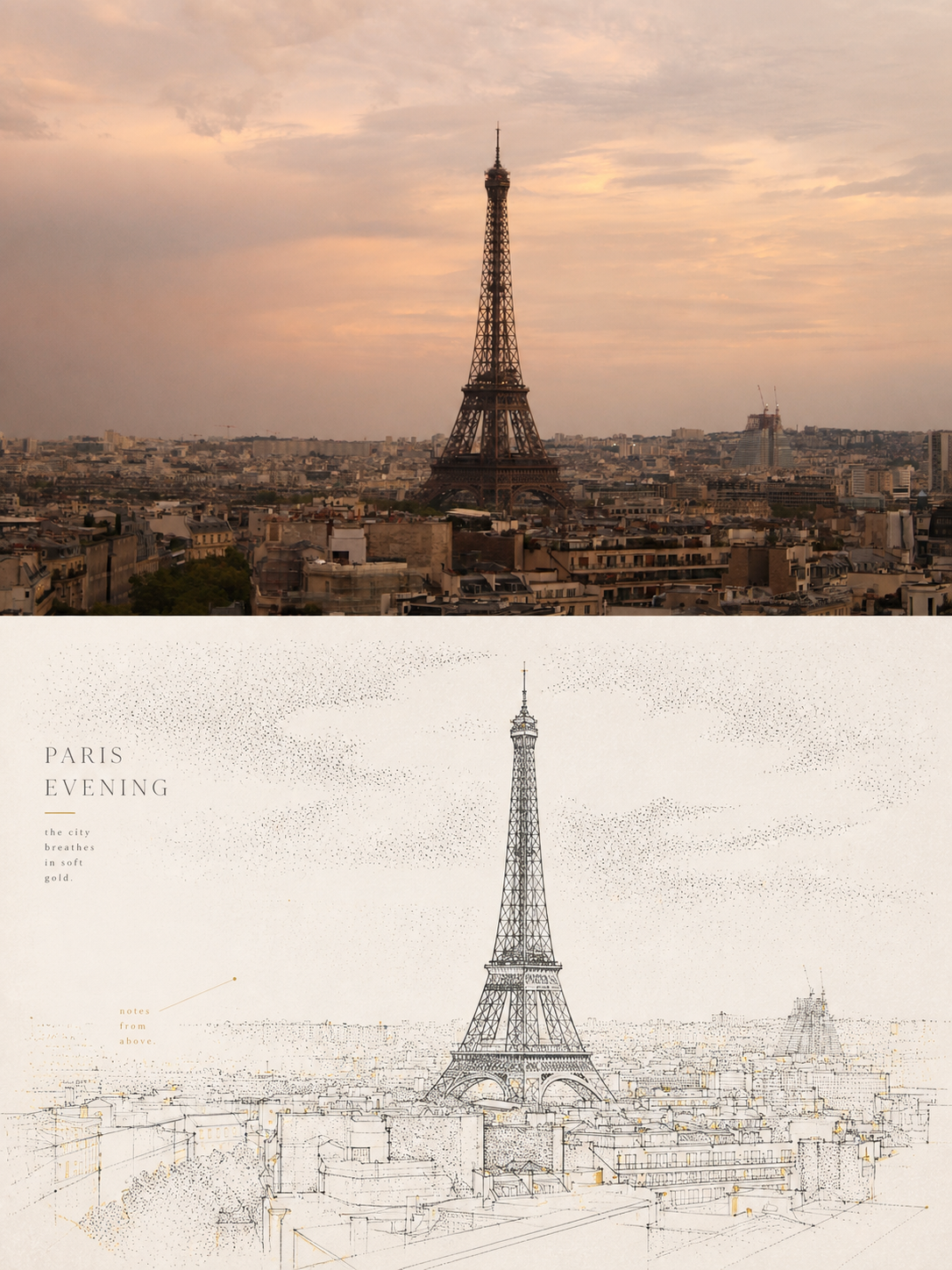
小小东 x 线描 x 点描 x P084
Panel 084, siyah veya koyu renkli ince çizgilerle ana unsurları, binaları, yolları ve mekânsal ilişkileri belirginleştirir; dikey, yatay, kırık ve kavisli çizgilerle perspektif kılavuzlarını kullanarak geometrik bir iskelet oluşturur. Ardından stippling/dotted texture yoğunluğundaki değişimlerle gökyüzünü, zemini, uzak planı, ağaç gölgelerini, ışığı ve ana unsurun çevresindeki hava katmanlarını şekillendirir. Karmaşık arka planlar bilinçli olarak sadeleştirilir; net bir odak, geniş boşluklar ve kaynağı açıkça belirli az miktarda vurgu rengi bırakılır. Şu durumlar için uygundur Şehir, mimari ve mekânsal ilişkilerin net biçimde görülmesi gerektiğinde: Yolları, binaları ve sahne yapısını geometrik ince çizgiler, perspektif kılavuzları ve önemli konturlarla öne çıkarır. Dokuyu her yeri doldurmadan hava, ışık ve alan derinliğini ifade etmek istediğinizde: stippling/dotted texture yoğunluğundaki geçişlerle sakin katmanlar oluşturur. Sınırlı ve ölçülü renk paletlerini tercih ettiğinizde: Mavi-gri, ekru ve sıcak beyazı temel alır; yalnızca orijinal görselden gelen az miktarda spot color ile odağı aydınlatır. Esnek teslim seçeneklerine ihtiyaç duyduğunuzda: Dikey, yatay, yalnızca tasarım, çeşitli oranlar ve dört kenarlı duvar kâğıtlarını destekler; ayrıca görsel klasörlerini toplu olarak işleyebilir.
Alıntı Kartı
Metinden çok dilli tipo baskı alıntı kartları
Açıklama
Öneren
Shuting@YouMind
Bu beceriyi neden öneriyoruz
Metinleri ve makaleleri zarif letterpress alıntı kartlarına dönüştürün. Kendine özgü vintage estetiği, yarı ton dağ manzaralarını özel çok dilli tipografiyle birleştirerek en etkili içgörüleriniz için sofistike, baskı kalitesinde görseller oluşturur.
En sevdiğiniz alıntıları ve anlamlı pasajları özenle hazırlanmış tipo baskı tarzı kartlara dönüştürün. Bu beceri, sağladığınız herhangi bir makale metninden, web sayfası URL'sinden veya belgeden "altın alıntılar" çıkarma ve ardından nostaljik bir baskı estetiğine sahip bir dizi zarif, yatay alıntı kartı oluşturma konusunda uzmanlaşmıştır. Her kart, saf beyaz bir arka plana sahiptir; seçtiğiniz alıntıyı solda, mürekkep boşlukları ve düzensiz vuruşlar gibi gerçek tipo baskı kusurlarıyla sergiler. Sağda, sisli dağ sırtlarından karla kaplı zirvelere kadar uzanan kendine özgü bir yarım tonlu manzara fotoğrafı—doğal bir huzur katar—tamamı zarif bir vurgu rengiyle renklendirilmiştir. İster uzun bir rapordan bilgelik derleyin ister çevrimiçi bir makaleden önemli noktaları vurgulayın, bu araç her kartın tutarlı ve zarif bir tasarıma sahip olmasını sağlar. Oluşturulan her alıntı kartını, belgenizdeki veya yeni oluşturulmuş bir makaledeki orijinal bağlamına özenle yerleştirir; derin fikirleri zamansız bir görsel çekicilikle paylaşmayı veya yeniden ziyaret etmeyi kolaylaştırır.
İlgili beceriler
Tümünü görGörselStardew Valley tarzı görsel
Bir görsel yükleyerek Stardew Valley piksel sanatı tarzında görseller oluşturun. Tek bir önden portre, önden portreyle birlikte klasik pozlardan oluşan birden fazla görsel veya özel talepler desteklenir. Arka plan olarak düz bir renk ya da Stardew Valley kırsal manzarası seçebilirsiniz.
GörselXiaoxiaodong x Serigrafi P086
Panel 086, görüntüyü güçlü kılan yalnızca 3–5 görsel bilgiyi korur. Ana özneyi silüetler, geometrik şekiller ve yalın renk bloklarıyla yeniden kurar; ardından fotoğraftan türetilen 2–4 özel renk ile dry-brush, brayer texture, dragged ink, broken ink ve uneven coverage kullanarak ortaçağ modernizmi esintili bir serigrafi baskı oluşturur. Kompozisyon her zaman net bir odak, baskın bir yön ve anlamlı bir boşluk arar. Şu durumlar için uygundur Fotoğraflarınıza daha fazla görsel düzen kazandırmak istediğinizde: Yalnızca 3–5 temel görsel bilgiyi koruyarak silüetler, geometrik şekiller ve renk bloklarıyla net bir odak oluşturur. Gerçek bir baskı dokusu istediğinizde: Kuru fırça, merdane dokusu, sürüklenmiş mürekkep, kesintili mürekkep ve düzensiz kaplamayı görsel dilin parçası hâline getirir. Renklerin canlı ama ölçülü olmasını istediğinizde: Orijinal görseldeki en güçlü renk ilişkisini 2–4 özel renge indirger; kâğıt zemininin ve boşlukların kompozisyona gerçekten katılmasını sağlar. Esnek çıktı seçeneklerine ihtiyaç duyduğunuzda: Üst-alt, sağ-sol, yalnızca tasarım, farklı en-boy oranları ve dört kenarlı duvar kâğıdı seçeneklerini destekler; ayrıca görsel klasörlerini toplu olarak işleyebilir.
Görsel小小东 x 线描 x 点描 x P084
Panel 084, siyah veya koyu renkli ince çizgilerle ana unsurları, binaları, yolları ve mekânsal ilişkileri belirginleştirir; dikey, yatay, kırık ve kavisli çizgilerle perspektif kılavuzlarını kullanarak geometrik bir iskelet oluşturur. Ardından stippling/dotted texture yoğunluğundaki değişimlerle gökyüzünü, zemini, uzak planı, ağaç gölgelerini, ışığı ve ana unsurun çevresindeki hava katmanlarını şekillendirir. Karmaşık arka planlar bilinçli olarak sadeleştirilir; net bir odak, geniş boşluklar ve kaynağı açıkça belirli az miktarda vurgu rengi bırakılır. Şu durumlar için uygundur Şehir, mimari ve mekânsal ilişkilerin net biçimde görülmesi gerektiğinde: Yolları, binaları ve sahne yapısını geometrik ince çizgiler, perspektif kılavuzları ve önemli konturlarla öne çıkarır. Dokuyu her yeri doldurmadan hava, ışık ve alan derinliğini ifade etmek istediğinizde: stippling/dotted texture yoğunluğundaki geçişlerle sakin katmanlar oluşturur. Sınırlı ve ölçülü renk paletlerini tercih ettiğinizde: Mavi-gri, ekru ve sıcak beyazı temel alır; yalnızca orijinal görselden gelen az miktarda spot color ile odağı aydınlatır. Esnek teslim seçeneklerine ihtiyaç duyduğunuzda: Dikey, yatay, yalnızca tasarım, çeşitli oranlar ve dört kenarlı duvar kâğıtlarını destekler; ayrıca görsel klasörlerini toplu olarak işleyebilir.
Bir sonraki favori becerini bul
Araştırma, üretim ve günlük işler için özenle seçilmiş daha fazla AI becerisini keşfet.