Thẻ trích dẫn đáng nhớ

Thẻ trích dẫn đáng nhớ

Tạo thiệp báo giá in dập nổi từ văn bản. Hỗ trợ nhiều ngôn ngữ.
Tạo bởi
SShuting@YouMind
Lượt cài đặt
16
TừYouMind
YouMind Product Manager: 1.0, the choices we made

Labeling a product as 1.0 is more than just moving the version number forward one digit; it's a sense of confirmation: YouMind has finally come to fruition. So, taking this opportunity, I'd like to share some candid thoughts from a startup team's perspective on our recent product, team, and development.

The current state of survival for small teams

We recently did a cost breakdown, and the good news is that YouMind's overall investment and returns are currently in a very healthy state. However, we sometimes need to plan ahead, because the healthier the situation, the more important it is to carefully consider whether this health can continue.

Here's the situation: let's start by looking at the costs. We found that heavy users of YouMind were spending far more each month than we expected. On one hand, we're happy because the product is very popular with users and creates value for them. On the other hand, we're also considering how to gradually optimize the cost structure while maintaining quality.

Optimizing the cost structure is essentially about giving us more initiative in our future development. Offering trial services to new users is always a significant expense, and if these users don't pay, spread the word, or provide feedback, it represents a direct loss for us.

This isn't a complaint; it's the reality for most startups.

The AI ​​era has changed the economic models of many software products. The traditional approach of "building a large user base first and then monetizing" is becoming increasingly inapplicable. The reason is simple: every time an AI product interacts with another user and generates an image, it incurs costs. Often, it doesn't operate mechanically according to a program, but rather it consumes real money.

If a startup doesn't have very strong capital backing, then the "burn money first, then monetize" model is no longer reliable. We must find a healthy growth curve in the early stages.

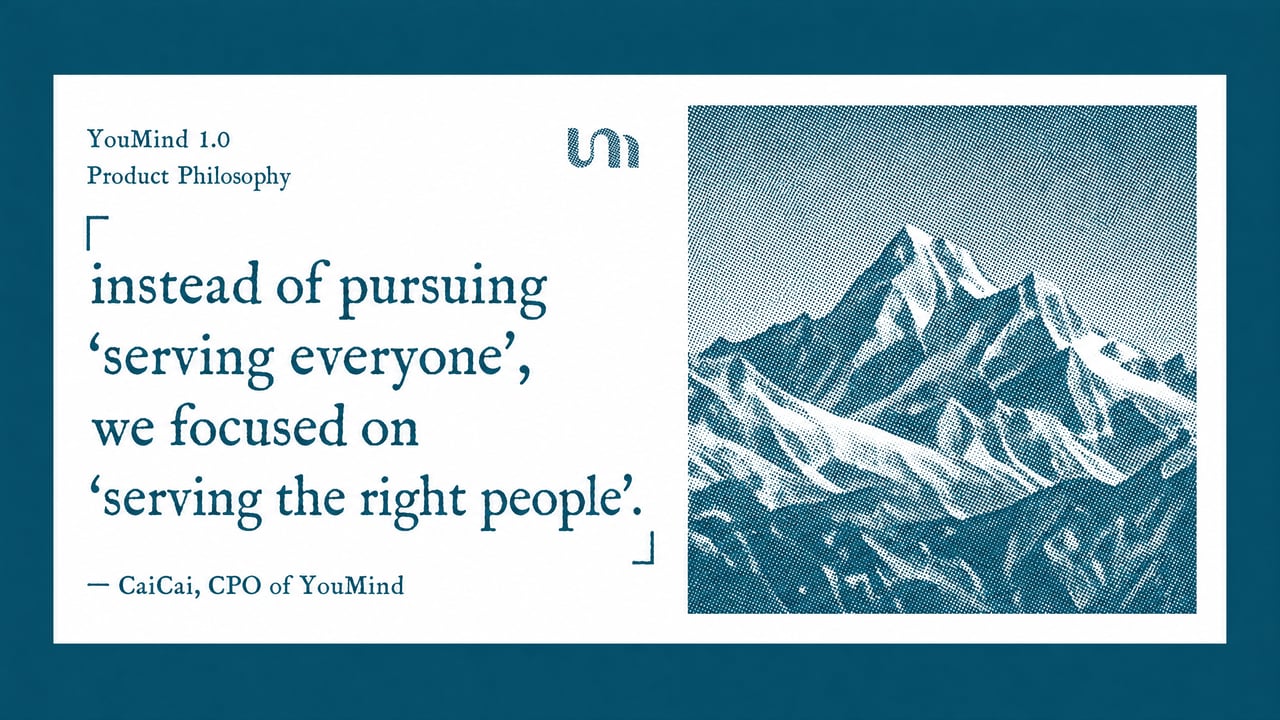
So we made a choice: instead of pursuing "serving everyone", we focused on "serving the right people".

{"alt":"Quote Card: Serving the Right People","id":"imageId-68a9f005-6622-48e5-b63e-f6f88a78a1f9","width":1066,"height":600}

<EMPTY_PARAGRAPH>

If "serving the right people" is our choice on the user side, then on the product side, we face another kind of anxiety.It's not that I can't think of what to do, but rather that there are too many things I want to do and can do.

AI amplifies possibilities and improves everyone's output efficiency, making everyone eager to try new ideas, and innovation surges. However, for small teams, what is truly scarce is never ideas, but time.

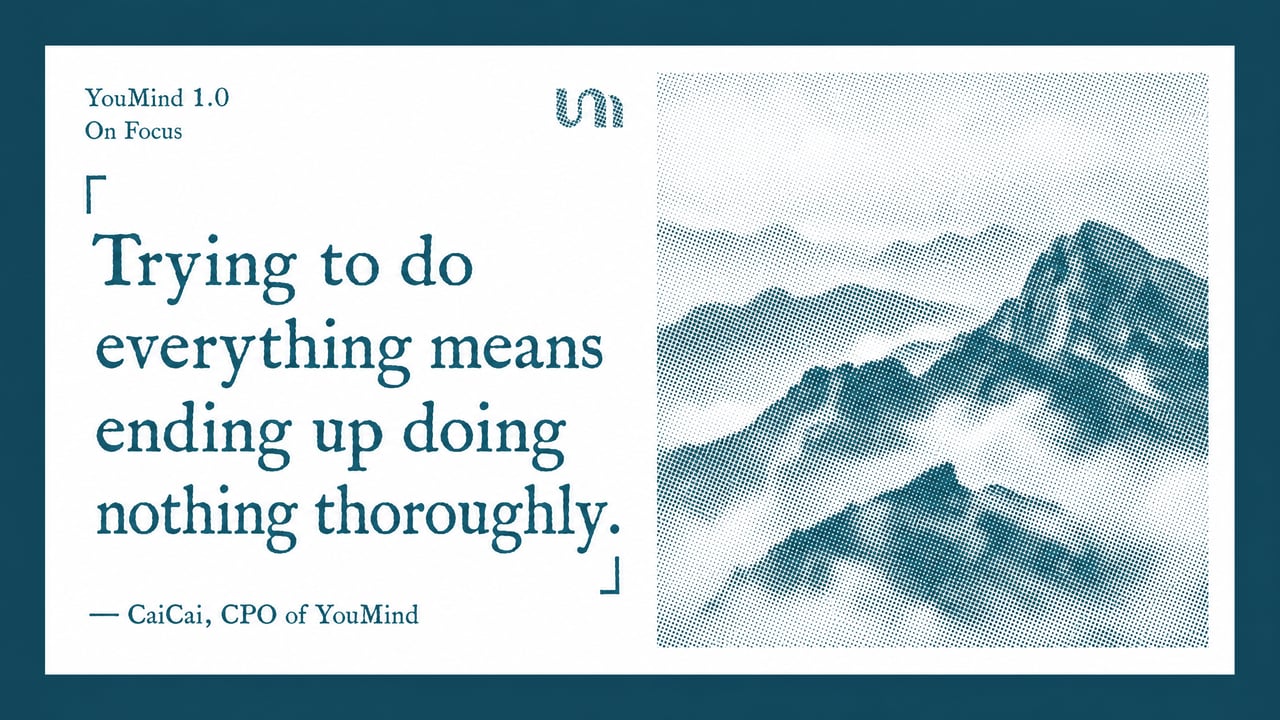
Trying to do everything means ending up doing nothing thoroughly.

{"alt":"Quote Card: Doing Nothing Thoroughly","id":"imageId-28ae376b-f655-40e8-a1f7-036473ae782e","width":1066,"height":600}

So when making choices, one topic we have to discuss is how to ensure we're still on the right track.

In a world of infinite possibilities, hold fast to the main storyline.

Over the past month, we've experimented with some new iteration methods, dividing R&D into several groups that can independently advance their tasks and directions. The experiments have yielded some benefits, but have also exposed some iteration-related issues.

Trying multiple groups has the most direct impact of multiple breakthroughs, which seems to speed up the iteration process. However, people will gradually forget our main focus and core principles because they are often more interested in trying new things than anything else.

The most fascinating, yet also the most dangerous, aspect of the AI ​​era is that every path seems correct, and every idea could become the next opportunity. We often cling to the hope that "it might just work out." But the problem is, most ideas don't actually lead to anything. Small teams also don't have the resources to gamble. Resources are finite; no matter how many agents you deploy, individual bandwidth is ultimately limited. If you can't even think through the intricacies of a single issue, scaling up the process is meaningless.

Hướng dẫn

Tác giả đã đặt hướng dẫn ở chế độ riêng tư. Dưới đây là phần giới thiệu ngắn gọn về hướng dẫn.

Mô tả

Biến những câu trích dẫn yêu thích và những đoạn văn sâu sắc của bạn thành những tấm thiệp kiểu in dập nổi tinh tế. Kỹ năng này chuyên trích xuất những "câu trích dẫn vàng" từ bất kỳ văn bản bài viết, URL trang web hoặc tài liệu nào bạn cung cấp, sau đó tạo ra một loạt các tấm thiệp trích dẫn ngang trang nhã với phong cách in cổ điển. Mỗi tấm thiệp có nền trắng tinh khiết, làm nổi bật câu trích dẫn bạn chọn ở bên trái, được thể hiện với những khuyết điểm đặc trưng của kiểu in dập nổi như khoảng trống mực và nét vẽ không đều. Ở bên phải, một bức ảnh phong cảnh halftone đặc sắc—từ những dãy núi mờ sương đến những đỉnh núi phủ tuyết—tạo thêm nét thanh bình tự nhiên, tất cả được tô điểm bằng một màu nhấn tinh tế. Cho dù bạn đang chọn lọc những lời khôn ngoan từ một báo cáo dài hay làm nổi bật những điểm chính từ một bài báo trực tuyến, công cụ này đảm bảo mỗi tấm thiệp đều duy trì một thiết kế nhất quán và tinh tế. Nó khéo léo đặt mỗi tấm thiệp trích dẫn được tạo ra trở lại ngữ cảnh ban đầu trong tài liệu của bạn hoặc một bài viết mới được tạo, giúp bạn dễ dàng chia sẻ hoặc xem lại những ý tưởng sâu sắc với sức hấp dẫn trực quan vượt thời gian.

Tìm kỹ năng yêu thích tiếp theo của bạn

Khám phá thêm các kỹ năng AI được tuyển chọn cho nghiên cứu, sáng tạo và công việc hằng ngày.

Khám phá tất cả kỹ năng