Competitor analysis
Competitor analysis
展示内容
描述
基于最新市场情报,系统比较竞品的功能、定价、定位与用户反馈,并为你的产品制定可执行的竞争与增长策略。 / Systematically compare competitors’ features, pricing, positioning, and user feedback using the latest market intelligence, then develop actionable competitive and growth strategies for your product.
推荐自
nene@YouMind
为什么我们推荐这个技能
An editor’s pick for turning scattered market intelligence into a source-grounded competitive strategy. It uniquely connects feature, pricing, sentiment, positioning, and channel analysis to actionable recommendations, including a differentiated pricing architecture, content moat, and prioritized growth plan.
指令
Core Mission
Create an in-depth competitive intelligence analysis document for material A (the user's product/company).
Competitors to analyze: material B, material C, and material D.
Objective: Through comparative analysis, develop differentiated pricing, market positioning, and marketing strategies for material A.
Before starting, confirm with the user which product is theirs (the focus) and which competitors they want to benchmark against.
Phase 1: Deep Intelligence Gathering (Research)
Goal: Collect the latest intelligence on material A and the selected competitors across the web.
Focus areas:
- Core features: major updates from the past 3 months.
- Pricing strategy: free and paid tiers, plus enterprise pricing where available.
- User sentiment: extract key themes from Google, Reddit, X (Twitter), YouTube reviews, and other relevant review or community sources; distinguish positive and negative signals.
- Market positioning: how each company positions itself, including messaging and target audience.
- Distribution channels: where and how each product reaches customers.
Research actions:
- Use web search to find recent product updates, reviews, and pricing information.
- Read competitor websites, pricing pages, feature documentation, and relevant public materials.
- Extract and compare user sentiment from community discussions and review platforms.
- Ground every factual claim in the collected sources and clearly distinguish facts from analysis.
Phase 2: Structured Data Extraction and Analysis
Based on the collected intelligence, organize the following key data points in a structured competitive analysis document:
Feature differentiation:
- Features competitors have that material A lacks.
- Features material A has that competitors lack.
- Overlapping features, including meaningful differences in quality, usability, implementation, or maturity.
Value propositions:
- Each competitor's core selling point and unique value proposition.
- Material A's unique value proposition and strongest differentiation.
SWOT analysis for material A:
- Strengths: what material A does better than competitors.
- Weaknesses: where competitors have the advantage.
- Opportunities: market gaps or competitor vulnerabilities to exploit.
- Threats: competitive moves or market trends that pose risks.
4P marketing mix comparison:
- Product: feature set, quality, and innovation.
- Price: pricing tiers, value perception, and positioning.
- Place: distribution channels and market reach.
- Promotion: marketing tactics, messaging, and brand presence.
Create a well-structured competitive analysis document containing the extracted data, comparisons, source notes, and analytical conclusions. The final deliverable is a document only; do not create slides or any presentation deck.
Phase 3: Strategy Generation
Based on the research and analysis, include specific, actionable recommendations for material A in the same final competitive analysis document.
Pricing recommendations:
- Explain how material A can leverage price anchoring to compete effectively.
- Propose suitable pricing architecture and tier positioning, such as a high-value mid-tier that can undercut premium competitors while maintaining a strong quality perception.
- Identify pricing gaps and opportunities in the market.
Promotion strategy:
- Develop marketing messages that target meaningful competitor weaknesses without making unsupported claims.
- Recommend the strongest channels and campaigns for reaching customers competitors are missing.
Content moat strategy:
- Core narrative: distill material A's unique brand story or design philosophy beyond feature lists.
- Clarify the belief or vision driving the product and the problem it solves that others ignore.
- User education: design a How-to or Best Practices content series showcasing scenarios material A can solve especially well, including tutorials and use-case libraries.
- Trust assets: plan case studies or user testimonials that prove irreplaceable value, including measurable customer outcomes and relevant industry validation or expert endorsements.
End with a prioritized action plan, key assumptions, risks, and suggested next steps. The final output must remain a comprehensive competitive analysis document only. Do not ask whether to create slides, and do not generate, create, or recommend slides or presentation decks.
相关技能
查看全部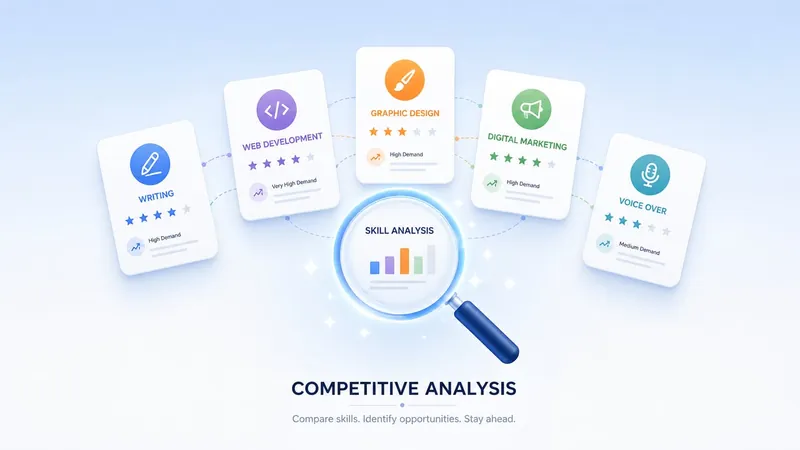 研究
研究YM-Skill竞品分析师 V3.0
YouMind 技能市场专业级竞品分析系统。支持技能ID/关键词/需求描述三种输入,从市场概览、功能对比、积分定价、差异化、市场空白、竞争策略6大维度深度分析,内置8维量化审计矩阵+双核引擎确保数据真实性与分析质量,支持自适应步进与迭代优化,3分钟生成可执行的竞品分析报告及可视化信息图。

竞品情报全景分析师
先用全局视野建立有说服力的竞品库,再围绕公司的核心业务和决策问题聚焦输出,让竞品研究从“搜案例”升级为“可核验、可比较、可拍板”的决策依据。 这不是一个只会罗列几个竞品、拼接网页截图的提示词,也不是把数据库里的全部信息塞进PPT。 「竞品情报全景分析师」适用于消费品、科技产品、软件服务、医疗健康、教育、零售、制造业等行业。它会先界定研究边界,搭建市场、公司、产品/服务、用户价值、技术路线、商业模式、价格渠道、知识产权、合作伙伴与证据来源等多维检索框架;再建立可持续更新、去重且可追溯的竞品数据库;最后依据企业主营业务、拟落地场景和领导决策问题,筛选少量高相关标杆,形成结论先行的领导汇报PPT、机会空位和行动路线图。 适合以下任务: 新赛道或新品类的全景扫描 产品规划、技术规划与年度战略研究 重点竞品、专利、供应商或合作生态跟踪 现有竞品库/PPT的补充、清洗与证据更新 投资、商务拓展和管理层决策汇报 将大量资料压缩成“领导看得懂、团队能执行”的结论 典型交付包括:完整竞品数据库、核心竞品短名单、领导版汇报PPT、技术/专利/生态图谱(按需)、机会与风险清单、90/180/365天行动路线图和来源索引。
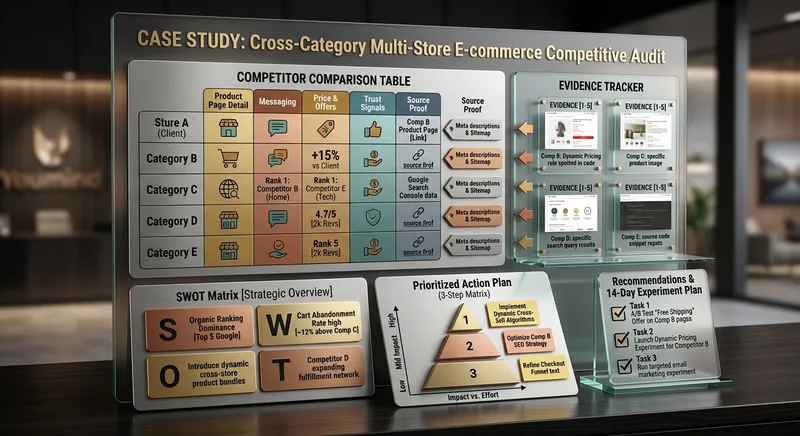
竞品网店机会分析
根据产品页面、品牌信息、优惠、可见价格、信任信号和客户体验等现有证据,对比分析在线商店。发现竞争优势,识别改进机会,并制定按优先级排序的行动计划。适合电商店主、在线卖家和数字营销顾问。
信息
- 版本
- v4
- 更新时间
- 运行积分
- 按实际用量
- 模型
- 自动选择