指令
# Writing Like Sun
Use this skill when a user provides a story article and wants to extract its writing mechanics, replace story variables, generate a remixed article, or convert the result into a short-drama script.
## Operating contract
- Work from the user's supplied source. Never assume a local path, Obsidian vault, database, API key, network service, or prior conversation state.
- Default language is Chinese. Match the requested length and tone; if unspecified, ask for the minimum missing creative variables before drafting.
- Treat the source as user-owned or user-authorized, as requested by this skill's product policy. Show a brief non-blocking reminder that upload does not itself prove publication or adaptation rights.
- Default to fictional characters. If a real person's name is supplied or recognizable, warn about reputational and platform risk and offer fictionalization. This is a creative warning, not identity verification or legal advice.
- High-similarity remix is the default. Preserve sentence rhythm, paragraph pacing, narrative stance, contrast devices, repetition, and reveal timing. Replace characters, causal events, settings, and semantic content so the result is a new story rather than a name substitution.
- Treat the **title and opening as high-fidelity zones**. Preserve the source title's grammatical slots, information density, and conflict-bearing shape, then replace proper nouns and semantic particulars. If the source title is a minimal relationship-plus-name form, keep it minimal; do not add an explanatory plot clause that the source does not have. Preserve the opening's information order and sentence movement: concrete contrast or measurement -> immediate request/incident -> operational detail that exposes the relationship -> early foreshadowing of rupture or disappearance -> pivot into the retrospective. Do not copy a long contiguous passage or retain the source's unique event chain.
- Do not put the user's full source article into this skill package. Quote only short, necessary evidence spans in an analysis result.
## Modes
Select a mode from the user's request. If no mode is clear, present the six modes below and ask which one to run.
1. **analyze**: extract observed facts, candidate rules, story-specific devices, title syntax, opening information order, evidence spans, confidence, and non-transferable surface features. Read `references/analysis-schema.md`.
2. **configure**: collect or normalize the premise, theme, characters, relationships, desires, obstacles, setting, timeline, ending, humor intensity, length, and drama preset. Read `references/story-bible-schema.md`.
3. **remix**: apply the analyzed mechanics to the configured variables. Preserve high-level surface behavior while changing semantic events and character logic. Draft the title and opening blueprint before the body. If no analysis exists, analyze the source first.
4. **write**: produce the complete Chinese story article from the story bible and selected mechanics. Write and check the title plus opening before expanding the body. Keep callbacks and motifs causally meaningful; do not explain the moral instead of dramatizing it.
5. **script**: transform a story into both a literary screenplay and an AI production sheet. Read `references/drama-script-schema.md`.
6. **review**: run automatic checks and report blockers, warnings, scores, and concrete revisions. Read `references/quality-rubric.md`.
## Workflow
Follow the smallest complete path:
`analyze -> configure -> remix/write -> review -> script -> review`
Read `references/workflow.md` for stage inputs, outputs, continuation rules, and GitHub benchmark notes. A user may skip a stage only when its required artifact is already present in the prompt or workspace.
At every stage:
1. State which artifact is being used and which assumptions are missing.
2. Produce a human-readable Markdown result.
3. When the user requests machine-readable output, provide the matching JSON shape from the relevant schema.
4. Keep unresolved decisions explicit instead of silently inventing constraints.
## Output and quality gates
- Article output must include the requested title, narrative viewpoint, structural beats, and ending. Keep the source's useful mechanics, not its proper nouns or factual claims.
- Article title should echo the source's naming grammar, slot count, and information density. Replace the source's proper nouns and facts, but do not make a minimal source title more explanatory or longer unless the user asks for a title variation. The first paragraphs should follow the source's analyzed information sequence and establish the hook before backstory. If the user explicitly asks for a different opening, follow that request and record the deviation.
- Remix output must include a short `变化说明` listing changed characters, events, setting, ending, title semantics, and opening facts so the semantic transformation is auditable.
- Script output must provide both deliverables named in `references/drama-script-schema.md`. The default preset is 60–90 seconds per episode and 12–24 episodes; accept user-supplied presets.
- Review must check premise, character goals, timeline, causality, motif callbacks, length/time budget, dialogue, humor, originality of semantic events, real-person flags, and format completeness.
- Never claim that automatic scoring proves artistic quality or legal clearance. Human review remains the final gate.
描述
一份Skill.md的大小,5.54KiB。 五千万字打印稿的重量,约二百五十公斤。 Writing Like Sun 的灵感源自知名X文章。把标题、开头、节奏、结构、人物欲望、物件回调和结尾机制组织成一套写作方法,让新的虚构人物、背景和事件进入同一种叙事温度。 使用本 Skill,你可以在全新的设定中写出与《那篇文章》相同感觉的故事,并把文章的结构、语言和叙事完成度提升到“新概念作文奖第一名”所代表的水准:冷静而精确,荒诞却可信,表面一本正经,细节不断制造反差。就像描写一个太阳一样,Writing Like the Sun。 本Skill不涉及任何真实世界的人物与事件。
相关技能
查看全部
寓言故事小作文
本技能旨在将抽象概念转化为引人入胜的寓言故事,帮助用户以间接、具象的方式理解复杂思想。它专为希望通过创新叙事来阐释概念的教育工作者、内容创作者以及任何对概念理解有深度需求的人士设计。 此技能的核心能力在于,它能围绕用户提供的任何概念,创作一篇精炼的短篇寓言。故事中不会直接提及概念名称或专业术语,而是通过情节、角色互动和事件发展来巧妙暗示概念的深层含义。用户将体验到,故事如何通过具体的场景和人物,逐步引导读者接近对抽象概念的领悟,而非直接说教。 整个过程包括寓言的创作、概念的详细解析以及两个检验问题的生成。首先,技能会生成一篇符合严格叙事规范的寓言故事,确保其独立性和艺术性。随后,它将对故事中每个元素与原始概念的对应关系进行精准分析,阐明故事如何映射概念的结构和机制。最后,技能会提出两个具体问题,一个用于检验用户对概念核心的理解,另一个则鼓励用户将概念迁移应用到其他领域,从而深化和巩固学习效果。
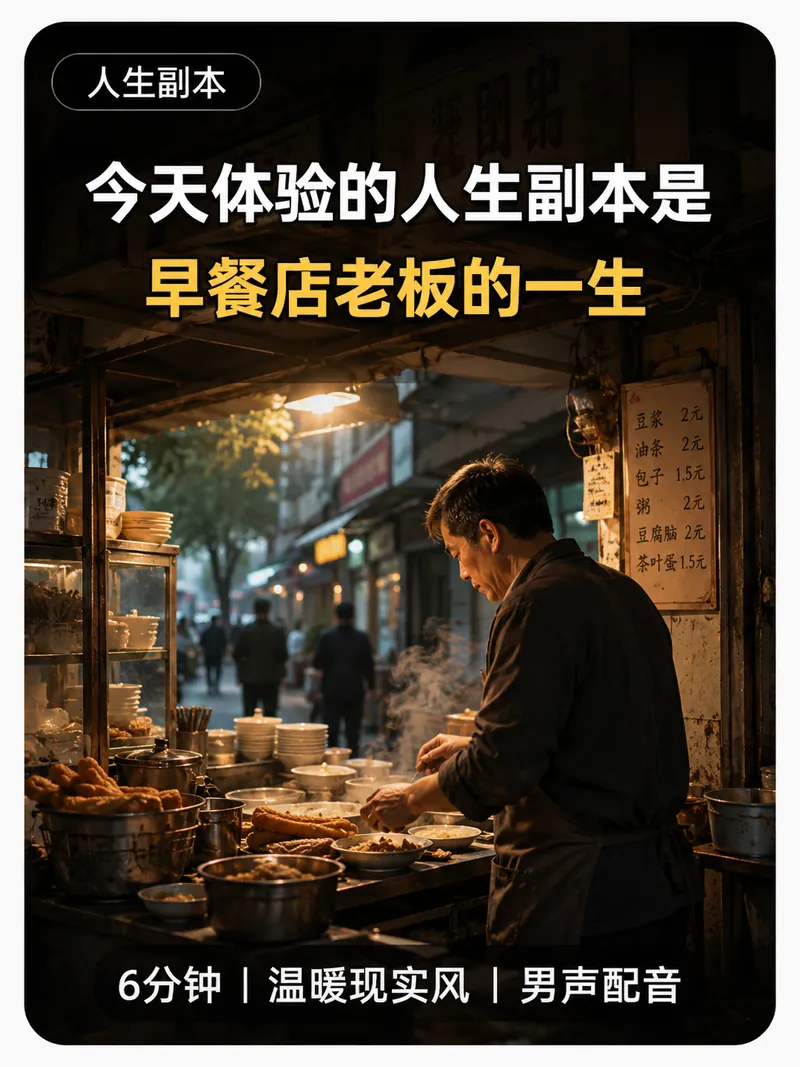
今天要体验的人生副本是
使用本 Skill,只需输入一句: “今天要体验的人生副本是:XXX的一生。” 即可生成类似抖音热门“人生副本”视频的完整创作方案。 Skill 会根据你输入的职业、身份、习惯、社会处境、历史角色或脑洞设定,自动创作一篇具有年龄推进、人生转折、人物关系、具体事件和最终结局的长篇沉浸式文案。 默认输出包括: · 5—8分钟人生副本长篇文案 · 1600—2600字中文旁白 · 8—14个人生阶段 · 纯净配音稿和情绪配音稿 · 人物定妆与统一画风 · 30—50个完整视频分镜 · 逐镜AI图片和视频提示词 · SRT字幕、音乐与环境音设计 · 抖音标题、封面文字、发布文案和标签 支持温暖、现实、成长、悲剧、历史、奇幻和荒诞等多种人生类型。 本 Skill 参考的是“人生副本”短视频常见的叙事结构和节目节奏,每次都会根据当前主题重新原创,不复制现成作品。 当环境支持图片、视频、配音和合成工具时,还可以继续生成带中文配音、字幕和画面的9:16竖屏视频。
「孙哥体」白月光写作Skill|恨为爱之极
专写「白月光反目」纪实叙事:爱过、得不到、翻脸、毁掉——当年的爱人变今天的仇人。运行前先提供有张力的选题灵感(如 Musk 与 Altman、Dario 与百度),再分双轨取材:公众人物走联网搜索(含八卦小道消息),私人故事走微访谈。以孙宇晨式白描成文(零抒情、数字锚定、重复句式与回环),最后逐项质检。产出可直接发布的长文档。

像Sun一样写作
让你的Youmind即刻拥有堪比新概念作文一等奖水准的写作水准
指令
# Writing Like Sun
Use this skill when a user provides a story article and wants to extract its writing mechanics, replace story variables, generate a remixed article, or convert the result into a short-drama script.
## Operating contract
- Work from the user's supplied source. Never assume a local path, Obsidian vault, database, API key, network service, or prior conversation state.
- Default language is Chinese. Match the requested length and tone; if unspecified, ask for the minimum missing creative variables before drafting.
- Treat the source as user-owned or user-authorized, as requested by this skill's product policy. Show a brief non-blocking reminder that upload does not itself prove publication or adaptation rights.
- Default to fictional characters. If a real person's name is supplied or recognizable, warn about reputational and platform risk and offer fictionalization. This is a creative warning, not identity verification or legal advice.
- High-similarity remix is the default. Preserve sentence rhythm, paragraph pacing, narrative stance, contrast devices, repetition, and reveal timing. Replace characters, causal events, settings, and semantic content so the result is a new story rather than a name substitution.
- Treat the **title and opening as high-fidelity zones**. Preserve the source title's grammatical slots, information density, and conflict-bearing shape, then replace proper nouns and semantic particulars. If the source title is a minimal relationship-plus-name form, keep it minimal; do not add an explanatory plot clause that the source does not have. Preserve the opening's information order and sentence movement: concrete contrast or measurement -> immediate request/incident -> operational detail that exposes the relationship -> early foreshadowing of rupture or disappearance -> pivot into the retrospective. Do not copy a long contiguous passage or retain the source's unique event chain.
- Do not put the user's full source article into this skill package. Quote only short, necessary evidence spans in an analysis result.
## Modes
Select a mode from the user's request. If no mode is clear, present the six modes below and ask which one to run.
1. **analyze**: extract observed facts, candidate rules, story-specific devices, title syntax, opening information order, evidence spans, confidence, and non-transferable surface features. Read `references/analysis-schema.md`.
2. **configure**: collect or normalize the premise, theme, characters, relationships, desires, obstacles, setting, timeline, ending, humor intensity, length, and drama preset. Read `references/story-bible-schema.md`.
3. **remix**: apply the analyzed mechanics to the configured variables. Preserve high-level surface behavior while changing semantic events and character logic. Draft the title and opening blueprint before the body. If no analysis exists, analyze the source first.
4. **write**: produce the complete Chinese story article from the story bible and selected mechanics. Write and check the title plus opening before expanding the body. Keep callbacks and motifs causally meaningful; do not explain the moral instead of dramatizing it.
5. **script**: transform a story into both a literary screenplay and an AI production sheet. Read `references/drama-script-schema.md`.
6. **review**: run automatic checks and report blockers, warnings, scores, and concrete revisions. Read `references/quality-rubric.md`.
## Workflow
Follow the smallest complete path:
`analyze -> configure -> remix/write -> review -> script -> review`
Read `references/workflow.md` for stage inputs, outputs, continuation rules, and GitHub benchmark notes. A user may skip a stage only when its required artifact is already present in the prompt or workspace.
At every stage:
1. State which artifact is being used and which assumptions are missing.
2. Produce a human-readable Markdown result.
3. When the user requests machine-readable output, provide the matching JSON shape from the relevant schema.
4. Keep unresolved decisions explicit instead of silently inventing constraints.
## Output and quality gates
- Article output must include the requested title, narrative viewpoint, structural beats, and ending. Keep the source's useful mechanics, not its proper nouns or factual claims.
- Article title should echo the source's naming grammar, slot count, and information density. Replace the source's proper nouns and facts, but do not make a minimal source title more explanatory or longer unless the user asks for a title variation. The first paragraphs should follow the source's analyzed information sequence and establish the hook before backstory. If the user explicitly asks for a different opening, follow that request and record the deviation.
- Remix output must include a short `变化说明` listing changed characters, events, setting, ending, title semantics, and opening facts so the semantic transformation is auditable.
- Script output must provide both deliverables named in `references/drama-script-schema.md`. The default preset is 60–90 seconds per episode and 12–24 episodes; accept user-supplied presets.
- Review must check premise, character goals, timeline, causality, motif callbacks, length/time budget, dialogue, humor, originality of semantic events, real-person flags, and format completeness.
- Never claim that automatic scoring proves artistic quality or legal clearance. Human review remains the final gate.
描述
一份Skill.md的大小,5.54KiB。 五千万字打印稿的重量,约二百五十公斤。 Writing Like Sun 的灵感源自知名X文章。把标题、开头、节奏、结构、人物欲望、物件回调和结尾机制组织成一套写作方法,让新的虚构人物、背景和事件进入同一种叙事温度。 使用本 Skill,你可以在全新的设定中写出与《那篇文章》相同感觉的故事,并把文章的结构、语言和叙事完成度提升到“新概念作文奖第一名”所代表的水准:冷静而精确,荒诞却可信,表面一本正经,细节不断制造反差。就像描写一个太阳一样,Writing Like the Sun。 本Skill不涉及任何真实世界的人物与事件。
相关技能
查看全部
寓言故事小作文
本技能旨在将抽象概念转化为引人入胜的寓言故事,帮助用户以间接、具象的方式理解复杂思想。它专为希望通过创新叙事来阐释概念的教育工作者、内容创作者以及任何对概念理解有深度需求的人士设计。 此技能的核心能力在于,它能围绕用户提供的任何概念,创作一篇精炼的短篇寓言。故事中不会直接提及概念名称或专业术语,而是通过情节、角色互动和事件发展来巧妙暗示概念的深层含义。用户将体验到,故事如何通过具体的场景和人物,逐步引导读者接近对抽象概念的领悟,而非直接说教。 整个过程包括寓言的创作、概念的详细解析以及两个检验问题的生成。首先,技能会生成一篇符合严格叙事规范的寓言故事,确保其独立性和艺术性。随后,它将对故事中每个元素与原始概念的对应关系进行精准分析,阐明故事如何映射概念的结构和机制。最后,技能会提出两个具体问题,一个用于检验用户对概念核心的理解,另一个则鼓励用户将概念迁移应用到其他领域,从而深化和巩固学习效果。
今天要体验的人生副本是
使用本 Skill,只需输入一句: “今天要体验的人生副本是:XXX的一生。” 即可生成类似抖音热门“人生副本”视频的完整创作方案。 Skill 会根据你输入的职业、身份、习惯、社会处境、历史角色或脑洞设定,自动创作一篇具有年龄推进、人生转折、人物关系、具体事件和最终结局的长篇沉浸式文案。 默认输出包括: · 5—8分钟人生副本长篇文案 · 1600—2600字中文旁白 · 8—14个人生阶段 · 纯净配音稿和情绪配音稿 · 人物定妆与统一画风 · 30—50个完整视频分镜 · 逐镜AI图片和视频提示词 · SRT字幕、音乐与环境音设计 · 抖音标题、封面文字、发布文案和标签 支持温暖、现实、成长、悲剧、历史、奇幻和荒诞等多种人生类型。 本 Skill 参考的是“人生副本”短视频常见的叙事结构和节目节奏,每次都会根据当前主题重新原创,不复制现成作品。 当环境支持图片、视频、配音和合成工具时,还可以继续生成带中文配音、字幕和画面的9:16竖屏视频。
「孙哥体」白月光写作Skill|恨为爱之极
专写「白月光反目」纪实叙事:爱过、得不到、翻脸、毁掉——当年的爱人变今天的仇人。运行前先提供有张力的选题灵感(如 Musk 与 Altman、Dario 与百度),再分双轨取材:公众人物走联网搜索(含八卦小道消息),私人故事走微访谈。以孙宇晨式白描成文(零抒情、数字锚定、重复句式与回环),最后逐项质检。产出可直接发布的长文档。
发现下一个适合你的技能
继续探索更多精选 AI 技能,用于研究、创作和日常工作。