Future Archive Storybook
Turn defining moments into historical art for the future.
Future Archive Storybook
Turn defining moments into historical art for the future.
展示內容
描述
Future Archive Storybook transforms important current or historical events into artistic records for future generations. It researches the topic using reliable sources, identifies iconic moments and visual cues from collective memory, builds them into a connected narrative flow, and explores suitable cultural art traditions to define the visual direction. Before any image generation, all prompts are shown for user approval. Images can be produced inside YouMind or continued in other tools through Production Transfer files. In the final stage, scene artwork, matching narrative text, cover design, closing section, and selected sources can be assembled into an artistic storybook or historical PDF document.
推薦自
Dancang
為什麼我們推薦這個技能
An editor’s pick for turning researched events into coherent visual histories, not disconnected images. It uniquely combines source-aware narrative architecture, culturally grounded art direction, anchor-scene validation, visual continuity, and final storybook assembly with careful separation between fact and artistic interpretation.
相關技能
查看全部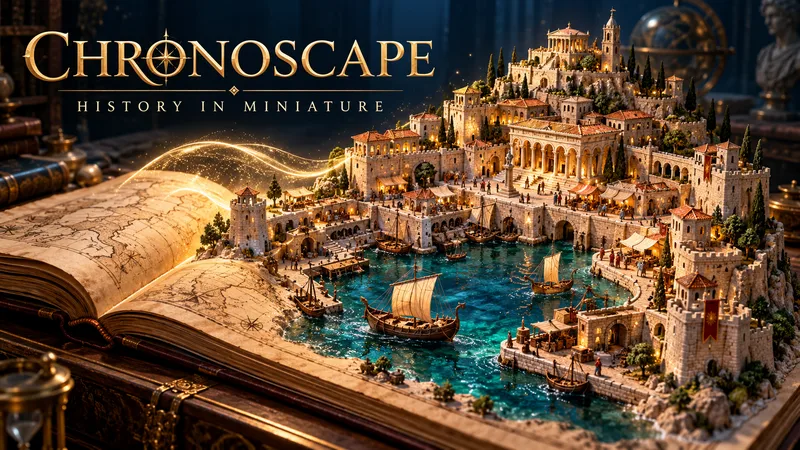 圖片
Chronoscape: History in Miniature
Step into history. Explore the past in miniature. What if you could hold an entire historical moment in your hands? Chronoscape transforms fascinating historical events, ancient civilizations, and everyday life from the past into breathtaking miniature worlds. From the streets of ancient Rome to medieval cities and defining moments in history, every scene becomes a carefully crafted visual story. DISCOVER THE STORY BEHIND THE SCENE Start with a historical event, location, civilization, or period. Chronoscape researches the setting, architecture, clothing, artifacts, and historical context to build a visually compelling reconstruction. CREATE YOUR MINIATURE WORLD Choose your scene count (3–12), aspect ratio (16:9, 9:16, or 1:1), and visual style: • Stylized 3D miniature dioramas with cinematic lighting and handcrafted textures. • Photorealistic tabletop miniatures featuring painted models, tangible materials, and macro photography. Each scene is designed to form part of a consistent visual narrative. HISTORICAL DETAIL MEETS CREATIVE STORYTELLING Architecture, costumes, objects, and environments are informed by historical research. Verified facts, disputed accounts, and artistic reconstructions are distinguished to preserve historical integrity. FROM MINIATURE IMAGES TO CINEMATIC VIDEOS Receive detailed English image prompts, scene descriptions in your language, and optional image-to-video prompts featuring cinematic camera movement and subtle environmental animation. Review and approve each production stage before generating images or video clips. YOUR COMPLETE HISTORY PROJECT The Chronicle File organizes your research, sources, scene plans, prompts, production progress, and available assets so your project can continue across supported platforms. Perfect for history enthusiasts, educators, documentary creators, and visual storytellers. Image and video generation depend on available tools. Narration is provided as text; final video editing is a separate production step.
 圖片
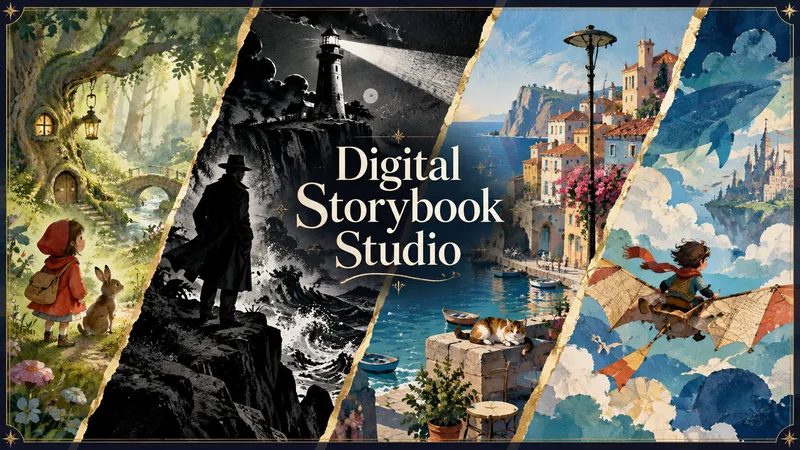
Digital Storybook Studio
Turn an idea—or your existing story—into a coherent illustrated digital book and finished PDF. Digital Storybook Studio guides you through every important creative decision one step at a time: book format, reader age, story subject, tone, visual style, length, and optional book details. Create picture books, comics, cartoon narratives, or newspaper-style storybooks without beginning from a blank page. Before artwork begins, it builds an approval-ready book blueprint with a page-by-page story plan, visual system, character bible, and continuity notes. For recurring characters, it creates a dedicated reference sheet to lock their appearance, clothing, colors, props, and proportions across the entire book. For comic and cartoon narratives, each page is generated as a complete final composition: approved dialogue, compact speech balloons, clear speaker tails, and style-appropriate lettering are embedded directly into the artwork. The Studio maps every line to its speaker and planned position before generation, then checks spelling, readability, balloon ownership, line breaks, and visual consistency during review. You review illustrations in small batches before final assembly. The Studio flags character drift, wardrobe inconsistencies, story-flow gaps, dialogue or balloon errors, layout issues, and any unreadable or misplaced text. If a page has a dialogue problem, that complete page is regenerated rather than patched afterward. The result is not just a collection of images—it is a polished, readable storybook with consistent art direction, purposeful pacing, fully integrated comic dialogue where needed, and a final PDF assembled only after your explicit approval.
 圖片
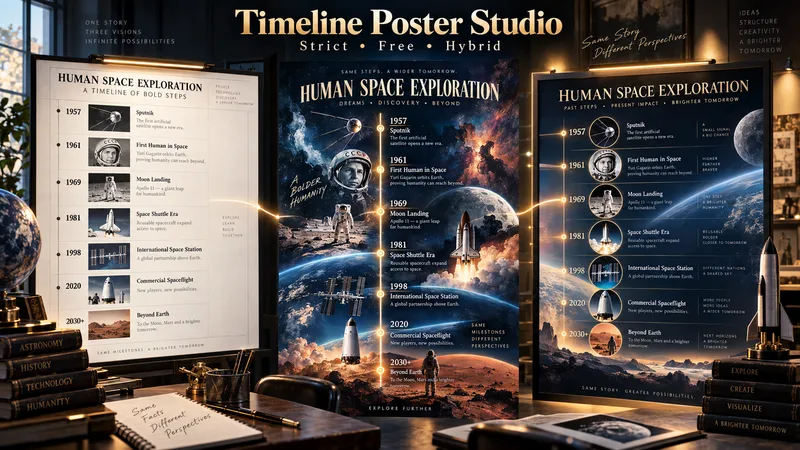
Timeline Poster Studio
Timeline Poster Studio transforms history, biography, technology, science, art, cultural change, product evolution, and other time-based subjects into informative and visually distinctive timeline posters. The skill first defines the topic, scope, audience, and time range, then performs focused research only to the level needed for the poster. It curates the most meaningful events, identifies turning points and natural eras, distinguishes exact, approximate, and duration-based events, and detects parallel storylines or geographic movement when relevant. It then builds an adaptive poster structure instead of forcing every topic into the same template or fixed aspect ratio. Depending on the content, the poster may use vertical, tall vertical, horizontal, or wide layouts. Visuals are selected according to their role: narrative scenes can blend naturally into the composition, while artworks, products, objects, documents, maps, and other reference visuals remain clearly organized and controlled. The design system protects chronology, readability, and factual structure while giving the visual AI creative freedom in color, typography, panel design, framing, decoration, background treatment, and overall art direction. For the same verified content, the skill produces three complete standalone poster prompts: Strict Hierarchical Design — optimized for educational clarity and structured reading. Free / Expressive Design — gives the visual AI greater freedom to create a bold and distinctive poster identity. Hybrid Design — balances clear information design with creative visual character. The prompts are designed to work across different image-generation tools, allowing the user to review, modify, or choose a design direction before generating the final poster.
