
Yüksek Değerli Karar Danışmanı
Gereklilik, risk, zamanlama ve alternatifler
Açıklama
Bir şeyi yapıp yapmama, bir planı seçip seçmeme, kaynak ayırmaya değip değmeme konusunda kararsız kaldığınızda veya 'o karar neden bugünkü noktaya geldi' diye bir kararı gözden geçirmek istediğinizde, bu Skill sıcak bir proje değerlendirme danışmanı gibi, bulanık düşüncelerinizi değerlendirilebilir kanıtlara ayırmanıza yardımcı olur. Şunlar için uygundur: - Kariyer seçimleri: İş değiştirme, sektör değiştirme, bir start-up'a katılma, yüksek lisans veya doktora yapma; - Eğitim ve gelişim yatırımları: Çocuğunuza bir kurs aldırma, bir ders satın alma, uzun vadeli bir öğrenme planına yatırım yapma; - Proje ve fırsat değerlendirmeleri: Bir proje başlatma, bir işbirliği kabul etme, kaynak ayırma; - İlişki ve yaşam seçimleri: İtiraf etme, taşınma, yaşam düzenini değiştirme; - Geçmiş karar incelemeleri: Bir istifa, lisansüstü sınavı, yatırım, işbirliği veya ilişki kararını gözden geçirme. Kararın büyüklüğüne göre argümantasyon derinliğini otomatik olarak ayarlar: - Hafif kararlar: Hızlıca ana değişkenleri sorgular, kısa öneriler sunar; - Orta düzey kararlar: Gereklilik, fizibilite, risk, zamanlama ve alternatifler etrafında yapılandırılmış analiz yapar; - Ağır kararlar: Tam proje benzeri bir argümantasyon yürütür, risk uyarıları, eğilim önerileri ve eylem yolları çıktısı verir; - İnceleme tipi sorular: O zamanki karar zincirini yeniden oluşturmanıza, tahmin sapmalarını ve aktarılabilir deneyimleri bulmanıza yardımcı olur. Şu şekilde başlayabilirsiniz: - “Çocuğuma yıllık 20.000 TL'lik bir İngilizce kursu aldırmalı mıyım?” - “İstikrarlı bir işten start-up'a geçmeli miyim?” - “Geçen yıl işten ayrılıp lisansüstü sınavına hazırlanma kararımı gözden geçirmek istiyorum.” - “İtiraf edip etmemekten emin değilim, analiz etmeme yardım eder misin?” - “Bu fırsat zaman ve para harcamaya değer mi?” Sonunda şunları elde edersiniz: - Net bir eğilim önerisi: Uygulama önerisi / Erteleme önerisi / Bilgi tamamlandıktan sonra karar verme önerisi; - Her önerinin güven düzeyi ve ana belirsizlikler; - En kolay gözden kaçırdığınız risk; - Bir sonraki en küçük doğrulama adımı. Not: Bilgi yetersiz olduğunda kesinmiş gibi davranıp sizin için karar vermez; karar dayanağınızı, risk sınırlarını ve bir sonraki adımda neyi doğrulamanız gerektiğini görmenize yardımcı olur.
İlgili beceriler
Tümünü görSteelman: Karar Analizi
Önemli bir karar vermeden önce acele etmeyin. Bu beceri, sonuca varmadan önce konuyu enine boyuna düşünmenize yardımcı olur: Gerçekte çözmeniz gereken sorunu netleştirir, fark etmediğiniz örtük varsayımları ortaya çıkarır, iki tarafın da en güçlü argümanlarını olabildiğince hakkaniyetli biçimde kurar, hangi koşul değiştiğinde sonucun tersine döneceğini gösteren kilit ayrışma noktalarını bulur ve sonunda size sonucu en çok değiştirebilecek tek bir soru sorar. Yanıtınızdan sonra net bir değerlendirme ve somut eylem önerileri sunar; “iki tarafın da kendince haklı olduğu” gibi boş sözlerle yetinmez. Kullanım alanları: kariyer seçimi, teknoloji seçimi, ürün yönü, ticari kararlar, yatırım değerlendirmeleri, ekip içi anlaşmazlıklar… “Bir düşünmeme yardım et” dediğiniz her an. Kullanım: Karar vermekte zorlandığınız soruyu doğrudan yazın. Örneğin: “Büyük bir teknoloji şirketinden ayrılıp girişim kurmalı mıyım?”, “Bu çözümde A’yı mı, B’yi mi kullanalım?”, “Bu ürün hattını kapatmalı mıyız?”
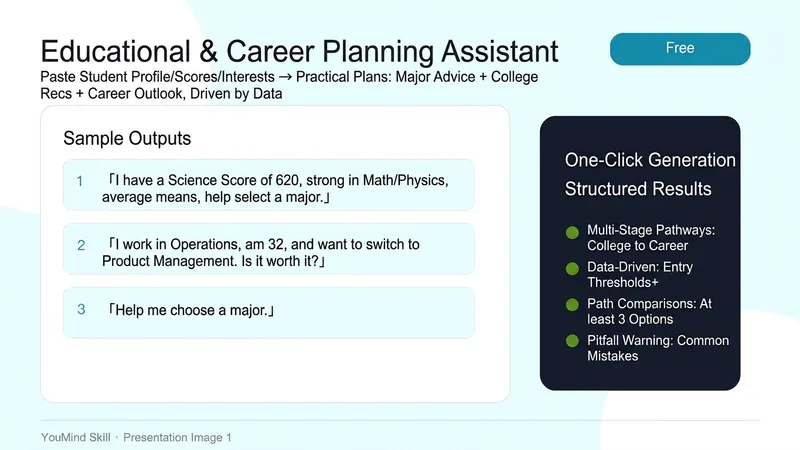
Eğitim ve Kariyer Asistanı
Üniversite tercihlerinde 'bu bölüm iyi görünüyor' diye karar vermek, yüksek lisans için 'abi iyi diyor' ile yön seçmek, kariyer değişikliğinde 'çok popüler' diye atlamak... ve sonra mezun olunca bölümün işsizlik oranının en yüksek olduğunu, sektörün gerilediğini, öğrendiklerinizi yapay zekanın yapabildiğini görmek. Puanınızı, geçmişinizi ve ilgi alanlarınızı girin, veriye dayalı konuşsun: sektöre giriş şartları, medyan maaş, beş yıl sonraki tavan, bu sektörün yapay zeka tarafından yok edilip edilmeyeceği. Sizi dinlemesi için değil, her yolu verilerle görüp kendi kararınızı vermeniz için. ✨ Temel Yetenekler 1. Çok aşamalı uyum: Üniversite tercihi / yüksek lisans / yurtdışı eğitim / kariyer değişikliği / iş planlaması, her aşama için farklı analiz çerçevesi 2. Veri odaklı: Giriş şartları + medyan maaş + 3-5 yıllık artış + sektör tavanı, sıfatlara gerek yok 3. Yol karşılaştırması: En az 3 alternatif yol, her biri için giriş/gelecek/risk analizi 4. Tuzak uyarıları: En yaygın seçim hataları – kulağa hoş gelen ama işsizlik oranı yüksek bölümler, gerileyen sektörler 5. Uygulanabilir ilk adım: Sizi 'düşünmeye' itmek yerine, bugün başlayabileceğiniz somut bir eylem 📱 Uygulama Alanları - Lise öğrencileri/ebeveynler tercih: Puanınız hangi bölümlere yeter? Hangi bölüm mezun olduktan sonra iş bulur? - Üniversite öğrencileri yüksek lisans/iş: Bölümünüzün geleceği nedir? Çapraz geçiş veya kariyer değişikliği yapmalı mısınız? - Çalışanlar kariyer değişikliği: 30 yaşında sektör değiştirmek değer mi? Kapı nerede? - Ebeveynler çocuklarına plan yaparken: 'Bence bu bölüm iyi' yerine veri kullanın ⚠️ Sorumluluk reddi: Analiz kamuya açık bilgilere dayanmaktadır, tek karar verme aracı değildir. Politika, pazar ve kişisel koşullar değişebilir.
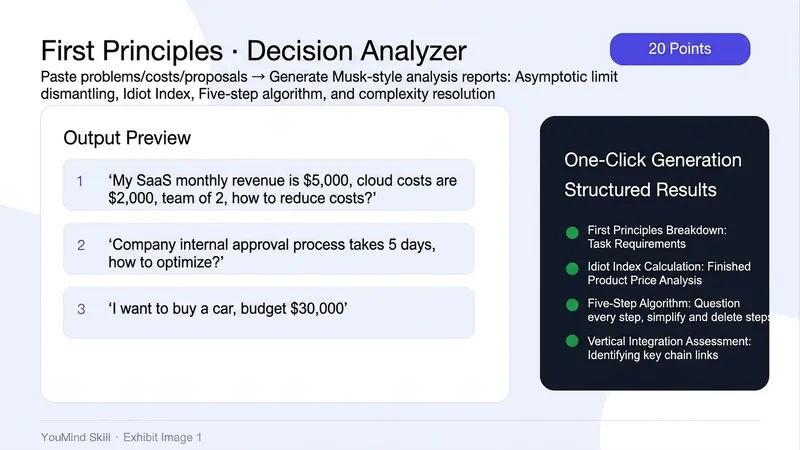
İlk İlkeler Karar Analizörü
Bu proje çok pahalı", "Bu süreç çok yavaş", "Kendim mi yapmalıyım yoksa dışarıdan mı?" — Her seferinde bu sorularla boğuşurken içgüdünüz "bir sorun var" dese de sorunun ne olduğunu ve ne kadar iyileştirilebileceğini tam olarak söyleyemezsiniz. Ona probleminizi ve sağlayabileceğiniz her türlü veriyi verin, Musk tarzı mühendislik düşüncesini kullanarak — Musk'ın konuşma tarzını değil, karar verme çerçevesini — sorunu parçalanamayacak hale gelene kadar ayırmanıza yardımcı olur: Asimptotik sınır nerede? Aptal indeksi kaç? Hangi adım silinmeli, hangisi entegre edilmeli? Bir rapor ortaya çıkar ve artık kararlarınızı içgüdülerinize göre vermezsiniz. ✨ Temel Yetenekler 1. İlk ilkelerle parçalama: Herhangi bir sorunu temel öğelerine ayırma, fiziksel sınır ile gerçek farkı hesaplama 2. Aptal indeksi hesaplama: Ürün fiyatı / hammadde maliyeti = ? İndeks yüksekse iyileştirme alanı büyüktür 3. Beş adım algoritması: Sırasıyla sorgula → sil → basitleştir → hızlandır → otomatikleştir, size özel eylem önerileri sunar 4. Dikey entegrasyon değerlendirmesi: Hangi alanlarda aptal indeksi >5? Hangilerini kendiniz yapmaya değer? 5. Fiziksel fizibilite testi: Plan fiziksel olarak mantıklı mı? En zor darboğaz nedir? 📱 Uygulama Alanları - Girişimler/küçük ekipler: Maliyet yapısını optimize etme, teknik çözümleri değerlendirme - Ürün yöneticileri: Gereksinimleri sorgulama, özellikleri azaltma, yinelemeyi hızlandırma - Bireysel kararlar: Belirli bir beceri öğrenmeli miyim, alan değiştirmeli miyim, yatırım getirisi nasıl hesaplanır? - "Bir şeyler ters ama ne olduğunu söyleyemiyorum" hissettiren her türlü maliyet/verimlilik sorunu Amaç sizi Musk'la sohbet ettirmek değil, onun düşünce çerçevesinin kararlarınızda size yardımcı olmasını sağlamak.
Yüksek Değerli Karar Danışmanı
Gereklilik, risk, zamanlama ve alternatifler
Açıklama
Bir şeyi yapıp yapmama, bir planı seçip seçmeme, kaynak ayırmaya değip değmeme konusunda kararsız kaldığınızda veya 'o karar neden bugünkü noktaya geldi' diye bir kararı gözden geçirmek istediğinizde, bu Skill sıcak bir proje değerlendirme danışmanı gibi, bulanık düşüncelerinizi değerlendirilebilir kanıtlara ayırmanıza yardımcı olur. Şunlar için uygundur: - Kariyer seçimleri: İş değiştirme, sektör değiştirme, bir start-up'a katılma, yüksek lisans veya doktora yapma; - Eğitim ve gelişim yatırımları: Çocuğunuza bir kurs aldırma, bir ders satın alma, uzun vadeli bir öğrenme planına yatırım yapma; - Proje ve fırsat değerlendirmeleri: Bir proje başlatma, bir işbirliği kabul etme, kaynak ayırma; - İlişki ve yaşam seçimleri: İtiraf etme, taşınma, yaşam düzenini değiştirme; - Geçmiş karar incelemeleri: Bir istifa, lisansüstü sınavı, yatırım, işbirliği veya ilişki kararını gözden geçirme. Kararın büyüklüğüne göre argümantasyon derinliğini otomatik olarak ayarlar: - Hafif kararlar: Hızlıca ana değişkenleri sorgular, kısa öneriler sunar; - Orta düzey kararlar: Gereklilik, fizibilite, risk, zamanlama ve alternatifler etrafında yapılandırılmış analiz yapar; - Ağır kararlar: Tam proje benzeri bir argümantasyon yürütür, risk uyarıları, eğilim önerileri ve eylem yolları çıktısı verir; - İnceleme tipi sorular: O zamanki karar zincirini yeniden oluşturmanıza, tahmin sapmalarını ve aktarılabilir deneyimleri bulmanıza yardımcı olur. Şu şekilde başlayabilirsiniz: - “Çocuğuma yıllık 20.000 TL'lik bir İngilizce kursu aldırmalı mıyım?” - “İstikrarlı bir işten start-up'a geçmeli miyim?” - “Geçen yıl işten ayrılıp lisansüstü sınavına hazırlanma kararımı gözden geçirmek istiyorum.” - “İtiraf edip etmemekten emin değilim, analiz etmeme yardım eder misin?” - “Bu fırsat zaman ve para harcamaya değer mi?” Sonunda şunları elde edersiniz: - Net bir eğilim önerisi: Uygulama önerisi / Erteleme önerisi / Bilgi tamamlandıktan sonra karar verme önerisi; - Her önerinin güven düzeyi ve ana belirsizlikler; - En kolay gözden kaçırdığınız risk; - Bir sonraki en küçük doğrulama adımı. Not: Bilgi yetersiz olduğunda kesinmiş gibi davranıp sizin için karar vermez; karar dayanağınızı, risk sınırlarını ve bir sonraki adımda neyi doğrulamanız gerektiğini görmenize yardımcı olur.
İlgili beceriler
Tümünü görSteelman: Karar Analizi
Önemli bir karar vermeden önce acele etmeyin. Bu beceri, sonuca varmadan önce konuyu enine boyuna düşünmenize yardımcı olur: Gerçekte çözmeniz gereken sorunu netleştirir, fark etmediğiniz örtük varsayımları ortaya çıkarır, iki tarafın da en güçlü argümanlarını olabildiğince hakkaniyetli biçimde kurar, hangi koşul değiştiğinde sonucun tersine döneceğini gösteren kilit ayrışma noktalarını bulur ve sonunda size sonucu en çok değiştirebilecek tek bir soru sorar. Yanıtınızdan sonra net bir değerlendirme ve somut eylem önerileri sunar; “iki tarafın da kendince haklı olduğu” gibi boş sözlerle yetinmez. Kullanım alanları: kariyer seçimi, teknoloji seçimi, ürün yönü, ticari kararlar, yatırım değerlendirmeleri, ekip içi anlaşmazlıklar… “Bir düşünmeme yardım et” dediğiniz her an. Kullanım: Karar vermekte zorlandığınız soruyu doğrudan yazın. Örneğin: “Büyük bir teknoloji şirketinden ayrılıp girişim kurmalı mıyım?”, “Bu çözümde A’yı mı, B’yi mi kullanalım?”, “Bu ürün hattını kapatmalı mıyız?”
Eğitim ve Kariyer Asistanı
Üniversite tercihlerinde 'bu bölüm iyi görünüyor' diye karar vermek, yüksek lisans için 'abi iyi diyor' ile yön seçmek, kariyer değişikliğinde 'çok popüler' diye atlamak... ve sonra mezun olunca bölümün işsizlik oranının en yüksek olduğunu, sektörün gerilediğini, öğrendiklerinizi yapay zekanın yapabildiğini görmek. Puanınızı, geçmişinizi ve ilgi alanlarınızı girin, veriye dayalı konuşsun: sektöre giriş şartları, medyan maaş, beş yıl sonraki tavan, bu sektörün yapay zeka tarafından yok edilip edilmeyeceği. Sizi dinlemesi için değil, her yolu verilerle görüp kendi kararınızı vermeniz için. ✨ Temel Yetenekler 1. Çok aşamalı uyum: Üniversite tercihi / yüksek lisans / yurtdışı eğitim / kariyer değişikliği / iş planlaması, her aşama için farklı analiz çerçevesi 2. Veri odaklı: Giriş şartları + medyan maaş + 3-5 yıllık artış + sektör tavanı, sıfatlara gerek yok 3. Yol karşılaştırması: En az 3 alternatif yol, her biri için giriş/gelecek/risk analizi 4. Tuzak uyarıları: En yaygın seçim hataları – kulağa hoş gelen ama işsizlik oranı yüksek bölümler, gerileyen sektörler 5. Uygulanabilir ilk adım: Sizi 'düşünmeye' itmek yerine, bugün başlayabileceğiniz somut bir eylem 📱 Uygulama Alanları - Lise öğrencileri/ebeveynler tercih: Puanınız hangi bölümlere yeter? Hangi bölüm mezun olduktan sonra iş bulur? - Üniversite öğrencileri yüksek lisans/iş: Bölümünüzün geleceği nedir? Çapraz geçiş veya kariyer değişikliği yapmalı mısınız? - Çalışanlar kariyer değişikliği: 30 yaşında sektör değiştirmek değer mi? Kapı nerede? - Ebeveynler çocuklarına plan yaparken: 'Bence bu bölüm iyi' yerine veri kullanın ⚠️ Sorumluluk reddi: Analiz kamuya açık bilgilere dayanmaktadır, tek karar verme aracı değildir. Politika, pazar ve kişisel koşullar değişebilir.
İlk İlkeler Karar Analizörü
Bu proje çok pahalı", "Bu süreç çok yavaş", "Kendim mi yapmalıyım yoksa dışarıdan mı?" — Her seferinde bu sorularla boğuşurken içgüdünüz "bir sorun var" dese de sorunun ne olduğunu ve ne kadar iyileştirilebileceğini tam olarak söyleyemezsiniz. Ona probleminizi ve sağlayabileceğiniz her türlü veriyi verin, Musk tarzı mühendislik düşüncesini kullanarak — Musk'ın konuşma tarzını değil, karar verme çerçevesini — sorunu parçalanamayacak hale gelene kadar ayırmanıza yardımcı olur: Asimptotik sınır nerede? Aptal indeksi kaç? Hangi adım silinmeli, hangisi entegre edilmeli? Bir rapor ortaya çıkar ve artık kararlarınızı içgüdülerinize göre vermezsiniz. ✨ Temel Yetenekler 1. İlk ilkelerle parçalama: Herhangi bir sorunu temel öğelerine ayırma, fiziksel sınır ile gerçek farkı hesaplama 2. Aptal indeksi hesaplama: Ürün fiyatı / hammadde maliyeti = ? İndeks yüksekse iyileştirme alanı büyüktür 3. Beş adım algoritması: Sırasıyla sorgula → sil → basitleştir → hızlandır → otomatikleştir, size özel eylem önerileri sunar 4. Dikey entegrasyon değerlendirmesi: Hangi alanlarda aptal indeksi >5? Hangilerini kendiniz yapmaya değer? 5. Fiziksel fizibilite testi: Plan fiziksel olarak mantıklı mı? En zor darboğaz nedir? 📱 Uygulama Alanları - Girişimler/küçük ekipler: Maliyet yapısını optimize etme, teknik çözümleri değerlendirme - Ürün yöneticileri: Gereksinimleri sorgulama, özellikleri azaltma, yinelemeyi hızlandırma - Bireysel kararlar: Belirli bir beceri öğrenmeli miyim, alan değiştirmeli miyim, yatırım getirisi nasıl hesaplanır? - "Bir şeyler ters ama ne olduğunu söyleyemiyorum" hissettiren her türlü maliyet/verimlilik sorunu Amaç sizi Musk'la sohbet ettirmek değil, onun düşünce çerçevesinin kararlarınızda size yardımcı olmasını sağlamak.
Bir sonraki favori becerini bul
Araştırma, üretim ve günlük işler için özenle seçilmiş daha fazla AI becerisini keşfet.