Academic Paper Introduction
Draft, polish, and structure research introductions
Academic Paper Introduction
Draft, polish, and structure research introductions
Showcase
Description
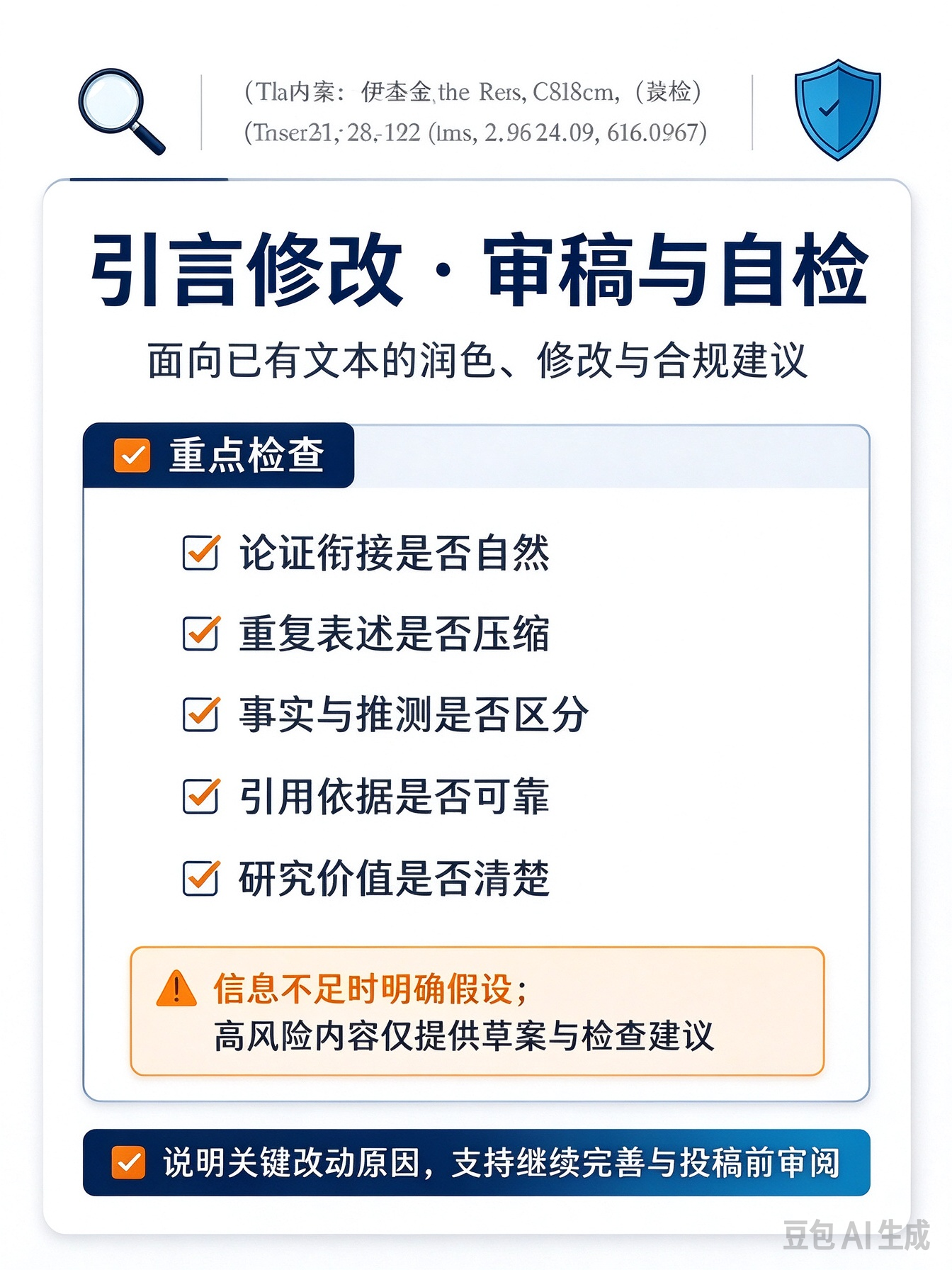
Helps you write logically clear, academically appropriate paper introductions centered on research background, core questions, literature gaps, and contributions. Whether drafting from scratch, rewriting, or addressing reviewer comments, it first organizes your research goals, target audience, source material, length, and tone before generating a tailored introduction plan. You will receive a clear heading or paragraph structure, ready-to-use introduction drafts, and reliable alternative academic phrasing. For existing text, it reviews logical transitions, eliminates filler words, distinguishes facts from speculation, checks citation backing, and highlights research value with explanations for key changes. Suitable for writing and revising introductions in academic papers, research reports, and funding proposals. It clarifies assumptions when information is insufficient and handles high-risk topics like data, citations, medical, legal, or professional content strictly using reliable materials without fabricating facts, faking citations, or guaranteeing review approval.
Best for
Students, researchers, and academic writers drafting, rewriting, or polishing paper introductions, research reports, and grant proposals.
How to use this Skill
Provide your input
Provide your research topic, goals, relevant materials, or existing draft, along with your target audience, length, and revision requests.
Run the Skill
Analyzes the research background, core problem, literature gap, and contribution, builds the paragraph structure, and checks logical flow and academic tone.
Review your result
Receive a well-structured academic paper introduction draft or revision, complete with alternative phrasing and notes for further verification.
Related Skills
View all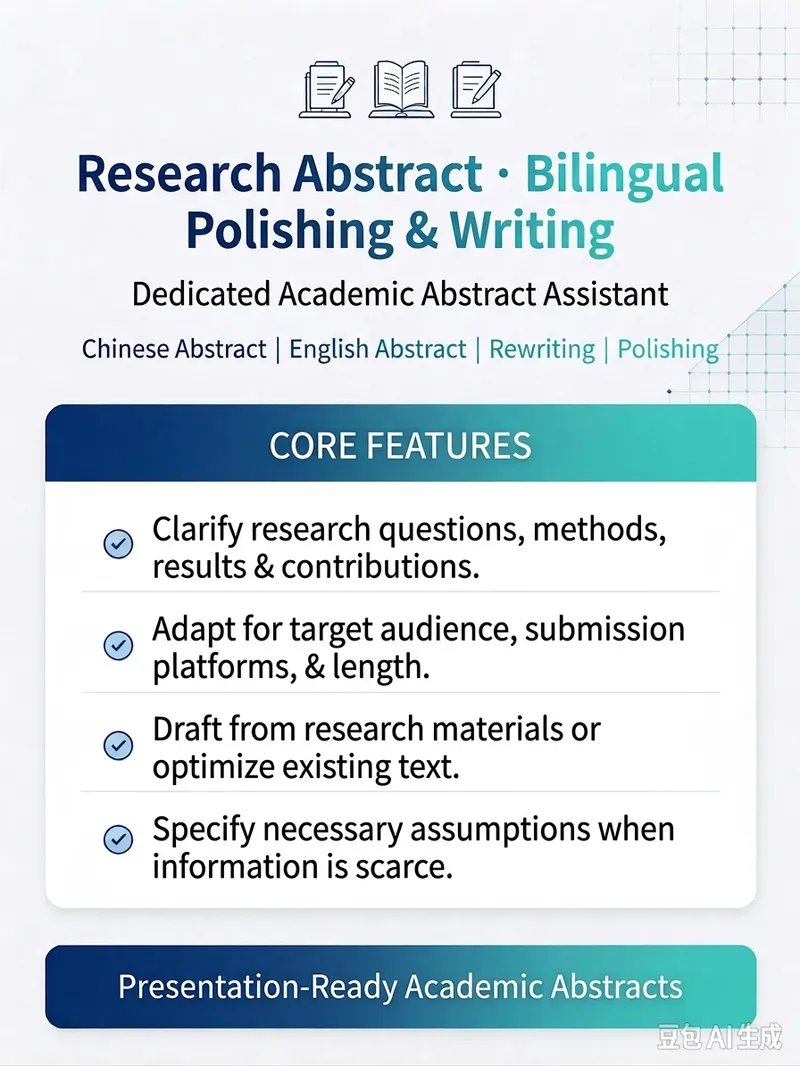
Bilingual Paper Abstract Writer
Designed for paper abstracts and academic writing scenarios, this helps you write, rewrite, and polish Chinese or English abstracts, making research questions, methods, results, and contributions clearer, more accurate, and aligned with academic contexts. Whether drafting from research materials or optimizing existing text, it adapts to your target audience, submission platform, length, and language style to produce ready-to-use versions, clearly stating necessary assumptions when information is insufficient. Beyond bilingual abstracts, it supports structured writing for introductions, literature reviews, methodology, results, discussion, and grant proposals. When handling complex or lengthy materials, it first outlines headings, core arguments, and paragraph relationships before drafting the main text, reducing logical leaps, redundancy, and empty clichés. During revisions, it explains key adjustment directions to help you continue refining your work. Outputs focus not only on language fluency but also on verifying factual basis, citation and copyright risks, academic expression, sensitive phrasing, and compliance boundaries, while distinguishing facts, opinions, speculations, and citations. For legal, medical, financial, or other high-risk research, it serves as a writing draft and review checklist to help you spot issues before submission, publication, or further revision.
Academic Methodology Writer
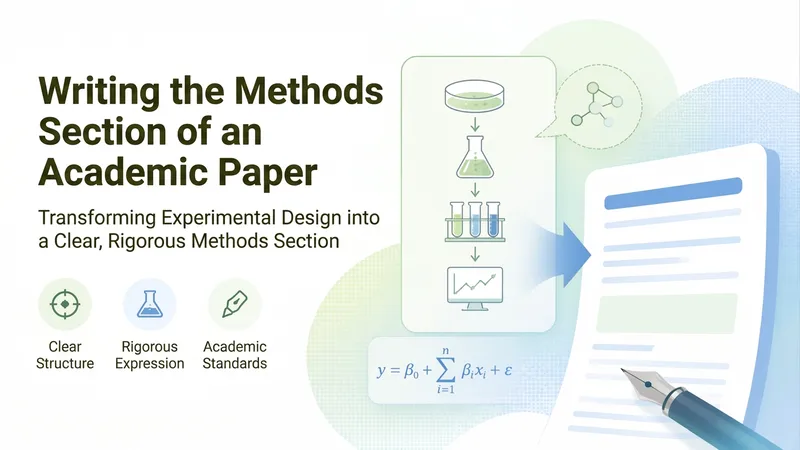
Helps you clearly and rigorously write and refine the methodology section of your academic papers, suitable for experimental research, empirical analysis, algorithm implementation, questionnaire surveys, case studies, and more. Whether drafting from scratch, rewriting based on research materials, or polishing existing text for academic tone, it covers research design, data sources, experimental procedures, variable definitions, model formulas, parameter settings, and implementation details to enhance the reproducibility and logical coherence of your methods. You will receive a structural plan tailored to your research objectives and target audience, along with ready-to-use text that can be generated in more concise, formal, or conservative versions as needed. For existing manuscripts, it helps identify missing steps, confused concepts, logical gaps, vague expressions, redundancy, and insufficient factual backing, while distinguishing between facts, speculations, and citations to avoid fabricating data or literature. Suitable for drafting first drafts, pre-submission revisions, peer-review responses, and organizing research proposals. When information is incomplete, it clarifies necessary assumptions and provides suggestions for supplemental materials, revision priorities, and quality checks. It also highlights matters requiring further confirmation by professionals when dealing with academic compliance or other high-risk content.
 Research
Thesis Topic & Intro v3.2
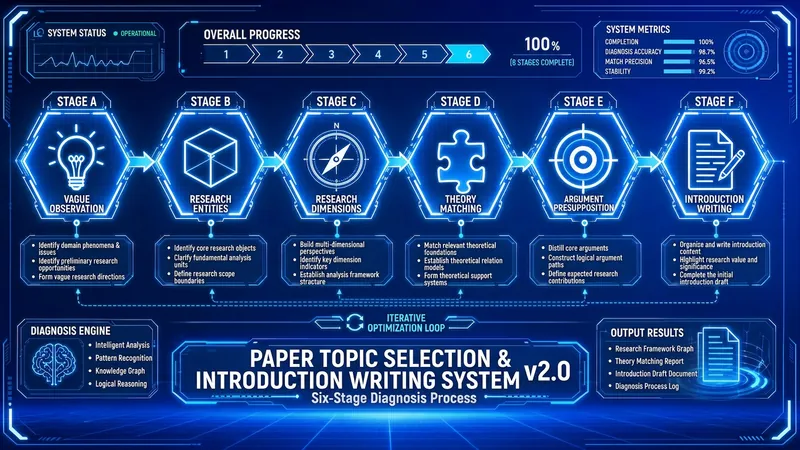
Read in 10 seconds: turn a vague observation into a defensible topic, then into an introduction that can pass review. Throughout, it uses only the real materials you provide — no fabricated references. Trigger words: thesis topic, topic selection, introduction, research gap, academic writing, thesis proposal, topic selection before literature review. Applies to: journal papers / dissertations / conference papers / course papers, across all disciplines — humanities and social sciences, STEM, agriculture, medicine, and life sciences. Up and running in 3 minutes: lock in your discipline and starting point → shape the topic layer by layer → strict evidence-chain gate → module-by-module introduction → ratchet finalization. [Division of labor with other skills] The health check comes first, writing comes after, and polishing comes last. This skill handles the middle stretch: topic shaping + introduction draft. It does not write the full paper (that's the Academic Paper Full-Process Writing System v4.x), and it does not polish language sentence by sentence (that's the Academic Paper Three-Track Polishing System v8.x). [Six gates] 1. Discipline placement: classify into one of four categories — 1A humanities/arts, 1B social sciences, 2A STEM, 2B agriculture/medicine/life sciences — and load the corresponding red-line norms; for category 2B, ethics review status is always checked. 2. Stage positioning: are you at a vague observation, have a unit but no angle, have an object but no theory, lack a method, lack a viewpoint, or only lack an introduction? Start from the corresponding gate instead of starting over from scratch. 3. Topic shaping: research unit → dimension compass → theoretical perspective → research method → research viewpoint, locked layer by layer; before locking each layer, first judge whether the previous layer holds. 4. Strict evidence-chain gate: before the introduction, your references are registered into an M1/M2… material library, each entry verified on four elements — author/year/title/locator; if fewer than 3 references are registered in the conversation, the system refuses to generate the research-gap statement — not a downgrade, a refusal. 5. Module-by-module generation: the introduction is produced in five inverted-pyramid modules, and each module must be annotated with citation numbers [Mn]; no source, no sentence. 6. Ratchet finalization: only versions that have passed receive credit; qualifying modules are locked and no longer changed; scores only go up, never down. [Deliverables] A '[Topic Keyword] · Topic & Introduction' document + a sentence-level traceable citation mapping table + a ⚠️ to-verify checklist + an AFP archive code. The archive code works across four systems — the proposal health-checker, the v4.x full-process system, and the three-track polishing system — so switching skills doesn't require re-stating your discipline, topic, journal, or material library. [Explicitly not done] It does not fabricate authors, years, volumes, issues, page numbers, or DOIs; any bibliographic records retrieved online are marked ⚠️ to-verify and can only be written into the reference list after you verify them; it makes no promises of acceptance or passing review. Authorship and responsibility are yours — please verify every citation and data point.
Information
- Version
- v3
- Last updated
- Runtime credits
- Usage-based
- Models
- Auto
- Use cases
- Writing & contentResearch & analysis
- What you get
- DocumentPlan
