
AI Viral Short Drama Studio
From script to shots, assets, and prompts
AI Viral Short Drama Studio
From script to shots, assets, and prompts
Showcase
Description
Use this Skill to generate AI short dramas, fight scenes, ensemble scenes, and continuous shots from a script or concept. Call it when users need to design a hit AI short drama, break it into storyboards, prepare character and setting assets, write video prompts, control action continuity, or troubleshoot generation issues. Drawing on the production review of the AI series *Bodyguard*, it focuses not on writing longer prompts, but on organizing story events, assets, space, action, cinematography, and post-production checks into an executable visual workflow.
Recommended by
淡苍
Why we love this skill
A practical, causal workflow from script to validation that improves generation stability and reduces rework, with special attention to character state, force, props, and spatial continuity between shots—not piled-on effects.
Best for
Creators and production teams turning short-drama concepts or scripts into continuous shots, generating prompts, and checking video continuity.
How to use this Skill
Provide your input
Provide a script excerpt or concept, character and setting materials, reference clips, and production constraints such as duration and shot count. You can also share generated clips and existing storyboards for troubleshooting.
Run the Skill
Organize the story into a production script, asset and spatial records, then break it into continuous shots and generate video prompts. Check shot transitions and state consistency in the generated results.
Review your result
Get executable written storyboards, roles for reference materials, video generation prompts, and a continuity review with issue diagnosis and targeted revision suggestions.
Related Skills
View all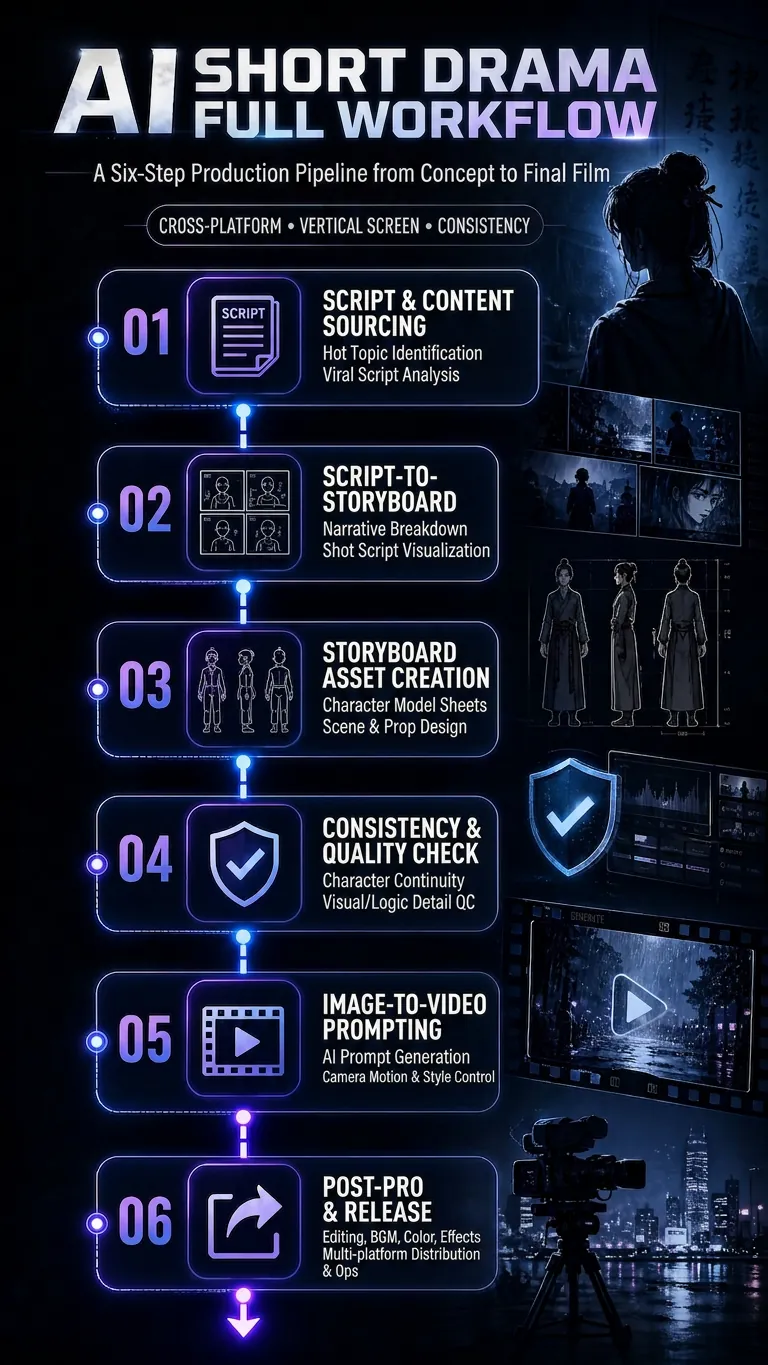
AI Short-Drama Workflow v5
Turn a concept, novel, or script into an executable AI video production plan, covering three formats: AI short drama, AI comic drama, and AI live-action drama. The Skill includes a complete six-step production pipeline: find scripts and hit copy → adapt the script into a shot list (including shot language and dialogue-duration adjustments) → design shot assets (character turnarounds, scene concept art with physical lighting, and material details) → consistency checks and pre-generation quality control (asset binding, cross-shot consistency, and P0/P1 blocking gates) → image-to-video prompts (Vidu/Jimeng/Doubao standard templates + Jimeng Seedance first/last-frame template) → final-cut production and publishing quality control. By default, the workflow uses no subtitles or background music, retaining only dialogue and necessary sound effects. Supports locked visual styles including realistic cinematic, 2D Chinese animation, and 3DCG Chinese animation. Designed for scaled production on vertical platforms such as Douyin, Kuaishou, WeChat Channels, and Xiaohongshu.

Viral Short Drama Studio
Turn short drama ideas, story outlines, or source materials into production-ready viral concepts, scripts, character and scene assets, shot-by-shot storyboards, image/video prompts, audio and subtitle plans, and post-production quality checks.
AI Video & Storyboard Prompts
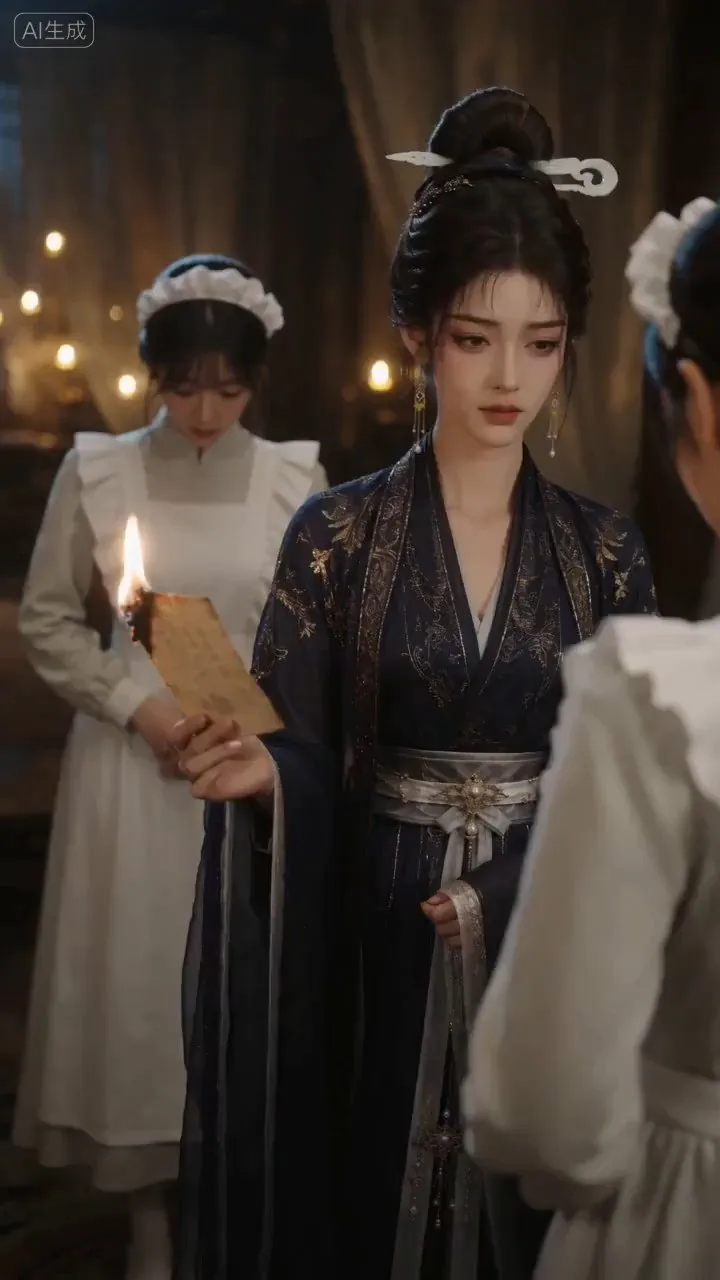
Turn storylines, character profiles, or existing video prompts into professional storyboards and ready-to-use shot prompts for AI video generation. Whether the scene involves contemporary life, historical drama, mystery, romance, or high-payoff drama, the skill focuses on character relationships, pacing, and emotional hooks. It clearly defines shot scale, camera position, perspective, camera movement, composition, lighting, ambient sound, and dialogue, giving every shot a clear visual focus and actionable movement. The skill pays close attention to character consistency and scene continuity. It helps lock in each character’s appearance, clothing logic, identity and status, and defining details, reducing generation issues such as facial changes, visual drift, spatial confusion, and unclear actions. A character’s gaze, expressions, breathing, hand movements, and physical reactions are also translated into visible performance changes, strengthening conflict, tension, twists, and emotional progression. You can start with a complete storyline or provide existing character assets, storyboards, or prompts for targeted optimization. When you already have an established character profile, it can be reused directly to avoid redesigning it. The complete sequence can then be organized into clips of 15 seconds or less for generation with mainstream AI video models, while preserving visual, audio, and duration details for easy copying, use, and further editing.
Information
- Version
- v2
- Last updated
- Runtime credits
- Usage-based
- Models
- Auto
- Use cases
- Writing & contentVideo & audio
- What you get
- ReportDocumentPrompt