Handwriting Pro — Write in Your Style
Handwriting Pro — Write in Your Style
Showcase
Description
One Skill handles all writing problems. A. Imitate yourself — Paste a piece of your writing, AI extracts your 6-dimensional writing DNA, all output becomes 'your voice'; B. Imitate anyone — Switch between 8 major known styles with one click (Banfo, Luke Wen, Beast Ye, Jiubian, Wang Xiaobo, Wang Zengqi…), and you can paste any favorite author's text to learn on the spot; C. Quickly remove AI flavor — Three rounds of deep proofreading (restructure → reword → re-rhythm), without changing style, just clean it up, fast and stable. 3999 credits = unlimited style library + style transfer + de-AI flavor, a three-in-one great value.
Why we love this skill
This skill is your personal writing stylist. It not only deeply learns your handwriting DNA but also lets you switch between eight famous styles with one click, and even completely removes AI traces, making your writing distinctive and unique.
Related Skills
View all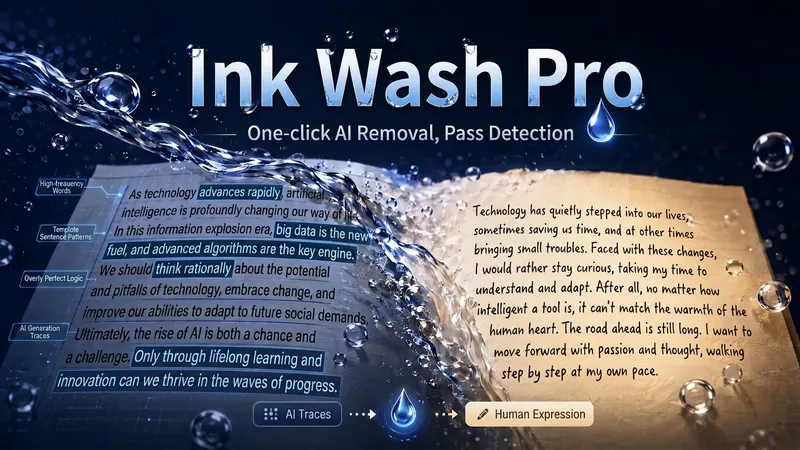 Write
WriteXimo Pro: AI Detection Bypass
AI Detection Countermeasure Engine — Deep rewriting based on three-layer statistical features (structural fragmentation + vocabulary purification with 30+ prohibited word hard interception + perplexity/burstiness optimization) + four-dimensional diagnostic scoring + native adaptation for 5 major platforms (Xiaohongshu, WeChat Official Accounts, Twitter, Zhihu, Academic). Before-and-after rewriting comparison scores, estimated detection pass rate over 95%. It's not just superficial word swapping—it thoroughly washes away the AI traces, revealing the genuine human-written undertones.
 Write
WriteSoulful Writing - Style Engine
A continuously learning personal writing style engine. By analyzing your work or articles from influencers you admire, it builds a unique "style DNA" to help you write content that is vivid and personal. 🌟 Key Highlights: • Intelligent style learning – automatically analyzes your edits and continuously optimizes your style. • Phase-based adaptation – provides different strategies according to your creation stage (cold start, exploration, maturity). • Multi-platform support – adapts to WeChat Official Accounts, Xiaohongshu, Twitter, TikTok, and more. • Proactive service – monitors edits across conversations and smartly prompts style learning. 💡 Suitable for: • Content creators building a personal brand. • Independent content creators looking to establish a consistent writing style. • Social media operators needing to produce high-quality content in bulk. ⚡ Quick Start: 1. Provide 3–5 pieces of your work or articles you like. 2. Answer 3 simple questions to define your reader profile. 3. Mark writing styles you dislike. 4. Start creating and let the AI learn from every edit you make. 📊 Results: • Style consistency improves by 80%+. • Creation efficiency increases 3–5x. • Continuously optimized—the more you use it, the better it understands you.
 Write
WriteViral Book Analyzer Pro
💡 Core Value First dual-engine book analysis Skill on the market: 'Internal Use + External Use' 📖 Internal Use (for self-learning): Deep notes + knowledge frameworks + methodology breakdown, truly reading and digesting the book thoroughly 📱 External Use (for publishing): Viral copy for Xiaohongshu/Douyin/WeChat Official Accounts/Zhihu + eye-catching headlines + engagement triggers, turning every book into a content arsenal 100+ viral formulas × deep analysis system (opinion scoring + emotion tags + viral potential) × scenario recognition engine (automatically switches between internal/external use) × IP style memory (gets to know you better over time), turning your reading investment into the dual rewards of knowledge accumulation and traffic output. ━━━━━━━━━━━━━━━ 🎯 Who is it for? ✅ Content creators: Bloggers on Xiaohongshu/Douyin/WeChat Official Accounts who need continuous output but struggle with topic exhaustion ✅ Knowledge IP: Those who want to turn books they've read into personal IP content and build a professional image ✅ Self-media operators: Who need to produce viral content in batches, increase account activity and follower growth efficiency ✅ Deep learners: Who want to thoroughly read books and create high-quality notes, instead of forgetting after reading ✅ Efficiency seekers: Who want to fully extract a book's value, both internalizing knowledge and externalizing traffic ━━━━━━━━━━━━━━━ ⚡ Core Features 【1. Dual-Mode Engine (First on the market)】 🎨 External mode: Generate viral copy focusing on hooks, emotional resonance, and calls to action 📖 Internal mode: Generate deep notes focusing on logic, structure, and deep understanding 【2. Deep Analysis System】 Score each opinion (counterintuitiveness/resonance/practicality/viral potential ⭐⭐⭐⭐⭐), intelligently recommend the most viral-prone angle or most worth exploring opinion 【3. 100+ Viral Formula Library】 Quote type/story type/dry goods type/emotional resonance type/scenario type, covering all content types 【4. IP Style Memory】 Remembers your writing style, target audience, and commonly used formulas, tracks historical performance data, gets to know you better over time 【5. Two-Step Interaction】 First generate a copy preview, then generate the image after confirmation to avoid wasting credits ━━━━━━━━━━━━━━━ 💰 Why is it worth 3999 credits? ✅ Dual value: Both internalize knowledge and externalize traffic, one Skill does the work of two ✅ Continuous output: One book can produce 100+ pieces of content, costing less than 40 credits each on average ✅ Technical moat: Deep analysis + scenario recognition + IP memory, a rare dual-engine book analysis system on the market ✅ Avoid waste: Two-step interaction prevents wasted images, every credit is used wisely ✅ Lifelong benefit: Buy once, use forever; the more books you read, the higher the ROI ━━━━━━━━━━━━━━━ 💬 One-sentence summary 3999 credits for a dual-engine content system of 'Internal Use + External Use', turning every book you've read into both your knowledge asset and your traffic goldmine.
Information
- Version
- v3
- Last updated
- Runtime credits
- Usage-based
- Models
- Auto