Classical Text Micro-Theater
Create modern titles and miniature covers
Classical Text Micro-Theater
Create modern titles and miniature covers
Showcase
Description
Transform key scenes and ideas from classical Chinese texts, poems, and classic articles into accessible, narrative paper-style miniature theater covers. Whether you provide the original text, a link, or a title, it extracts core conflicts, turns, or viewpoints to create clear entry points with modern Chinese titles for readers. It is ideal for classical literature interpretations, course content, book sharing, and serial article illustrations. The visuals focus on bright, whitespace-rich paper carving and low-relief scenes where actions like folding, suspending, page-turning, and walking carry the article's ideas. Each piece is freshly conceived for the specific chapter, allowing xiaoxiaodong, a simple black bean-shaped character, to interact concretely with key imagery rather than relying on fixed props or plots. You can specify aspect ratios, quantities, primary colors, or use cases, or simply generate a standalone cover. Deliverables include the generated Chinese cover image, a brief conceptual explanation, and a title, along with a note on whether the text is clear and verifiable. When dealing with authors, events, and citations, it carefully distinguishes between source facts and visual metaphors, without claiming historical accuracy or altering the original text or adding unrequested signatures, seals, or decorations.
Why we love this skill
Brings the core conflicts and ideas of classical literature into a visible paper miniature theater, lowering the barrier to understanding with modern titles. Re-extracts scenes and actions for each piece with xiaoxiaodong, balancing accurate interpretation and unique visual storytelling.
Best for
Best for classical literature interpreters, course creators, and book sharers to create narrative article illustrations.
How to use this Skill
Provide your input
Provide the original text, link, or title of a classical Chinese text, poem, or classic article, and optionally specify the aspect ratio, quantity, primary color, and use case.
Run the Skill
Transforms core situations, conflicts, or ideas from the text into paper-style miniature theater covers, paired with accessible modern Chinese titles.
Review your result
Receive the generated Chinese cover image, a brief conceptual explanation, and a title, along with a note on whether the text in the image is clear and verifiable.
Related Skills
View all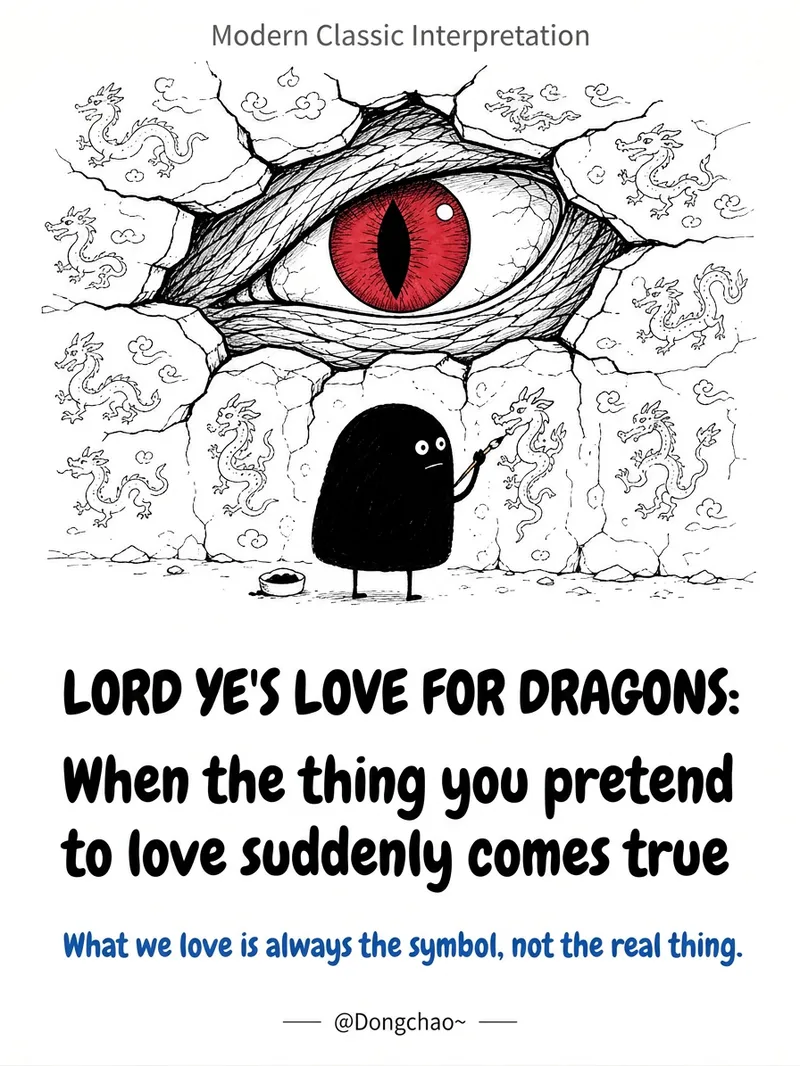 Image
Classical Cover Art Studio
Transforms the core arguments, turning points, and metaphors of your article into three classical-inspired cover concepts and ready-to-use image generation prompts tailored for the RedNote feed. Each set uses distinct visual metaphors, compositions, and dramatic tension while maintaining a unified series feel through a single dominant color. It places xiaoxiaodong in the role of the protagonist engaged in earnest yet absurd actions, rather than mere decorative elements. Ideal for quickly turning history, culture, social observation, and opinion pieces into cohesive cover concepts, core metaphors, xiaoxiaodong action directions, Chinese text overlays, and AI image generation prompts.
 Image
Starryear-Xihuan
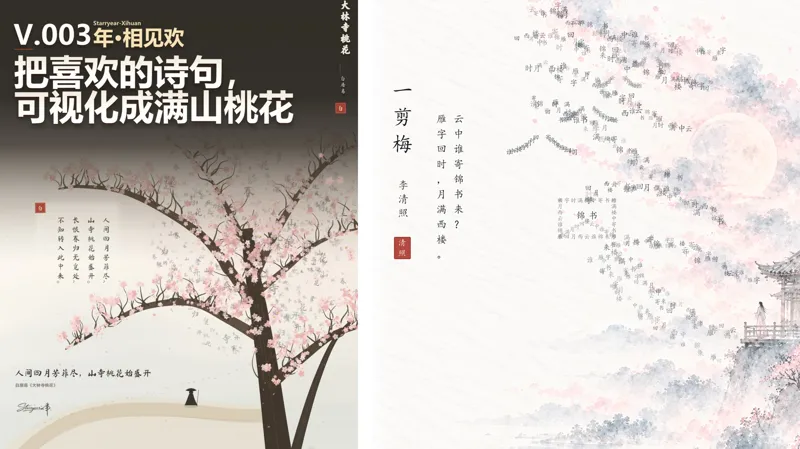
Transform Chinese poetry into a recognizable, readable 3:4 vertical poetic word-art painting. You can provide the original poem, title, author, or core imagery, or ask the agent to help select a work. Focusing on the actions and scenes within the verses, it arranges real Chinese characters into poetic visual forms such as swirling, cascading, converging, spreading, traveling, or blooming, rather than simply overlaying text onto an illustration. The artwork uses light blue and light pink watercolors against a warm, paper-white background, combined with delicate washes, ink character groups, generous negative space, vertical inscriptions, a small red seal, and tiny figures to create a refined and subtle classical Chinese aesthetic. The poem title, author, and selected verses are integrated into the left or center-left composition while remaining clearly legible, allowing the piece to read as scenery from afar and poetry up close. Great for creating classical poetry posters, personal poetry art collections, literature-themed visuals, and matching watercolor word-art series. By default, it outputs a single high-definition poetry painting without mockup covers, serial numbers, brand footers, watermarks, or extra notes. If a title or tune name is ambiguous, it will clarify the specific work beforehand to prevent misattributions or unreadable pseudo-text.
 Image
Line and Space Poetry Art
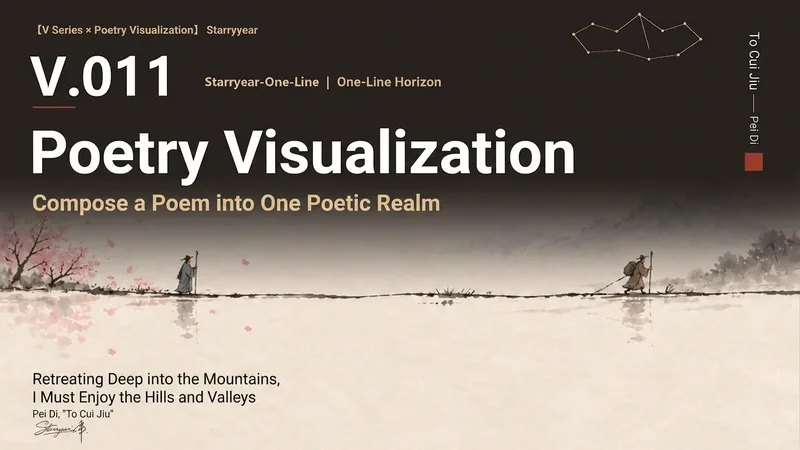
Transform authentic Chinese classical poetry into vertical ink art where poetry, calligraphy, and painting harmonize, allowing the emotion, space, and imagery of the text to unfold naturally. Based on a warm rice paper tone with generous negative space, the artwork uses a slender, naturally broken horizontal ink line to connect water surfaces, mountain paths, roads, or other poetic spaces. Tiny figures and simple scenery are distributed along the line, presenting a light, tranquil, and breathable Eastern aesthetic. Each creation reorganizes the narrative, visual flow, and ink structure according to the poem, avoiding fixed landscape templates. Unseen elements in the poem such as figures, wind, rain, sound, light, and distance are subtly expressed through blank space, light ink, brushstrokes, or spatial rhythms. Titles, authors, and designated verses can be vertically arranged using cursive, seal script, or small vermilion seals, emphasizing textual accuracy, clarity, and overall negative space while retaining ink textures like rice paper fibers, light ink bleeding, flying white, and dry-wet brush effects. Ideal for creating classical poetry mood paintings, poetry art series, and single collectible creations. Each poem is independently composed, and delivery includes notes on the adopted poem and text verification details, ensuring poetry art is distinct from promotional covers.
Information
- Version
- v3
- Last updated
- Runtime credits
- Usage-based
- Models
- Auto
- Use cases
- Writing & contentImages & designLearning & education
- What you get
- ImageBrief
- Visual styles
- Minimalist3DPaper art
