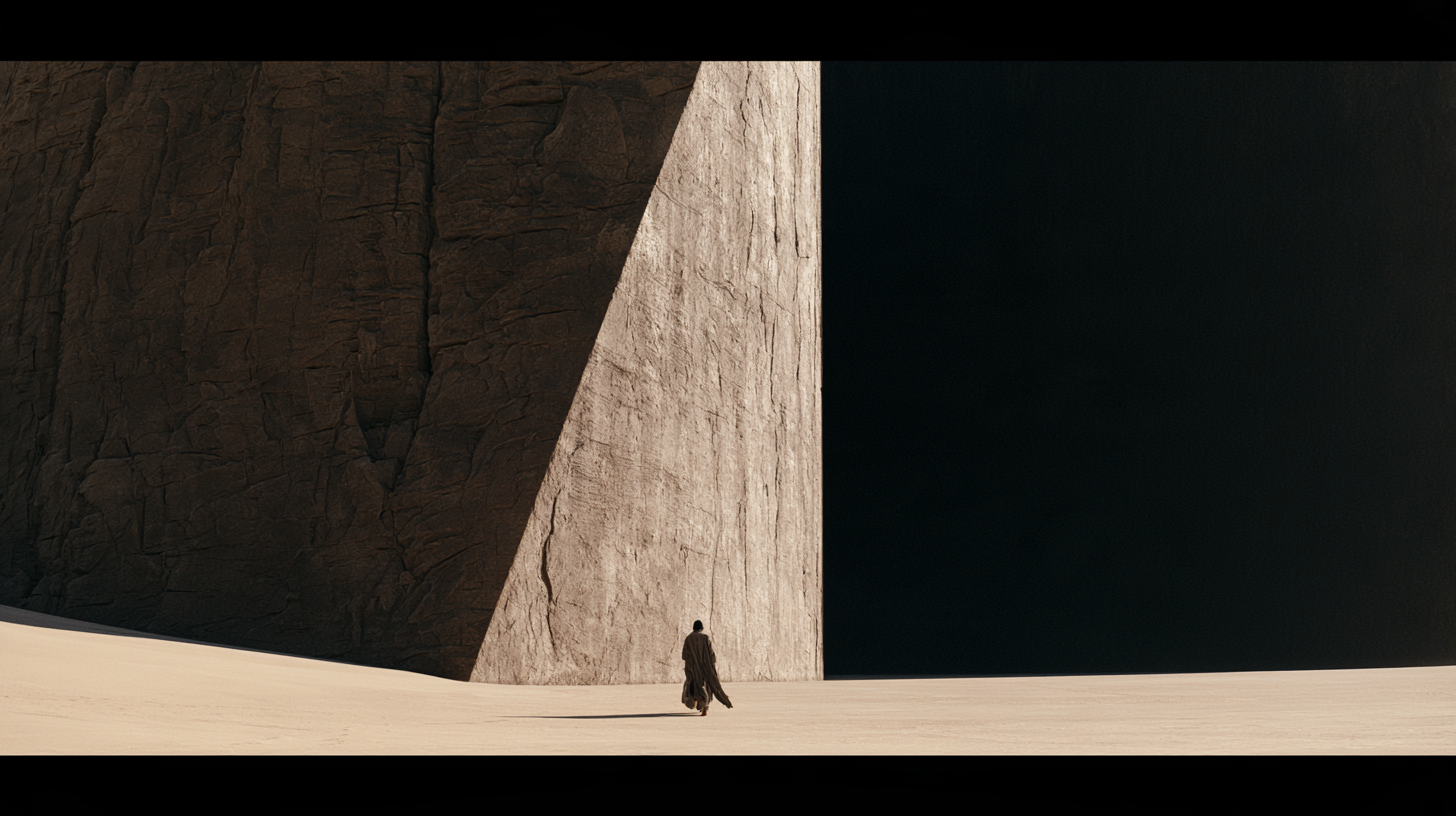
Desert Megastructure Aesthetic
Low-color megastructure still prompts
Desert Megastructure Aesthetic
Low-color megastructure still prompts
Showcase
Description
Turn people, objects, cities, interiors, or other suitable subjects into ready-to-use minimalist still-image prompts in a desert megastructure style. The skill preserves the user’s specified subject, number of people, actions, contact relationships, and scene function, while using low-saturation sand and mineral gray, monolithic wedge-shaped geometric megastructures, hard sunlight, vast pure-dark surfaces, and extreme contrasts of scale to create a silent, restrained, architectural image. It does not rely on a film title as a substitute for specific descriptions of lighting, materials, and composition. You’ll get a clear compositional intent, native Chinese ImageGen prompts, and English Midjourney prompts. You can also reduce the output to a single-platform version as needed. This is suitable for single stills, consistently styled image sets, and correcting common deviations such as oversaturated colors, overly dense machinery, unbalanced scale, or visual noise. The visual language can also be applied to city and interior subjects without forcing in a desert. When you request actual image generation, the skill can additionally check character visibility, contact relationships, style anchors, and consistency across images.
Recommended by
淡苍
Why we love this skill
Transforms any subject into a restrained desert megastructure scene with muted sandstone, extreme scale, hard-cut light, and executable prompts in Chinese and English.
Related Skills
View all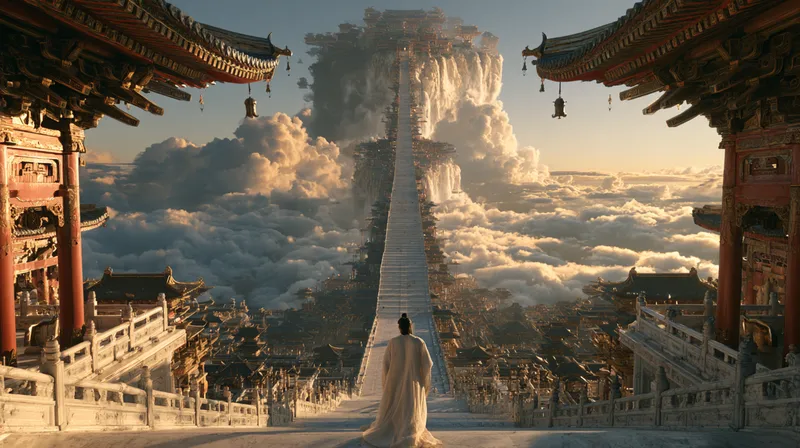 Image
ImageColossal Celestial Palace
Turn a Chinese scene concept into a Chinese colossal celestial-palace prompt ready for AI image generation. Preserve the number of people, their actions, key objects, location, era constraints, and mood so the image stays true to the original intent while gaining a grand Eastern sense of scale. Whether the scene features tea, music, meetings, banquets, or reading in a palace—or a celestial landscape of cloud seas, colossal pillars, moon gates, and supersized architecture—you get clear relationships between activities, coherent architectural logic, and layered depth between mountains, water, and empty space. The Skill defaults to a Chinese celestial-palace aesthetic inspired by white-jade-and-gold palaces and solitary cities above a sea of clouds. It combines traditional palace order, cinematic widescreen composition, low-angle golden light, and colors such as ivory white, cinnabar, antique gold, and blue-green. It adjusts character scale, viewpoint, lighting, and negative space to fit each scene. It will not let colossal scenery obscure the narrative actions you specify, and it avoids modern cities, neon sci-fi, cluttered text, and common problems with building or character generation. Each run provides a visual design brief, prompts tailored separately for ImageGen and Midjourney 8.2, and a few possible directions for adjustment. It is suited to concept development, storyboard planning, Chinese-style scene creation, celestial-palace architecture visualization, and optimizing Chinese image-generation prompts.
 Image
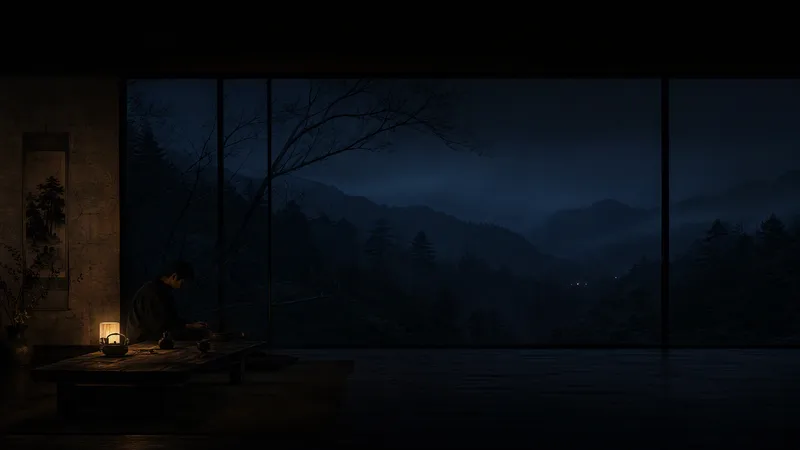
ImageMono no Aware, Wabi-Sabi & Yūgen
Turn themes, scenes, people, classical Chinese poetry, or photos into Japanese aesthetic images grounded in clear sources of thought and visual references—ideal for creators who need nuanced storytelling and art direction. The skill selects mono no aware, wabi-sabi, or yūgen as the primary direction based on the content: mono no aware expresses the beauty of what is fading, wabi-sabi reveals the marks left by materials and time, and yūgen creates understated depth through concealment, distance, negative space, and unseen areas. These aesthetics are combined only when the subject genuinely supports multiple aesthetic logics. You’ll receive a clear thematic assessment, primary aesthetic, relationship between combined styles, art-historical anchors, and core narrative. It then generates professional visual prompts covering the subject, setting, composition, spatial layers, materials, color, lighting, mood, and negative constraints—avoiding vague labels such as “Japanese,” “Zen-like,” or “sophisticated.” For portrait photos, it aims to preserve identity, facial structure, perceived age, body type, and key clothing features, transforming the aesthetic through environment, lighting, and narrative rather than automatically turning the person into someone wearing a kimono. After confirmation, the skill displays the complete prompt and generates an image, along with an aesthetic explanation to help you understand how the image expresses the beauty of transience, traces of time, or the unseen. It is suited to concept art, photography style transfer, classical Chinese poetry visualization, character-and-setting creation, spatial storytelling, and AI image generation with a Japanese aesthetic sensibility.
 Image
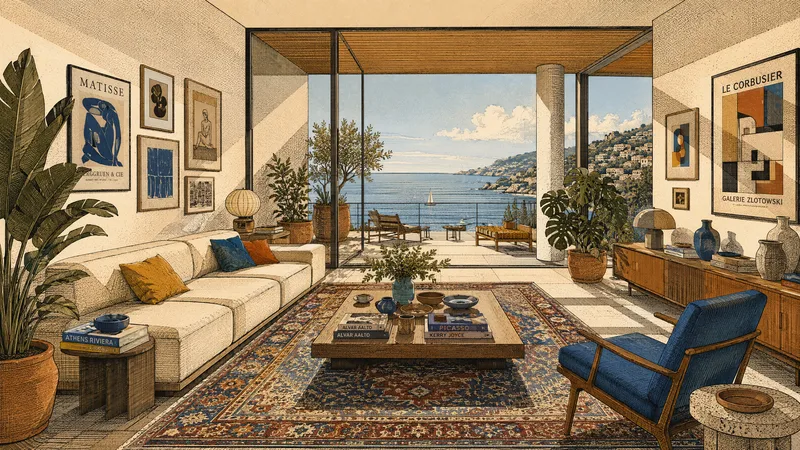
ImageArchitectural Story Art
Transforms real photos or natural-language descriptions into architectural illustrations that combine the precision of architectural drawings with a narrative atmosphere. Suitable for interior spaces, building exteriors, landscapes, still lifes, and people scenes. Whether it’s a living room, study, gallery, or urban building, it can preserve the original composition and relationships between key objects, or reorganize them from text into clear spatial layers and visual focal points. Fine linework, crosshatching, and halftone textures define structure and materials, combined with strongly directional sunlight, hard-edged geometric shadows, and distinct projected beams of light. The image uses flat color blocks and a printmaking feel, with an overall palette of cream white, warm beige, ochre, terracotta, and warm wood tones. Small accents of highly saturated deep red, royal blue, emerald green, or indigo add focal points, avoiding photorealism and soft gradients. Rich elements such as plants, patterned rugs, art walls, books, staircases, arches, and large windows can be naturally integrated according to the scene, adding a sense of life and cultural atmosphere while maintaining visual order. Each generation produces one image along with a reusable English prompt, making it easy to continue refining the style, colors, and spatial expression.
Information
- Version
- v2
- Last updated
- Runtime credits
- Usage-based
- Models
- Auto