
H&SS Topic Selection AFP
High-approval topic design for H&SS grants
H&SS Topic Selection AFP
High-approval topic design for H&SS grants
Showcase
Description
Humanities and Social Sciences Topic Selection Engineering System 🎯 Adaptive Coverage System: | Topic Type | System Fit | Difficulty Level | |------------|------------|------------------| | National Social Science Fund | ✅ Core Application | ★★★★★ | | Ministry of Education Humanities and Social Sciences Project | ✅ Fully Compatible | ★★★★☆ | | National Education Science Planning Key Projects | ✅ Fully Compatible | ★★★★☆ | | Provincial Social Science Planning | ✅ Fully Compatible | ★★★☆☆ | | Vocational Education/Teaching Reform Projects | ✅ Fully Compatible | ★★★☆☆ | 📊 Six-Stage Delivery Process (P0-P5 Mandatory Steps): | Stage | Phase | Core Output | Key Action | |-------|-------|-------------|------------| | P0 | Anchor Your Base | Personal Resources & Position Assessment | Take stock of your academic accumulation, existing achievements, and team resources | | P1 | Policy Decoding & Real Problem Extraction | Policy Analysis Table + Problem List | Scan the latest policy documents to uncover issues that truly matter to the review committee | | P2 | Atomic-Level Object Decomposition | Minimum Granularity Object Table | Break down grand propositions into core research objects | | P3 | Nine-Grid Topic Explosion | 9 Topic Direction Matrix | One object, 9 angles, select the optimal direction | | P4 | Critical Review & Finalization | Revision Suggestions + Risk Checklist | Two-role confrontation: applicant vs. blind reviewer, iterative refinement | | P5 | Asset Packaging | Topic Core Asset Memorandum | Final topic + reasoning logic + ready for proposal writing | 🔧 Built-in Standard Tool Library: ✓ Two-Role Confrontation System — Topic Planner ↔ Blind Review Expert (self vs. self PK) ✓ Naming Red Line Check — No colons/dashes/subtitles allowed, must end with "research" ✓ Trinity Rule — Qualifier + Object + Problem (invisible scoring sheet) ✓ Real-Time Policy Update — Synchronized with latest guidelines from NSSF, MOE, and Education Science Planning ✓ Nine-Grid Topic Matrix — Systematically spread 9 angles, visualize innovation comparison ✓ Blind Review Risk Assessment — Predict topic weaknesses in review 📈 Expected Results: 📌 Grant Approval Rate — From average 20-30% to 60-70%+ (depending on prior accumulation) ⏱️ Topic Selection Cycle — From 3-6 months of polishing to 2-3 weeks of systematic finalization 🎯 Hit Accuracy — From "broadcasting" to precisely targeting the review logic of the target committee 📦 Continuity — The Topic Memorandum can directly interface with "Grant Proposal Writing AFP" for a complete closed loop
Related Skills
View all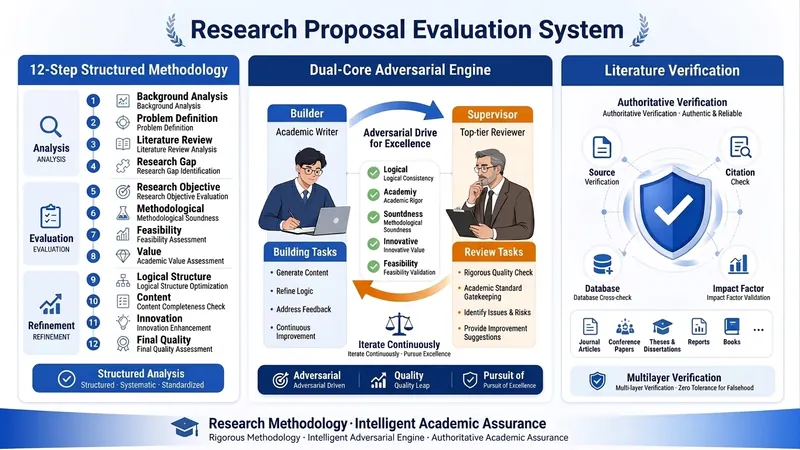
Grant Proposal Review PRO V2.0
🎯 Core Functionality Overview This is an intelligent review and optimization system specially designed for national social science, education ministry, and provincial grant applications. It simulates the thinking mode of a senior review expert with 15 years of experience, ensuring academic rigor and competitiveness through three core mechanisms. 🔧 Three Core Mechanisms 1️⃣ 12-Step Structured Methodology Covers the full lifecycle of grant proposal review: Phase 1-3: Basic Diagnosis - In-depth analysis of announcement (funding priorities, review criteria, application requirements) - Cross-disciplinary type judgment (precise identification of 8 types) - Research GAP five-dimension identification (theory/methodology/empirical/policy/technology) Phase 4-7: Core Element Review - Research question TMAQ model analysis (theory/methodology/approach/question four dimensions) - Research objective SMART principle test - Research content framework completeness assessment - Research approach type matching (6 types) Phase 8-10: Deep Quality Enhancement - Precise extraction of key difficulties (distinguish criteria + breakthrough paths) - Innovation point seven-dimension mining - Feasibility seven-dimension argumentation Phase 11-12: Overall Optimization - Nine-dimension quality check (academic rigor, innovativeness, feasibility, etc.) - Comprehensive optimization suggestions and final report 2️⃣ Dual-Core Adversarial Mechanism (Builder vs Supervisor) Working Principle: - Builder (academic writer): Generates optimization plans based on user materials - Supervisor (top journal reviewer): Challenges Builder's plans with the strictest standards - Adversarial iteration: 3 rounds of confrontation to ensure plans are robust Application Scenarios: - Innovation point mining: Builder proposes innovation points → Supervisor questions novelty → iterative optimization - Feasibility argumentation: Builder designs plan → Supervisor challenges feasibility → supplementary argumentation - Literature citation: Builder cites literature → Supervisor verifies authenticity → ensure academic standards 3️⃣ Literature Authenticity Verification Mechanism Two working modes: Mode A: Placeholder Mode (Default) - Use markers like [Literature Placeholder-001] in place of specific references - Output a Literature Requirement List specifying search requirements for each placeholder - User searches and fills in real references Mode B: Real-Time Verification Mode - Call Google Scholar to verify literature authenticity in real time - Generate Literature Verification Report (authenticity/relevance/authority scores) - Ensure every citation is traceable Preventing AI Hallucination: - Prohibits fabricating authors, journals, DOIs - All references must be verified or marked as placeholders - Guarantees academic integrity bottom line 💡 Core Value and Applicable Scenarios ✅ Key Pain Points Addressed 1. Academic sloppiness: AI-generated content often includes fake references, logical gaps 2. Insufficient innovation: Difficulty uncovering true academic innovation points 3. Weak feasibility: Research plans lack systematic argumentation 4. Cross-disciplinary difficulty: Interdisciplinary topics often fall between two stools 🎓 Target Users - University faculty (social sciences, education, humanities) - Researchers (applying for national and provincial grants) - Academic teams (needing systematic review processes) 📋 Typical Workflow 1. Input: Upload announcement + proposal draft 2. Review: System executes 12-step structured analysis 3. Adversarial: Dual-core mechanism iteratively optimizes key sections 4. Verification: Literature authenticity check 5. Output: Complete review report + optimization suggestions + literature list 🔍 Differences from Traditional Review | Dimension | Traditional Human Review | Expert Review System | |-----------|------------------------|----------------------| | Review depth | Depends on personal experience | 12-step structured + 9D QC | | Academic rigor | Hard to fully audit | Literature verification + dual-core adversarial | | Innovation mining | Subjective judgment | 7-dimension systematic analysis | | Feasibility argumentation | Experience-driven | 7-dimension item-by-item argumentation | | Consistency | Varies by individual | Standardized process | | Efficiency | Days to weeks | 1-2 hours for initial review | The core advantage of this system is: it makes the tacit knowledge of a 15-year senior review expert explicit, structured, and replicable, enabling every user to receive top-level expert review services.
 Research
Teaching Award App Auto Expert
Teaching Achievement Award Application · Full-Process Automation Advisor System 🎯 Adaptive Recognition of Coverage Levels: Education Type: Basic Education / Vocational Education / Higher Education → Automatically matches the application system Award Level: National / Provincial / School Level → Automatically identifies difficulty and focus of competition 📊 Four Delivery Phases (Staged Closed Loop): | Phase | Output | Core Value | |-------|--------|------------| | 1. Diagnosis & Profiling | 7-8 question smart survey + achievement positioning report | Identify the right application level to avoid over or under applying | | 2. Topic Selection | Topic direction matrix + 3-5 similar successful cases | Know which direction to adjust to be most visible | | 3. Title Incubation | 5-8 alternative titles (SCPAR naming) | If the title is right, half the application is done | | 4. Body Writing | Complete version of the application with strict word count | How many words for innovation, results, and dissemination value — precise to the paragraph | | 5. Diagnostic Scoring | Three-dimensional innovation assessment + expert checklist | Reviewing it yourself after editing is like having a professional review | 🔧 Built-in Standardized Tool Library: ✓ SCPAR Naming Rule — The invisible scoring table for teaching achievement titles ✓ Word Count Hard Constraint Check — Automatically enforces 5000-12000 word range ✓ Three-Dimensional Innovation Assessment Model — Full reproduction of the scoring logic used by award judges ✓ Title Template Library — Reference templates for national/provincial/school level achievements ✓ Expert Checklist — Item-by-item self-check for the finished application 📈 Expected Results: Application success rate from random 30% to precise 70%+ Application preparation time from 2-3 months to 2-3 weeks Higher first-submission hit rate (more accurate topic selection)
Research Proposal Assistant
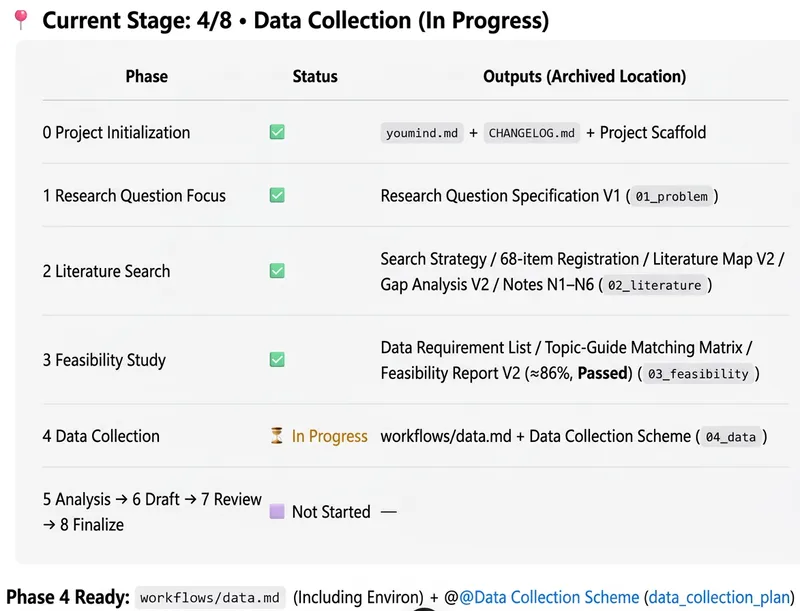
Designed for university faculty and researchers, this assistant turns an initial research idea into an executable, fundable project plan. It covers national- and provincial-level humanities and social sciences projects, teaching reform projects, and other research project types. Provide the project type and application guidelines or template, research direction, existing成果, and personal and institutional information. The assistant helps clarify the topic, focus the research question, and build a complete foundation for the proposal around the research problem, application requirements, and review logic. As the project develops, the assistant can support academic searches, literature reviews, research gap analysis, feasibility assessments for data and methods, comparable project matching, and research design adjustments. It helps ensure that literature, data, and funding information are authentic and verifiable, while incorporating AI, contemporary relevance, and methodological innovation into the topic and innovation points. Once the research plan is mature, it can draft an initial proposal based on the application guidelines or blank template you provide, simulate different reviewer perspectives, and suggest revisions through to the final draft. The project retains stage outputs, version records, and the basis for changes. It can ultimately organize a proposal, technical roadmap, research framework diagram, innovation logic diagram, progress Gantt chart, and other research visuals. For tasks requiring an external environment, such as full-text PDF analysis, code execution, web scraping, or large-scale data processing, the assistant clearly identifies handoff tasks and supports filling in results and continuing the work, helping move the project from preparation through a properly formatted final proposal.
Information
- Version
- v2
- Last updated
- Runtime credits
- Usage-based
- Models
- Auto