Slow Teacher's Keyword Method
Slow Teacher's Keyword Method
Showcase
Description
Use the keyword learning method to quickly get started in any field: output a table of 20 core keywords (with one-sentence explanations, application scenarios, and best practices), hand-drawn comic-style SVG logic relationship diagrams, simulate a domain expert answering 5 key questions, recommend 3–5 professional books, and assemble them into a well-formatted report; enter 'Interpret [Book Title]' to switch to the seven-part in-depth book interpretation mode.
Recommended by
淡苍
Why we love this skill
Condenses unfamiliar fields into 20 keywords, diagrams, expert Q&A, and book lists. Supports quick learning and deep reading, with clear boundaries and no fabrication—for systematic learners.
Related Skills
View all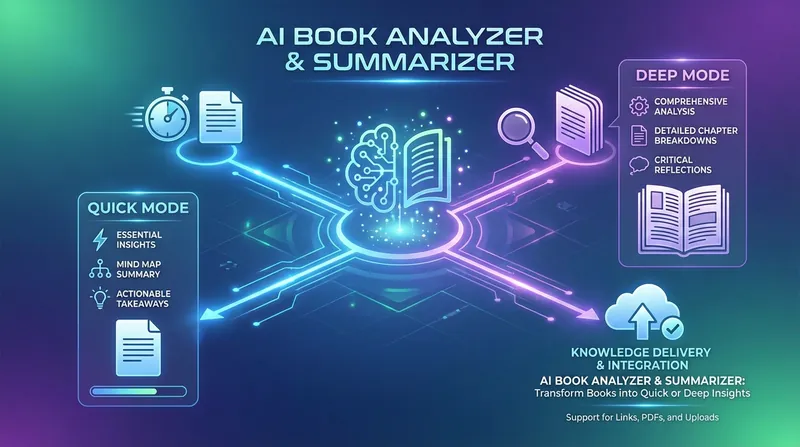 Research
Extract a Book's Value 2.0
A deep-reading expert that helps you absorb knowledge efficiently, it focuses on transforming long books or documents into structured core-value reports. Whether you need to quickly grasp a book's main ideas or pursue systematic deep learning, it accurately analyzes the original content to extract key arguments, methodological frameworks, and inspiring actionable points. This skill offers two custom reading modes: Quick Mode generates concise summaries with mind-map structures, perfect for reviewing key points in a short time; Deep Mode provides detailed reading notes, including in-depth chapter analysis, core insight breakdowns, and notable quote excerpts, helping you build a complete personal knowledge base. It can process uploaded PDF or Word documents as well as directly parse web content, making sure no key details are missed. Beyond high-quality notes, it also turns book theory into immediately actionable recommendations for life or work. Whether you're doing academic research, exploring business, or pursuing personal growth, it becomes your most reliable partner for internalizing knowledge—ensuring every book's value is fully extracted.
Rapid Domain Knowledge in 30m
Based on the open-source prompts from Digital Life Kazek, we have developed a learning skill to help you quickly go from a novice to an in-depth understanding of professional knowledge in an unfamiliar field. The core methodology, proposed by Saussure, is called diachronic analysis and synchronic analysis. It combines temporal and relational dimensions to provide learning content, helping you rapidly grasp the key content of unfamiliar domains.
 Research
Impossible Task Quest Learning
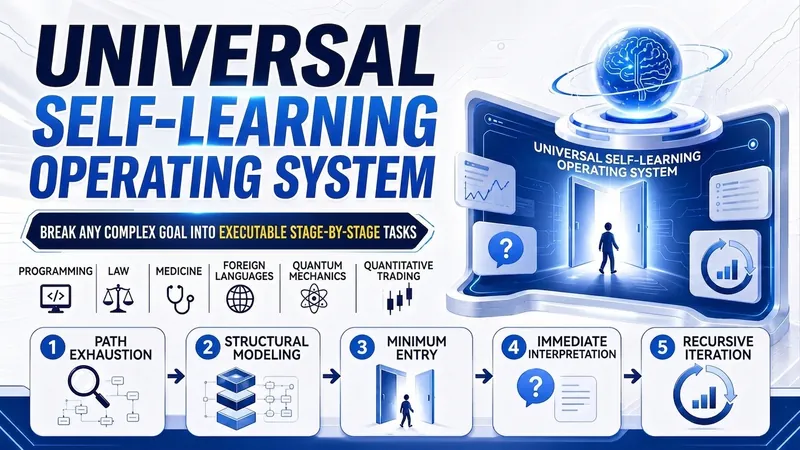
A universal self-learning operating system that breaks down any complex, abstract, high-barrier learning goal into executable quests. Applicable to programming, law, medicine, foreign languages, quantum mechanics, quantitative trading, and all high cognitive load fields. Through the mechanisms of 'path enumeration - structural modeling - minimal entry - instant explanation - recursive iteration', it enables you to gradually grow from zero foundation to domain expert.
Information
- Version
- v5
- Last updated
- Runtime credits
- Usage-based
- Models
- Auto