Professor Slow

Slow Teacher: Find Your Path
Based on Jinpei Yagi’s *How to Find What You Want to Do*, this Skill accompanies users through a phased conversation in Chinese to explore life or work directions: first clarify what matters most (values), then distill work purpose, strengths, and interests, combine them into 2–4 directional hypotheses, and design practical small experiments with follow-up reflection. It is suited to people who don’t know what they want to do, have too many interests, are exploring themselves before a career change, or want to continue an existing exploration record. The Skill responds one round at a time, asking one question per round, writing its tentative understanding as a hypothesis that can be corrected, and recording supporting evidence and counterexamples along the way. It does not treat the three-element formula as an assessment, and it does not promise one lifelong career or guaranteed income.
 Research
Slow Teacher's Keyword Method
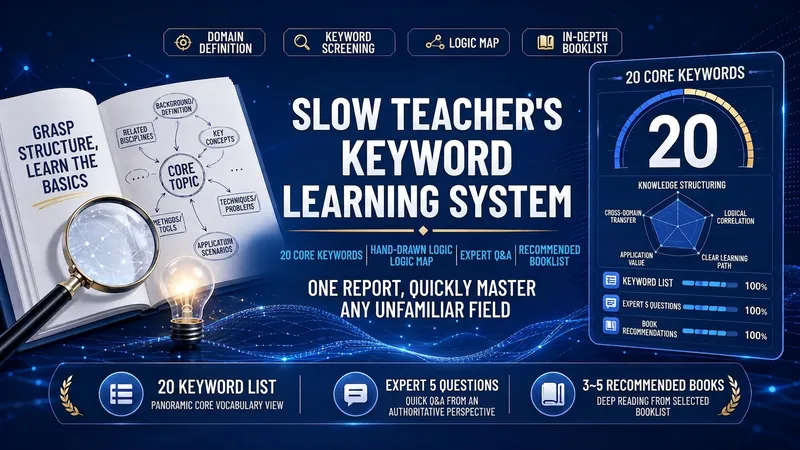
Use the keyword learning method to quickly get started in any field: output a table of 20 core keywords (with one-sentence explanations, application scenarios, and best practices), hand-drawn comic-style SVG logic relationship diagrams, simulate a domain expert answering 5 key questions, recommend 3–5 professional books, and assemble them into a well-formatted report; enter 'Interpret [Book Title]' to switch to the seven-part in-depth book interpretation mode.
SCI Cover Letter Slow Teacher
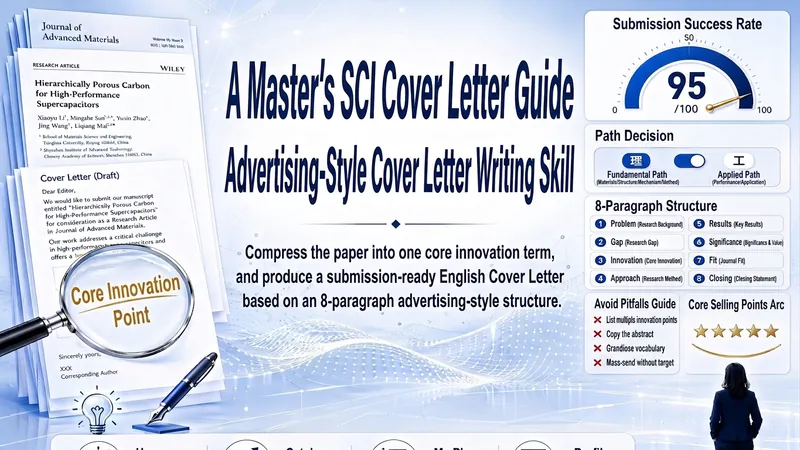
This skill treats your journal submission cover letter as an advertisement for your paper. It first forces you to compress your research into a single core innovation point ("one word") and decide whether it follows the "science" route (material/structure/mechanism/method) or "engineering" route (performance/application). Then, it generates an 8-section English cover letter ready for submission: a four-sentence selling arc covering problem, innovation, data, and significance; journal matching information; and standard declarations. It uses the most concise, objective language (rejecting flashy words like "employs" or "shatter the ceiling") and fits within one page. Including a figure is mandatory: for performance types, it provides literature comparison scatter plots or tables; for mechanism/structure types, it actively diagnoses your existing figures (five-point check), gives a redraw list, and directly outputs an SVG draft. It can also critique an existing draft, pointing out common flaws such as listing multiple innovations, lacking data, copying the abstract, or having no journal targeting, and rewrite it. Compatible with universal agents like Claude Code and Codex. Trigger phrases include "help me write a cover letter", "submit to SCI", "is this letter good", and "which figure should I show the editor".
 Image
ImageSCI Graphical Abstract Maker
Generate professional Graphical Abstracts for SCI papers that meet top journal standards such as Cell Press, Elsevier, ACS, Nature, and more. Through interactive Q&A, core information is collected. Prioritizes white/near-white backgrounds, top-journal-level academic illustrations, fused SEM/structural diagrams, realistic molecular/material expression, restrained color schemes, and professional arrow systems. Automatically applies the 60-30-10 color rule, Gestalt psychology principles, and stamp size test standards to produce single-panel, data-free, highly self-explanatory, non-cartoonish professional scientific graphical abstracts.
 Image
ImageSlow Teacher Graphical Abstract
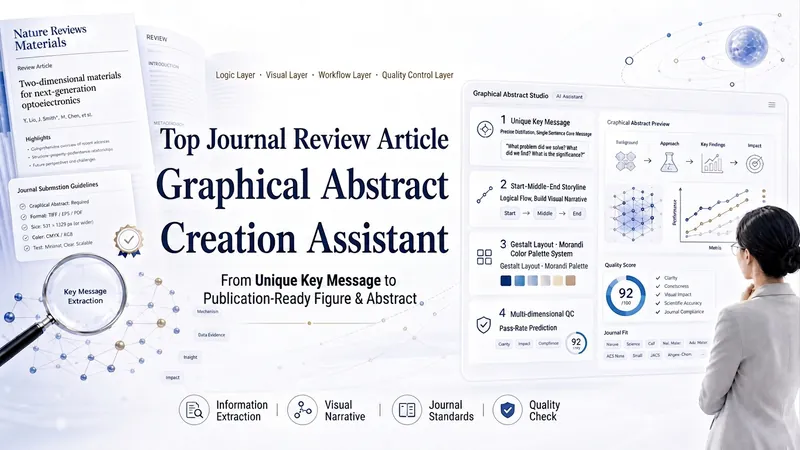
A Graphical Abstract creation assistant tailored for review papers in top SCI journals. Based on the top journal methodology of Logic, Visual, Workflow, and Quality layers, it supports dual input channels (text or file references), automatically extracts the unique key message of the review, matches target journal specifications, and builds a Start–Middle–End visual storyline, Gestalt topological layout, Morandi color system, and pre-submission stress test to produce publication-ready high-quality graphical abstracts.
Man Laoshi: 1-Click SCI Poster
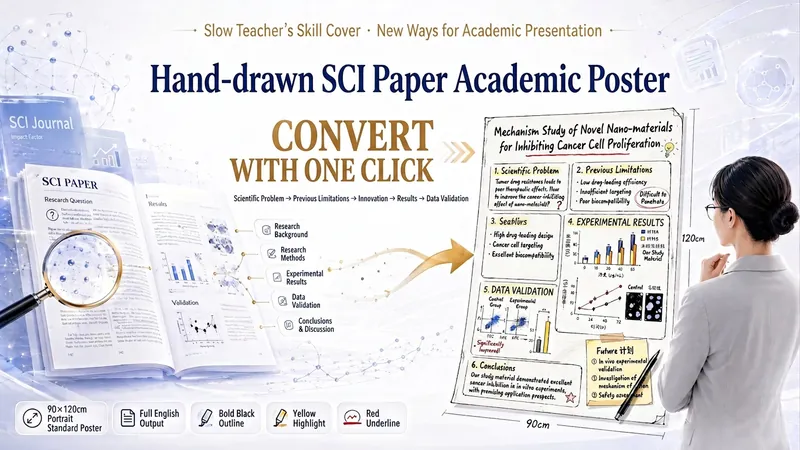
One-click transform any SCI paper into a hand-drawn academic poster! Fully replicates Man Laoshi's signature hand-drawn style — thick black outlines, yellow highlights, and red underlines. Generates standard 90×120 cm vertical posters. The content strictly follows a scientific logic chain: scientific question → previous limitations → innovation → results → data validation. All output is in Chinese, perfect for researchers who want to stand out in academic presentations. Trigger: 'SCI paper hand-drawn poster'.
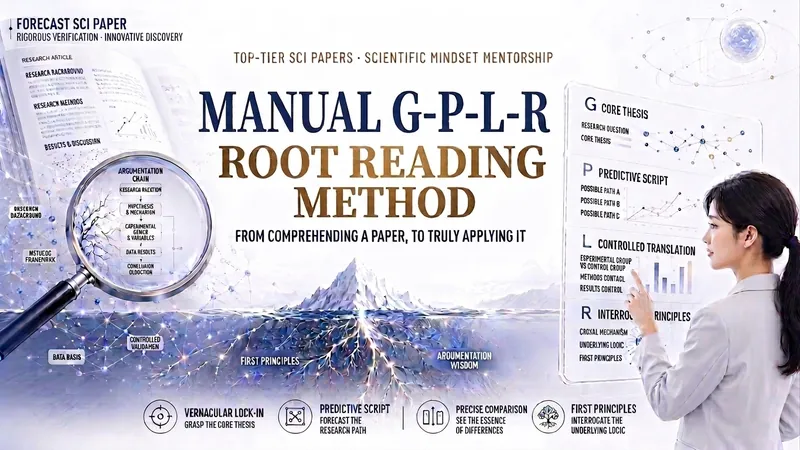
Slow Teacher's Root Reading
Slow Teacher's G-P-L-R Root Reading Method. This is not an ordinary paper summarization tool, but a professional "research thinking training coach." It uses the original G-P-L-R four-stage iceberg reading method (also called root reading method) to help you transform your understanding of top SCI papers from "comprehension" to "application": Stage G: Quickly lock in the core argument of the paper in the most plain language. Stage P: You play the role of the author, predicting the paper's argumentative script and figure layout. Stage L: AI precisely compares your prediction with the actual paper, points out key differences, and provides a full high-quality Chinese translation. Stage R: Explore layer by layer asking "why the author did this" to uncover the underlying first principles and argumentative wisdom. Unlike ordinary AI, it strictly forbids giving you direct answers; instead, it forces your brain to participate fully, like a one-on-one sparring session with a top journal reviewer. After reading a paper...
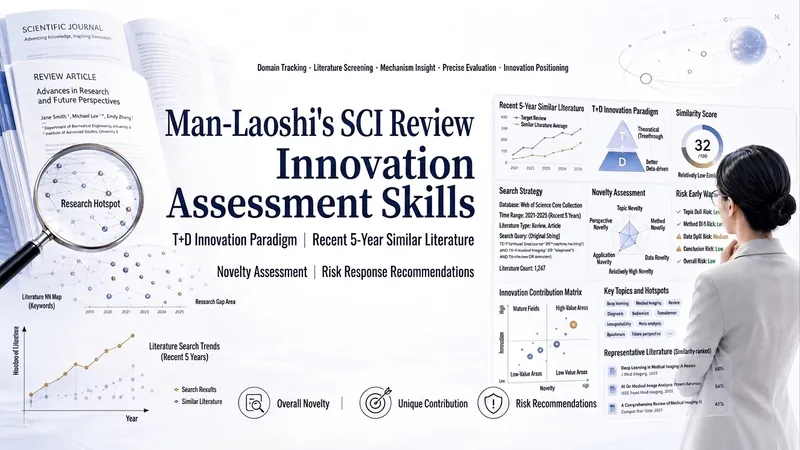
SCI Review Novelty Check – 慢老师
The 慢老师 SCI Review Novelty Check skill is an academic tool specially optimized for depth. It helps researchers systematically and accurately assess whether the innovation points of their own SCI review articles are sufficiently novel and unique, avoiding duplicate publication. The skill strictly follows Professor Slow's T+D Innovation Paradigm through a complete 4-step process: collect 6 core pieces of information from the manuscript, generate multi-dimensional search strategies in Chinese and English, real-time comparison with highly similar literature from the past 5 years, and output a professional report. Ultimately, it produces a complete Chinese report covering three major sections: [Overall Novelty Judgment], [Innovation Points and Unique Contributions], and [Potential Risks and Countermeasure Suggestions].
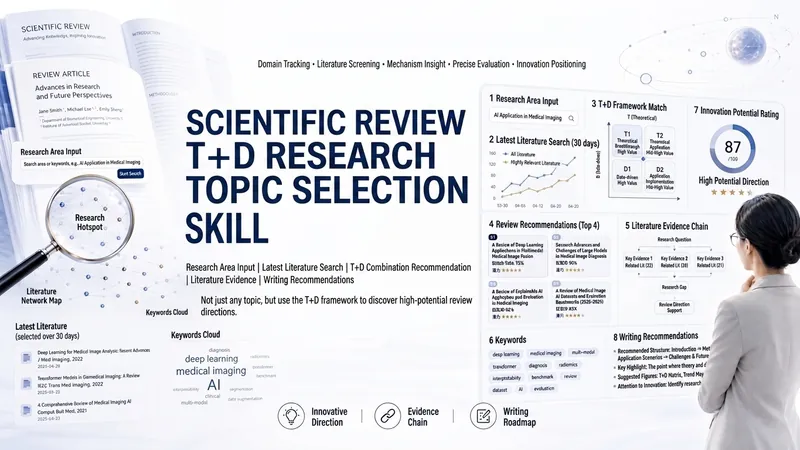
慢老师 Review T+D Topic Picks
This is an intelligent tool designed specifically for researchers to choose a topic before writing a review. After you directly provide a research field (e.g., 'Electrochemical Energy Storage', 'Protein Structure Prediction', 'AI for Science', etc.), the skill systematically retrieves high-impact reviews, latest research hotspots, and research gap literature from the past 3-5 years. Strictly based on Professor Man's established T+D innovation paradigm (T = Innovation Themes: methods/structures/materials/mechanisms/systems/performances; D = Innovation Directions: time dimension/summary method/new framework integration), it recommends 3-5 review writing directions with the highest innovative potential.
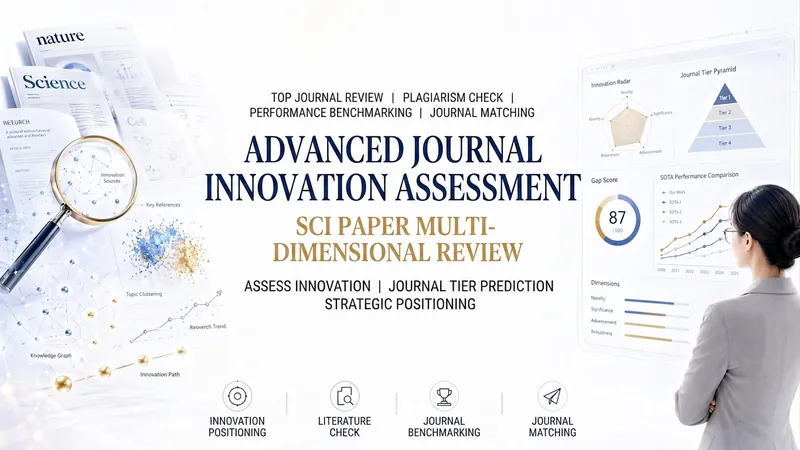 Research
Prof. Man's Innovation Eval
This skill is a complete replication of Professor Man's (Professor Man's Research World) 2025 released world-class prompt for 'Multi-dimensional Innovation Assessment of Top Journal SCI Papers'. After entering the paper title, core scientific question, core innovation strategy, and sub-innovation points, it automatically performs deconstruction of six innovation types, literature comparison benchmarking, multi-dimensional scoring (novelty, importance, transcendence, logic), and generates a complete evaluation report including a one-sentence conclusion, radar chart scores, strengths & risks analysis, submission suggestions, and Cover Letter phrasing. Suitable for researchers aiming for top journals such as Nature, Science, Nat. Energy, Joule, Adv. Mater., etc., to accurately diagnose innovation before submission and avoid blind submissions. Trigger words: top journal innovation assessment, SCI innovation evaluation, Professor Man innovation evaluation, Nature
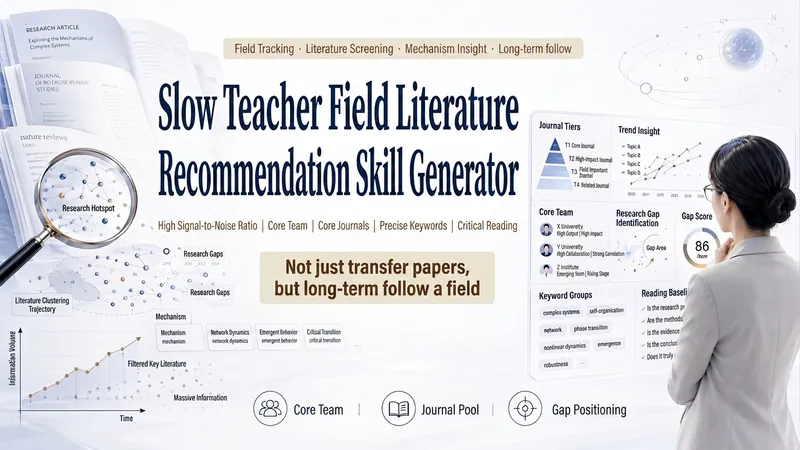
Slow Teacher's Literature Push Skill Generator
«Slow Teacher's Field Literature Push Skill Generator» is an OpenClaw meta-skill designed specifically for researchers. Simply enter any research field (such as solid-state batteries, CO2RR, cryo-EM, AI agent evaluation, etc.), and it will automatically generate a complete, installable, dedicated literature push skill SKILL.md. This skill strictly follows Slow Teacher's high signal-to-noise principle, with built-in core teams (5–8 members) authentic to the field, an adaptive core journal pool (6–10 journals), precise keyword groups, and a critical reading baseline framework. The generated skill defaults to prioritizing high-quality literature from the previous day each day; if there are no new additions, it expands to the previous 7 days. Output is in the format of a «Slow Teacher Literature Push Card», helping you efficiently track mechanism debates and avoid being misled by flashy results. Truly, it's not about moving papers, but helping you follow a field long-term.
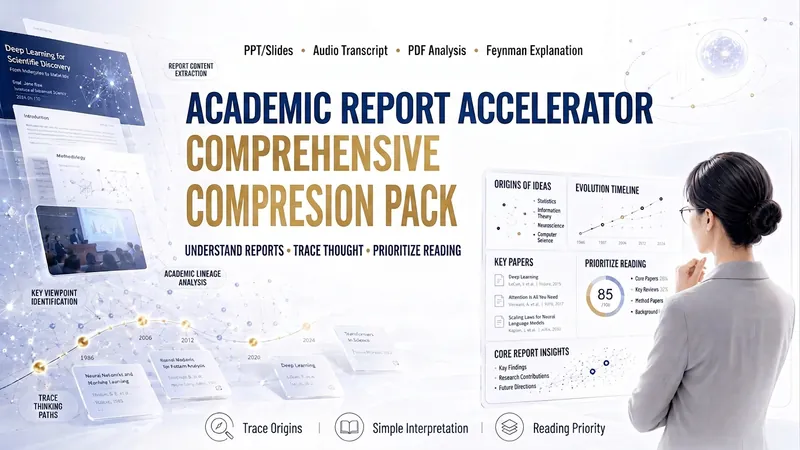 Research
Prof. Slow's Report Pack
Designed for conference attendees. Whether you have photos of slides, audio transcriptions, or PDF files, one click generates a comprehensive archaeological report of the scholar's ideas. It includes interpretations of origins, evolution, key papers, and a recommended reading order, making it easy to grasp core content.
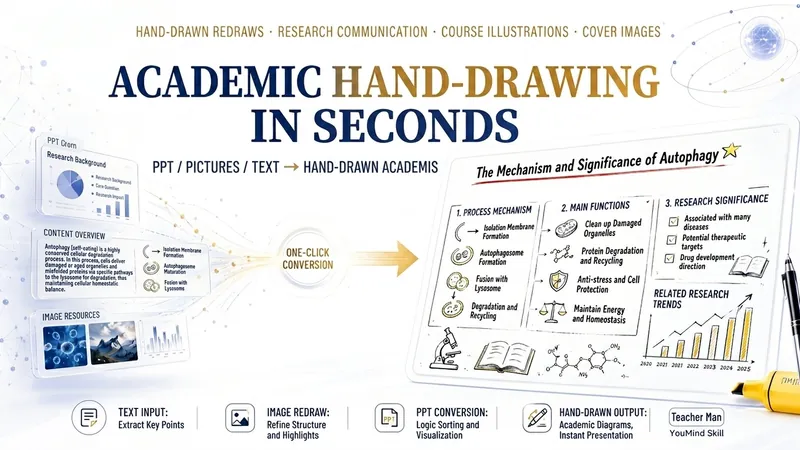
Hand-Drawn in Sec -SlowTeacher
Convert a piece of text, PPT screenshot, or ordinary image into a hand-drawn academic science infographic with a 16:9 pure white background.
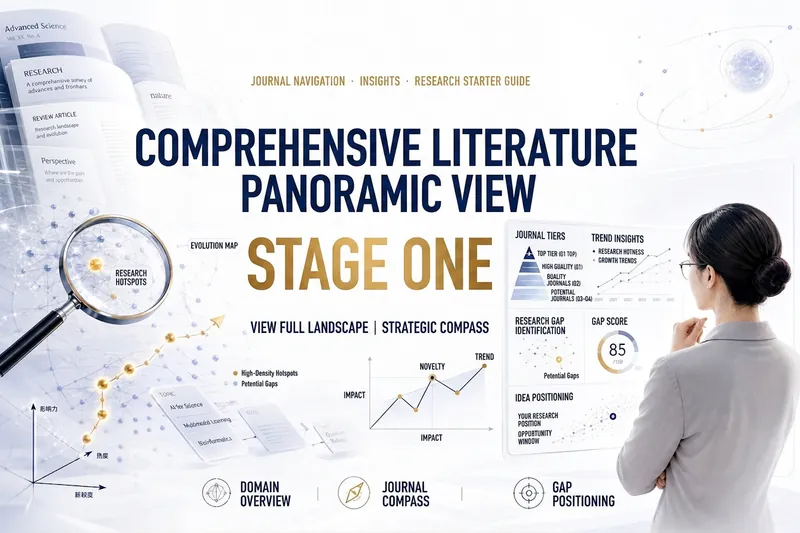
Lit Overview L1: Full Picture
In 30 minutes, help research novices get a bird's-eye view of the field: automatically generate a field evolution universe map, the precise location of your idea, Top 5 Gap priority scores, and a novice starter pack. See the past→present→future at a glance and never be in the dark again.
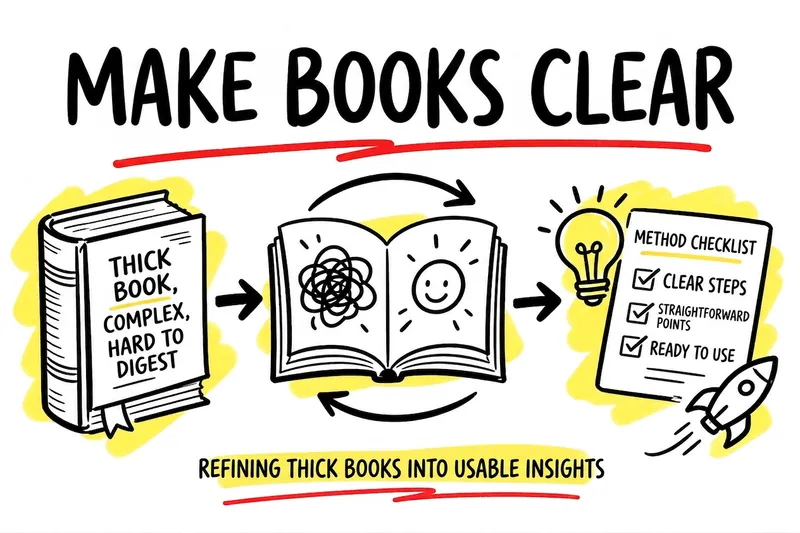
Slow Teacher: Book to Basics
No matter how thick a book, it all boils down to a few key takeaways. It extracts the most valuable insights for you.
 Write
WriteReview Topic AI - Slow Teacher
Want to write a review but can't decide on a topic? This AI tool uses Deep Research (or other search tools) combined with top journal hotspots and investment reports to lock in forward-looking review topics with both trending appeal and financial potential in three steps. A must-have for researchers aiming for top journals. Click to receive high-impact recommendations.
 Research
Scholar Decade: One-Click-慢老师
Compress the task of 'tracking a scholar' — which originally required weeks of immersive reading — into a structured AI conversation. This enables every young researcher to see a scientific problem lineage worth investing ten years in, much earlier. Enter the name (and field) of a scholar you're interested in, and the AI will map out the scholar's research trajectory, core scientific questions, key paper milestones, and academic paradigm shifts. It helps you quickly grasp the 'hidden thread' within a scholar's decade-long research journey.