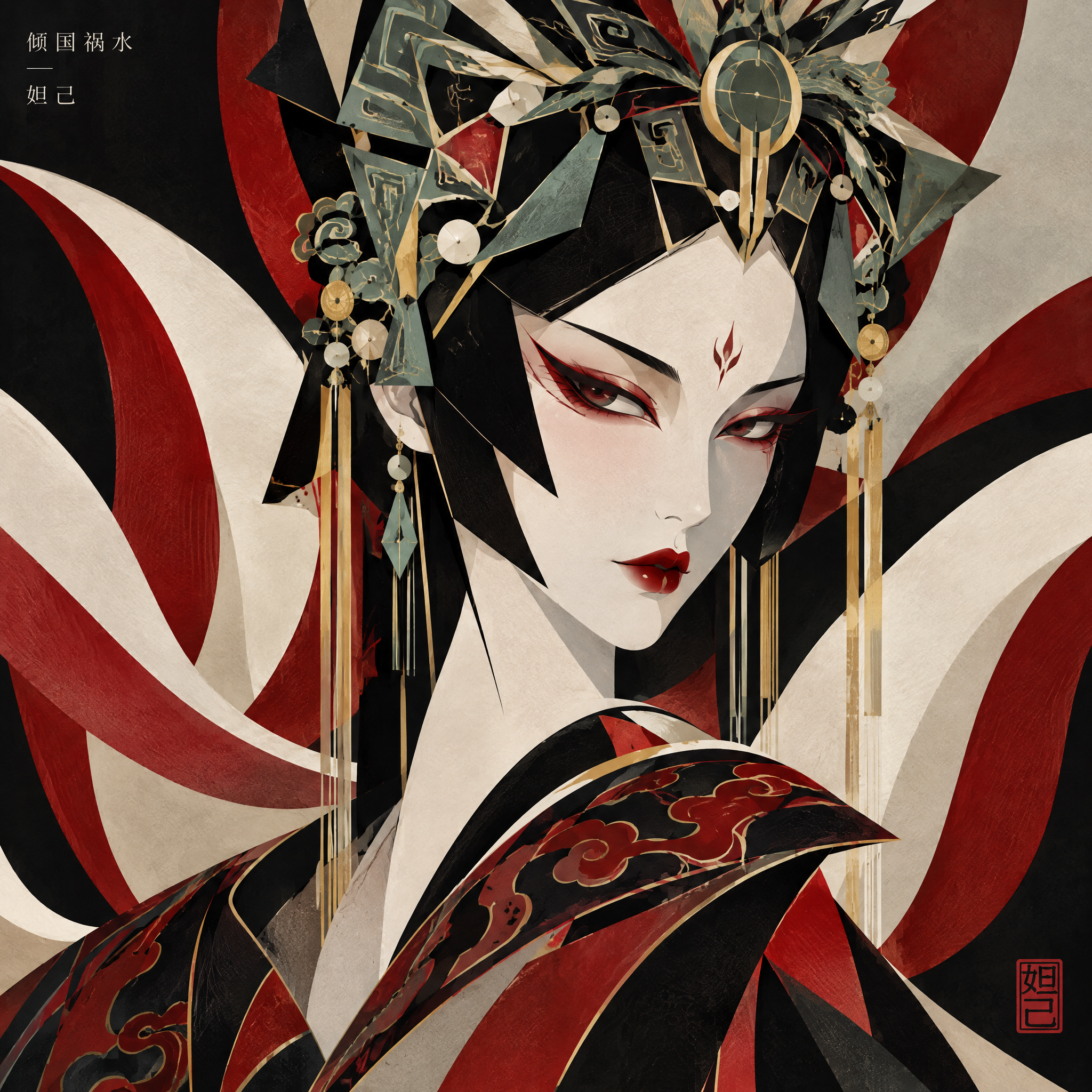
Modern Opera Character Posters
Reimagine opera and historical figures
Modern Opera Character Posters
Reimagine opera and historical figures
Showcase
Description
Transform Chinese opera, historical, and literary figures into original art posters and phone wallpapers designed for contemporary aesthetics, bringing traditional culture from the stage to phone screens and social media. Whether it’s opera figures such as Guan Yu, Mu Guiying, and Sun Wukong, or fictional characters such as Qiao Feng and Linghu Chong, each can be redesigned as a distinctive modern East Asian character based on their identity, temperament, and iconic props. Rather than recreating traditional costumes or directly copying painted faces, this Skill extracts facial structures, clothing silhouettes, poses, props, and opera patterns, translating them into geometric forms, bold color blocks, hand-drawn lines, abstract symbols, and asymmetrical compositions. Traditional colors are modernized and combined with negative space, flat backgrounds, and controlled high-saturation tones to create a clean, youthful, artistic visual system—avoiding realistic stage effects, cheap “neo-Chinese” styling, and overly elaborate decoration. Customize the design by theme and mood, aspect ratio, background color, degree of modernization, and cultural elements to retain. It can also redesign the features of a person in a photo as an opera-inspired visual character. For phone wallpapers, the composition prioritizes the character and preserves negative space suitable for a lock screen; for social media posters, it uses publish-ready proportions and concise Chinese typography. With a “Sichuan opera face-changing” theme, it can also develop multiple painted-face states of the same character into a poster series.
Recommended by
Shuting@YouMind
Why we love this skill
Translates the cultural DNA of opera and historical figures into bold geometry, modern color, and original facial-makeup structures for wallpapers, social posts, and Sichuan opera face-changing series.
Related Skills
View all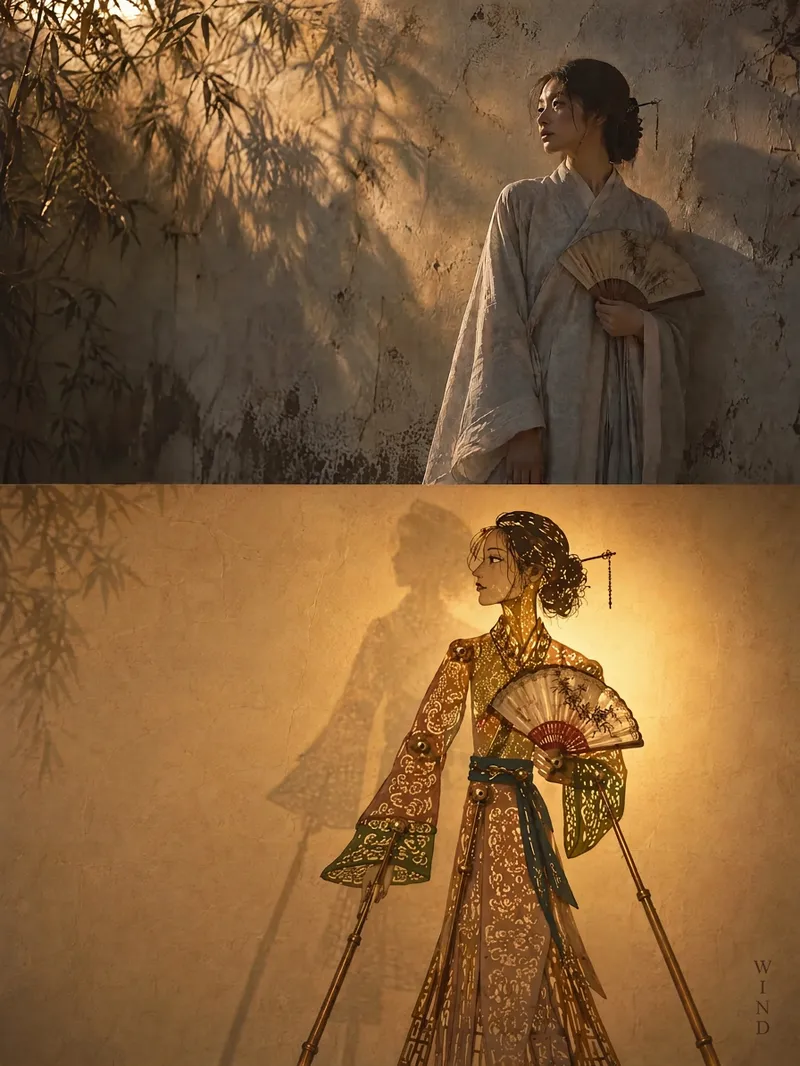 Image
Shadow Play Photo Poster
Transform your uploaded photos into an Eastern light-and-shadow poster that blends original memory with the mood of traditional shadow puppetry. Each photo is generated independently without collages. The top half preserves the original subject, posture, details, and realistic texture, while subtly unifying the colors with restrained warm tones and naturally expanding the environment. The bottom half translates the core figure, animal, building, plant, object, or landscape into a traditional Chinese shadow puppet performing on a rice paper screen. The poster extracts the most recognizable silhouettes, actions, handheld items, or structural features, presenting joints, overlapping plates, antique copper rivets, hollowed-out patterns, and subtle translucent color staining in a profiled, flattened style. Warm light shines from behind the puppet, creating a soft halo, paper texture, and slight shadows while maintaining clean negative space to avoid realistic copying, cartoonish looks, or cluttered stage backdrops. The position, volume, and orientation of the puppet adapt to the original composition, echoing the upper subject with a staggered offset. Each final piece includes a short title distilled from the photo's vibe, placed in a corner in small, vertical, handwritten-style text. After generation, the system checks fidelity, split sections, shadow play craftsmanship, lighting, negative space, and text clarity. Multiple photos are delivered one by one in a consistent Eastern shadow play style.
 Image
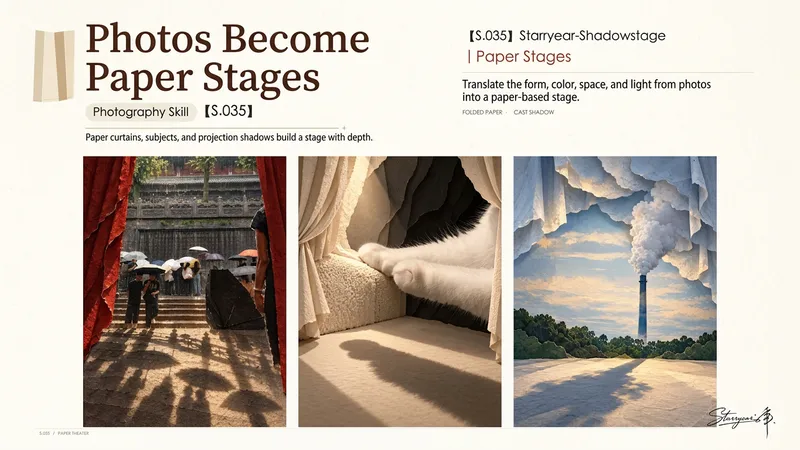
S.035 Year Stage · Starryear
Turn a photograph into a vertical paper-art stage poster with a projection of the subject integrated into the scene. People, plants, buildings, patterns, or other key forms from the photo naturally extend across paper curtains, a paper floor, and layered scenery to create a visually deep world. The work uses the original subject, colors, composition, spatial relationships, and lighting to generate an organically growing paper stage structure, rather than simply applying a photo frame or collage-card layout. The paper curtains, background, and stage floor connect with one another, while the folds, thickness, and occlusion of handmade paper create a convincing sense of depth. The projection derived from the photo becomes a key focal point, using side or backlighting to create dramatic light and shadow. It stretches across the paper floor and scene edges, reinforcing the sense of scale and stage atmosphere. Ideal for transforming documentary photography, travel photos, portraits, nature imagery, or scenes with distinctive textures into photographic posters with a paper-art texture and narrative quality. The default output is one complete vertical 3:4 poster that preserves the original subject’s identity and key visual facts, and typically adds no text, watermark, or decorative elements without a source in the image.
 Image
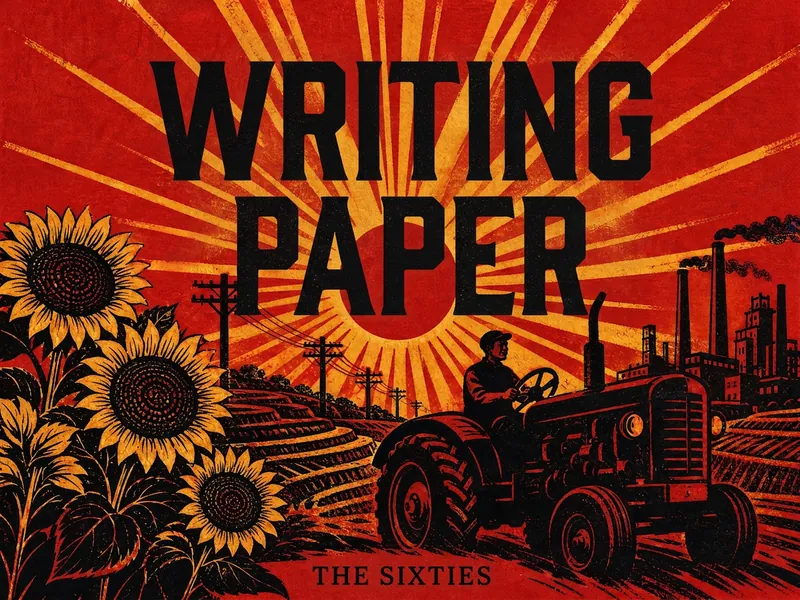
Modern Chinese Era Visuals
Transform titles, themes, or graphics into visual designs inspired by modern Chinese eras, suitable for book covers, posters, cards, illustrations, typography, and social media graphics. Simply provide the text, target era, design format, and aspect ratio to receive a visual concept tailored to your theme. If no ratio is specified, a portrait cover composition can be used. Supports a range of styles from the 1920s–30s Republic of China period and the 1940s through the 2000s, including Eastern Constructivism, War of Resistance woodcut, revolutionary realism, understated literary design, humanistic minimalism, and digital visual styles. Each era-based style presents a distinct design language through its color palette, composition, typography, graphics, and print texture—for example, geometric display lettering, woodcut marks, limited-color flat fills, asymmetrical layouts, paper grain, and balanced negative space. Whether you need a literary book cover, an era-themed poster, or a simple Chinese title design, you can evoke the aesthetics of the corresponding period while keeping the text clear and the composition clean. Supports common aspect ratios including 1:1, 2:3, 3:2, 4:3, 16:9, and 9:16, making it suitable for publishing visuals, exhibition promotion, content graphics, and personal creative work.
Information
- Version
- v5
- Last updated
- Runtime credits
- Usage-based
- Models
- GPT Image 2.5 Flare
