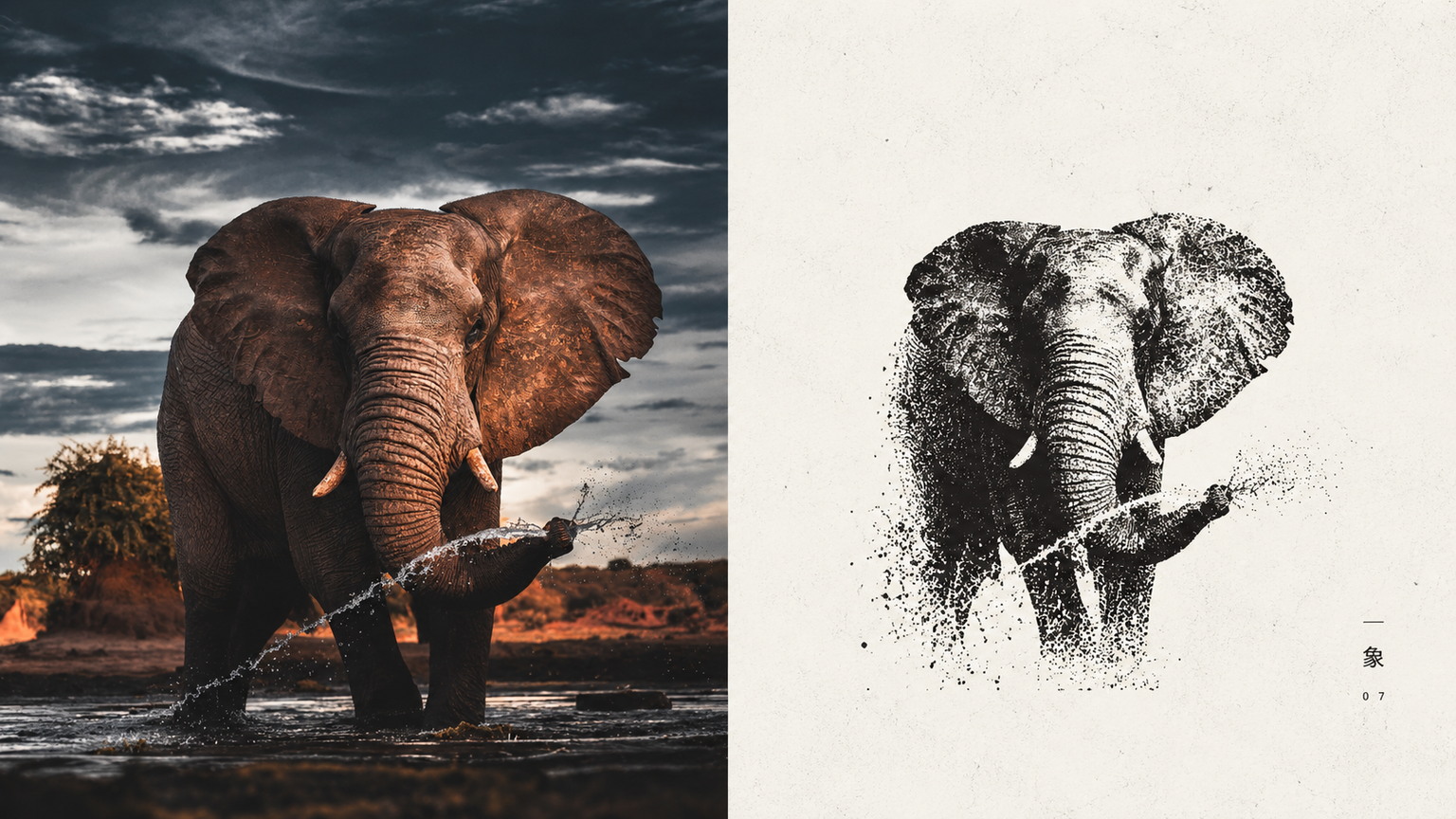
1-Bit Mark | xiaoxiaodong P300
By xiaoxiaodong
1-Bit Mark | xiaoxiaodong P300
By xiaoxiaodong
Showcase
Description
Ideal for reducing an ordinary photo to the core graphic of an art-book page. The original image appears on top; below it is a tiny 1-bit mark using only pure black and white, shaped through error-diffusion dithering and dot density, with no grayscale or gradients. The form emerges from “absence,” while its edges can fade away like an old scan weathered by time. The mark is small and quiet, placed within a large area of blank space, with text styled as a low-resolution archival ID. Avoid complete scenes, grayscale photos, game-like pixels, film-grain filters, commercial logo templates, and decorative patterns.
Best for
For content creators who need to turn photos into core graphics for art-book pages.
How to use this Skill
Provide your input
Provide an ordinary photo or image.
Run the Skill
Turn the image into a quiet, tiny black-and-white binary mark, set within a large area of blank space.
Review your result
Get a PNG image suited for an art-book page, with archival ID text in a low-resolution style.
Related Skills
View all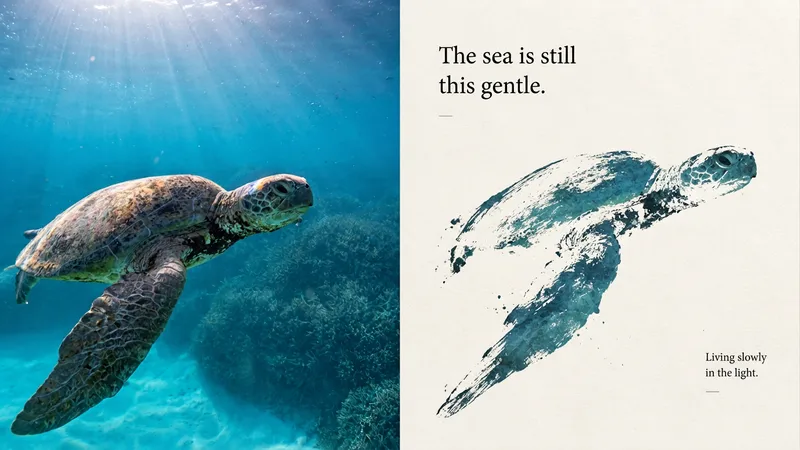
Traces P296 · xiaoxiaodong
Ideal for distilling an ordinary photo into an artistic, seal-like spiritual imprint. The upper half is the original image; the lower half is not an outline, but charcoal, ink, or graphite marks with speed and direction. A single stroke, patch of color, or fragment of a contour carries the entire recognition. Contours may break, fade, or disappear. Symbols should be small and isolated, placed amid generous blank space on warm white paper, with text styled like an archival number. Keep color extremely restrained: beyond black and gray, retain only one emotional color drawn from the original image. Avoid complete illustrations, commercial logos, cartoons, decoration, and realism.
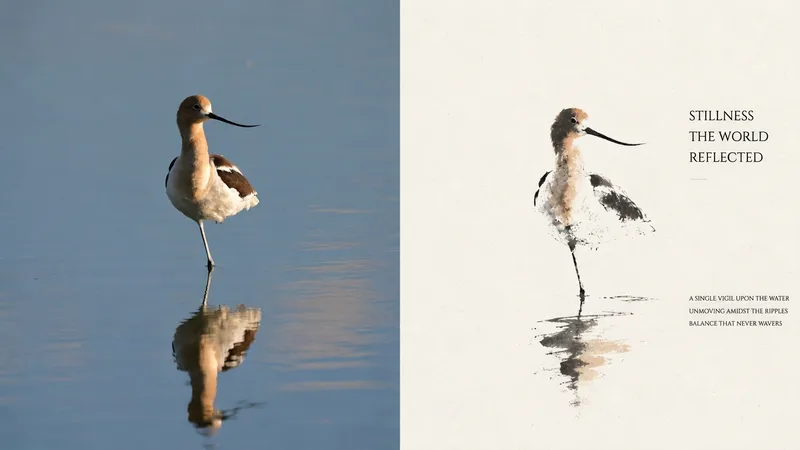
Charcoal | xiaoxiaodong P298
Ideal for reducing an ordinary photo to a totem with minimal information. The upper half shows the original image; the lower half distills the subject into a semi-abstract mark at the edge of recognition. Every stroke must carry identifying weight. The outline need not be closed; erasures and remnants are welcome. The materials are charcoal, graphite, ink, and paper fibers, with uneven edges. Warm white paper is paired with only a small amount of low-saturation color from the subject. The symbol stands alone, with negative space left to breathe and text styled like an art archive annotation. Avoid complete depictions, commercial logos, cartoons, smooth vector shapes, mechanical geometry, and templated marks.
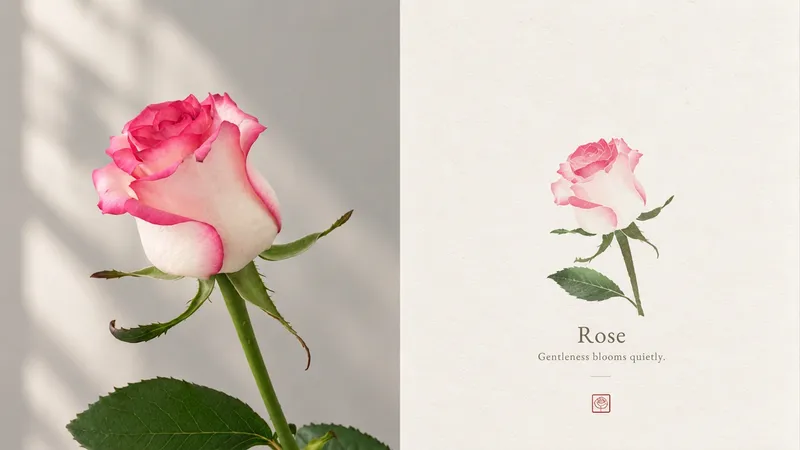
Quiet Symbol|xiaoxiaodong P268
Turn an ordinary photo into a quiet, small-scale visual symbol. The top half shows the original photo; the bottom half condenses the subject into a minimalist mark made of a simple outline, a few color blocks, and symbolic forms—like a brand mark, art seal, or personal collection symbol. The subject can be very small and placed quietly within generous negative space: centered, off-center, near an edge, or partially cropped. Preserve soft lines, flat color blocks, subtle grain, paper texture, and imperfect edges. Avoid complete scenes, complex backgrounds, excessive detail, a generic illustration look, a commercial Logo feel, and a cartoon style.
Information
- Version
- v3
- Last updated
- Runtime credits
- Usage-based
- Models
- Auto
- Use cases
- Images & design
- What you get
- Image
- Visual styles
- MinimalistBlack and whitePrintmaking