小小东
 Image
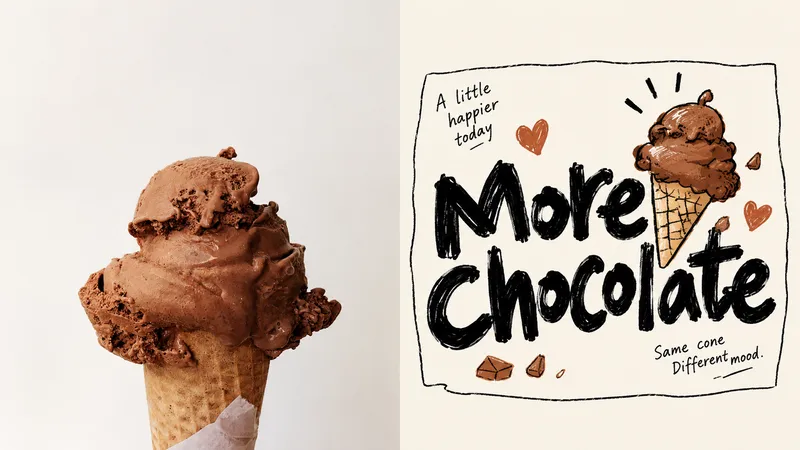
Marker Text | xiaoxiaodong
Ideal for turning a photo's metaphor into a single line of large text for small brand visuals, stickers, or menu covers. The upper half features the original photo; the lower half stars a short phrase in bold black marker handwriting across the middle with generous whitespace on both sides, featuring wonky lettering, irregular sizes, and uneven stroke weights. The main subject and two or three small objects from the photo are rendered as palm-sized clumsy doodles, outlined in thin black lines with flat bright color fills that often spill outside the lines, leaning against the text, sitting on strokes, or peeking out from behind. The entire set is loosely enclosed by a non-closed crooked thin-line border, accompanied by two small handwritten notes at an angle, with a warm white background taking up most of the space. Avoid this if you need to preserve the scene, lighting, or true proportions, if you do not want large text or prefer neat printed fonts, or if you are looking for polished, refined illustration lines and smooth commercial cartoons.
 Image
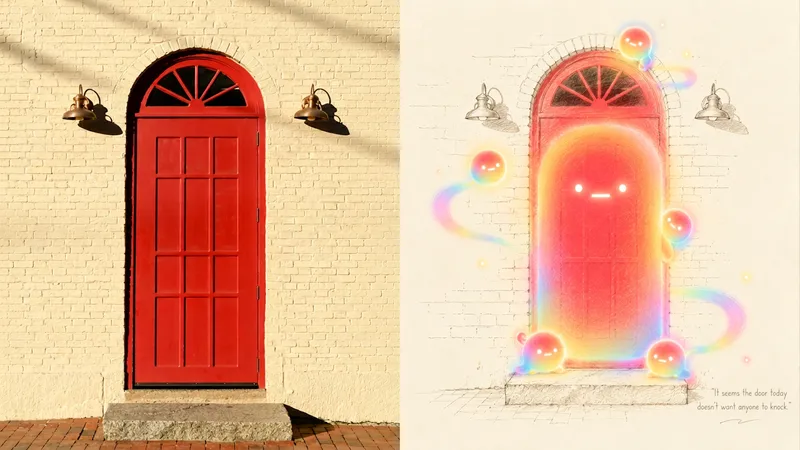
Neon Sprite
Transform ordinary subjects into glowing little spirits. The top half shows the original photo; the bottom half removes clutter and outlines a small area around the subject using delicate, light ink lines that appear in a warm, faint off-white. The subject is no longer line art, but a soft, rounded, lineless spirit formed by gentle light. It retains its original shape while the body features layered gradients shifting from the photo's most vivid colors to pink, orange, yellow, green, and blue. Its face features only two small round eyes and a short horizontal line for a mouth. Other little spirits peek out nearby, connected by an arc of light. The surrounding area remains mostly blank, with a line of handwritten pencil text in the bottom right corner. Avoid subjects with vague shapes that rely on fine details to be recognized, full color illustrations or commercial cartoon characters, and dark, realistic, or serious photographs.
 Image
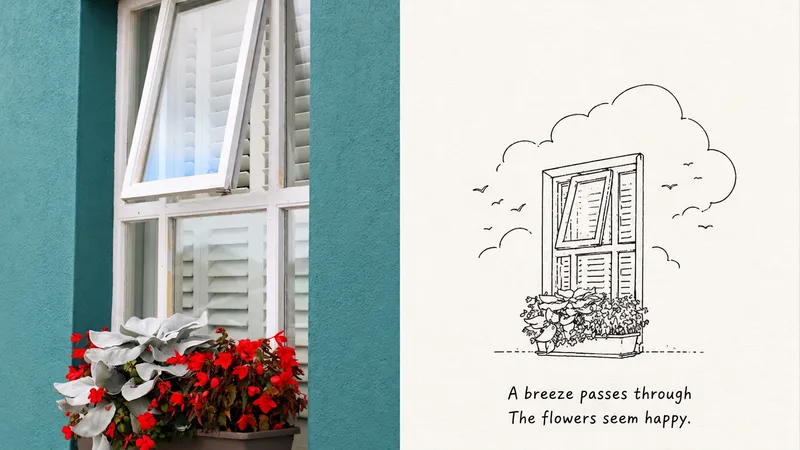
Line Art Scene by xiaoxiaodong
Perfect for turning travel moments or daily corners into quiet, minimalist black line illustrations. The top half shows the original photo; the bottom half uses a single fine black line to draw the main subject and a few nearby items in a straight-on, uncolored view. The shapes are slightly blocky and squished in proportion, sitting neatly like a toy model. Details are shrunk into small icons, windows and doors become small grids, and textures are suggested with just a few short strokes without shading. The lines look like they were pressed with a soft pencil, with gentle variations. The scene rests on a broken short horizontal ground line, with a fluffy cloud larger than the subject rising behind it. The entire group occupies a small central area, with plenty of blank space below and a short handwritten poem in the same pen. Avoids reliance on photo color, lighting, or atmosphere, strong perspective, realistic architectural line art, decorative details, coloring, and cross-hatching shadows.
 Image
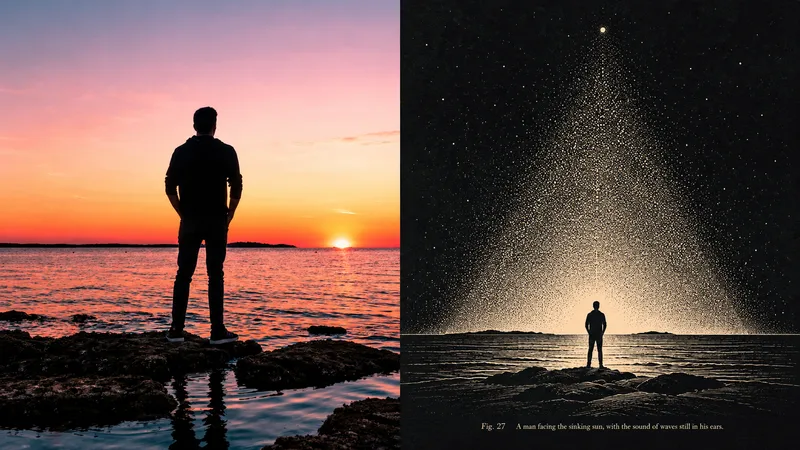
Pointillist Light Cone|xiaoxiaodong P353
Ideal for turning a quiet, single subject into a page from a scientific catalog featuring wood engraving style. The top half shows the original photo; the bottom half deepens the darkest tones of the photo to near-ink coverage, with a huge triangular light cone rising from the center of a low horizon, formed entirely by countless dense bright dots, wider at the bottom and narrower and fading as it goes up. The subject is reduced to a small dark silhouette at the foot of the light cone, rendered with parallel fine engraved lines and only a few bright lines left on the light-facing side. The entire image uses only one dark tone and one slightly creamy light tone, with a very small bright point next to the peak. A single line of small classic serif text is centered at the bottom: a figure number and a caption, like a catalog author calmly recording a curious phenomenon. Avoid photos that require clear subject details, expressions, or colors, full streetscapes and lively scenes, as well as color, photographic realism, soft focus halos, and stage spotlight effects.
 Image
Ink Dot Specimen
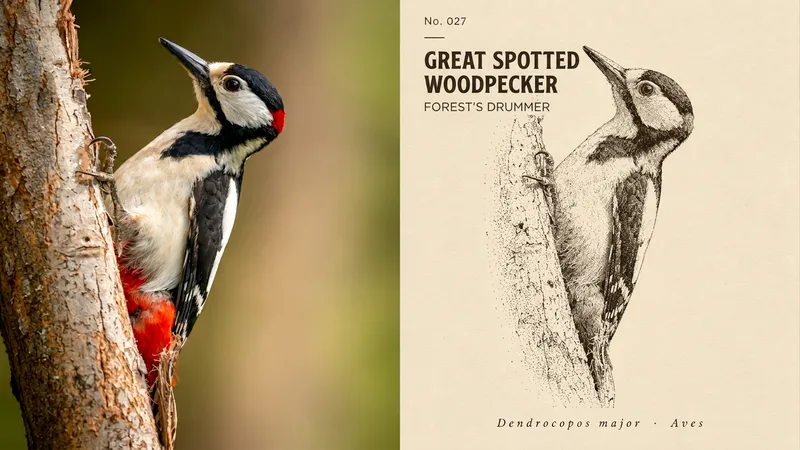
Perfect for placing your photo subject inside a vintage natural history encyclopedia. The top half shows the original photo; the bottom half transforms the subject into a recognizable side specimen pose, rendered entirely with near-black ink dots. The shaded areas are dense enough to nearly merge, while lit areas are left blank without a single continuous solid line. The dots are nearly uniform in size with a handcrafted uneven arrangement, and the subject is placed diagonally across a lightened background derived from the photo, with no color other than black ink. The text follows encyclopedia entries: a small code and common names in two languages in the upper left, and a line of italicized serif Latin-style scientific names at the bottom, hiding a touch of humor within seriousness. Avoid photos that rely on color or frontal expressions to be recognizable, whole streets, multi-person scenes, as well as color realism, gray washes, line drawing outlines, and neat halftone dots.
Floating Block Island by xiaoxiaodong
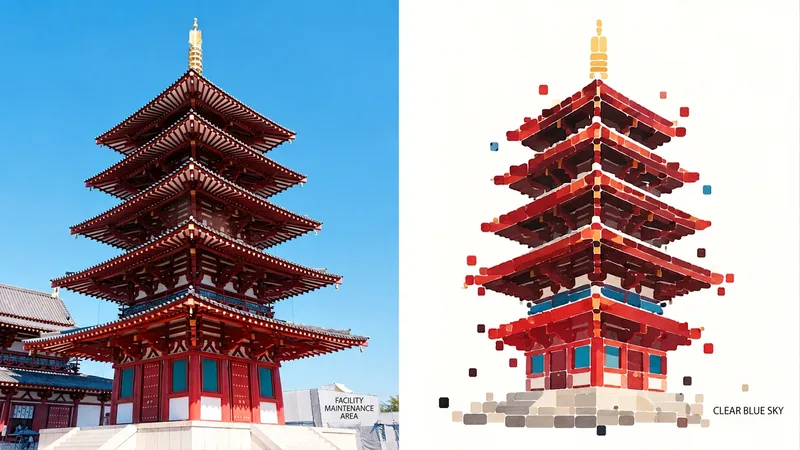
Transform your photo subject and the ground beneath it into a floating square island. The top half is the original photo, while the bottom half is entirely redrawn into large, rounded rectangular flat color blocks stacked horizontally and slightly offset with no photo texture remaining. Edges feature no outlines, instead breaking into a ring of outward-drifting small squares that shrink and thin out further from the center. Dark blocks contain thin white lines resembling cascading water, accented by delicate dark strokes. The palette uses only one bright color, one dark color, and a few mid-tones, heavier at the bottom with marker-like water stains along the edges. The entire composition floats on a white background with quiet handwritten text in the lower right. Avoid using photos where facial details or photo textures must be preserved, complex horizons, complete streetscapes, neat pixel grids, outlines, realistic watercolor washes, or many colors.
 Image
Floating Pixel Art by xiaoxiaodong
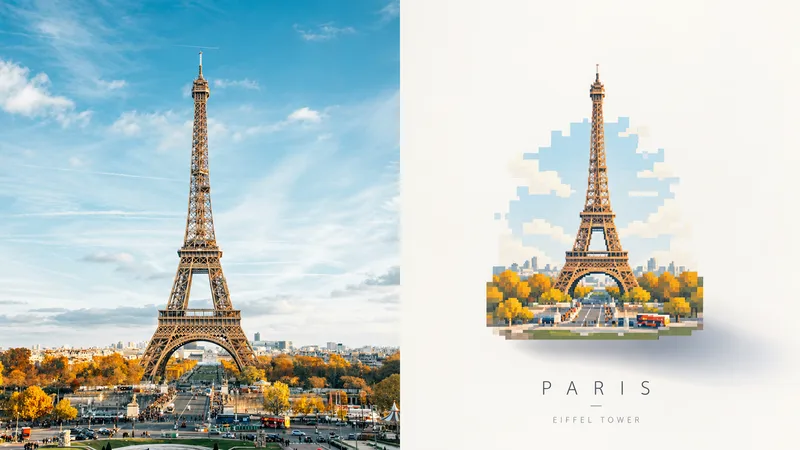
Perfect for turning photo subjects into a floating, pastel pixel art piece. The top half shows the original photo; the bottom half redraws the subject as a self-contained small art piece centered in a large expanse of light negative space, with a soft shadow offset from the piece at the bottom right that fades into the distance. The artwork uses uniform pixel grids, breaks curves into horizontal and vertical steps, merges details into grouped rectangles, and features no black outlines. Colors are sampled from the photo into four to six high-lightness pastel shades, with a small amount of muted dark tones and a single highlight, resulting in clean and flat color blocks. A thin, light sans-serif caption may appear outside the artwork. Avoid photos that require clear facial recognition or fine textures, scenes intended to fill the entire frame, or cartoon styles, smooth curves, plastic textures, and old paper textures.
 Image
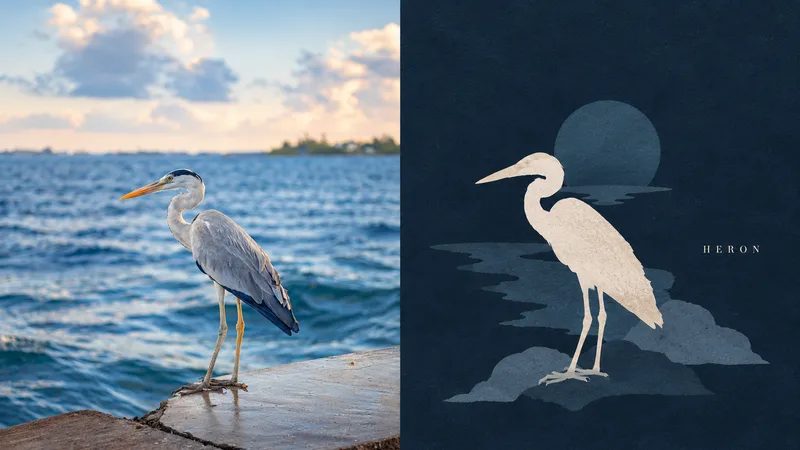
Mini Diorama | xiaoxiaodong
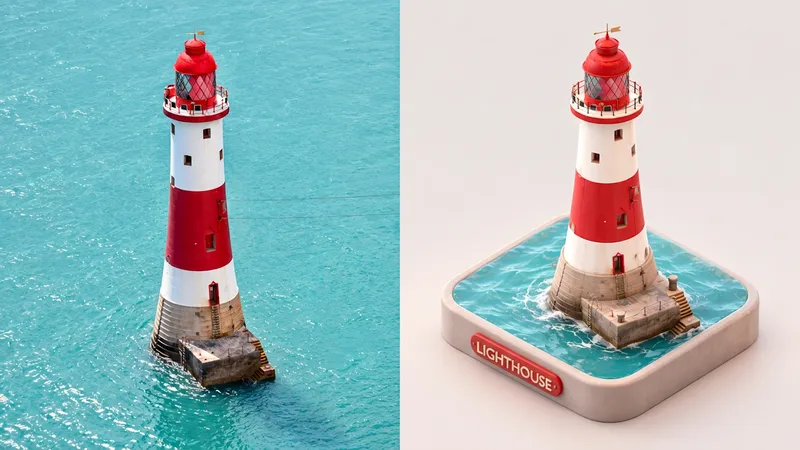
Perfect for turning the main subject of a photo along with the ground beneath it into a miniature model. The upper half shows the original photo; the lower half extracts the subjects and places them on a rounded square base, viewed from an elevated angle with the base edges fully visible. All volumes are smooth and chunky with rounded corners, resembling soft-clay figurines. Leaves appear as clusters of small spheres, and clutter is organized into neat accessories. The surface is matte, featuring soft diffuse lighting and subtle ground-contact shadows. The color palette draws from pink-toned harmonious colors extracted from the photo, set against a grayish-white base and a clean, light-colored background. A matching rounded 3D text label appears on the front. This style avoids entire streets, large landscapes, or full interiors; it requires photos with clear appearances and realistic textures, and is unsuited for eye-level front elevations, flat vectors, glossy plastic, or highly saturated candy colors.
 Image
Dark Silhouette by xiaoxiaodong
Ideal for turning a main subject and a few nearby items into a dark-background silhouette still life. The top half shows the original photo; the bottom half converts them into front-facing or profile flat silhouettes with no outlines and almost no internal details, staggered in height and overlapping in a cluster like quiet objects on a tabletop. The background color deepens the darkest tone of the photo, and the silhouettes are rendered as low-saturation pink-gray blocks with only one accent brightened to near warm white as if illuminated. The entire surface features fine, dry-gouache-like textures. The silhouette group leans slightly to one side, leaving empty space on the other side featuring a slender serif uppercase word. Avoid photos requiring perspective, 3D lighting, or clear facial features, as well as entire streets, full rooms, bright backgrounds, pure black backgrounds, gradients, outlines, and high-saturation colors.
 Image
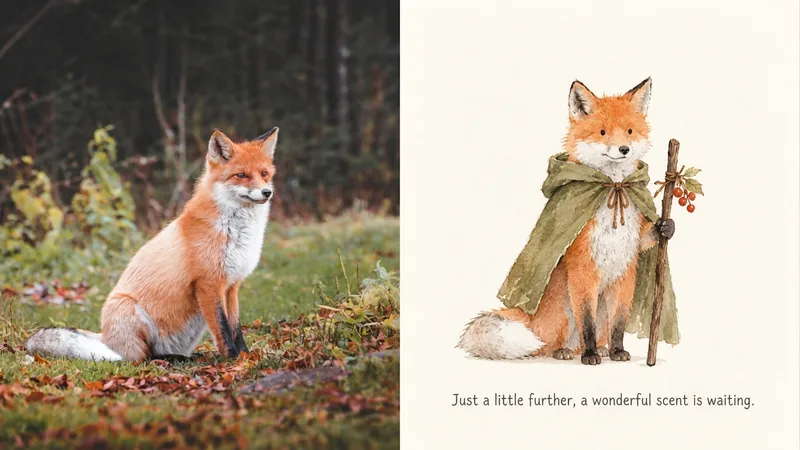
Costume Figurine
Turns pets, family members, or small objects into picture book characters ready for a journey. The top half shows the original photo; the bottom half removes the background and lighting, presenting the subject standing straight and facing forward. They wear a solid-color cloak or hood, or a pointed cap, holding a small staff or a small item from the photo. The character is rendered in flat watercolor washes with watermarks left after drying, and fluffy areas brushed with dry strokes. The face features only two small black dots for eyes and a tiny nose, with no black outlines or shadows. The costume uses soft, washed-fabric colors with a warm, bright accent on the prop, set against a warm white background with a light pencil note at the feet describing their journey. Avoid requests requiring running or jumping actions, complex backgrounds, big cartoon eyes, realistic fur, black outlines, or flashy colors.
 Image
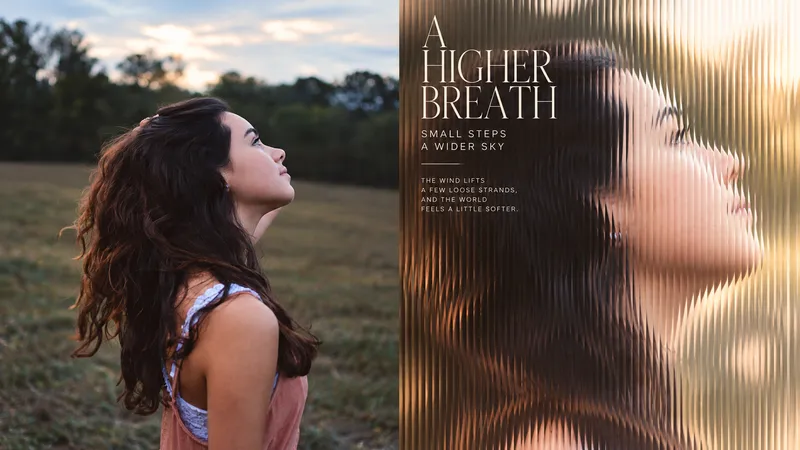
Reeded Glass by xiaoxiaodong
Ideal for turning photos into magazine covers that look as though they were shot through vertical reeded glass. The top half shows the original photo; the lower half pushes the subject into a full-bleed closeup while removing clutter, maintaining a true photographic texture with extremely fine, dense vertical ribs that compress and offset the image inside each stripe, fracturing outlines into fine vertical serrations. The lighting is transparent afternoon warmth, with highlights approaching milky white and backgrounds blurred into soft color spots while the face or most recognizable part of the subject remains in frame. One blurred side features a set of milky white magazine cover typography: fine-line serif title, letter-spaced small uppercase text, a short rule, and two to three lines of notes. Avoid photos requiring clear full scenes or many people, demands for sharp details, illustrations, dim cold tones, or heavy shadows.
 Image
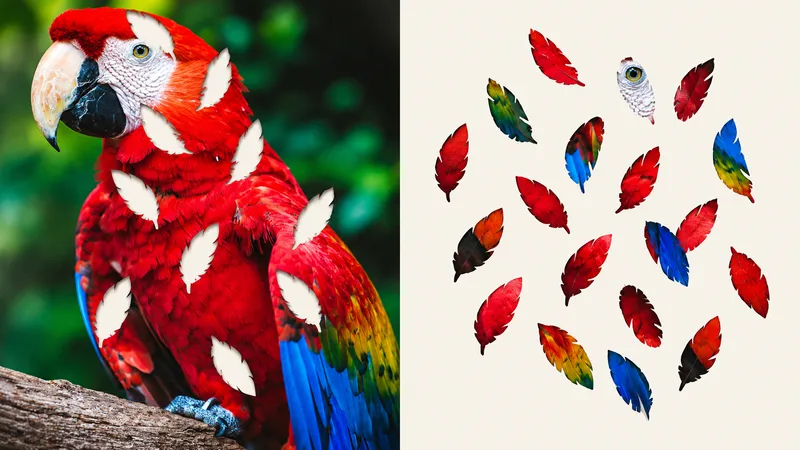
Punch Art Echo | xiaoxiaodong P342
Ideal for turning a colorful, detail-rich photo into an artistic punched paper work. The top half shows the original photo punched irregularly with clean holes from the same mold (such as stars, petals, leaves, water droplets, or keyholes), revealing solid colors pulled from the photo inside the holes. The bottom half is a large area of solid white space in the same color, where every punched-out fragment regathers with its original texture and color. All holes share the exact same shape and size, only varying in rotation without tracing object edges, placed randomly yet with aesthetic judgment. The fragments cluster into loose constellations, specimens, or clue-like new arrangements, completely free of text. Avoid large areas of solid color, low-detail photos, ID photos, important portraits, explanatory text, full contour tracing, or paper carving and relief.
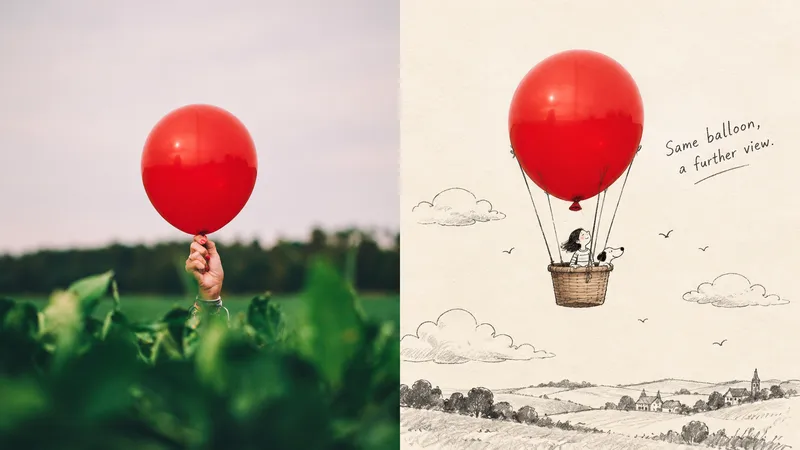 Image
Second World | xiaoxiaodong P341
Perfect for turning an ordinary photo into a continuous "Second World". The top half features the original photo. Instead of a separate drawing, the bottom half takes a clever cue from the image—a rope, a shadow, a boundary, or a motion—crossing the centerline to continue drawing, change purpose, or lead to an unexpected outcome on warm off-white paper. The lower area has generous negative space with only a few tiny black line-art figures interacting with, repairing, or misinterpreting elements from the photo. A short handwritten English caption is included. The style is clean, bright, and witty with a touch of micro-surrealism. It avoids complete redraws as illustrations, dense doodling, sticker props, cliché brainstorming, and motivational quotes.
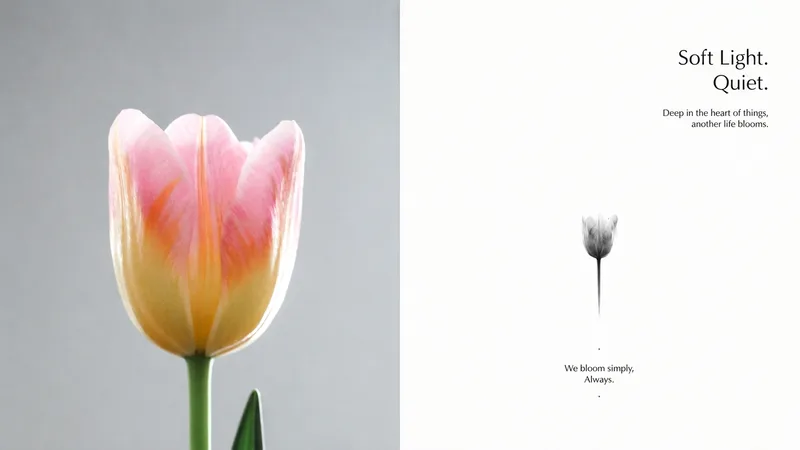 Image
Visual Singularity Style | GPT
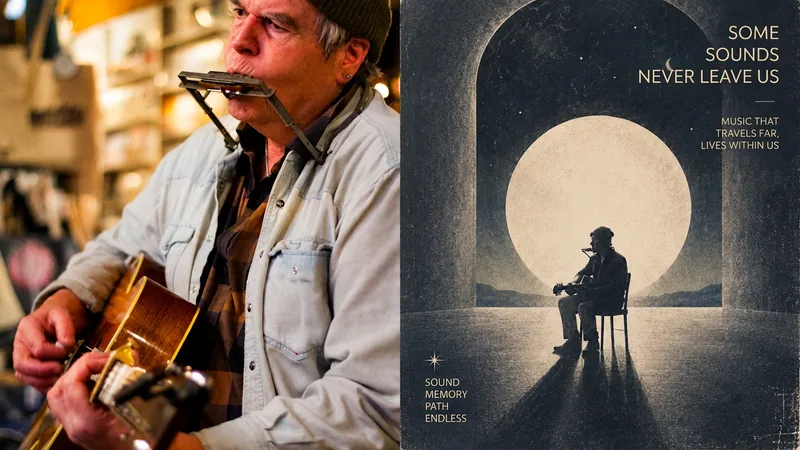
Transform your photos into a visual singularity with a single click. A person, a tree, or an object that only looks striking when placed in a vast expanse of space.
 Image
Central Axis Seal | xiaoxiaodong
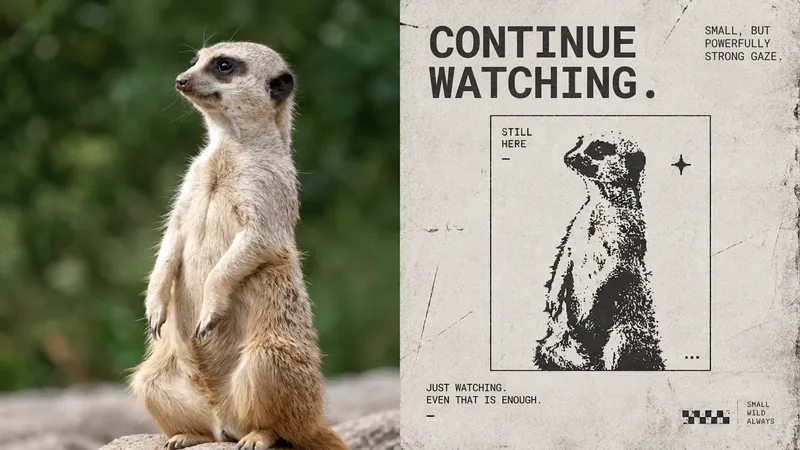
Transforms an ordinary photo into a mystical memory seal. The top half features the original photo, while the bottom half bypasses specific events to draw the eye inward using a central axis, nested frameworks, light sources, entrances, or paths, housing only a tiny silhouette to express scale, solitude, or anticipation. The lines are restrained with subtle manual imperfections, resembling woodcuts or ancient seals, and the negative space represents distance and the unknown. The color palette is near-monochromatic and deep: dark indigo, midnight blue, off-black, ivory, and soft grayish-purple, evoking old film or ancient printmaking. Specific scenes, portraits, excessive symbols, bustling backgrounds, and decorative frames used to explain the image are avoided.
 Image
Pixel Fragment by xiaoxiaodong
Transforms an ordinary photo into a street fragment dug out from the early internet and re-exhibited. The top half is the original photo; the bottom half features coarse black blocks, pixelated edges, and stencil silhouettes housed within a restrained box, complete with faint traces of outdated interfaces. Strength and fragility, detachment and emotion coexist, leaving vast areas of silence. The color palette consists of cool gray, charcoal black, warm gray, and aged white, with only a tiny anomalous color focal point (roughly 80% detachment, 15% coarseness, and a dash of accent color). Avoids glossy app icons, complete figures, nostalgic cartoons, and busy interfaces.
 Image
Storybook Border by xiaoxiaodong
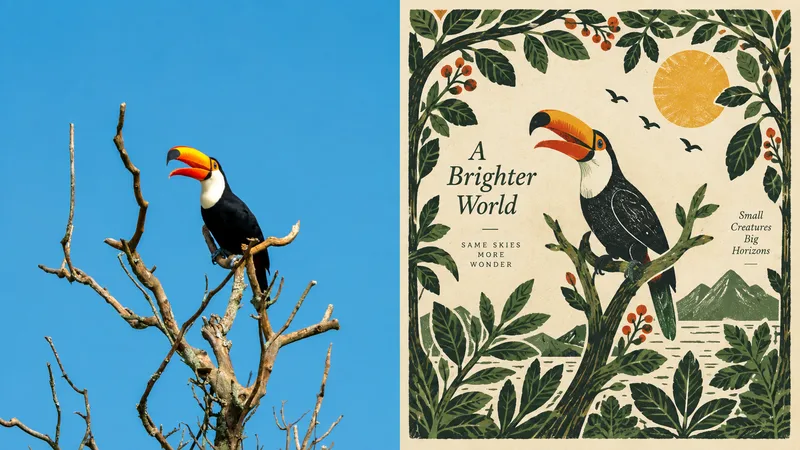
Turn an ordinary photo into a long-lasting storybook illustration insert. The top half features the original photo, while the bottom half uses a unified design grammar of plants, people, animals, and objects growing along the page edges like border decorations. The large central area provides quiet negative space for breathing room or minimal text. It utilizes paper-cut silhouettes, geometric modules, and mid-century editorial simplification. The color palette features limited spot colors reminiscent of screen printing: sage green, forest green, warm white, black, mustard yellow, low-saturation red, and soft orange. It avoids cluttered centers, mixed art styles, stock photo collages, commercial poster aesthetics, and realistic details.
Round Totem | xiaoxiaodong
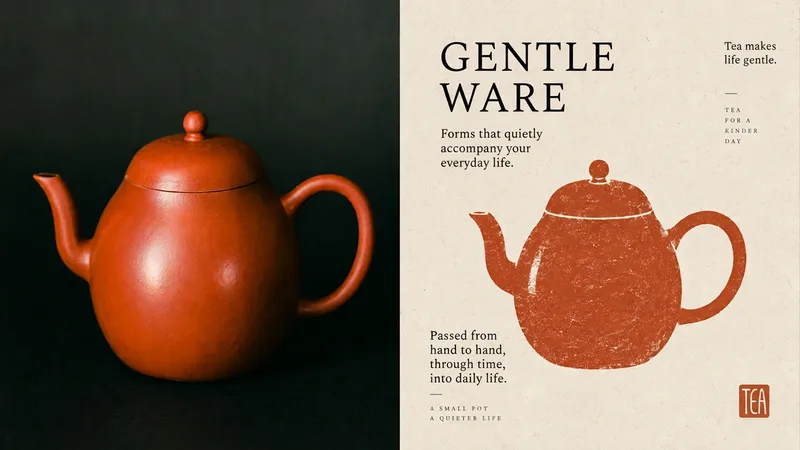
Perfect for turning an ordinary photo into a chapter marker for an art book. The top half features the original photo, while the bottom half presents a rounded, slightly clumsy, asymmetrical, and minimally detailed simplified outline with sparse color blocks, resembling a long-kept private stamp. It blends soft gouache, crayon grain, paper textures, and a subtle silkscreen feel. Featuring only a single symbol with generous negative space, it includes a single line of private notes. The color palette uses warm off-white, oatmeal, and gray-beige as a base, complemented by botanical green, lake blue, soft yellow, and coral red for the main subjects. Avoid multiple objects, complex scenes, precise geometry, commercial logos, and polished retouching.
 Image
Minimalist Line Art by xiaoxiaodong
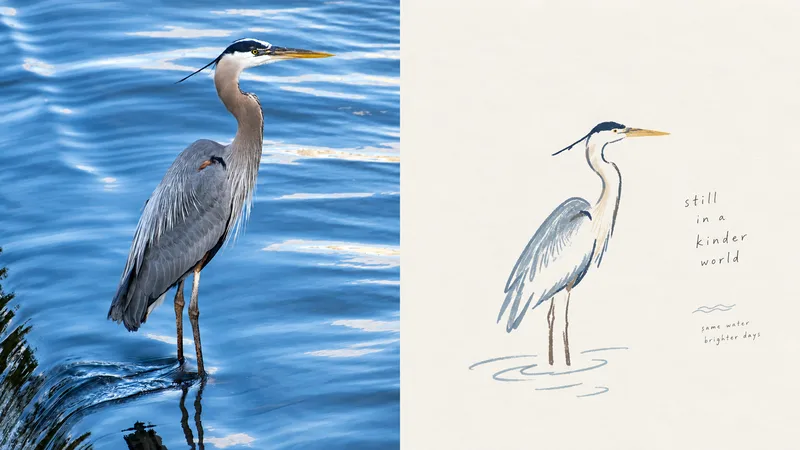
Turns an ordinary photo into a quiet symbol that evokes its original context. The top features the original photo; the bottom is a Japanese-style relaxed hand-drawn single line: thin, slightly trembling, pausing, slightly clumsy, with only a few outlines and simple color blocks. The symbol is compact, slightly off-center or floating, with ample negative space carrying the mood. The color palette is low-stimulus: faded blue, misty green, warm white, light gray, soft brown, or a single thematic color. Avoids precise depiction, noisy colors, complete illustrations, and perfect geometry.
 Image
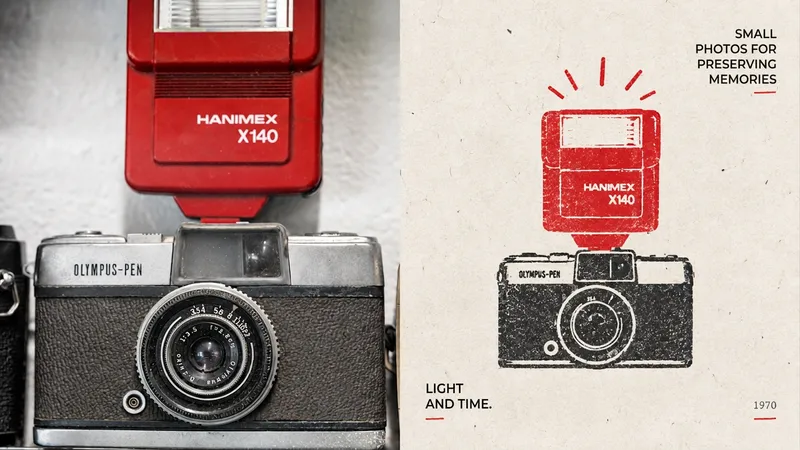
Sticker Badge | xiaoxiaodong
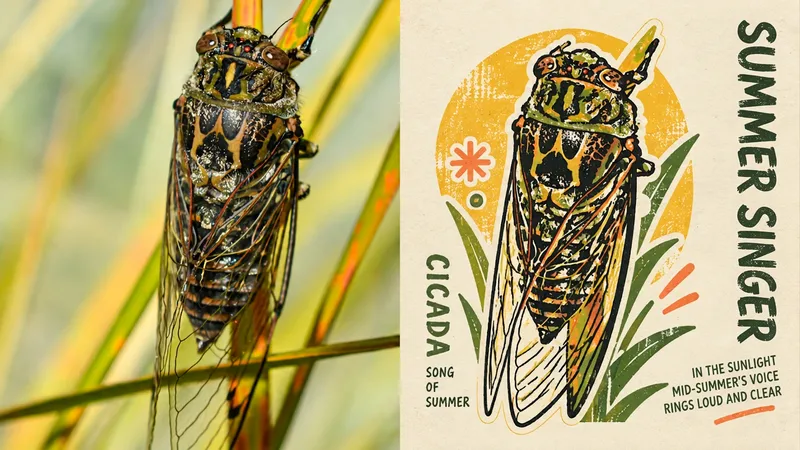
Turn an ordinary photo into a bold, thick-outlined sticker badge you can collect individually. The top half shows the original photo, while the bottom half features an exaggerated silhouette, simplified proportions, and flat spot colors. It has a chunky outline with slight artisanal imperfections, making it compact and complete like a die-cut emblem. It features a touch of Riso or screen-print texture, optionally accented by a single star, dot, or botanical element. The spot colors are few and distinct: cream, warm yellow, pink, coral, vintage blue, plant green, and dark brown-black. Realistic proportions, complex scenes, smooth vectors, and corporate locks are avoided.
 Image
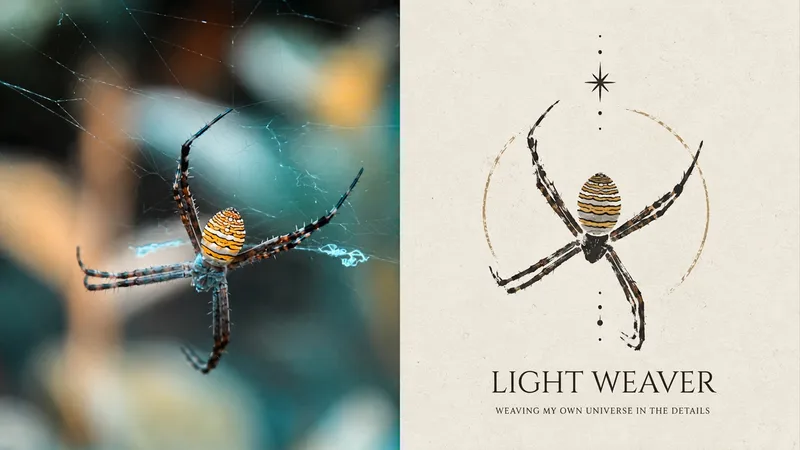
Old Magazine Relic P327
Transforms an ordinary photo into a small graphic motif cut from an old publication. The top half features the original photo, while the bottom half displays controlled, naive markings with accurate proportions and positioning but slightly rough edges, reminiscent of small relics left on childhood print materials. Uses 2-4 spot colors derived from the original image, set against a warm gray-white or aged paper off-white background. It includes subtle childhood-print accent colors in red, blue, and yellow, allowing for slight color misregistration and dry ink effects. The markings are placed within quiet, generous white space with extremely small text resembling margin notes from a publication. Avoids corporate logos, cute cartoons, heavy aging, gradients, 3D effects, and fully filled-in illustrations.
 Image
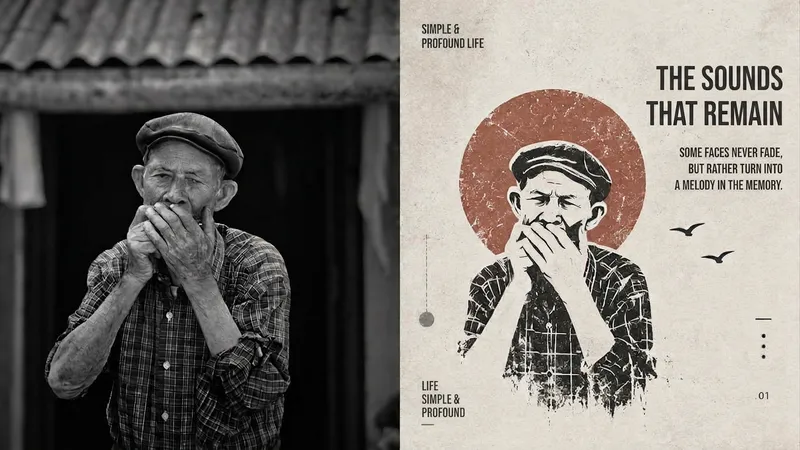
Rough Totem
Transforms an ordinary photo into a suspended artistic marker. The upper half features the original photo, while the lower half introduces subtle distortion, incomplete structure, and imprecise proportions, retaining only the spiritual core as a quiet, rough-textured totem. Uneven ink lines, dry brush, chalk, and paper texture coexist. A halo, short line, or dot can be added to enhance the totem feel without becoming decorative. The symbol floats within a vast expanse of quiet whitespace. The palette is low-saturation and collector-oriented: bone white, warm beige, ink black, dusty rose, fog pink, deep green, and muted red. Avoids perfect digital logos, complete objects, decorative clutter, and smooth vectors.
 Image
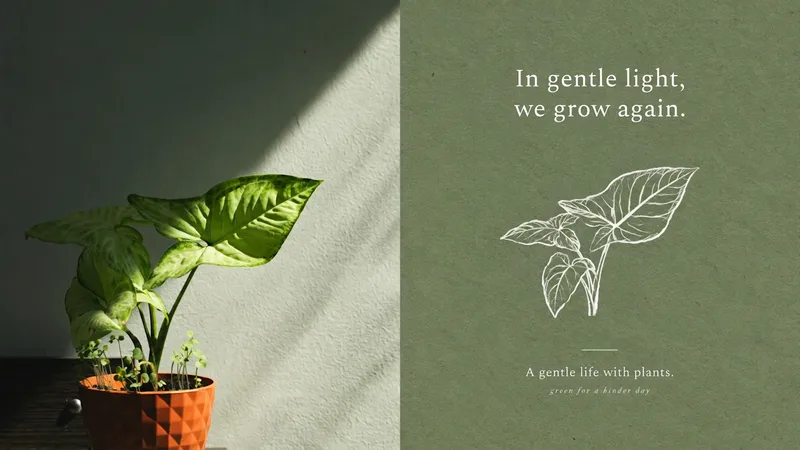
Mythic Seal | xiaoxiaodong
Transform an ordinary photo into a private mythical symbol preserved by time. The top half shows the original photo, while the bottom half features an artistic stamp with strong outlines, few elements, and high recognizability. It can be incomplete, using a short line, a dot, a circle, or an ancient non-semantic mark to assist spiritual expression. It blends woodcut engraved lines, the instability of naive hand-drawing, and screen-printing grain, placing a single symbol within vast negative space. The color palette feels aged and collectible: warm white, bone white, charcoal black, dusty rose, fog blue, natural green, and dark red. Avoids average color sampling, decorative clutter, commercial logos, and complete scenes.
 Image
White Line Emblem | xiaoxiaodong
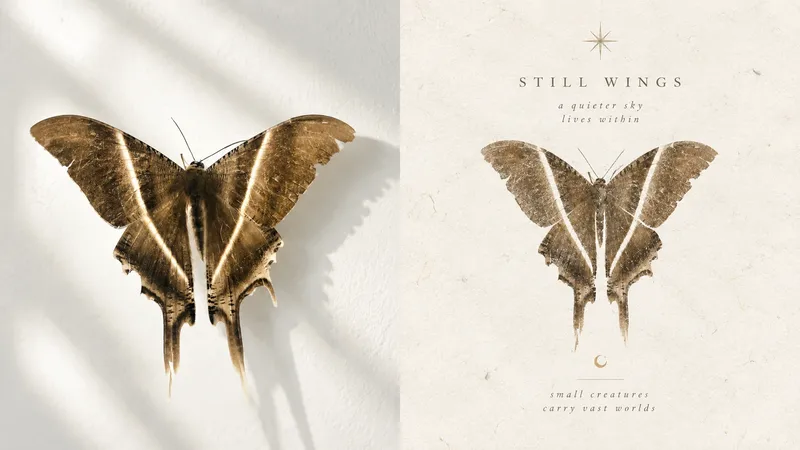
Ideal for turning an ordinary photo into an independent handmade mark within an artisanal brand system. The top half is the original photo; the bottom half features a delicate, trembling white-line outline with varied stroke weight and occasional skips, drawn like chalk or marker without any fill. The base can feature a tactile texture, but the symbol remains a single outline surrounded by plenty of breathing room, making it especially suitable for simplifying plants or organic shapes. The color palette is natural and soft: warm wood, off-white, botanical green, misty blue, soft coral, and pale yellow. Avoid perfect vector logos, heavy fills, complex scenes, and competing multiple outlines.
 Image
Miniature Vision xiaoxiaodong
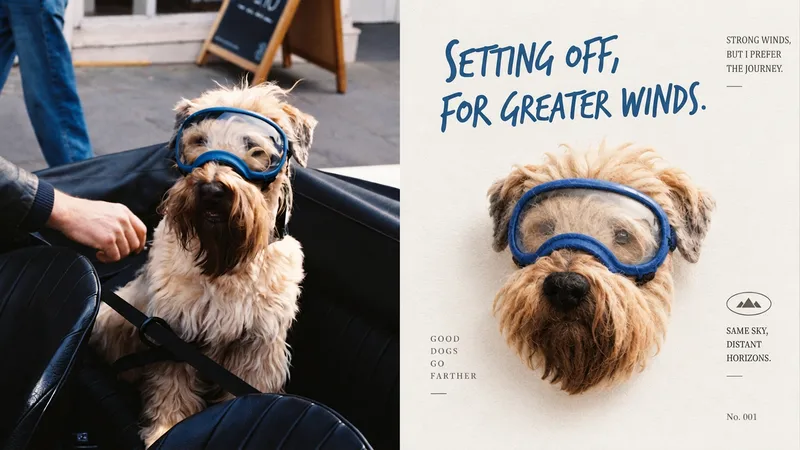
适合把一张普通照片收成安静的魔幻现实主义小印章。上半是原照;下半不解释完整对象,只留最核心的精神形态,加一点微妙的不对称和极少的辅助,精致、克制、可以轻微漂浮。 物件很小,情绪很大;纸纹、蜡笔、色铅笔、干刷和丝网误差并存,留白极端。配色柔和低饱和但有生命:暖米白、雾蓝、粉蓝、苔绿、柔珊瑚、淡黄,留一点微小亮色。避免完整解释、复杂背景、光泽成品和喧闹徽章。
 Image
Tactical Sculpture
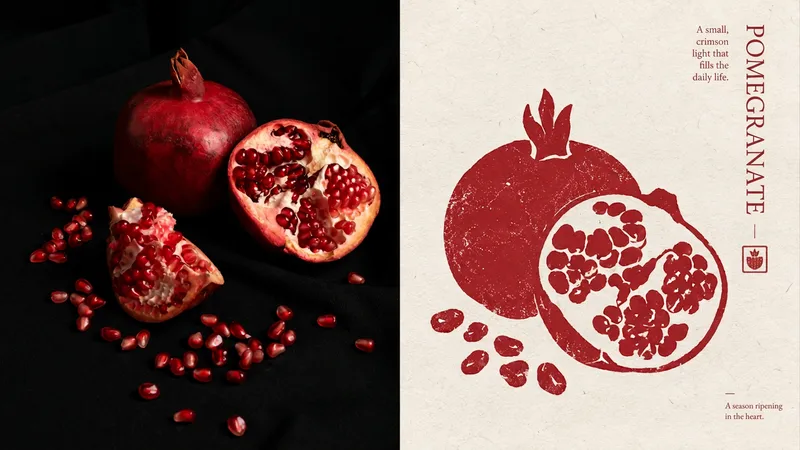
Transforms an ordinary photo into a high-end brand's tactile little icon. The top half shows the original photo; the bottom half retains only one to three identifying features—silhouette, posture, color, or an object—rendered as rounded, slightly exaggerated, asymmetrical handmade pieces. The material reads like paper fiber, felt, soft pottery, fabric, or wood, featuring tiny handmade imperfections rather than realistic rendering. The small piece stands alone in a clean space, resembling a collectible from a design catalog. Full bodies, complex anatomy, scenes, glossy rendering, and commercial toy logos are avoided.
 Image
Folk Art Logo | xiaoxiaodong
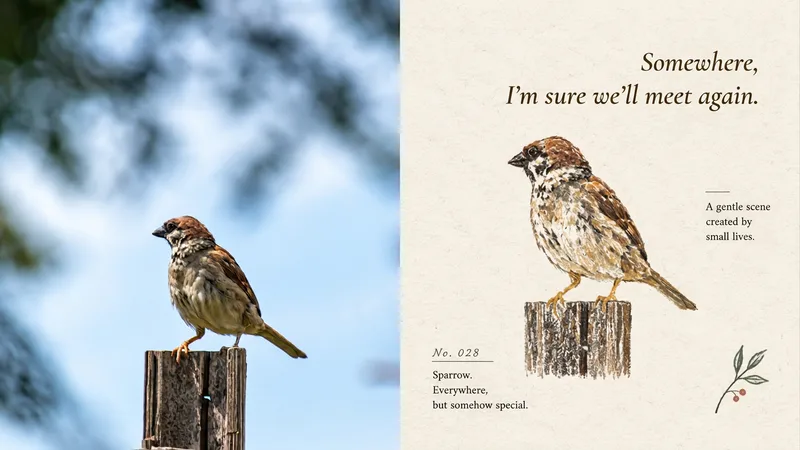
Ideal for turning an ordinary photo into a cultural graphic for an art institution or independent publication. The top half shows the original photo; the bottom half keeps only a single outline, pose, or structure where shape takes precedence over details, using a bold outer outline and a few flat color blocks. Paper-cut edges, silk-screen textures, and uneven ink are all retained, and proportions can be naive. The color palette consists of one primary color, one secondary color, and a few accent colors, such as pastel blue, botanical green, coral red, warm yellow, ivory white, and brick red. A single symbol, small, slightly off-center, or lightly cropped. Avoid complete stories, complex backgrounds, digital vectors, and multiple competing symbols.
 Image
Old Book Pictograph
Ideal for turning an ordinary photo into a small motif that evokes a specific place or mood. The upper half features the original photo; the lower half retains only the core shape that best represents its identity, styled with a slightly chunky yet thoughtful proportion and imperfect, irregular edges like a hand-drawn pictograph tucked inside an old book. Colored pencil, crayon grain, and paper textures are clearly visible. The symbol is compact, appearing as though collected on paper, accompanied by a small collection word. The palette is warm and desaturated: off-white, ochre, brick red, dark green, misty blue, and coffee brown, with a touch of vivid color as a memorable accent. Avoids complete buildings, full figures, intact scenes, smooth vectors, and mechanical edges.
 Image
Memory P314 · xiaoxiaodong
Ideal for turning an ordinary photo into a simple symbol that carries its emotion away. The top half is the original image; the bottom half is a soft outline with naive flat color blocks. It may include a star, a plant, or a short line, but it should not develop into a scene. Colored-pencil and chalk-like grain remains visible on the paper. The symbol is small and surrounded by ample blank space. The palette uses the muted colors of an old children’s book: misty blue, gray-green, warm ivory, cream, soft pink, and muted red, with a single area of brightness as a focal point. Avoid commercial logos, realistic proportions, complete illustrations, and smooth vector graphics.
 Image
P313 Stamp | xiaoxiaodong
A plain photo transformed into an independent zine or a personal mark in an artist’s notebook. The upper half shows the original photo; the lower half uses a bold outer contour, a few identifying features, and slightly awkward proportions, with a touch of hesitation, repetition, and incompleteness in the linework. Flat spot colors, paper texture, and printing imperfections coexist. There is only one focal point, kept small, with plenty of paper left to breathe. The palette is limited to a main color, supporting colors, and black-and-white contrast—bright but restrained. Avoid commercial geometry, complete scenes, polished vectors, and over-cleaned linework.
 Image
Concept Emblem | xiaoxiaodong P309
Ideal for turning an ordinary photo into a small, limited-edition motif with an artist’s or premium brand’s feel. The top half shows the original image; the bottom half keeps only one core symbol, one subtle reinterpretation, and one hidden meaning, allowing something familiar to reveal a second layer. Choose just one material—embroidery, fabric, paper, printmaking, or clay—and keep the entire emblem consistent. Keep the symbol small and the negative space clean, with one small editorial word as the text. Use a restrained, cohesive palette: one primary color with a few supporting colors. Avoid complex illustrations, complete narratives, piled-up elements, commercial cartoons, and busy logos.
 Image
Spirit Field | xiaoxiaodong P310
Ideal for shaping an ordinary photo into a poetic emblem with the sensibility of an art institution or fragrance brand. The upper half is the original image; the lower half does not depict a specific object, but the feeling behind it: a large organic form creates the field, with a tiny yet highly recognizable focal point hidden inside or placed beside it. Build order through negative space, curves, and a few geometric facets, keeping information density very low. The materials are matte paint, paper grain, and a subtle screen-printing feel. Avoid specific still lifes, complex scenes, smooth vector graphics, and piles of symbols.
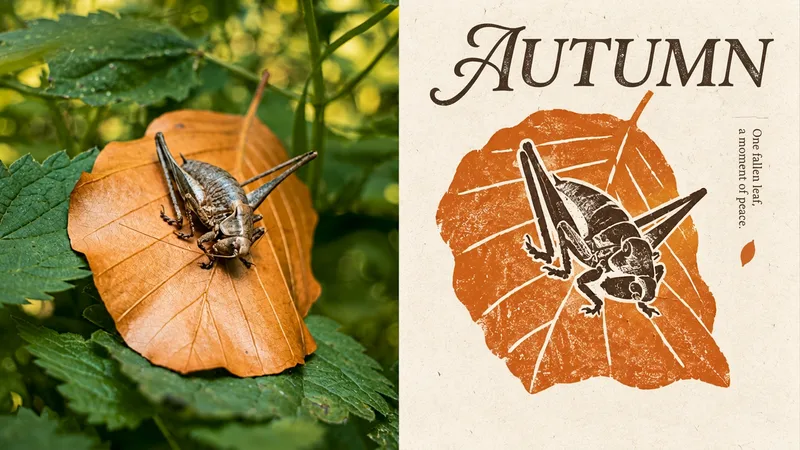 Image
Paper-Cut Badge | xiaoxiaodongP308
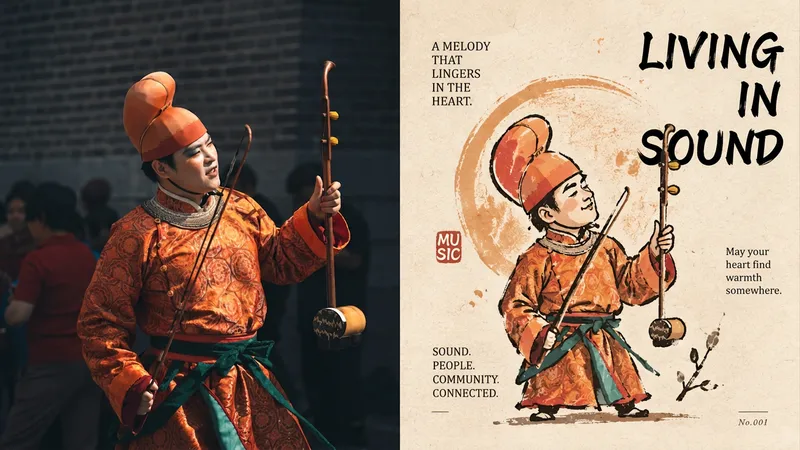
Turn an ordinary photo into a personal cultural marker rooted in a particular place. The top half shows the original image; the bottom half uses a bold outer contour, a few layered color blocks, and positive-negative space, like a badge made with scissors, stencils, and screen printing. The subject can be incomplete, exaggerated, or symbolic. Paper-cut, stencil, screen-print, and crayon textures coexist, with rough edges and slightly misregistered layers. The palette is limited to one main color, one supporting color, and one accent color, such as soft blue, botanical green, warm yellow, coral, off-white, or ochre. The badge is small and may be slightly rotated, with text serving as a cultural annotation. Avoid full illustrations, smooth vector art, AI cartoons, 3D, and template icons.
 Image
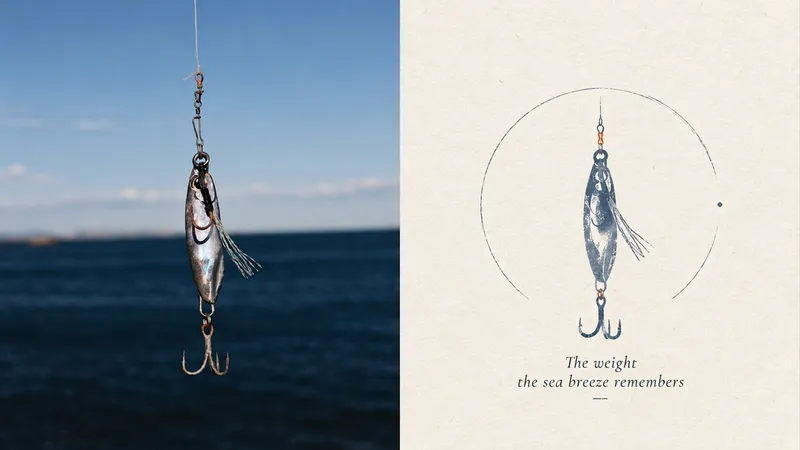
xiaoxiaodong P320 Silhouette
For turning an ordinary photo into a distinctive character captured by an artist—not a commercial mascot. The top half is the original image; the bottom half first establishes a silhouette, then layers broken, overflowing, and not-quite-closed gesture lines over it. Proportions may be rounded or slightly distorted. A circle, star, or sprig of a plant can support the identity, but must not become the background. Ink lines sit on paper, loose yet controlled, forming a small collectible icon. Use a warm, limited palette: warm yellow, ochre, soft orange, off-white, dark brown, and deep red, with a small amount of cool color for balance. Avoid smooth vector shapes, excessive retouching, cute IP, and complete scenes.
 Image
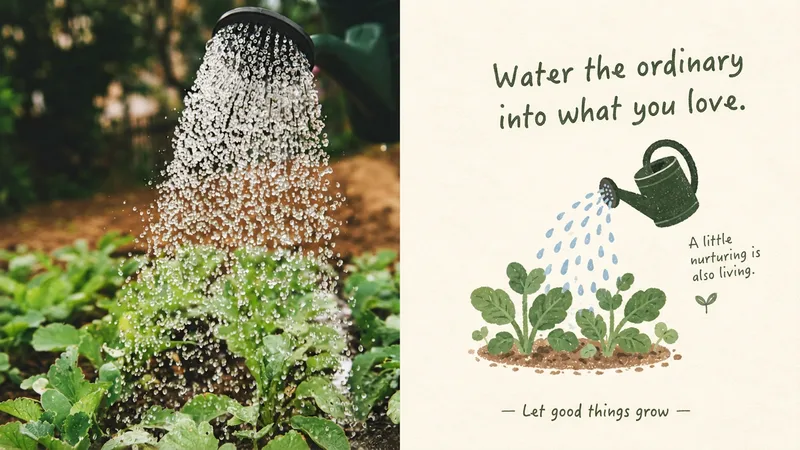
Poetic Mark | xiaoxiaodong P319
Ideal for turning an ordinary photo into a private poetic mark on white paper. The upper half shows the original image; the lower half keeps only a silhouette, a set of proportions, or a gesture. It can be pared back to near abstraction, with a quiet touch of surrealism. A very small label, number, or handwritten word may appear as a second layer of metaphor rather than an explanation. The materials are colored pencil, crayon, and paper grain. The palette uses warm white with one main color and one supporting color for a low-stimulation effect. Keep the symbol small and place it within a broad field of psychological space. Avoid complete scenes, piles of annotations, perfect geometry, and noisy colors.
 Image
Life Trace | xiaoxiaodong P318
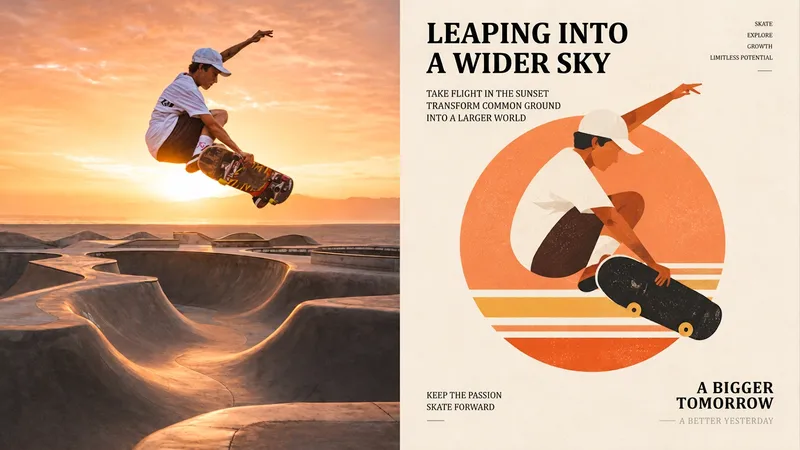
Designed to turn an ordinary photo into a visual expression of everyday life worth remembering. The upper half shows the original photo; the lower half distills a pose, plant, pet, architectural detail, or household object into a clear, rounded little emblem with a subtle handmade feel. Soft gouache, naive linework, colored-pencil grain, and paper texture coexist. The symbols are small, floating in clean negative space, while the text resembles a small label from a lifestyle brand. The palette is fresh and warm: warm cream, light beige, plant green, misty blue, dusty pink, soft coral, and light apricot. Avoid complete stories, complex backgrounds, excessive cuteness, and template-like icons.
 Image
Geometric Composition | xiaoxiaodong P322
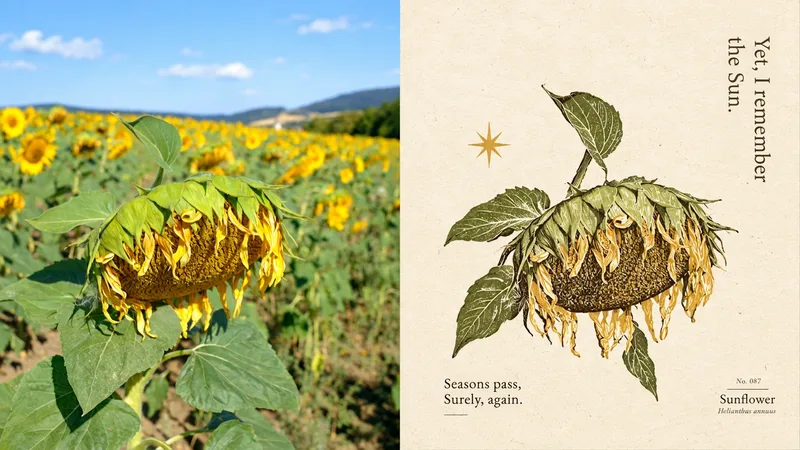
Turn an ordinary photo into a small graphic for an arts organization, cultural brand, or travel keepsake. The top half shows the original photo; the bottom half reorganizes the subject with circles, rectangles, arcs, and triangles—first forming a balanced composition, then allowing viewers to recognize the original object. You can add a ring, a horizontal line, or a structural axis to aid recognition. Extract a limited palette from the original image: clear blue, cream white, warm yellow, coral orange, soft green, peach pink, and dark brown. Build a system with a primary color, supporting colors, and accents. Keep the mark small and the negative space generous. Avoid details, complete scenes, too many supporting shapes, and generic app icons.
 Image
Chapter P321 | xiaoxiaodong
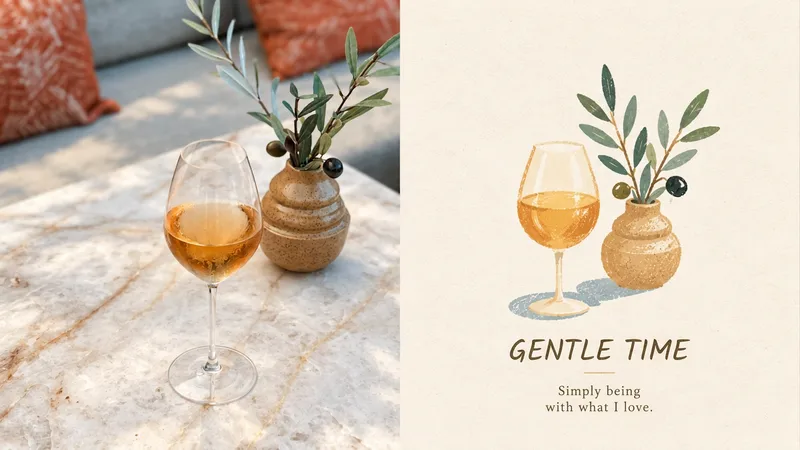
Ideal for turning an ordinary photo into an isolated mark quietly placed in blank space. The upper half shows the original photo; the lower half resembles a small illustration from an old herbal atlas, folk manual, or private seal: irregular hand-drawn ink lines, solid ink blocks, and organic forms work together to carry the subject’s visual essence. Starbursts, botanical patterns, or small abstract marks should serve the subject rather than form a background. The symbol stands alone in generous blank space, like a page from an old diary. Keep the palette warm and restrained: warm white paper, deep brown ink, soft gray-green, misty blue, and light brown. Avoid complete illustrations, polished vectors, commercial badges, and piled-on decoration.
 Image
Life Note | xiaoxiaodong P307
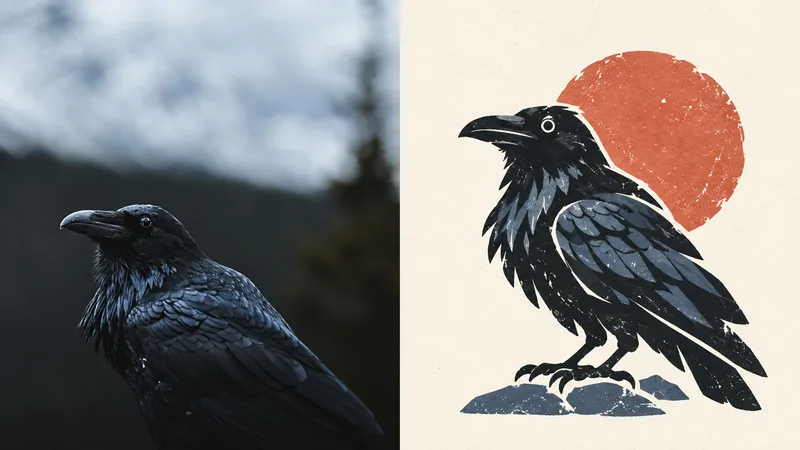
Ideal for turning an ordinary photo into a memorable everyday moment. The top half is the original photo; the bottom half features soft, oversized color blocks and slightly awkward hand-drawn outlines, with pencil, pastel, and dry-brush textures left visible on the paper. Icons are small and slightly float in the open space, while the text feels like a tiny label from an independent lifestyle brand. The palette feels lived-in: creamy white, misty blue, sage, mustard yellow, coral orange, and soft pink—bright but not harsh. Avoid complex scenes, narrative illustrations, commercial cartoon logos, excessive cuteness, 3D, and templates.
 Image
Paper-Cut Totem | xiaoxiaodong P305
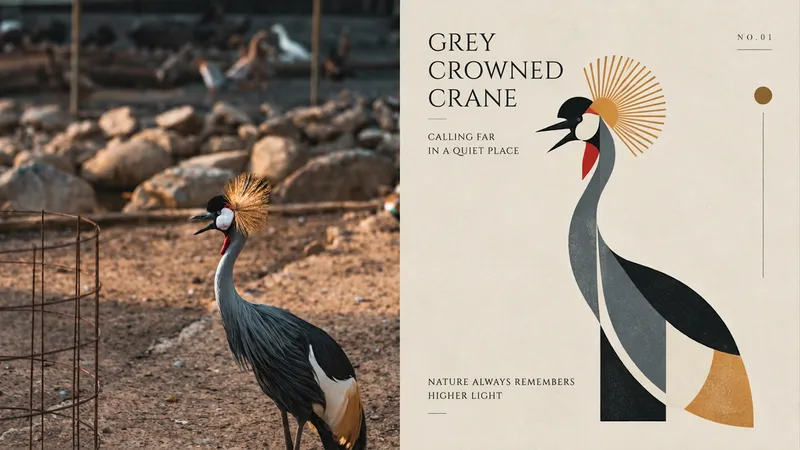
Ideal for turning an ordinary photo into a cultural symbol that remains recognizable when reduced in size. The subject is compressed directly into a standalone paper-cut visual totem, with form taking priority: bold outer contours, a few geometric shapes, and rounded edges, with slightly exaggerated proportions and a hint of charming awkwardness. Retain irregular cut edges, white paper borders, screen-print grain, uneven ink coverage, and slight color-registration shifts. Use a single core symbol with generous negative space for a stable, brand-recognizable feel. Keep the palette vivid but easy on the eyes: coral, warm yellow, botanical green, misty blue, cream, and brick red, divided into primary, secondary, and accent colors. Avoid complex textures, full figures, commercial cartoon logos, smooth vector art, gradients, and cheap candy colors.
 Image
Geo Mark | xiaoxiaodong P303
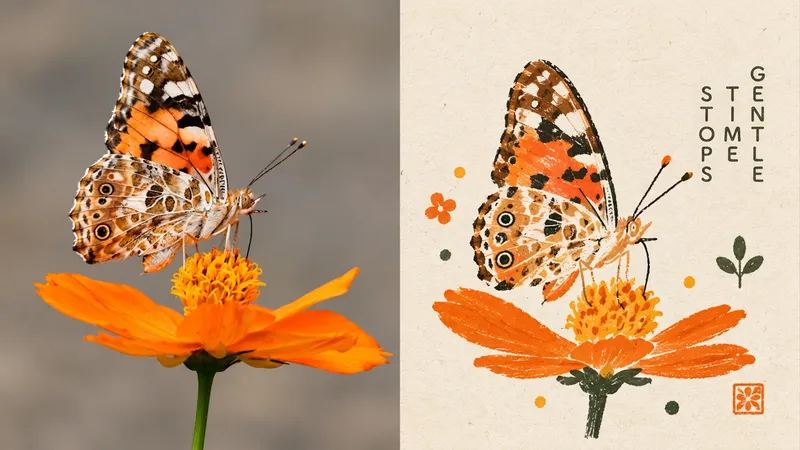
Ideal for turning an ordinary photo into the core graphic of an arts institution or cultural brand. The top half shows the original image; the bottom half retains only the subject’s silhouette, structural relationships, or direction, rebuilding them into a geometric identity mark with circles, rectangles, triangles, and negative space. The palette is a refined selection of brand colors drawn from the original image: one main color, one supporting color, and a small accent color—bold but restrained. The mark is small, centered or slightly offset, like a logo displayed in an art book, with narrow modern editorial lettering. Avoid realism, cartoon icons, gradients, 3D effects, decoration, and logo templates.
 Image
Folk Art, New Chapter
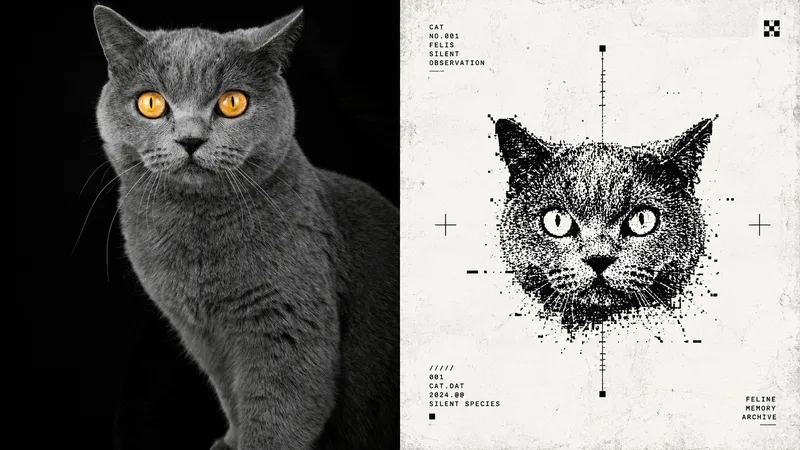
Ideal for turning an ordinary photo into a cultural symbol somewhere between an old picture book and an independent brand. The upper half is the original image; the lower half reworks the subject with wobbly hand-drawn outlines, large areas of flat color, and simplified geometry. Proportions can be exaggerated while still clearly evoking the original. A tiny related symbol may be added, but it must not grow into a scene. Preserve the feel of gouache, crayon, and Riso misregistration. Use 2–5 colors drawn from the original image—warm, bright, and full of character, but not sugary or cartoonish. Keep the emblem small, leave plenty of negative space, and place text at a distance from the subject. Avoid full character illustrations, commercial logos, cartoon IP, 3D, and smooth vector graphics.
 Image
Relic | xiaoxiaodong P301
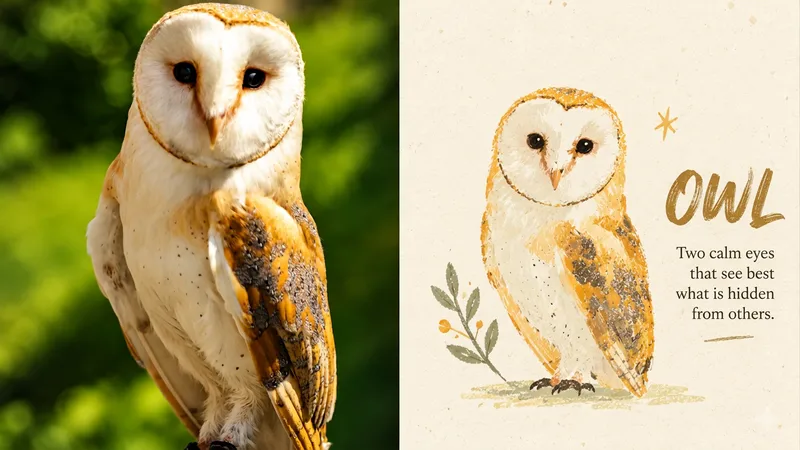
Ideal for turning an ordinary photo into something between an early computer icon and an underground magazine mark. The top half is the original image; the bottom half is an anonymous digital relic in pure black and white, with coarse dithering, halftone dots, jagged low-resolution edges, and a touch of information loss. Keep only the strongest identifying feature as a totem. The symbol should be small and centered, with clean space around it, while the text resembles an old system label. The mood is calm, mysterious, and restrained. Avoid complex illustrations, game scenes, cartoon logos, gradients, colorful interfaces, modern commercial icons, and 3D.
 Image
Poetic Mark | xiaoxiaodong P293
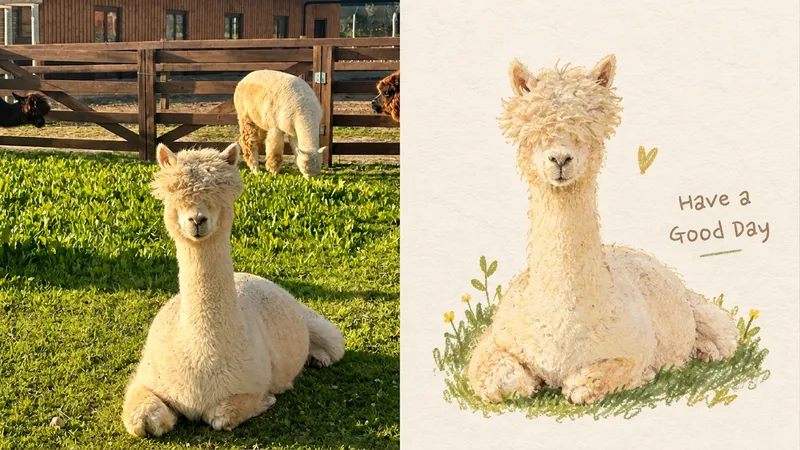
Ideal for turning an ordinary photo into a story-rich handmade imprint. The original photo occupies the upper half; the lower half features a simple, rounded, slightly clumsy, not-perfectly-symmetrical symbol of the original object. It may include a tiny expression or small gesture, but remains the original object rather than becoming a new mascot. Retain paper grain, gouache texture, color bleeding, and Riso misregistration. Place a single symbol in generous white space, with lettering that feels like a mark from an independent zine. Use a warm, limited palette such as warm ivory, misty blue, sage green, soft coral, cream yellow, and warm brown. Avoid realism, smooth vector graphics, 3D, template icons, and excessive cuteness.
 Image
Soft Totem|xiaoxiaodong P291
Ideal for turning an ordinary photo into a preserved memory symbol. The top half shows the original photo; the bottom half distills the subject into a rounded, soft, slightly imprecise organic shape, like a blend of journal doodles and marks from a vintage picture book. Pencil, crayon, and dry-paint textures remain on the paper. A single symbol floats in ample negative space, with fine, light lettering that leaves room to breathe around the symbol. The palette uses cream, warm beige, olive, honey yellow, soft brown, burgundy, and misty blue, with just a touch of vivid color for emphasis. Avoid complex scenes, vector icons, 3D, cartoon IP, and excessive refinement.
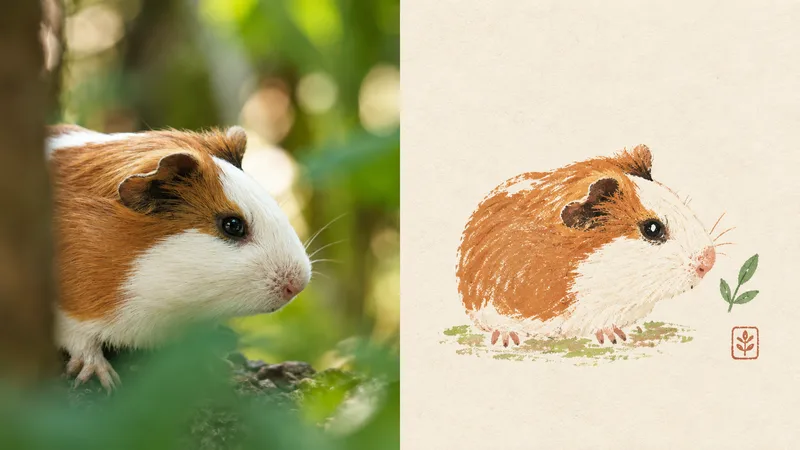
Folk Craft Mark | P289
Turn an ordinary photo into something like an old picture book illustration or a handmade stamp from a private collection. The top half shows the original image; the bottom half keeps only one core shape and one enlarged identifying feature, with rounded, slightly clumsy contours, dry gouache and crayon grain, and a touch of Riso misregistration. Keep the symbol small and quiet within generous warm-paper white space, with text styled like a collector’s label. Use soft, warm, low-saturation colors such as warm ivory, misty blue, botanical green, soft coral, pale yellow, dusty pink, and natural brown. Avoid commercial logos, standard mascots, sleek vector graphics, 3D, and piled-on decoration.
 Image
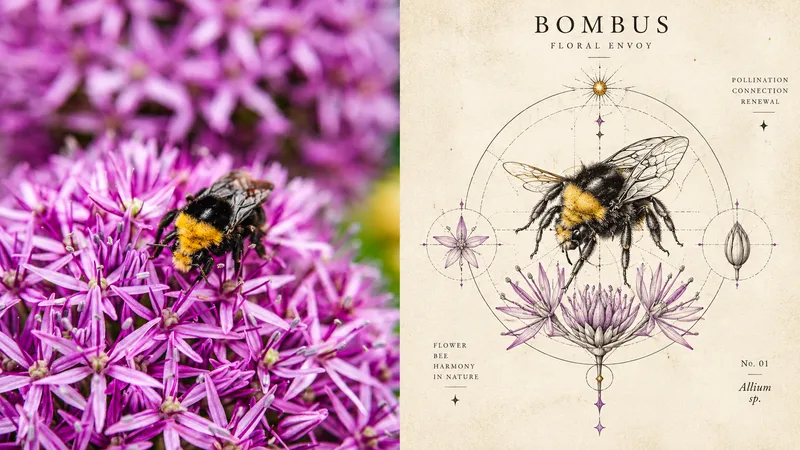
Archive Emblem | xiaoxiaodong P288
Turn an ordinary photo into the small imprint beside a museum collection number. The upper half shows the original image; the lower half keeps only an outline, a set of structural relationships, and one memorable detail, rendered in fine-pen engraved lines on warm ivory or parchment tones, with an optional halo or axis. Use warm ivory, parchment, ochre, dark brown, and ink black as the main colors. Cobalt blue, vermilion, or teal should appear only as very limited research markings. Let the lettering feel like an index from an old book or a museum label. Avoid pages filled with handwriting, commercial icons, tech interfaces, cartoons, and complete photorealism.
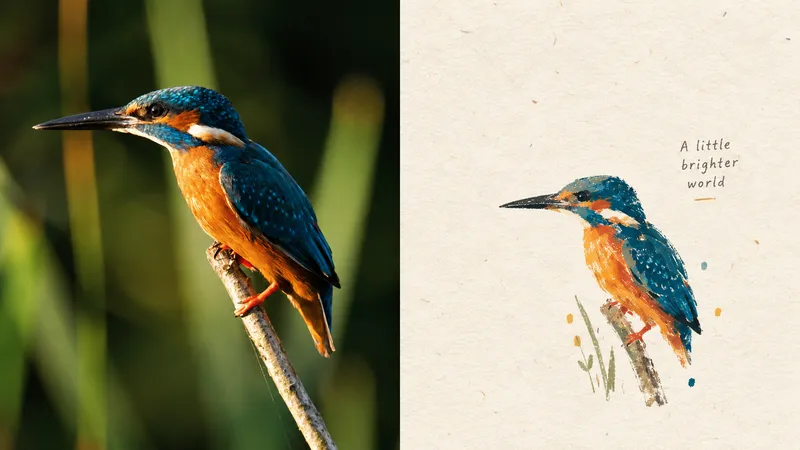
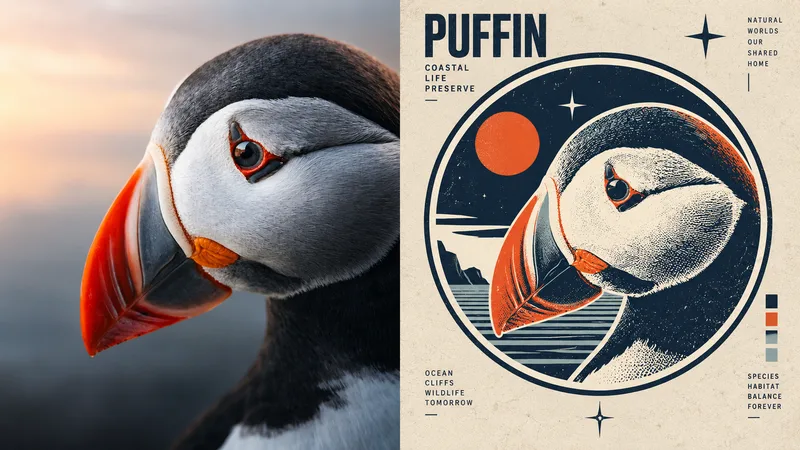
Paper Note | xiaoxiaodong P287
Turn an ordinary photo into a quiet little graphic on blank paper. The upper half shows the original photo; the lower half contains just a tiny picture-book-style mark, with loose lines and slightly clumsy shapes, plus matte gouache, crayon grain, and handmade-paper texture. Keep the blank space much larger than the graphic, with the subject resting quietly on a warm white paper surface and text resembling a journal margin note. Use low-stimulation colors that feel absorbed into the paper, such as powder blue, warm ivory, gray-green, soft coral, ochre, and pale yellow. Avoid filling the background, oversized subjects, commercial logos, standard cute styles, smooth vector graphics, perfect symmetry, 3D, and a plastic look.
 Image
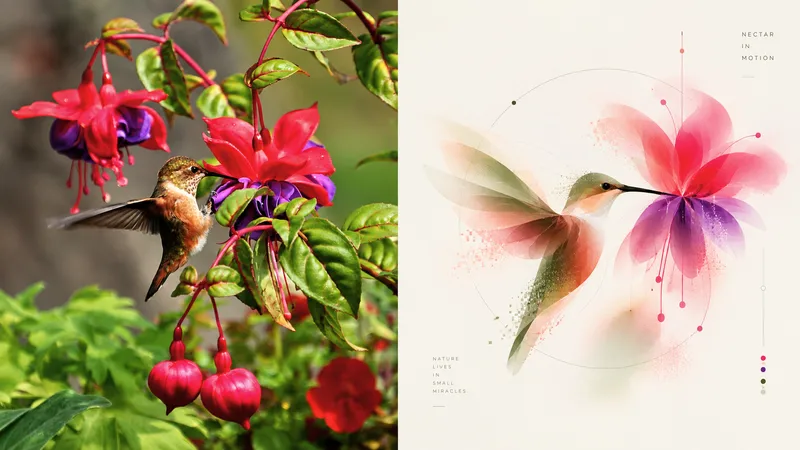
Era Badge | xiaoxiaodong P283
Ideal for turning an ordinary photo into an institutional commemorative badge. The top half preserves the original image; the bottom half compresses the subject into a complete circular, shield-shaped, or ring-shaped composition. Hard-edged color blocks, halftones, and color-registration misalignment create the feel of a badge that has been officially awarded. The badge is small and self-contained, with generous whitespace around it. The lettering uses a compact institutional sans serif, like a mission label. Colors are vivid but limited, reworked from the original image into deep blue, cosmic purple, warm red, orange-yellow, gold, and paper white, with a touch of technological grandeur and history. Avoid complete scenes, cinematic sci-fi, cyberpunk, 3D Logos, neon, and commercial icons.
 Image
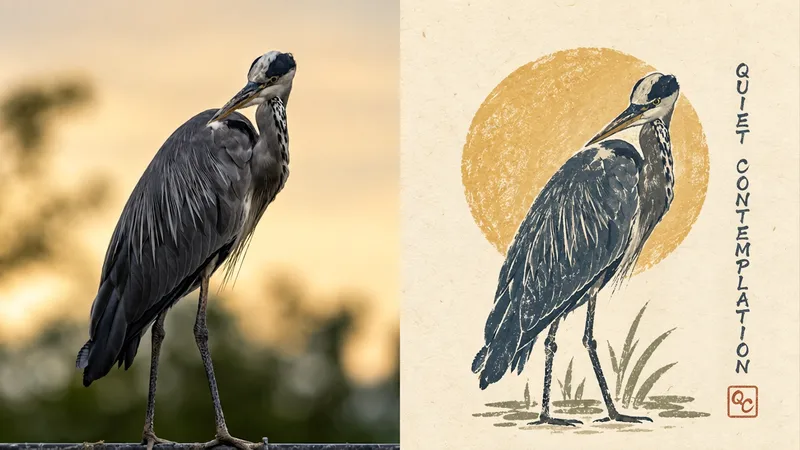
Soft Blur xiaoxiaodong
Ideal for reducing an ordinary photo to a soft, distanced visual symbol. The original image appears in the upper half; below, the subject becomes an organic abstract outline made from translucent layers, soft-focus diffusion, and a few pixel fragments. The symbol is complete, centered, and modest in scale, with clean space around it and only a tiny, precise sans-serif caption beside it. The palette uses low-contrast milky white, nude pink, misty pink, gray-green, pale olive, and light blue—like colors filtered through soft light. Avoid literal object rendering, complete scenes, commercial illustration, neon, strong gradients, and cartoon styles.
 Image
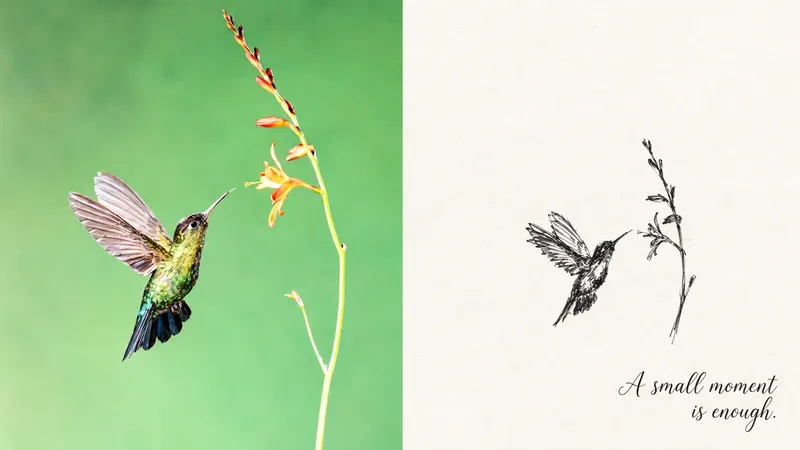
Naive Badge | xiaoxiaodongP275
Ideal for turning an ordinary photo into a warm, personal handmade badge. The top half shows the original photo; the bottom half compresses the subject into a small visual symbol with a sense of memory, like a handmade badge, personal mark, or independent brand totem. Its form is slightly awkward, asymmetrical, and handmade. The subject stands alone like a small badge, seal, or icon, with generous blank space around it. Simplified rounded shapes, naturally varied hand-drawn outlines, limited color blocks, and a few decorative elements create a look of matte gouache, colored-pencil and crayon grain, dry-brush strokes, and paper texture. Colors are soft and low-stimulation, like pigment absorbed into paper. Avoid complete scenes, commercial logo design, standard icon systems, smooth vectors, and excessive cuteness.
 Image
Tiny Private Symbol | P294
Turn an ordinary photo into a tiny private symbol. The upper section contains the original image; the lower section is about 80% to 95% blank, leaving only one outline, pose, or relationship that must be remembered. The lines may be hesitant, rough, repeated, and unfinished. By default, use only black, gray, and paper white, with at most one tiny accent color drawn from the photo. Text can be omitted entirely; if included, it should remain weaker than the symbol. Avoid complete figures, complete scenes, decoration, cute stickers, smooth vectors, and anything added just to fill the frame.
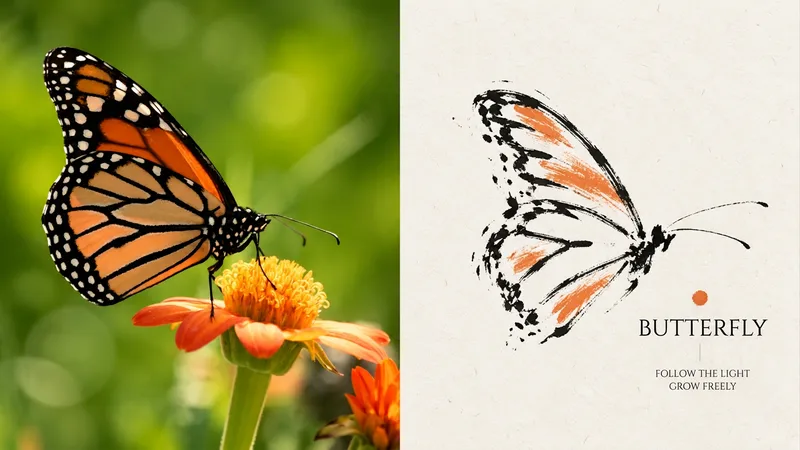 Image
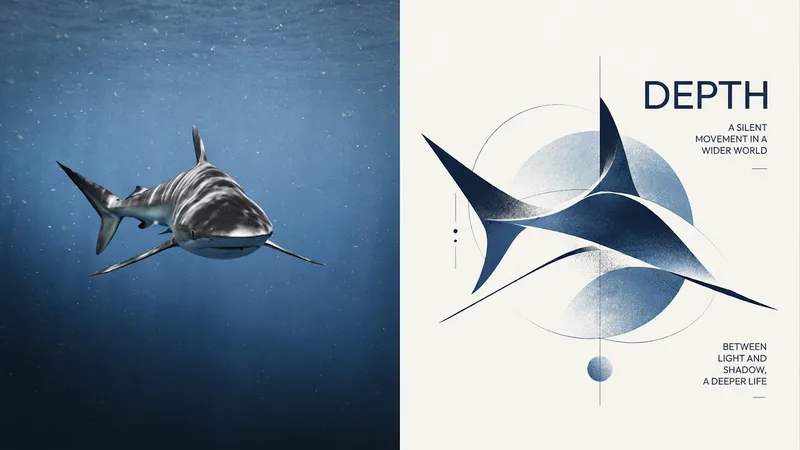
Closed Cipher | xiaoxiaodong P297
Ideal for turning an ordinary photo into a private mark with the feel of an art brand. The upper half is the original image; the lower half retains only the minimum information needed to identify the subject—an outline, a pose, or a direction—so the form breaks, fades, and remains incomplete, inviting viewers to close the image in their own minds. Use directional strokes reminiscent of calligraphy or charcoal, a small number of dark lines, limited colors, and clear negative space. The symbol may be tiny, off-center, or cropped at the edge; use black and gray on warm white paper, accented by one emotional color drawn from the original image. Avoid complete depictions, commercial icons, cartoons, excessive geometry, and smooth vector forms.
 Image
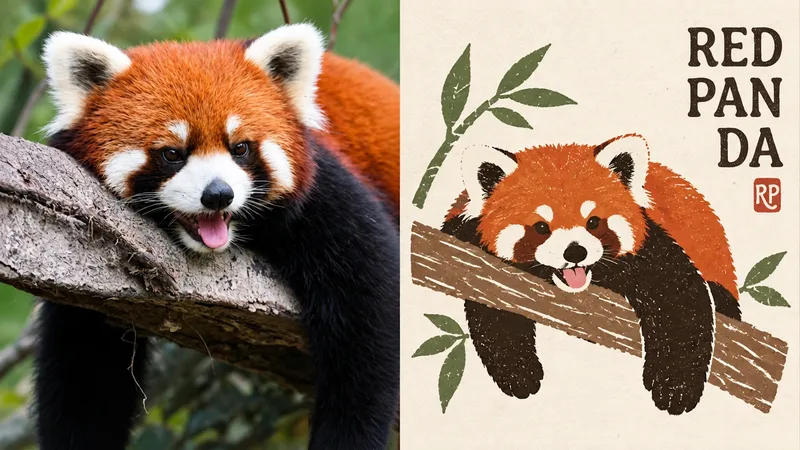
Totem | xiaoxiaodong P304
Turn an ordinary photo into a visual symbol for an art institution or high-end magazine. Compress the photo’s core spirit, subject features, and emotional tone into a standalone abstract logo / icon. Rather than explaining literally, it is built from a few organic forms, circles, rectangles, irregular color blocks, and a single gestural fine line. Organic and geometric forms, order and improvisation coexist, with partial occlusion, misalignment, and cuts allowed. The result may look spontaneous but remains highly controlled. Use one core symbol with precise proportions and generous negative space; set it against soft neutral tones with a single, highly recognizable accent color, such as deep blue, vermilion, forest green, warm orange, or soft pink. Avoid complete human portraits, realistic illustrations, complex scenes, bright childlike colors, technological gradients, and meaningless geometric collages.
 Image
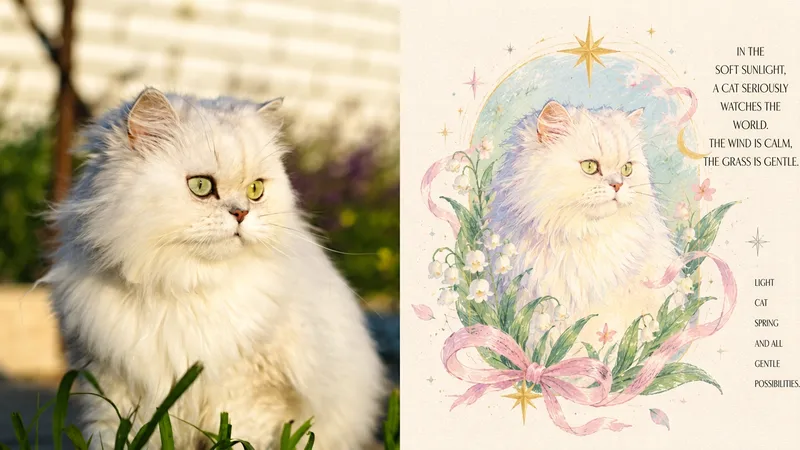
Folk P306 | xiaoxiaodong
Ideal for distilling an ordinary photo into a folk pattern designed to be preserved for a long time. The top half shows the original image; the bottom half uses a paper-cut silhouette, broad areas of flat color, and a few interior carved lines. Forms may overlap slightly, preserving the naive quality of folk motifs. Symbols are small and blank space is abundant, with an off-center layout and paper texture and misregistration along the edges. Text appears as a small note beside a handmade stamp. The palette is simple yet lively: powder blue, off-white, botanical green, coral red, warm yellow, and ochre, with clear visual hierarchy. Avoid complete scenes, smooth vector graphics, commercial cartoon styling, 3D, and a cheap merchandise aesthetic.
Pastel Totem | xiaoxiaodong P286
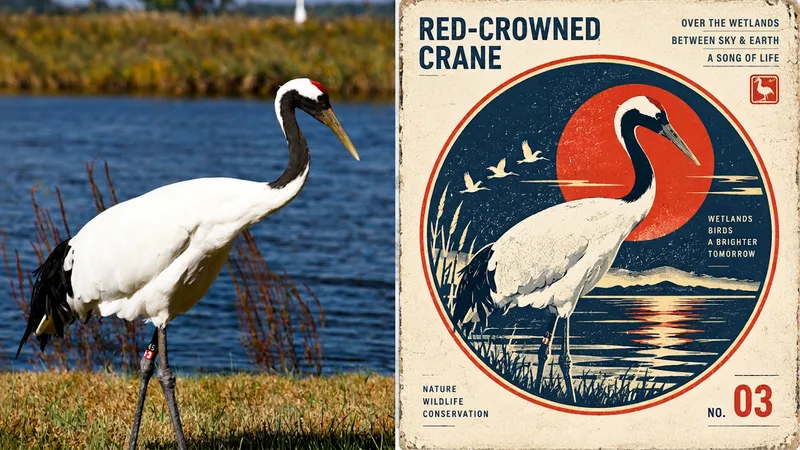
Turn an ordinary photo into a dreamlike symbol belonging to one person. The top half shows the original image; the bottom half distills the subject into a light, slightly naïve, slightly strange personal totem, with imperfect lines and screen-print texture. A few stars, ribbons, or small objects may surround it, but they should support one central symbol, with clean negative space around it. Text should read like a small note in a fashion magazine. The palette includes dusty rose, misty blue, cream, mint, soft purple, and peach—light without becoming overly sweet. Avoid cluttered scenes, commercial icons, 3D, smooth vector art, template logos, and cartoon characters.
 Image
Civ. Emblem | xiaoxiaodong P284
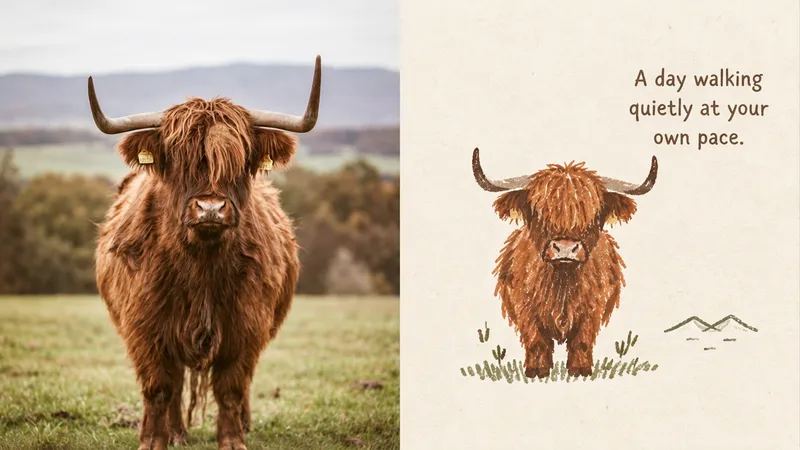
Ideal for turning an ordinary photo into a preserved symbol of civilization. The top half shows the original image; the bottom half places the subject in a stable circular, shield-shaped, or square frame, like a miniature monument. A few orbit lines, a horizon, or a solar arc may be added. The symbol is small in scale but carries monument-like weight. Retain halftone dots, ink spread, and uneven printing. Use a retro-futurist warm-cool contrast: deep space blue against solar yellow, warm red, or orange. Set the lettering in a compact institutional sans-serif. Avoid complete scenes, cinematic sci-fi, 3D, cyberpunk, app logos, and souvenir badges crowded with elements.
 Image
Old Sigil | xiaoxiaodong P290
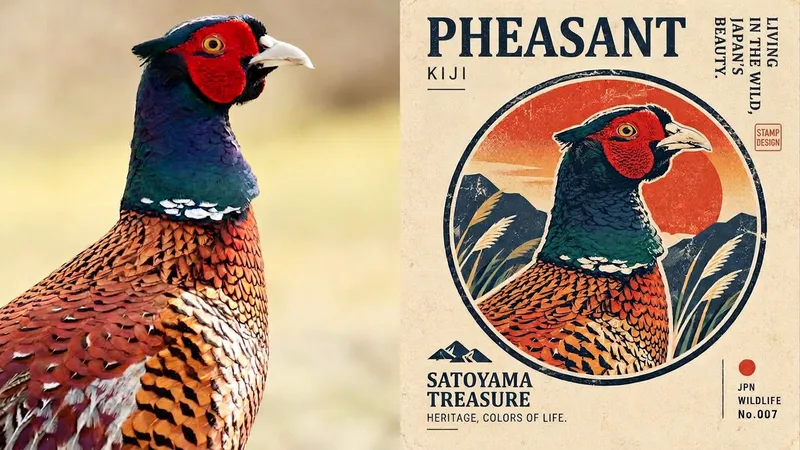
Ideal for turning an ordinary photo into a warm little totem. The top half shows the original image; the bottom half uses an uneven, slightly shaky hand-drawn outline with limited flat color, along with the imperfections of old printing: ink bleed, misregistration, and visible paper fibers. The symbol is small, with generous blank space preserving a touch of loneliness, while the text resembles a handwritten collection number. The palette is a limited, warm vintage selection: faded orange, washed blue, olive green, warm off-white, ink black, and soft red. Avoid full illustrations, commercial logos, standard mascots, smooth vector graphics, and 3D.
 Image
Scientific Badge | xiaoxiaodong P285
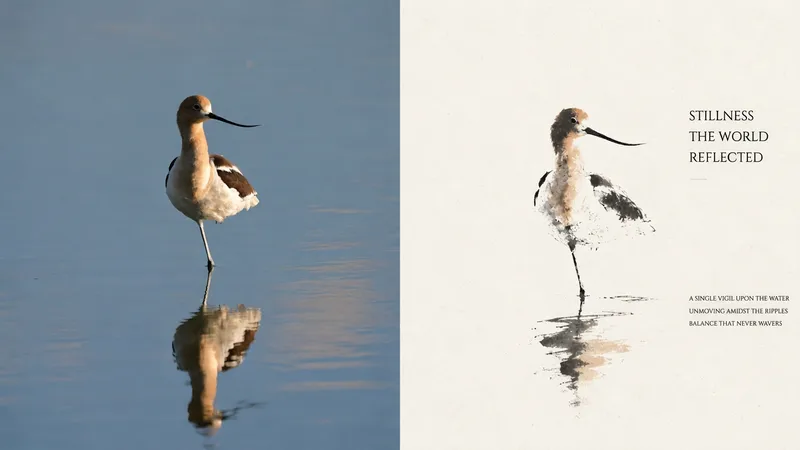
Ideal for turning an ordinary photo into a scientific badge worthy of a museum collection. The upper half shows the original image; the lower half compresses the subject into a bold, simplified silhouette with a few engraved lines, halftone dots, and uneven ink, like a graphic from an old stamp or aviation archive. The symbol is small, surrounded by generous negative space, with text formatted as a compact archive number or short label. Colors are vivid and dignified, reworked from the original image into deep blue, cosmic blue, warm red, orange-yellow, ivory, ink black, or teal green, with a sense of the print era. Avoid complete scenes, cinematic sci-fi, neon, modern commercial logos, muddy gray-muted palettes, and the feel of a tourist souvenir.
Charcoal | xiaoxiaodong P298
Ideal for reducing an ordinary photo to a totem with minimal information. The upper half shows the original image; the lower half distills the subject into a semi-abstract mark at the edge of recognition. Every stroke must carry identifying weight. The outline need not be closed; erasures and remnants are welcome. The materials are charcoal, graphite, ink, and paper fibers, with uneven edges. Warm white paper is paired with only a small amount of low-saturation color from the subject. The symbol stands alone, with negative space left to breathe and text styled like an art archive annotation. Avoid complete depictions, commercial logos, cartoons, smooth vector shapes, mechanical geometry, and templated marks.
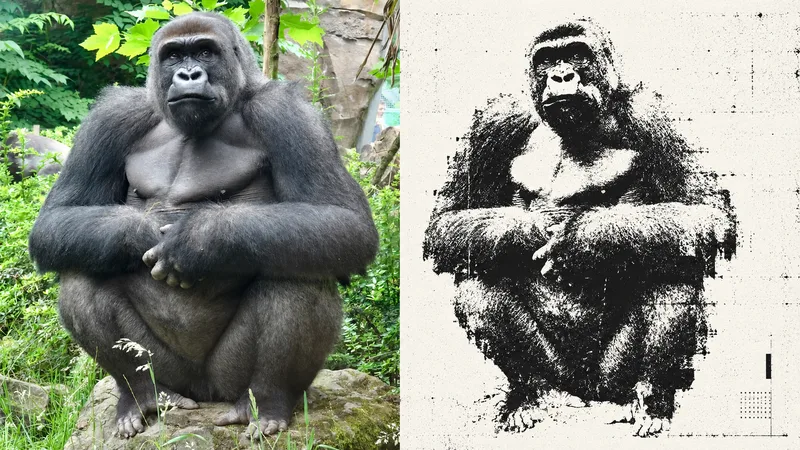
Copy | xiaoxiaodong P299
Ideal for turning an ordinary photo into visual evidence discovered in an old archive. The subject is distilled into a minimalist archival symbol rather than a full photo, then transformed into a high-contrast black-and-white graphic through thresholding, tonal compression, contour erosion, and photocopy wear. One subject, one core form, and plenty of negative space; the contour is fragmented and partially missing, settling into a state that is “recognizable but impossible to fully explain.” Black is ink and photocopy residue; white is exposure and absence. The original image’s emotional color may remain only as a very faint trace, while the text is a tiny archival reference number. Avoid full photos, small illustrations, commercial brand logos, modern UI icons, clean vectors, and decorative patterns.
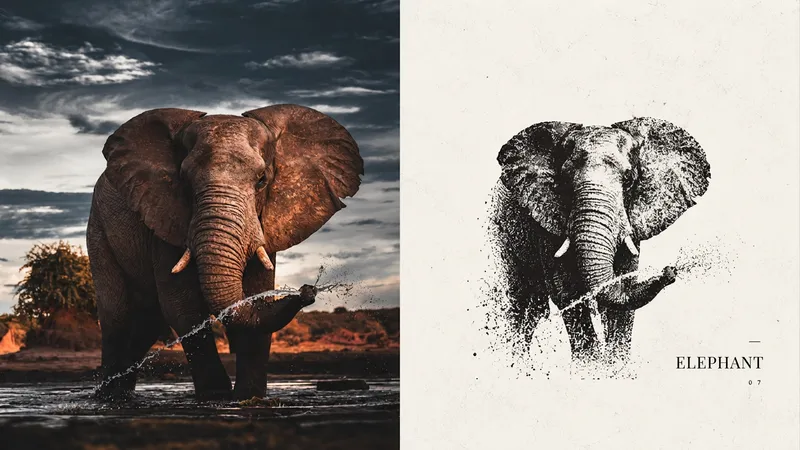
1-Bit Mark | xiaoxiaodong P300
Ideal for reducing an ordinary photo to the core graphic of an art-book page. The original image appears on top; below it is a tiny 1-bit mark using only pure black and white, shaped through error-diffusion dithering and dot density, with no grayscale or gradients. The form emerges from “absence,” while its edges can fade away like an old scan weathered by time. The mark is small and quiet, placed within a large area of blank space, with text styled as a low-resolution archival ID. Avoid complete scenes, grayscale photos, game-like pixels, film-grain filters, commercial logo templates, and decorative patterns.
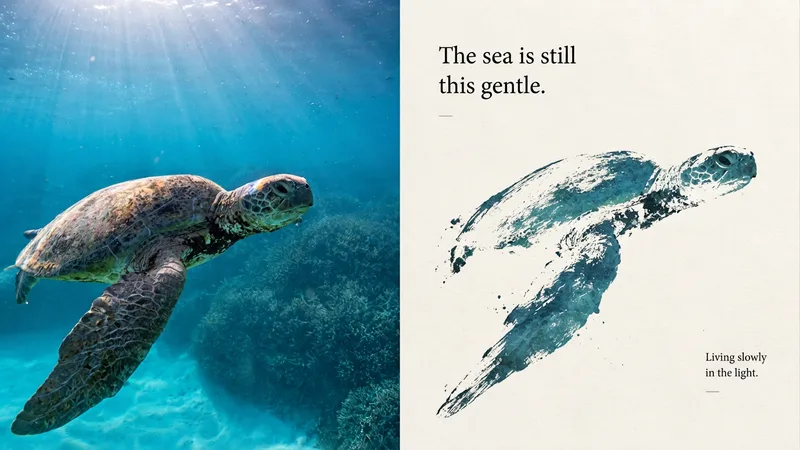
Traces P296 · xiaoxiaodong
Ideal for distilling an ordinary photo into an artistic, seal-like spiritual imprint. The upper half is the original image; the lower half is not an outline, but charcoal, ink, or graphite marks with speed and direction. A single stroke, patch of color, or fragment of a contour carries the entire recognition. Contours may break, fade, or disappear. Symbols should be small and isolated, placed amid generous blank space on warm white paper, with text styled like an archival number. Keep color extremely restrained: beyond black and gray, retain only one emotional color drawn from the original image. Avoid complete illustrations, commercial logos, cartoons, decoration, and realism.
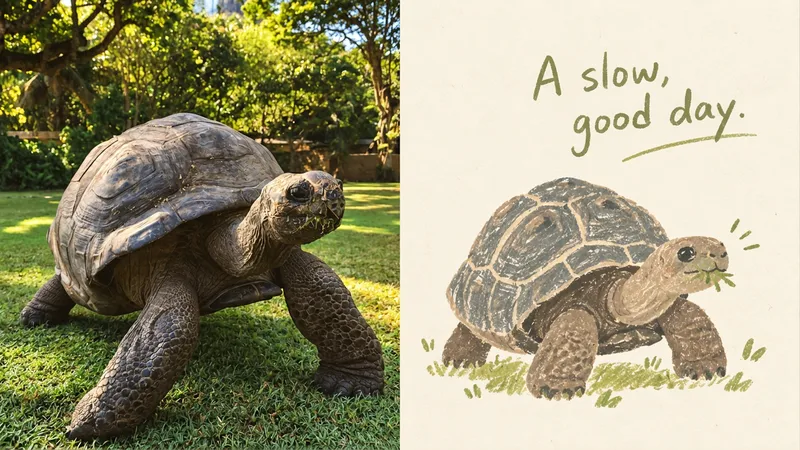
Warm Symbol xiaoxiaodong P295
Ideal for turning an ordinary photo into a small, collectible mark. The upper half shows the original image; the lower half compresses the subject into a simple, rounded, slightly unbalanced silhouette. The hand-drawn outline can feel a little clumsy, while colored-pencil and crayon textures, paper grain, and a touch of Riso misregistration remain. There is only one symbol, slightly off-center and quietly placed in a large area of whitespace, with text resembling a private collection number. The palette is calm and lived-in: warm ivory, mist blue, sage, creamy yellow, and soft coral. Avoid complex scenes, commercial mascots, anime, smooth vector art, 3D, and template icons.
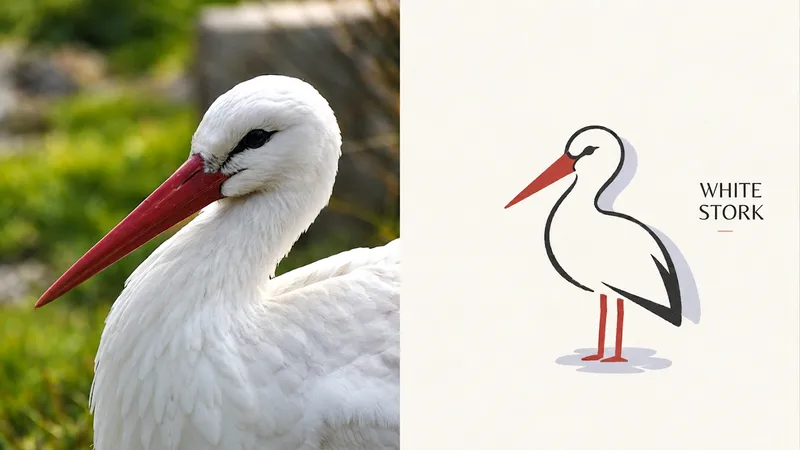
Glyph P281 | xiaoxiaodong
Ideal for turning an ordinary photo into a quiet, slightly uncanny small pictograph. The original image appears on top; below, the subject is distilled into an irregular, rounded-corner flat dark form layered with a very faint misregistration color, like a pictographic character with a life of its own. It may include a tiny eye, a standing pose, or a small sign of life, but remains expressionless and never cute. The symbol is small and quiet within generous warm-white negative space, using an almost monochrome palette: a dark subject with one or two low-saturation accent colors. Avoid mascots, commercial characters, app icons, realistic rendering, gradients, highlights, 3D, and excessive decoration.
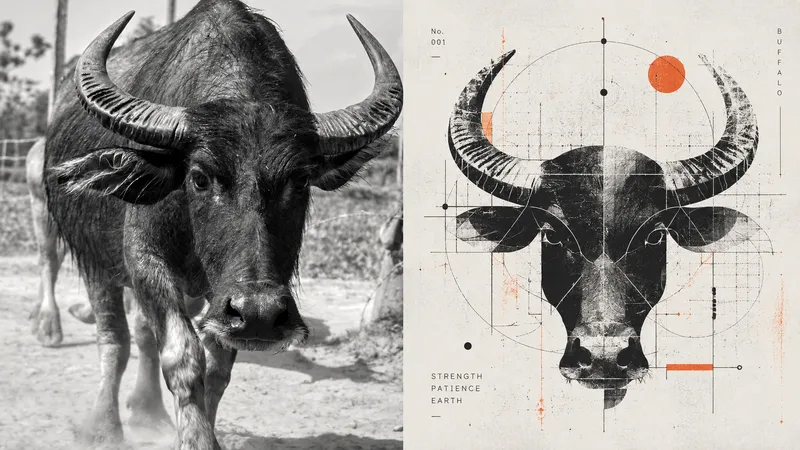
System Gene | xiaoxiaodong P279
Ideal for turning an ordinary photo into an abstract mark with a sense of system. The upper half preserves the original image; the lower half compresses the subject into a “visual gene” built from just a few geometric modules, fine lines, arcs, and a tiny number. The symbol stays small and rests quietly in generous warm-white negative space. One or two highly recognizable functional colors from the original image—such as teal green, blue, magenta, or orange—serve as codes, while the edges retain slight photocopy or screen-print registration errors. Avoid infographics, complex posters, cyberpunk, piles of random geometry, template logos, and meaningless text.
 Image
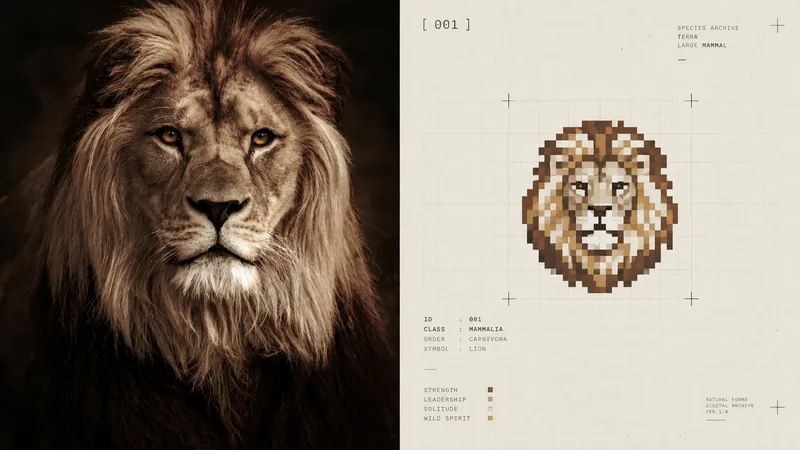
Pixel Specimen | xiaoxiaodong
Ideal for turning an ordinary photo into a small signal on an archival page. The original image appears on top; below it, the subject is distilled into an abstract pixel badge with a hard grid, minimal tonal levels, and almost no dithering—like a pixel specimen preserved in a collection book. The badge is very small, set in generous warm-white or light-gray negative space, with an optional tiny monospaced number beside it. The overall design uses low-saturation industrial neutrals, retaining only one sparse signal color derived from the original image. Avoid complete scenes, pixel illustrations, game interfaces, icon collections, nine-grid templates, noisy retro effects, and cheap tech aesthetics.
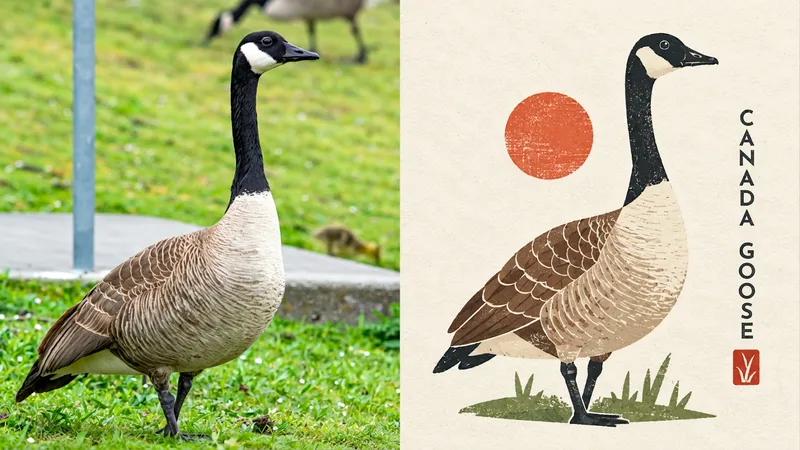
Cultural Silhouette|xiaoxiaodong P278
Turn an ordinary photo into a cultural emblem with a collectible feel. The upper half shows the original photo; the lower half compresses the subject into a memorable miniature identity system. Geometric simplification, paper-cut collage, flat color blocks, and symbolic forms create an abstract graphic reminiscent of a cultural institution mark, art badge, or design studio logo. The subject resembles a carefully designed miniature cultural seal, centered or slightly offset with clean space around it. Large areas of solid color, clear contours, and a few internal structure lines preserve a simulated print texture inspired by screen printing, Riso overprint misalignment, and uneven ink coverage. The palette uses warm ivory and beige paper as the background, with forest green, cobalt blue, soft yellow, and coral red shaping the subject. Avoid complex scenes, cartoon characters, commercial logo templates, and sleek corporate vector styling.
 Image
Geo Mark | xiaoxiaodong P277
Turn an ordinary photo into a small, modernist visual mark. The original image appears above; below, the subject is distilled into a geometric symbol with a distinct brand identity, retaining only one contour, one set of proportions, one pose, and one memorable detail. The subject resembles a small visual mark from an art book, architectural brand manual, or exhibition identity, floating in generous white space. A few fine lines, supporting geometric relationships, or abstract structures may be added. It uses the language of modernist graphic design—geometric contours, flat color blocks, simple proportions, and clear boundaries. Facial features are minimized for people, and details are reduced for buildings, leaving only the most symbolic forms. Avoid complex illustrations, complete scenes, cartoon styling, generic app icons, and the feel of a commercial logo template.
Archive | xiaoxiaodong P276
Ideal for turning an ordinary photo into an unfinished spatial research archive. The upper half contains the original image; the lower half deconstructs and reassembles the spatial relationships, structural logic, and visual memory surrounding it, forming an analytical, archival composition through linear structures, geometric relationships, local sections, spatial fragments, and layered projections. The subject does not need to fill the frame and can be compressed into the center or a partial area, leaving plenty of surrounding space. Quiet and restrained from a distance, it reveals fine lines and fragmented information up close. Use ultra-fine, emotionally neutral technical pen and drafting lines, with an archival paper palette of off-white, ivory, pale gray-green, and warm gray, alongside graphite-gray lines. Avoid complete photorealistic reproduction, conventional architectural renderings, blueprint styles, a CAD drafting feel, and cyberpunk HUD elements.
Night Crayon xiaoxiaodong P274
Ideal for turning an ordinary photo into a small, childhood-style emblem that glows against black paper. Extract the subject’s most recognizable outline, action, structural, or emotional features and compress them into an extremely simple, memorable visual symbol without retaining the full scene. Use black or dark paper as negative space, with colorful crayon-, pastel-, or oil-pastel-like lines forming the subject. Preserve slight wobble, breaks, repeated strokes, and variations in hand pressure. Use a small selection of bright yet soft candy colors—pink, coral, lavender, powder blue, mint green, and warm yellow—like scattered points of light and crayon fragments illuminating the black background. Keep the composition focused on a single subject with generous black space and a clear visual center. Avoid complete illustrations, realistic people, commercial cartoon logos, 3D effects, and smooth vectors.
 Image
Nouveau Badge · xiaoxiaodong
Ideal for turning an ordinary photo into a visual badge in the Art Nouveau style. The top half shows the original photo; the bottom compresses the subject into a sophisticated visual symbol, totem-like logo, or artistic badge with symbolic meaning. A standalone symbol is reconstructed using minimal lines, decorative curves, geometric structures, and symbolic elements. The subject resembles a carefully designed brand mark, with a small scale, generous negative space, and a strong visual focal point. The result is stable, balanced, and restrained. Use black, gray, warm white, or a low-saturation background, extracting just one of the original image’s most vibrant colors as the sole accent. Preserve delicate linework, a subtle printmaking feel, and paper texture. Avoid complete scenes, excessive botanical detail, generic logo templates, commercial icon styling, and cheap decoration.
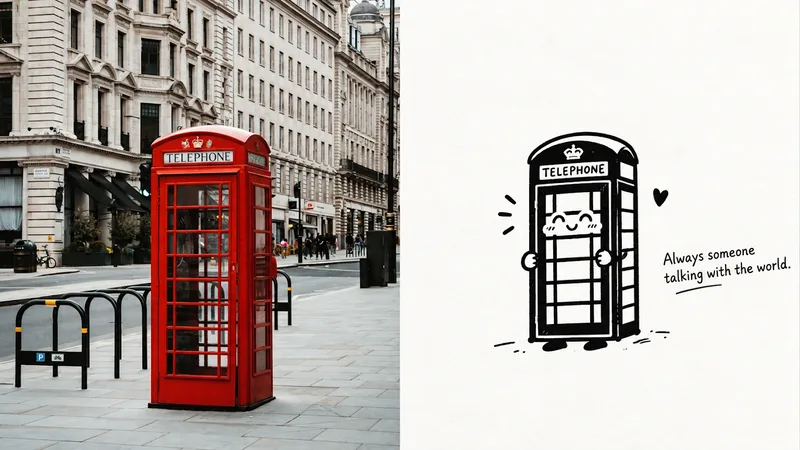
Monochrome Soul | xiaoxiaodong P272
Turn an ordinary photo into a small “soul symbol” with an emotional personality. The original photo appears on top; below it, the subject is condensed into a small character that is as recognizable as a brand mark—such as an expressive building, a characterful animal, a personified object, or an abstract form with emotional cues. The subject can be very small, like a seal, badge, sticker mark, or brand graphic, resting quietly in a large area of white space. Build recognition with black lines of naturally varying weight, simple contours, limited black fills, and white negative space. Preserve the hand-drawn warmth of slight wobble, pressure variation, imperfect symmetry, and occasional broken lines. Avoid complex scenes, multiple characters, commercial cartoon IP, polished animation styles, 3D rendering, and smooth vector Logos.
 Image
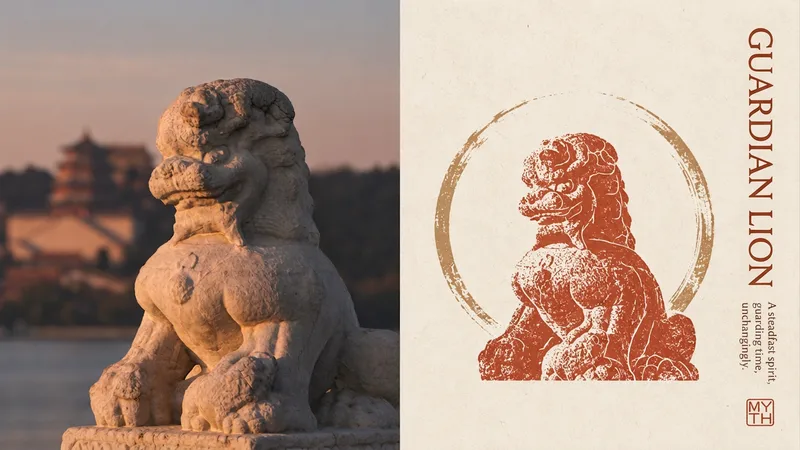
East Totem | xiaoxiaodong P270
Ideal for transforming an ordinary photo into a cultural totem with an Eastern spirit and aesthetic. The upper half shows the original image; the lower half distills the subject into a symbolic visual mark, like a redesigned cultural seal, brand logo, or ancient totem. The subject appears as a small collectible symbol, resting quietly in a large expanse of negative space. It may be centered, offset, or partially cropped. Simple geometric relationships, delicate line engraving, flat color blocks, and a subtle printmaking texture evoke the handcrafted traces of antique paper, xuan paper, seal carving, and woodblock printing. The palette leans toward a dignified, restrained Eastern color scheme of cinnabar red, antique gold, warm ivory, ink black, celadon green, and more. Avoid complete scenes, piled-up traditional elements, a tourist-souvenir feel, and excessive decoration.
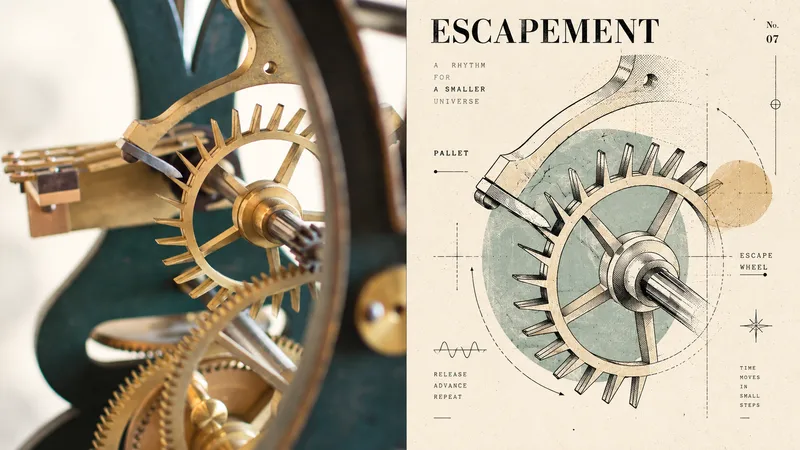
Lab Notes | xiaoxiaodong P269
Turn an ordinary photo into a page of an artist's experimental notes. The top half shows the original photo; the bottom distills the subject into a conceptual symbol, like an experimental apparatus mark, a sketch for a future invention, or a visual mark from an independent publication—with a touch of observation, note-taking, and reflection. The subject remains small within ample negative space and may be centered, offset, placed against an edge, or partially cropped. Use minimalist black linework, geometric structures, a few color blocks, and halftone textures, retaining a vintage experimental palette of off-white paper, black ink lines, and a small amount of low-saturation accent color. Avoid copying complete scenes, intricate mechanical structures, dense infographic layouts, commercial tech illustration, cyberpunk, and glossy 3D rendering.
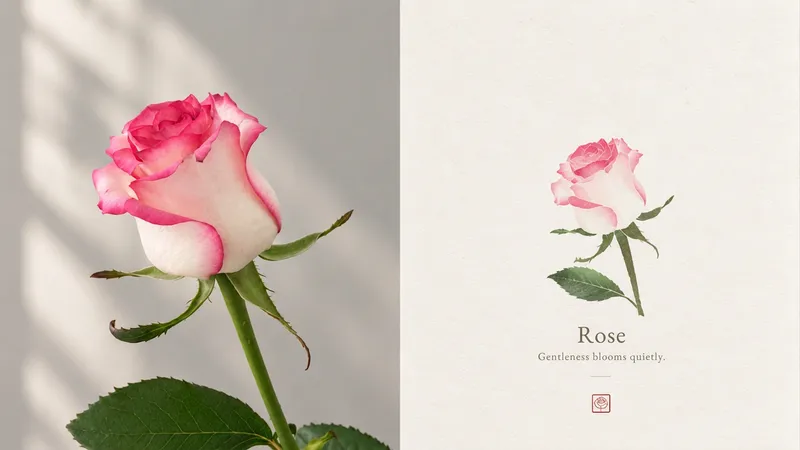
Quiet Symbol|xiaoxiaodong P268
Turn an ordinary photo into a quiet, small-scale visual symbol. The top half shows the original photo; the bottom half condenses the subject into a minimalist mark made of a simple outline, a few color blocks, and symbolic forms—like a brand mark, art seal, or personal collection symbol. The subject can be very small and placed quietly within generous negative space: centered, off-center, near an edge, or partially cropped. Preserve soft lines, flat color blocks, subtle grain, paper texture, and imperfect edges. Avoid complete scenes, complex backgrounds, excessive detail, a generic illustration look, a commercial Logo feel, and a cartoon style.
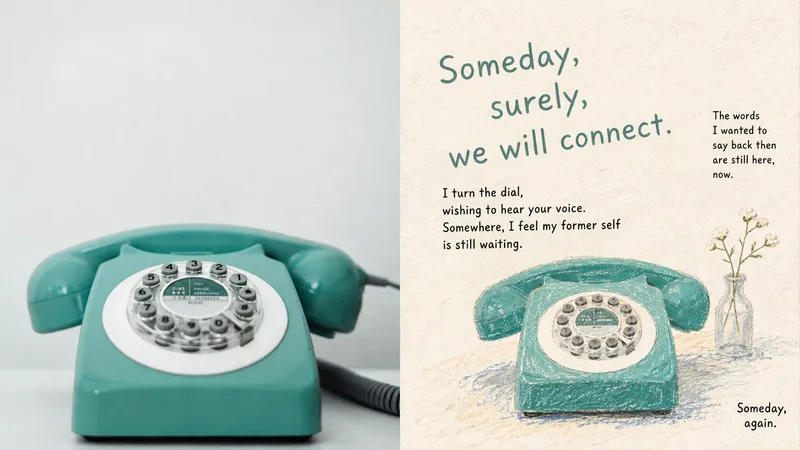 Image
Crayon Memo P261 xiaoxiaodong
This style is suited to expressing the feeling a place leaves behind, rather than drawing the place itself. The top half is the original image; the bottom half keeps only the visual core most worth remembering, with a simplified structure and no need for accurate perspective. Keep the subject small; it may be off-center, flush with an edge, or cropped. Colored-pencil rubbing, crayon grain, dry-brush marks, and paper fibers should remain visible. Keep lines loose, with pauses. Avoid digital precision, fully filled backgrounds, and complete realistic scenes.
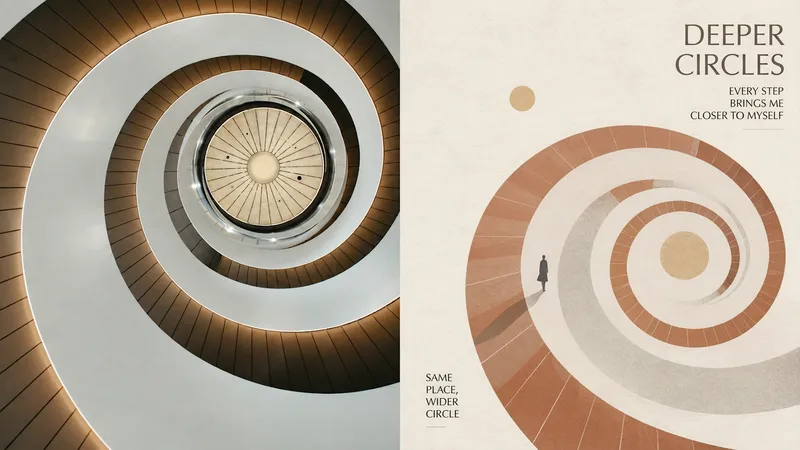 Image
Geo Memory | xiaoxiaodong
Suitable for turning photos into reassembled fragments of memory. The top half shows the original image; the bottom half retains only the core forms that evoke identity and emotion, using triangles, rectangles, circles, and fine lines to express direction, distance, and relationships. Geometry can repeat, shift, overlap, and fade, but it is not decorative. Paper texture and slight printing imperfections are preserved. Avoid complete scenes, decorative geometry, and overly hand-drawn elements.
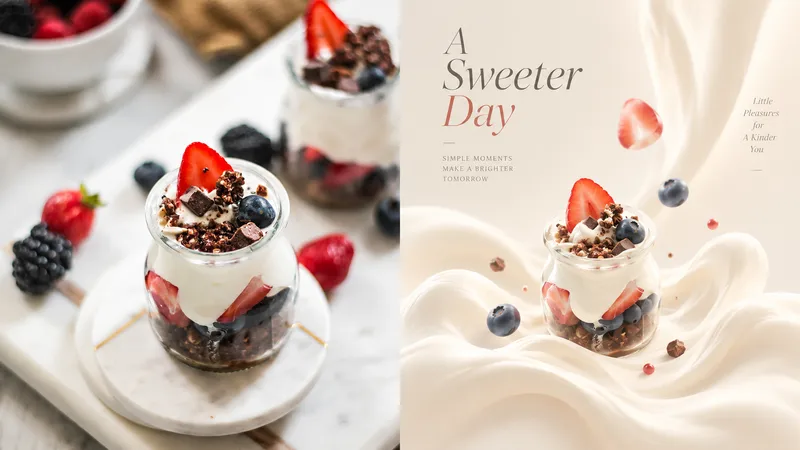 Image
Cream Dream | xiaoxiaodong P258
Ideal for transforming an original subject into a new form between cream, soft clay, and a dreamscape. The top half shows the original image; the bottom half preserves the most essential identifying features, while softening the contours, allowing exaggerated proportions, and introducing slight melting. Keep the subject very small, centered or slightly offset. The background uses minimalist cream-colored geometry with plenty of negative space, gentle shadows, and a subtle lifted effect. Avoid turning realistic objects directly into cream products, as well as hard plastic textures and fully filled-in scenes.
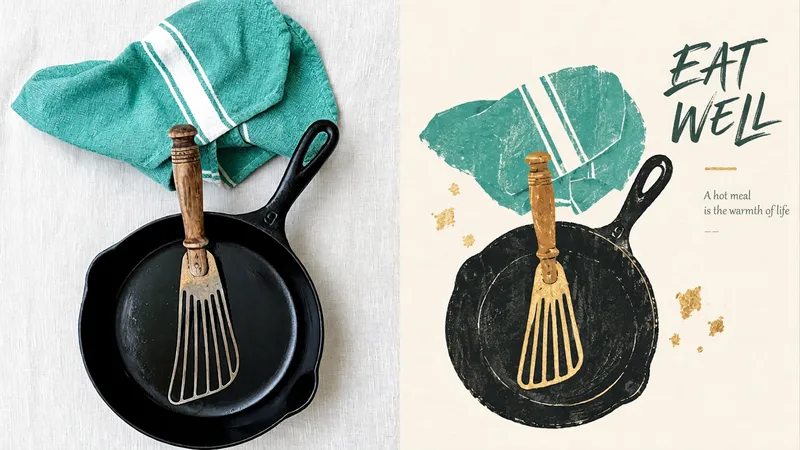 Image
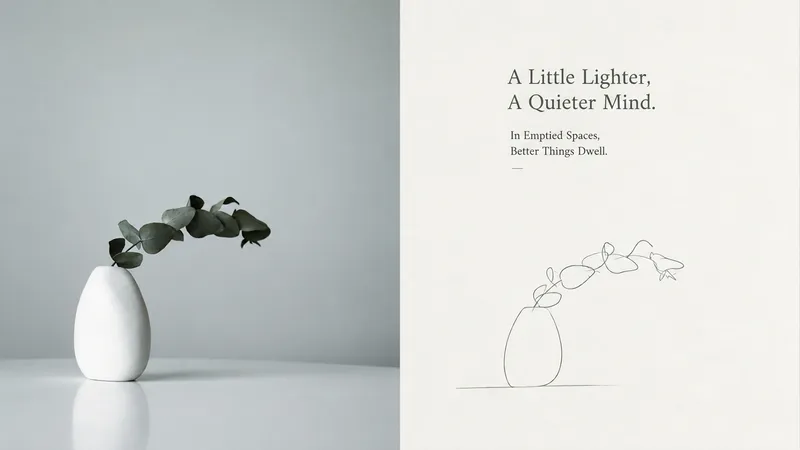
Folk Art | xiaoxiaodong P256
Ideal for turning an ordinary photo into an artist’s illustration page for an independent publication. The top half shows the original photo; the bottom half keeps only one theme, one emotion, and one metaphor. The subject stays near the center, with rounded forms and naive lines. Preserve irregular edges, paint coverage, paper texture, and hand-drawn imperfections. Avoid complex backgrounds, multiple narrative elements, and digitally perfect results.
 Image
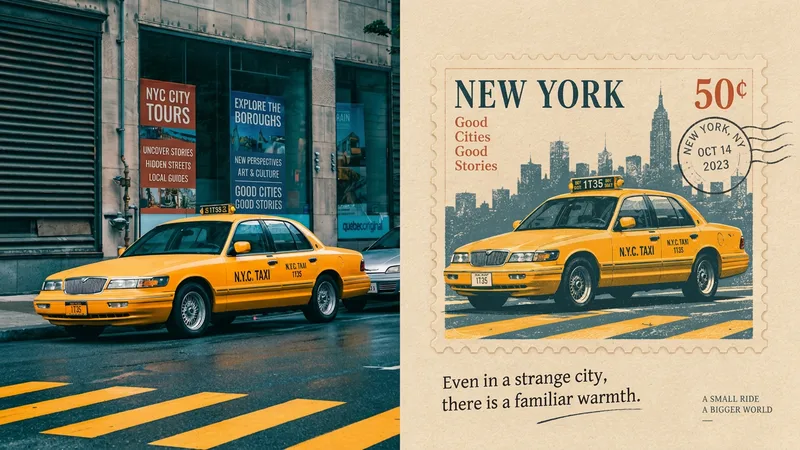
Silent Line | xiaoxiaodong P257
Ideal for reducing a subject to a minimalist emotional symbol. The upper half shows the original image; the lower half removes everything down to the fewest clues, letting viewers complete the image themselves. The subject can be very small or appear only as a partial outline. The lines feel like a quiet handwritten note, with pauses and room to breathe. Use no more than a few supporting lines, and make sure each one serves the mood. The goal is to make the image fall apart if even one line is removed. Avoid complete outlines, complex scenes, and mechanically uniform lines.
 Image
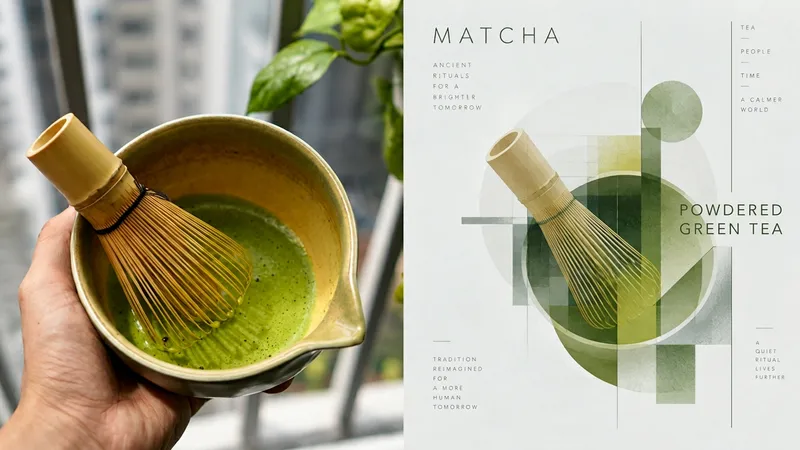
Travel Stamp xiaoxiaodongP255
Ideal for turning ordinary moments into collectible personal memories. The top half shows the original photo; the bottom half keeps only the anchor that best establishes the subject’s identity, forming a single postage stamp. The stamp is the creative core, not a decorative border. It can be centered, off-center, placed at the edge, or slightly cropped. Keep the colored-pencil, crayon, paper-texture, and screen-print irregularities. Lines may wobble slightly, and colors may extend just beyond the edges. Avoid complete scenes, smooth digital illustration, and stamps used only as borders.
 Image
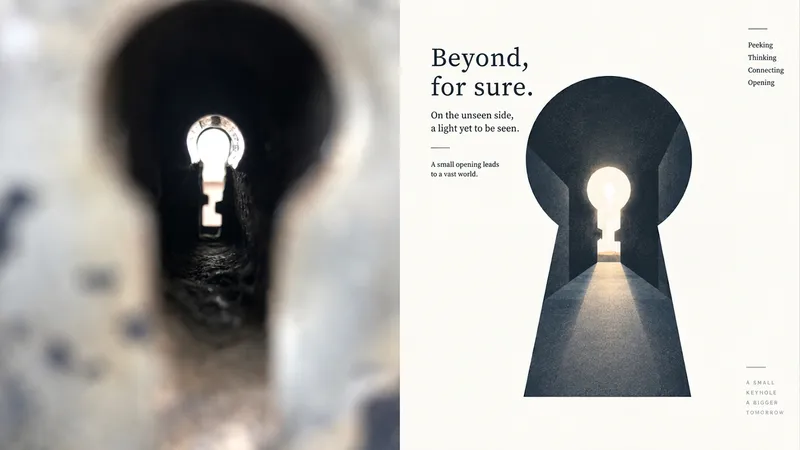
East Geo | xiaoxiaodong P254
A visual archive for reducing real objects into forms that can be re-encoded by a future civilization. The upper half is the original photo; the lower half removes most information and rebuilds identity with rectangles, circles, irregular polygons, and cut surfaces. Parts may be obscured, missing, or floating. Blank space represents the unknown, time, and the Eastern void. One core geometric form carries the narrative. Avoid realistic depiction, filled-in environments, and decorative geometry unrelated to the subject.
 Image
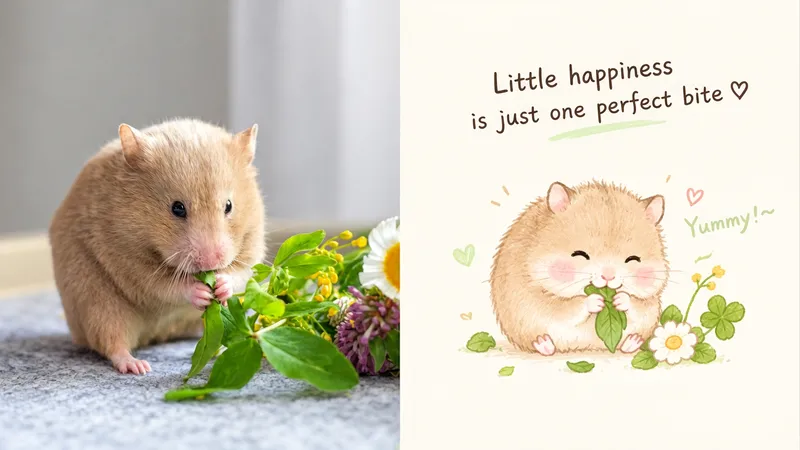
Flat Key | xiaoxiaodong P253
Ideal for reducing a photo to a highly simplified flat symbol. The top half shows the original image; the bottom keeps only the outer contour, structural relationships, and emotional cues. Layered color blocks and geometric simplification create memorable visual anchors. The subject can be centered, offset, cropped, or suspended. The style is modern flat illustration: simple shapes, soft contours, limited color blocks, and a subtle hand-drawn feel. No realistic textures or complex lighting. Avoid filling the frame or including secondary objects.
 Image
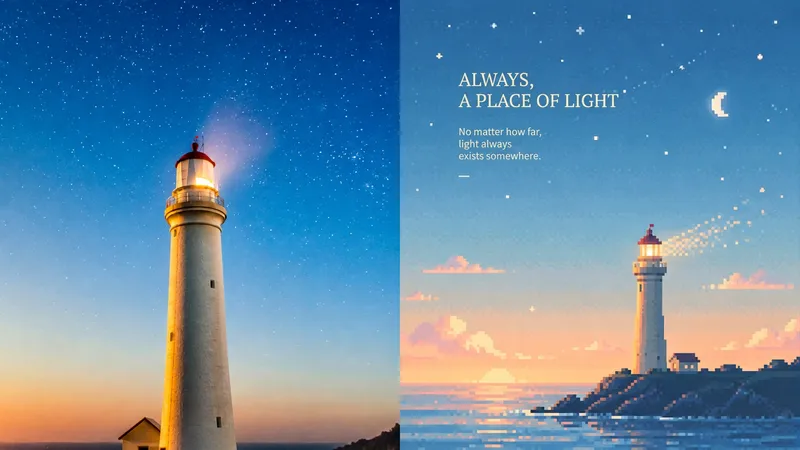
Healing Stickers | xiaoxiaodong P252
Ideal for turning ordinary objects into comforting symbols that feel like companions. The top half shows the original image; the bottom half distills it to one visual memory cue, expressed as a rounded miniature character or symbolic form. A touch of childlike charm is welcome, while the subject should remain recognizable. The subject does not need to fill the frame—think of a gentle moment in a journal. Keep pauses and slight imperfections in the lines. Small stars or flowers may appear, but should not be overused. Avoid precise vector shapes, fully filled backgrounds, and results where the original object is no longer recognizable.
 Image
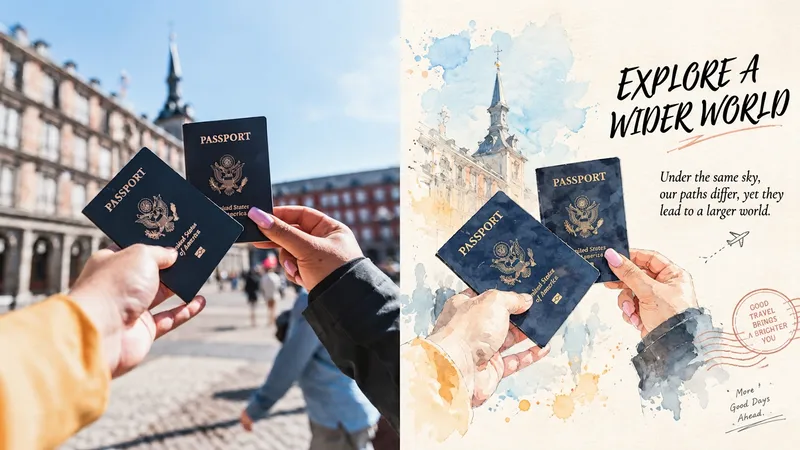
Mood Pixels | xiaoxiaodong P249
Suited to turning ordinary scenes into a quiet moment in a retro game world. The upper half is the original photo; the lower half reduces information while preserving its spirit and silhouette. The subject may be off-center, farther away, or cropped. The sky, mist, water, or blank space carries the mood. Colors from the original image shift to misty blue, pale cyan, mint green, creamy yellow, warm beige, and soft pink. Clear and warm—not gray, dirty, or highly saturated. Avoid ordinary pixel filters and fully packed scenes.
 Image
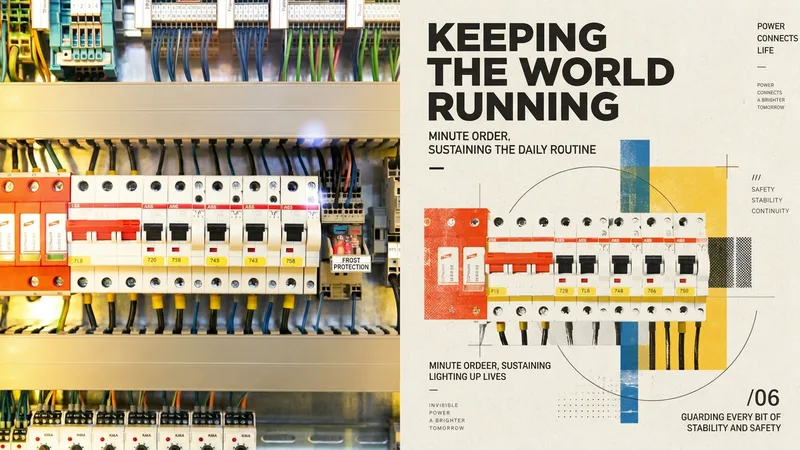
Old Trip · xiaoxiaodong P248
Suitable for turning a single photo into a preserved page from an old travel journal. The original photo fills the upper half; the lower half actively removes unrelated objects, keeping only clues that convey its spirit. The subject may be small, off-center, or close to the edge. Negative space becomes air, distance, and time. Transparent watercolor, diluted ink, and paper grain retain natural diffusion and pauses. Stamps and collage serve only as minimal emotional cues. Avoid showing a complete landscape or adding excessive decoration.
 Image
New Collage | xiaoxiaodong P246
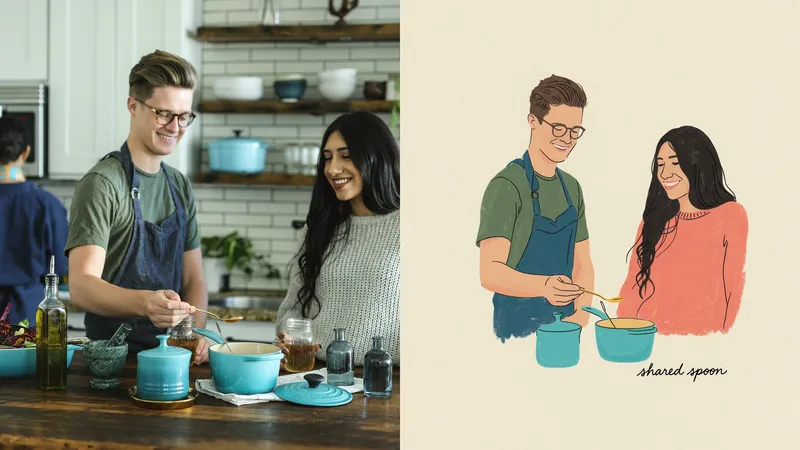
Turn an ordinary photo into a conceptual poster. The upper half remains a recognizable version of the original photo; the lower half does not restate the scene, but keeps only one subject and turns it into a new compositional collage using rectangles, circles, axes, and modular color blocks. The subject can be small, off-center, or cropped. Geometry serves meaning rather than decoration. Paper texture, halftone dots, and registration shifts remain in the design area. Avoid piling on concepts, filled backgrounds, cyberpunk, smooth vectors, and plastic-like 3D.
 Image
Memory | xiaoxiaodong P245
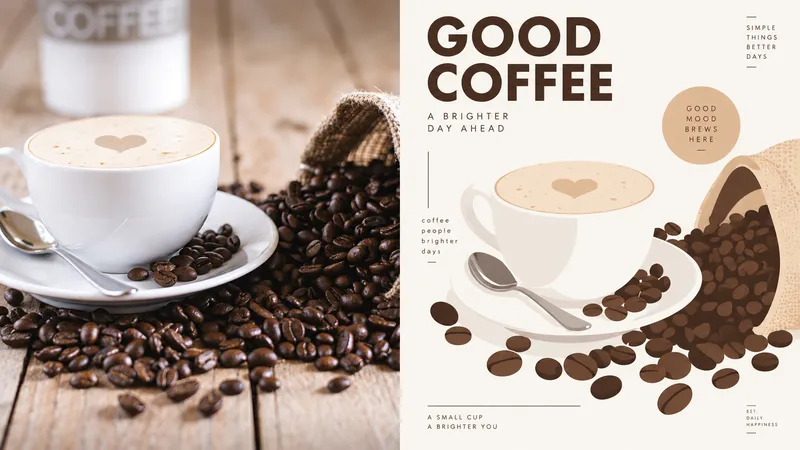
Ideal for turning an ordinary photo into a standalone picture-book page or a page from a travel journal: personal photo curation, exhibition practice, and lifestyle visuals. The top half preserves a recognizable version of the original photo; the bottom half does not restate the entire image, but distills only its most identifiable contours and relationships into a quiet, slightly naive form of modern folk art. The subject is small, can be off-center or cropped, and is surrounded by plenty of white space. The lines are loose and imperfect, with slight pauses and corrections. Colors are drawn from the most vibrant tones in the original image and refined into a limited palette such as cream white, deep teal, misty blue, butter yellow, and plant green. Avoid filling the frame, polished vectors, a plastic look, fluorescent colors, and commercial illustration.
 Image
GPT2 x Editorial Visual
For creating key visuals for creative tools, digital magazines, or visual identities: brand exercises, covers, and exhibition graphics. Keep the original photo recognizable in the upper half; reframe it in the lower half with large solid-color blocks, simplified contours, fine lines, and a few rounded cards. The subject is the sole focus—do not crowd the surrounding space with a complex interface. Young, smart, and slightly playful, with a warm tech feel rather than a cyberpunk look. Draw the palette from the most vivid colors in the original image and refine them, using plenty of warm white—about one or two primary colors plus an accent. Keep text small and clear, using a condensed sans serif or a lightweight monospaced font. Avoid realism, complex shadows, gradient effects, dense UI, game interfaces, and cartoon stickers.
 Image
GPT2 x Mint Pixel Cuisine
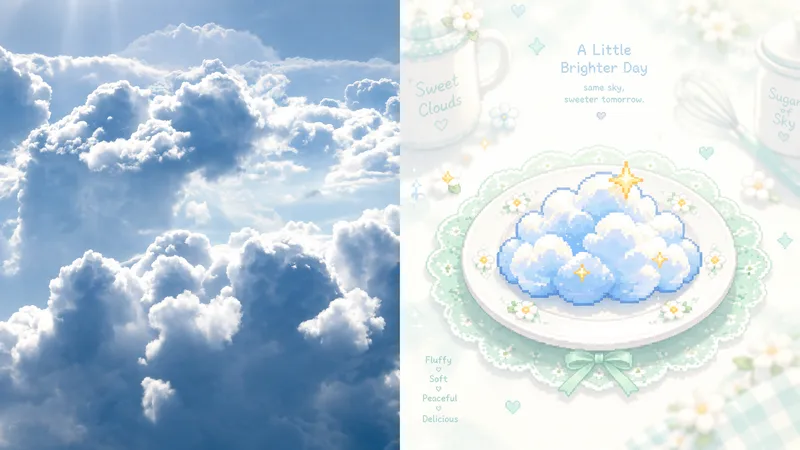
Ideal for turning photos into light, sweet, quiet pixel art cards: culinary nostalgia, independent stationery, and exhibition vignettes. The upper half preserves the recognizable original image; the lower half reduces the subject to a single central pixel symbol on a pale ceramic plate. A soft white halo, mint-green lace, and tiny floral dots surround it. Cookware in the distance should nearly fade into white. Only the center has clear blocky pixel edges; everything else is mist, bloom, and an almost overexposed pale background. Use mint green, ivory, and cream as the base, with bright orange, coral, golden yellow, or pink appearing only as accents at the center. Avoid dark backgrounds, strong outlines, complex details, and gray, dirty-looking filters.
 Image
GPT2 x B&W Geometry
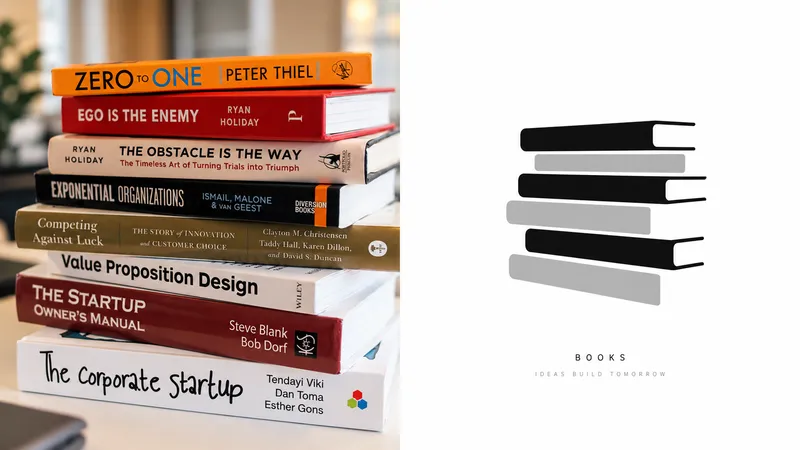
Ideal for turning photos into museum wayfinding, architectural pictograms, or editorial glyphs: identity systems, cover symbols, and exhibition graphics. The upper half retains a recognizable version of the original image; the lower half keeps only three to five key structures, reorganized with a few rounded geometric blocks and negative-space notches. The symbol must be very small and centered, with continuous white space around it. Use only black, neutral gray, and white. No gradients, textures, or extra colors. If there is text, it must be tiny and placed only at the edge. Avoid realistic rendering, colorful decoration, oversized graphics, full-bleed layouts, and cheap icon templates.
 Image
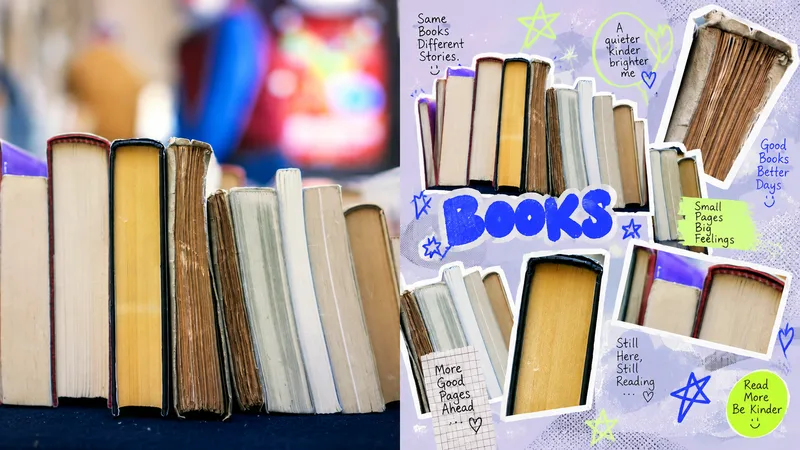
GPT2 x Y2K Sticker Collage
Ideal for turning photos into cute, quirky, playful sticker zines: youth-focused visuals, independent magazines, and social media covers. The top half keeps the original photo recognizable; the bottom transforms the same subject into multiple cutouts in different poses and sizes, each with a clear white die-cut border. Slight rotation and overlap add spontaneity while keeping the visual hierarchy clear. The base is pale gray-purple, accented with acid lime and cobalt blue, plus a small selection of colors drawn from the original image. Tiny text reads like magazine marginalia or snippets of chat. It looks casual but is thoughtfully art-directed. Avoid cheap templates, childish cartoons, rigid grids, dull retro styling, and piles of photos.
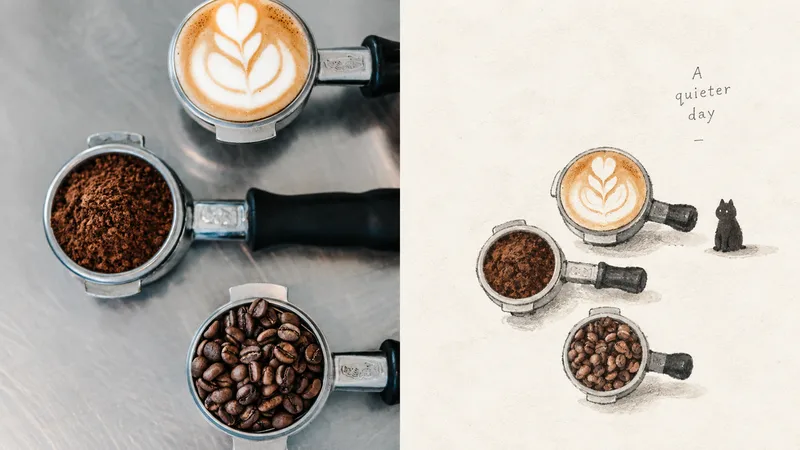 Image
GPT2 x Gothic Miniature
Ideal for turning strong or complex photos into fragile, understated picture-book metaphors for literary visuals, independent publishing, and exhibition pieces. The upper half retains a recognizable version of the original image; the lower half keeps only its most symbolic features, forming a small, isolated figure. Surround it with an enormous amount of empty space and, at most, one extremely faint cast shadow. Opaque gouache with thin watercolor, dry-brush marks, pencil, uneven blacks, and hesitant edges. The main colors are charcoal black, ivory white, and soft gray, with warm peach or pale apricot used only as tiny accents. A little dark but not frightening, a little awkward but not cutesy. Avoid smooth finishes, polished CG, commercial cartoons, complex backgrounds, and cinematic lighting.
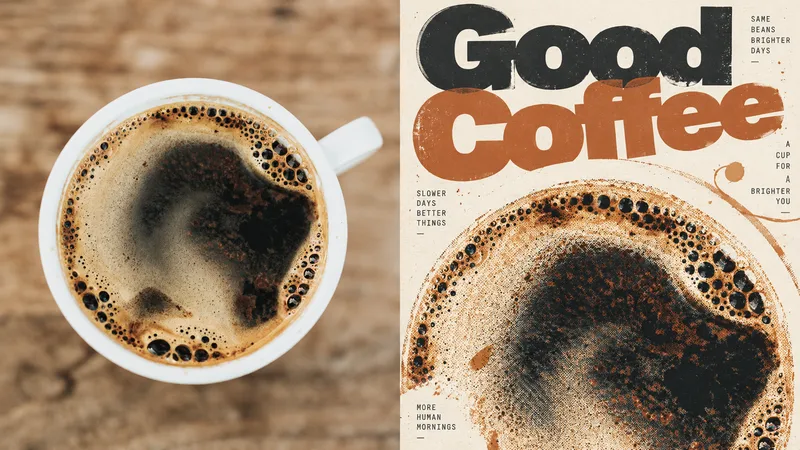 Image
GPT2 x Spot-Color Poster
Ideal for turning photos into experimental independent magazine posters: covers, exhibition graphics, and visual studies. Keep the upper half recognizable as the original photo; rework the subject in the lower half with limited spot colors, translucent overprinting, visible halftone dots, and slight misregistration. The subject can be cropped, off-center, or partially extend beyond the frame. Use generous negative space, with every element orbiting a visual center. The title can be large enough to nearly become a graphic, overlapping and weaving through the image. Supporting text should be tiny. Use warm white, uncoated paper with visible fibers and controlled imperfection. Avoid tidy brand templates, complex collages, digital gradients, and fluorescent screen glow.
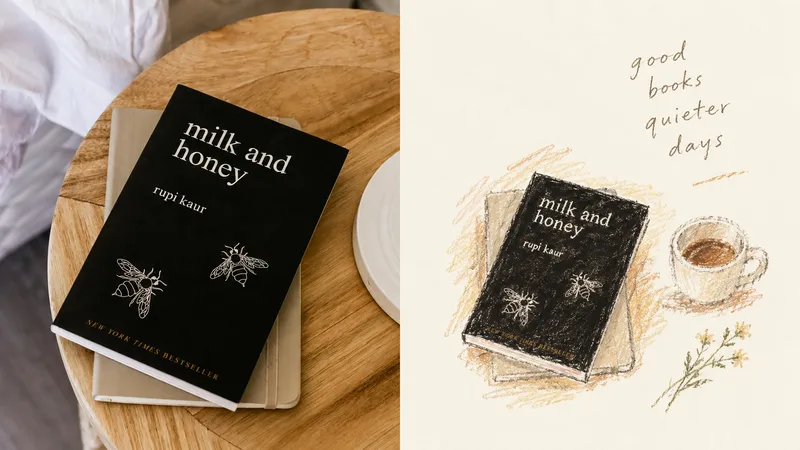 Image
GPT2 x Crayon Visual Diary
Ideal for turning photos into private visual diaries: travel journals, everyday moments, and independent publishing. The upper half preserves a recognizable original photo; the lower half keeps only one movement or relationship worth remembering. Keep the subject small—it can be off-center, close to the edge, or cropped. Let the blank space carry air and time. Use loose oil pastels and crayons, with open contours, broken edges, and the friction of paper grain and wax still visible—deliberately stopping short of finished. Draw colors from the original image’s color temperature: warm ivory, soft blue-gray, plant green, terracotta, apricot brown, and dusty pink. Quiet, intimate, and slightly clumsy, yet mature. Avoid filling the frame, smooth detailed rendering, dark brown aging effects, fluorescent colors, and overly sweet candy tones.
 Image
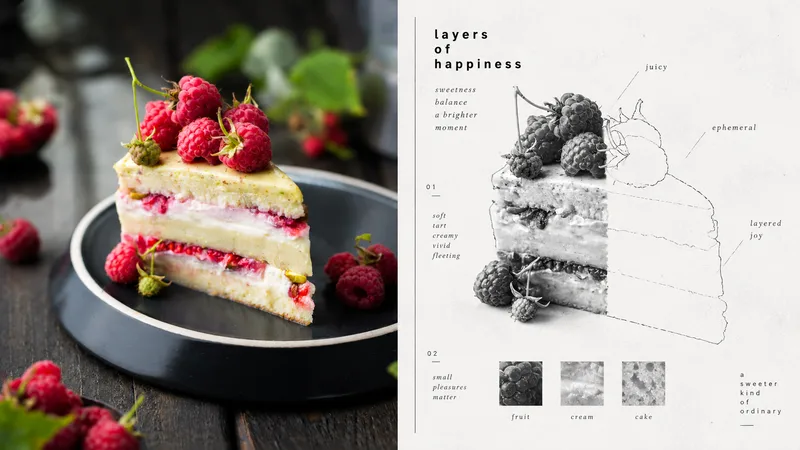
GPT2 x Specimen Poetics Atlas
Ideal for turning an object into a poetic classification page styled like a museum publication: visual research, exhibition catalogs, and concept posters. The image shows only a precise black-and-white photograph of part of the subject; the missing portion is completed with a large area of untouched blank space and a fragile, imperfect hand-drawn outline. A few square material samples serve as evidence. Feeling words label intangible qualities, not anatomical details. Extreme negative space, restrained asymmetry, small, coarse lowercase sans serif type, a fine border line, black-and-white photographic grain, and slight printing errors. Quiet, cerebral, gentle, archival. Avoid full-color illustrations, dense catalog grids, cute stickers, smooth vector graphics, and explanatory infographics. The original is in English and is preserved verbatim in zh-CN.md.
 Image
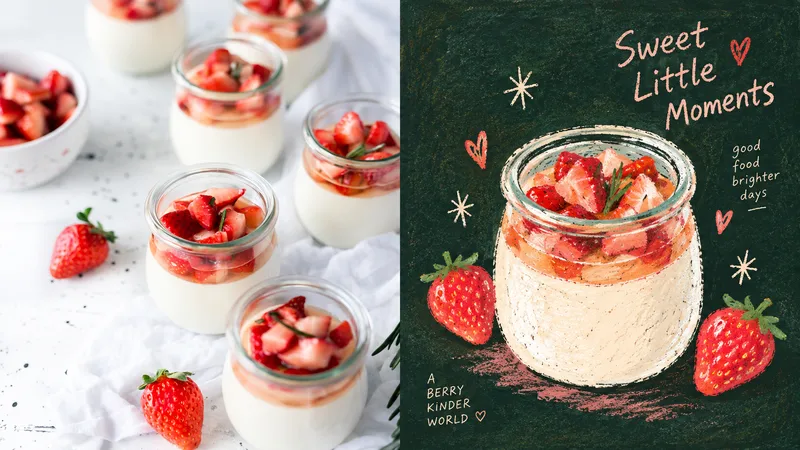
GPT2 x Naive Talisman Art
Ideal for turning an ordinary object into an emotional visual talisman: an independent illustration, cover, or small exhibition piece. The upper half preserves the source photo’s recognizability; the lower half uses a centered, rough, boldly simplified silhouette to establish its identity. Flat candy-colored shapes and intentionally imperfect outlines. The marks from crayon and oil pastel should reveal the pressure of the hand. The background is dark, softly hazy, and matte; the subject feels lighter and more alive. Draw two to four colors from the source image, arranged to feel warm, quirky, slightly magical, and sweet without going too far. Use only a few small symbols around it. Add an expressive, non-realistic grounding shadow beneath. Avoid smooth vector graphics, precise volume, commercial characters, busy backgrounds, and digital polishing.
 Image
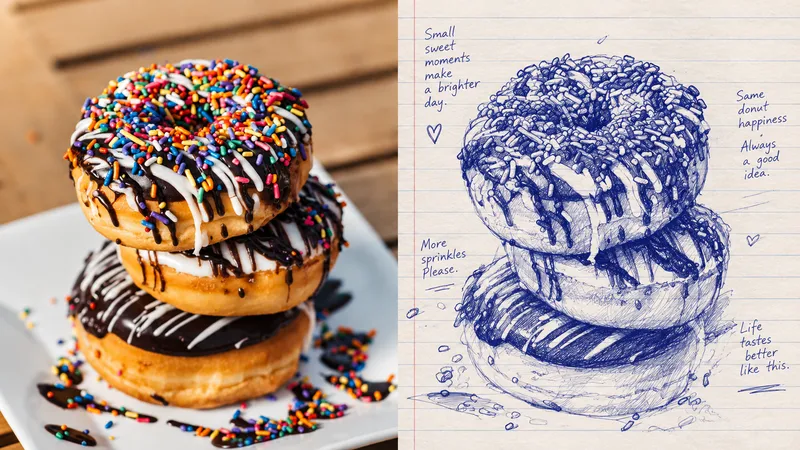
GPT2 x Blue Pen Sketch
Ideal for turning photos into private observation pages from a journey: journal pages, sketch publications, and exhibition vignettes. The upper half preserves a recognizable original photo; the lower half uses only an ordinary blue ballpoint pen and cheap lined paper. The lines must pass through the drawing. Light and dark come from structural hatching, not digital gray. Some areas are extremely dense, then the pen suddenly stops nearby. Pressure, hesitation, repeated corrections, and the search for a line all remain visible. The subject may be off-center, cropped, or partly missing. If there is text, it must be a few words written casually with the same pen. Avoid polished illustrations, complete backgrounds, photo outlines, smooth shading, tidy vectors, and commercial sketches.
 Image
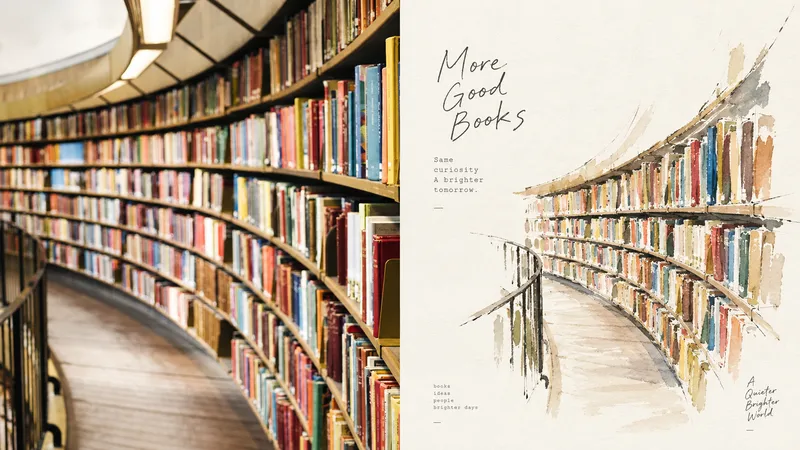
GPT2 x Paused Notes
Ideal for turning everyday photos into one-page private-note illustrations: journaling, indie publishing, and exhibition vignettes. The upper half preserves the recognizable original photo; the lower half keeps only the silhouette, personality, and expression, using relaxed, broken ink lines and a small amount of light watercolor to draw the subject small. Leave plenty of white space rather than filling the page, allowing strokes to stop and edges to remain open. Take two to four colors from the original image—light, thin, and restrained, but precise. Keep text small and delicate, placing it in the corners of the white space. Avoid filling the page, smooth digital polish, a plastic feel, fluorescent colors, and commercial-style headlines.
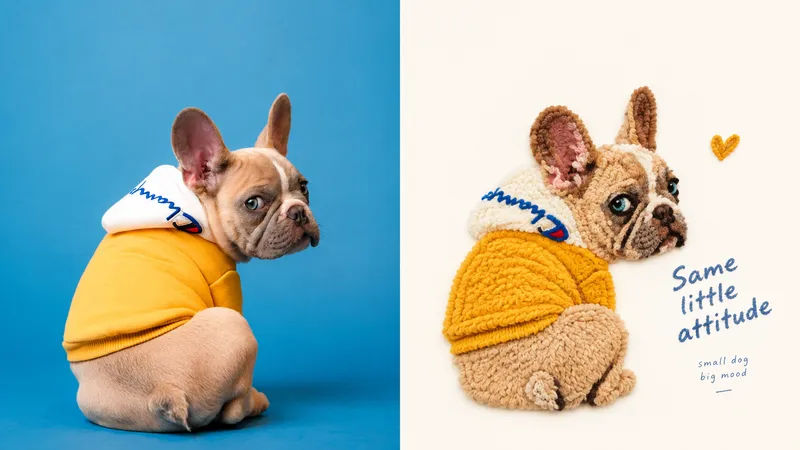 Image
GPT2 x Tufted Fiber Wall Art
Ideal for turning photos into contemporary fiber wall art: home visuals, independent crafts, and small exhibition pieces. Keep the recognizable original photo in the upper half; in the lower half, reduce the subject to a few rounded, slightly naïve tufted forms scattered across an extremely pale solid-color background. No rooms, furniture, or wall textures. Keep the subject small, sparse, and asymmetrical. The thick tufting, soft relief, imperfect edges, and handmade variations must be visible. Draw colors from the brightest, most vibrant tones in the original image, refining them into sky blue, turquoise, fresh green, warm yellow, coral, and peach pink. Avoid muddy grayish muted tones, dark brown filters, fluorescent candy colors, and commercial sticker-like styling.
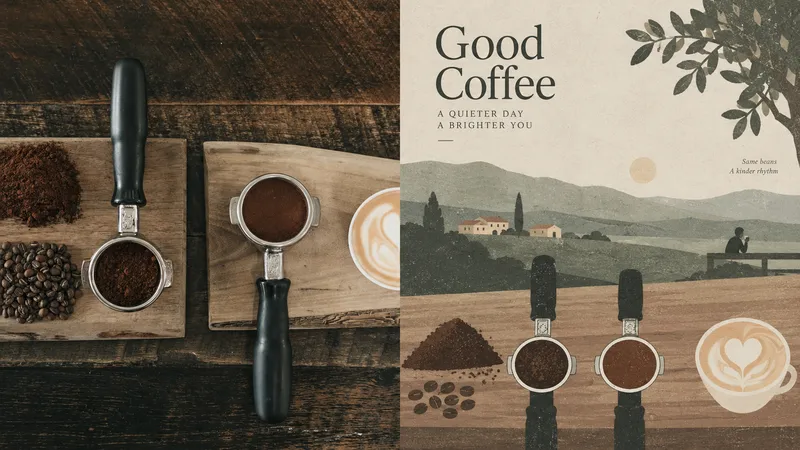 Image
GPT2 x Horizontal Folk Art
Ideal for turning photos into quiet, detached, place-aware editorial illustrations with a modern folk-art sensibility—for independent publishing, exhibition studies, and local visual work. The upper half preserves the recognizable source image; the lower half compresses the scene into shallow horizontal bands of color—fields, roads, walls, rooftops, and trees—with extremely low density and generous negative space. If people appear, they are tiny, isolated points. Matte paper, subtle screen-print grain, and the texture of vintage book illustrations. A highly desaturated palette—gray-green, sage, warm beige, light gray, faded burgundy, and earth brown—compressed from the original image. Overcast, diffused light. Avoid high saturation, fluorescents, heavy rendering, a slick digital feel, and commercial titles.
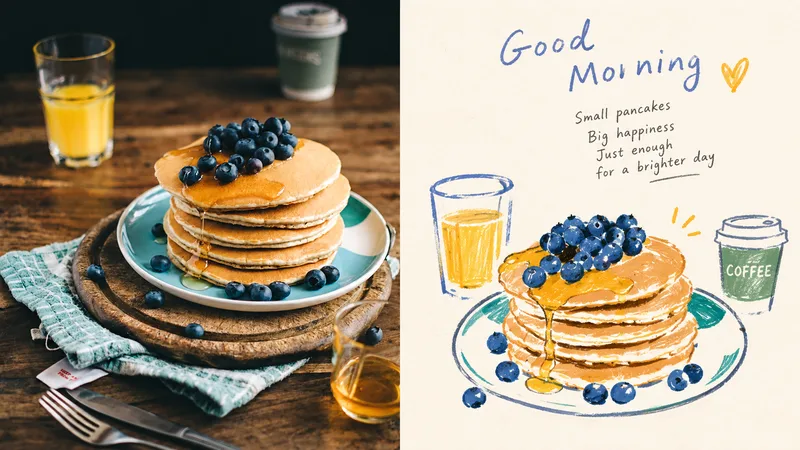 Image
GPT2 x Naive Hand-Drawn
Ideal for turning everyday photos into contemporary naïve hand-drawn art for personal albums, independent stationery, and small-scale art publishing. The top half preserves the recognizable original photo; the bottom half keeps only its most soulful shapes, reinterpreted with loose, slightly wobbly colored outlines, marker, and colored pencil. Keep the subject small, surrounded by warm cream white. Draw a few of the most expressive colors from the original image. Keep them warm and matte, with select areas allowed to be slightly more vivid. Preserve paper grain, overrun lines, and pauses. Avoid smooth vectors, polished edges, complex shadows, 3D, and formal commercial titles.
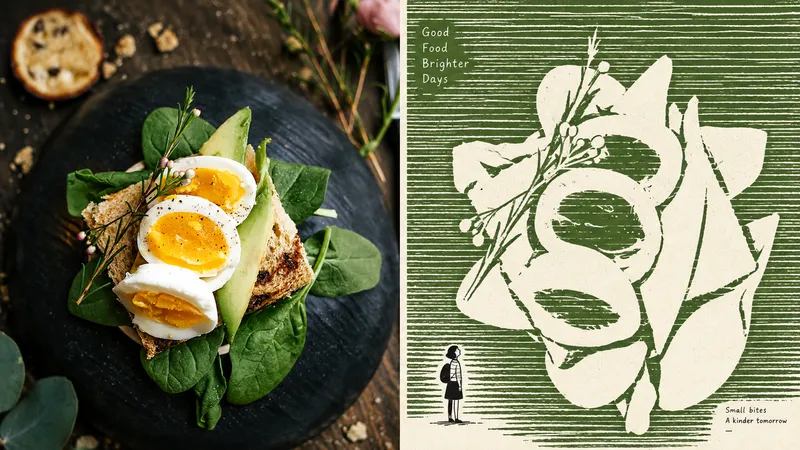 Image
GPT2 x Negative Monument
For turning everyday photos into minimalist independent-publication illustrations: exhibition studies, personal photography projects, and literary visuals. The upper half retains a recognizable version of the original photo; the lower half does not depict the subject, but instead builds a field of dense, slightly shaky, broken horizontal strokes, leaving the subject as a huge, quiet expanse of negative space. A tiny, naïve figure contrasts with, passes through, or accompanies this monument. Use no more than three colors: a warm white paper ground, one soft, bright ink color drawn from the source image, and black. The image must use flat graphic forms while retaining paper texture and slight misregistration. Avoid volumetric rendering, gradients, shadows, smooth digital rendering, and flashy multicolor treatments.
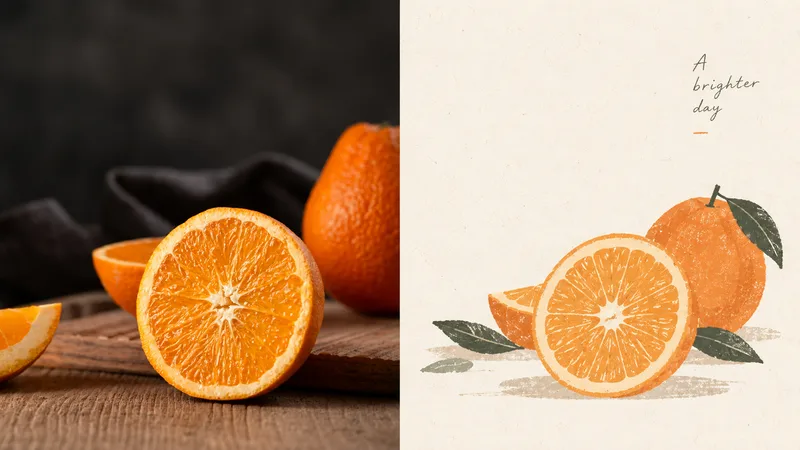 Image
GPT2 x New Folk Art
Ideal for turning everyday photos into quiet, nostalgic illustrated vignettes with a contemporary folk-art sensibility—for organizing personal photography, independent publishing, exhibition studies, and lifestyle brands. The upper half preserves the original image's recognizability; the lower half does not simply apply a filter, but retains only the most identifiable shapes and relationships, reworking a beautiful moment with rounded, simplified forms, powdery gouache, and an abundance of negative space. The overall result is quiet, intimate, poetic, restrained, warm, and nostalgic: small-scale subjects, generous negative space, powder blue and ivory, botanical green, and small touches of coral red. Avoid densely filled realism, high saturation, fluorescent colors, a slick digital look, plasticity, and piles of commercial-style headlines.
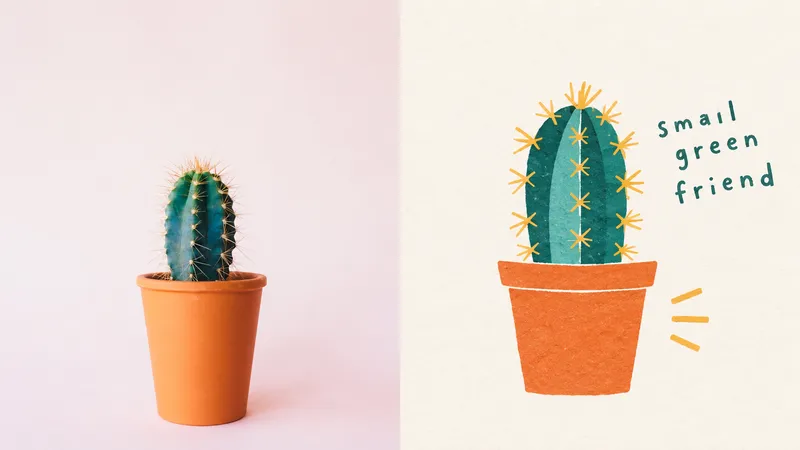 Image
GPT2 x Indie Paper Object
For turning everyday photos into the kind of handmade paper piece you might find in an independent bookstore, design museum shop, or small art market: personal photo curation, independent publishing, exhibition exercises, and lifestyle brands. The upper half preserves a recognizable version of the original photo; the lower half does not apply a paper-cut filter, but removes irrelevant information and reworks it into a small paper-art object using naive hand-drawing, paper-cut color blocks, rough geometric shapes, and a few simple lines. The overall look is clean, friendly, optimistic, relaxed, and slightly quirky: a medium-to-small scale, generous warm-white space, matte paper and Risograph grain, and 2–3 spot colors sampled from the original image. Avoid realistic illustration, smooth vector graphics, a glossy 3D plastic feel, complex backgrounds, commercial packaging, children's craft-class aesthetics, and templated brand design.
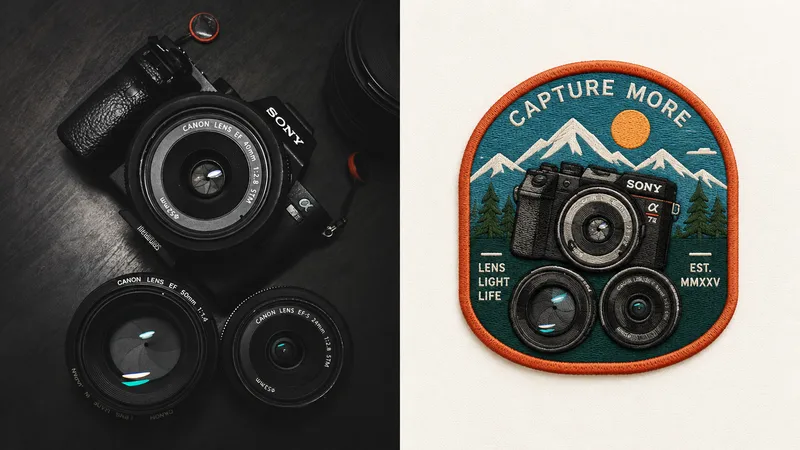 Image
GPT2 x Embroidered Patch
For turning everyday photos into archivable, recognizable collectible fabric patches—for personal photo organization, independent publishing, exhibition studies, and visual systems for research and fieldwork. The upper half preserves the identifiable original image; the lower half does not simply apply an embroidery filter. Instead, it interprets the subject’s meaning, emotion, and symbolism, then compresses the contours, structure, and memorable details that best define it into an embroidered mission patch. The overall result is refined, restrained, precise, and enduring: a small-to-medium scale, generous breathing room, twill fabric with bound edges, industrial identification typography, and bright, soothing colors extracted from the original image. Avoids fully realistic scenes, excessive information, decorative clutter, smooth vector styling, a plastic feel, templated creative merchandise, and e-commerce product imagery.
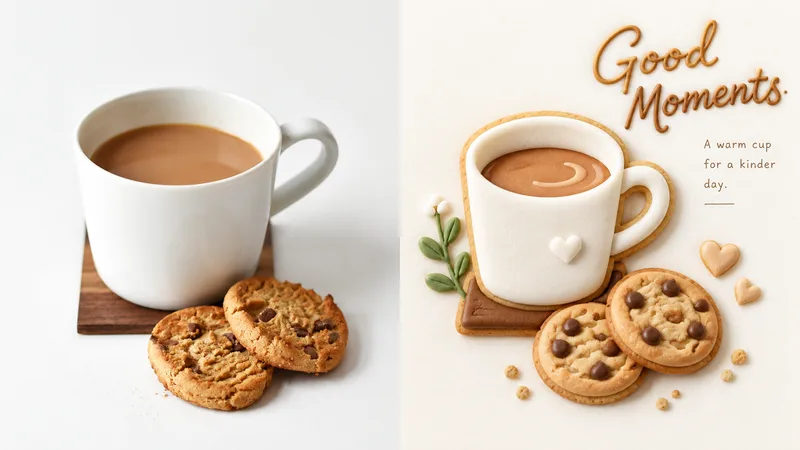 Image
GPT2 x Iced Cookie Relief
Suitable for personal photo organization, independent publishing, exhibition practice, and lifestyle visual creation. Even images with ordinary composition, cluttered backgrounds, or small subjects can regain focus through reduction, rearrangement, cropping, and changes in scale—instead of simply applying a filter. The goal is not to “turn a photo into a cookie,” but to reinterpret and retell the original image through the consistent material of an iced cookie: simple, complete, poetic, warm, and collectible. Avoid literal replication of every object, filling the background, complex realism, plastic-like highlights, heavy shadows, cheap cartoonishness, and templated icons.
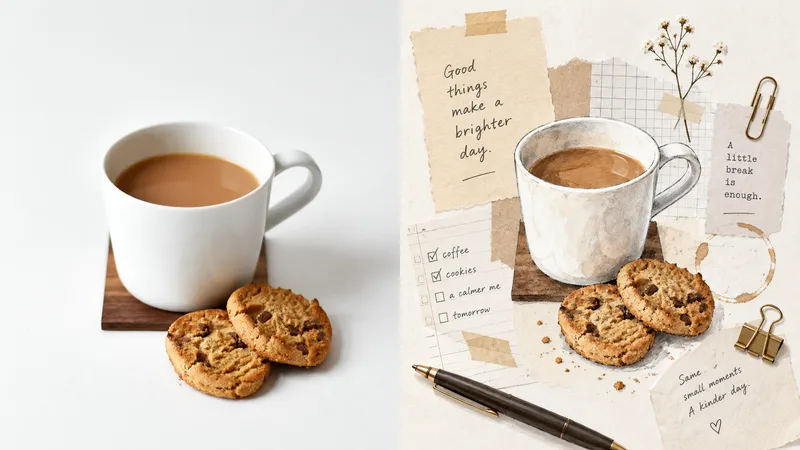 Image
GPT2 x Office Object Collage
Ideal for organizing personal photography, independent publishing, exhibition studies, and lifestyle-focused visual work. Even ordinary compositions, cluttered backgrounds, or undersized subjects can be reshaped through reduction, reorganization, cropping, and changes in scale to establish a new focal point—instead of simply applying a filter to a photo. The overall result should combine the refined visual sensibility of selective memory, object-based storytelling, office routines, hand-drawn collage, and generous negative space: restrained, perceptive, poetic, contemporary, and guided by a clear editorial design sensibility. Avoid literal depictions of every object, filling the frame, listing materials, excessive decoration, commercial planner-template aesthetics, cartoonish or 3D looks, and a cheap collage feel.
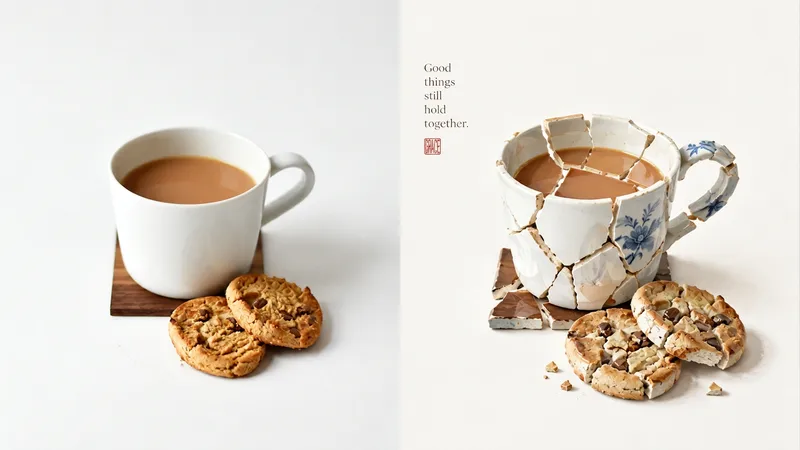 Image
GPT2 x Porcelain Rebuild
Suitable for personal photography curation, independent publishing, exhibition studies, and lifestyle-focused visual creation. Even when the original image has an ordinary composition, a cluttered background, or a small subject, its focus can be re-established through subtraction, reorganization, cropping, and changes in scale rather than simply applying a filter. This is not a “porcelain-shard version” of the photo, but a re-creation made after understanding the original image: Chinese porcelain fragments become the visual medium, while breakage, absence, assembly, negative space, and cultural memory reinterpret the spirit of the original scene. The result is poetic, restrained, contemporary, Eastern, psychologically charged, and collectible in character, while avoiding literal object-by-object recreation, overfilled compositions, stacked traditional patterns, an antique-display feel, cheap “new Chinese” styling, a 3D plastic look, and template-like collage.
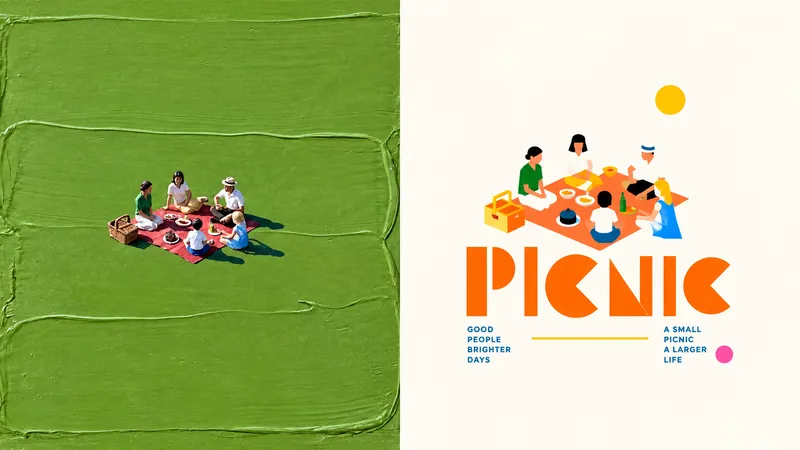 Image
GPT2 x Architectural Type
Suitable for organizing personal photography, independent publishing, exhibition studies, and lifestyle-oriented visual work. Even when the original image has an ordinary composition, a cluttered background, or a subject that is too small, you can reestablish a focal point through reduction, reorganization, cropping, and changes in scale—instead of simply applying a filter. A refined visual effect emerges from a small-scale central key visual, architectural typography, modular geometric construction, high-contrast functional color coding, and generous negative space. The style draws on the editorial language of public cultural visuals, art festival posters, architectural visual systems, and international design studios. Avoid full-bleed compositions, complex backgrounds, multiple equally weighted focal points, ordinary text layouts, realistic illustration, a cartoon feel, 3D rendering, cheap color clashes, and a templated poster look.
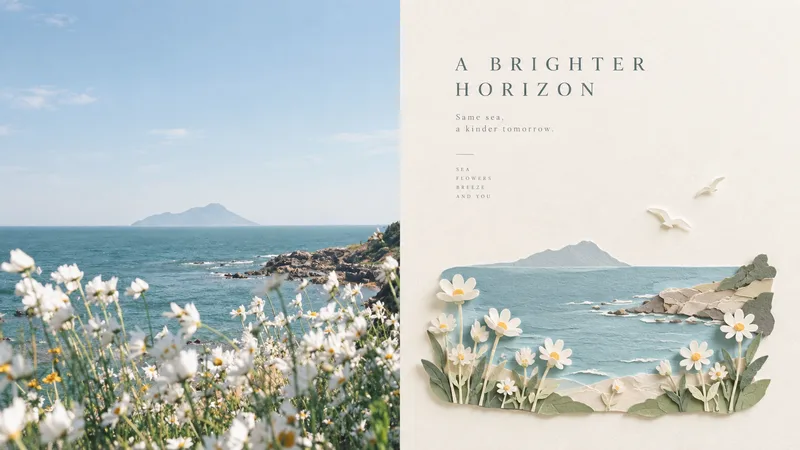 Image
GPT2 x Soft Paper Diorama
Suitable for personal photo curation, independent publishing, exhibition practice, and lifestyle visual creation. Even when the original image has an ordinary composition, a cluttered background, or a relatively small subject, you can reestablish the focal point through reduction, recombination, cropping, and changes in scale—instead of simply applying a filter to the photo. The overall look combines a miniature paper-art centerpiece, a soft paper color palette, generous artistic negative space, subtle bas-relief layers, and sophisticated editorial layout.
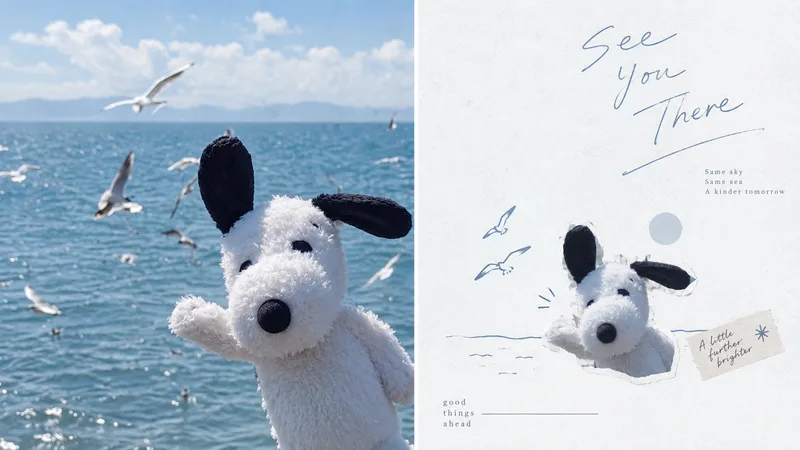 Image
GPT2 x Light Concept Collage
Suitable for organizing personal photography, independent publishing, exhibition studies, and lifestyle visual projects. Even when the original composition is ordinary, the background is cluttered, or the subject is too small, you can reestablish a visual focus through reduction, rearrangement, cropping, and changes in scale—instead of simply applying a filter to the photo. The overall look combines small-scale subjects, generous negative space, a limited color palette, lightweight collage, hand-drawn linear graphics, and editorial-style typography. It evokes a conceptual illustration or personal visual note in an independent magazine: restrained, relaxed, intelligent, quiet, and full of afterglow.
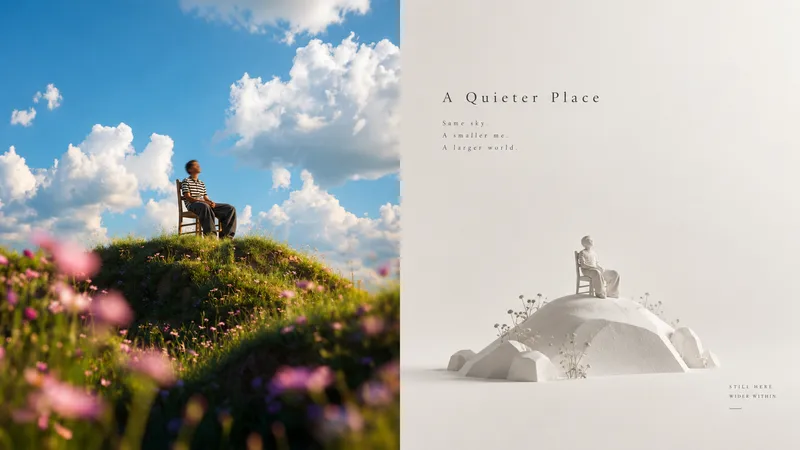 Image
GPT2 x Near-Monochrome Forms
Suitable for organizing personal photography, independent publishing, exhibition exercises, and lifestyle visual creation. Even if the original image has an ordinary composition, a cluttered background, or a small subject, you can reestablish the focal point through reduction, reorganization, cropping, and changes in scale—instead of simply applying a filter. The overall look combines small-scale conceptual forms, expansive negative space, near-monochrome tonal relationships, sculptural volume, and minimalist editorial layout to create a refined visual effect.
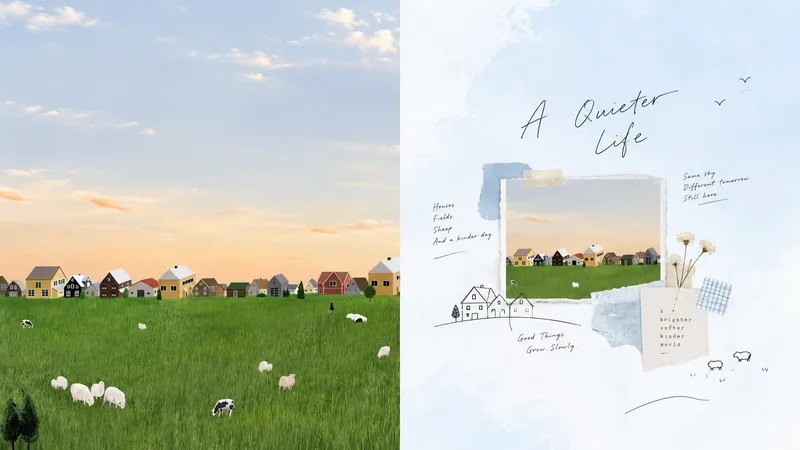 Image
GPT2 x Blue-White Mixed-Media
Suitable for organizing personal photography, independent publishing, exhibition exercises, and lifestyle-focused visual work. Even images with ordinary compositions, cluttered backgrounds, or small subjects can regain a clear focal point through reduction, rearrangement, cropping, and changes in scale—instead of simply applying a filter to the photo. The overall look features a small-format subject, generous artistic whitespace, a pale blue and white palette, photography combined with line drawings, paper-textured collage, and a light, relaxed editorial insert feel. References include minimal mixed-media collage / whitespace scrapbook layout / centered editorial collage / airy zine-inspired layout.
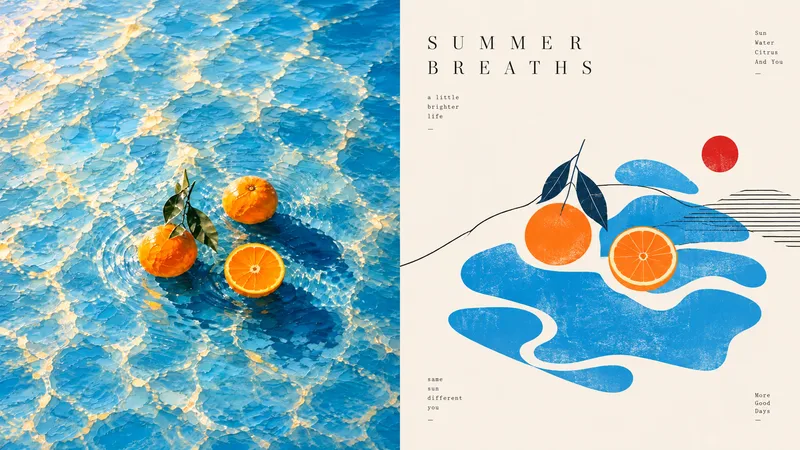 Image
GPT2 x Blue-Pink Modernism
Ideal for organizing personal photography, independent publishing, exhibition studies, and lifestyle-focused visual projects. Even when the original composition feels ordinary, the background is cluttered, or the subject is too small, you can reestablish visual focus through reduction, rearrangement, cropping, and changes in scale—instead of simply applying a filter to the photo. The overall look combines small-scale abstract shapes, generous artistic negative space, blue and pink as the primary colors, red accents, black structural textures, and editorial-style typography to create an experimental, sophisticated poster aesthetic with a modernist, independent-publishing, and contemporary art design sensibility.
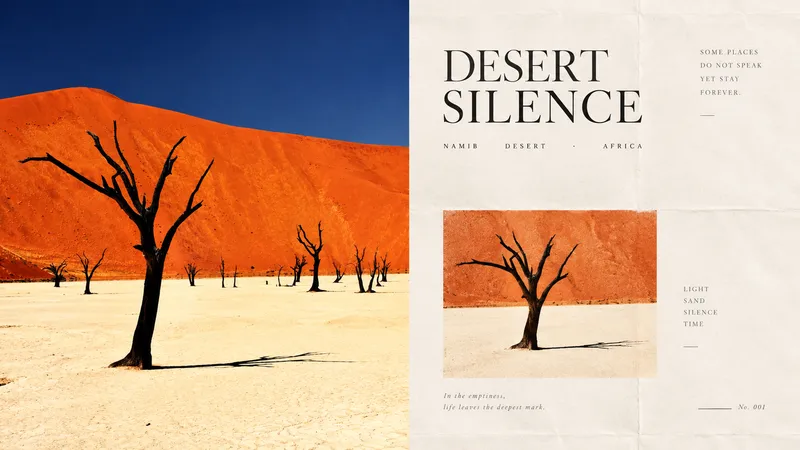 Image
GPT2 x Minimal Paper Archive
Ideal for organizing personal photography, independent publishing, exhibition practice, and lifestyle-focused visual creation. Even images with ordinary compositions, cluttered backgrounds, or small subjects can be given a new focus through reduction, reorganization, cropping, and changes in scale—rather than simply applying a filter. The final result combines small images, generous white space, restrained colors, subtle emotional highlights, archival text, and the tactile quality of paper into a refined editorial aesthetic—like a carefully preserved page from a photography book, private archive, or independent art publication.
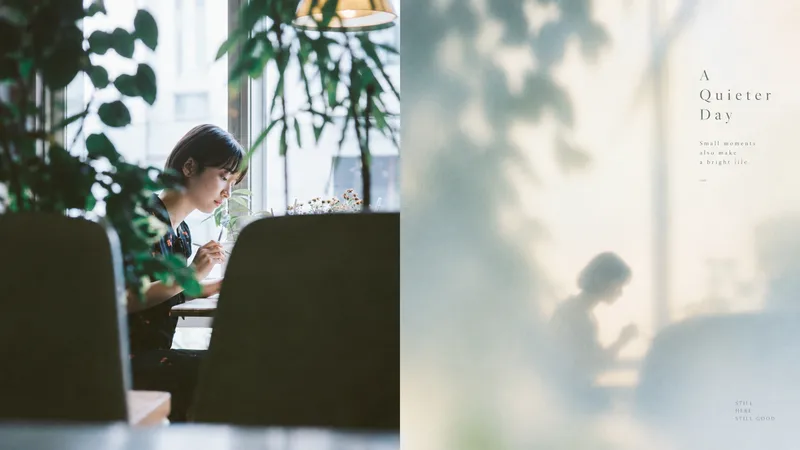 Image
GPT2 x Soft-Light Memory
Ideal for organizing personal photography, independent publishing, exhibition studies, and lifestyle visual creation. Even when the original composition is ordinary, the background is cluttered, or the subject is too small, you can reestablish a visual focus through subtraction, recomposition, cropping, and changes in scale—instead of simply applying a filter to the photo. The overall look combines small-scale light-and-shadow focal points, expansive negative space, soft-focus glow, cool-and-warm pink-mist relationships, and minimalist editorial layout to create a refined visual effect, like an atmospheric minimalist poster from an art magazine, cultural brand, or exhibition identity. Whether the subject is a person, building, animal, plant, object, vehicle, or natural landscape, preserve its essential visual spirit rather than reproducing it in full.
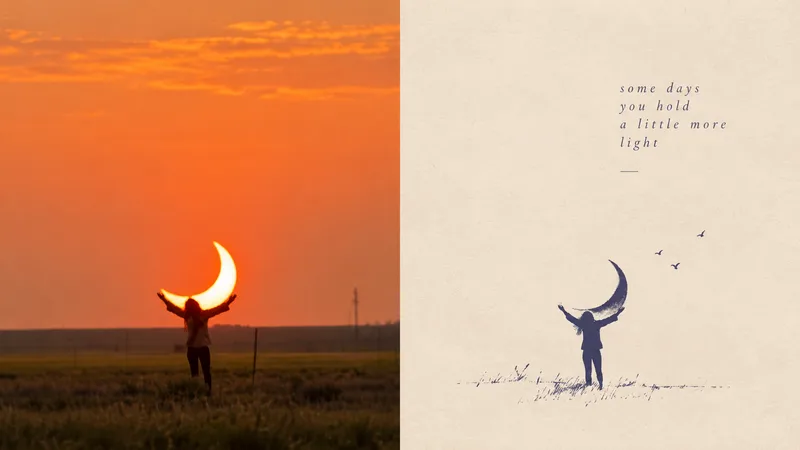 Image
GPT2 x Warm Paper Cool-Tone Line Art
Ideal for personal photo curation, independent publishing, exhibition studies, and lifestyle-oriented visual work. Even images with ordinary compositions, cluttered backgrounds, or undersized subjects can be reshaped through reduction, reorganization, cropping, and changes in scale to reestablish visual focus—instead of simply applying a filter. The overall style combines vignette-like subjects, generous artistic negative space, a warm paper background, low-saturation monochrome hand-drawn elements, visual metaphor, and poetic typography to create a refined conceptual illustration aesthetic—like an independently published poetry collection, a personal manuscript, or an archive of psychological imagery.
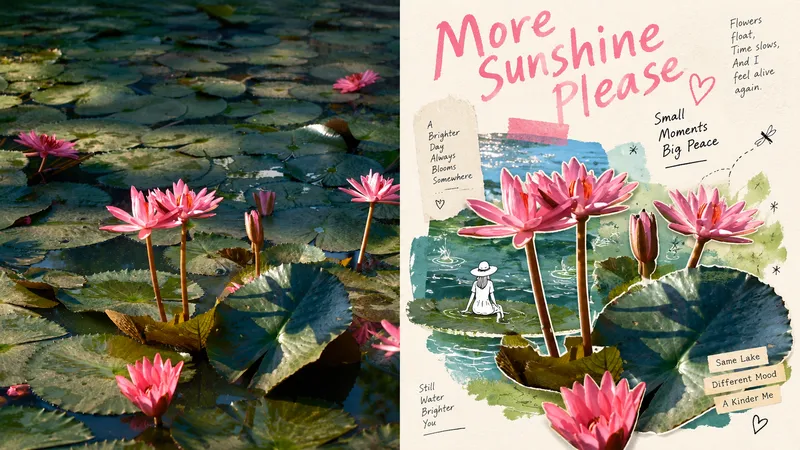 Image
GPT2 x Mingkuai Digital Collage
Suitable for organizing personal photography, independent publishing, exhibition exercises, and lifestyle-focused visual creation. Even when the original composition is ordinary, the background is cluttered, or the subject is too small, you can reestablish a focal point through subtraction, rearrangement, cropping, and changes in scale—instead of simply applying a filter to the photo. The overall look combines authentic photographic cutouts, hand-drawn doodles, paper collage, mismatched scales, generous negative space, and editorial-style layouts of images and text to create a refined mixed-media aesthetic. Whether the subject is a person, building, animal, plant, object, food, vehicle, or natural landscape, its clear identity and original narrative should remain intact, while re-editing and visual metaphors create a new expression. Avoid fully redrawing the subject, overcrowding the composition with assets, ordinary framed collages, cartoonization, complex UIs, overly realistic shadows, and templated commercial posters.
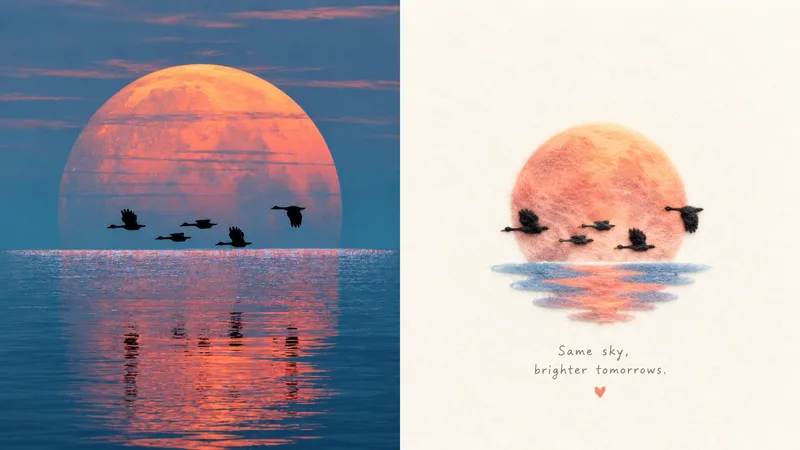 Image
GPT2 x Minimal Felt Art
Suitable for organizing personal photography, independent publishing, exhibition practice, and lifestyle-focused visual creation. Even when the original image has an ordinary composition, a cluttered background, or a subject that is too small, you can reestablish visual focus through reduction, rearrangement, cropping, and changes in scale—instead of simply applying a filter to the photo. The overall look combines minimalist picture-book composition, authentic wool-felt craftsmanship, vibrant and soothing colors, small-scale subjects, and generous artistic negative space for a refined visual effect. Avoid literal object-by-object conversion, realistic wool-felt scenes, complex backgrounds, a miniature-model look, true 3D realism, fully filled frames, dull aged colors, a cheap cartoon feel, and templated poster aesthetics.
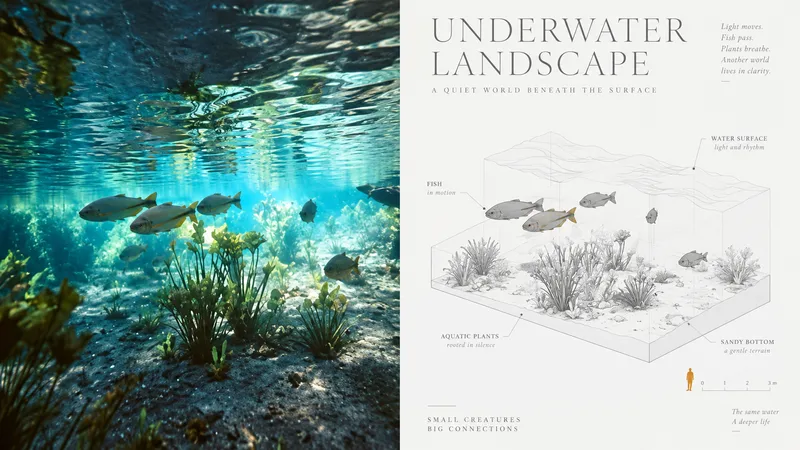 Image
GPT2 x Ochre Minimal Axon
Ideal for organizing personal photography, independent publishing, exhibition studies, and lifestyle-oriented visual creation. Even images with ordinary compositions, cluttered backgrounds, or small subjects can regain focus through reduction, reorganization, cropping, and changes in scale—rather than simply applying a filter. The overall look combines Vignette + Negative Space + Axonometric Diagram + Monochrome Grayscale + Single Ochre Accent to create a refined architectural-diagram aesthetic: small yet precise, bright yet restrained, rational yet artistic.
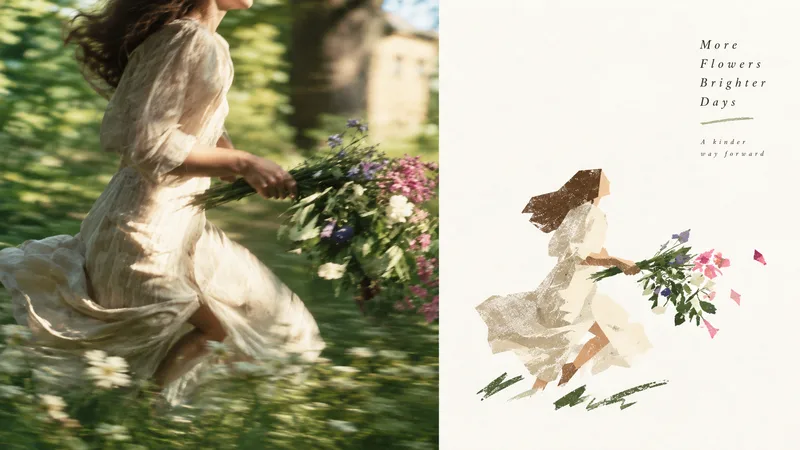 Image
GPT2 x Local-Color Cutouts
Ideal for organizing personal photography, independent publishing, exhibition studies, and lifestyle visual projects. Even ordinary compositions, cluttered backgrounds, or small subjects can be refocused through reduction, rearrangement, cropping, and changes in scale—rather than simply applying a filter to the photo. The overall look combines tiny visual islands, generous clean white space, rough geometric paper-cut edges, dry-grain color blocking, true local colors, and sophisticated editorial layout. From a distance, you first notice the white paper, space, and rhythm; only up close do the delicate small graphics and colors reveal themselves.
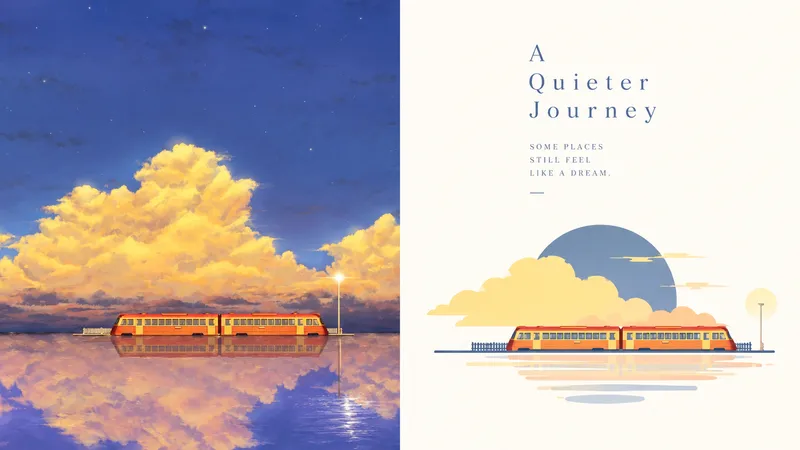 Image
GPT2 x Semantic Color Geometry
Ideal for organizing personal photography, independent publishing, exhibition studies, and lifestyle-focused visual work. Even when the original composition is ordinary, the background is cluttered, or the subject is too small, you can reestablish a clear focal point through reduction, reorganization, cropping, and changes in scale—instead of simply applying a filter. The result combines small-scale graphics, generous artistic negative space, semantically driven color, geometric simplification, and refined editorial layout to create a sophisticated visual effect—like a graphic vignette from an independent publication, lifestyle brand, or cultural visual identity system.
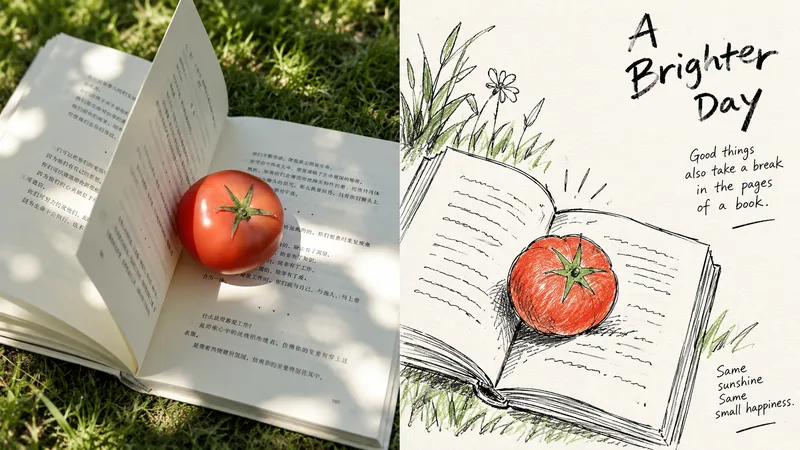 Image
GPT2 x Pencil Travel Journal
Ideal for organizing personal photography, independent publishing, exhibition studies, and lifestyle visual creation. Even when the original image has an ordinary composition, a cluttered background, or a subject that is too small, you can reestablish a clear focal point through reduction, reorganization, cropping, and changes in scale—instead of simply applying a filter to the photo. The overall look combines loose linework, hatching textures, localized colored-pencil accents, generous white space, and a travel journal feel to create a sophisticated visual aesthetic. References include hand-drawn doodle illustration / colored-pencil travel sketch illustration / illustrated journal style. Avoid photo-outline filters, overly clean vector lines, fully realistic backgrounds, excessive coloring, a cartoon-template look, a 3D feel, and a cheap illustration aesthetic.
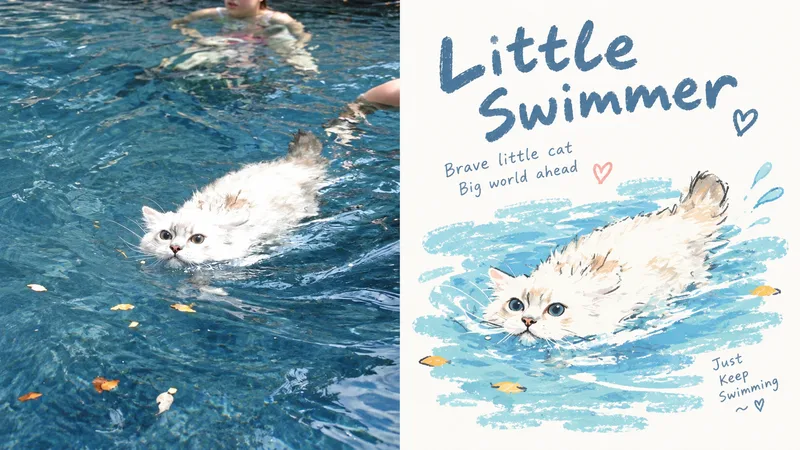 Image
GPT2 x Soft Doodle Sketches
Ideal for organizing personal photography, independent publishing, exhibition studies, and lifestyle-focused visual work. Even when the original image has an ordinary composition, a cluttered background, or a subject that feels too small, you can reestablish focus through reduction, reorganization, cropping, and changes in scale—instead of simply applying a filter. The refined visual effect comes from a controlled childlike awkwardness, rounded lines, occasional colored-pencil strokes, small-scale subjects, generous artistic negative space, and relaxed text-and-image layouts. Avoid literal rendering of every object, complete coloring, complex backgrounds, rigid vector lines, a templated cartoon feel, a 3D look, and the cheap appearance of children's illustrations.
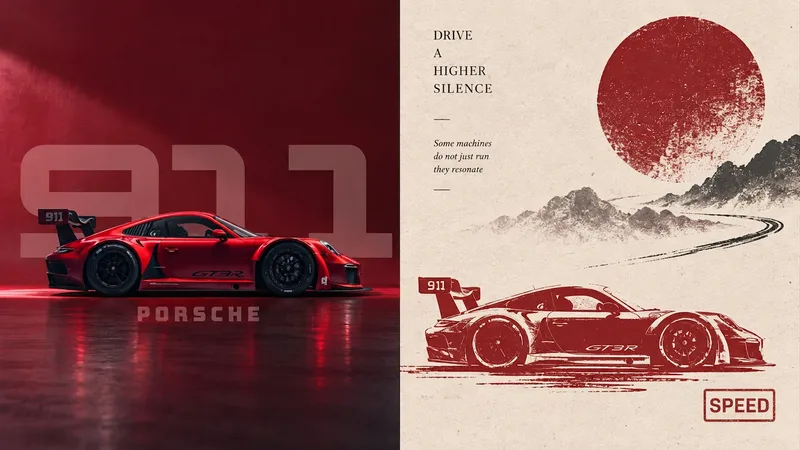 Image
GPT2 x New Chinese-Style Print
Suitable for organizing personal photography, independent publishing, exhibition practice, and lifestyle-focused visual creation. Even when the original image has an ordinary composition, a cluttered background, or a subject that is too small, you can reestablish a clear focal point through reduction, reorganization, cropping, and changes in scale—rather than simply applying a filter. The overall look combines refined graphic compositions, Eastern negative space, spot-color printmaking, paper texture, and modern editorial layout to create a sophisticated visual aesthetic. It brings together a New Chinese-style cultural character, the feel of an independent publication, and contemporary design order. Avoids literal object-by-object redraws, full-bleed compositions, complex backgrounds, realistic illustration, cartoonishness, a 3D feel, commercial promotional styling, and templated effects.
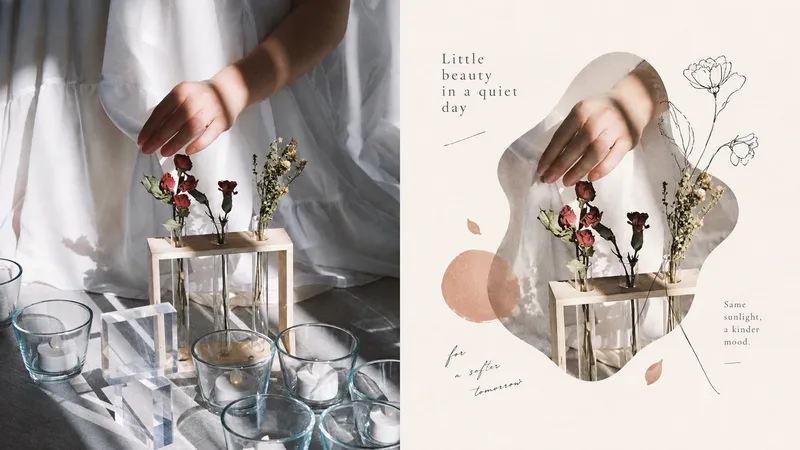 Image
Warm Organic Photo Collage
Ideal for organizing personal photography, independent publishing, exhibition practice, and lifestyle visual creation. Even when the original composition is ordinary, the background is cluttered, or the subject is too small, you can reestablish a focal point through reduction, rearrangement, cropping, and changes in scale—rather than simply applying a filter to the photo. The overall look combines a small-scale visual center, organic-shaped crops, photography layered with line drawings, lightweight collage, generous artistic negative space, warm low-saturation colors, and refined editorial layout to create a lifestyle-oriented visual style. Whether the subject is a person, building, animal, plant, object, vehicle, or natural scene, it should retain a clear identity and a light, graceful narrative.
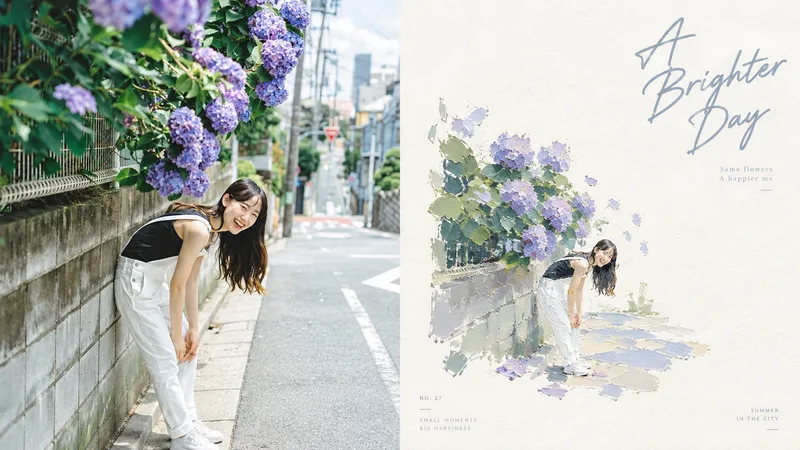 Image
Blank Postcard | xiaoxiaodong P203
Suitable for organizing personal photography, independent publishing, exhibition exercises, and lifestyle visual projects. Even when the original image has an ordinary composition, a cluttered background, or a small subject, you can reestablish a clear focal point through subtraction, rearrangement, cropping, and changes in scale—rather than simply applying a filter. The overall look combines negative-space vignettes, thick impasto texture, postcard layouts, a clear balance of cool and warm tones, and an artistic, soothing feel for a refined visual effect.
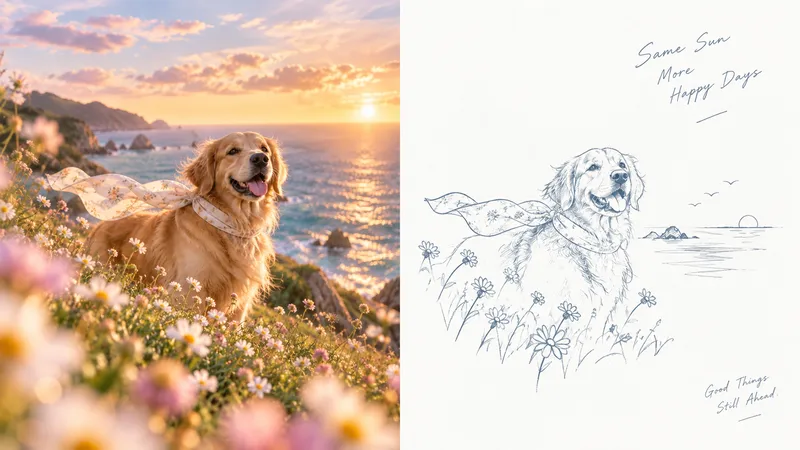 Image
Blue-Gray · xiaoxiaodong P200
Suitable for organizing personal photography, independent publishing, exhibition studies, and lifestyle-focused visual projects. Even when the original image has an ordinary composition, a cluttered background, or a small subject, you can reestablish a focal point through reduction, rearrangement, cropping, and changes in scale—instead of simply applying a filter to the photo. The overall look combines monochrome line drawing, small-scale graphics, generous negative space, hand-drawn sketch marks, and quiet editorial layout. It feels like a spot illustration from an independent publication, illustrated journal, or art concept page: light, restrained, perceptive, poetic, and lingering.
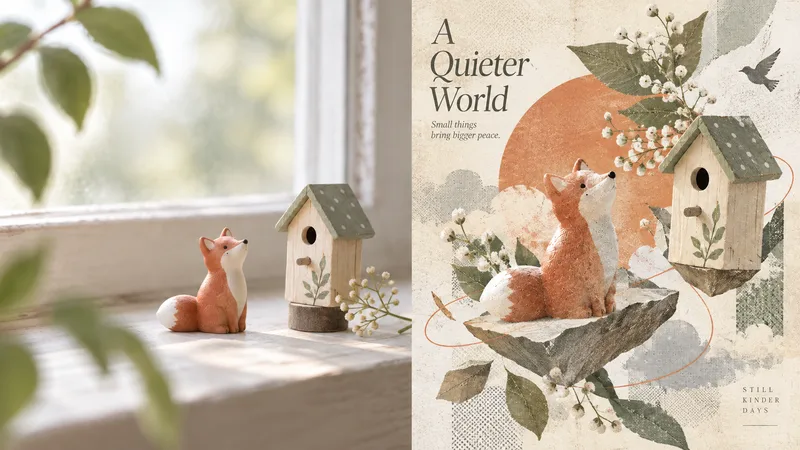 Image
Collage | xiaoxiaodong P198
Ideal for organizing personal photography, independent publishing, exhibition studies, and lifestyle visual creation. Even when the original image has an ordinary composition, a cluttered background, or a relatively small subject, you can reestablish a focal point through reduction, rearrangement, cropping, and changes in scale—rather than simply applying a filter. The overall look combines surreal weightless storytelling, conceptual fashion illustration, digital collage, halftone dots, distressed print texture, a limited-color system, and editorial-style layout to create a sophisticated visual effect.
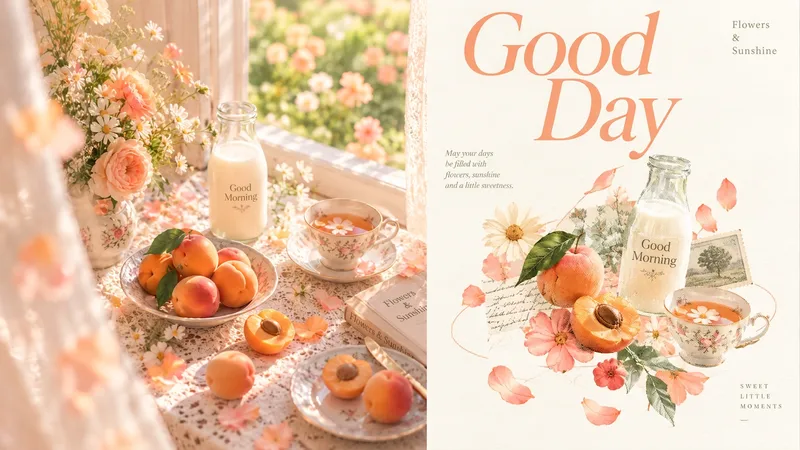 Image
Fashion Collage | xiaoxiaodong
Suitable for organizing personal photography, independent publishing, exhibition exercises, and lifestyle visual projects. Even ordinary compositions, cluttered backgrounds, or small subjects can be reshaped through reduction, reorganization, cropping, and changes in scale to reestablish a visual focus—rather than simply applying a filter to the photo. The overall look combines small-scale subjects, expansive negative space, surreal weightless narratives, conceptual fashion illustration, digital collage, halftone patterns, vivid and soothing colors, and editorial-style layout to create a refined visual aesthetic.
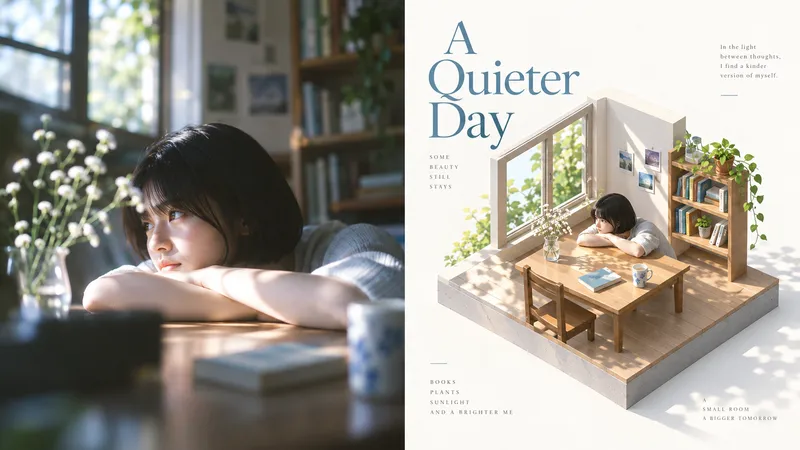 Image
Axonometric | xiaoxiaodong P194
Suitable for organizing personal photography, independent publishing, exhibition studies, and lifestyle-oriented visual creation. Even images with ordinary compositions, cluttered backgrounds, or small subjects can regain a clear focal point through reduction, reorganization, cropping, and changes in scale—rather than simply applying a filter. The overall result uses a refined visual language of Planar Base + 3D Axonometric + Massing Diagram + Large Negative Space + Editorial Layout. It emphasizes how three-dimensional massing grows from planar order, rather than creating a photorealistic rendering.
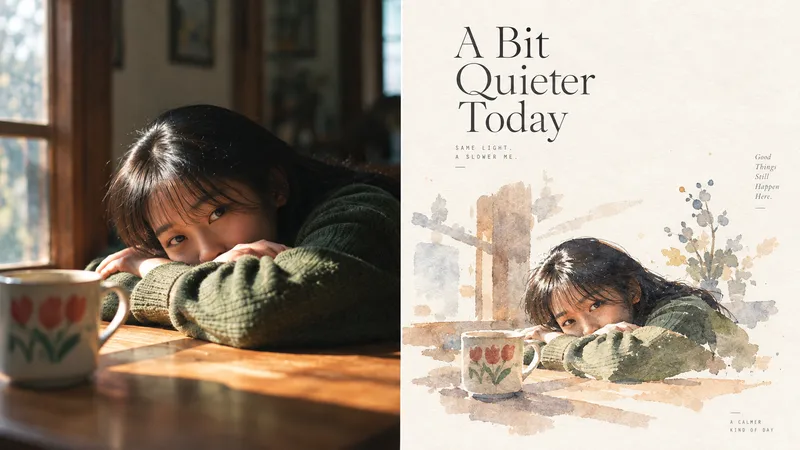 Image
Gray Wash | xiaoxiaodong P193
Ideal for organizing personal photography, independent publishing, exhibition studies, and lifestyle-focused visual projects. Even images with ordinary composition, cluttered backgrounds, or small subjects can regain a clear focal point through reduction, reorganization, cropping, and changes in scale—instead of simply applying a filter. The overall look combines small-scale graphic subjects, pedestal-like support, graphic watercolor, gray-pink warm tones with blue-violet cool grays, generous artistic negative space, controlled random brushstrokes, and editorial-style layout. The result resembles an independently published travel journal or a small collection of artistic watercolor studies.
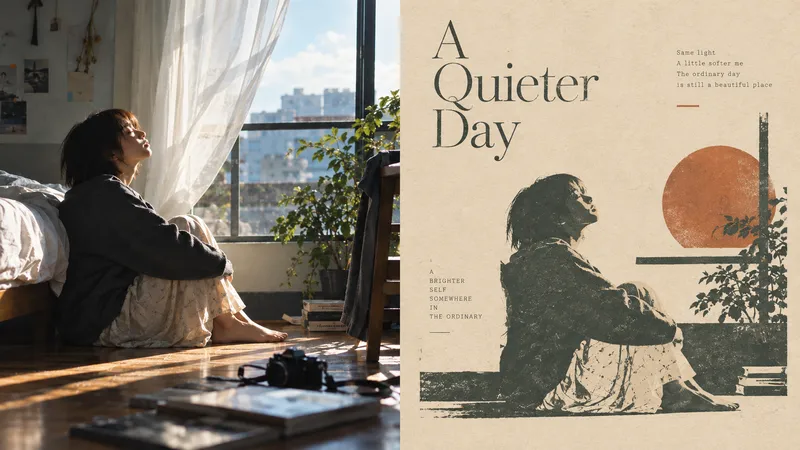 Image
Retro | xiaoxiaodong P192
Suitable for organizing personal photography, independent publishing, exhibition studies, and lifestyle-oriented visual work. Even ordinary compositions, cluttered backgrounds, or small subjects can be given a new focal point through reduction, rearrangement, cropping, and changes in scale—rather than simply applying a filter to the photo. The overall look combines small graphic visual anchors, generous artistic negative space, a retro limited-color palette, tactile paper-like print texture, and editorial typography to create a refined visual effect—like a quiet, relaxed, clever independent art poster with a lingering sense of resonance.
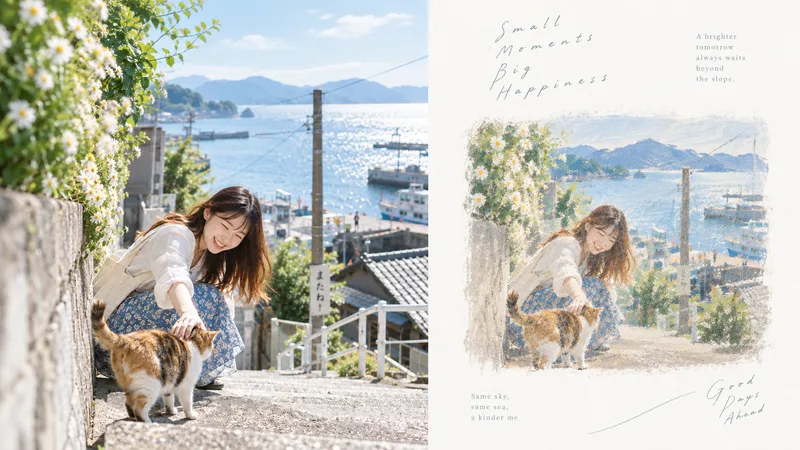 Image
Ragged Pastel · xiaoxiaodong
Ideal for personal photo organization, independent publishing, exhibition exercises, and lifestyle-oriented visual creation. Even images with ordinary compositions, cluttered backgrounds, or small subjects can be given a new focal point through reduction, reorganization, cropping, and changes in scale—instead of simply applying a filter. The overall look combines ragged-edged rectangular color fields, small-scale visual vignettes, expansive negative space, continuous horizontal color layers, powdery rubbed-and-blended textures, a cool-dominant palette with warm accents, and poetic typography. Together, these elements create a sophisticated visual aesthetic reminiscent of an independently published art booklet, a private travel journal, or poetry illustrations.
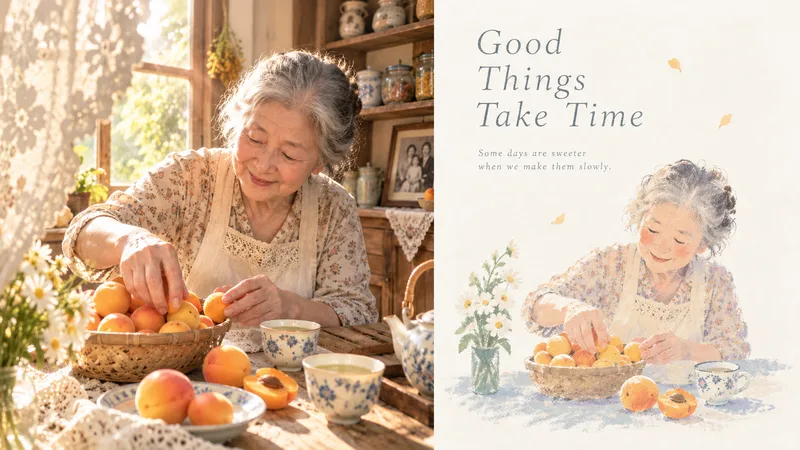 Image
Cool-Warm Pastels|xiaoxiaodong
Ideal for organizing personal photography, independent publishing, exhibition studies, and lifestyle-oriented visual work. Even when the original image has an ordinary composition, a cluttered background, or a subject that appears too small, you can reestablish a focal point through subtraction, rearrangement, cropping, and changes in scale—instead of simply applying a filter. The overall look combines a small image format, generous white space, raw pastel colors, a cool-dominant and warm-accent palette, powdery grain, and poetic typography to create a refined visual effect, like an art booklet from an independent press, a personal travel journal, or an illustrated book of poetry. Whether the subject is a person, building, animal, plant, object, or natural landscape, the process centers on selective memory and emotional distillation.
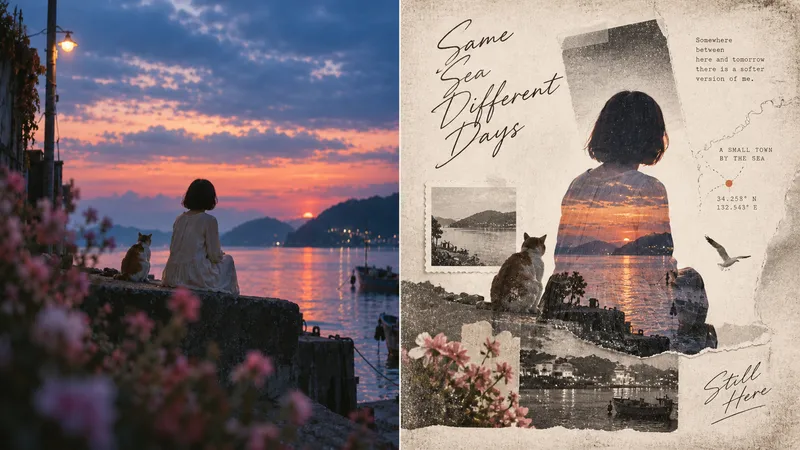 Image
A Splash of Color: History Montage | xiaoxiaodong P195
Suitable for personal photo curation, independent publishing, exhibition studies, and lifestyle visual projects. Even when the original composition is ordinary, the background is cluttered, or the subject is too small, you can reestablish a focal point through reduction, recombination, cropping, and shifts in scale instead of simply applying a filter. The overall look combines archival photo collage, double exposure, layered time and space, map-inspired information language, nonlinear storytelling, generous artistic negative space, and a splash of color as a finishing accent. Whether the original image shows people, architecture, objects, vehicles, natural landscapes, or everyday scenes, it should be re-narrated around its core memories and relationships rather than mechanically stacking old photos.
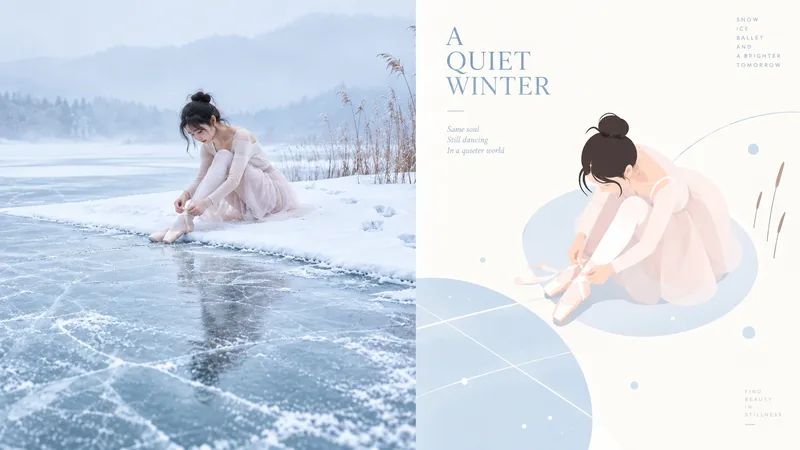 Image
Geo Figures xiaoxiaodong
Ideal for organizing personal photography, independent publishing, exhibition studies, and lifestyle-oriented visual creation. Even when the original image has an ordinary composition, a cluttered background, or a small subject, you can reestablish visual focus through reduction, recombination, cropping, and changes in scale instead of simply applying a filter. The overall look combines a top-down perspective, geometric abstract figures, flat color blocks, expansive negative space, soft shadows, bright and soothing colors, and editorial-style layout to create a sophisticated visual effect. References include Top-down Geometric Figurative Illustration / Minimalist Geometric Figurative Illustration / Bauhaus-inspired geometric composition.
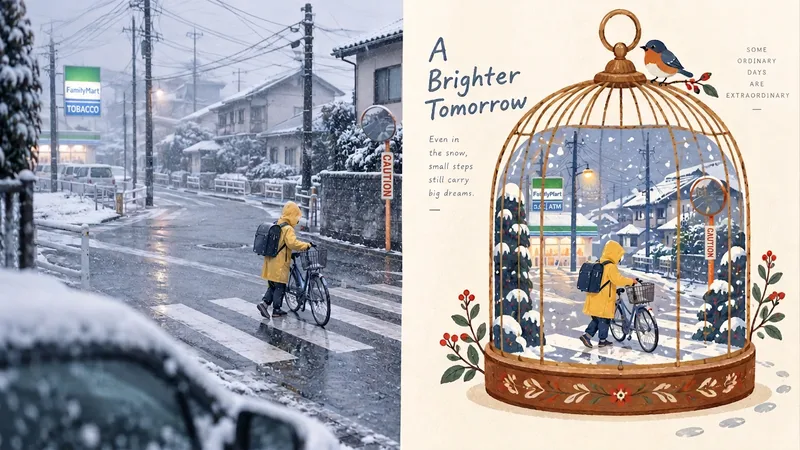 Image
Caged New Art xiaoxiaodong P197
Suitable for personal photography curation, independent publishing, exhibition practice, and lifestyle visual creation. Even if the original image has an ordinary composition, a cluttered background, or a relatively small subject, you can reestablish a focal point through reduction, reorganization, cropping, and changes in scale, rather than simply applying a filter to the photo. The overall look combines container-based storytelling, a caged world, xiaoxiaodong’s new folk-art hand-drawn style, vivid colors, generous artistic negative space, and editorial-style layout to create a refined visual effect. The key is to place the original image’s subject inside a cage, making the cage the subject’s world.
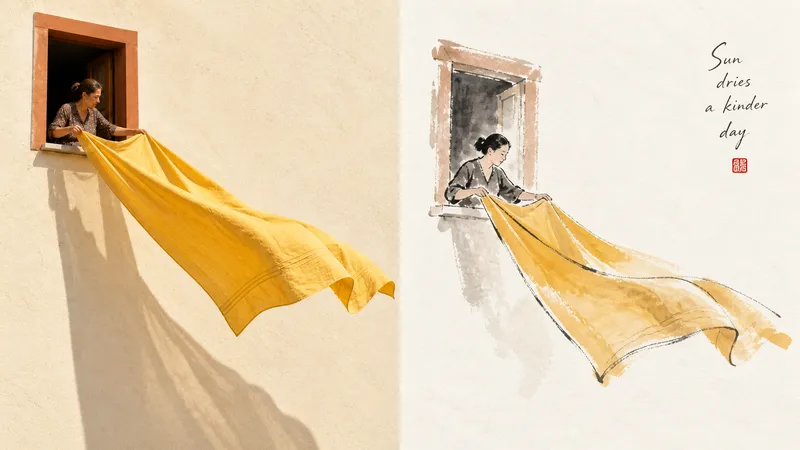 Image
Ink Study xiaoxiaodong P181
Suitable for organizing personal photography, independent publishing, exhibition exercises, and lifestyle-focused visual creation. Even images with ordinary compositions, cluttered backgrounds, or undersized subjects can be given a new focal point through subtraction, reorganization, cropping, and changes in scale—not by simply applying a filter. The refined visual effect comes from expressive color-ink styling, vignette-like compositions, ink as the dominant color with supporting accents, generous artistic negative space, and a literati-painting-inspired relationship between image and text. Whether the subject is a person, building, animal, plant, object, vehicle, or natural landscape, the focus should be on “capturing its spirit while leaving out the excess.” Avoid complete ink-wash landscapes, realistic fine rendering, fully filled backgrounds, layered heavy colors, a photographic filter look, cartoon styling, and formulaic Chinese-style poster designs.
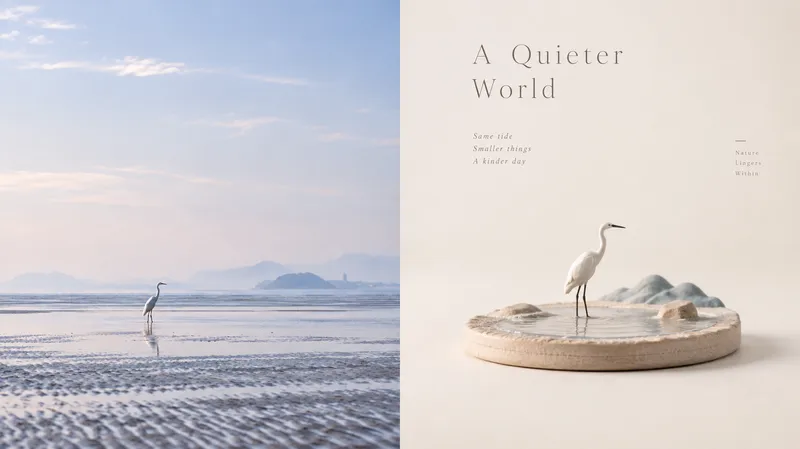 Image
GPT2 x Creamy Handmade 3D
Ideal for personal photography curation, independent publishing, exhibition practice, and lifestyle-focused visual creation. Even when the original image has an ordinary composition, a cluttered background, or a subject that is too small, you can reestablish visual focus through reduction, reorganization, cropping, and changes in scale—rather than simply applying a filter. The overall look combines small-scale miniature subjects, a warm neutral monochromatic palette, handmade matte textures, generous artistic negative space, and restrained typography to create refined visual vignettes.
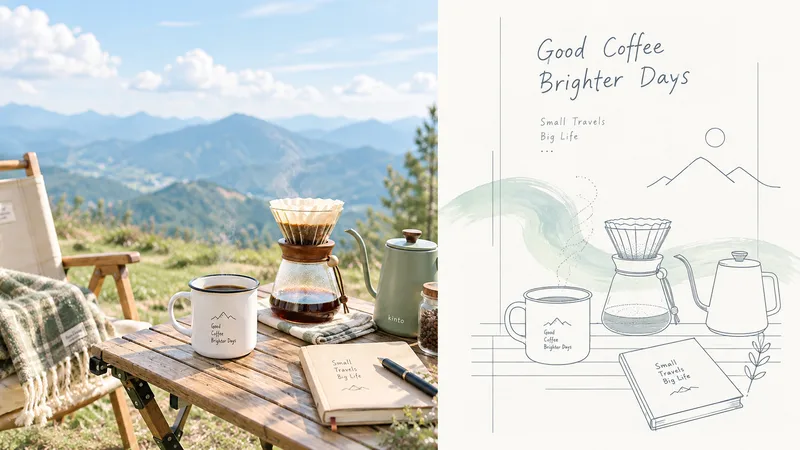 Image
Geometry Lines | xiaoxiaodong
Suitable for organizing personal photography, independent publishing, exhibition exercises, and lifestyle-oriented visual creation. Even images with ordinary compositions, cluttered backgrounds, or small subjects can be given a new focal point through reduction, rearrangement, cropping, and changes in scale—rather than simply applying a filter. The overall look combines geometric linework, structural guiding lines, small-scale subjects, generous negative space, a few colorful brushstrokes, and quiet text-and-image layouts. It resembles the spot illustrations, concept pages, or diagrammatic art illustrations found in independent publications: light, rational, perceptive, restrained, and rich with lingering resonance.
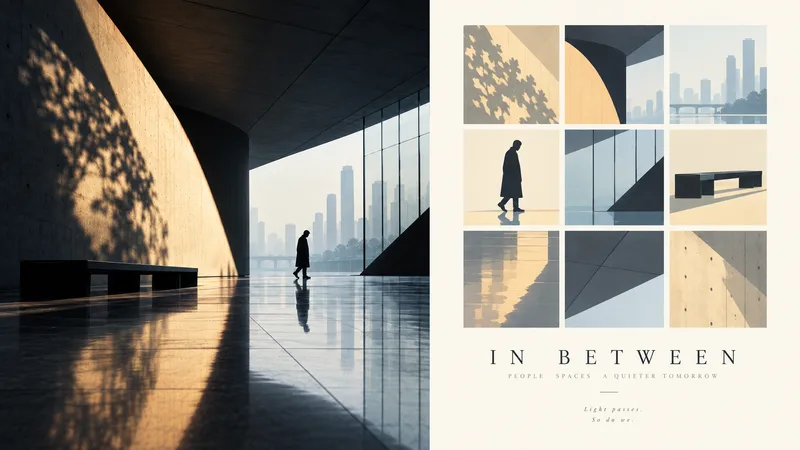 Image
Soft 9-Grid P186 xiaoxiaodong
Suitable for personal photo organization, independent publishing, exhibition exercises, and lifestyle visual creations. Even images with ordinary compositions, cluttered backgrounds, or small subjects can have their focus reestablished through reduction, rearrangement, cropping, and changes in scale—rather than simply applying a filter. The overall look combines a nine-grid matrix, flat color blocks, strong geometric divisions, a warm-white paper surface, generous negative space, and poetic editorial typography to create a refined visual effect. Whether the subject is a person, building, animal, plant, object, vehicle, or natural landscape, the nine units should maintain a consistent visual language and help viewers reconnect with the photo’s central theme through these geometric fragments, rather than presenting a set of mechanically duplicated thumbnails.
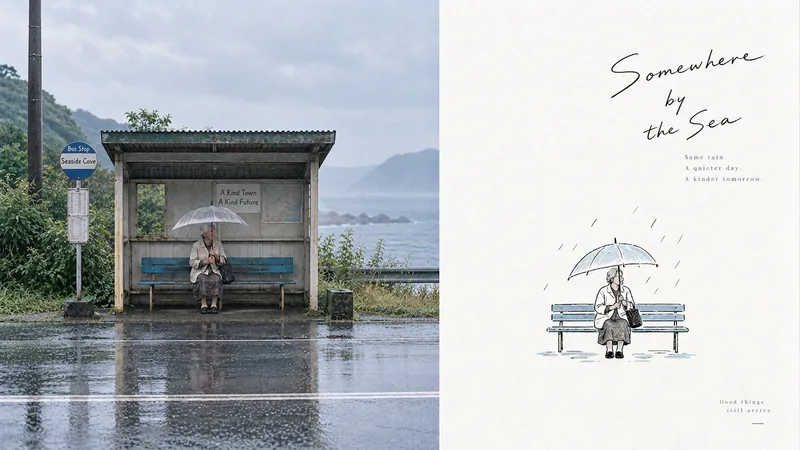 Image
B&W Sticker · xiaoxiaodong P185
Suitable for organizing personal photography, independent publishing, exhibition exercises, and lifestyle-oriented visual creation. Even images with ordinary compositions, cluttered backgrounds, or undersized subjects can be given a new focal point through reduction, rearrangement, cropping, and changes in scale—instead of simply applying a filter. The overall look combines small graphics, generous white space, a black-and-white foundation, a single pale-color accent, a hand-drawn sticker feel, and restrained typography to create a refined visual aesthetic.
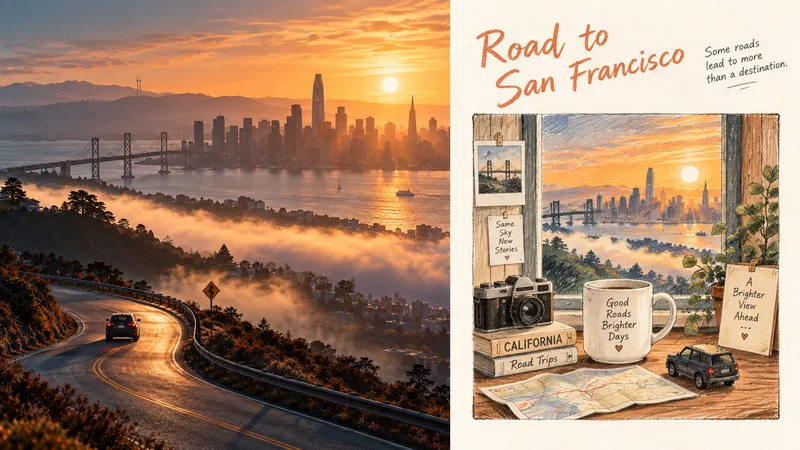 Image
Square Life Hand-Drawn Diorama | P184
Ideal for organizing personal photography, independent publishing, exhibition studies, and lifestyle visual projects. Even when the original composition is ordinary, the background is cluttered, or the subject is too small, you can reestablish the focus through reduction, rearrangement, cropping, and changes in scale—instead of simply applying a filter to the photo. The refined visual style combines nostalgic, naïve hand-drawn elements, square miniature scenes, loose linework, colored-pencil and watercolor textures, generous artistic negative space, and editorial-style layout.
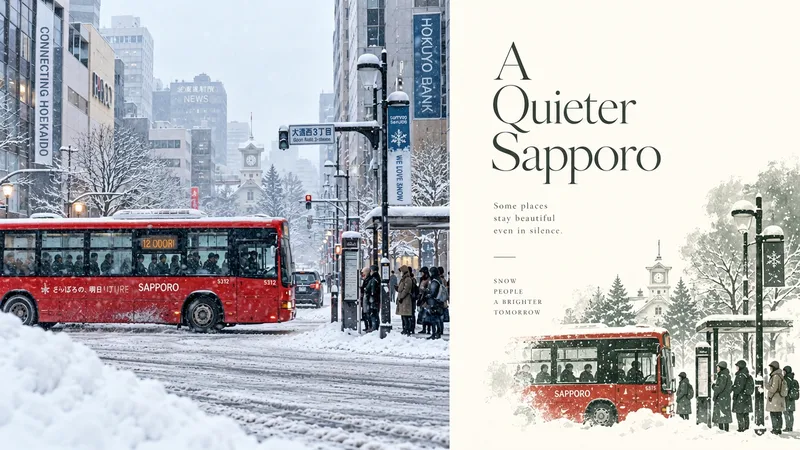 Image
Deep Green | xiaoxiaodong
Ideal for organizing personal photography, independent publishing, exhibition studies, and lifestyle visual projects. Even when the original image has an ordinary composition, a cluttered background, or a small subject, you can reestablish a focal point through reduction, rearrangement, cropping, and changes in scale—instead of simply applying a filter. The overall look combines generous negative space, small corner-set graphics, asymmetrical balance, natural organic forms, creamy neutrals, and deep gray-green corner accents for a refined visual effect. It feels like a blend of cultural branding, art publishing, premium lifestyle visuals, and minimalist floral editorial design.
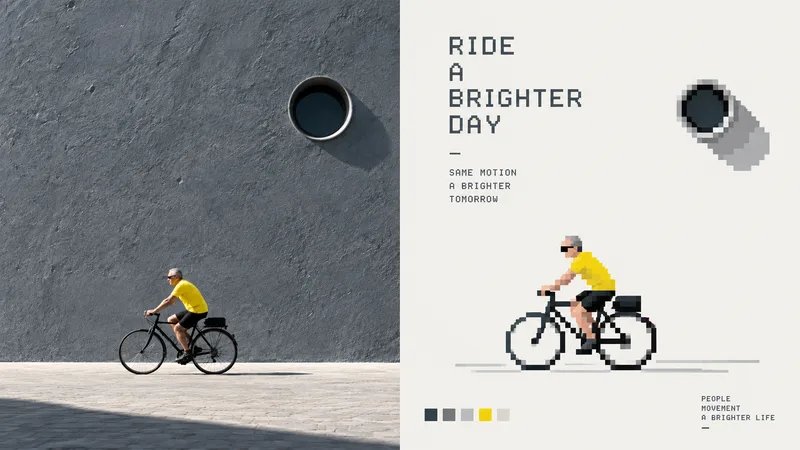 Image
Mini Pixel P182 · xiaoxiaodong
Ideal for organizing personal photography, independent publishing, exhibition exercises, and lifestyle-focused visual work. Even when the original image has an ordinary composition, a cluttered background, or a small subject, you can reestablish visual focus through reduction, recombination, cropping, and changes in scale—instead of simply applying a filter to the photo. The overall look combines miniature pixel subjects, modular graphics, muted neutrals, restrained functional color, generous white space, and editorial-style typography to create a refined visual effect. Whether the subject is a person, building, animal, plant, object, vehicle, or natural landscape, it should retain a clear identity while being rendered in a highly distilled form.
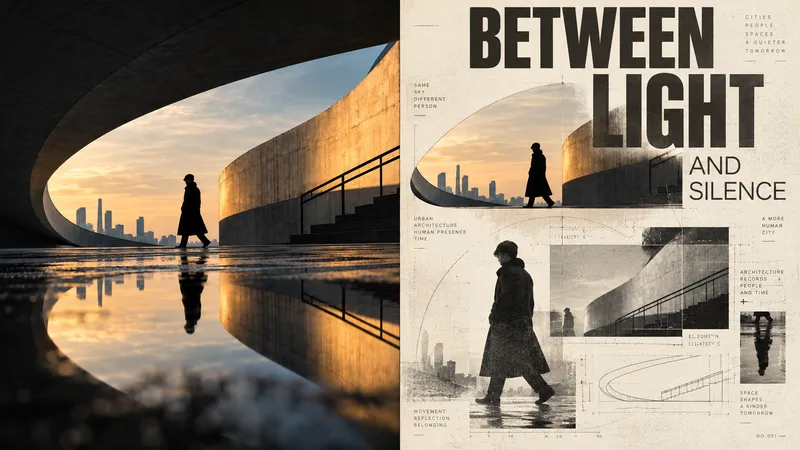 Image
GPT2 x Giant Type Collage
Ideal for organizing personal photography, independent publishing, exhibition studies, and lifestyle-focused visual creation. Even ordinary compositions, cluttered backgrounds, or small subjects can be given a new focal point through subtraction, rearrangement, cropping, and changes in scale—instead of simply applying a filter to the photo. The overall look combines photographic collage, archival paper, drafting lines, technical markings, oversized typography, generous negative space, and modern editorial layout to create a sophisticated visual style. References include Architectural Archival Style / Photomontage / Blueprint Aesthetic / Oversized Typography.
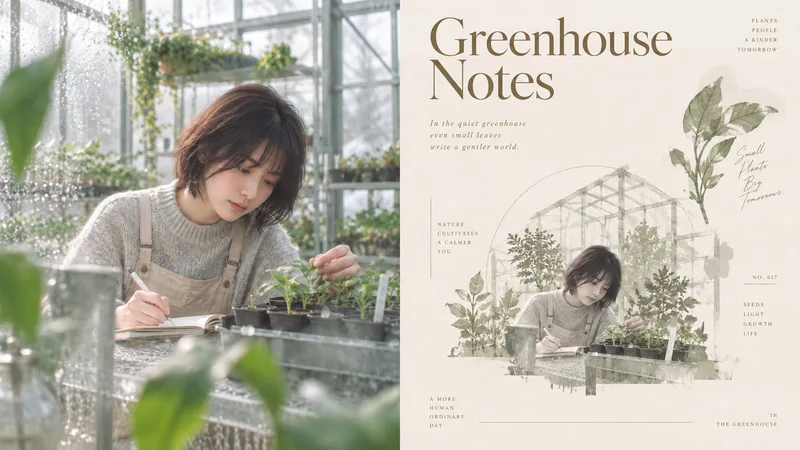 Image
Arch. Beige P188|xiaoxiaodong
Ideal for organizing personal photography, independent publishing, exhibition exercises, and lifestyle visual projects. Even images with ordinary compositions, cluttered backgrounds, or small subjects can regain a clear focal point through subtraction, reorganization, cropping, and changes in scale—instead of simply applying a filter. The overall look combines small-subject compositions, generous negative space, an aged paper background, a low-saturation palette of beige, gold, gray, and brown, fine-line graphic elements, and restrained typography to create a sophisticated visual effect. References include Minimal Architectural Poster with Generous Negative Space / Archival Editorial Poster.
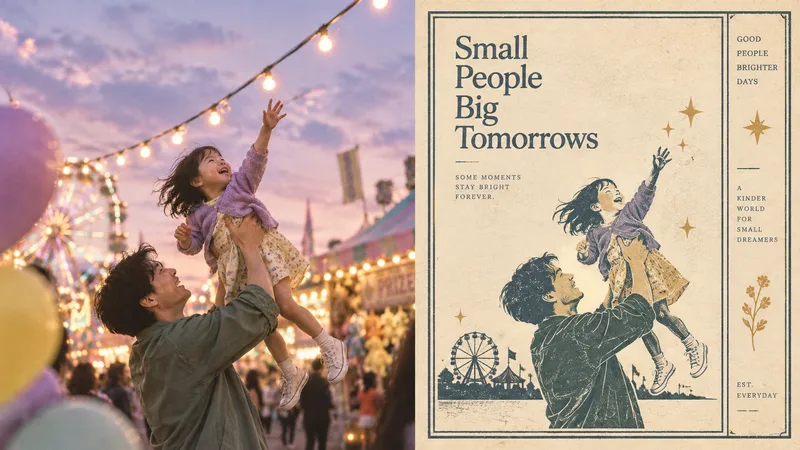 Image
Matchbox Sidebar | xiaoxiaodong
Suitable for organizing personal photography, independent publishing, exhibition exercises, and lifestyle visual projects. Even images with ordinary compositions, cluttered backgrounds, or small subjects can be given a new focal point through reduction, rearrangement, cropping, and changes in scale—rather than simply applying a filter. The overall look combines a vintage label-style border system, sidebar sections, small vignette illustrations, whitespace-led composition, limited spot-color blocks, and an aged print texture to create a refined visual effect.
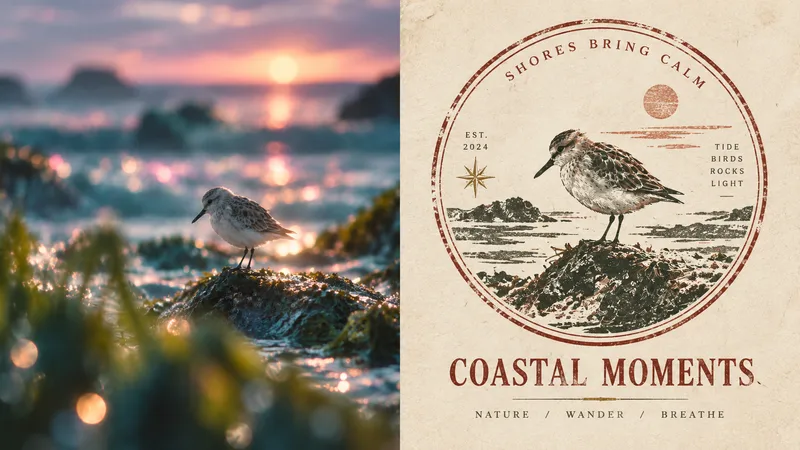 Image
Retro Seal P180|xiaoxiaodong
Suitable for personal photo curation, independent publishing, exhibition exercises, and lifestyle-oriented visual creation. Even when the original composition is ordinary, the background is cluttered, or the subject is too small, you can reestablish a focal point through reduction, rearrangement, cropping, and changes in scale instead of simply applying a filter. The main subject and 1–2 environmental cues form a small circular commemorative seal, with woodblock rubber-stamp and etched textures, aged paper fibers, and imperfect or misregistered printing. Source images are reduced to 2–3 colors and converted into vintage ink-pad tones, with minimal gold leaf, generous negative space, and an English title and keywords beneath the seal. Created by xiaoxiaodong.
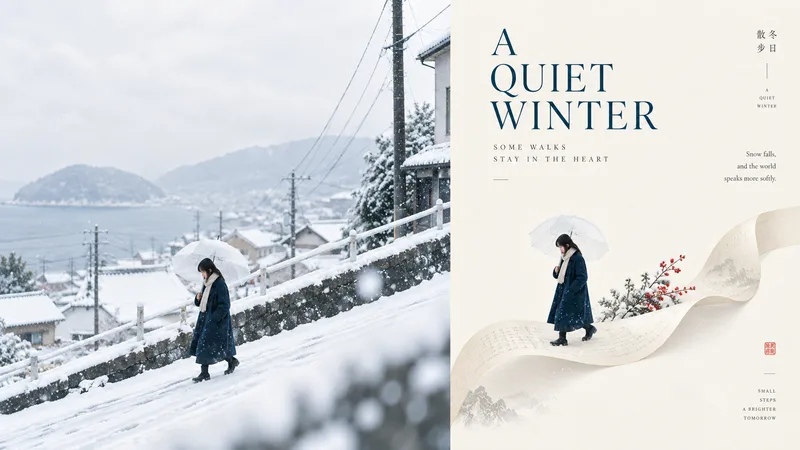 Image
Ribbon Display | xiaoxiaodong
Suitable for organizing personal photography, independent publishing, exhibition practice, and lifestyle visual creation. Even images with ordinary compositions, cluttered backgrounds, or undersized subjects can regain a clear focal point through reduction, rearrangement, cropping, and shifts in scale—rather than simply applying a filter. 70–85% whitespace, a light, nearly colorless ribbon-like display surface, and sparse miniature exhibits; ultramarine, vermilion, and ochre-gold are concentrated only on the subject, while text may serve as fine gray texture.
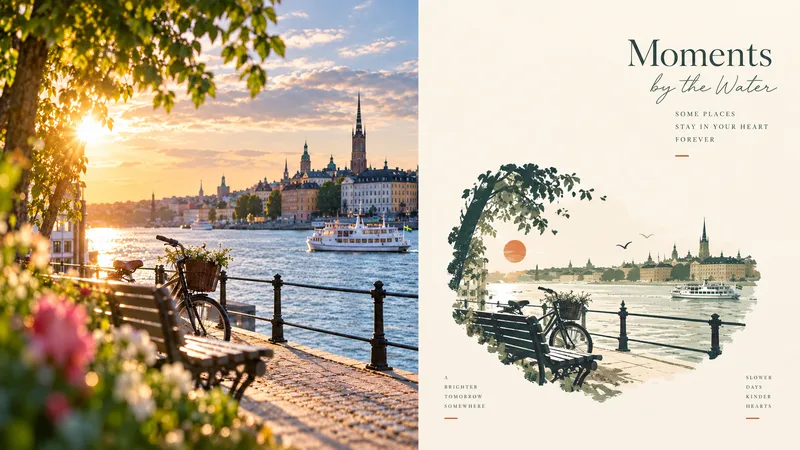 Image
Odd-Island xiaoxiaodong P178
Suitable for personal photography organization, independent publishing, exhibition exercises, and lifestyle visual creation. Even when the original image has an ordinary composition, a cluttered background, or a relatively small subject, you can reestablish focus through reduction, reorganization, cropping, and changes in scale, rather than simply applying a filter to the photo. 15–25% irregular visual islands, nested isomorphism, and restrained frame breaking; ivory-white negative space, ink navy and gray olive green, with very limited cinnabar orange-red. Exactly the same as the P177 original.
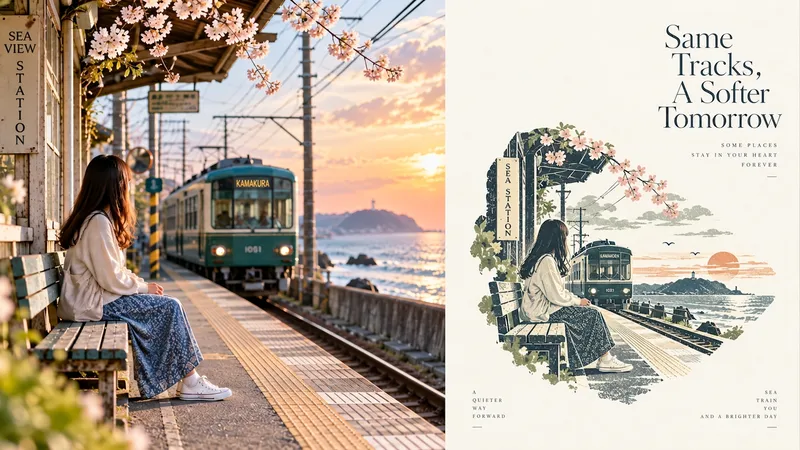 Image
xiaoxiaodong P177: Micro-Island
Suitable for organizing personal photography, independent publishing, exhibition exercises, and lifestyle-focused visual creation. Even photos with ordinary compositions, cluttered backgrounds, or undersized subjects can regain focus through subtraction, rearrangement, cropping, and changes in scale—rather than simply applying a filter. 15–25% irregular visual islands, nested isomorphism, and restrained frame-breaking; ivory-white negative space, ink navy, gray olive green, and minimal cinnabar orange-red. Exactly the same as the P178 original.
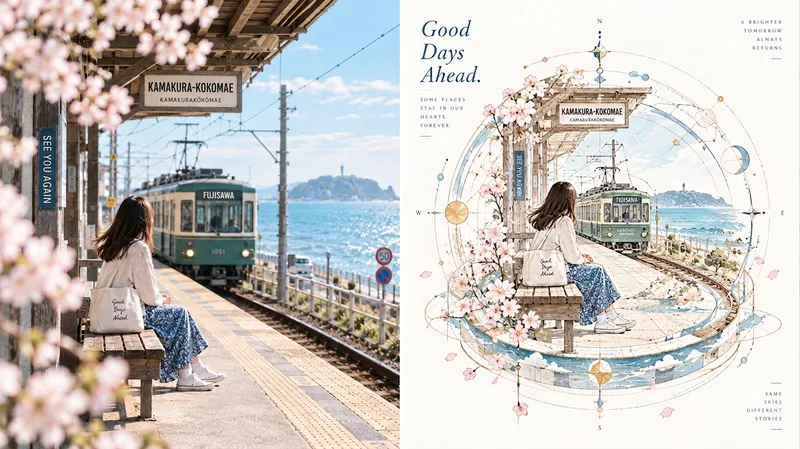 Image
Gongbi Grid | xiaoxiaodong P176
Suitable for personal photo organization, independent publishing, exhibition exercises, and lifestyle visual creation. Images with ordinary composition, cluttered backgrounds, or undersized subjects can also regain a clear focal point through subtraction, reorganization, cropping, and changes in scale—instead of simply applying a filter. An intricate, orderly grid, fine gongbi lines, and subtle dimensional layers, with a dense core opening outward. Vivid source-image colors, an almost-white background, and generous negative space complete the look.
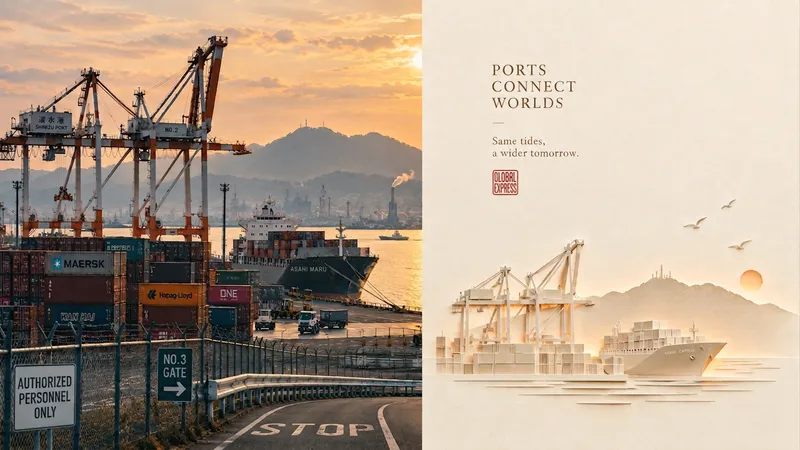 Image
Amber Light Paper Diorama | P175
Ideal for organizing personal photography, independent publishing, exhibition studies, and lifestyle visual projects. Even when the original composition is ordinary, the background is cluttered, or the subject is too small, you can reestablish the focal point through reduction, recomposition, cropping, and changes in scale—instead of simply applying a filter to the photo. 20–25% miniature layered paper relief, 75–80% negative space; warm ivory and amber backlight, warm brown paper shadows, with red ink accents kept below 1%.
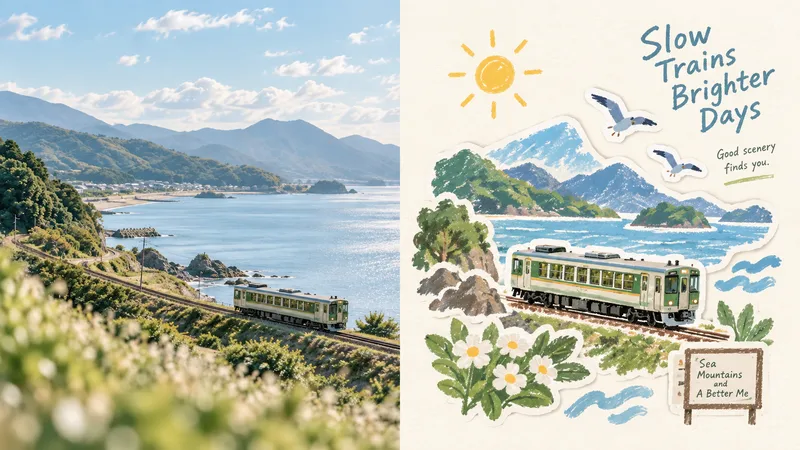 Image
Naive Stickers · xiaoxiaodong
Suitable for personal photography organization, independent publishing, exhibition exercises, and lifestyle visual creation. Even when the original composition is ordinary, the background is cluttered, or the subject is too small, you can reestablish a focal point through subtraction, reorganization, cropping, and changes in scale, rather than simply applying a filter to the photo. Multiple independent, bold-line sticker units cluster around the center to form the subject, with offset overlaps and clear contours—not a neat grid or a random sticker pack.
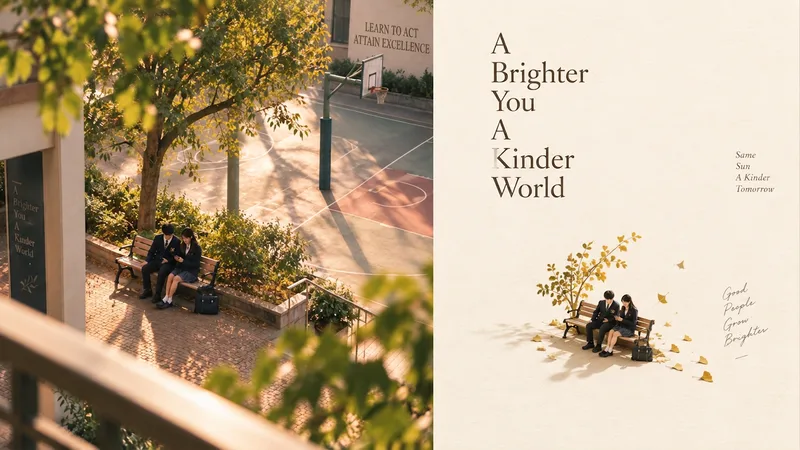 Image
Ivory Paper Text Micro-Scene | xiaoxiaodong P173
For organizing personal photography, independent publishing, exhibition studies, and lifestyle visual creation. Even ordinary compositions, cluttered backgrounds, or small subjects can be given a new focal point through reduction, rearrangement, cropping, and changes in scale—instead of simply applying a filter to the photo. Subject 10–20%, warm-white negative space 80–90%, with a paper-and-text installation and soft paper shadows; 95% ivory white, warm gray, and paper brown. No red, gold, cyan, or blue.
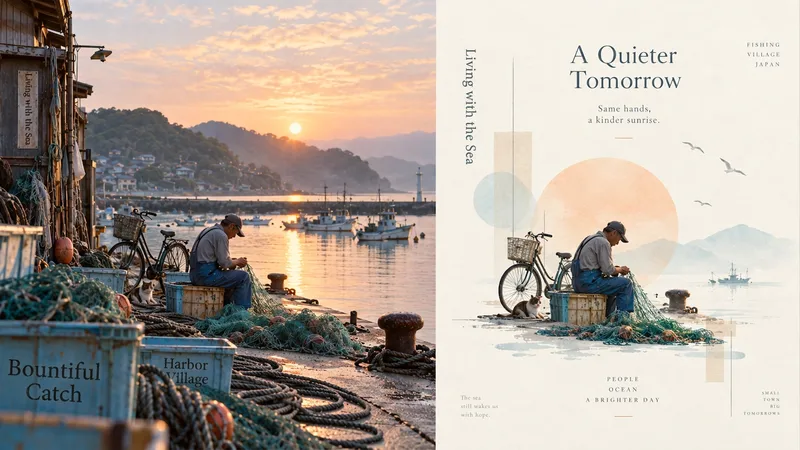 Image
Centered Geometry xiaoxiaodong
Suitable for personal photo curation, independent publishing, exhibition exercises, and lifestyle visual creation. Even images with ordinary composition, cluttered backgrounds, or small subjects can be given a new focus through reduction, rearrangement, cropping, and changes in scale—instead of simply applying a filter. A centered small subject and generous whitespace are paired with low-contrast, translucent geometric layers that recede into the background. Fine vertical lines are optional and must not create a second focal point.
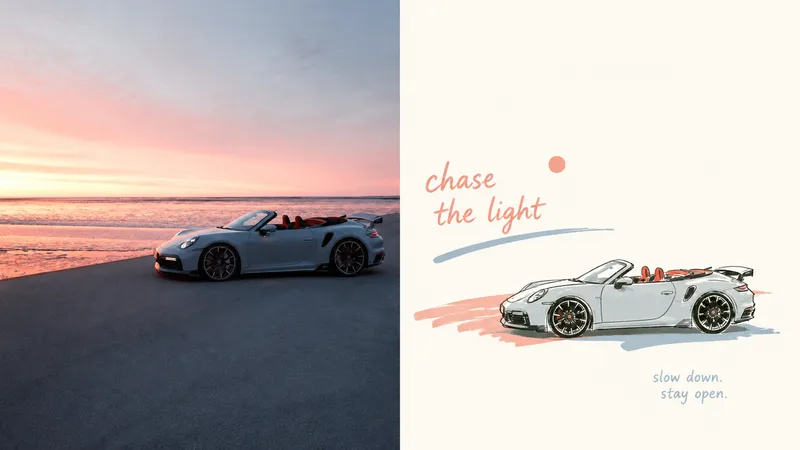 Image
xiaoxiaodong P121 | Doodle
An everyday photo may contain a compelling pose or relationship, yet ordinary composition and a cluttered background can distract from it. Panel 121 preserves the photo’s authentic identity, re-extracts the most recognizable subject, and uses relaxed marker-style doodles, edited handwritten text, and generous negative space to turn a slice of life into a finished work. Best for People, everyday objects, and scenes that need to become independent magazine or lifestyle editorial illustrations. You want to preserve the subject’s outline, pose, and narrative relationships while actively removing most of the background and secondary objects. You like the relaxed feel of naive hand-drawing, while still caring about the mature arrangement of graphics, text, and empty space. You need consistent delivery formats, including top-and-bottom, left-and-right, design-only, multiple aspect ratios, wallpaper, or catalog batches. What it solves Even ordinary photos can establish a new visual focus through reduction, rearrangement, cropping, and changes in scale. Graphics and text first share an invisible grid, visual axes, and a reading path, avoiding “one line of text above, one person below.” Graphic elements occupy only a small proportion of the composition. Negative space provides distance, pauses, and breathing room instead of being filled with random small icons. Comparison images use two strict 50:50 areas and are generated directly from the original image in this run, avoiding a third band and secondary stylization.
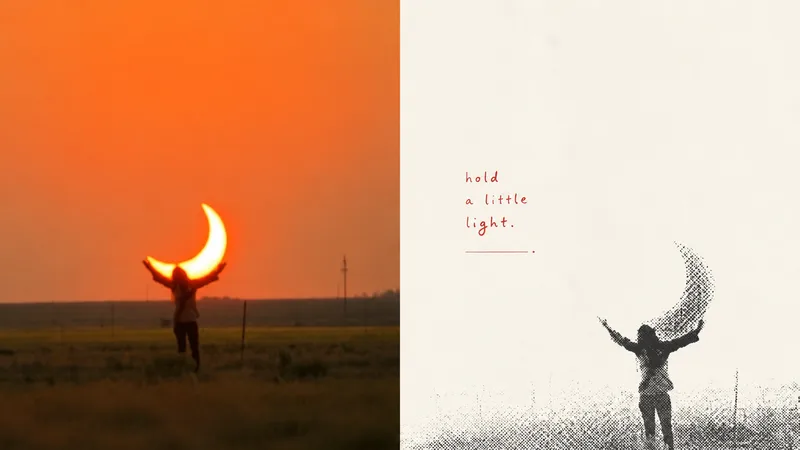 Image
xiaoxiaodong|P122 Halftone
Suitable for organizing personal photography, independent publishing, exhibition studies, and lifestyle visual work. Even when the original image has an ordinary composition, a cluttered background, or a small subject, you can reestablish a focal point through reduction, reorganization, cropping, and changes in scale—rather than simply applying a filter to the photo. In the second half, make a new artistic judgment by extracting only the photo’s most recognizable subjects, contours, structures, poses, and narrative relationships. Do not copy every object from the photo, preserve the complete scene, or reproduce the original composition. Actively remove most of the background and unrelated details, keeping only the visual memory points that best represent the original theme, and direct the image anew. Even if the original composition is weak, the background is cluttered, or the subject is small, use reduction, reorganization, cropping, changes in scale, and negative space to turn it into a cohesive work.
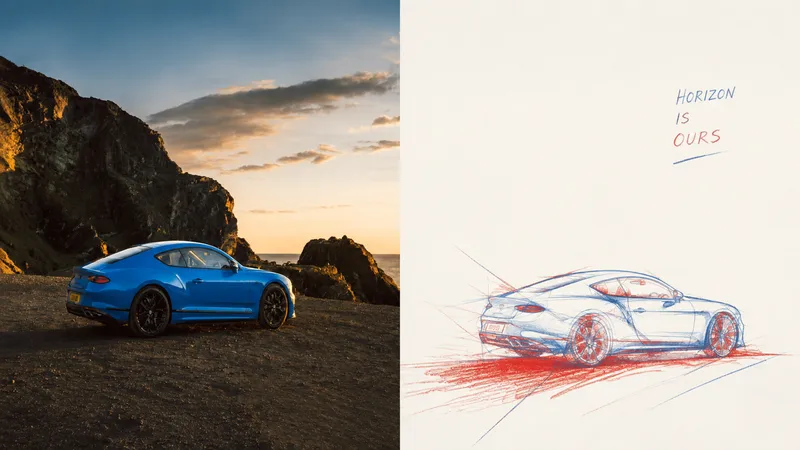 Image
xiaoxiaodongP123 | Red/Blue
Suitable for personal photo organization, independent publishing, exhibition exercises, and lifestyle visual creation. Even when the original image has an ordinary composition, a cluttered background, or a small subject, you can reestablish the focus through subtraction, rearrangement, cropping, and changes in scale, rather than simply applying a filter. In the lower half, extract only the most recognizable subjects, contours, structures, poses, and narrative relationships from the photo. Reconstruct them as a red-and-blue colored-pencil expressive illustration incorporating Angular expressive figure line. Do not fully copy the photo, retain every object, or redraw each item one by one; actively remove most of the background, details, and irrelevant elements. Keep only the core information that best represents the original objects and theme, and use angular expressive linework, contour lines, hatching, overlapping lines, rubbing, and free curves to summarize them anew, so viewers can immediately recognize the correspondence between the illustration and the photo above.
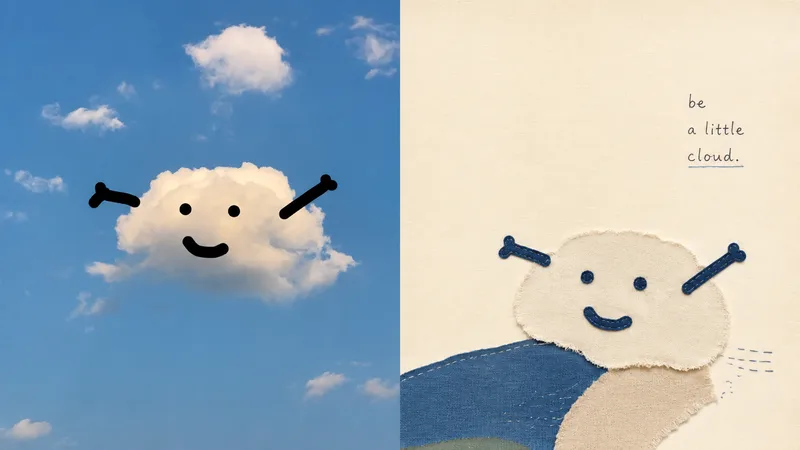 Image
xiaoxiaodong P124 | Collage
Suitable for organizing personal photography, independent publishing, exhibition practice, and lifestyle visual creation. Even when the original image has an ordinary composition, a cluttered background, or a small subject, you can reestablish a visual focus through reduction, reorganization, cropping, and changes in scale—instead of simply applying a filter to the photo. For the lower section, extract only the most recognizable subjects, outlines, structures, poses, and narrative relationships from the photo, then reconstruct them as Fabric Collage Illustration / Appliqué-style Illustration. Do not fully copy the photo, redraw every object one by one, or retain every element; remove irrelevant details and keep only the structures, visual flow, and memorable visual cues that best represent the original. Use textile textures, appliqué-style color blocks, layered fabric pieces, raw edges, and a small number of stitches to create a concise interpretation, while keeping the correspondence with the photo above immediately recognizable.
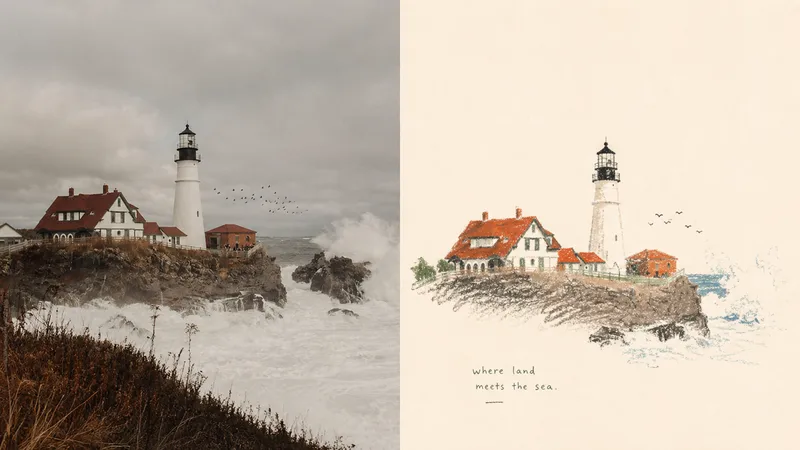 Image
xiaoxiaodong P125 | Crayon Zine
Suitable for organizing personal photography, independent publishing, exhibition practice, and lifestyle visual projects. Even when the original composition is ordinary, the background is cluttered, or the subject is small, you can reestablish a visual focus through subtraction, reorganization, cropping, and changes in scale—instead of simply applying a filter to the photo. The lower section extracts only the most recognizable subjects, outlines, structures, poses, and narrative relationships from the photo, then reconstructs them as a digitally simulated, childlike hand-drawn illustration with crayon or oil pastel texture. Do not copy the photo in full, redraw every object individually, or retain most of the background and unrelated elements. Remove irrelevant details and keep only the structures, lines of movement, and visual cues that best represent the original subject. Through simplification, subtraction, and reorganization, make the connection between the illustration and the photo above immediately recognizable.
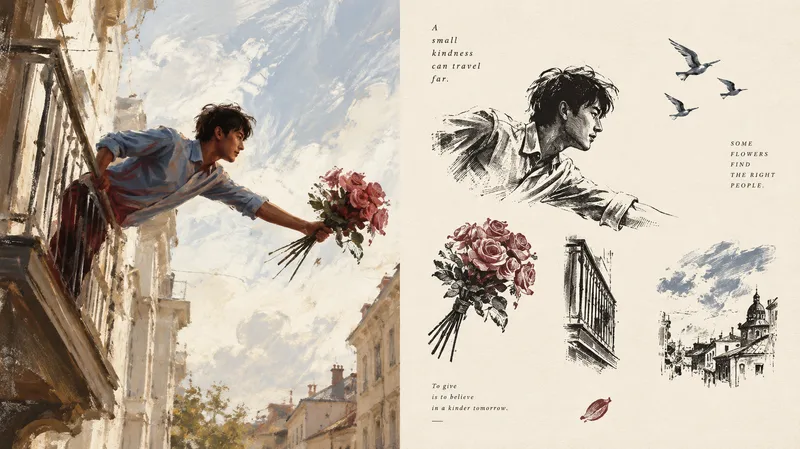 Image
GPT2 x Vintage Mini Engraving
Ideal for organizing personal photography, independent publishing, exhibition studies, and lifestyle-focused visual projects. Even ordinary compositions, cluttered backgrounds, or undersized subjects can be given a new focal point through editing, rearrangement, cropping, and changes in scale—not by simply applying a filter. The overall look combines small independent illustrations, generous negative space, a limited spot-color palette, vintage engraved line art, and editorial-style typography to create a refined visual effect. It resembles a small illustrated page from an old reference book, an independent art book, or a cultural publication. Avoid oversized subjects that fill the frame, complete scenes, complex backgrounds, interconnected graphics, full-page decoration, multicolor fills, cartoon-like styling, modern UI icon aesthetics, and template-driven compositions.
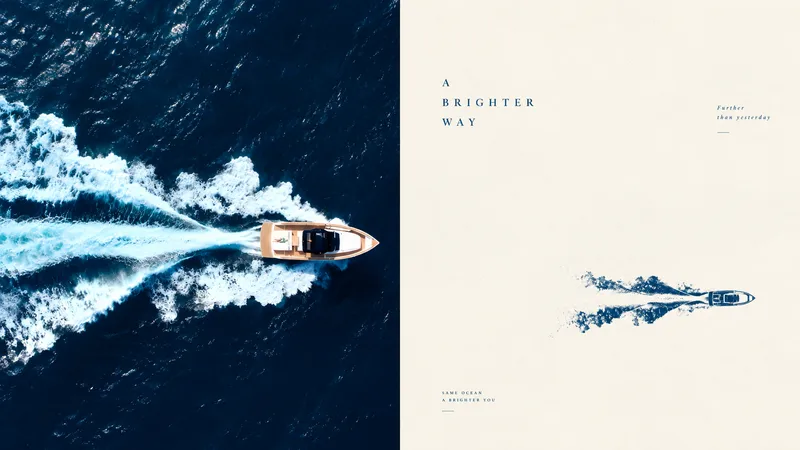 Image
GPT2 x 90% Negative Space
Ideal for organizing personal photography, independent publishing, exhibition exercises, and lifestyle-focused visual projects. Even when the original composition is ordinary, the background is cluttered, or the subject is too small, you can reestablish the visual focus through reduction, reorganization, cropping, and changes in scale—instead of simply applying a filter to the photo. The overall aesthetic combines Tiny focal element / Expansive negative space / Warm neutral field / Sparse color accents: an extremely small subject, generous negative space, low-density typography and imagery, monochrome printed blocks, and paper grain come together to create the quiet, literary, restrained, poetic, and refined visual language of an independent publication.
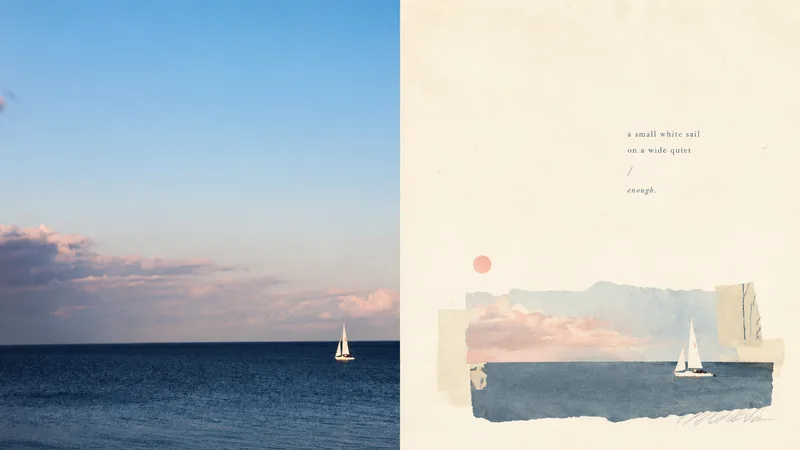 Image
xiaoxiaodong P126 | Collage
Suitable for organizing personal photography, independent publishing, exhibition studies, and lifestyle-oriented visual projects. Even when the original composition is ordinary, the background is cluttered, or the subject is small, you can reestablish the visual focus through reduction, rearrangement, cropping, and changes in scale—instead of simply applying a filter to the photo. The lower section extracts only the most recognizable subjects, outlines, structures, gestures, and narrative relationships from the photo, reconstructing them as Minimalist Poetic Collage Illustration. Do not copy the photo in full, redraw every object literally, or retain all subjects and background elements. Remove irrelevant details and keep only the structures, lines of movement, and visual memory cues that best represent the original. Re-express them through simplification, cropping, scaling, rearrangement, and negative space, so the relationship to the photo above is immediately recognizable.
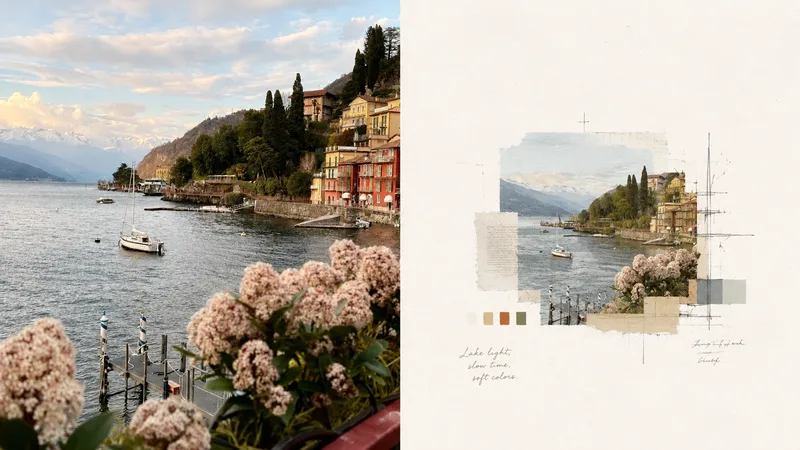 Image
xiaoxiaodong P127: Arch Collage
Suitable for organizing personal photography, independent publishing, exhibition exercises, and lifestyle-oriented visual creation. Even when the original composition is ordinary, the background is cluttered, or the subject is too small, you can reestablish a focal point through reduction, rearrangement, cropping, and changes in scale—instead of simply applying a filter to the photo. The lower section extracts only the most recognizable subjects, outlines, structures, gestures, and narrative relationships from the photo, reconstructing them in a Mixed-media Architectural Collage style. Do not fully copy the photo, redraw every object, or retain all subjects and the background. Remove irrelevant details and keep only the core visual memories that best represent the original objects and theme. Through cutting, cropping, scaling, rearranging, and recomposing, transform the original image into a more compelling conceptual collage. Even when the original composition is weak, the background is cluttered, or the subject is small, proactively redirect the image through artistic judgment.
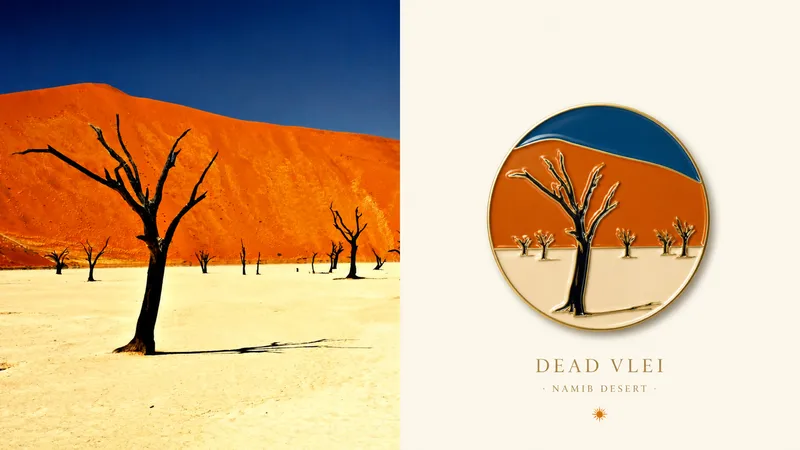 Image
xiaoxiaodong | Badge Travelogue
Ideal for organizing personal photography, independent publishing, exhibition practice, and lifestyle visual creation. Even if the original image has an ordinary composition, a cluttered background, or a small subject, you can reestablish the focal point through reduction, reorganization, cropping, and changes in scale—instead of simply applying a filter. The lower section extracts only the most recognizable subjects, outlines, structures, poses, and narrative relationships from the photo, then reconstructs them as an enamel badge–style 3D relief illustration paired with a minimalist travel poster design. Do not copy the photo in full, redraw every object individually, or retain every object and background detail. Remove irrelevant details and keep only the structures, visual flow, and visual memory cues that best represent the original, compressing them into a refined circular badge or commemorative medallion. The result should make the correspondence with the photo above immediately recognizable.
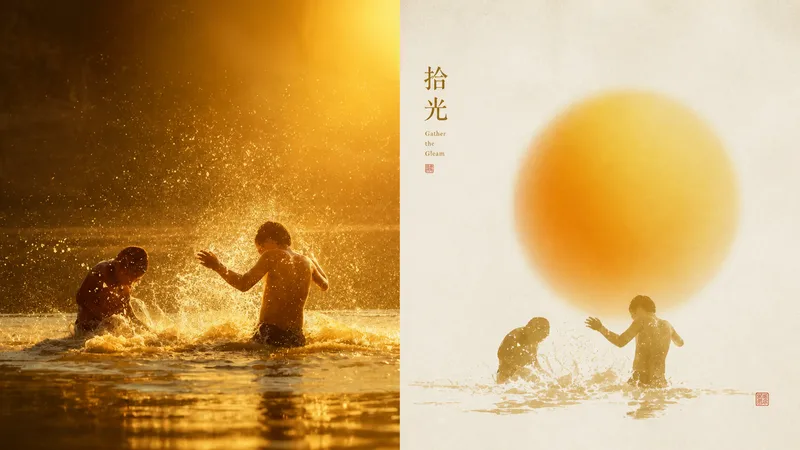 Image
xiaoxiaodong P129 | Open Space
Ideal for organizing personal photography, independent publishing, exhibition studies, and lifestyle-oriented visual work. Even when the original composition is ordinary, the background is cluttered, or the subject is too small, you can reestablish a focal point through reduction, rearrangement, cropping, and changes in scale instead of simply applying a filter to the photo. The lower section extracts only the most recognizable subjects, contours, structures, gestures, and narrative relationships from the photo, then reconstructs them as a new Chinese-style Eastern minimalist graphic poster. Do not copy the photo in full, redraw every object individually, or retain all the objects and background. Remove irrelevant details and keep only the visual cues that best represent the original subject and theme. Reexpress them through silhouettes, symbols, geometric forms, and imagery so viewers can immediately recognize the connection to the photo above while clearly experiencing a considered redesign rather than a replica.
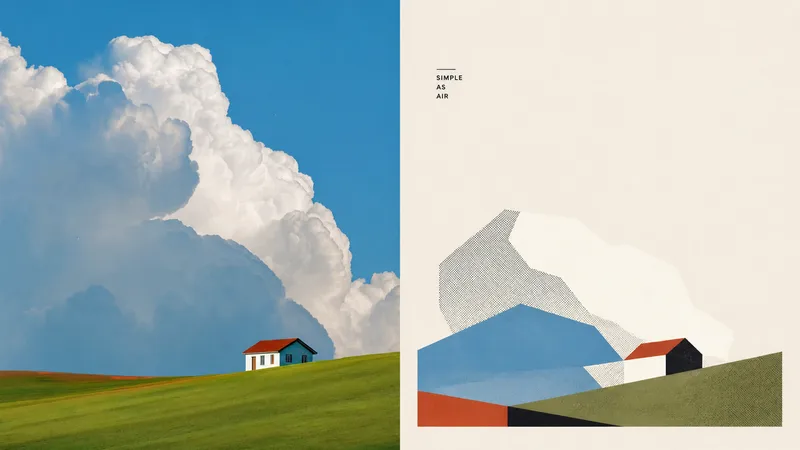 Image
xiaoxiaodong P130 | Facets
Suitable for organizing personal photography, independent publishing, exhibition studies, and lifestyle visual work. Even an image with an ordinary composition, a cluttered background, or a small subject can regain a clear focal point through subtraction, reorganization, cropping, and changes in scale—not by simply applying a filter. The lower section extracts only the most recognizable subjects, contours, structures, poses, and narrative relationships from the photograph, then reconstructs them as a hard-edged geometric composition / faceted geometric reconstruction collage. Do not replicate the photograph in full, redraw each object literally, or retain every subject and background detail. Remove irrelevant details and keep only the structures, movement, and visual memory cues that best represent the original. Re-express them through high-contrast simplification, faceted segmentation, geometric recombination, local misalignment, and a small amount of material layering, so viewers can immediately recognize the correspondence with the photograph above.
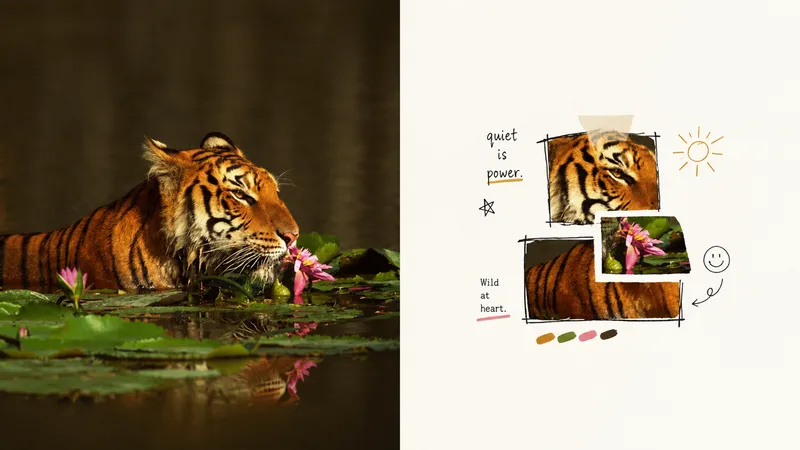 Image
xiaoxiaodong P131 Doodle
Suitable for personal photo organization, independent publishing, exhibition studies, and lifestyle-focused visual creation. Even when the original composition is ordinary, the background is cluttered, or the subject is small, you can reestablish visual focus through reduction, rearrangement, cropping, and changes in scale—instead of simply applying a filter to the photo. The lower section extracts only the most recognizable subjects, contours, structures, poses, and narrative relationships from the photo, reconstructing them as a hand-drawn doodle-style photo collage / Hand-drawn Doodle Photo Collage. Do not copy the photo in full or retain every object and background detail. Remove irrelevant elements and select only a few photo fragments that best represent the original subject and visual memory points. Reexpress them through cropping, scaling, rearrangement, and negative space, so viewers can immediately recognize their correspondence with the photo above.
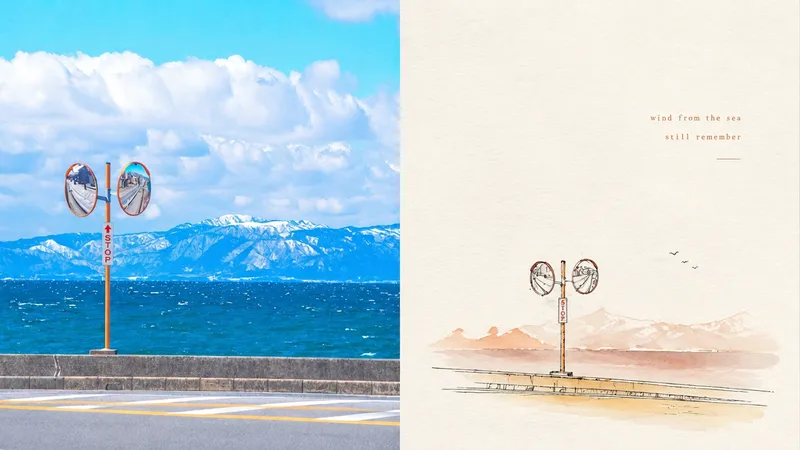 Image
xiaoxiaodong P132 Travel Sketch
Suitable for organizing personal photography, independent publishing, exhibition practice, and lifestyle-focused visual creation. Even when the original photo has an ordinary composition, a cluttered background, or a small subject, you can reestablish its visual focus through subtraction, reorganization, cropping, and changes in scale—instead of simply applying a filter. The lower section extracts only the most recognizable subjects, contours, structures, poses, and narrative relationships from the photo, then reconstructs them as architectural and scene illustrations in a pen-and-ink watercolor style. Do not copy the photo in full, redraw every object individually, or retain all objects and background details. Remove most irrelevant details and keep only the structures, visual flow, and visual cues that best represent the original subject and theme, so the connection between the illustration and the photo above is immediately recognizable.
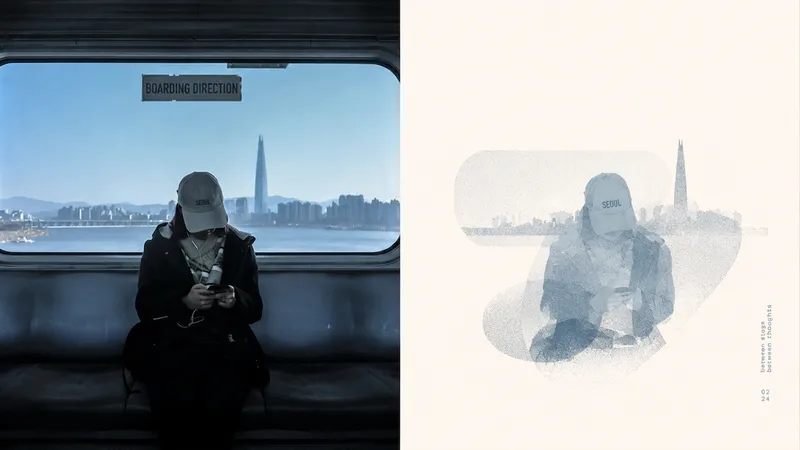 Image
xiaoxiaodong P133 | Stipple
Suitable for personal photo organization, independent publishing, exhibition studies, and lifestyle-focused visual work. Even when the original image has an ordinary composition, a cluttered background, or a small subject, you can reestablish the visual focus through reduction, restructuring, cropping, and changes in scale—instead of simply applying a filter to the photo. The lower half extracts only the most recognizable subjects, outlines, structures, gestures, and narrative relationships from the photo, reconstructing them in a minimalist editorial poster style that combines botanical stipple illustration × monochrome transparent overprint composition. Do not copy the photo in full, redraw every object, or retain the entire background. Remove irrelevant details and keep only the structures, visual flow, and memorable features that best represent the original, then reinterpret them through simplification, cropping, scaling, restructuring, and negative space. The correspondence between the result and the photo above should be recognizable at a glance. Whether the subject is a person, building, animal, plant, object, or landscape, translate it into this visual language.
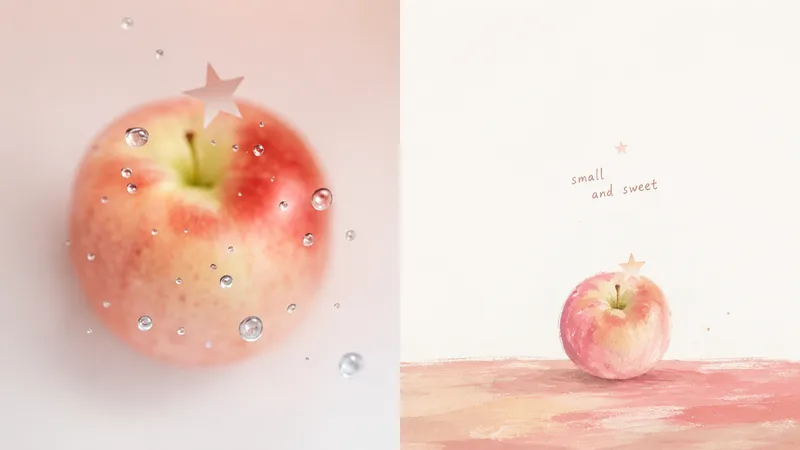 Image
xiaoxiaodong P134 | Color Tale
Suitable for organizing personal photography, independent publishing, exhibition exercises, and lifestyle visual creation. Even when the original composition is ordinary, the background is cluttered, or the subject is too small, you can reestablish a visual focus through reduction, recombination, cropping, and changes in scale—instead of simply applying a filter to the photo. The lower section extracts only the most recognizable subjects, outlines, structures, gestures, and narrative relationships from the photo, reconstructing them as naïve hand-drawn mixed-media picture-book illustrations / Naïve Mixed-media Picture-book Illustration. Do not reproduce the photo in full, redraw every object individually, or retain all objects and the background. Remove irrelevant details and keep only the visual cues that best represent the original subjects and theme. Re-express them through simplified forms, handmade marks, color-block recombination, and negative space, so viewers can immediately recognize the connection to the photo above.
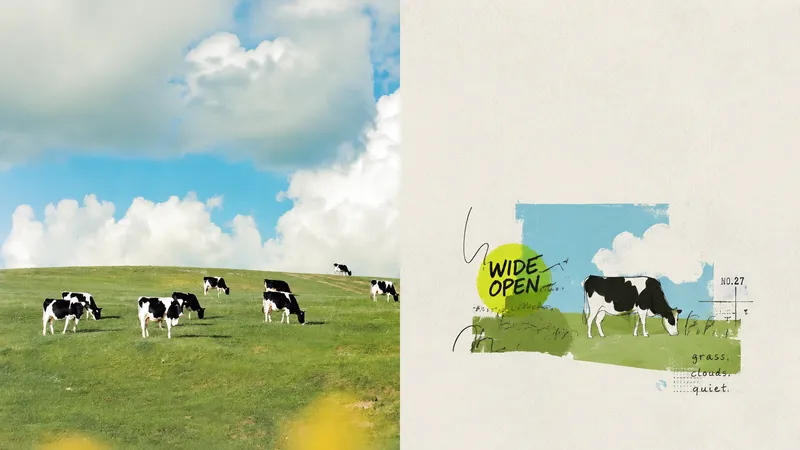 Image
xiaoxiaodong P135 Sketch
Suitable for organizing personal photography, independent publishing, exhibition exercises, and lifestyle-oriented visual creation. Even when the original image has an ordinary composition, a cluttered background, or a small subject, you can reestablish a focal point through reduction, reorganization, cropping, and changes in scale—instead of simply applying a filter to the photo. The lower half extracts only the most recognizable subjects, contours, structures, gestures, and narrative relationships from the photo, reconstructing them as an experimental street hand-drawn poster illustration / Zine-style Street Illustration. Do not reproduce the photo in full, redraw every object individually, or retain all subjects and background elements. Remove irrelevant details and keep only the structures, visual flow, and memorable features that best represent the original, then summarize them through hand-drawn linework, limited spot colors, simulated Riso / screen-print textures, moderate exaggeration and distortion, and a collage-style layout. The result should make the connection to the photo above immediately recognizable.
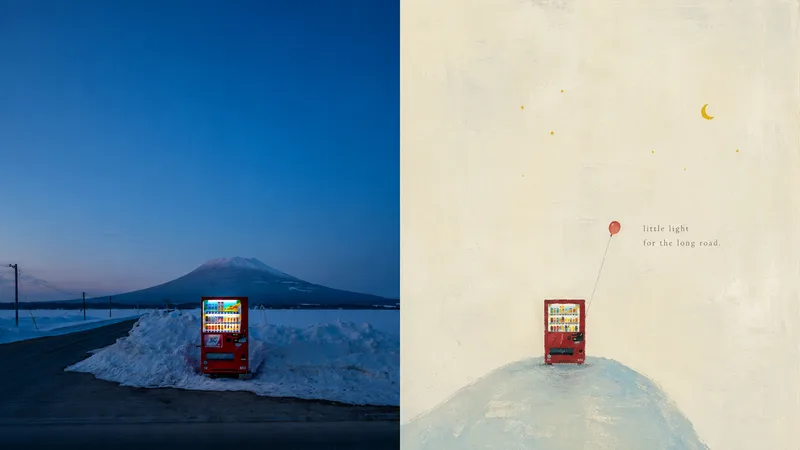 Image
xiaoxiaodong P136 | Poetic
Suitable for organizing personal photography, independent publishing, exhibition studies, and lifestyle visual creation. Even when the original composition is ordinary, the background is cluttered, or the subject is small, you can reestablish a focal point through reduction, rearrangement, cropping, and changes in scale—instead of simply applying a filter to the photo. The lower section extracts only the most recognizable subjects, contours, structures, gestures, and narrative relationships from the photo. It reinterprets the original image’s emotions, relationships, and visual metaphors, then reconstructs them as a poetic narrative illustration in the style of Naïve Art + Poetic Surrealism. Do not redraw every object or reproduce the complete scene. Boldly remove the background and irrelevant details, keeping only a few truly important forms. Scale shifts, object substitutions, floating elements, pulling relationships, dislocation, and improbable combinations are all welcome to re-express the original theme, making the image feel unfamiliar while preserving an immediately recognizable connection to the photo above.
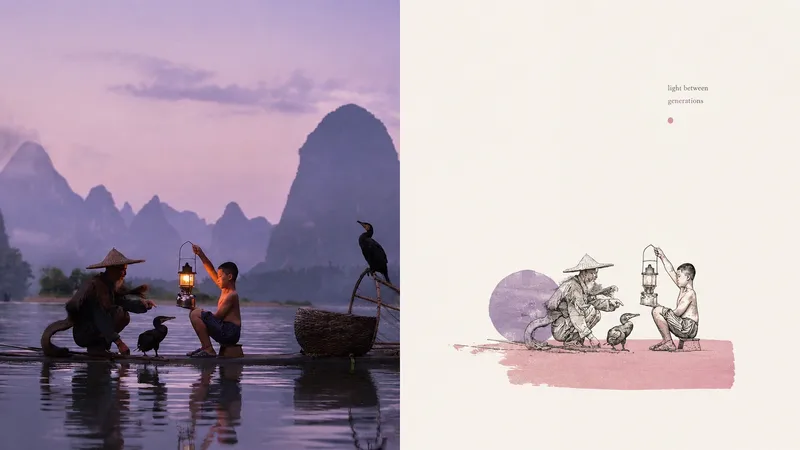 Image
xiaoxiaodong P137 Collage
Ideal for organizing personal photography, independent publishing, exhibition studies, and lifestyle-focused visual projects. Even when the original composition is ordinary, the background is cluttered, or the subject is too small, you can reestablish a focal point through reduction, recombination, cropping, and changes in scale—not by simply applying a filter. The lower section extracts only the most recognizable subjects, contours, structures, gestures, and narrative relationships from the photo, reconstructing them as retro etched-print linework combined with modern textured color-block collage. Do not preserve the complete scene or redraw every object individually. As a rule, remove the background, setting, decoration, and secondary objects entirely; retain only a very small number of supporting forms when they are genuinely necessary to the narrative, so the original subject remains instantly recognizable with minimal information.
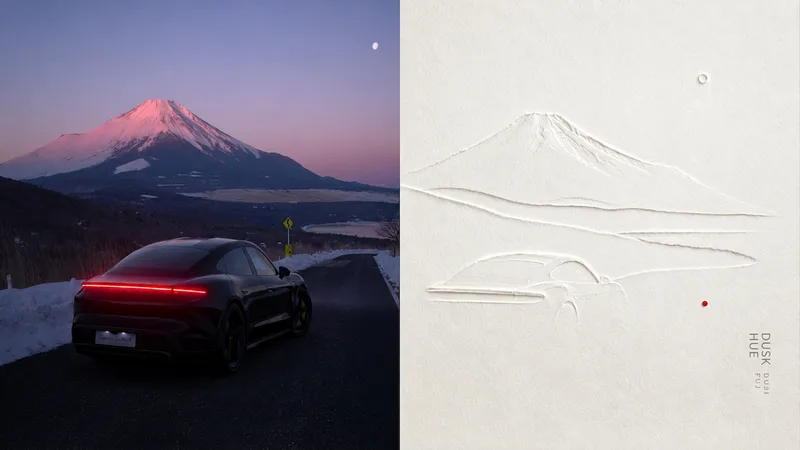 Image
xiaoxiaodong P138 | Relief
Suitable for organizing personal photography, independent publishing, exhibition studies, and lifestyle-oriented visual creation. Even when the original composition is ordinary, the background is cluttered, or the subject is small, you can reestablish visual focus through reduction, reorganization, cropping, and changes in scale—rather than simply applying a filter to the photo. The lower section extracts only the most recognizable subjects, contours, structures, gestures, and narrative relationships from the photo. It then applies artistic judgment to reconstruct them as New Chinese Eastern Minimalist Paper Relief / Oriental Minimalist Paper Relief. Do not copy the photo in full or redraw every object; actively remove most of the background and irrelevant details, keeping only the structural flow and visual memory points that best represent the original subject. Use paper folds, embossing, debossing, shallow relief, cutting, and subtle layering to create a new visual summary, so viewers can immediately recognize its correspondence with the photo above.
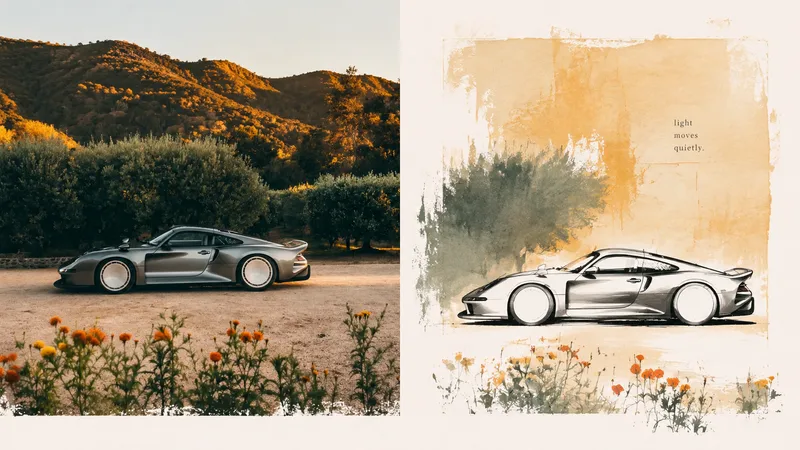 Image
White Field xiaoxiaodong P168
Suitable for personal photo organization, independent publishing, exhibition studies, and lifestyle visual creation. Even images with ordinary compositions, cluttered backgrounds, or small subjects can regain a clear focal point through reduction, reorganization, cropping, and shifts in scale—not by simply applying a filter. The subject emerges as paper-white negative space within a rectangular ground. Light layering, broken overlapping brushwork, and semi-dry scumbling are used, with some areas crossing the edges. The subject is not pasted on afterward.
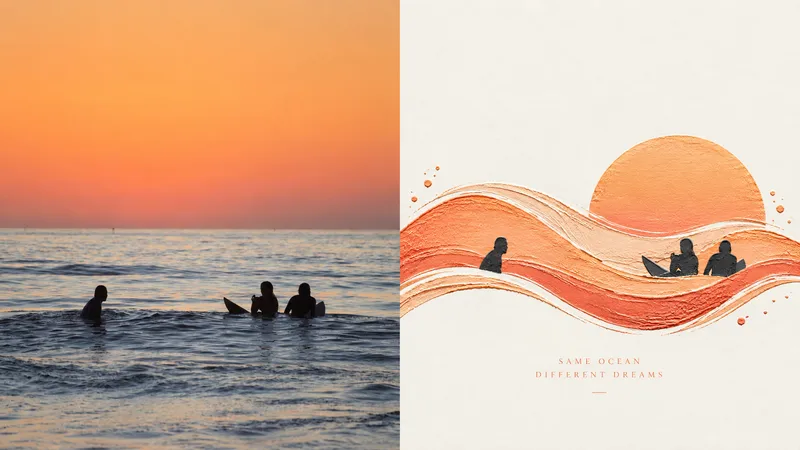 Image
Ink Relief | xiaoxiaodong P167
Suitable for organizing personal photography, independent publishing, exhibition studies, and lifestyle-focused visual projects. Even when the original image has an ordinary composition, a cluttered background, or a small subject, you can reestablish visual focus through reduction, reorganization, cropping, and changes in scale—instead of simply applying a filter. A centered, abstract waveform supports the subject without needing to depict real seawater; thick oil-ink embossing adds grain with subtle side lighting, 2–4 vivid colors, and oversized negative space.
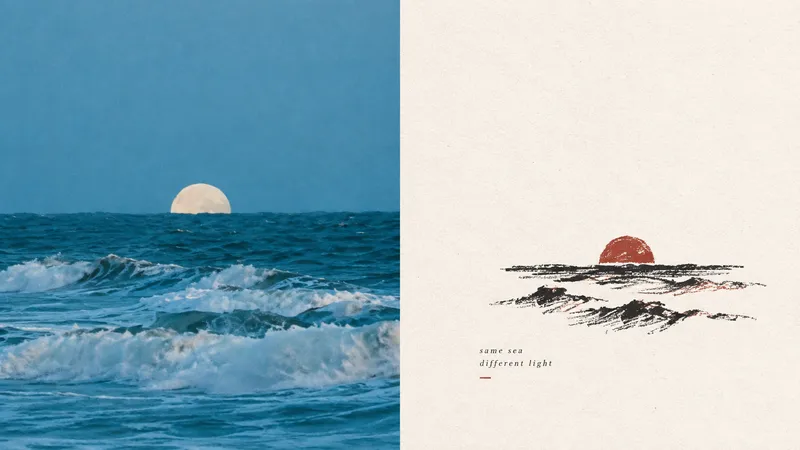 Image
Dry Brush P170 xiaoxiaodong
Suitable for organizing personal photography, independent publishing, exhibition exercises, and lifestyle-focused visual creation. Images with ordinary compositions, cluttered backgrounds, or small subjects can be given a new focal point through subtraction, reorganization, cropping, and changes in scale—rather than simply applying a filter. Tiny graphics, large brushstrokes, and minimal detail; charcoal black dominates on warm gray-white paper, with a small amount of rust red. Multicolor use and background boards are strictly prohibited.
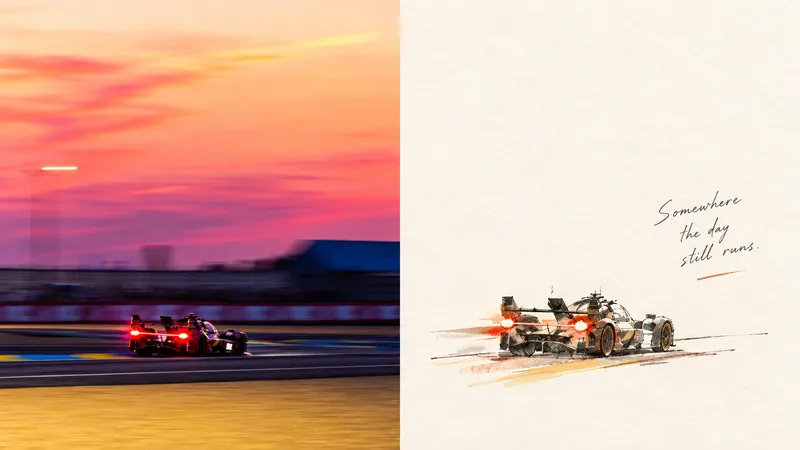 Image
Ochre Line P169|xiaoxiaodong
Suitable for organizing personal photography, independent publishing, exhibition practice, and lifestyle visual creation. Even images with ordinary compositions, cluttered backgrounds, or undersized subjects can regain a clear focal point through reduction, reorganization, cropping, and changes in scale—instead of simply applying a filter. 75–85% blank paper, 15–25% isolated small illustrations; fine, charcoal-black loose lines, ochre-yellow khaki subjects, and very little burnt orange, with no competing cool colors.
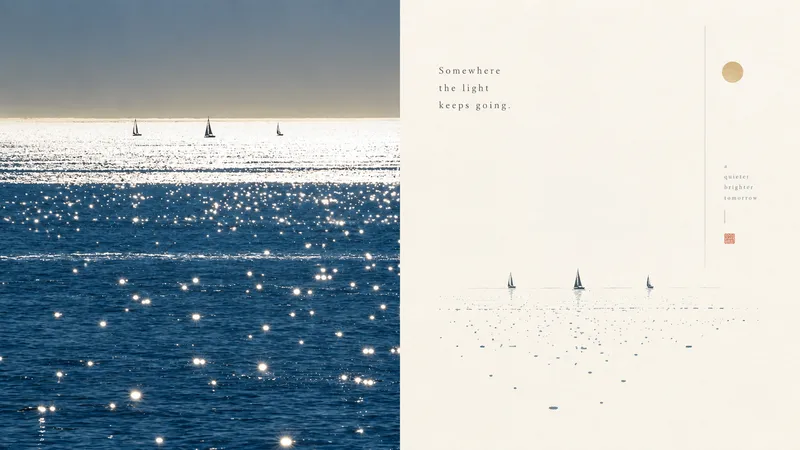 Image
Scatter P171 | xiaoxiaodong
Ideal for personal photo organization, independent publishing, exhibition studies, and lifestyle visual work. Even when the source image has an ordinary composition, a cluttered background, or a small subject, you can reestablish a focal point through reduction, reassembly, cropping, and changes in scale—instead of simply applying a filter. 75–85% warm white as the dominant field, a slender, low-contrast vertical framework with a few island-like shapes, and soft gray-blue and earthy gold tones with tiny pops of color.
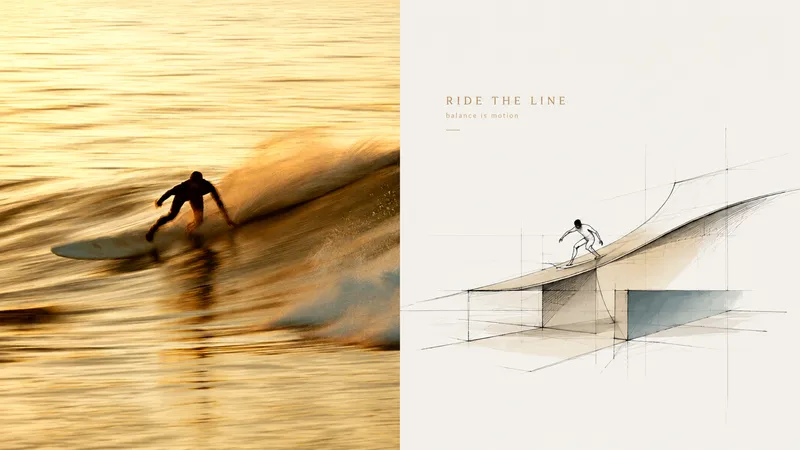 Image
xiaoxiaodong P120 Concepts
Want to turn a photo into a concept image with a sense of design exploration, without ending up with a fully rendered scene that traces every object? Panel 120 preserves the photo’s identity and spatial memory, distilling its key forms, outlines, and relationships into loose, freehand perspective linework. A few color blocks, geometric guide lines, and generous areas of blank space come together to form the work. Ideal for these situations Architectural, spatial, travel, or object photos need to become concept sketches with an editorial sensibility. The original composition is weak, the background is cluttered, or the subject is small, and you want to reorganize the visual focus through reduction, recomposition, and changes in scale. You want to preserve recognizability and spatial relationships while avoiding full-frame coloring or photorealistic renderings. The same style needs to be delivered in vertical, horizontal, design-only, wallpaper, and catalog batches. What it solves for you Remove backgrounds and secondary objects, leaving the core forms and visual memory points that represent the subject. Use relaxed, restrained, slightly repetitive perspective lines and a few construction lines to express design exploration. Make blank space part of the composition instead of filling the frame with decoration or color blocks. The comparison image contains exactly two equal sections; each source image is generated independently to avoid secondary stylization.
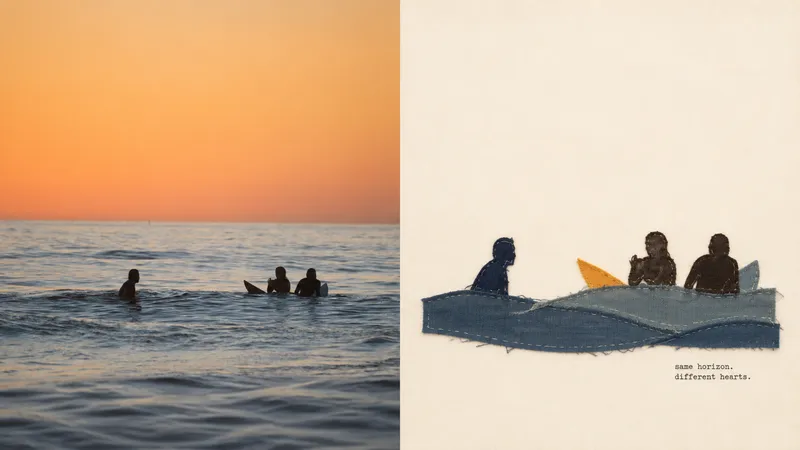 Image
xiaoxiaodong P119 | Fabric
When the people, objects, or actions in a photo are worth preserving but the background is too crowded, Panel 119 distills the central subject into a hand-sewn textile collage. A few large fabric pieces, raw-edge appliqué, and a small amount of embroidery create a compact visual focal point, while generous negative space gives the linen-and-cotton fibers and stitchwork room to be seen. Best for Preserving the true identity of people, everyday objects, and travel memories while adding a warm fabric touch. Distilling the subject, outline, structure, posture, and narrative relationships from a complex photo without redrawing every element of the original scene. Working with lively yet soft 2–4-color fabric palettes and restrained, editorial-style copy. Creating consistent styles for top-and-bottom, left-and-right, pure-design, multiple-aspect-ratio, four-edge wallpaper, or catalog batch processing. What it solves for you It actively removes most of the background and unrelated details to prevent visual information from piling up. It builds recognizability with a few large fabric pieces and hand-stitched details, avoiding a cheap handcrafted look or templated collage style. It strictly uses only two 50:50 areas on the canvas, with no title band, bottom bar, or third section. Each image is generated in a single pass from the current original image, avoiding a second round of stylization on intermediate results.
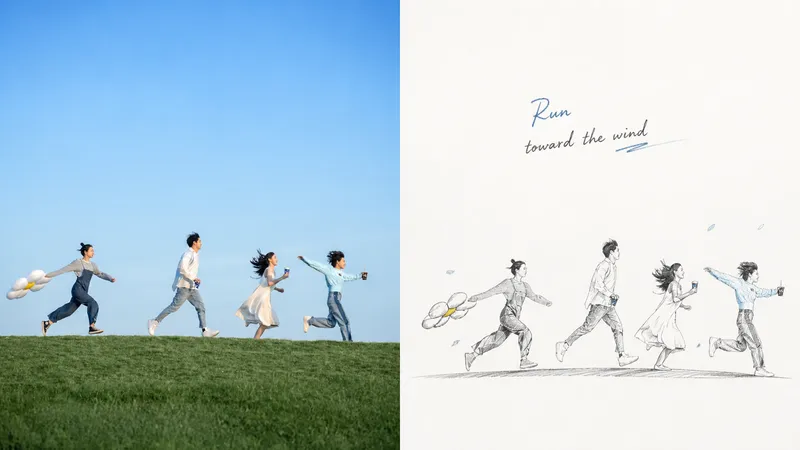 Image
xiaoxiaodong P118
When the subject in a photo is small, the background is cluttered, or you want an ordinary photo to express itself like an independently published work, Panel 118 preserves the real photo while redirecting the design area into a graphite pencil-themed composite illustration. It first determines what is worth keeping, then rebuilds the scale, placement, and negative space. Best for Preserving a photo’s identity and texture while creating an editorial poster with independent artistic judgment. Making the subject relationships immediately clear without tracing every object or copying the original composition. Those who prefer black-and-white graphite, natural pencil strokes, and generous negative space over complex academic realism. Delivering vertical, horizontal, design-only, wallpaper, or catalog outputs in batches. What it solves for you Actively corrects subjects that are too small, cluttered backgrounds, and ordinary compositions. Builds a thematic arrangement through reduction, reorganization, cropping, and scale adjustments. Uses positive and negative shapes, density, and asymmetrical balance to make negative space part of the composition. Generates each source image independently in a single round; comparison mode uses two zones in a strict 50:50 split.
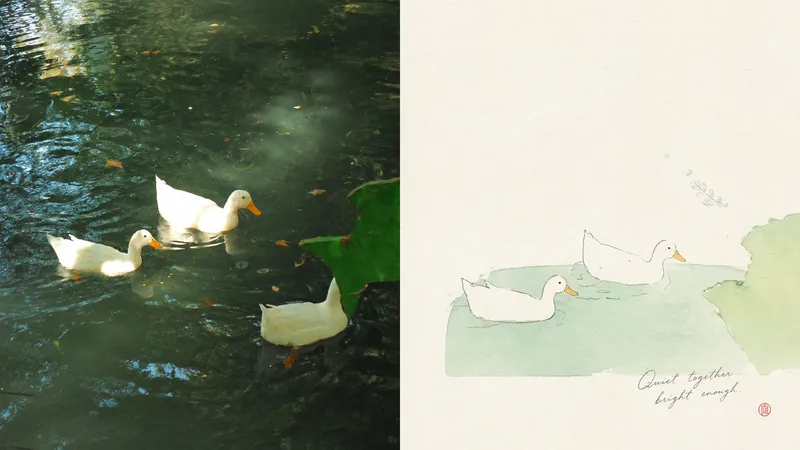 Image
xiaoxiaodong P117 | Fine Line
When a photo is cluttered or ordinarily composed but still contains a subject worth keeping, Panel 117 first identifies one core subject, one visual anchor, and one emotional relationship, then re-directs them into a small-scale image made of fine lines, pale colors, paper texture, and light collage. The original photo can remain in the comparison area, while the design area gains an independent expression through generous, intentional negative space. Best for Keeping the original subject recognizable while rearranging its position, scale, direction, and crop. Creating an artistic poster with few elements and a strong theme, without tracing every object or retaining a cluttered background. Using delicate lines, soft pastels, and the breathing quality of paper while avoiding realistic detail and smooth vector styling. Producing the same style in top-and-bottom, side-by-side, design-only, multiple aspect ratios, four-end wallpapers, or catalog batch processing. What it solves for you Selects the truly important visual anchor from complex source material and removes secondary information. Lets negative space shape positive and negative forms, distance, and asymmetrical balance instead of filling the entire canvas. Keeps the comparison image strictly divided into two areas, each occupying 50%, with no third band or inset panel. Generates each output independently from the current original image in a single round, avoiding the re-rendering of intermediate results.
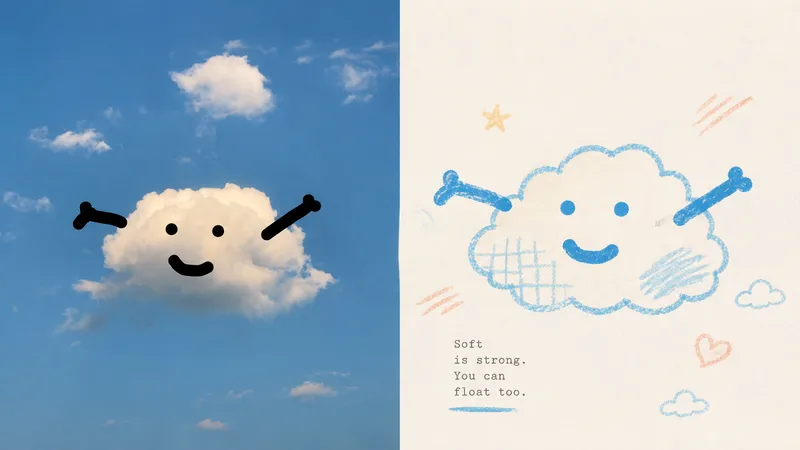 Image
xiaoxiaodong P116 | Doodle
Some photos are truly moving not because of how much information they contain, but because of a single subject, a particular pose, a few colors, and the emotion captured in the image. Panel 116 keeps the real photo in the upper half, then translates the lower half into pastel crayon doodles on an extremely light paper surface: coarse-grain outlines, a few soft color blocks, minimal symbols, and small-scale subjects that leave room to breathe. Ideal for these situations You want to preserve the photo’s identity and natural texture while creating a lighter poster that feels more like an art publication. You don’t want to trace every object, create a realistic redraw, or fill the background with details. You only want to retain the core subject, relationships, and visual memories. You like bright, soothing pastel colors but don’t want anything gloomy, low-contrast, fluorescent, or cheaply candy-colored. You need the same style to produce consistent results across top-and-bottom layouts, left-and-right layouts, pure designs, multiple aspect ratios, four-end wallpapers, or catalog batch processing. What it solves for you It removes secondary information from complex photos so the subject isn’t overwhelmed by details and decoration. It uses clear colored lines and a light paper background to maintain recognizability and keep the subject from blending into the background. It ensures the split composition contains exactly two 50:50 regions, with no title strip, bottom bar, or third section. Each image is generated directly from the current original in a single pass, without sending samples, intermediate results, or work from other Panels back into the model.
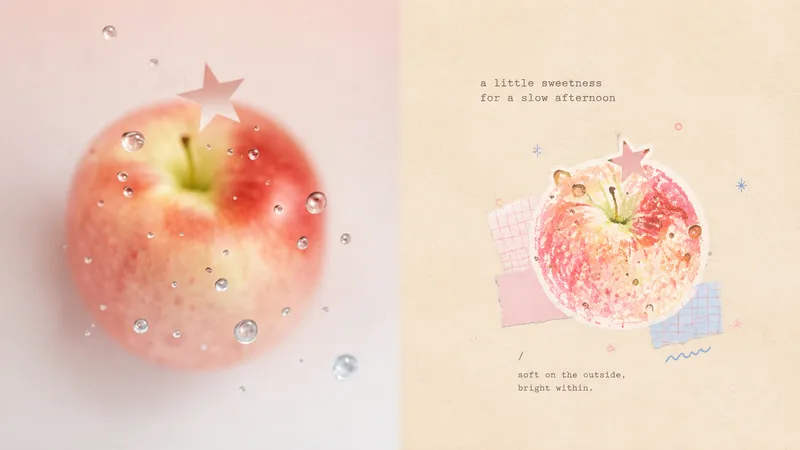 Image
xiaoxiaodong P115 | Pastel Stamp Collage
When a photo needs to be redesigned as a poster, cover, social content, or exhibition image, common problems include tracing every object, overcrowding the frame, or applying overly sweet children’s collage templates—causing the relationships between subjects and the sense of breathing room to disappear. Panel 115 turns each photo into a separate 3:4 vertical poster: the original photo is preserved in full in the upper half, while the lower half reconstructs its most memorable themes, relationships, structural movement, emotions, and metaphors as a pastel, hand-drawn doodle-material collage illustration on a vintage paper texture. Small stamp-like subjects, generous intentional negative space, 2–4 vivid colors drawn from the source image, and minimal light typographic layout come together in a clever, airy reinterpretation. It addresses problems such as copying subjects object by object, blending the background and subject into an indistinct mass, filling the frame, realistic tracing, smooth vector styling, excessive decoration, a children’s-template feel, a 3D look, and a commercial-poster aesthetic.
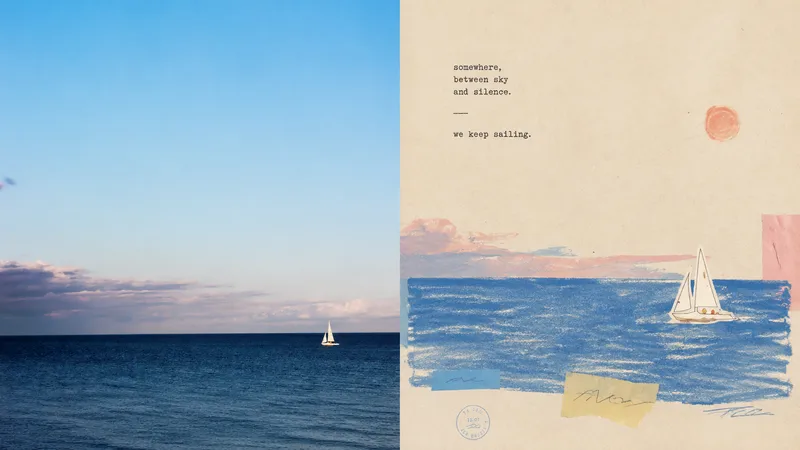 Image
xiaoxiaodong P114 Doodles
When a photo is intended for a poster, cover, social content, wallpaper, or independent publication, Panel 114 first identifies the core theme worth remembering, relationships between subjects, structural flow, emotional atmosphere, and visual metaphors. It then translates these elements into a pastel, hand-drawn doodle illustration with a vintage paper texture. This helps avoid the stiffness of drawing every object literally, the cramped feeling of filling the entire frame, an overly digital look, and muddy retro color palettes.
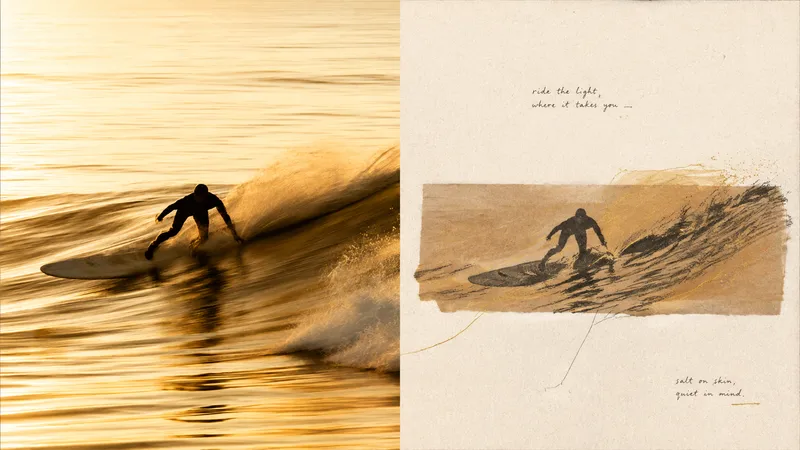 Image
xiaoxiaodong P112 | Gold Paper
Some photos need more than liveliness—they need a paper surface that can hold a memory. Panel 112 preserves the realistic elements of the photo, then compresses the rest into horizontal bands of muted color, small-scale wax pastel stamp marks, and just a few gold lines on off-white handmade paper. It suits quiet portraits, travel moments, plants and objects, literary covers, personal commemorations, and exhibition images. It addresses the common challenges of paper-based styles: becoming gray, dirty, and heavy; making gold look gaudy; rendering the subject too literally and stiffly; and filling the composition with color blocks and decoration.
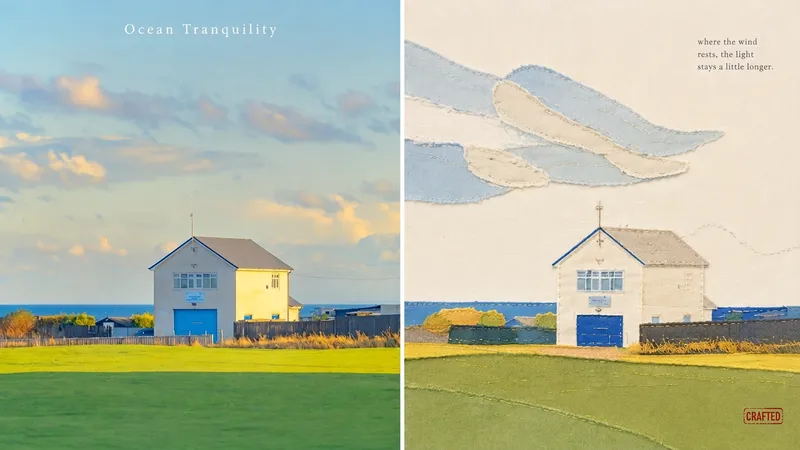 Image
xiaoxiaodong P111 | Textile
Some photos are most moving not because of how much information they contain, but because of the relationship between people and their surroundings, the tactile quality of clothing, or a quiet pause. Panel 111 preserves the realistic part of a photo, then stitches the other half into a small-scale visual stamp with frayed edges, fabric texture, and visible stitches. It works well for commemorative posters, lifestyle photography, portraits and relationships, pets and nature scenes, independent publishing, and exhibition images. It addresses the lack of tactility in ordinary photo filters, the clutter of overly dense collage materials, the tendency for handmade styles to look cheap, and the way subjects and relationships can get lost beneath decoration.
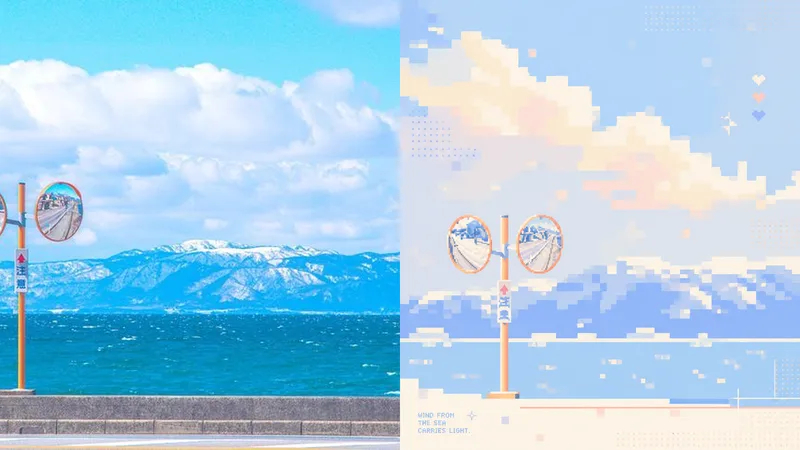 Image
xiaoxiaodong P106: Soft Pixel
Photos often contain too many details, yet what stays memorable may be just a silhouette, a gesture, a sense of distance, or a patch of color. Panel 106 selects 2–4 visual anchors that define the subject’s identity from the original image, then reconstructs them as a soft, clear pixel memory with geometric order: from a distance, it looks like a refined abstract composition; up close, you can still tell that it is your photo. Works well when Your photo is complex, but you don’t want to lose its identity: Remove secondary objects and trivial structures, keeping only the silhouettes, poses, directions, and color relationships that truly define the image. You want an abstract poster without turning it into unrecognizable decoration: Use a regular grid, hard-edged color blocks, localized dithering, and positive and negative space to let the subject gradually emerge from the abstract order. You like a fresh, soothing look but dislike a cheap candy-like feel: Recompose a soft, bright limited palette from the original image, using colors such as creamy white, peach pink, milky blue, and mint green for a sweet but balanced result. You need flexible delivery in a consistent style: Supports top-and-bottom comparisons, side-by-side comparisons, pure designs, multiple aspect ratios, four-device wallpapers, and batch processing of image folders. What it solves for you It does not simply shrink the photo, apply a filter, or pixelate each object individually. Instead, it reorganizes the visual memory directly from the original image in a single pass. The 2–4 anchors work together to form one single-focus image, rather than being split into cards, grids, or a collage wall. Comparison mode always has exactly two 50:50 areas: top-and-bottom places the original image on top and the design below; side-by-side places the original on the left and the design on the right, with no extra third strip. Get started quickly Use XXD Panel 106 to process this image for me, starting by recommending the most suitable composition and size.
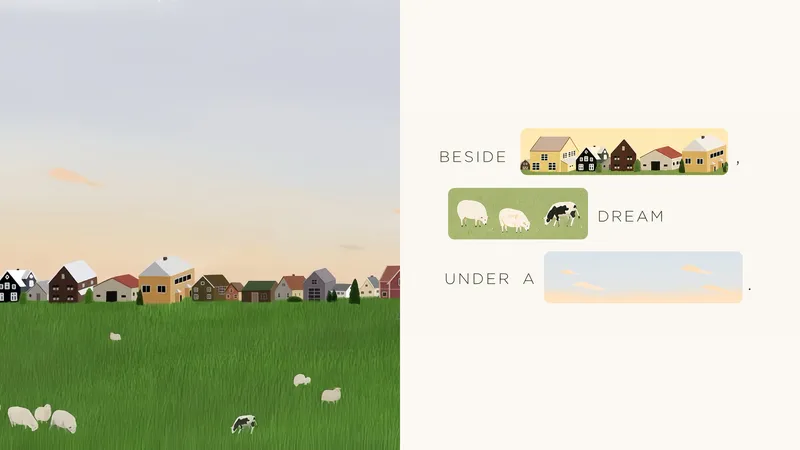 Image
xiaoxiaodong P107 Image Verse
Some photos carry emotions that are difficult to express in a single caption—and those emotions should not be overshadowed by a few decorative images. Panel 107 places the original photo on one side and turns the other into a visual sentence that can genuinely be read: when the text mentions a flower, window, road, or action, that word is directly replaced by a hand-drawn image from the photo. Remove either the words or the images, and the sentence is incomplete. Best for these situations When one caption cannot express the feeling in a photo: Let the subjects, actions, and imagery from the original image truly enter the syntax and take the place of omitted words. When you do not want a “complete title plus a few small pictures” layout: The image must occupy the original position of the word, so readers complete the sentence by following the text and images together. When you want a light, fresh, yet sophisticated visual design: Organize visual poetry with bright, soft color blocks, modern hand-drawn editorial illustrations, and generous negative space. When you need flexible delivery in one consistent style: Support top-and-bottom comparisons, side-by-side comparisons, design-only layouts, multiple aspect ratios, four-sided wallpapers, and batch processing for image catalogs. What it solves for you Turns “the image is merely an illustration” into “the image is the word,” solving the problem of text and visuals telling separate stories. Automatically generates short phrases from a photo’s mood, actions, relationships, setting, or memories, then selects the words best suited for visualization. Uses a clear reading path to avoid sticker walls, card grids, and cluttered collages while preserving a light, elevated sense of space. Get started quickly Use XXD Panel 107 to process this image, and first recommend the most suitable composition and dimensions.
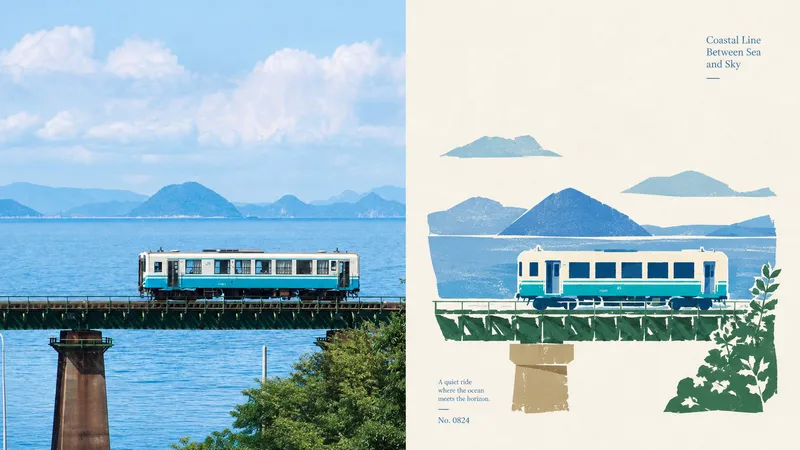 Image
xiaoxiaodong P108 Folk Cut
When the subject of a photo is highly recognizable but weakened by a complex background, excessive decoration, or ordinary filters, 108 reorganizes the information through new folk-art paper cutting: the real photo remains above, while the section below keeps only the subject, outline, pose, and narrative relationships, transforming them into flat paper-cut forms, a seal-like main visual, and printmaking texture. Best suited for Art posters, publication covers, or exhibition images that preserve the identity of a photo while adding cultural and handcrafted character. A preference for silhouettes, color blocks, engraved lines, positive and negative space, and paper grain over realistic illustration, smooth vectors, or 3D. Stable output in the same style across top-and-bottom, side-by-side, pure design, wallpaper, multiple aspect ratios, and catalog batch processing. What it solves for you Removes irrelevant backgrounds and duplicate objects so the subject is not overwhelmed by decoration. Extracts the 2–4 most distinctive colors from the photo to create vivid but restrained folk-art color blocks. Unifies the two-zone structure of every finished piece: a strict 50:50 split, with no added title bar, footer, or third band. Quick check: Is Panel 108 right for you? What you get: A complete poster with the real photo on top and a new folk-art paper-cut design below At-a-glance characteristics: A small-scale, seal-like subject; flat paper-cut color blocks; printmaking grain; and generous warm-white space How the original image is respected: Identity, structure, pose, lighting, and color are preserved; the lower section only simplifies and symbolically reconstructs them
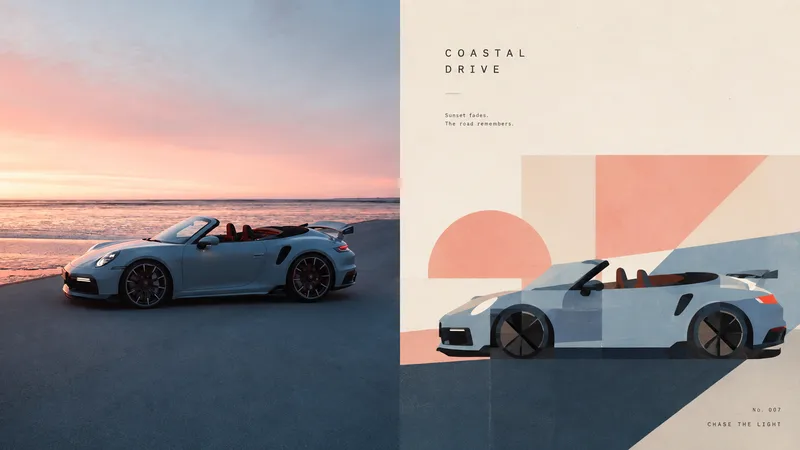 Image
xiaoxiaodong P109 | Soft Geo
When a photo has a clear structure but feels overloaded with information, 109 reinterprets it using large, cohesive shapes: the real-world photo remains above, while a small number of rectangles, rounded blocks, ellipses, triangles, and irregular planes rebuild its geometric memory below—preserving identity without becoming a fragmented collage. Best for You want a modernist geometric poster, publication cover, or exhibition visual while preserving the recognizability of the original subject. You prefer large modules, flat color blocks, paper grain, and soft, sophisticated colors—not realistic rendering or cartoon styling. You need consistent output for top-and-bottom, left-and-right, design-only, wallpaper, multiple aspect ratios, and catalog batch processing. What it solves for you Reduces complex scenes to a small number of cohesive modules, avoiding fragmentation and a competing secondary focal point. Extracts 2–4 colors from the photo and organizes them into a timeless, warm, stylish color-block system. Keeps the two-zone logic consistent in every finished piece: a strict 50:50 split with no added third band. Quick check: Is Panel 109 right for you? What you get: One complete poster with a real photo on top and a large-scale geometric deconstruction below Key visual traits: A small number of cohesive geometric modules, soft sophisticated colors, paper grain, and editorial negative space How it respects the original: Preserves identity, structure, pose, and relationships; changes only the information density and organization
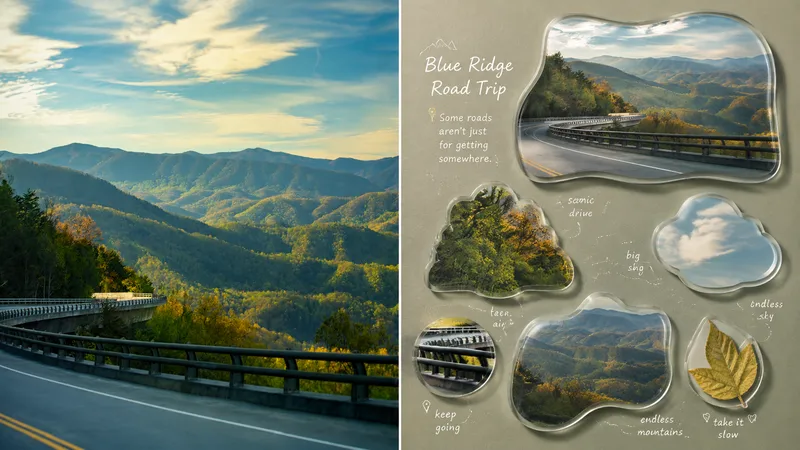 Image
xiaoxiaodong P110 Scene Map
When a lifestyle photo contains many memorable objects, routes, and emotional connections, 110 organizes them into a Japanese-style lifestyle Scene Map: the authentic photo remains at the top, while around 4–7 real objects are selected and rearranged below with an acrylic collectible feel, dynamic routes, and charming annotations. Ideal for Turning travel scenes, coffee moments, rooms, street corners, or everyday objects into lifestyle posters with a collectible feel. A preference for authentic, clear, soft INS tones and acrylic/resin borders—not flat cartoons or plastic 3D. Creating a different diagonal, S-shaped, circular, stepped, or floating route for each image instead of using a fixed four-panel grid. What it helps you solve Selects 4–7 genuinely memorable elements from a complex photo, avoiding evenly spaced layouts and information overload. Uses fine dotted lines, curved arrows, nodes, and labels to create a personal route map rather than a complex flowchart. Keeps every finished image consistent with a two-zone structure: a strict 50:50 split, with no third band added. Quick check: Is Panel 110 right for you? What you get: An authentic photo on top plus 4–7 objects below, arranged into a dynamic Scene Map At a glance: Real objects, acrylic collectible borders, dynamic routes, light labels, and generous negative space How the original image is respected: Object identity, texture, lighting, color, and relationships are preserved; only selection, rearrangement, and subtle color adjustments are made
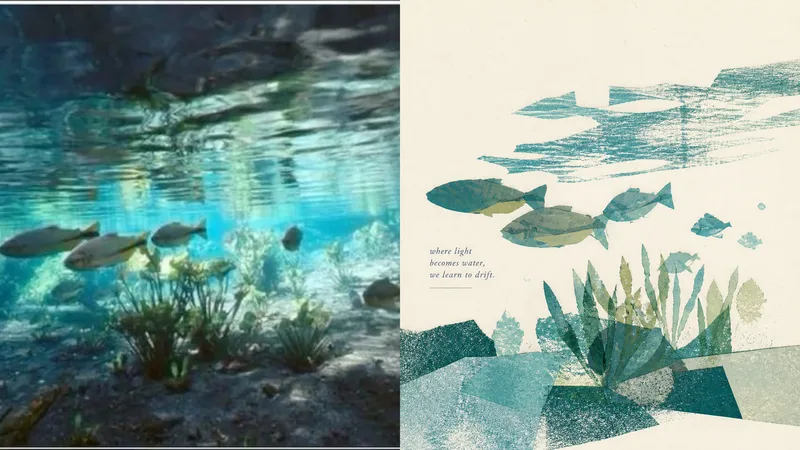 Image
xiaoxiaodong P105 | Poetic
Some photos are truly moving not because they reveal every detail, but because of a gesture, a relationship, or a moment meant to stay in memory. Panel 105 is designed to turn photos like these into quiet, refined visual excerpts: it first determines what is most worth keeping, then reconstructs the image with paper pieces, color blocks, negative space, and print textures instead of mechanically tracing the original into an illustration. Best for these situations Your photo contains too much information, but you only want to preserve the emotion: Select one central subject and only a few essential supporting elements from a complex scene. You want a breathable poster or cover: Use a single visual focus and generous paper white to create rhythm between the subject, text, and negative space. You prefer real paper over a smooth digital look: Keep collage edges, grain, uneven ink, dry-brush marks, imperfect ink coverage, and subtle color-registration shifts. You need flexible delivery in one consistent style: Support top-and-bottom comparisons, side-by-side comparisons, pure design, multiple aspect ratios, four-edge wallpapers, and batch processing for image catalogs. What it solves for you No more filling the frame with cluttered backgrounds, repeated objects, and details with no narrative value. You do not have to decide which elements to keep or remove; the model makes an aesthetic selection based on the photo’s beauty and recognizability. Colors are not sampled evenly. Instead, the most memorable color relationships are preserved and refined into a soft, clear, harmonious limited palette. Get started quickly Use XXD Panel 105 to process this image, and first recommend the most suitable composition and size.