Philosophical Four-Panel Comic
Instructions
First, carefully understand the topic concepts provided by the user. Confirm:
1. What is the core meaning of the theme?
2. Is it a philosophical piece about life or a satirical piece about the industry?
3. Are there any requirements regarding the protagonist's gender/characteristics?
4. Does it involve real people or brand logos?
If the topic is unclear, ask the user for clarification.
Based on the theme, create a philosophical four-panel comic strip story. Story structure:
**First Section: Presentation of the Problem/Current Situation**
- Scene Description
- Character actions and expressions
- Dialogue content
- Narration (stating the theme)
**Second Section: Problem Escalates/Conflict**
- Scene Description
- Changes in character movements and expressions
- Dialogue content
- Narration (revealing the predicament)
**Third Section: Turning Point/Awakening**
- Scene Description
- Character movements and facial expressions
- Dialogue content
- Narration (to guide thought)
**Fourth Section: Sublimation/Wisdom**
- Scene Description
- The character's movements and expressions are relaxed.
- Dialogue content
- Narration (conveying philosophical ideas)
- Orange label (core keywords)
**Story Highlights:**
- Use visual metaphors (e.g., pushing against a wall and a door, gripping and releasing, height and flowers, etc.).
- Strong contrast (first three panels vs. fourth panel)
- The ending elevates the theme and conveys profound philosophical insights.
- Concise and powerful, without being verbose
Present the complete four-panel story to the user for confirmation.
Use the imageGenerate tool to generate the illustration. Strictly follow the prompt template below:
```
Four-panel comic strip, 2x2 grid layout (two rows and two columns), minimalist line art style, business illustration style. Pure white background, outlined with black lines, orange is used only as the accent color for key labels, and the use of orange is very restrained. Except for a very small amount of light brown used for wooden objects, gray tones are not used.
At the top of the entire four-panel comic strip, the title is written in clear black Chinese font: "[Topic Name]".
Character Style: Simplified yet proportionally balanced character design (not stick figure): round head, minimalist facial features (two dots for eyes, an arc for mouth, simple hairstyle outline), and clearly defined details on the body, including shirt collar, sleeves, pants, and shoes. The character occupies a relatively small proportion of the image (mid-to-long distance). Characters are distinguished by different hairstyles: bald, short hair, medium-length hair, etc.
Four-grid layout: a grid layout with 2 rows and 2 columns of squares. The border of each square is hand-drawn with slightly natural curves (not completely straight).
Key stylistic features: clean lines, simplified figures with individuality, figures in appropriate proportions, pure white background with only black outlines, orange used only for key labels and very restrained, minimal shadows (light brown is used only for wooden objects), slightly irregular borders with a hand-drawn aesthetic, and clear outlines of business casual clothing.
[If brand logos are involved, add:] Important: Each person's logo should be displayed on their chest (simplified version, outlined in black, Claude logo filled with a warm rust orange).
First panel (top left): [Detailed description of the scene, characters, actions, expressions, dialogue, and narration]
Second panel (top right): [Detailed description of the scene, characters, actions, expressions, dialogue, and narration]
Third panel (bottom left): [Detailed description of the scene, characters, actions, expressions, dialogue, and narration]
Fourth panel (bottom right): [Detailed description of the scene, characters, actions, expressions, dialogue, and narration, emphasizing that the orange label is the only orange element in the entire painting]
```
**Key Parameters:**
- model: "gemini-3.1-flash-image-preview"
- aspect_ratio: "16:9"
- quality: "medium"
- title: "[Theme Name] - Four-Panel Comic"
**Important Notice:**
1. The prompts must be very detailed, including the scene, characters, actions, expressions, dialogue bubbles, and bottom descriptions for each cell.
2. Orange is used only for the key tag in the fourth cell; extreme restraint is required.
3. If real people are involved (such as Sam Altman, Dario Amodei, Elon Musk), their actual physical characteristics need to be described.
4. If brand logos are involved (such as ChatGPT, Claude, Gemini, Grok), the logo characteristics need to be accurately described.
5. Claude logo characteristics: square or rounded square, warm rust orange (#C15F3C), with abstract geometric patterns inside.
After generation:
1. **Display Results** - The four-panel comic has been automatically displayed.
2. **Inquire about user feedback:**
Are you satisfied with the storyline?
- Do the characters/roles need to be adjusted?
Does the visual style need to be changed?
3. **Optimization options are provided:**
- Modify the storyline
- Adjust character traits (gender, hairstyle, clothing)
- Modify the scene or dialogue in a specific cell.
- Adjust the viewing angle (e.g., switch to a top-down view).
- Regenerate
4. **Provide prompt words:**
If users want prompts to use for their own optimization, provide a complete prompt generation tool.
5. **Next step suggestion:**
- Continue creating other themes
- Save your work to board
- Publish and share
Description
Automatically create philosophical four-panel comic stories based on user-provided themes, and generate simple business-style illustrations. Suitable for themes such as life philosophy, AI industry satire, etc.
Related Skills
View all
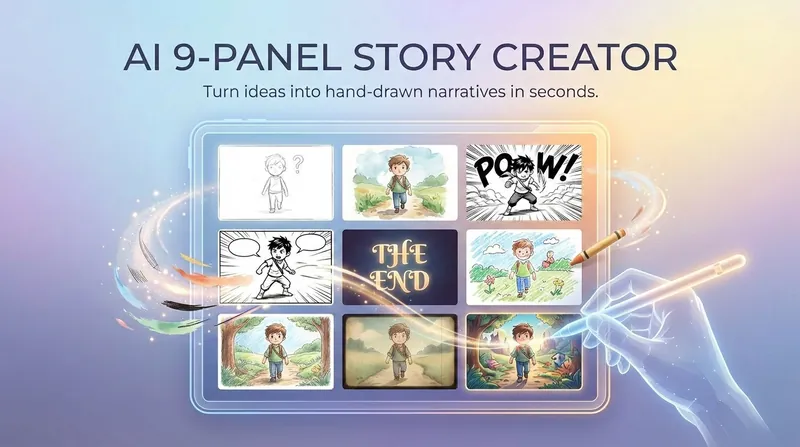
Grid Story: Nine-Panel Comics
Enter a story theme or synopsis. The AI automatically arranges the plot into nine panels. You can provide reference images to maintain consistent character appearances. Choose from six hand-drawn styles: Minimalist Doodle, Watercolor Picture Book, Pencil Sketch, Japanese Manga, Retro Comic Strip, and Children's Crayon Drawing. The skill generates a complete 3×3 nine-grid hand-drawn story image. Ideal for sharing on Xiaohongshu, WeChat Official Accounts, and WeChat Moments.
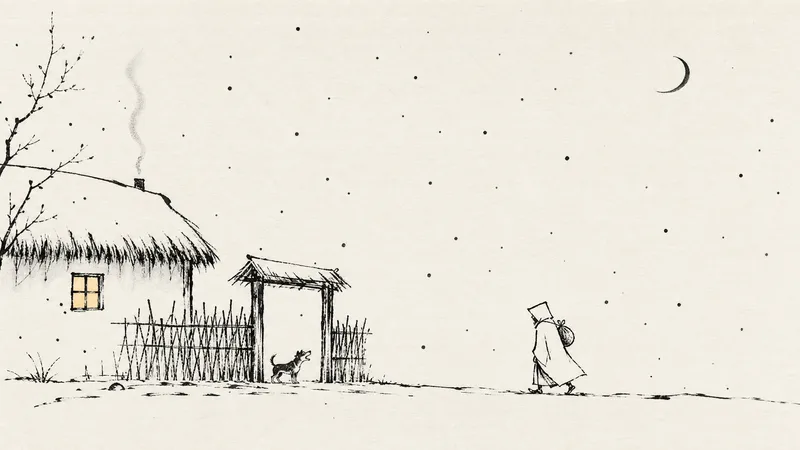
Eastern Philosophy Comics
Turn a sentence, philosophical idea, piece of classical prose or poetry, fable, everyday question, scene description, or uploaded photo into a simple, quiet, original comic illustration with an Eastern philosophical sensibility. The artwork centers on black-and-white ink lines, symbolic figures, generous negative space, and minimal environmental elements, allowing abstract ideas to emerge naturally through gestures, key objects, and spatial relationships rather than lengthy textual explanation. For abstract concepts such as “自我消耗,” “自由,” and “沉没成本,” as well as Zen koans, Tang and Song poetry, and historical stories, the skill distills the underlying tensions and meaning, then chooses a suitable single-panel composition or multi-panel narrative to express themes such as loneliness, choice, desire, and impermanence. Figures, clothing, and settings are simplified to suit modern or classical contexts while preserving a clear, two-dimensional comic style and visual metaphors. When you upload a photo, it can be redrawn as a minimalist Eastern line-art comic while preserving recognizable features, posture, clothing, and the main compositional relationships, rather than simply applying a filter. Text is not added by default; when needed, specified text can be retained, a small amount of dialogue added, or the aspect ratio, panel count, or low-saturation colors adjusted. Realistic, 3D, anime-inspired, and complex commercial illustration styles are avoided.
Create Healing Comic Notes
Automatically generate healing-style Xiaohongshu content for social media operators. Enter a topic to generate a 3:4 comic image with speech bubbles and matching copy. ## Step 1: Topic Analysis and Style Positioning Analyze the user's input topic, extract core keywords and emotional tone, determine the scene type (daily life/nature/pets/food/solo time, etc.), set the visual temperature (warm: warm yellow-orange tones vs fresh: blue-green-white tones) and emotional depth (light healing/deep resonance). **Prohibited**: Do not analyze commercial or sales-oriented content; avoid horror, thriller, negative, or overly sentimental tones. ## Step 2: Image Concept and Generation Use the imageGenerate tool to create a 3:4 ratio healing comic image. The prompt must include: healing comic style, soft colors, simple composition, appropriate white space, and comic speech bubbles (2-10 short warm words inside the bubble). Set quality to high. **Key Requirements**: The image must be a 3:4 comic style with soft colors and comic speech bubbles. ## Step 3: Copywriting Write Xiaohongshu copy including: a title (must include emoji, 15-20 characters), body text (automatically determined by topic emotional depth: 50 characters or less for light topics, 100-200 characters for story-driven topics), and 5 relevant topic hashtags (format #Hashtag). **Copy Requirements**: First-person perspective, warm and gentle, avoid commercial or preachy tone, may include a soft call-to-action at the end. **Output Format**: [Title] [Body] #[Hashtag1] #[Hashtag2] #[Hashtag3] #[Hashtag4] #[Hashtag5] ## Step 4: Final Output Combine the generated image and copy into a complete Xiaohongshu content proposal. --- **Tool Configuration**: imageGenerate (generates 3:4 healing comic images) **Usage Tips**: 1. The more specific the topic, the more precise the output 2. You can add style preferences like "I want a warm style" 3. Use the same topic multiple times to get different perspectives **Testing Suggestions**: - Standard scenario: Enter "Healing moments of the weekend" → generate warm/fresh comic + healing copy + 5 hashtags - Edge case: Enter a negative topic → automatically turn it into a positive healing direction
Philosophical Four-Panel Comic
Instructions
First, carefully understand the topic concepts provided by the user. Confirm:
1. What is the core meaning of the theme?
2. Is it a philosophical piece about life or a satirical piece about the industry?
3. Are there any requirements regarding the protagonist's gender/characteristics?
4. Does it involve real people or brand logos?
If the topic is unclear, ask the user for clarification.
Based on the theme, create a philosophical four-panel comic strip story. Story structure:
**First Section: Presentation of the Problem/Current Situation**
- Scene Description
- Character actions and expressions
- Dialogue content
- Narration (stating the theme)
**Second Section: Problem Escalates/Conflict**
- Scene Description
- Changes in character movements and expressions
- Dialogue content
- Narration (revealing the predicament)
**Third Section: Turning Point/Awakening**
- Scene Description
- Character movements and facial expressions
- Dialogue content
- Narration (to guide thought)
**Fourth Section: Sublimation/Wisdom**
- Scene Description
- The character's movements and expressions are relaxed.
- Dialogue content
- Narration (conveying philosophical ideas)
- Orange label (core keywords)
**Story Highlights:**
- Use visual metaphors (e.g., pushing against a wall and a door, gripping and releasing, height and flowers, etc.).
- Strong contrast (first three panels vs. fourth panel)
- The ending elevates the theme and conveys profound philosophical insights.
- Concise and powerful, without being verbose
Present the complete four-panel story to the user for confirmation.
Use the imageGenerate tool to generate the illustration. Strictly follow the prompt template below:
```
Four-panel comic strip, 2x2 grid layout (two rows and two columns), minimalist line art style, business illustration style. Pure white background, outlined with black lines, orange is used only as the accent color for key labels, and the use of orange is very restrained. Except for a very small amount of light brown used for wooden objects, gray tones are not used.
At the top of the entire four-panel comic strip, the title is written in clear black Chinese font: "[Topic Name]".
Character Style: Simplified yet proportionally balanced character design (not stick figure): round head, minimalist facial features (two dots for eyes, an arc for mouth, simple hairstyle outline), and clearly defined details on the body, including shirt collar, sleeves, pants, and shoes. The character occupies a relatively small proportion of the image (mid-to-long distance). Characters are distinguished by different hairstyles: bald, short hair, medium-length hair, etc.
Four-grid layout: a grid layout with 2 rows and 2 columns of squares. The border of each square is hand-drawn with slightly natural curves (not completely straight).
Key stylistic features: clean lines, simplified figures with individuality, figures in appropriate proportions, pure white background with only black outlines, orange used only for key labels and very restrained, minimal shadows (light brown is used only for wooden objects), slightly irregular borders with a hand-drawn aesthetic, and clear outlines of business casual clothing.
[If brand logos are involved, add:] Important: Each person's logo should be displayed on their chest (simplified version, outlined in black, Claude logo filled with a warm rust orange).
First panel (top left): [Detailed description of the scene, characters, actions, expressions, dialogue, and narration]
Second panel (top right): [Detailed description of the scene, characters, actions, expressions, dialogue, and narration]
Third panel (bottom left): [Detailed description of the scene, characters, actions, expressions, dialogue, and narration]
Fourth panel (bottom right): [Detailed description of the scene, characters, actions, expressions, dialogue, and narration, emphasizing that the orange label is the only orange element in the entire painting]
```
**Key Parameters:**
- model: "gemini-3.1-flash-image-preview"
- aspect_ratio: "16:9"
- quality: "medium"
- title: "[Theme Name] - Four-Panel Comic"
**Important Notice:**
1. The prompts must be very detailed, including the scene, characters, actions, expressions, dialogue bubbles, and bottom descriptions for each cell.
2. Orange is used only for the key tag in the fourth cell; extreme restraint is required.
3. If real people are involved (such as Sam Altman, Dario Amodei, Elon Musk), their actual physical characteristics need to be described.
4. If brand logos are involved (such as ChatGPT, Claude, Gemini, Grok), the logo characteristics need to be accurately described.
5. Claude logo characteristics: square or rounded square, warm rust orange (#C15F3C), with abstract geometric patterns inside.
After generation:
1. **Display Results** - The four-panel comic has been automatically displayed.
2. **Inquire about user feedback:**
Are you satisfied with the storyline?
- Do the characters/roles need to be adjusted?
Does the visual style need to be changed?
3. **Optimization options are provided:**
- Modify the storyline
- Adjust character traits (gender, hairstyle, clothing)
- Modify the scene or dialogue in a specific cell.
- Adjust the viewing angle (e.g., switch to a top-down view).
- Regenerate
4. **Provide prompt words:**
If users want prompts to use for their own optimization, provide a complete prompt generation tool.
5. **Next step suggestion:**
- Continue creating other themes
- Save your work to board
- Publish and share
Description
Automatically create philosophical four-panel comic stories based on user-provided themes, and generate simple business-style illustrations. Suitable for themes such as life philosophy, AI industry satire, etc.
Related Skills
View all
Grid Story: Nine-Panel Comics
Enter a story theme or synopsis. The AI automatically arranges the plot into nine panels. You can provide reference images to maintain consistent character appearances. Choose from six hand-drawn styles: Minimalist Doodle, Watercolor Picture Book, Pencil Sketch, Japanese Manga, Retro Comic Strip, and Children's Crayon Drawing. The skill generates a complete 3×3 nine-grid hand-drawn story image. Ideal for sharing on Xiaohongshu, WeChat Official Accounts, and WeChat Moments.
Eastern Philosophy Comics
Turn a sentence, philosophical idea, piece of classical prose or poetry, fable, everyday question, scene description, or uploaded photo into a simple, quiet, original comic illustration with an Eastern philosophical sensibility. The artwork centers on black-and-white ink lines, symbolic figures, generous negative space, and minimal environmental elements, allowing abstract ideas to emerge naturally through gestures, key objects, and spatial relationships rather than lengthy textual explanation. For abstract concepts such as “自我消耗,” “自由,” and “沉没成本,” as well as Zen koans, Tang and Song poetry, and historical stories, the skill distills the underlying tensions and meaning, then chooses a suitable single-panel composition or multi-panel narrative to express themes such as loneliness, choice, desire, and impermanence. Figures, clothing, and settings are simplified to suit modern or classical contexts while preserving a clear, two-dimensional comic style and visual metaphors. When you upload a photo, it can be redrawn as a minimalist Eastern line-art comic while preserving recognizable features, posture, clothing, and the main compositional relationships, rather than simply applying a filter. Text is not added by default; when needed, specified text can be retained, a small amount of dialogue added, or the aspect ratio, panel count, or low-saturation colors adjusted. Realistic, 3D, anime-inspired, and complex commercial illustration styles are avoided.
Create Healing Comic Notes
Automatically generate healing-style Xiaohongshu content for social media operators. Enter a topic to generate a 3:4 comic image with speech bubbles and matching copy. ## Step 1: Topic Analysis and Style Positioning Analyze the user's input topic, extract core keywords and emotional tone, determine the scene type (daily life/nature/pets/food/solo time, etc.), set the visual temperature (warm: warm yellow-orange tones vs fresh: blue-green-white tones) and emotional depth (light healing/deep resonance). **Prohibited**: Do not analyze commercial or sales-oriented content; avoid horror, thriller, negative, or overly sentimental tones. ## Step 2: Image Concept and Generation Use the imageGenerate tool to create a 3:4 ratio healing comic image. The prompt must include: healing comic style, soft colors, simple composition, appropriate white space, and comic speech bubbles (2-10 short warm words inside the bubble). Set quality to high. **Key Requirements**: The image must be a 3:4 comic style with soft colors and comic speech bubbles. ## Step 3: Copywriting Write Xiaohongshu copy including: a title (must include emoji, 15-20 characters), body text (automatically determined by topic emotional depth: 50 characters or less for light topics, 100-200 characters for story-driven topics), and 5 relevant topic hashtags (format #Hashtag). **Copy Requirements**: First-person perspective, warm and gentle, avoid commercial or preachy tone, may include a soft call-to-action at the end. **Output Format**: [Title] [Body] #[Hashtag1] #[Hashtag2] #[Hashtag3] #[Hashtag4] #[Hashtag5] ## Step 4: Final Output Combine the generated image and copy into a complete Xiaohongshu content proposal. --- **Tool Configuration**: imageGenerate (generates 3:4 healing comic images) **Usage Tips**: 1. The more specific the topic, the more precise the output 2. You can add style preferences like "I want a warm style" 3. Use the same topic multiple times to get different perspectives **Testing Suggestions**: - Standard scenario: Enter "Healing moments of the weekend" → generate warm/fresh comic + healing copy + 5 hashtags - Edge case: Enter a negative topic → automatically turn it into a positive healing direction
Find your next favorite skill
Explore more curated AI skills for research, creation, and everyday work.