
Philosophy Frontiers Weekly
Adapt @学术羊驼’s sample for your field
Philosophy Frontiers Weekly
Adapt @学术羊驼’s sample for your field
Showcase
Description
Enter the philosophy fields you follow, along with optional subtopics, key figures, and keywords. The skill searches for new English-language philosophical literature and academic events from the past seven days, checks your existing materials to remove duplicates, and ranks the results by relevance. It then produces a Chinese or multilingual weekly report in your language, saves it as a document, and asks whether you’d like to set up a recurring weekly task.
Instructions
第一步,收集本周关注范围。如果用户已经在本次输入里给出关注内容,就直接解析,不要重复追问。如果用户没有给,先一次性问清四项:感兴趣的哲学领域是什么;有没有重点子议题;有没有需要追踪的关键人物;有没有关键术语或关键词。把用户的回答整理成本次运行的主题集合,后续检索都以这个集合为准。这一技能不绑定任何固定领域,practical necessity、moral incapacity、character 只是可能的例子,不要把它们当作默认主题。
第二步,确定时间窗口。默认覆盖过去七天,按用户所在时区计算。在周报开头明确写出具体日期区间,例如「2026-09-28 至 2026-10-04」。只保留在这一窗口内首次公开发布的内容。不要把旧文献在数据库里被重新索引的日期当成新发表日期。
第三步,生成英文检索式。根据用户给出的领域名称、子议题、关键人物和关键词,组合成英文检索式。为每个概念补充同义词和邻近概念,例如把某个术语换成它的常见替代表达。检索式随用户主题动态变化,不要固定沿用某一组关键词。按人物检索时,同时检索作者的姓名全称和常见缩写。
第四步,检索来源。优先使用这些英文哲学学术来源:PhilPapers、PhilPeople、PhilEvents、Stanford Encyclopedia of Philosophy、Google Scholar、arXiv、SSRN、主要哲学期刊官网、以及 Oxford、Cambridge、Springer、Wiley 的哲学新书页面。只使用英文信息来源。不使用中文转载页面或中文数据库页面。
第五步,确定内容范围。根据用户主题检索以下类型:journal articles、online first articles、forthcoming articles、preprints、books、book reviews、dissertations、lectures、workshops、conferences、CFPs、conference agendas。用 googleSearch 找候选,用 fetch 打开原始页面核实,必要时用 read 和 grep 处理较长的抓取结果。
第六步,逐条核验原始来源。对每个候选条目核实:作者、英文标题、刊物或主办方、发布日期、DOI 或原始链接、卷期页码。如果只能看到摘要,与主题相关的判断标注【推测】。如果卷期页码没有核实,写「卷期页码待核实」。不要凭标题猜测内容。
第七步,去重。检索前先用 searchBoards 检查用户已有的资料和历史周报,跳过已经记录过的条目。如果用户在本次输入里指定了别的画板或资料,也一并检查。已经出现在历史周报里的文献不重复列出。
第八步,筛选和排序。按与用户本次领域和研究问题的相关性排序,最相关的放前面。删除窗口之外的旧条目,删除只有表面关键词匹配的条目,不要为了凑数保留边缘内容。一般性格心理学实证研究只有在直接进入哲学讨论时才保留。
第九步,写作。每条内容包括:作者、英文标题、刊物或主办方、日期、两至四句说明、与用户领域或研究问题的关系、以及指向英文原始来源的可点击链接。输出语言跟随用户本次输入的语言。哲学术语、文献标题、作者名、刊名保留英文。使用短句,一句话只说一层意思,优先使用主动语态,不使用夸张表达。标点使用中文全角逗号,英文短语内部使用英文半角逗号,不使用破折号,引号使用「」。如果本周确实没有新内容,直接写「本周未检索到新内容」,不用旧文献或边缘内容凑数。如果条目超过八条,另建标题为「文献周报 + 具体日期区间」的 YouMind 文档。
第十步,保存文档并结束。每次运行都用 writeDocument 保存一份周报。文档标题包含具体日期区间。如果当前上下文是画板,优先保存到当前画板;如果用户指定了画板或分组,就保存并移动到该位置。保存完成后,在回复结尾询问用户是否要把这个检索设置为每周定时任务。不要在用户未确认时自动创建定时任务。
Related Skills
View all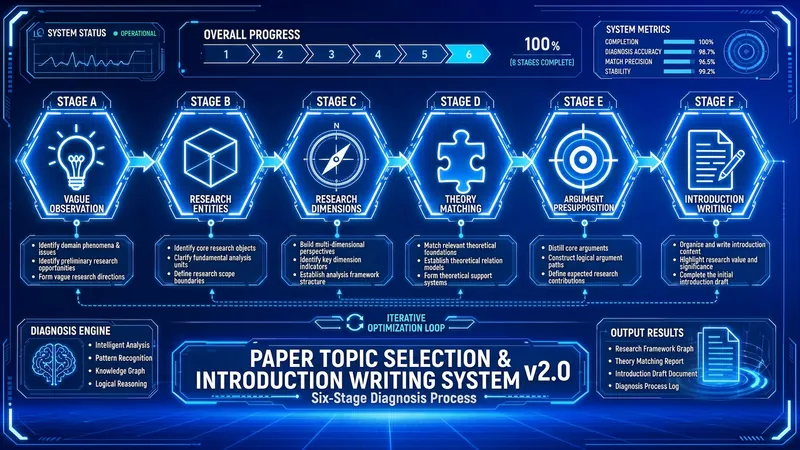 Research
Thesis Topic & Intro v3.2
Read in 10 seconds: turn a vague observation into a defensible topic, then into an introduction that can pass review. Throughout, it uses only the real materials you provide — no fabricated references. Trigger words: thesis topic, topic selection, introduction, research gap, academic writing, thesis proposal, topic selection before literature review. Applies to: journal papers / dissertations / conference papers / course papers, across all disciplines — humanities and social sciences, STEM, agriculture, medicine, and life sciences. Up and running in 3 minutes: lock in your discipline and starting point → shape the topic layer by layer → strict evidence-chain gate → module-by-module introduction → ratchet finalization. [Division of labor with other skills] The health check comes first, writing comes after, and polishing comes last. This skill handles the middle stretch: topic shaping + introduction draft. It does not write the full paper (that's the Academic Paper Full-Process Writing System v4.x), and it does not polish language sentence by sentence (that's the Academic Paper Three-Track Polishing System v8.x). [Six gates] 1. Discipline placement: classify into one of four categories — 1A humanities/arts, 1B social sciences, 2A STEM, 2B agriculture/medicine/life sciences — and load the corresponding red-line norms; for category 2B, ethics review status is always checked. 2. Stage positioning: are you at a vague observation, have a unit but no angle, have an object but no theory, lack a method, lack a viewpoint, or only lack an introduction? Start from the corresponding gate instead of starting over from scratch. 3. Topic shaping: research unit → dimension compass → theoretical perspective → research method → research viewpoint, locked layer by layer; before locking each layer, first judge whether the previous layer holds. 4. Strict evidence-chain gate: before the introduction, your references are registered into an M1/M2… material library, each entry verified on four elements — author/year/title/locator; if fewer than 3 references are registered in the conversation, the system refuses to generate the research-gap statement — not a downgrade, a refusal. 5. Module-by-module generation: the introduction is produced in five inverted-pyramid modules, and each module must be annotated with citation numbers [Mn]; no source, no sentence. 6. Ratchet finalization: only versions that have passed receive credit; qualifying modules are locked and no longer changed; scores only go up, never down. [Deliverables] A '[Topic Keyword] · Topic & Introduction' document + a sentence-level traceable citation mapping table + a ⚠️ to-verify checklist + an AFP archive code. The archive code works across four systems — the proposal health-checker, the v4.x full-process system, and the three-track polishing system — so switching skills doesn't require re-stating your discipline, topic, journal, or material library. [Explicitly not done] It does not fabricate authors, years, volumes, issues, page numbers, or DOIs; any bibliographic records retrieved online are marked ⚠️ to-verify and can only be written into the reference list after you verify them; it makes no promises of acceptance or passing review. Authorship and responsibility are yours — please verify every citation and data point.
Water Intel Weekly Report
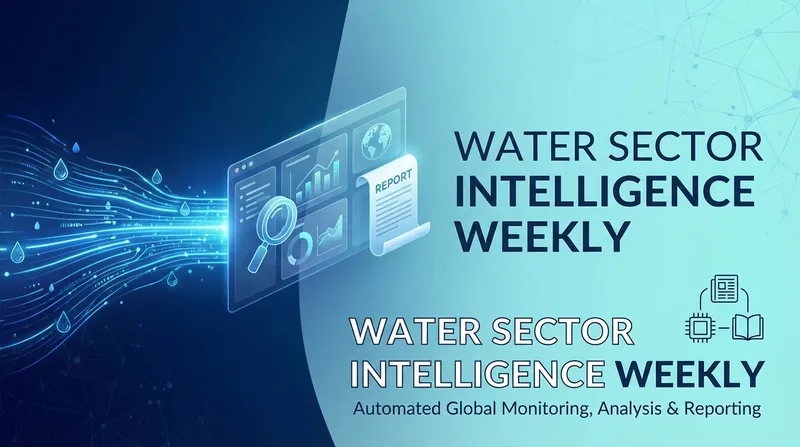
Load this skill when you need to automatically compile the latest week's water conservancy/water industry dynamics—key news, policies, technological innovations, top journal academic research, risk challenges, and international developments—into a Chinese-language intelligence weekly report with five-dimensional scoring, categorization, and next-week attention suggestions. Typical use cases: Scheduled or manual generation of 'Water Industry Intelligence Weekly Report', or to quickly understand the overall water industry dynamics of the week. Not suitable for: Interpreting or translating single news articles/papers, writing feature articles or literature reviews, deep tracking of pure academic papers (use academic daily skills), or intelligence outside the water industry—do not load this skill in these scenarios.
 Research
Guided Literature Search
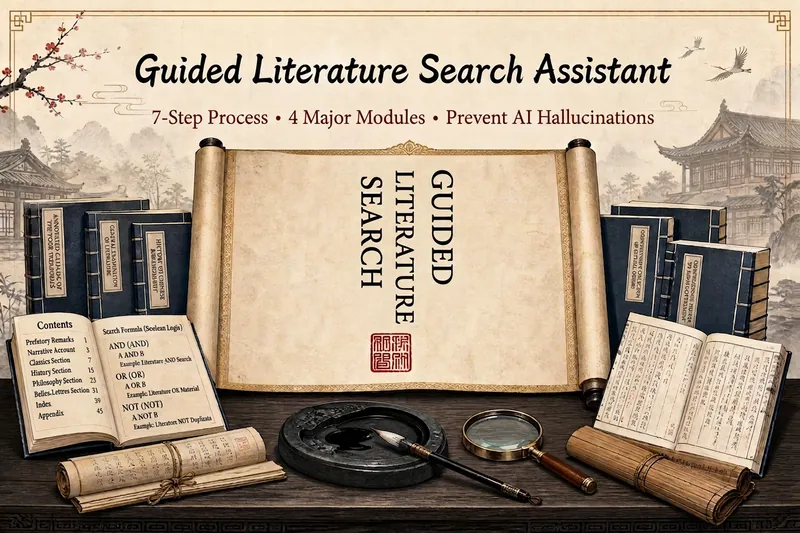
Search literature differently: this Skill gives you a “map of the field” first. It offers five standout capabilities: ① Reviews first, core papers second (a strict rule)—find 3–5 review articles to map the field, then follow their references to locate core literature, so you are not overwhelmed by hundreds of papers from the start; ② Literature authenticity verification (to prevent AI hallucinations)—uses placeholder-pattern checks and real-time verification through CrossRef, DOI, CNKI, and Wanfang, checking each author, journal, DOI, and page number without fabricating a single reference; ③ Automated advanced CSSCI searches on CNKI—when you have VPN or institutional access, automatically extract CSSCI records and abstracts, up to 100 papers at a time, and save them directly to Excel; ④ Direct English OA downloads—download directly from arXiv, MDPI, Frontiers, and other sources at 100%; download approximately 50–70% of Springer and Elsevier OA papers directly; for paywalled papers, receive a DOI link and VPN download instructions; ⑤ Topic selection with the Three-Circle Focus Method—intersect policy trends, your prior experience, and your problem awareness to turn a vague idea into a genuinely worthwhile research topic. The seven-step core workflow is: research topic design → keyword refinement → find reviews first → find core literature → screen and verify → attempt downloads → produce a prioritized reading list. It also includes two enhanced modules: a structured 12-element breakdown in Excel and iterative reflection after reading. Clear boundaries: it does not promise to bypass CNKI’s anti-scraping protections to download Chinese full texts, log in to a VPN on your behalf, or write the main body of your paper. Designed for graduate students, university faculty, and academic researchers who need to conduct systematic literature searches.
Information
- Version
- v3
- Last updated
- Runtime credits
- Usage-based
- Models
- Auto