xiaoxiaodong P126 | Collage
By xiaoxiaodong
xiaoxiaodong P126 | Collage
By xiaoxiaodong
Description
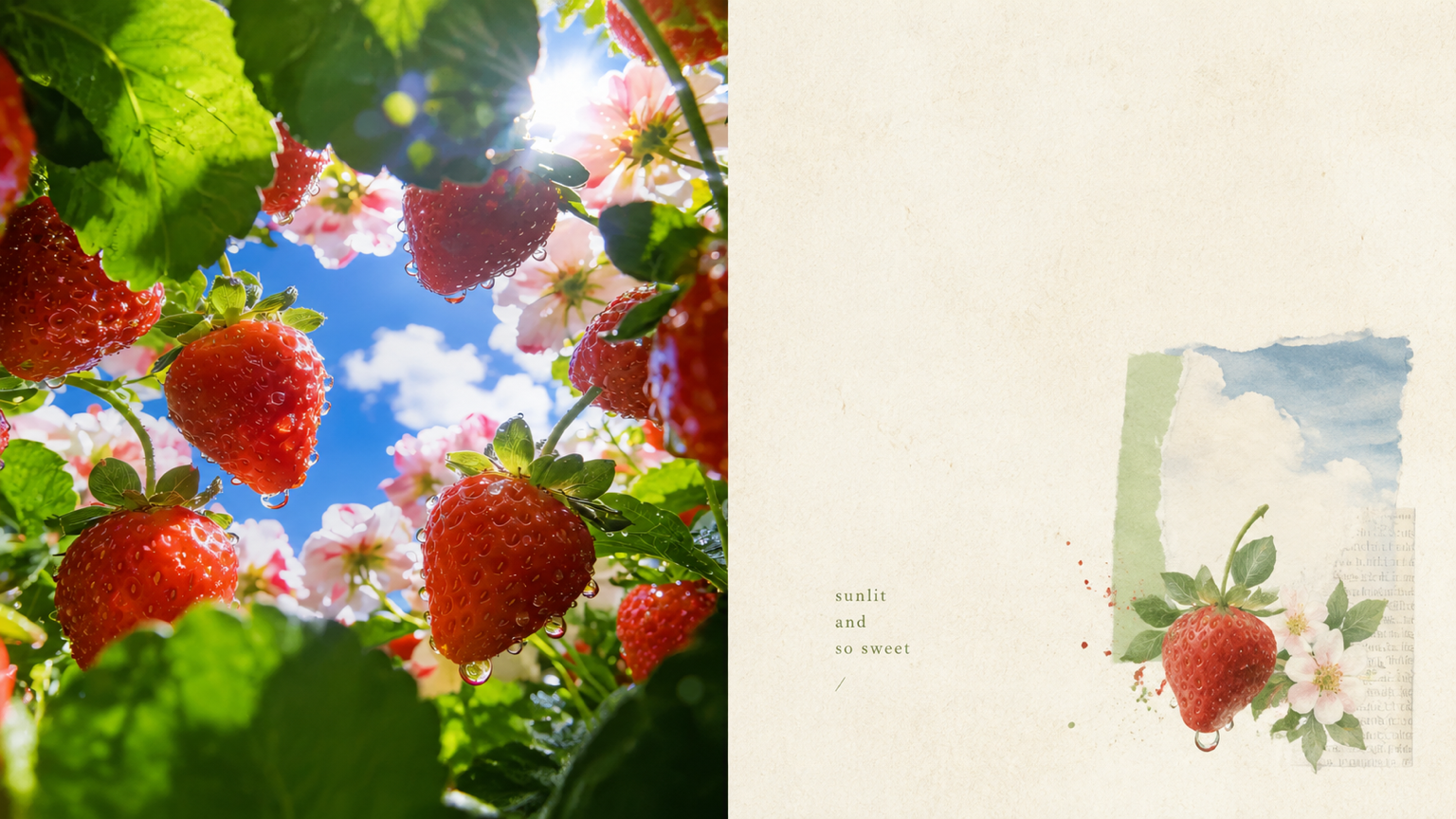
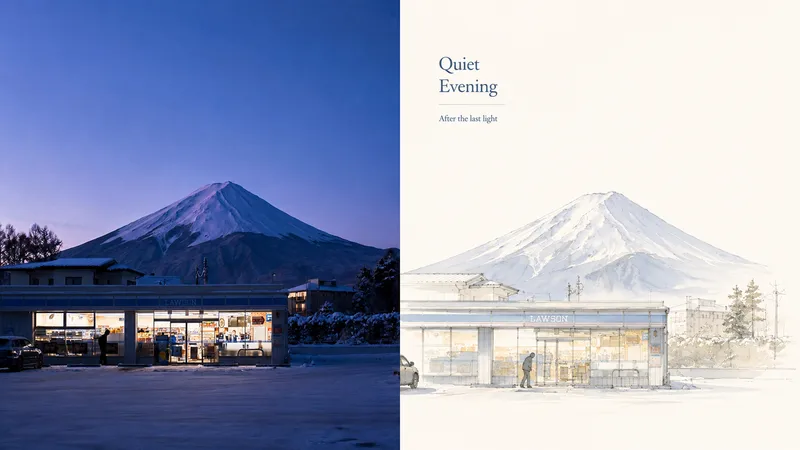
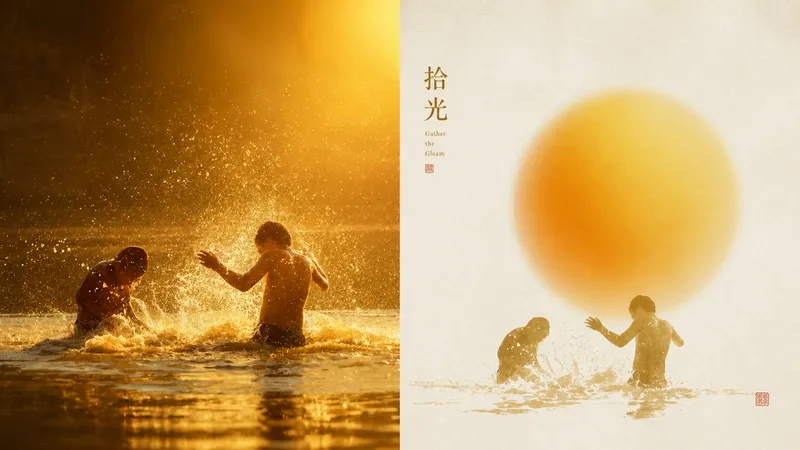
Suitable for organizing personal photography, independent publishing, exhibition studies, and lifestyle-oriented visual projects. Even when the original composition is ordinary, the background is cluttered, or the subject is small, you can reestablish the visual focus through reduction, rearrangement, cropping, and changes in scale—instead of simply applying a filter to the photo. The lower section extracts only the most recognizable subjects, outlines, structures, gestures, and narrative relationships from the photo, reconstructing them as Minimalist Poetic Collage Illustration. Do not copy the photo in full, redraw every object literally, or retain all subjects and background elements. Remove irrelevant details and keep only the structures, lines of movement, and visual memory cues that best represent the original. Re-express them through simplification, cropping, scaling, rearrangement, and negative space, so the relationship to the photo above is immediately recognizable.
Recommended by
淡苍
Why we love this skill
Transforms real photos into poetic miniature collages through balanced composition, restrained negative space, and a limited color palette, with flexible layouts, text modes, and wallpaper support.
Showcase
1 / 4
Related Skills
View all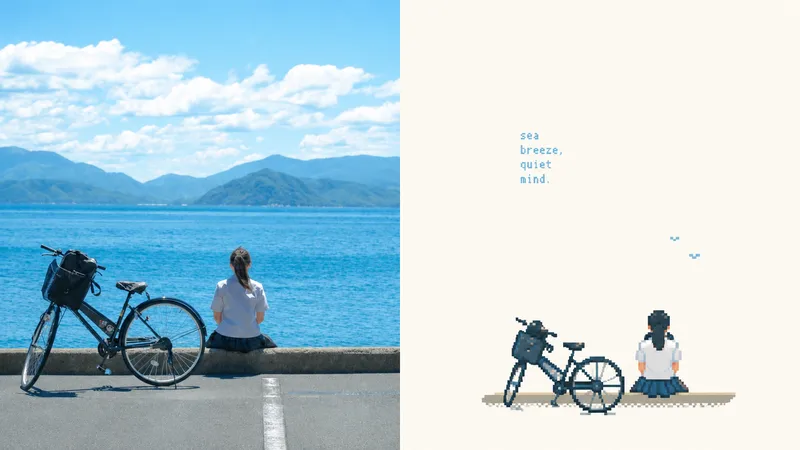 Image
Imagexiaoxiaodong P154 | Pixel Zine
Suitable for organizing personal photography, independent publishing, exhibition practice, and lifestyle visual projects. Even when the original image has an ordinary composition, a cluttered background, or a small subject, you can reestablish its visual focus through reduction, recomposition, cropping, and changes in scale instead of simply applying a filter. The lower half extracts only the most recognizable subjects, outlines, structures, poses, and narrative relationships from the photo, then reconstructs them as low-resolution pixel art illustrations in a retro 16-bit game art style. Do not fully copy the photo or redraw every object. Instead, remove most unrelated background elements and details, preserving only the structures, directions, and visual memory cues that best represent the original subject. Use deliberate pixel clusters, hard-edged color blocks, and geometric contours to create a new summary, so the connection between the result and the photo above is immediately recognizable.
 Image
Imagexiaoxiaodong P155 | 1-Point
For organizing personal photography, independent publishing, exhibition practice, and lifestyle visual creation. Even when the original image has an ordinary composition, a cluttered background, or a small subject, its focus can be re-established through subtraction, reorganization, cropping, and changes in scale—not by simply applying a filter. In the lower section, extract only the most recognizable subject, outline, structure, pose, and narrative relationships from the photo, and reconstruct them as a one-point-perspective interior design sketch / softly colored architectural interior rendering. Do not copy the photo in full or retain every object. Remove irrelevant details and keep only the structures, directional flow, and visual memory cues that best represent the original, then summarize and reinterpret them so the relationship to the photo above is immediately recognizable.
 Image
Imagexiaoxiaodong P129 | Open Space
Ideal for organizing personal photography, independent publishing, exhibition studies, and lifestyle-oriented visual work. Even when the original composition is ordinary, the background is cluttered, or the subject is too small, you can reestablish a focal point through reduction, rearrangement, cropping, and changes in scale instead of simply applying a filter to the photo. The lower section extracts only the most recognizable subjects, contours, structures, gestures, and narrative relationships from the photo, then reconstructs them as a new Chinese-style Eastern minimalist graphic poster. Do not copy the photo in full, redraw every object individually, or retain all the objects and background. Remove irrelevant details and keep only the visual cues that best represent the original subject and theme. Reexpress them through silhouettes, symbols, geometric forms, and imagery so viewers can immediately recognize the connection to the photo above while clearly experiencing a considered redesign rather than a replica.