xiaoxiaodong P125 | Crayon Zine
By xiaoxiaodong
xiaoxiaodong P125 | Crayon Zine
By xiaoxiaodong
Description
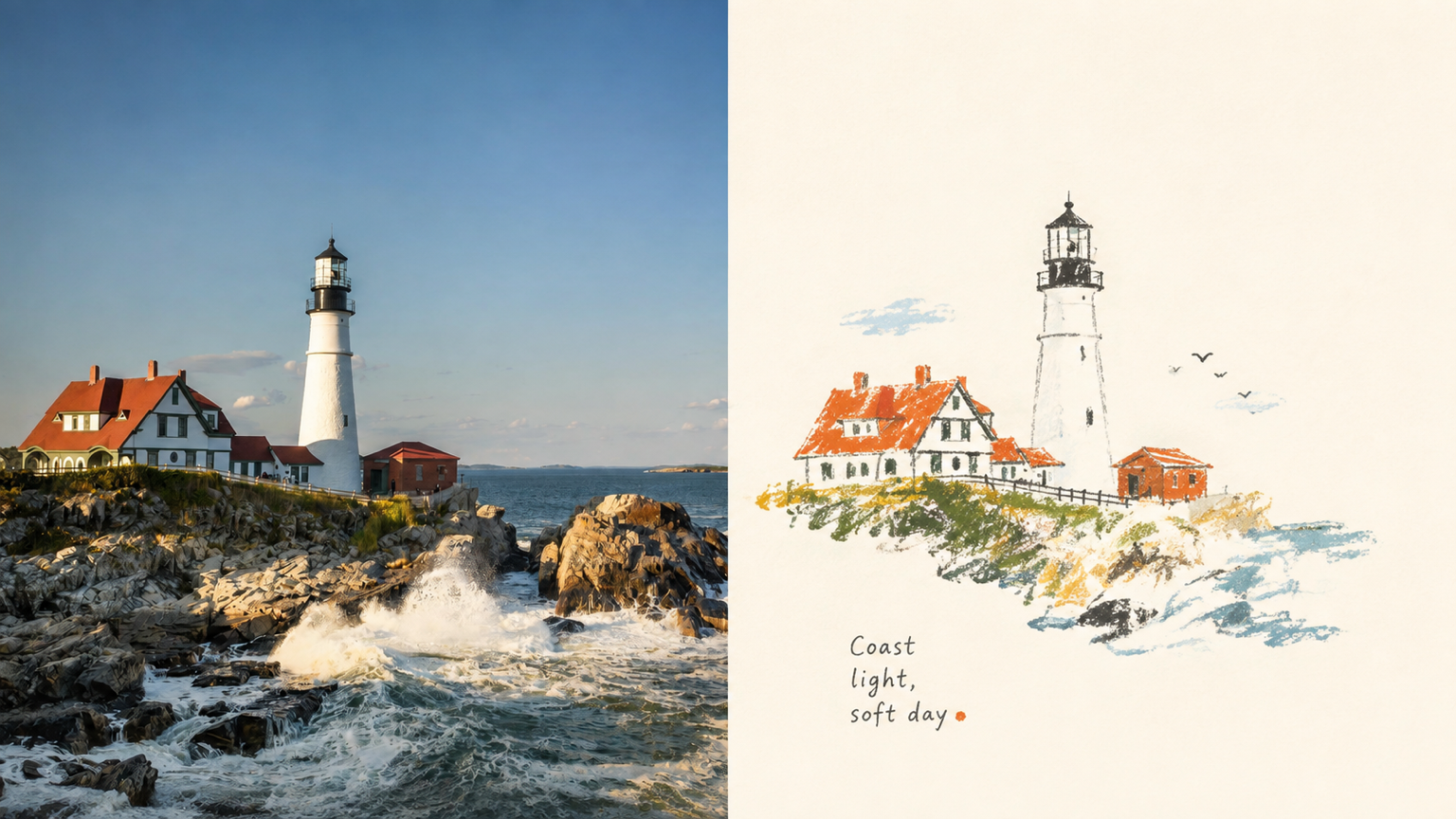
Suitable for organizing personal photography, independent publishing, exhibition practice, and lifestyle visual projects. Even when the original composition is ordinary, the background is cluttered, or the subject is small, you can reestablish a visual focus through subtraction, reorganization, cropping, and changes in scale—instead of simply applying a filter to the photo. The lower section extracts only the most recognizable subjects, outlines, structures, poses, and narrative relationships from the photo, then reconstructs them as a digitally simulated, childlike hand-drawn illustration with crayon or oil pastel texture. Do not copy the photo in full, redraw every object individually, or retain most of the background and unrelated elements. Remove irrelevant details and keep only the structures, lines of movement, and visual cues that best represent the original subject. Through simplification, subtraction, and reorganization, make the connection between the illustration and the photo above immediately recognizable.
Recommended by
淡苍
Why we love this skill
Turns photos into standalone visual stories with playful crayon strokes, restrained colors, and generous white space. Follows the original brief while handling split layouts, text patterns, and multi-device wallpaper delivery.
Showcase
1 / 4
Related Skills
View all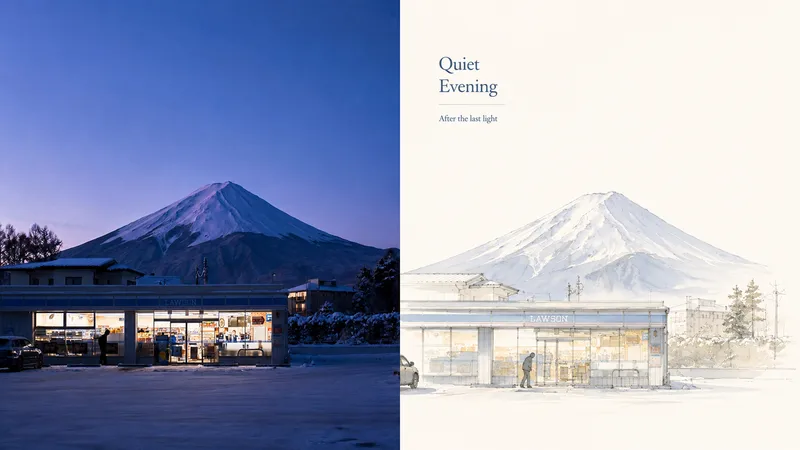 Image
Imagexiaoxiaodong P155 | 1-Point
For organizing personal photography, independent publishing, exhibition practice, and lifestyle visual creation. Even when the original image has an ordinary composition, a cluttered background, or a small subject, its focus can be re-established through subtraction, reorganization, cropping, and changes in scale—not by simply applying a filter. In the lower section, extract only the most recognizable subject, outline, structure, pose, and narrative relationships from the photo, and reconstruct them as a one-point-perspective interior design sketch / softly colored architectural interior rendering. Do not copy the photo in full or retain every object. Remove irrelevant details and keep only the structures, directional flow, and visual memory cues that best represent the original, then summarize and reinterpret them so the relationship to the photo above is immediately recognizable.
 Image
Imagexiaoxiaodong P124 | Collage
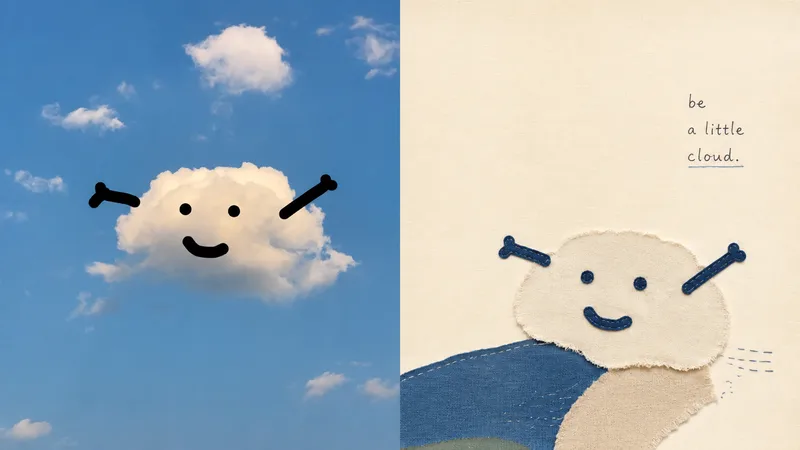
Suitable for organizing personal photography, independent publishing, exhibition practice, and lifestyle visual creation. Even when the original image has an ordinary composition, a cluttered background, or a small subject, you can reestablish a visual focus through reduction, reorganization, cropping, and changes in scale—instead of simply applying a filter to the photo. For the lower section, extract only the most recognizable subjects, outlines, structures, poses, and narrative relationships from the photo, then reconstruct them as Fabric Collage Illustration / Appliqué-style Illustration. Do not fully copy the photo, redraw every object one by one, or retain every element; remove irrelevant details and keep only the structures, visual flow, and memorable visual cues that best represent the original. Use textile textures, appliqué-style color blocks, layered fabric pieces, raw edges, and a small number of stitches to create a concise interpretation, while keeping the correspondence with the photo above immediately recognizable.
 Image
Imagexiaoxiaodong P156|Duo Zine
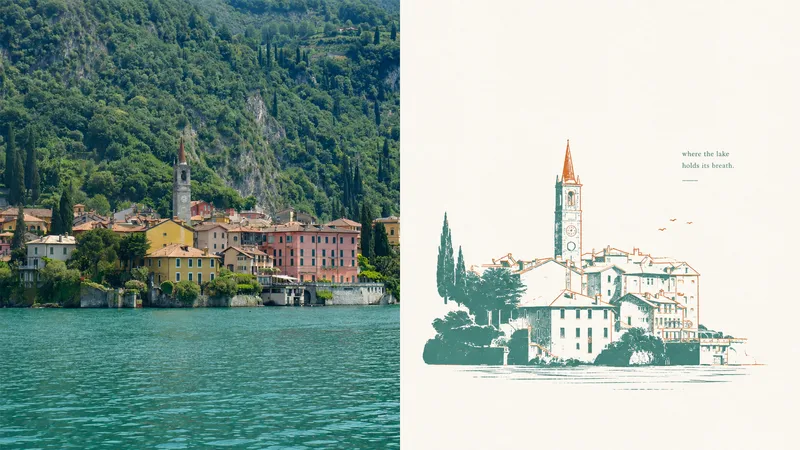
Suitable for organizing personal photography, independent publishing, exhibition practice, and lifestyle-oriented visual creation. Even when the original image has an ordinary composition, a cluttered background, or a subject that appears too small, you can reestablish its visual focus through reduction, reorganization, cropping, and changes in scale—instead of simply applying a filter to the photo. The lower section extracts only the most recognizable subjects, contours, structures, poses, and narrative relationships from the photo, reconstructing them as a two-color spot-ink misregistered hand-drawn illustration / Risograph-like duotone editorial illustration. Do not fully copy the photo or redraw every object individually. Actively remove most of the background and secondary information, retaining only the structural flow and visual memory points that best represent the original subject. Use selective flat color, open contours, negative space, and a small number of lines to distill the image, so viewers can immediately recognize its correspondence with the photo above.