Slow Teacher's Readable Writing
Craft engaging content and polish grant proposals
Slow Teacher's Readable Writing
Craft engaging content and polish grant proposals
Showcase
Description
Leverage reading engineering to transform topics, notes, or reference materials into WeChat articles, Xiaohongshu posts, or book review scripts that readers genuinely enjoy and easily understand. It also supports reader-friendly editing and polishing for National Natural Science Foundation proposals (such as project foundations, abstracts, and research content), flexibly adapting style to suit your audience and scenario.
Related Skills
View all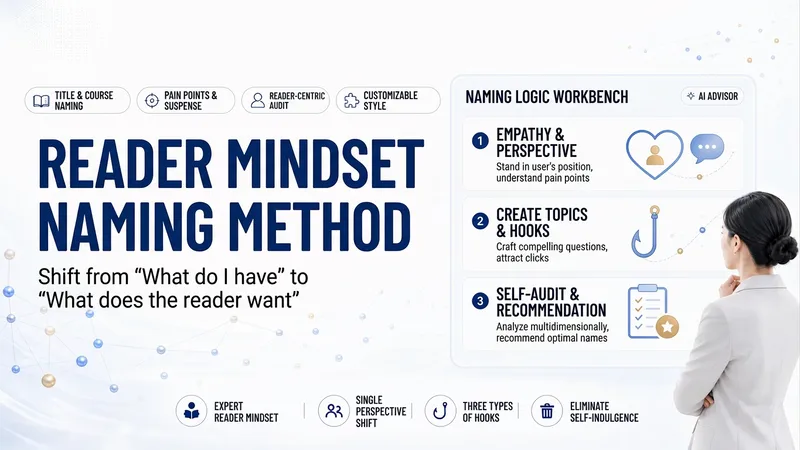
Slow Teacher Naming Method
Based on Qiuguo (田洪鋆)’s “reader mindset,” this Skill shifts from “what I have” to “what readers want, fear, and aspire to become.” It generates batches of compelling candidates for book titles and manuscripts, WeChat Official Account articles, short videos and image-text posts, courses, lectures, and columns. It also adapts one piece of content across channels—including WeChat Official Accounts, Douyin, WeChat Channels, Xiaohongshu, Bilibili, and podcasts—based on each platform’s characteristics, with WeChat Official Account titles given the highest priority. It provides recommendations, reasons, and reader-perspective self-checks. The default style is general and adaptive, with an option to switch to the Slow Teacher Official Account style.
 Write
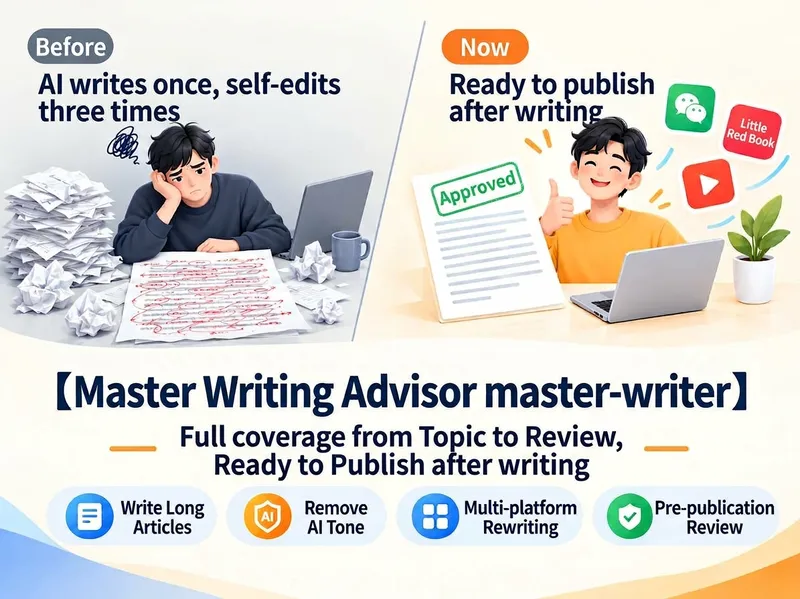
Master Writing Advisor
Who it's for: Content creators, WeChat Official Accounts and Xiaohongshu operators, short-video voiceover copywriters, e-commerce and brand copywriters, and anyone who wants to spend fewer rounds editing AI-written content. Core features: Write long-form content WeChat Official Accounts posts, deep-dive articles, and opinion pieces. It checks the source material before writing and says when information is insufficient—no padding or fabrication. Remove the AI feel Keeps numbers, names, and original quotes intact while changing only the phrasing, so the result reads like it was written by a real person. It can also diagnose without rewriting. Write short-form content Xiaohongshu posts, Douyin voiceovers, Zhihu posts, WeChat Moments, X, LinkedIn, and YouTube scripts. Get multiple opening options each time, and adapt one idea for multiple platforms. Write conversion copy Landing pages, product detail pages, and ads. Get multiple headline and button options, along with the trade-offs behind them. Review before publishing Three outcomes—stop, polish, or approve—check facts, risks, and AI-like phrasing in one pass. Understand your voice Share a few older pieces, and it can write in your style. For drafts that need citations, it researches the material before writing.
 Write
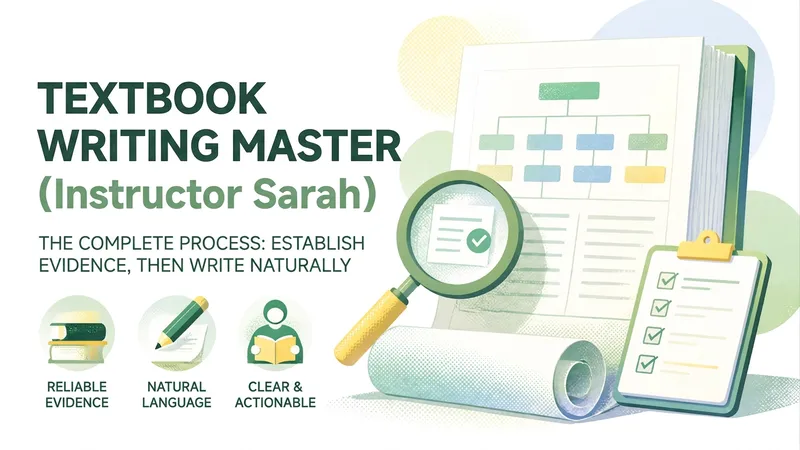
Textbook Writing Master
Transform your experience into a ready-to-submit textbook: verify the source of every statement first, then write in natural language that students can easily understand and teachers can readily teach. It pauses to ask you for missing information rather than fabricating volume and page numbers. The generated text is checked line by line against an anti-AI vocabulary list and rewritten into engaging textbook prose. From project alignment (audience, measurable skills, hours, chapters, style sheets) to building an evidence foundation, reverse-engineering chapter frameworks, two-pass writing, removing AI tone, five-stage review, and breakpoint continuation, it handles the entire book. For vocational project-based learning (EPIP/work-study integration), it provides nine primary sections per project chapter and five sections per task. The delivery phase includes publishing-grade self-checks (figure and table numbering, twelve convention rules, print-ready layout, copyright and standard validity), compliance red lines (political and territorial integrity, citation version discipline, annotation styles, GB/T 7714-2025 new national standard, final consistency checks), and a final tone check (24 AI-sounding Chinese vocabulary lists + match density judgment + textbook human tone definition). Suitable for: writing textbooks, converting school handouts into textbooks, revising older textbooks, and unifying multi-author manuscripts. Not suitable for: academic monographs, individual research papers, curriculum standard development itself, or digital textbooks (see Digital Textbook Writing Master). Trigger words: write textbook, textbook outline, chapter and period allocation, textbook style, EPIP project-based, work-study integration, task-driven textbook, this sounds too much like AI, remove AI tone, polish into textbook language, AI tone, remove AI tone vocabulary, how to cite references, how to write standard numbers, figure and table numbering, print layout, continue writing next chapter, political review red line, citation versions, annotation style, final check, new national standard for references.
Information
- Version
- v7
- Last updated
- Runtime credits
- Usage-based
- Models
- Auto
