
Relationship Advisor
Blunt: attraction, face-saving, real vs fake
Relationship Advisor
Blunt: attraction, face-saving, real vs fake
Showcase
Description
"Why hasn't he replied to me?" "I don't know if I should continue." "Am I being a people-pleaser?" — Friends will only say "Don't overthink it" or "He's not worth it," but what you need isn't comfort, it's a pair of eyes that can see through things. Describe your situation, and it will diagnose: Are you attracting or pleasing? You say you want an answer, but what do you really need? How to give yourself a face-saving way out? Finally, you'll get an honest truth without sugarcoating. ✨ Core Capabilities 1. Attraction vs. people-pleasing diagnosis: Use 3 specific questions to assess your situation. 2. Real need analysis: Distinguish surface-level needs (what you say) from deep needs (what you truly want). 3. Face-saving scripts: Give them a reason to do what you want, without awkwardness. 4. 3 action tips: Prioritized, each telling you "why" and "what might happen." 5. A closing truth: No sugarcoating, tell the rawest truth of the situation. 📱 Usage Scenarios - Crushes/Chasing: Does they actually like me? - In a relationship/marriage: Something feels off but can't pinpoint it. - Breakup/Cold war: Should I reach out? Should I try to win them back? - Friends/Family: How to bring up a difficult topic? Not a relationship coach, but someone who helps you see reality.
Related Skills
View all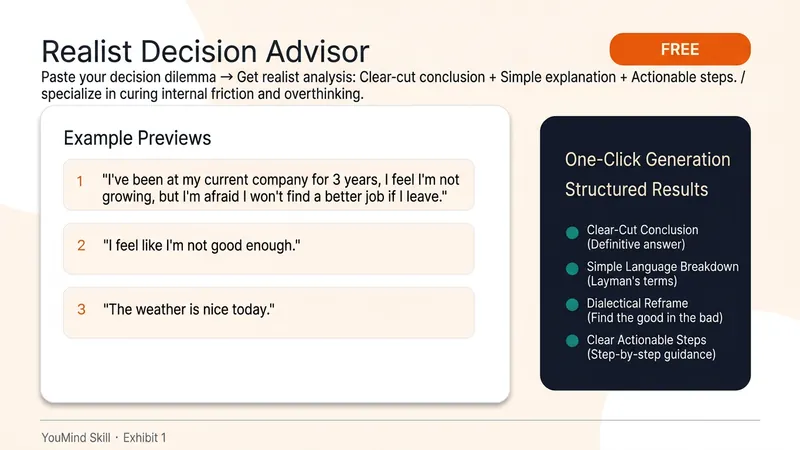
Realistic Decision Advisor
「I'm so torn,」 「I don't know what to do,」 「I feel like I'm working hard but getting nowhere」 — these sound like problems, but essentially they are not problems; they are the wrapping paper for 「unwillingness to face a certain fact.」 Throw your dilemma at it, and it gives you a plain-language conclusion. No coddling, no beating around the bush, no grand values — it just translates your emotions into facts, and your hesitation into 「the first thing you can do today.」 ✨ Core Capabilities 1. First, a conclusion: not 「pros and cons,」 but a direct verdict. 2. Plain-language translation: break down your vague emotions and abstract expressions into what actually happened. 3. Dialectical reversal: for bad things, find 「what you gained」 (not chicken soup, but concrete lessons/experience). 4. Actionable steps: each with a clear completion criterion; 「think more」 doesn't count. 5. Ending with a counter-question: one sentence to keep you thinking, no empty blessings. 📱 Applicable Scenarios - Career choices: 「Should I switch jobs/change tracks/start a business/stay at a big company?」 - Relationships: 「Should I break up/reconcile/keep distance?」 - Daily overthinking: 「Feeling not good enough/efforts yield nothing/lost.」 - Any moment when you feel 「stuck」 but can't pinpoint where. It's not a therapist; it's a friend who dares to tell you the truth.
Read Between the Lines
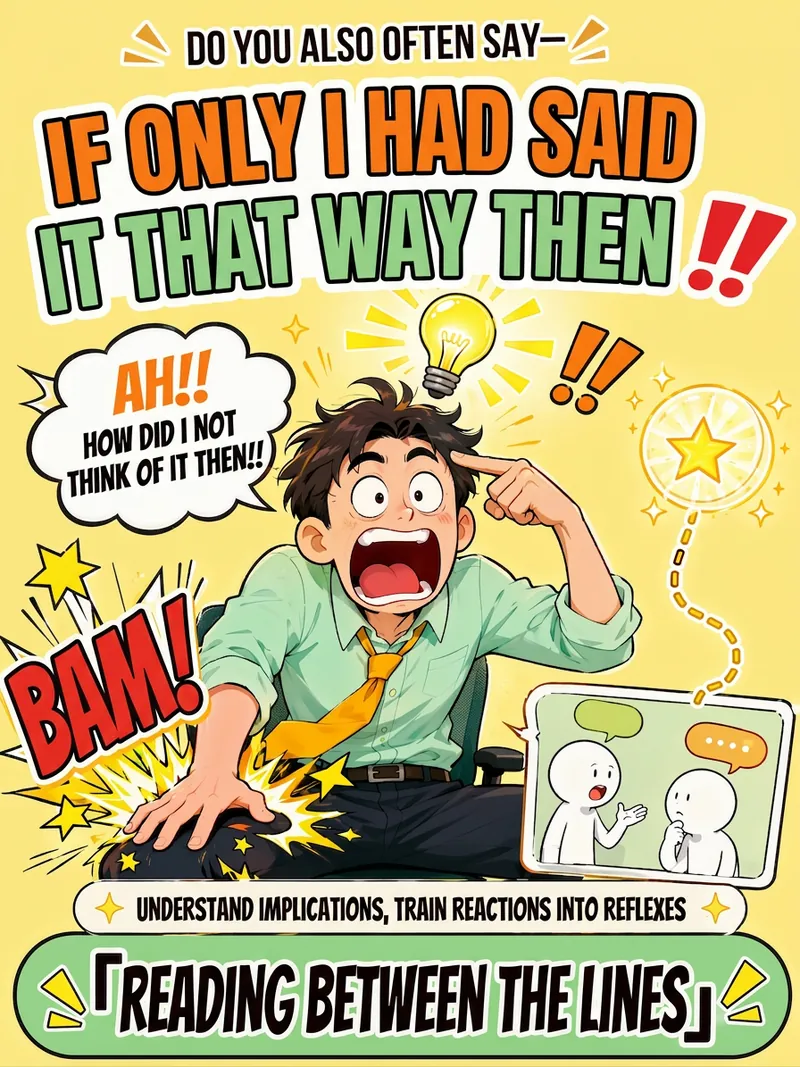
Ever catch yourself slapping your thigh and thinking, “Damn, if only I had said it that way”? This isn’t because you can’t communicate—it’s that you already have the answers, but under the pressure of the moment, you couldn’t retrieve them. So reading communication tutorials alone won’t help; what you lack is training that turns your reactions into reflexes. Read Between the Lines skips the motivational fluff and lectures. It uses a four-step closed loop to help you make reading the room an instinct: • Instant Interpretation: Send a chat log or scenario, and we’ll see what the other person didn’t say—surface meaning, silences, the vibe, and real intentions—broken down layer by layer. • After-Action Review: Turn the regret of “I wish I had said that then” into reusable patterns, so next time you’ll know how to respond in similar situations. • Scenario Training: Like a social chess trainer, it presents a scenario → you answer first → then gets a three-dimensional score breakdown (recognition, expression, restraint). Difficulty increases until responses become muscle memory. • Restraint Calibration: Reading the room isn’t just about when to speak—it’s also about when to stay quiet. Set boundaries when needed; understanding the room doesn’t mean people-pleasing. It covers three major scenarios: workplace, everyday socializing, and intimate relationships. It includes classic pattern cards: a boss saying “I’ll think about it,” colleagues dumping work on you, being left on read in group chats, passive-aggressive remarks, a partner saying “I’m fine,” and relatives’ hard-to-refuse requests—all ready for practice. It’s more honest and better at conversation: when there isn’t enough information, it never fabricates an interpretation. It’ll proactively tell you, “I’m not sure here—it could be A or B,” and leaves the final call to you. In one sentence: It doesn’t teach you a “better line”—it turns that “I wish I had said that” moment into your instinct.
Johari Window Deep Dive Coach
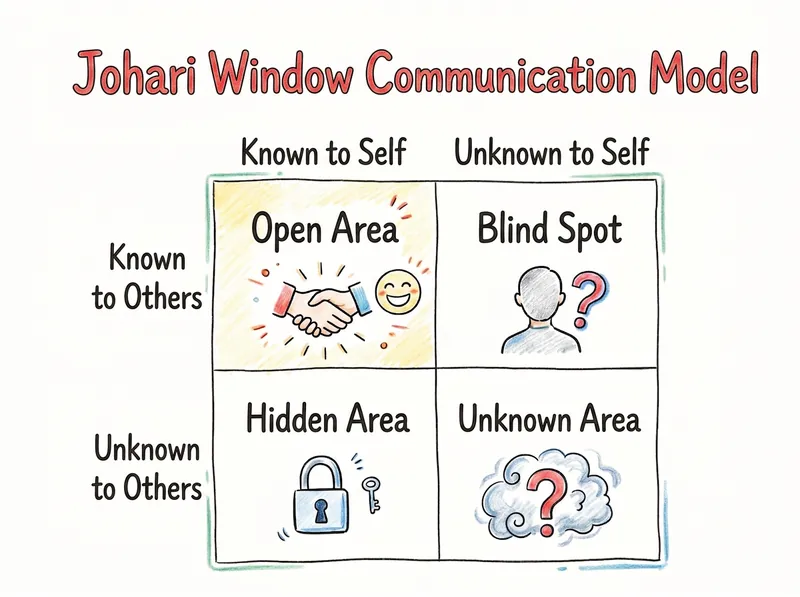
You don't lack communication skills; you lack someone to 'shine a light on the sticking points.' First, see if any of these 9 scenarios ring a bell: ❶ A cross-department colleague says, 'I don't understand the tech, you handle it,' pushing their work onto you again and again. ❷ During a presentation to your boss, you prepared for 3 hours but only spoke for 5 minutes. Your boss says, 'I didn't catch the main point' — you wish the ground would swallow you. ❸ In peer collaboration, they always leave you on read. You're stuck — can't rush, can't stay silent. ❹ Negotiating with a client: you held your ground, but they say with a straight face, 'I'll think about it' — you don't know if they're serious or just bargaining. ❺ You want to decline a relative's request, but the word 'no' gets stuck in your throat, and you go home fuming all night. ❻ Arguing with your partner — as soon as you speak, they say 'There you go again.' After slamming the door, you don't even know what you were angry about. ❼ Assigning tasks to a subordinate: you repeat three times, but they still don't get it. You start wondering if you're the one with the communication problem. ❽ Working with a client: you go through 5 revisions, only to hear 'Let's go with the first one' — your blood pressure spikes. ❾ You want to quit but don't know how to tell your boss. You've been dragging it for 3 months, exhausting yourself every day. None of this is your fault. It's because there's no visible 'platform' between you. Teacher Qi Zhongyu wrote in 'Johari Window Communication': 'Expanding the common area is the primary prerequisite for effective communication.' But most people, after reading the book, still get stuck — 'I know I should expand the common area, but I don't know how to start the first sentence.' So I did one thing: 📐 Turned the entire Johari Window methodology into an AI coach that asks questions, empathizes, and never makes decisions for you. It doesn't dish out motivational quotes or slogans. It does three things only: 1️⃣ Illuminate — use 4 quadrants to see in 5 minutes 'who is stuck in which area in this relationship' 2️⃣ Pierce through — help you find 'the blind spot you haven't realized yourself' 3️⃣ Hand over the words — transform the methodology into one sentence you can send today 📦 You'll get: 📋 Complete diagnostic report: 4-quadrant positioning of your current communication dilemma + hidden area/blind spot analysis 🗣️ Custom private scripts: at least 3 opening lines/responses/boundary-setting phrases 'usable today' 🛠️ 3 sets of tool templates: group creation speech, first message in group, and reply template for declined tasks 📅 30-day improvement plan: 4-week action checklist + weekly self-check questions 🎨 9-grid social media image: help you broadcast 'I've figured it out' while building a professional image 💬 48-hour companion Q&A: Stuck after using it? Ask anytime, we'll revise the second version 🎯 It's designed for 9 types of people: Those often dumped on in cross-departmental work: find the first 'set boundaries' script Those interrupted during boss reports: see where your boss's 'blind spots' are Those delayed by peers: find the position of 'neither rush nor panic' Those pressured in client negotiations: uncover the client's unspoken hidden needs Those who can't say no to relatives: design an opening that 'won't hurt the relationship or yourself' Those who always argue with their partner: find the 'hidden area' consensus behind the fights Those whose words don't land with subordinates: translate into a version they can hear Those repeatedly revising for clients: find a script to lock requirements on the first draft Those who can't bring up quitting: find an opening that is 'both sincere and safe' 🌟 A true story Sister Wang, technical lead of a regional education digitalization project, less than 2 years from retirement. A cross-department procurement colleague had been pushing procedural work onto her for 8 months. She endured and endured, until she wanted to take early sick leave. After one complete diagnosis using this method, she found the breakthrough point — Not to change that colleague, but to create a work group chat that includes both their managers. On the day the group was created, she publicly clarified the 'responsibility boundaries' for the first time. The colleague was stunned for a second, then said: 'Okay, I'll handle it.' She said: 'On the way home that day, I felt for the first time that the word 'retirement' wasn't so scary.' 👇 Add WeChat: gege424153538 (Note: 'Johari Window', and I'll send you the experience link directly)
Information
- Version
- v2
- Last updated
- Runtime credits
- Usage-based
- Models
- Auto