Paper Forging
Imagery Style Series
Paper Forging
Imagery Style Series
Showcase
Description
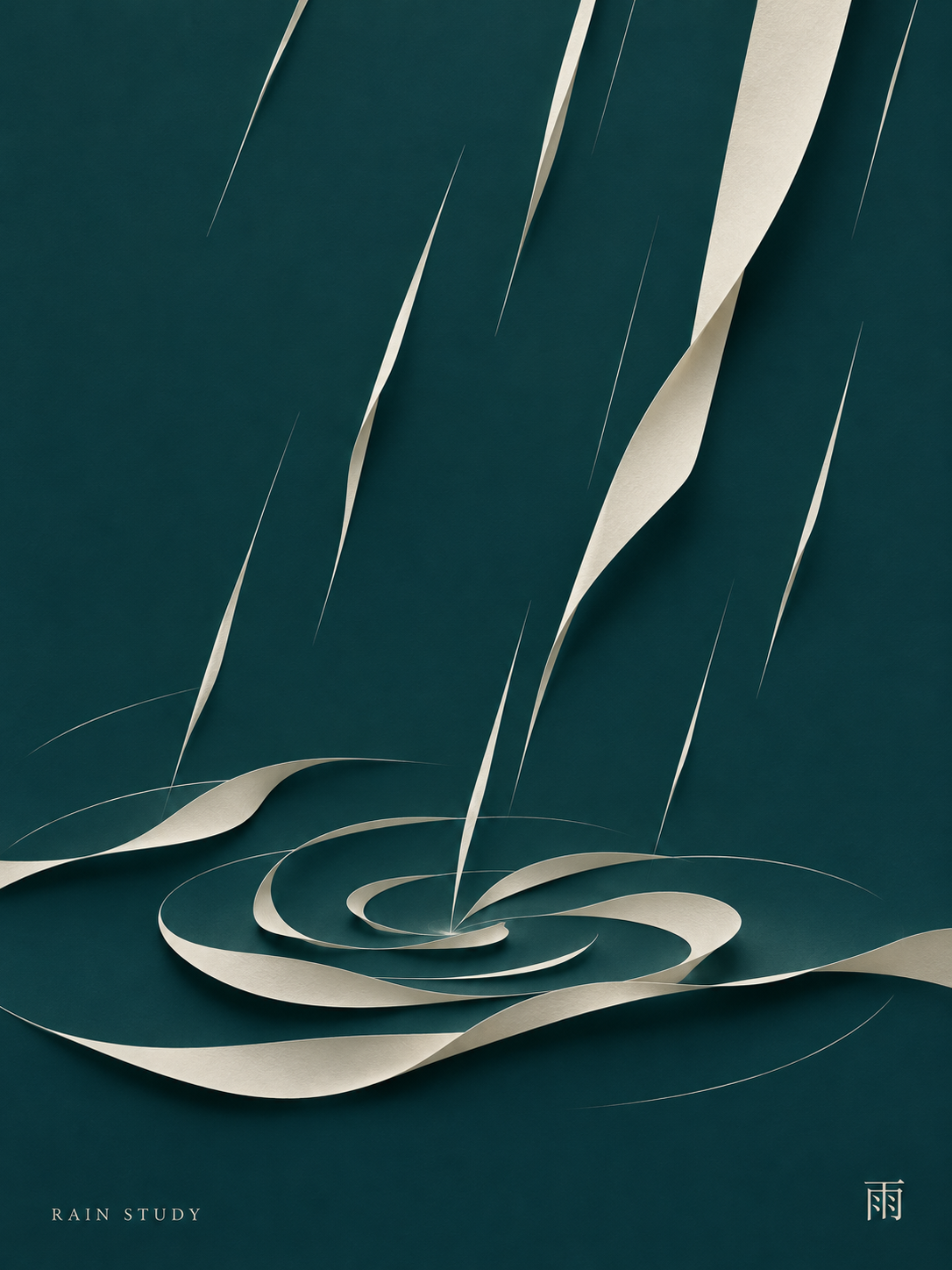
Transform natural phenomena, emotions, abstract concepts, or specified themes into distinctive 3D paper art posters. The artwork primarily uses creamy white or ivory paper, building three-dimensional forms through curling, folding, expanding, and layering. This gives imagery such as waves, moons, mountains, flowers, and paths their own independent structures and narratives rather than applying fixed templates. The visuals adopt a clean, modern editorial style paired with a uniform, pure monochrome background, generous negative space, and restrained, natural paper shadows, accented with ultra-fine gold or light-colored curves when necessary. It outputs standalone 3:4 vertical works by default, with options to adjust the aspect ratio, color scheme, theme text, or create text-free versions as needed. When a title is present, it is neatly typeset in small bilingual text at the bottom. Ideal for creating paper art imagery series, conceptual posters, mood visuals, and multi-piece themed artworks. Each image features independent composition and background color tailored to the theme without merging into a grid. Before delivery, focus is placed on theme recognition, background purity, image proportion, and text presentation, though manual verification of the text content is still recommended.
Recommended by
Dancang
Why we love this skill
Forges abstract themes into 3D paper art posters with both narrative and distinct recognition, expressing imagery through original curling, folding, and layering compositions. Solid backgrounds, restrained negative space, and refined typography complement each other to present a quiet yet striking modern editorial aesthetic.
Best for
Best for content creators and designers looking to produce themed paper art posters, mood visuals, or conceptual image series.
How to use this Skill
Provide your input
Provide a natural phenomenon, emotion, abstract concept, or specific theme, and optionally specify the aspect ratio, color palette, title, and text preference.
Run the Skill
Transforms your theme into a uniquely composed 3D paper art poster, combining paper techniques like curling, folding, stretching, and layering with a solid background and restrained layout.
Review your result
Receive one or more standalone 3D paper art poster images, typically in a 3:4 vertical format with a clean, modern editorial style. Manual review is recommended for any text.
Related Skills
View all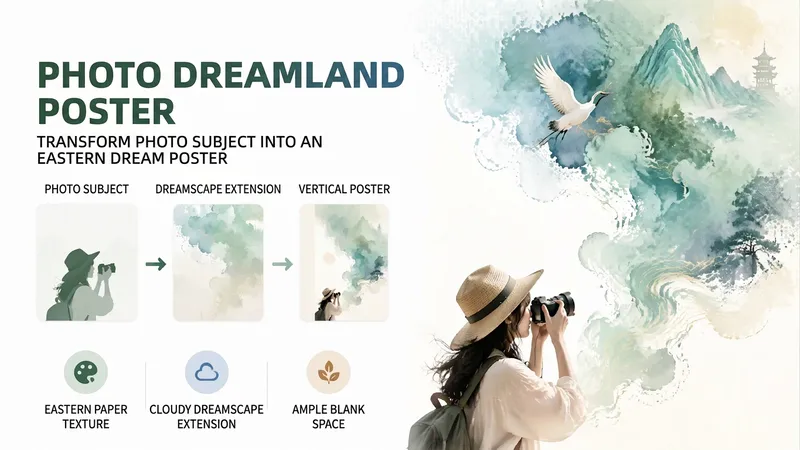 Image
S.034 · Starryear Photo Dream
Transform a user photo into a vertical dreamlike poster with an Eastern paper-like texture. Preserve the subject’s outline, details, and identifying features, place it in the lower left, and extend grand cloud-and-mist forms into the upper right that relate to the subject’s shape, material, or texture, naturally connecting the real object with an imagined space. Draw colors and atmosphere from the subject and its lighting. Use ink tones, watercolor, pigment, and soft mist to create delicate visual layers while retaining generous clean negative space and a subtle printed-paper texture. Keep the subject clear and recognizable, create a striking contrast in scale with the clouds and mist, and use organic flowing lines to connect the two visual anchors. Ideal for turning photographs of people, animals, plants, objects, or subjects with distinctive textures into art posters, personal visual pieces, and image series. You can add a simple, restrained English title related to the image in the open space. The result is a clearly composed 9:16 vertical poster with a photo-based subject, documentary recognizability, and a dreamlike atmosphere.
 Image
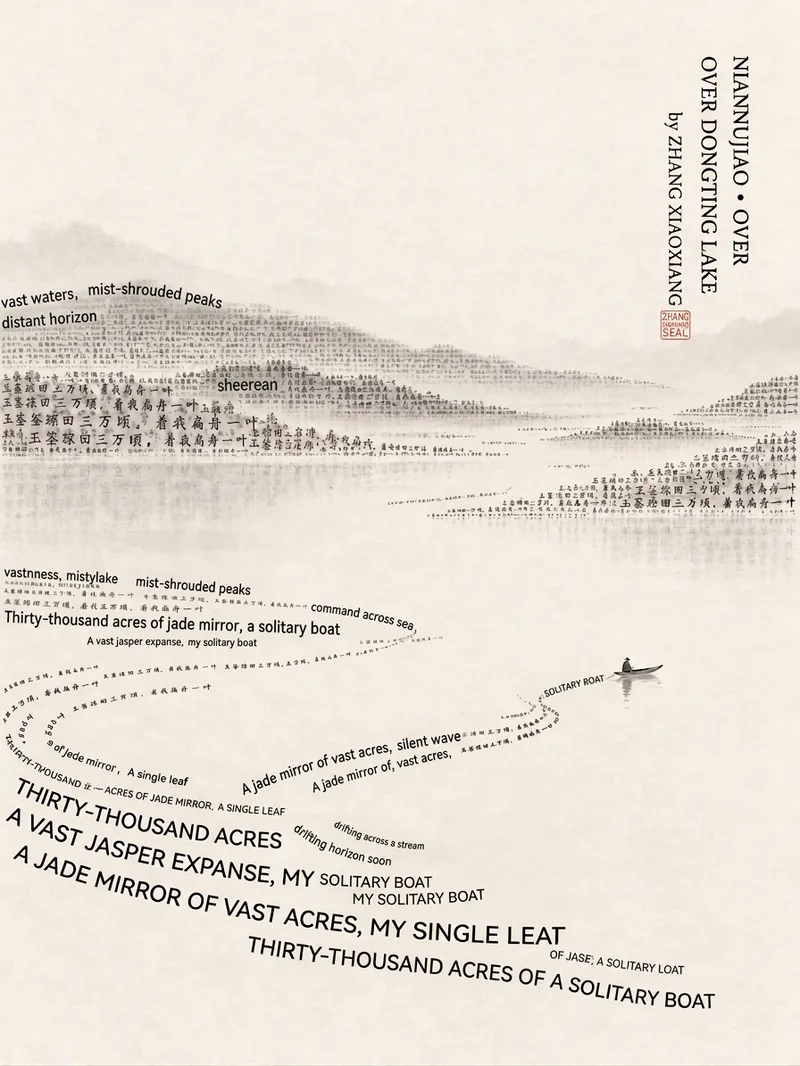
Starryear Difebo Poster
Transform poems, prose excerpts, or short phrases into misty ink-wash posters where text and mountains intertwine. Repeated vertical lines of poetry merge with fog, ridges, and ink to form the core of the image, while enlarged keywords, layered text groups, and subtle paper textures create depth, rhythm, and space. The artwork adapts its text flow, negative space, weather, and scenery to match the mood of the text: melancholic tones bring low clouds and sinking ink, expansive moods stretch toward the light, and serene moments use quiet mists to leave room to breathe. The composition uses warm white rice paper, black and gray ink, and a 3:4 vertical format, accented by a tiny trail, a minuscule traveler, and minimalist calligraphy for scale. Ideal for turning classical poetry, modern phrases, prose imagery, or personal writing into poetic posters, literary covers, and oriental ink-wash style images.
 Image
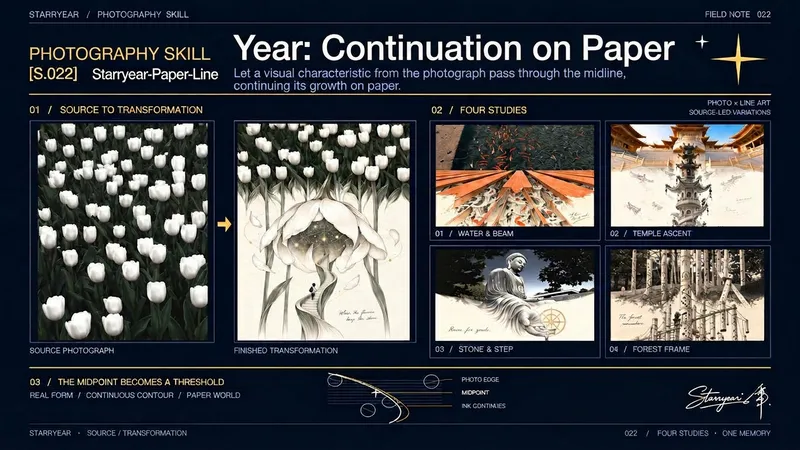
【S.022】Starryear · Photo
【Featured】Starryear featured photography Skill Extend a real photo into a 2:3 vertical “photo × line art” narrative poster: preserve the subject, lighting, colors, and spatial cues in the photo, while allowing one real form to naturally cross the middle of the frame and develop into a uniquely functional line-art world on warm white paper. The photo and hand-drawn section are not simply spliced together; continuous contours, materials, and shadows create a visual extension that can be entered, walked through, or activated. The lower section centers on the main transformation, adding a few thematic details drawn from the original photo and placing a small faceless figure rendered in pen lines within it. The figure has a clear action relationship with the line-art scene, strengthening the sense of scale and narrative. Depending on the photo’s atmosphere, subtle star-like points or glimmers may be carefully incorporated, but no fixed starry-sky, flower, or architectural template is applied. Brief handwritten English annotations add a light editorial touch. Ideal for scene-extending line-art posters, photo-and-illustration fusion posters, photographic art narrative posters, and visual works that bring a touch of fantasy to real scenes. The goal is to keep the photo believable, make the line-art world bold enough, and maintain a clear central focus and coherent material transitions both at thumbnail size and up close.
Information
- Version
- v3
- Last updated
- Runtime credits
- Usage-based
- Models
- Auto
- Use cases
- Images & design
- What you get
- Image
- Visual styles
- MinimalistEditorialPaper art
