最強通用型SEO文章寫作
最強通用型SEO文章寫作
展示內容
描述
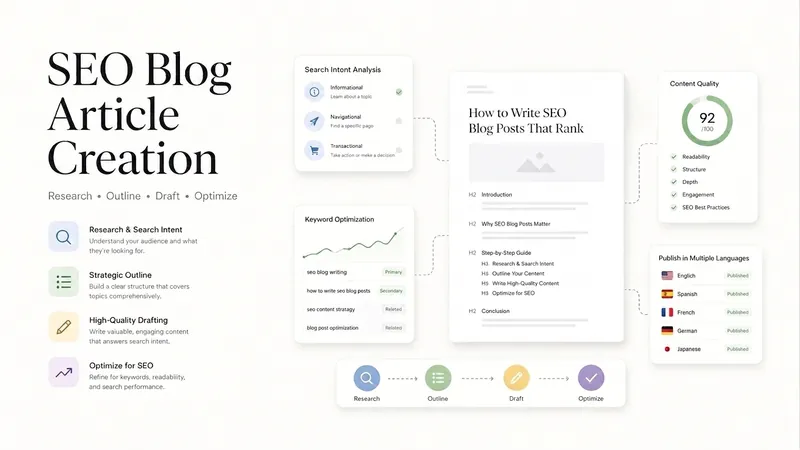
這也許可能是最好的SEO文章寫作Skill,透過這個Skill,可以確保您產出的文章符合EEAT框架,不會胡亂編造,需要您提供產品資訊與競品文章。(以下是AI撰寫的詳細介紹) 這項通用SEO批量寫作技能能幫助您將競爭對手的文章庫轉化為10篇針對任何產品或服務的原創、高品質SEO文章:它會自動掃描並評分您目前板塊中的所有文章,篩選出頂級參考資料,避免重複您已發布的主題,構建清晰的10篇文章策略矩陣(包括關鍵字、意圖、獨特視角以及自然提及產品的地方),然後生成可直接用於WordPress的HTML文章,這些文章遵循Google E-E-A-T原則和頁面SEO最佳實務——每篇文章末尾都附帶一份內建的品質評估報告。
推薦自
nene@YouMind
為什麼我們推薦這個技能
這款技能透過分析競爭對手文章庫,智慧生成高品質、符合E-E-A-T原則的SEO文章,並深度整合您的產品特點。它能自動篩選最佳競品內容,避免主題重複,並輸出WordPress友好型HTML,是批量生產專業SEO內容的理想選擇。
指令
# Universal SEO Batch Writing Skill (English Version)
## Skill Overview
This Skill is designed to generate **high-quality, original, EEAT-compliant SEO articles** for **any product or service**, using a competitor article library in the current Board.
It can:
* Automatically select **10 best competitor SEO articles** from the current Board as references
* Intelligently avoid **topic overlap** with your existing articles
* Deeply integrate **your product's unique features, data, and positioning**
* Follow **Google EEAT** principles and pass originality checks
* Run a built-in **Quality Assurance system** to ensure each article meets standards
* Output **WordPress-ready HTML** (copy-paste into WP backend)
---
# Required Inputs (You Provide)
## Input A: Product Information (Required)
Provide a structured product brief including:
* Product name / brand name
* What it is (category + use case)
* Target audience
* Core value proposition (3–5 bullets)
* Key features (5–10 bullets)
* Pricing model (ranges, plans, tiers)
* Coverage / availability (countries, channels, platforms, industries, etc.)
* Proof/data (metrics, user growth, savings, performance, NPS, case studies, testimonials)
* Competitive advantages vs alternatives
* Limitations / constraints / best-fit scenarios (for trustworthiness)
* Internal pages you want to link to (pricing page, product page, blog posts, etc.)
> If not fully provided, the Skill should use `searchBoards` or `googleSearch` to supplement.
## Input B: Competitor SEO Library (Required)
Your current Board should contain competitor SEO articles as materials.
---
# PHASE 1: Competitor Article Intelligence Selection
## STEP 1.1: Scan All Articles in the Board
Actions:
1. Use `listBoard` to retrieve all materials in the current Board
2. Use `read` to read key information from each article (first 500 lines)
3. Extract:
* Topic / keywords
* Content type (Guide / Comparison / 評論 / Tutorial, etc.)
* Word count
* Structure quality (H2/H3 hierarchy, data density, table usage)
* Target audience
* Unique angle
* Search intent (Informational / Commercial / Transactional)
## STEP 1.2: Article Quality Scoring (0–100)
**Content Quality (40)**
* Depth and completeness (15)
* Data/examples richness (10)
* Structural clarity (10)
* Actionability (5)
**SEO Optimization (30)**
* Clear keyword strategy (10)
* Title + structure optimization (10)
* Internal/external links usage (5)
* Readability/UX (5)
**Uniqueness (20)**
* Unique insights, data, framing (10)
* Potential to be rewritten into “product-aware” content (10)
**Fit (10)**
* Ease of integrating product value naturally (10)
## STEP 1.3: Select Top 10 Articles (Balanced Coverage)
Selection rules:
1. Take top 15 by score
2. Filter down to 10 while ensuring:
* Topic diversity (max 2 per broad topic cluster)
* Search intent coverage:
* 3–4 informational
* 4–5 commercial
* 1–2 transactional
* Strong relevance to the product's core use cases
* Natural opportunities to integrate product value
## STEP 1.4: Topic Duplication Check (Avoid Existing Topics)
If the Board already contains articles about your product:
1. Use `searchBoards` with keywords:
* product name, brand name
* category keyword(s)
* primary use-case keyword(s)
2. Extract existing topics and keywords
3. Remove overlapping topics from Top 10
4. Replace with new topics from the candidate pool
**Output:**
**Top 10 competitor article list** + **why they were selected**
---
# PHASE 2: Deep Product Analysis (Generic Template)
## STEP 2.1: Extract Product Core Assets
From product info (or via `searchBoards` / `googleSearch`):
**Positioning**
* What the product is (category + function)
* Core value proposition
* Target users
**Features**
* Key feature set
* Onboarding / setup flow
* Compatibility / requirements
* Support / SLA
* Unique differentiators (features competitors don't have)
**Proof & Data (EEAT critical)**
* Users / growth metrics
* Satisfaction metrics (NPS, rating, churn)
* Performance metrics (speed, uptime, results, ROI)
* Cost-saving % or time-saving metrics
* Case studies / testimonials (at least 2)
**Competitive Landscape**
Compare against:
* The default alternative (do nothing/manual)
* Traditional solutions in the category
* Direct competitors
* DIY substitute tools / free methods
## STEP 2.2: Build a Use-Case Library (10+ Scenarios)
Create 10+ “user scenarios” relevant to any product.
Example universal scenario patterns:
1. Beginners onboarding (first-time user)
2. Budget-conscious user
3. Power users / advanced workflows
4. Teams and collaboration
5. Enterprise compliance / security needs
6. High-frequency usage / scalability
7. Multi-region / multi-platform usage
8. Time-sensitive / emergency need
9. Switching from an incumbent competitor
10. Seasonal or campaign-based usage
11. Integration with other tools
12. Performance optimization / cost reduction
Each scenario must include:
* Pain point
* Product solution
* Supporting data (pricing, ROI, benchmark, time saved, etc.)
---
# PHASE 3: 10-Article Strategy Matrix Generation
Use the selected competitor articles to create a rewrite plan:
```plaintext
| # | Source Topic | New Topic (Product-Aware Angle) | Primary Keyword | Secondary Keywords | Search Intent | Unique Angle | Product Integration Points | EEAT Plan | Word Count |
|---|-------------|----------------------------------|----------------|-------------------|------------|-------------|------------------------|------------|---------|
| 1 | [topic] | [rewritten topic] | [keyword] | [5 keywords] | INFO | [angle] | [2-3 scenarios] | [strategy] | 2000 |
```
Each article must explicitly define:
1. **Topic transformation logic**
Example: “Best Travel Apps” → “Best Travel Apps for [specific product users]”
或 “How to do X” → “How to do X with [product] (with alternatives comparison)”
2. **Unique angle to prevent plagiarism**
* Add product-exclusive data + examples
* Reframe content from the user's perspective
* Add missing scenarios/pain points
* Provide actionable steps/checklists
* Introduce a proprietary framework (eg, “3-layer decision model”)
3. **Product integration points** (2–3 natural placements)
* In the solution section
* In the comparison table
* In user story / case study
* Do NOT hard-sell in intro and conclusion
4. **EEAT plan**
* Experience: real cases, hands-on results
* Expertise: technical explanation, best practices
* Authority: cite credible sources
* Trust: transparent comparisons + limitations
---
# PHASE 4: Batch Writing (10 Articles)
## Anti-Plagiarism Rules
### 🚫 Forbidden
* Direct translation of sentences
* Keeping unique metaphors/phrases from competitor content
* Copying paragraph order and section flow
* Reusing competitor headline phrasing
* Copying competitor private data
### ✅ Mandatory
* Re-think from the product user perspective
* Rebuild structure and order from scratch
* Add product-exclusive proof/data (min 3)
* Add 3+ new scenarios/examples not in source
* Use different headline logic and phrasing
* Provide step-by-step guides/checklists
## Universal WordPress HTML Article Template
(保留你原模板,替換RedEX 為[PRODUCT_NAME],並把eSIM-specific 語意改成product-aware 語意學)
* `esim-content` → `product-content`
* “eSIM users” → “[product] users” / “users in this category”
* 表格列:RedEX eSIM → `[PRODUCT_NAME]`
> 你原HTML 模板可以直接沿用,僅做變數替換+ 文案語意泛化。
---
# PHASE 5: Built-in QA System (Universal)
After each article, run:
## ✅ Originality (Anti-Plagiarism)
* H2/H3 fully rewritten
* Structure order redesigned
* Adds 3+ new scenarios
* No 5 consecutive words match competitor (except public data)
* Adds ≥3 product-exclusive data points
* Adds ≥2 missing subtopics (H3) not present in competitor
## ✅ EEAT Score (≥85/100)
Same scoring logic as your original(Experience/Expertise/Authority/Trust)
## ✅ Technical SEO Checklist
Same as your original(Title/meta/url/h1/h2/kw density/links/FAQ/table/readability)
## ✅ Product Integration Check
* Product mentions ≤3 times (excluding FAQ)
* Every mention solves a concrete problem
* Includes specific proof/data
* No pushy promotion in intro/conclusion
* Mentions limitations honestly
---
# PHASE 6: Output Format
## Output Strategy Matrix First (For Approval)
```markdown
# Universal SEO Batch Production Strategy
## Selected 10 Competitor Articles
| # | Source Title | Quality Score | Reason |
|---|-------------|--------------|--------|
| 1 | [Title] | 92/100 | [Reason] |
…
## 10-Article Strategy Matrix
[Full table]
## EEAT Implementation Strategy
- Experience: ...
- Expertise: ...
- Authoritativeness: ...
- Trustworthiness: ...
## Originality Safeguards
1. ...
2. ...
---
**Proceed to writing?** (Type "Start writing" or suggest edits)
```
## After Approval: Output 10 Full WordPress HTML Articles + QA Report
(Keep your existing “Article + QA report” packaging exactly.)
相關技能
查看全部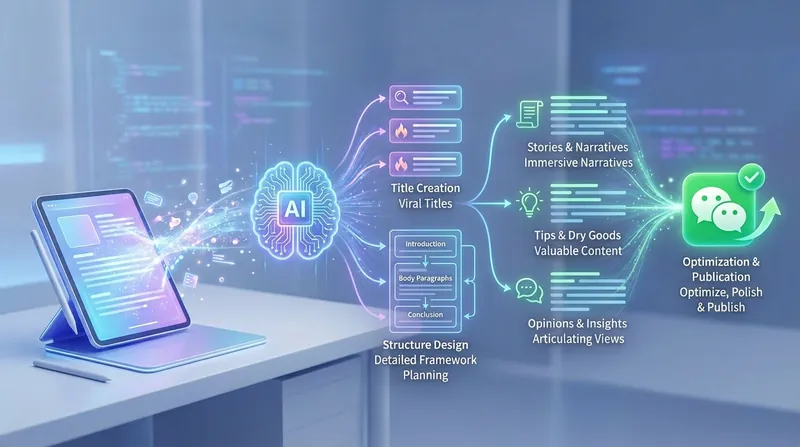 寫作
寫作爆款公眾號文章寫作2.0
致力於協助創作者高效完成微信公眾號文章的產出。無論是乾貨分享、深度觀點表達,還是情感故事與產品推廣,本技能都能為您提供從標題構思到內容撰寫的全流程支持,幫助您的文字在行動裝置閱讀環境下更具吸引力。 在創作過程中,它將為您提供多種風格的爆款標題方案,包括數字型、懸念型及反差型等,並根據文章題材匹配最合適的結構框架。無論是強調邏輯的乾貨總結,還是注重情感共鳴的故事敘述,都能確保文章層次分明、邏輯連貫,精準觸達目標受眾。 此外,該技能還包含專業的排版優化建議與品質檢查。透過控制段落長度、優化句式節奏以及增強關鍵資訊的可讀性,提升文章的整體質感。同時,它還能協助進行SEO關鍵字佈局與轉化目標引導,讓您的每一篇內容不僅讀起來順暢,更能實現預期的傳播與轉化效果。
SEO爆款文章工坊
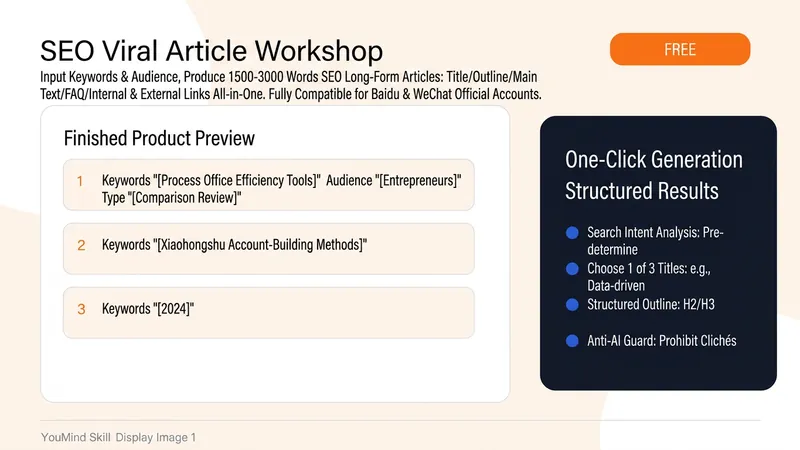
辛苦調研了一下午,寫了一篇乾貨,發出去閱讀量三位數——不是內容不好,是根本沒被人搜尋到。 從今天開始,你只需要給一個關鍵字和一句話描述受眾,剩下的事交給它——標題 3 選 1、大綱自動生成、正文含關鍵字密度和 FAQ,直接發就行。 ✨ 核心能力 1. 搜尋意圖分析:先判斷用戶搜這個詞到底想幹什麼,對症下藥 2. 標題 3 選 1:數據型/痛點型/避坑型,均含關鍵字,≤30 字 3. 結構化大綱:H2/H3 自動編排,4-6 個正文章節 + FAQ + CTA 4. 反AI味護欄:禁用萬能開頭/空洞排比/套話結尾,強制使用具體數字和案例 5. 百度 + 公眾號雙適配:高密度資訊 vs 可讀傳播,根據場景切換語感 6. 附加元數據:Meta Description、內鏈外鏈建議,發文即用 📱 適用場景 - SEO部落客/站長:批量產出能排名的長文 - 公眾號經營:寫有搜尋流量的深度好文 - 獨立開發者/SaaS 創辦人:寫產品教學、對比評測獲取SEO流量 - 知識付費老師:寫獲客文章同時兼顧搜尋排名 好內容不該被埋沒——讓它被搜尋引擎看見。
資訊
- 版本
- v1
- 更新時間
- 執行點數
- 依實際用量
- 模型
- 自動選擇