A PhD is the top of the old ladder. The new ladder starts where you stop calculating.
Look at the ladder you've been climbing your whole life. Every rung is labor. Study harder. Compute faster. Publish more.
Each step up was just a heavier version of the same thing.
I'm not going to pretend I figured all of this out alone. Most of what follows I learned the slow way, then watched other people learn it fast inside @NeuroClubAi the room I'd point you to if you asked me over coffee how to actually do this. Not a pitch.
Just where the people building their second brain already hang out. Keep reading, then go look if it lands.
You climbed the old ladder well. You reached a rung almost nobody reaches. And here's what no one warned you about: the top of that ladder is still a floor.
Because every rung rewarded the same skill, being an excellent executor. The best calculator in the room. The fastest reader, the cleanest method, the sharpest hands. That was the whole game. Be a better machine than the other humans.

Then a real machine showed up that does all of it for free.
Sit with that. The exact skill the old ladder spent your life sharpening just dropped to zero. The thing you climbed toward is now the thing that costs nothing. The ground gave way.
This feels like grief for a second, until you see what's underneath it.
There was always a second ladder. Nobody could climb it before, because everyone was trapped doing their own grunt work. You couldn't spend your day having ideas when your day was eaten by calculation. The mind and the mule lived in the same body, and the mule always won.
The new ladder has nothing to do with working harder. Its rungs are ideas. Judgment. The leap no one in your field has made. Taste. The question worth asking. You step onto it the moment you stop being the one who does the work.
So digitize yourself, and get off the mule.
Take everything you know and move it out of your head. Every method you trust, every rule of thumb, every "I'd never do it that way and here's why." Your decision tree. The reasons behind your reasons. Most experts have never written this down once. It lives as instinct. Put it in plain words, the way you'd explain it to a sharp student at 2am.

That isn't notes. It's a copy of your judgment. And once it lives outside your skull, your skull is finally free to do the one thing it can't hand off: have the thought no one's had.
Here's exactly how to wire that up. This is the part most people get wrong.
Stop opening blank chats. Using a second brain like a vending machine wastes it. Build the system once.
Create a Claude Project for your domain. Load it with your knowledge: your papers, your methods, your procedures, your decision rules, your "here's how I judge whether a result is real." That becomes Project knowledge, so every chat inside it starts already knowing how you think. Put your standing rules in the custom instructions: always show the assumptions, flag anything I'd reject, write in my voice.

Now you never re-explain yourself. The context is loaded once and lives there.
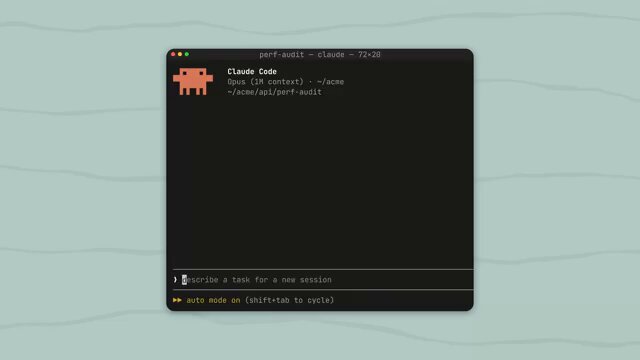
For anything with data or code, hand it to Claude Code. Point it at your files and say "run this analysis, plot it, draft the methods section." It writes the script, runs it, checks the output, hands you a draft. The loop you used to run by hand now runs on its own. Turn the result into an artifact, a working calculator, a dashboard, a clean report, in one pass.
First prompt to build the corpus: "Read everything in this Project. Map how I make decisions in this field: the rules I follow, the mistakes I avoid, what I check before I trust a result. Write it so a sharp junior could make my calls."
That's how you automate the work. Now automate the ideas.
A model loaded with your judgment doesn't just answer. It can brute-force the idea space you never had time to explore.
"Give me 30 hypotheses my field hasn't tested. Use my methods. Rank them by novelty times feasibility. Kill anything that's been done."
Then run it adversarially. One chat generates, a second attacks: "Here are my ten ideas. You're the harshest reviewer in my field. Find the fatal flaw in each. Which three survive?" You stop arguing with yourself in the shower and let the machine red-team you at scale.
Use web search inside the prompt to scan the frontier
"Pull the last two years near this problem. Show me the contradictions and the open questions nobody's answered." The gaps are where your next idea lives.

And the cheat code, cross-domain transplant: "Take the core mechanism from this other field and map it onto my problem. What would it predict?" That's where leaps come from, and the model crosses fields faster than any human can read.
Now automate the refinement. A raw idea is cheap. Turning it into something real used to eat weeks.
Take one survivor and run the gauntlet: "Steelman this. Then break it. Then fix the break." "Design the cheapest experiment that would prove this wrong. Estimate cost and time." "Write the protocol. List every way it fails."
Let Claude Code run the test where it can, sweep the parameters, simulate it, check whether the numbers hold. What survives becomes an artifact: a grant paragraph, a one-pager, a sim spec, a draft. What dies gets dropped, and you don't mourn the hours, because you never spent them.
The meta-rule that makes all of it work: split the roles. A generator, a critic, an executor, keep them separate so they don't soften each other. You stay one thing only. The editor-in-chief. You don't produce. You judge. You point. You say deeper, kill it, yes.

And keep a memory file that grows. Every good call, every "never again," every rule you discover, feed it back in. The system gets more like you every week. A human forgets. Your second self doesn't. That's the compounding.
Here's the insight the whole thing turns on. You were never valuable because you could calculate. A calculator can calculate. You were valuable because you could imagine what was worth calculating. The old ladder paid you for the wrong half of yourself.
A beast of burden carries the load. A human decides what's worth building. For all of history the expert had to be both, and the load ate the deciding alive. That's over now.
Week one it feels like a faster assistant. Month one it runs your routine work without you in the room. Month three you realize you haven't done a calculation by hand in weeks, and you've had more real ideas in that stretch than in the year before it. The grunt work didn't speed up. It left.
0:37
You were not born to be the smartest animal doing the most work.
You were born to be the one who looks at what is and imagines what could be.
So here's the only push I'll make. Build your second brain this week: the corpus, the Project, the loop. If you want the exact templates, the prompt library, and people two steps ahead of you who'll catch your mistakes, that's what @NeuroClubAi is for. Come build it where it's already being built. The first brick costs you one honest hour today.

Hand it the load. Climb the ladder that was always meant for you.
You build your own life, so choose the right path.
Follow for the next one


