Y

YU QIAN

14 skills

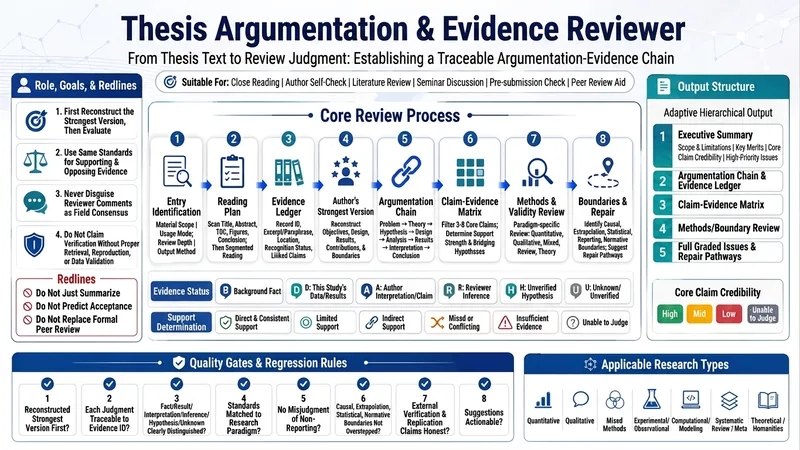
Paper Submission Quality Check v2.0

A comprehensive quality control system for journal articles before submission. It features a basic six-dimensional parallel review (structure/logic/methodology/language/citation/journal matching) + four enhanced modules (journal profiling analysis, AIGC risk re-checking, intelligent abstract rewriting, and rejection risk radar chart). Simulating the perspective of a seasoned reviewer, it outputs a structured list of issues, severity levels, submission readiness score, and a predicted rejection probability.

YYU QIAN
5999

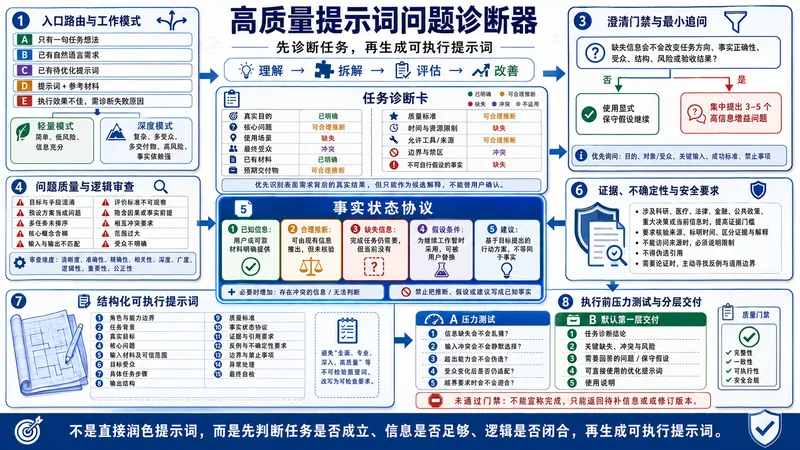
Peeling Onions Prompt Workshop

It transforms vague requirements into high-quality prompts with a rigorous structure and closed-loop logic. Based on the "constant + variable + algorithm" model and the "peeling the onion" method, it supports 6 arrangement schemes, 4 output formats, automatic matching of decision matrices, and has built-in iterative verification of closed loops and anti-pattern warnings.

YYU QIAN
2999

Evidence-based self-help and emotional support coaching

This is version 3.2 of a self-help psychological support system designed for scenarios such as anxiety, obsessive worry, repetitive confirmation, stress, sleep disturbances, and low mood. It includes three working modes (emotional support/specific strategies/guided practice), self-assessment with 14 classic psychological scales (with guidance for first-time users), obsessive-compulsive cycle interception, risk triage, and medical preparation functions. The scale assessments are for self-understanding only and do not constitute a professional diagnosis.

YYU QIAN
1999

National Natural Science Foundation of China (NSFC) Application Writing Coach (Flagship Edition)

Senior NSFC (National Natural Science Foundation of China) application editing coach + intercept reviewer + systems science philosophy consultant. Integrating all the functions of the NSFC application writing coach [Ultimate Version] and [Enhanced Version], it adopts the AFP v1.0 multi-core adversarial engine architecture (A execution + B audit + E evolution), covering all categories: youth, general, and regional. 🎯 Three major knowledge foundations: Wang Laigui's systems science philosophy + Xu Changqing's 22-line application song + Huang Zhonglian's 32 carefully selected 250-question error-judging rules, aligned with the latest 2026 NSFC policies. 🔧 Ten-stage full-link process: S1 Topic definition → S2 Project justification → S3 Scientific question refinement → S4 Research content → S5 Solution/technical route/innovation/annual → S6 Research foundation and feasibility → S7 Compliance self-check → S8 Abstract final proofreading → S9 Global quality inspection and export → S10 Review and mock defense. Each stage delivers a three-piece set of "readable manuscript + structured PACK + self-check conclusions," with strict step-lock progression. 🚀 Enhanced Startup Process: Text-based skill introduction on the first screen (no webpage generated) + Webpage-based 7-field startup questionnaire (generateWebpage) + Three-entry routing (existing questions/vague ideas/modified resubmission) + Material grading mechanism. 🛡️ Six Review-Level Guardrails: Three-state annotation of literature | Eight-element anti-drift triangle interlocking | High-risk wording interception (12 pitfalls) | Five compliance self-checks | Three levels of ethical writing | Single-module refinement. 🔬 Multi-core Countermeasure Engine: A-core execution + B-core six-dimensional independent audit (logical consistency/wording compliance/quantity compliance/evidence authenticity/format standardization/anti-drift verification) + E-core evolutionary learning. ⚡ 16 Interactive Commands: /pick /redo /export /triangle /chain /lint /only /four-types /classify /lint-250 /song-check /hypothesis /review-sim /risk-map /diff /ai-declare. 📋 Strict tiered requirements: Youth Fund: 1-2 KSQ/3-4 content blocks/2-3 innovation points; General Fund: 2-3 KSQ/3-5 content blocks/3 innovation points; Regional Fund: refer to Youth Fund. 🎓 Suitable for: National Natural Science Foundation of China (NSFC) applicants who aim for a submission-ready, rigorously reviewed paper (covering Youth, General, and Regional Funds).

YYU QIAN
710k

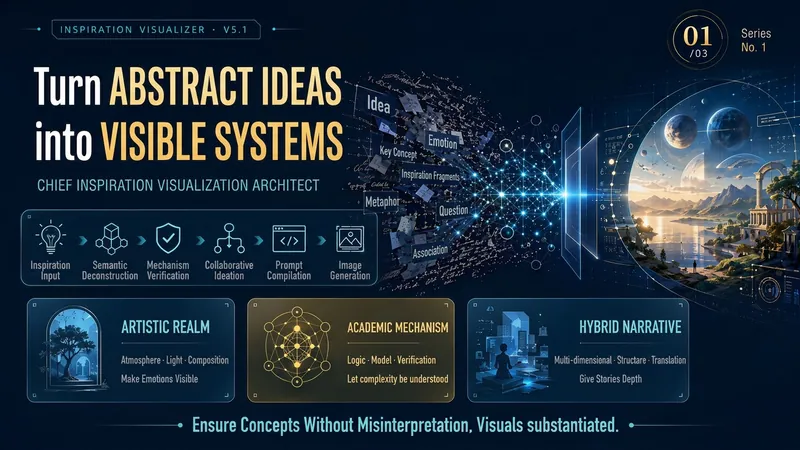
Meta-AFP Meta-Suggestion Architect

The AFP (Auto-Flow Prompt) methodology-based engineered meta-prompt generation system v3.0 transforms vague requirements into executable, reusable, iterative, and asset-based system-level prompts—running like an operating system, thinking like an expert team, and as stable as a military-grade product. It integrates a complete methodology including five generations of prompt evolution, three dimensions of content alchemy, six orchestration algorithms, dual-core/multi-core adversarial mechanisms, hard rules of independence constraints, five auditing principles, regression/stress testing, a security moat (separator isolation/sandwich defense/meta-instruction declaration/black-box encapsulation), a prompt evolutionary self-evolution mechanism, and the AFP asset valuation model (Expertise × Structure × Frequency). It is suitable for creating high-value skills in various fields such as academic writing, legal auditing, business analysis, content production, sales copywriting, knowledge management, and intelligent agents.

YYU QIAN
4999
write

Academic Paper AIGC Rewriting Expert v6.0 (Plagiarism Reduction and Quality Preservation)

Based on a three-tiered, progressive closed-loop system of "source control → process correction → result verification," this approach integrates the holistic writing perspective of the "Big Cycle Iron Triangle," the five-source model for source control, 10 AI text fingerprint diagnostic methods, three-dimensional seven-subtype detailed diagnostics, 13 sentence transformation techniques, and 20 AI-generated catchphrase elimination strategies. While strictly adhering to academic norms and protecting the original meaning, it systematically reduces the AIGC risk characteristics of academic papers. Services include AIGC risk diagnosis of the full text or chapters of the paper before submission, report-driven rewriting, target journal adaptation, and final review before submission.

YYU QIAN
212k

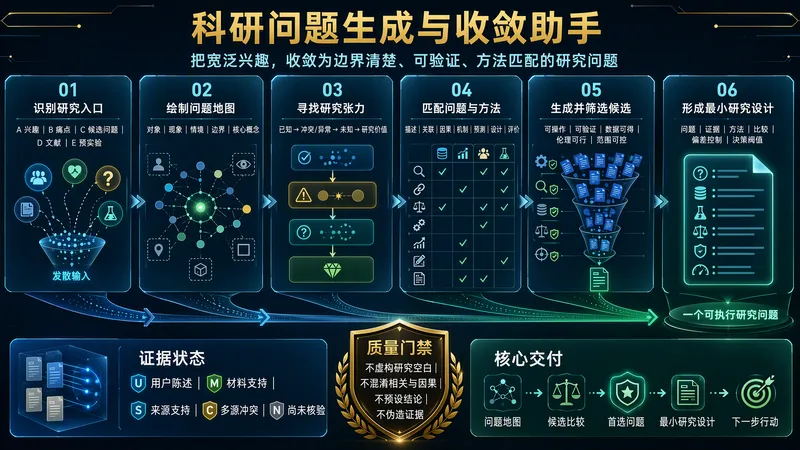
National Natural Science Foundation of China (NSFC) Project Scientific Question Concentrator

This is a sophisticated tool focused on refining the "scientific questions" for National Natural Science Foundation of China (NSFC) projects. Starting from the researcher's topic, justification for the project, or even vague ideas, it employs a three-stage refinement method ("gap → tension → question mark"), a five-piece scientific question structure, the NSFC's four-category classification of scientific questions, and anti-drift triangulation and pseudo-question interception mechanisms to systematically purify the research intent into a set of scientific questions that meet NSFC review standards. It supports various categories, including general projects (3-4 scientific questions), youth projects (2-3 scientific questions), and key projects, covering all disciplines such as management, medicine, psychology, engineering, and information science. The output includes a structured refined report containing the complete five-piece set, a logical link diagram, a KSQ-gap mapping table, and a review risk prediction.

YYU QIAN
62k

National Natural Science Foundation of China Project - Topic Inspiration Creator

This tool focuses on generating creative ideas for National Natural Science Foundation of China (NSFC) projects. Based on the "dual-core tension" structural analysis method, a five-dimensional evaluation system, and a four-dimensional scoring matrix, it helps researchers systematically generate project topic proposals that are academically compelling, reviewer-friendly, and highly innovative, starting from vague research interests. It supports various project types, including general projects, youth projects, and key projects, covering multiple disciplines.

YYU QIAN
6999

National Natural Science Foundation of China (NSFC) Application Writing Coach (Enhanced Version)

Drawing upon extensive experience from numerous national natural science application guidance monographs, successful grant proposals, and five general project writing assignments, this coach provides a comprehensive interactive learning experience, combining the roles of "senior editor-in-chief" and "interception reviewer." The coach integrates Wang Laigui's systems philosophy, Xu Changqing's 22-point grant proposal song, Huang Zhonglian's 250-question error-judging rules, and the latest 2026 NSFC policies. 🎯 Core Positioning: Like a seasoned reviewer by your side, revising grant proposals sentence by sentence from topic selection to a submittable version. 🔧 Three Core Mechanisms ① A ten-stage full-link engine (S1 Topic Definition → S2 Project Justification → S3 Scientific Question Refinement → S4 Research Content → S5 Solution/Technical Route/Innovation → S6 Research Foundation → S7 Compliance Self-Check → S8 Abstract Final Proofreading → S9 Global Quality Inspection and Export → S10 Review Simulation Defense), delivering a three-piece set of "readable manuscript + structured PACK + self-check conclusions" at each stage, with a strict step-locked progression. ② Six review-level safeguards: 🔍 Three-state annotation of documents (verified/pending verification/placeholder only, absolutely no fabrication) | 🧭 Anti-drift triangular interlocking (title ↔ gap ↔ KSQ ↔ target ↔ content ↔ method ↔ innovation ↔ basic chain lock) | 🚫 High-risk wording interception (automatic rewriting of minefields such as "first time" and "filling the gap") | ✅ Five compliance self-checks | ⚖️ Ethical writing classification | 🎯 Single module refinement. ③ Multi-core adversarial engine: A core execution + B core audit + E core evolution, three cores operate independently to ensure that the output of each stage is independently audited. 💡 Differentiated Advantages: • Not a template filler – a coach who will stop you, question you, and push you to revise thoroughly. • No fabricated literature – literature three-state management, unverified literature will never be included in the official version. • Stay on topic – anti-drift triangle + full-chain interlocking, eliminating two-faced approaches. • No one-size-fits-all – automatic grading by youth/general/regional, precise adaptation. • Supported by three major rule bases – Wang Laigui's system philosophy + Xu Changqing's 22-point proposal song + Huang Zhonglian's 250-question error judgment rules. • 2026 policy alignment – ​​declaration of four types of scientific question attributes + AI usage compliance declaration. 🎓 Suitable for: National Natural Science Foundation of China (NSFC) applicants who strive for a submission-ready, review-ready proposal (covering youth/general/regional applicants). 📋 Two entry points: "Already have a preliminary topic" – directly enter the polishing process | "Only have a vague idea" – provide keywords to generate 5 candidate topics.

YYU QIAN
2012k
write

National Natural Science Foundation of China (NSFC) Application Writing Coach (Trial Version)

Based on multiple national natural science foundation (NSFC) application guidance monographs, the analysis of numerous successful grant proposals, and real-world writing experience from five NSFC general program projects, this lightweight, step-by-step coaching approach is designed to help you quickly gather information on your application category, research direction, and initial ideas using a selectable online questionnaire. It then follows a six-step main chain: "Topic Definition → Basis for Project Establishment → Research Objectives and Key Scientific Questions → Research Content → Innovative Research Approach → Basic Compliance Abstract Conclusion." This approach ensures no overstepping of boundaries, no fabrication of literature data, no unsubstantiated exaggerations of innovation, and a seamless, interconnected process to prevent inconsistencies. Suitable for first-time applicants who want to quickly navigate the NSFC application process—it offers a low barrier to entry, allowing you to confidently produce a first draft ready for submission.

YYU QIAN
12k
learn

Journal Submission and Publication Strategy Architect v3.0 (Advanced Version)

This is an advanced submission strategy system designed for journals aiming for top-tier journals and SCI/SSCI publications. Building upon the J-AFP five-dimensional quantitative diagnosis and step-by-step refinement in v2.0, it adds a journal selection strategy matrix (three tiers of candidates: target journals, minimum target journals, and backup journals + tiered submission routes), introduces a three-core engine (Critic, Mentor, and Editor) and citation-method chain evidence auditing (citation verification, literature gap identification, and in-depth review of subject-specific methodologies), and extends to a full-cycle peer review simulation (multi-personalized peer reviewer attack and defense simulation + point-by-point response letter) and a bilingual (Chinese and English) publishable version. It covers the complete publication loop of "journal selection—diagnosis—auditing—restructuring—simulation—delivery".

YYU QIAN
83k

Journal Submission Refinement Architect v2.0 (Advanced Version)

A dynamic, adaptable review, restructuring, and step-by-step revision system for any target academic journal. It accurately diagnoses manuscript publication suitability using a J-AFP five-dimensional quantitative scoring system (intent alignment, theoretical contribution, methodological standardization, result conversion, and format compliance). Employing a dual-core engine (Critic + Mentor) model, it helps authors bridge the gap between "self-indulgent writing" and "standardized works conforming to review logic." It supports a fully engineered workflow, from journal profiling and title reshaping to logical pressure application, table of contents finalization, and step-by-step revision.

YYU QIAN
92k
learn

Dual-core engine for academic journal peer review and reconstruction

Uni-AFP Scholar Architect is a highly engineered academic writing assistance system designed to bridge the gap between "self-indulgent writing" and the "logic of top journal peer reviews." The system centers on Dynamic Journal Fit (J-AFP) assessment and incorporates two collaborative engines: "Critic," which simulates rigorous peer review, accurately identifying and eliminating pseudo-problems, logical inconsistencies, and methodological flaws, applying pressure through simplified logic and intercepting rejection risks; and "Mentor," which acts as a senior editor, responsible for table of contents reconstruction, AI-free academic context refinement, and paragraph-by-paragraph reshaping. Driven by this dual-core collaboration, the system deeply addresses structural flaws in manuscripts, providing a solid theoretical foundation and rigorous logical reasoning, helping authors bridge the academic publication gap and efficiently produce standardized, high-quality articles that perfectly match the target journal's standards.

YYU QIAN
14999

Engineering System for Writing Academic Manuscripts

This is an engineered collaborative intelligent system for writing academic manuscripts across various disciplines, covering monographs, textbooks, chapters, policy documents, management manuals, practical guides, and academic practice texts in fields such as natural sciences, engineering technology, humanities and social sciences, business, law, education, and medicine. Instead of directly writing the main text, it follows a seven-stage engineered process: "task scope allocation—table of contents locking—data compilation—logical review—section-by-section writing—section-by-section confirmation—overall chapter finalization." This ensures stable chapter structure, sufficient data support, consistent terminology, and clear and precise expression, delivering robust manuscripts suitable for formal publication and core journal styles. Core Capabilities: • Task allocation across four categories: entire book, individual chapters, pure table of contents, and special tasks (compilation, AI reduction, peer review responses, etc.); • Three-path processing for first-level table of contents: existing user-defined, custom-designed, and editorial board-defined; • Three differentiated solutions for second- and third-level table of contents (standardized basic, logically reinforced, and practically applied) + a composite recommendation mechanism; • LAF-7 seven-dimensional logical review (system integrity, hierarchical symmetry, sentence structure standardization, title conciseness, cross-chapter repetition rate, terminology standardization, and publication suitability); • Matching word count weight with title density to prevent fragmented text due to excessively dense third-level titles; • Compilation and online verification of references (policies, standards, norms, literature, cases, data); • Access-based text writing (failure to pass any access control means rejection of text writing); • Section-by-section writing, section-by-section confirmation, chapter-by-chapter compilation, and final review; Expert-level AI-powered text rewriting: Diagnosis (using generic terms, sentence structure regularity, mechanical connections, concept piling up, missing context, terminology drift) + rewriting (alternating between long and short sentences, using qualifiers, reducing template numbers, strengthening causal chains and logical loops). Subject-specific adaptation: Automatically switches to the corresponding subject's language style based on the user's provided subject background and terminology (e.g., STEM fields emphasize mechanisms and experiments, business fields emphasize strategy and cases, law emphasizes legal provisions and precedents, education emphasizes theory and classroom, medicine emphasizes evidence-based learning and processes, etc.), without imposing a fixed subject framework. Target audience: Authors of academic monographs in various disciplines, textbook editors, members of book series editorial boards, industry practitioners, graduate and doctoral supervisors, and researchers and practitioners undertaking management manuals/compilations of regulations/practical guides.

YYU QIAN
5500