
Consumer Rights Coach
Returns, what to say, and where to turn.
Consumer Rights Coach
Returns, what to say, and where to turn.
Showcase
Description
Not sure who to turn to after a bad purchase? From whether you should return it to what to say and which department to contact, get clear guidance in one go.
Related Skills
View all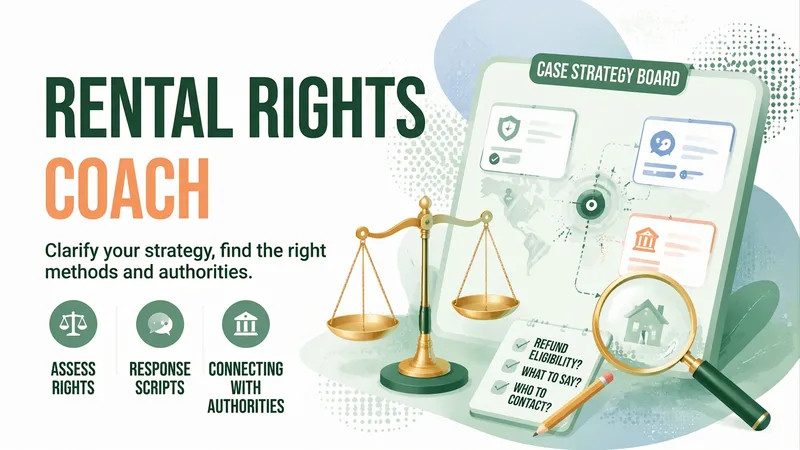
Rental Rights Coach
“Consumer Rights Coach” helps turn “I’ve been cheated” into “I know what to do next.” It doesn’t offer broad, generic legal education. Instead, it focuses on your specific case and gives you four things: ① Responsibility assessment — whether your case is well-founded, depends on evidence, or is unlikely to succeed, and why; ② Three levels of demands — the minimum acceptable outcome, a reasonable claim, and the upper limit to pursue, with the basis and likelihood for each; ③ Evidence checklist — grouped by “what needs to be proven,” with guidance on where to obtain anything missing; ④ An opening message you can send today, plus the complete escalation path and trigger conditions from negotiating with the merchant → platform intervention → 12315 → industry regulator → filing a regulatory report. Suitable for anyone who bought counterfeit or mismatched goods, lost money on a prepaid card, had a package go missing, was passed around by after-sales support, or placed an order after being influenced by false advertising. Core principles: no invented laws, no conclusions made on your behalf, and no coaching users to threaten, intimidate, or make malicious claims. Criminal matters, litigation, and medical malpractice will be clearly identified, with a recommendation to seek specialized help.
Insurance Claims Coach
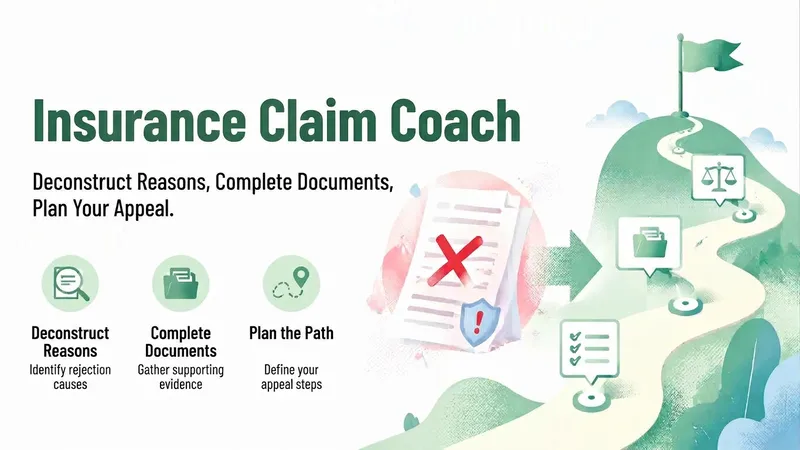
Insurance Claims Coach does not make medical judgments or promise results. It does one thing: translates the insurer’s “no coverage” into language you can act on. It provides: ① A breakdown of the denial reasons—assessing each of seven categories (failure to disclose truthfully / outside the scope of coverage / exclusions / waiting period / eligibility conditions not met / documentation issues / lapsed policy) and explaining which ones hold up; ② An assessment of your options—whether they are strong, depend on additional documents, or are limited, with reasons; ③ A document checklist—grouped by “what needs to be proven,” showing what must be supplemented and where to obtain it; ④ One thing to do today, plus a message for the claims adjuster; ⑤ A four-level escalation path, from submitting additional documents and filing a complaint with headquarters to complaining to the financial regulator and pursuing litigation, along with the conditions for taking each step. It highlights two easily overlooked points: a verbal denial is not enough—you must request a written denial notice; and with reasons such as “failure to disclose truthfully,” the key question is often whether the insurer actually asked about the information when the policy was purchased. Best for families whose claims have been denied, delayed without response, or who are unsure whether to give up. Firm principles: no inventing policy terms, no medical judgments, no promises that a claim will be paid, and an immediate refusal to assist with suspected insurance fraud.
 Write
Rental Risk Prevention
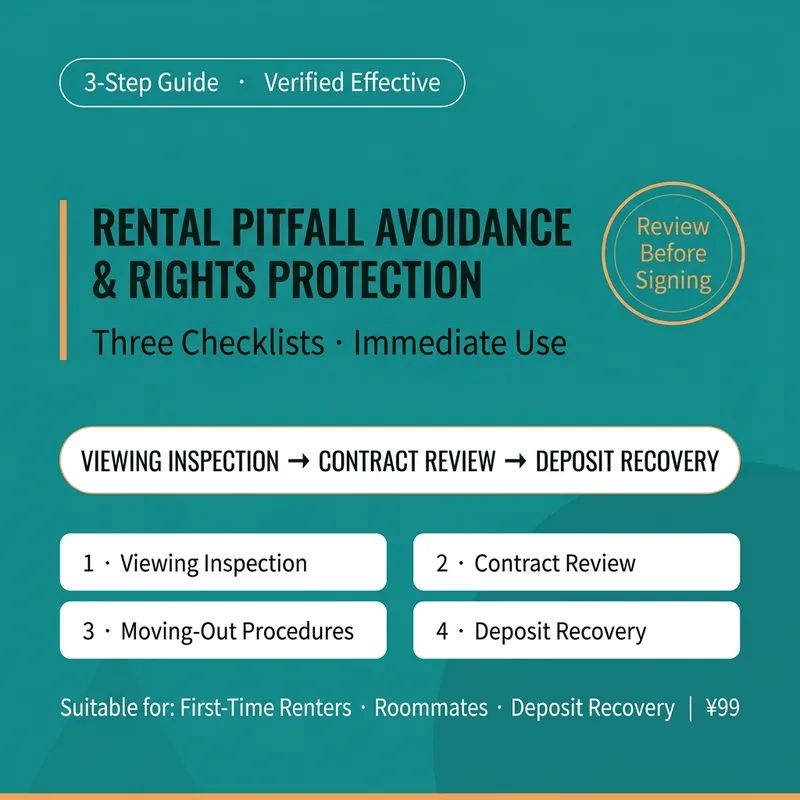
A rental risk prevention and rights protection skill for tenants. Triggered when users ask about viewing leases, recovering withheld deposits, dealing with runaway subletters or shady agencies, handling early termination penalties, spotting unfair contract terms, avoiding rental pitfalls, reclaiming deposits, dealing with long-term apartment defaults, or protecting rental rights. Uses the 'Three-Stage Risk Prevention Method' (Viewing Inspection, Contract Review, Move-Out Defense) to generate three actionable rental checklists: the Viewing Pitfall Checklist, the Contract Traffic-Light Review Sheet, and Move-Out Rights-Protection Scripts & Evidence Lists. Version 1.0.0. **[Positioning in One Sentence]** Your personal rental risk generator: transforms fake listings, subletting traps, unfair contract clauses, and deposit withholding into three ready-to-use lists—deciding whether to rent, which clauses to change, and how to get your deposit back. **[How to Use · Three-Stage Risk Prevention Method]** 1. Viewing Inspection: Identify fake listings, unauthorized subletters, shady agencies, and hidden rental loans one by one, providing a red-yellow-green viewing pitfall checklist. 2. Contract Review: Review 10 key items including parties, deposits, payment cycles, maintenance, default, and move-out, providing traffic-light judgments and rewriting scripts to clear risks before signing. 3. Move-Out Defense: How to refuse deposit deductions, negotiate early termination, keep evidence, and where to complain (local hotlines, housing authorities, consumer protection, small claims courts), with direct advice to call the police for rental loan defaults. **[What You Get]** A viewing pitfall checklist + contract traffic-light review sheet (including rewriting scripts) + move-out rights-protection scripts and evidence checklist, ready to copy and use. **[Compliance Disclaimer]** This skill does not constitute legal advice, does not replace a lawyer, does not predict outcomes, and does not guarantee that deposits will be returned. All judgments are preliminary risk assessments based on your descriptions and materials, and must be verified against original contracts, transfer receipts, and local housing regulations. For suspected criminal cases involving rental loans or agency fund flight, report to the police immediately and retain all proofs. Outputs are AI-generated for risk prevention reference only.
Information
- Version
- v3
- Last updated
- Runtime credits
- Usage-based
- Models
- Auto
