East Geo | xiaoxiaodong P254
By xiaoxiaodong
East Geo | xiaoxiaodong P254
By xiaoxiaodong
Showcase
Description
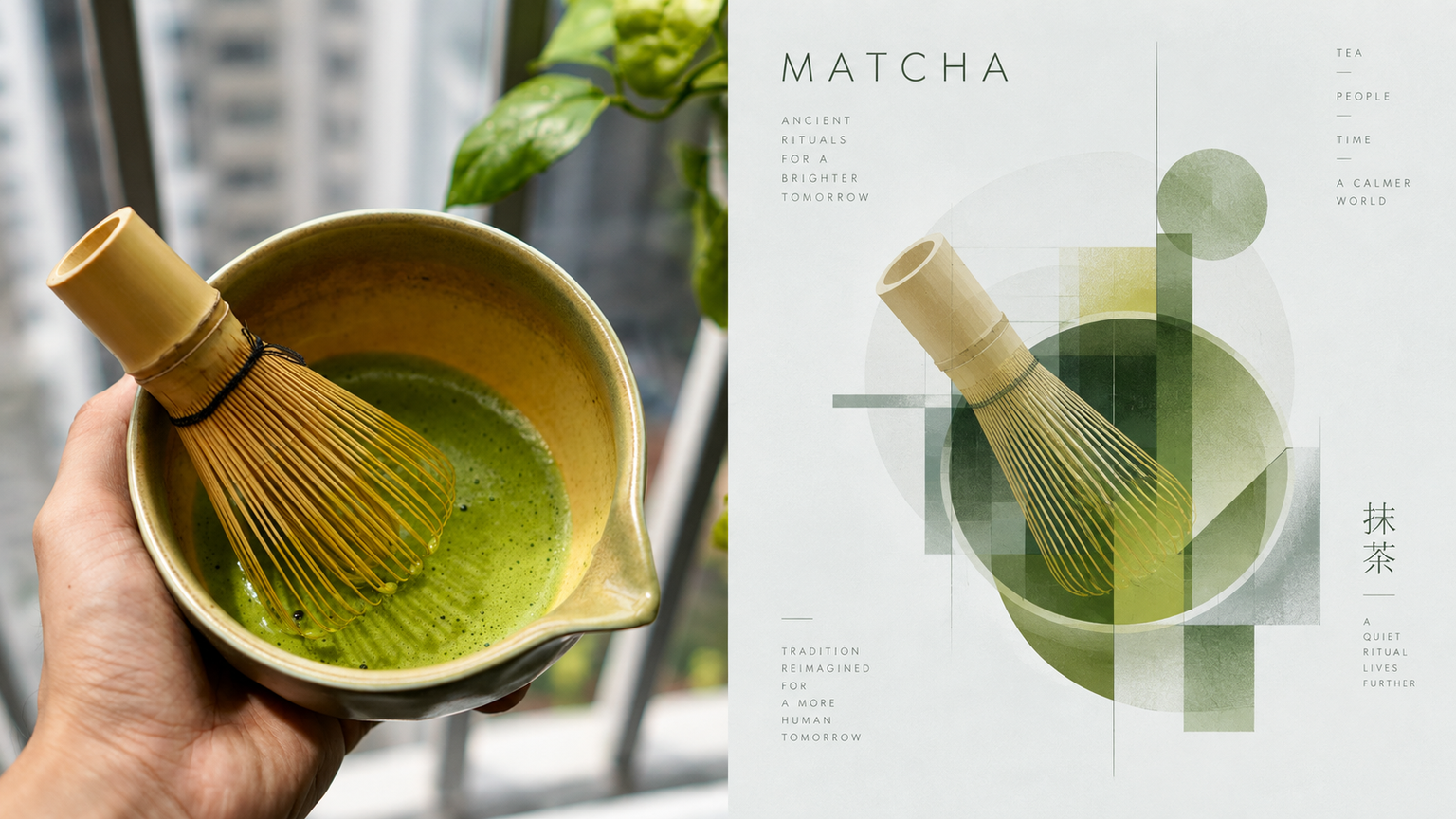
A visual archive for distilling real objects into forms re-encoded by a future civilization. The upper half is the original photo; the lower half removes most information and rebuilds the subject’s identity with rectangles, circles, irregular polygons, and planes. Parts may be obscured, missing, or floating. Blank space represents the unknown, time, and Eastern emptiness. One core geometric form carries the narrative. Avoid realistic depiction, fully filled environments, and decorative geometry unrelated to the subject.
Recommended by
淡苍
Why we love this skill
Reconstructs photos as restrained, spiritual geometric symbols through ordered planes, translucent color, negative space, and subtle anchors—avoiding realism for a truly deliverable final artwork.
Best for
Creators who want to transform real objects into minimalist, futuristic Eastern geometric artwork.
How to use this Skill
Provide your input
Provide a photo of a real object or an image directory.
Run the Skill
Distill the subject into an Eastern geometric visual archive made of rectangles, circles, irregular polygons, and planes. Preserve ample negative space; parts may be obscured, missing, or floating.
Review your result
Generate a finished PNG artwork: the upper half retains the original photo, while the lower half re-encodes the subject’s identity with concise geometric forms.
Related Skills
View all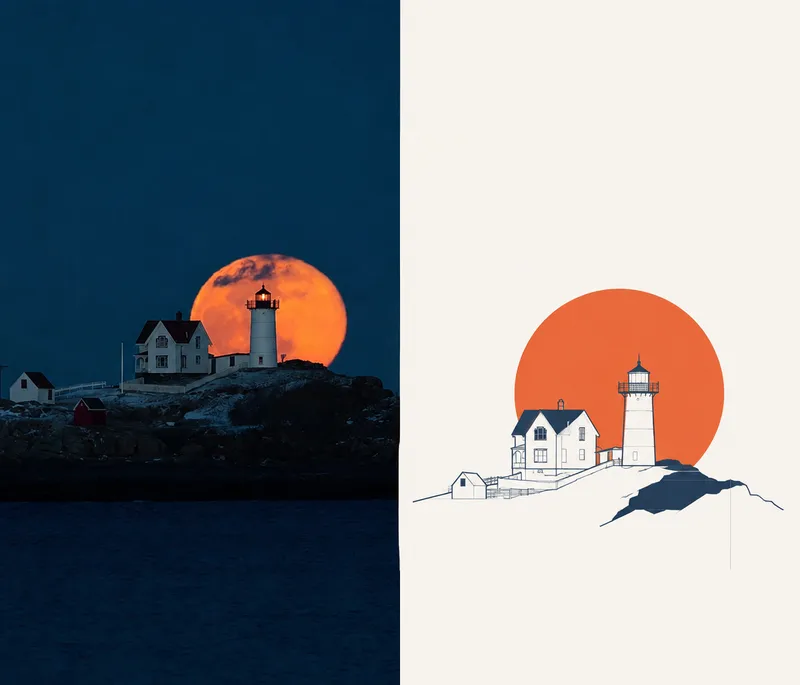 Image
Imagexiaoxiaodong P144 | Geometry
Suitable for personal photo curation, independent publishing, exhibition practice, and lifestyle-oriented visual projects. Even when the original composition is ordinary, the background is cluttered, or the subject is small, you can re-establish the visual focus through reduction, reorganization, cropping, and changes in scale instead of simply applying a filter to the photo. The lower section makes a fresh artistic judgment, extracting only the most recognizable subjects, contours, structures, poses, and narrative relationships from the photo. Do not reproduce the photo in full or retain irrelevant backgrounds and secondary objects. Instead, remove most of the information, leaving only the structural flow and visual memory points that best represent the original subject. Then recreate it with minimalist line art, geometric color blocks, positive/negative-space inversion, and overlapping elements that break the frame. The result should make the connection to the photo above immediately recognizable while clearly avoiding a simple redraw.
 Image
Imagexiaoxiaodong P130 | Facets
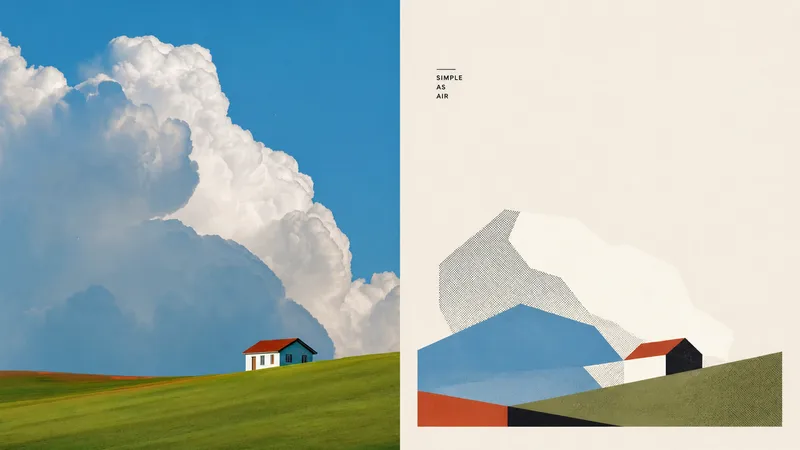
Suitable for organizing personal photography, independent publishing, exhibition studies, and lifestyle visual work. Even an image with an ordinary composition, a cluttered background, or a small subject can regain a clear focal point through subtraction, reorganization, cropping, and changes in scale—not by simply applying a filter. The lower section extracts only the most recognizable subjects, contours, structures, poses, and narrative relationships from the photograph, then reconstructs them as a hard-edged geometric composition / faceted geometric reconstruction collage. Do not replicate the photograph in full, redraw each object literally, or retain every subject and background detail. Remove irrelevant details and keep only the structures, movement, and visual memory cues that best represent the original. Re-express them through high-contrast simplification, faceted segmentation, geometric recombination, local misalignment, and a small amount of material layering, so viewers can immediately recognize the correspondence with the photograph above.
 Image
Imagexiaoxiaodong P109 | Soft Geo
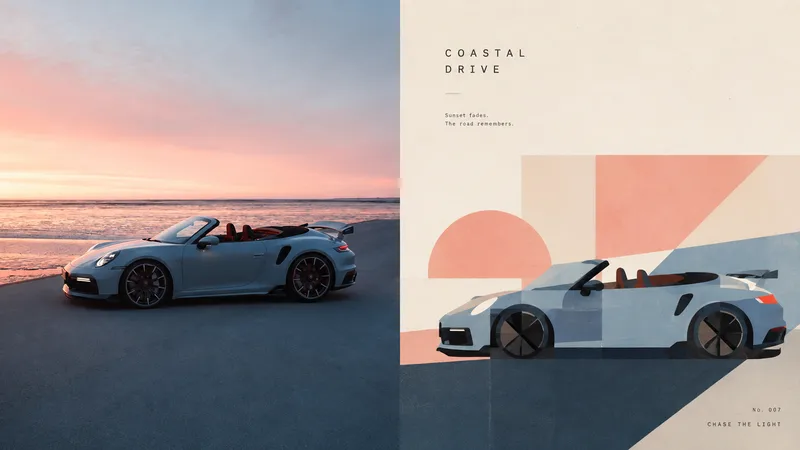
When a photo has a clear structure but feels overloaded with information, 109 reinterprets it using large, cohesive shapes: the real-world photo remains above, while a small number of rectangles, rounded blocks, ellipses, triangles, and irregular planes rebuild its geometric memory below—preserving identity without becoming a fragmented collage. Best for You want a modernist geometric poster, publication cover, or exhibition visual while preserving the recognizability of the original subject. You prefer large modules, flat color blocks, paper grain, and soft, sophisticated colors—not realistic rendering or cartoon styling. You need consistent output for top-and-bottom, left-and-right, design-only, wallpaper, multiple aspect ratios, and catalog batch processing. What it solves for you Reduces complex scenes to a small number of cohesive modules, avoiding fragmentation and a competing secondary focal point. Extracts 2–4 colors from the photo and organizes them into a timeless, warm, stylish color-block system. Keeps the two-zone logic consistent in every finished piece: a strict 50:50 split with no added third band. Quick check: Is Panel 109 right for you? What you get: One complete poster with a real photo on top and a large-scale geometric deconstruction below Key visual traits: A small number of cohesive geometric modules, soft sophisticated colors, paper grain, and editorial negative space How it respects the original: Preserves identity, structure, pose, and relationships; changes only the information density and organization
Information
- Version
- v3
- Last updated
- Runtime credits
- Usage-based
- Models
- Auto
- Use cases
- Images & design
- What you get
- Image
- Visual styles
- MinimalistFuturistic