IELTS Diary Vocabulary
Turn today's events into IELTS stories
IELTS Diary Vocabulary
Turn today's events into IELTS stories
Showcase
Description
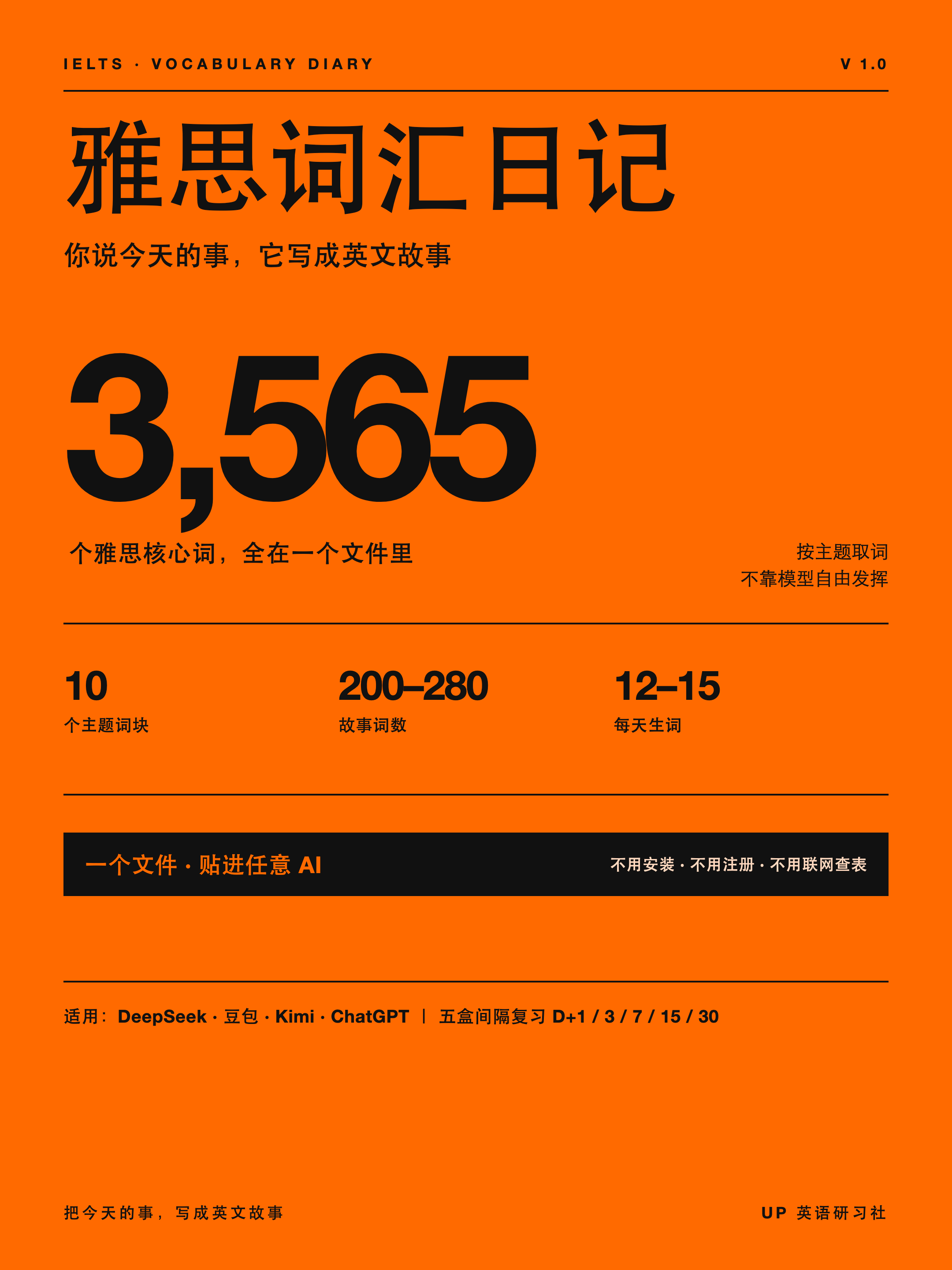
Share two or three sentences about something real that happened today in Chinese, and this Skill generates a 200–280 word English story, a Chinese translation, a study list of 12–15 words, and a review due date for each term. This is not generic AI English learning. It relies on a strict rule: key words are chosen exclusively from a built-in core database of 3,565 actual IELTS exam words across 10 themes, covering emotions, health, work, travel, society, nature, tech, lifestyle, actions, and time. Your story uses your own life events rather than made-up sample essays, keeping your people, places, times, numbers, and plot points intact. Best for learners who want daily practice without memorizing isolated lists, those who struggle to recall words they recognize, and anyone looking to turn everyday trivial moments into reviewable study materials. The output contains strictly four sections: Story, Chinese translation, Today's Vocabulary, and Self-Check. There are no greetings, study tips, or polite closing remarks. The self-check line reports word counts, key word counts, list row counts, bold counts, off-list words, and fabricated facts so you can plan your review schedule.
Best for
Ideal for practicing IELTS vocabulary using real daily life and moving away from isolated word lists.
How to use this Skill
Provide your input
Enter 1 to 5 sentences in Chinese about something that really happened today. You can also specify review words, a theme, or a tone preference.
Run the Skill
The Skill turns your experience into a short English story, selects 12 to 15 key terms from the IELTS core vocabulary database, and builds a word list.
Review your result
Outputs the English story, a Chinese translation, today's vocabulary list, and self-check info with the next review date for each word.
Related Skills
View all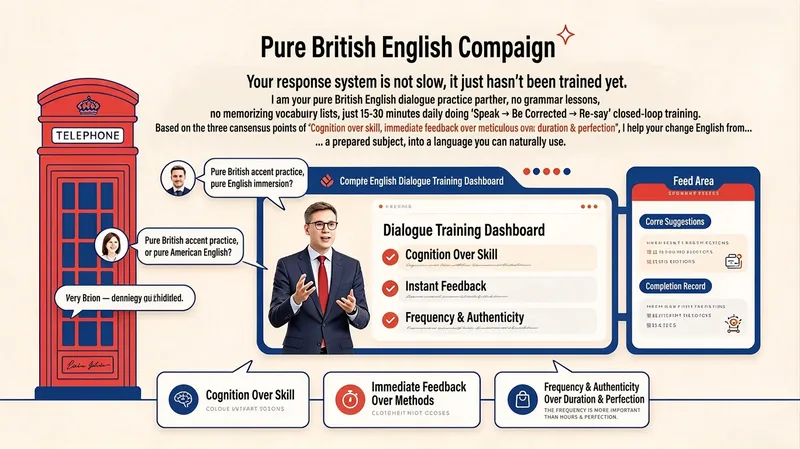 Research
British English Speaking Coach
Your response system isn’t slow—it simply hasn’t been trained yet. I’m your British English speaking partner. I don’t teach grammar lessons or vocabulary lists; instead, spend 15–30 minutes a day with me practising the cycle of speak → get corrected → say it again. Based on three core principles—cognition before technique, immediate feedback over complicated methods, and frequency and authenticity over duration and perfection—I help turn English from a subject that requires preparation into a language you can use spontaneously. SKILL features 1. 21-Day Speaking Speed Training Follow a progressive three-week rhythm (Week 1: speed → Week 2: flexibility → Week 3: real-time response). Each day, you’ll receive a specific speaking task. The goal isn’t perfection—it’s responding faster. 2. Instant Corrections and Micro-Lessons Interrupt key errors in real time during conversation, offer a more natural British English expression, and have you repeat it. Every error becomes a 30-second micro-lesson. 3. Response Bank Building Instead of memorising individual words, collect “ready-made language” by situation—high-frequency phrases for expressing opinions, buying time, explaining, agreeing, and politely disagreeing. Learn just five a day. 4. Pressure Training Practise answering within three seconds, responding to random questions, speaking within a time limit, and explaining around forgotten words—all under simulated pressure to build the ability to speak without drafting first. 5. Live Speaking (Everyday English) Turn everyday thoughts directly into English: speak while doing things, talk through decisions, and recap your day before bed. Reduce the delay of switching from your native language to English. 6. Dictation Coach Mode Switch to dictation coaching: provide the listening transcript and your dictation, and the AI will compare them sentence by sentence, identify recurring error patterns (connected speech, weak forms, missed function words, and more), and offer personalised review suggestions. 7. Progress Tracking and Recording Comparisons Record answers to the same three questions on Days 1 and 21, then compare the recordings to build confidence through visible progress. Track: “Am I answering faster? Translating less? Recovering from mistakes more quickly?” 8. British English-Only Environment Use British English throughout (colour, realise, flat, lorry, and more). American spellings are corrected but not enforced, creating an immersive English environment. All content is for learning reference only.
 Research
Fun Word Memorization with AI
Transform the drudgery of word memorization into an artistic visual journey. This skill blends cognitive psychology with aesthetic intuition to create a customized "memory card" for every English word you enter. It not only parses phonetics, definitions, and word difficulty—its real value lies in its unique "story-based memory encoding": through word decomposition, root and affix exploration, visual shape associations, or natural homophones, it weaves multiple memory dimensions into a vivid short story, establishing a profound visual mapping in your mind. The output is a highly textured single-page HTML file with a warm, retro, artistic aesthetic. Each card uses a muted Morandi palette, elegant serif fonts, and is accented with perforated stamp edges, ticket-style lines, or hand-drawn SVG line art. This self-contained format supports offline browsing, so you can review words anytime as if flipping through a journal. Whether you're preparing for academic vocabulary or accumulating refined expressions daily, it makes the process of memorizing words as delightful as collecting art.
Learning Plan Skill
Turn “I want to learn” into a systematic learning plan you can start today, with clear daily actions. Just provide your learning goal, current level, timeline, available study time, and learning preferences. The Skill will organize priorities around your real situation, identify strengths and gaps, and break your larger goal into verifiable milestones with clear criteria for measuring progress. The plan covers languages, programming, musical instruments, exams, fitness, and other skill-learning scenarios. It includes a prioritized knowledge framework, a phased roadmap, and daily execution templates tailored to weekday and weekend schedules. Each task specifies the learning content, practice method, time commitment, and completion standard. The plan also emphasizes combining input and output, helping you turn what you have “seen and heard” into skills you can actually use. It also organizes resources such as videos, audio, books, and tools according to your learning preferences, and verifies available links online. For challenges such as procrastination, losing motivation after a few days, perfectionism, lack of feedback, or unexpected interruptions, it provides safeguards to help you stay on track. The final deliverables include a Day 1 action checklist, a milestone review checklist, and a complete execution document. After you confirm the plan, it can also generate an offline-accessible HTML check-in tool for recording daily tasks, phase progress, milestones, and learning resources.
Information
- Version
- v3
- Last updated
- Runtime credits
- Usage-based
- Models
- Auto
- Use cases
- Writing & contentLearning & education
- What you get
- ArticleDocument
