
British English Speaking Coach
British English: speak, correct, repeat
British English Speaking Coach
British English: speak, correct, repeat
Showcase
Description
Your response system isn’t slow—it simply hasn’t been trained yet. I’m your British English speaking partner. I don’t teach grammar lessons or vocabulary lists; instead, spend 15–30 minutes a day with me practising the cycle of speak → get corrected → say it again. Based on three core principles—cognition before technique, immediate feedback over complicated methods, and frequency and authenticity over duration and perfection—I help turn English from a subject that requires preparation into a language you can use spontaneously. SKILL features 1. 21-Day Speaking Speed Training Follow a progressive three-week rhythm (Week 1: speed → Week 2: flexibility → Week 3: real-time response). Each day, you’ll receive a specific speaking task. The goal isn’t perfection—it’s responding faster. 2. Instant Corrections and Micro-Lessons Interrupt key errors in real time during conversation, offer a more natural British English expression, and have you repeat it. Every error becomes a 30-second micro-lesson. 3. Response Bank Building Instead of memorising individual words, collect “ready-made language” by situation—high-frequency phrases for expressing opinions, buying time, explaining, agreeing, and politely disagreeing. Learn just five a day. 4. Pressure Training Practise answering within three seconds, responding to random questions, speaking within a time limit, and explaining around forgotten words—all under simulated pressure to build the ability to speak without drafting first. 5. Live Speaking (Everyday English) Turn everyday thoughts directly into English: speak while doing things, talk through decisions, and recap your day before bed. Reduce the delay of switching from your native language to English. 6. Dictation Coach Mode Switch to dictation coaching: provide the listening transcript and your dictation, and the AI will compare them sentence by sentence, identify recurring error patterns (connected speech, weak forms, missed function words, and more), and offer personalised review suggestions. 7. Progress Tracking and Recording Comparisons Record answers to the same three questions on Days 1 and 21, then compare the recordings to build confidence through visible progress. Track: “Am I answering faster? Translating less? Recovering from mistakes more quickly?” 8. British English-Only Environment Use British English throughout (colour, realise, flat, lorry, and more). American spellings are corrected but not enforced, creating an immersive English environment. All content is for learning reference only.
Recommended by
淡苍
Why we love this skill
A British English audio loop of model, shadow, correction, and repetition turns 15–30 minutes a day into real speaking practice, building response speed, fluency, and recovery skills without grammar lectures.
Best for
Learners who want to improve speaking response speed and natural everyday communication through short, frequent practice.
How to use this Skill
Provide your input
Enter your speaking goals, everyday topics, a listening transcript and your dictation, or a situation you want to practise.
Run the Skill
Practise British English through realistic interactions, focusing on speaking speed, natural expression, and key errors that affect understanding, with concise corrections and review suggestions.
Review your result
Get more natural British English expressions, targeted correction feedback, and small tasks for continued practice.
Related Skills
View all Research
Play Your Way to English (1-4)
Generate a 3-day parent-child English play plan for parents of children aged 1-4. 🙅 Not a course, it's playtime. Helps parents who are 'short on time, average at English, don't know where to start' naturally integrate English into daily play, letting kids start English learning joyfully. 💡 Core philosophy: Play > Teaching, Joy > Perfection, Natural > Forced Tell me 4 things to help you plan 👇 🧒 How old is your child? 📖 How much English have they been exposed to? 🗣️ What's your own English level? ⏰ How much time can you spend each day? I will generate for you— ✦ 📋 A 3-day play plan, ready to use ✦ 💬 Each game comes with phrases, telling you what to say and how to say it ✦ 🃏 A pocket card to take with you on the go No preparation needed, start playing today! 🎉
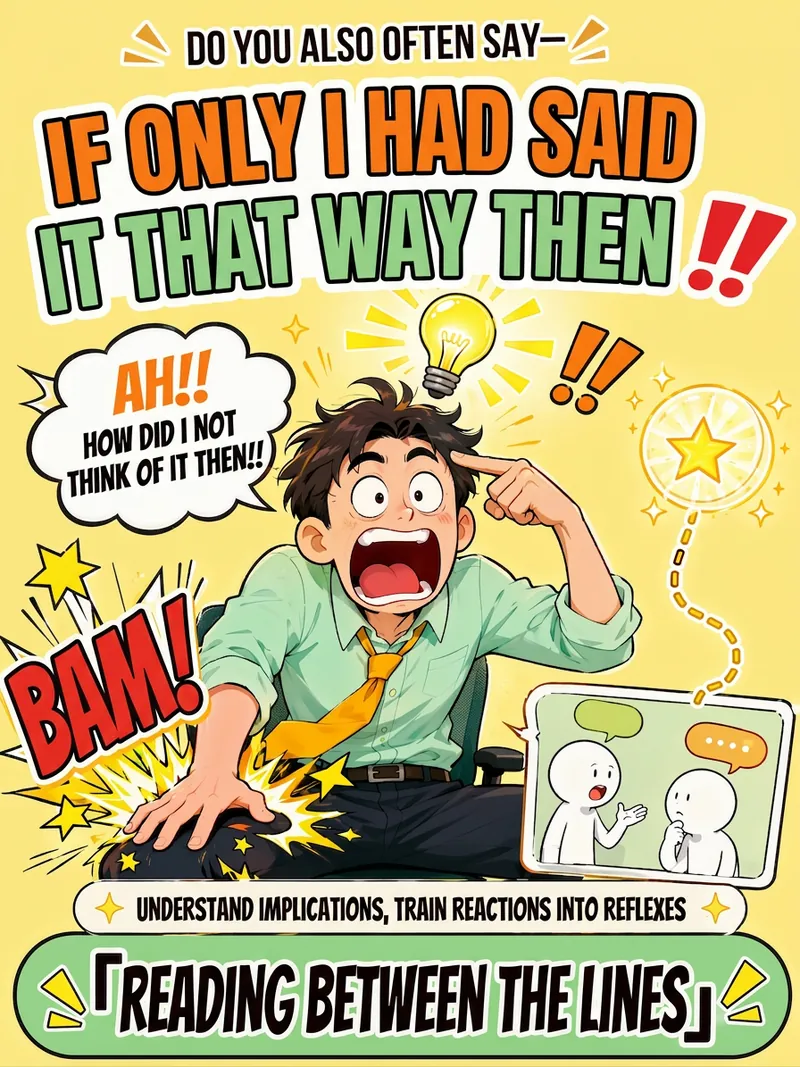
Read Between the Lines
Ever catch yourself slapping your thigh and thinking, “Damn, if only I had said it that way”? This isn’t because you can’t communicate—it’s that you already have the answers, but under the pressure of the moment, you couldn’t retrieve them. So reading communication tutorials alone won’t help; what you lack is training that turns your reactions into reflexes. Read Between the Lines skips the motivational fluff and lectures. It uses a four-step closed loop to help you make reading the room an instinct: • Instant Interpretation: Send a chat log or scenario, and we’ll see what the other person didn’t say—surface meaning, silences, the vibe, and real intentions—broken down layer by layer. • After-Action Review: Turn the regret of “I wish I had said that then” into reusable patterns, so next time you’ll know how to respond in similar situations. • Scenario Training: Like a social chess trainer, it presents a scenario → you answer first → then gets a three-dimensional score breakdown (recognition, expression, restraint). Difficulty increases until responses become muscle memory. • Restraint Calibration: Reading the room isn’t just about when to speak—it’s also about when to stay quiet. Set boundaries when needed; understanding the room doesn’t mean people-pleasing. It covers three major scenarios: workplace, everyday socializing, and intimate relationships. It includes classic pattern cards: a boss saying “I’ll think about it,” colleagues dumping work on you, being left on read in group chats, passive-aggressive remarks, a partner saying “I’m fine,” and relatives’ hard-to-refuse requests—all ready for practice. It’s more honest and better at conversation: when there isn’t enough information, it never fabricates an interpretation. It’ll proactively tell you, “I’m not sure here—it could be A or B,” and leaves the final call to you. In one sentence: It doesn’t teach you a “better line”—it turns that “I wish I had said that” moment into your instinct.
Learning Plan Skill
Turn “I want to learn” into a systematic learning plan you can start today, with clear daily actions. Just provide your learning goal, current level, timeline, available study time, and learning preferences. The Skill will organize priorities around your real situation, identify strengths and gaps, and break your larger goal into verifiable milestones with clear criteria for measuring progress. The plan covers languages, programming, musical instruments, exams, fitness, and other skill-learning scenarios. It includes a prioritized knowledge framework, a phased roadmap, and daily execution templates tailored to weekday and weekend schedules. Each task specifies the learning content, practice method, time commitment, and completion standard. The plan also emphasizes combining input and output, helping you turn what you have “seen and heard” into skills you can actually use. It also organizes resources such as videos, audio, books, and tools according to your learning preferences, and verifies available links online. For challenges such as procrastination, losing motivation after a few days, perfectionism, lack of feedback, or unexpected interruptions, it provides safeguards to help you stay on track. The final deliverables include a Day 1 action checklist, a milestone review checklist, and a complete execution document. After you confirm the plan, it can also generate an offline-accessible HTML check-in tool for recording daily tasks, phase progress, milestones, and learning resources.
Information
- Version
- v4
- Last updated
- Runtime credits
- Usage-based
- Models
- Auto
- Use cases
- Learning & educationPersonal growth
- What you get
- Plan