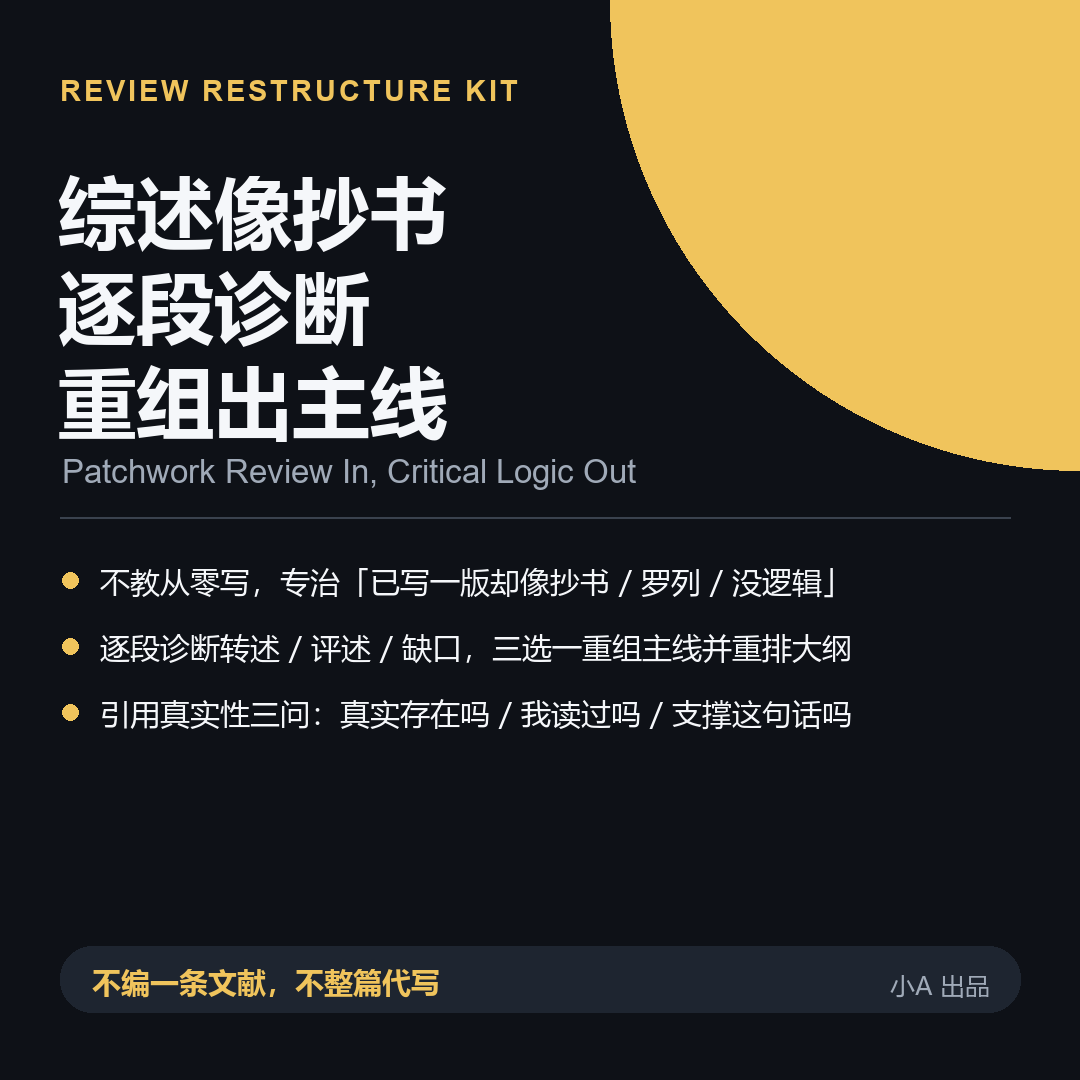
Literature Review Redesigner
Diagnose, reorganize, and refine literature reviews
Literature Review Redesigner
Diagnose, reorganize, and refine literature reviews
Showcase
Description
Finished a literature review draft only to hear it feels like a book report or a disconnected list of sources? This tool is built specifically for revision, not writing from scratch: paragraph-by-paragraph diagnosis, a choice of three thematic threads, actionable rewriting methods, and rigorous citation verification. ## Summary **Stop struggling with drafts dismissed as mere book reports. Transform a list of summaries into a coherent logical thread without generating fake citations.** ## Details The hardest part of a literature review isn't reading; it's spending weeks compiling dozens of sources into a draft only to be told it lacks logic, feels piecemeal, or reads like a simple summary of who said what. The root cause is usually a missing narrative thread that ties the literature together. This skill specializes in restructuring. First, it tags your draft paragraph by paragraph—identifying pure paraphrase, critique, or research gap—and flags questionable citations. Next, it offers three distinct organizing threads (by problem, by debate, or by gap), explains the rationale, and outlines a new structure. It then guides you on how to revise each section: using comparative sentences, highlighting disagreements, stating your judgment, and concluding with research gaps. It provides precise revision methods rather than writing the text for you. Crucially, it includes citation verification. Every reference is evaluated for authenticity, first-hand reading, and true support. AI-suggested references are verified thoroughly, and unverified entries are removed to prevent fabricated citations that reviewers easily spot. Finally, it uses a reverse-reading technique to test the logical thread. **This is a guidance-only skill**: it delivers diagnostics, threads, outlines, and revision methods without full ghostwriting, reference fabrication, or guaranteed approval. You remain responsible for verifying all sources.
Why we love this skill
Designed for literature reviews that read like disjointed lists. It diagnoses drafts, establishes clear thematic lines, and provides structural revisions and citation checks without fabricating references.
Best for
Students and researchers with a draft who need to clarify logical threads and reduce list-like literature summaries.
How to use this Skill
Provide your input
Provide your existing literature review draft, research question or topic, and discipline or use case. Include references if available.
Run the Skill
The skill diagnoses paragraph types, analyzes logical issues, and selects an organization thread based on problems, debates, or gaps.
Review your result
Receive a diagnostic report, a reorganized outline, paragraph-by-paragraph revision suggestions, and a citation check checklist without fabricated quotes.
Related Skills
View all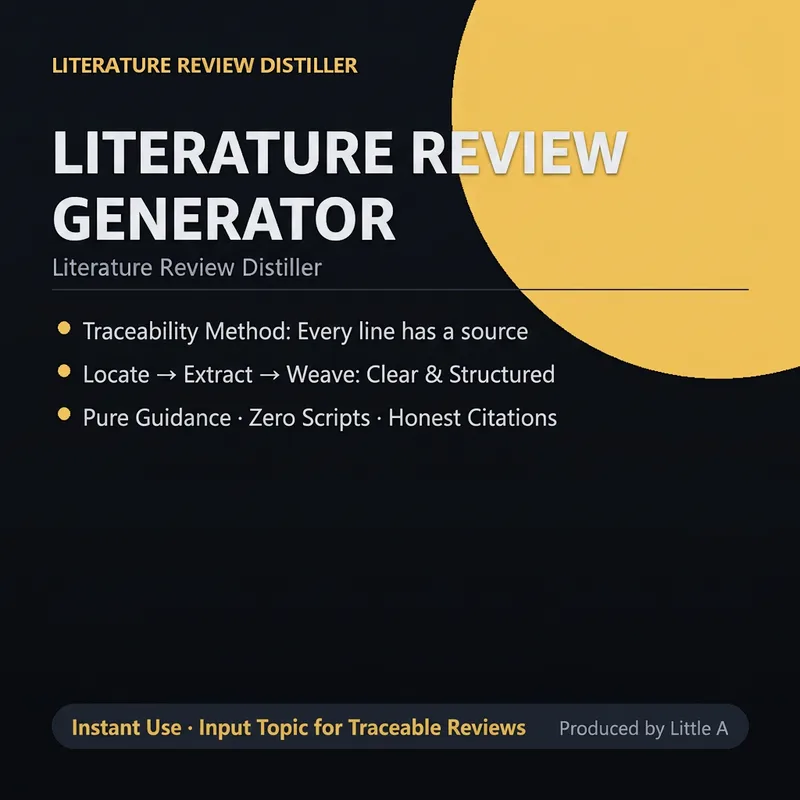 Write
Literature Review Builder
Help graduate students, early-career faculty, and researchers turn a pile of scattered literature (PDFs, notes, keywords) into a logically clear literature review where every claim can be traced and used directly in a paper. The three-step source-tracing method guides you through scope definition, individual paper extraction, and four-line weaving, providing templates and editable intermediate outputs throughout without fabricating citations. Ideal for research proposals, thesis background chapters, and grant applications when you are stuck organizing too many papers or finding research gaps.
 Write
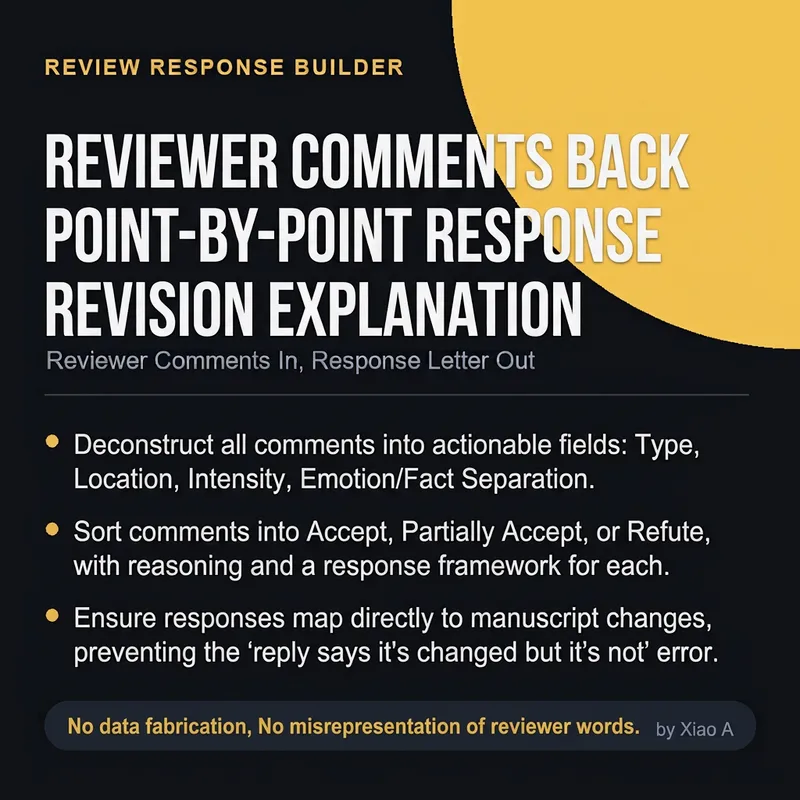
Peer Review Response Generator
Struggling to respond to a mountain of peer review comments? This Skill parses feedback into actionable items, sorts them by acceptance status, provides structured response templates, creates a mapping table between replies and manuscript edits, and assembles a professional response letter and revision checklist. After receiving dozens of comments, the hardest part is categorizing them, prioritizing edits, and respectfully rebutting points without provoking reviewers. This workflow breaks down reviews into structured fields: type, location, demand strength, and feasibility. It separates reviewer tone from actual requested actions. Incoming comments are triaged into three categories: accept, partially accept, or rebut, with clear determination criteria and proven response frameworks. Rebuttals follow strict red lines to remain professional and evidence-based. The critical step is the revision mapping table, which ensures every promised change matches actual manuscript edits, preventing discrepancies. Finally, it formats a numbered response letter and a revision checklist for your supervisor. **Note**: This is a guidance-only Skill. It delivers worksheets, response frameworks, and checklists. It does not write manuscript text, fabricate experimental data or literature, or guarantee acceptance.
Proposal Readiness Checker
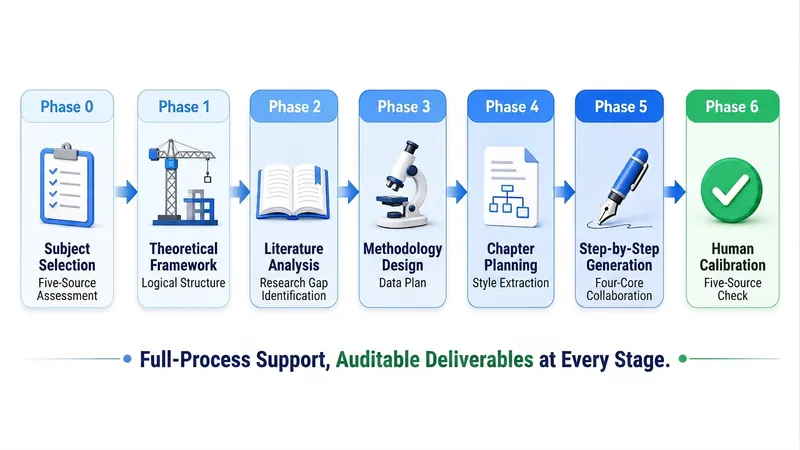
Before you spend dozens of hours writing your thesis, take ten minutes to run a structured checkup. This skill does only one thing: It diagnoses, not writes. It tells you whether your topic can hold up, whether your materials are sufficient, what's missing, where to fill the gaps, and in what order. Then it gives you an actionable missing-material checklist and search queries. It will not write your introduction, literature review, methods, or discussion. Four steps: 1. Discipline diagnosis: Classify your work into 1A Humanities/Arts, 1B Social Sciences, 2A Science/Engineering, or 2B Agriculture/Medicine/Life Sciences, and load the corresponding regulatory red lines; 2B triggers a mandatory ethics review block. 2. Topic checkup: Examine the topic from three dimensions—momentum, shape, and wording—to judge whether the research unit can be operationalized, whether the research question can be answered, and whether the topic has been done to death. 3. Material checkup: Register your existing literature into an M1/M2… material library, verify each entry against the four elements (author/year/title/verifiable locator), and compute the true coverage rate. 4. Gap list and search queries: Specify how many papers of what type are missing and which piece of evidence is lacking, and provide search queries ready to paste into databases (including Boolean keyword combinations, time ranges, and screening criteria). When to use it (trigger phrases): "Help me check my proposal" "Can this topic work?" "Do I have enough literature?" "My proposal was sent back" "I want to confirm before starting to write" — for graduate students who have just set a direction but haven't started writing; for those whose proposal was rejected but don't know why; for those with a pile of literature but unsure if it's enough to begin; for those wanting to confirm whether the topic is worth the investment before committing fully. Deliverables: A Proposal Checkup Report document + a Five-Source Readiness Scorecard (each level has behavioral criteria, not vague scoring) + a prioritized list of missing materials + search queries + an archive code. The archive code is compatible with the Academic Paper Full-Process Writing System v4.0; after the checkup, paste it there to continue writing without re-stating your discipline, topic, or journal. What this skill explicitly does not do: It does not write the main text, generate reference lists, or fabricate authors, years, volumes, issues, pages, or DOIs. Any literature found via online search is flagged with ⚠️ "needs verification" and must be verified by you before use. This skill does not promise any acceptance or passing outcome.
Information
- Version
- v3
- Last updated
- Runtime credits
- Usage-based
- Models
- Auto
- Use cases
- Writing & contentResearch & analysisLearning & education
- What you get
- ReportDocumentPlan
