McKinsey Problem Dissector
McKinsey Problem Dissector
Showcase
Description
Helps tech entrepreneurs deeply think through and clarify complex problems using structured consultant-style dialogue and the SCQA framework, ultimately delivering concrete, actionable analysis and recommendations. Suitable for startup direction validation, business model analysis, strategic planning, and similar scenarios.
Recommended by
nene@YouMind
Why we love this skill
Deconstructs McKinsey's SCQA into a five-step structured process, helping you clarify complex problems, extract insights from vague ideas, and generate actionable analysis and data needs. A powerful assistant for entrepreneurs and consultants.
Related Skills
View all
Business Consultant
A McKinsey-style business consultant that delivers structured methods for strategic analysis, problem-solving, and management consulting. Triggered when users say "help me analyze an industry," "analyze this using the McKinsey method," "SWOT analysis," "create a strategic plan," "diagnose a business problem," "write a consulting report," "seven-step analysis," "break this down using the MECE principle," "conduct a competitive analysis," or "analyze a business model." Not suitable for pure data processing, code writing, casual conversation, or repetitive work with an existing standard operating procedure.
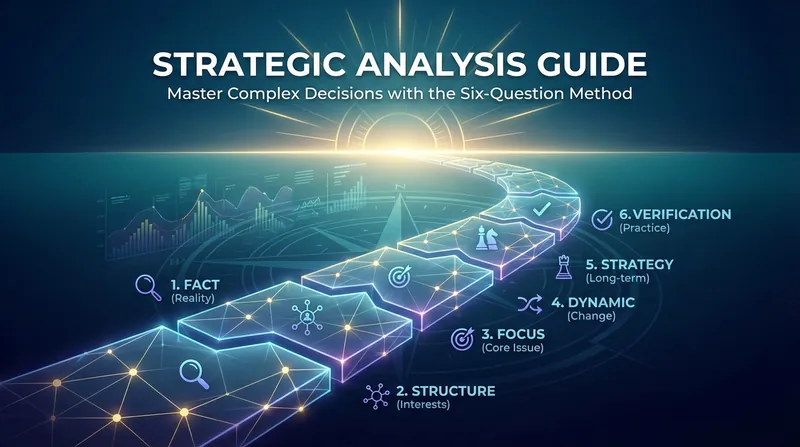
Mao's Strategic Six Questions
A strategic analysis framework based on Mao Zedong Thought, analyzing complex problems through six progressive questions: facts, interests, contradictions, dynamics, strategies, and verification. Supports two modes: quickly generate a complete analysis report, or engage in guided interactive deep thinking. Suitable for industry analysis, business decision-making, strategic planning, and other scenarios.
Multi-Framework Analysis
Turn complex problems into structured, multi-perspective analyses that can be reviewed, verified, and used to support next steps. Whether you are evaluating career choices, business and product decisions, social phenomena, controversial issues, trending topics, innovations, or abstract concepts, this Skill first clarifies the subject, goals, constraints, known information, and key unknowns. It then selects complementary cognitive frameworks based on the task, avoiding a pileup of concepts or repeated versions of the same conclusion. The analysis clearly distinguishes between information provided by the user, verified facts, general principles, assumptions, inferences, and content that still needs validation. It places evidence, mechanisms, counterevidence, alternative explanations, and uncertainty within a clear chain of reasoning. For time-sensitive, controversial, specialized, or high-risk facts, it can use targeted web searches and verify original sources. When sources conflict, it preserves the differences rather than filling gaps with unverified data or overly certain claims. The final output typically includes a problem profile; the framework selection and analysis of each framework; areas of agreement and disagreement across perspectives; sensitive variables; blind spots and failure conditions; and conditional conclusions with confidence levels. It does not replace professional medical, legal, investment, tax, or other advice. Instead, it helps you identify the factors that truly affect judgment and design minimal validation steps, information-gathering plans, decision gates, or reversible next steps. Simple questions can be condensed into a brief assessment, while complex or multi-subject tasks can be developed into a complete analytical report.
Information
- Version
- v1
- Last updated
- Runtime credits
- Usage-based
- Models
- Claude Sonnet 4.5
- Capabilities
- Web research
