
Triple Deconstruction: Papers
Identify Elements · Subcycles · Macrocycles
Triple Deconstruction: Papers
Identify Elements · Subcycles · Macrocycles
Showcase
Description
Using the 'Identify Elements, Subcycles, Macrocycles' triple deconstruction method, automatically or interactively deconstruct the argument skeleton of any academic paper. Includes 14 AI prompt templates, suitable for all academic readers.
Why we love this skill
This skill uses a unique "three-element decomposition method" to deeply analyze academic papers, progressing step by step from element identification to large and small cycles. It also features an interactive teaching mode to help you truly understand papers and improve your critical thinking.
Related Skills
View all Research
Core Academic Paper Deep Dive
Deeply read the academic paper provided by the user. Through a three-stage process of 'paradigm identification → structured deconstruction → template extraction', it produces a comprehensive deconstruction report containing a logical argument map, writing template library, and critical audit comments.
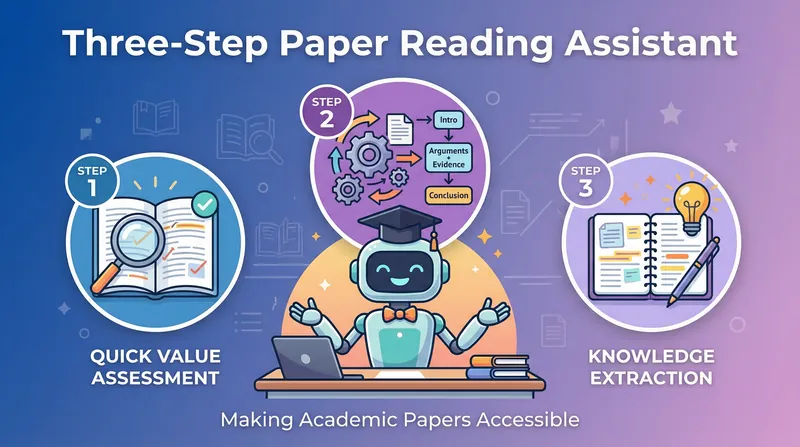
Plain Paper Reading in 3 Steps
Helps non-experts understand professional papers using a three-step reading method, inspired by the 'three-pass reading technique.' The entire process uses a conversational interface that supports questions at any time, enabling laypeople to read highly specialized academic literature. Step 1: Grasp the core idea to quickly assess the paper's reading value. Step 2: Break down the core argument logic. Step 3: Extract key knowledge points and optionally generate personalized reading notes.
 Research
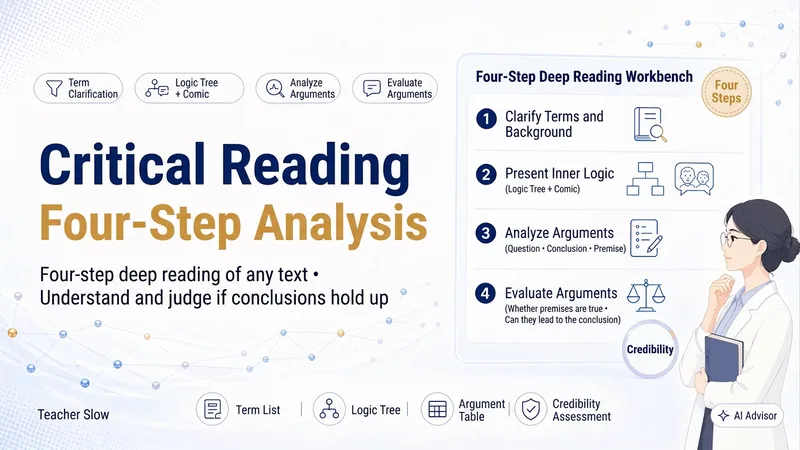
Four-Step Critical Reading
When reading a book, paper, or report, the hardest part is often not understanding the words, but explaining what the author is really saying—and why they believe it. Based on Tian Hongyun’s *Critical Thinking in Plain English: From Beginner to Master*, this skill uses a four-step critical reading method to break down a passage: ① Clear up terminology and background obstacles; ② Use a text logic tree and a hand-drawn cartoon to map its underlying logic; ③ Create an analytical argument table identifying the issues, conclusion, premises, and unstated premises; ④ Create a commentary argument table to assess whether the premises are true and whether they support the conclusion. It then provides a credibility assessment of the conclusion and a list of knowledge that still needs to be added. It knows when not to overdo it: only texts that genuinely express a viewpoint go through all four steps, while purely explanatory or narrative texts go through the first two steps only. Suitable for papers, commentary, reports, policy texts, book passages, and any other material that calls for close reading, helping you move from “opening a book and counting it as reading” to genuine deep reading.
Information
- Version
- v4
- Last updated
- Runtime credits
- Usage-based
- Models
- Auto