
University Faculty IP Planner
IP positioning tool for university faculty
University Faculty IP Planner
IP positioning tool for university faculty
Showcase
Description
An IP positioning tool designed specifically for university faculty—using a six-dimensional academic asset canvas to precisely translate academic accumulation into IP directions, with built-in compliance boundary reminders and academic year rhythm adaptation, ensuring that teachers' academic assets are no longer confined to papers.
Related Skills
View all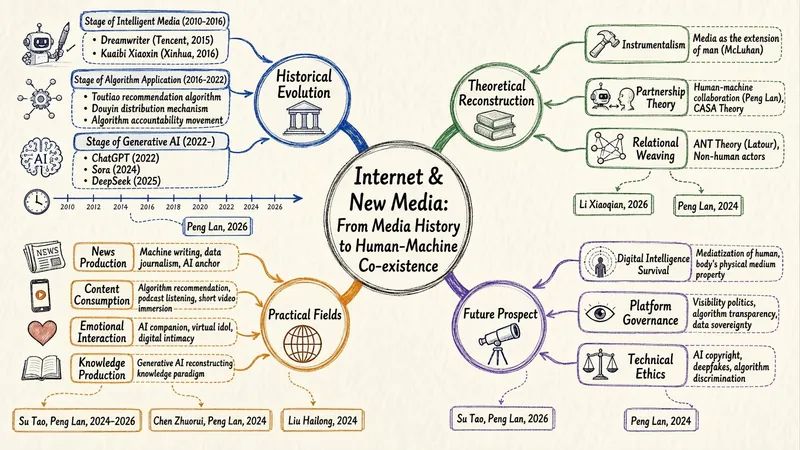 Image
Core HSS T&R Accelerator v10.0
A gold-medal consulting tool specially designed for university humanities and social science teachers to 'feed teaching with research.' With one click, it transforms a vast amount of teaching and research materials (personal achievements + cutting-edge literature) into competition-ready teaching designs, and automatically generates zero-garbled, highly academic hand-drawn mind maps of cutting-edge subject areas. Target users: - University teachers interested in participating in youth teaching competitions at all levels and teaching innovation competitions at all levels - University humanities and social science teachers who need to convert research achievements into teaching content - Frontline teachers who want to enhance the academic depth and frontier nature of their teaching designs Highlights: ✨ v10.0 is a stable version after multiple rounds of iterative adjustments and testing, carefully polished to ensure reliability. Strictly aligned with the scoring criteria of the two major teaching competitions: the National Teaching Innovation Competition and the National Youth Teacher Teaching Competition, it provides a step-by-step guided workflow to make your teaching materials stand out! As the saying goes, 'A journey of a thousand miles begins with a single step.' Solidify your everyday teaching materials, skillfully leverage the 'feed teaching with research' feature, and polish your unique teaching materials!
 Write
Teaching Award Assistant
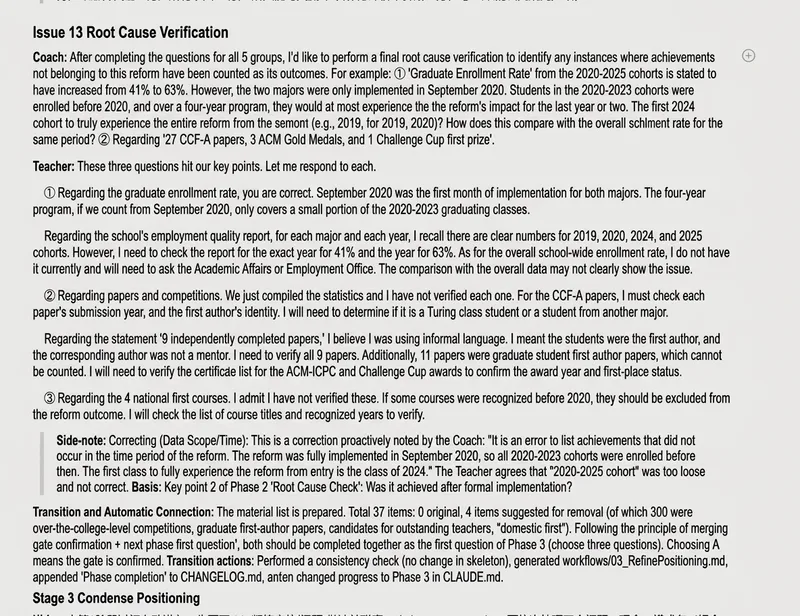
Designed for teachers at universities and vocational colleges, this teaching award application assistant works like a submission consultant who has participated in final expert panel reviews. It guides you through the recommendation form in six steps: build a profile, organize materials, distill the positioning, develop the title and draft, align the evidence, and conduct an expert quality check. Ask one question at a time to help clarify the three teaching problems the achievement solves and where its innovations lie Draft according to the distinct writing approaches used by four types of institutions: academic undergraduate, applied undergraduate, vocational undergraduate, and higher vocational Built-in review experts score the application across six dimensions—pain points, logic, rigor, innovation, outcomes and demonstrative value, and compliance—and provide revision suggestions Automatically check common critical issues such as the practice validation period, attribution of outcomes, and the years used in key statements Never fabricate data. Clearly flag areas without supporting evidence and remind you to provide additional materials Suitable for school-level, provincial-level, and national teaching achievement awards, across the higher education (undergraduate) and vocational education tracks.
Teaching Paper Architect
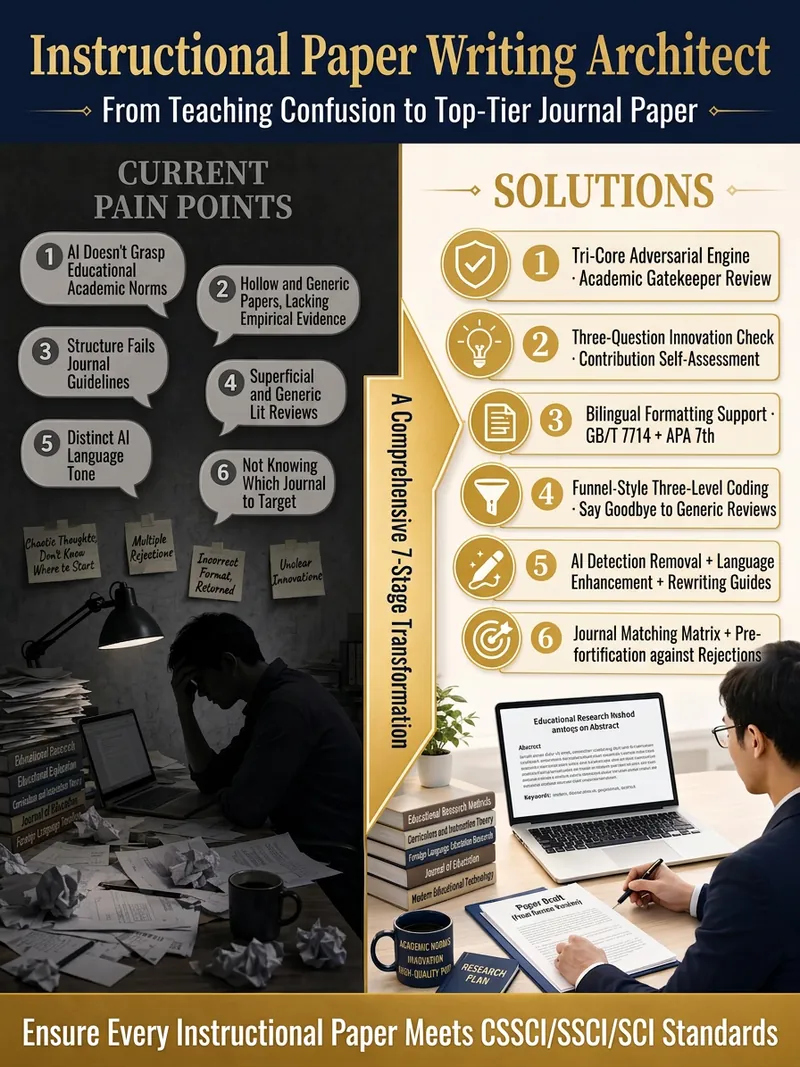
From teaching research accumulation to CSSCI/SSCI/SCI — making every teaching paper stand up to peer review. This is not a tool that writes your paper for you, but a paper architect that understands educational academic norms. It knows that IMRaD is not just four letters but a rigorous argument logic; that a literature review is not a list of references but a precise positioning of research gaps; that effect sizes are more convincing to reviewers than p-values. Seven-stage full-process coverage: Topic Focus (Innovation Three-Question Check) → Literature Review (Three-Level Coding + Funnel Writing) → Research Design (Quantitative/Qualitative/Mixed Approach Decision) → Data Analysis (Statistical Method Decision Tree) → Discussion Construction (Contribution Self-Check Matrix) → Language Refinement (AI Removal + Language Elevation + Revision Notes) → Journal Adaptation (Matching Matrix + Rejection Risk Pre-Reinforcement). Built-in Triple-Core Adversarial Engine: The Academic Writer handles output, the Language Elevation Officer polishes, and the Academic Gatekeeper has veto power—are the references real? Is the data reliable? Is the argument grounded in evidence? Does the contribution match the target journal level? Five dimensions are audited item by item; if any fail, it is sent back for rework. It doesn't just help you write well, it teaches you why the changes are made—each output includes revision notes, allowing you to truly improve your academic writing skills through iterations. Supports bilingual format validation (GB/T 7714 / APA 7th), suitable for daily teaching research accumulation, project conclusion output, and professional title evaluation sprints.
Information
- Version
- v4
- Last updated
- Runtime credits
- Usage-based
- Models
- Auto
