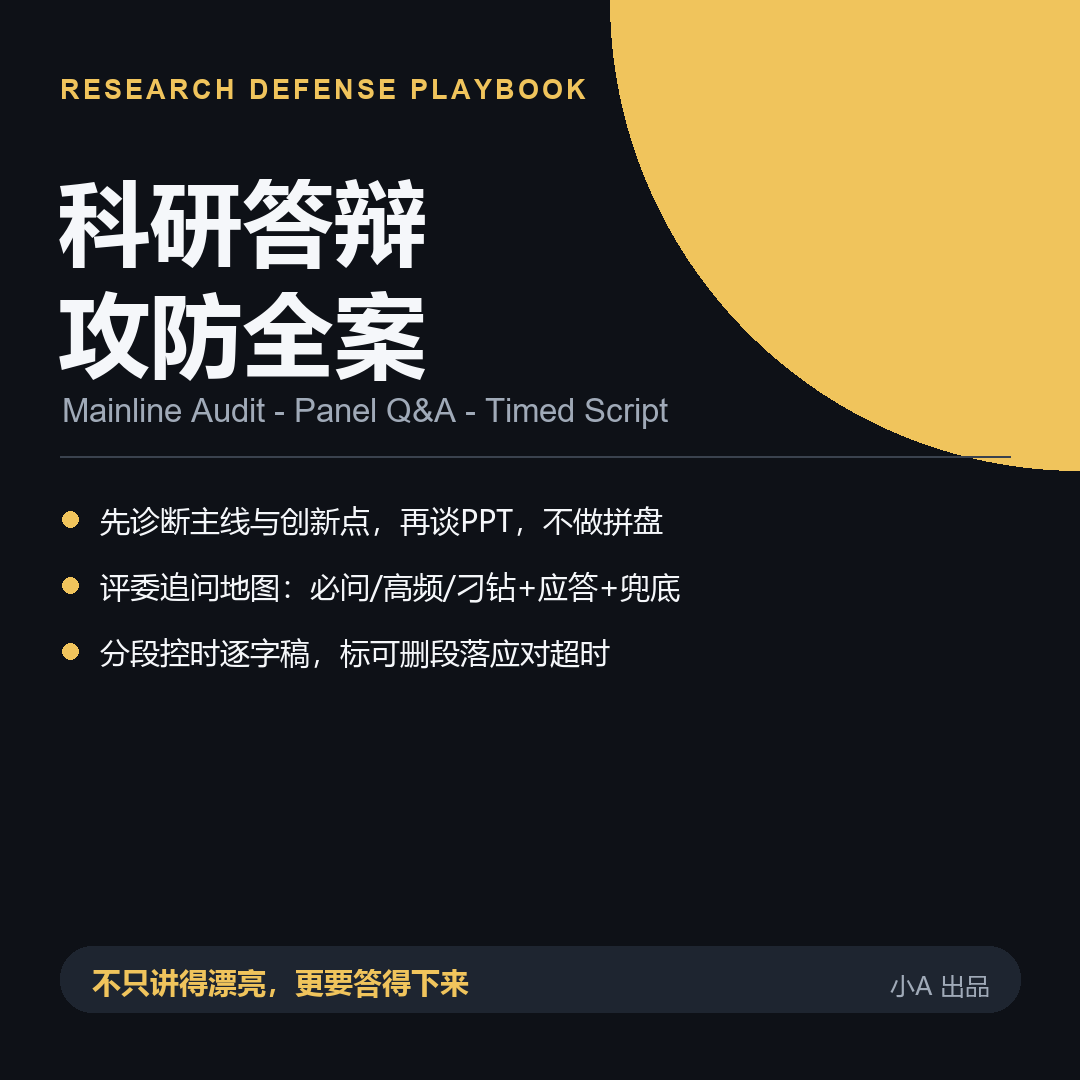
Research Defense Strategy
Master your storyline, anticipate Q&A, and pace your defense
Research Defense Strategy
Master your storyline, anticipate Q&A, and pace your defense
Showcase
Description
Most presentation tools only focus on the surface layer—organizing materials into Slides, writing a script, and picking fonts. But academic defenses usually fail for two reasons: a shaky research storyline where innovations are unclear, and getting cornered by committee questions. Summary Goes beyond making your presentation look good to help you successfully defend your work with storyline diagnosis, a panelist question map, and timed scripts. Key Advantages 1. **Deep Diagnosis**: Evaluates whether your research storyline and contributions hold up, including patchiness checks, innovation grading, and vulnerability warnings. 2. **Panelist Q&A Map**: Categorizes questions into mandatory, high-frequency, and tough tiers, providing response frameworks and fallback phrases for tricky spots. 3. **Timed Scripts**: Segments your speech with time markers and optional cuts to prevent overtime without sacrificing core conclusions. 4. **Five Scenario Routes**: Tailored preparation for proposal, midterm, graduation, project completion, and title defense scenarios. 5. **Data Discipline**: No fabricated data or passing guarantees; missing items are marked as pending verification with a pre-defense checklist. Target Audience University faculty, early-career researchers, and graduate students preparing for academic defenses or evaluations who are worried about difficult committee questions.
Recommended by
Dancang
Why we love this skill
It goes beyond presentation materials to diagnose your research thread and innovation points, predicts committee questions across scenarios, and provides response frameworks and timed scripts to help you successfully defend your work.
Related Skills
View all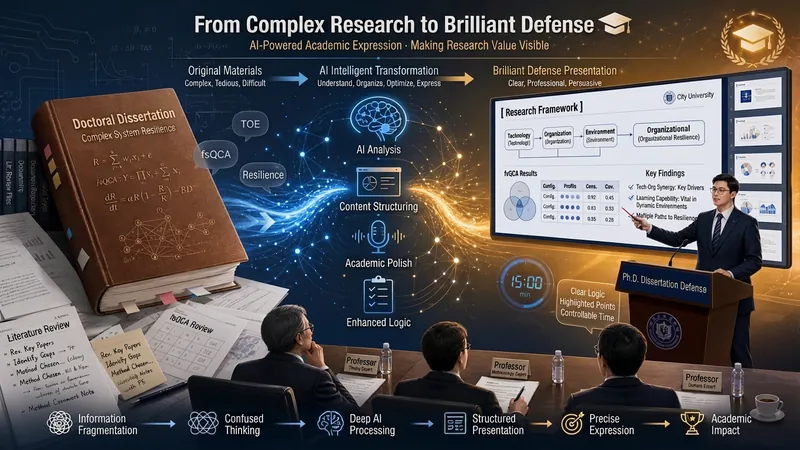 Slides
Thesis Defense: PPT*Script*QA
Say goodbye to defense anxiety! Generate academically standard PPT and word-for-word scripts from a 100,000-word thesis with one click. Each slide is strictly synchronized with the script, and timing is precisely controlled. Additionally, an AI defense committee provides mock Q&A (three difficulty levels: easy, medium, hard) that deeply questions weaknesses in your thesis and offers professional feedback. Adaptive to four major disciplines: Science/Engineering, Humanities, Social Sciences, and Arts, covering proposal, mid-term, and graduation defenses. Suitable for master's and doctoral defenses and proposal reports.
 Write
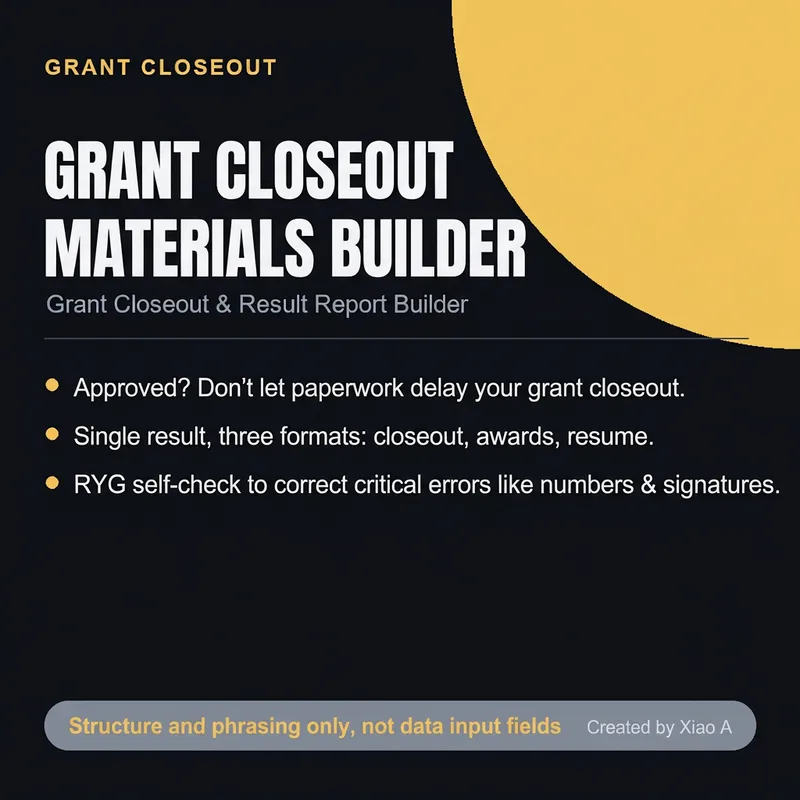
Project Completion Generator
While the Social Science Fund Dual-Track Application Argumentation Generator handles applications, this skill handles completion. For university faculty, early-career researchers, and graduate students who have secured project approval, the most time-consuming part is often not the research itself, but the administrative paperwork: completion reports, achievement submissions, award materials, promotion forms, and CV entries. They have rigid formats, strict phrasing conventions, require the same achievement to be rewritten in three different ways, and are easily rejected over minor details like serial numbers, dates, or authorship. ## Quick Overview **Application approved? Don't let the paperwork block completion.** Turn your project approval info and achievement list into a completion report skeleton, three-angle achievement descriptions, scenario-based submission checklists, and a red-yellow-green self-check table. It provides structure and phrasing only, does not invent table fields or achievements, and does not guarantee review approval. ## What You Get 1. **Completion ID card and achievement inventory**: Align serial numbers, dates, members, and achievement counts at once, marking missing items as needs verification. 2. **One achievement, three angles**: Academic completion angle, award contribution angle, and CV/promotion entry angle, with traceable facts, phrasing, and evidence for each column. 3. **Six-section completion report skeleton**: Objective review, execution process, main conclusions, achievements and impact, funding and progress, and challenges and next steps, complete with writing points, customizable starting sentences, and common reasons for rejection. 4. **Scenario-based material checklist**: Common items for project completion, awards, promotions, CVs, and annual reviews, plus common format issues. 5. **Red-yellow-green self-check table**: Catch hard errors like inconsistent serial numbers, dates, or authorship first, with a printable version. 6. **Exaggerated phrasing replacement table**: Replace phrases like filling a gap or remarkable results with verifiable, review-friendly wording. ## Who It Is For - University faculty, early-career researchers, and project leaders: When projects are due for completion and you are worried about mismatched serial numbers, authorship, or achievements. - Graduate students and research assistants: Helping advisors organize achievement submissions, award applications, and annual review materials. - Previous users of the Social Science Fund Dual-Track Application Argumentation Generator: Moving naturally from application to completion.
 Research
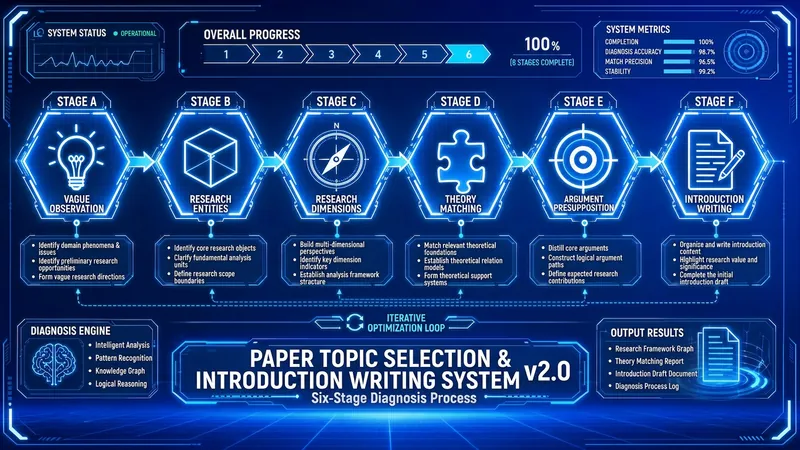
Thesis Topic & Intro v3.2
Read in 10 seconds: turn a vague observation into a defensible topic, then into an introduction that can pass review. Throughout, it uses only the real materials you provide — no fabricated references. Trigger words: thesis topic, topic selection, introduction, research gap, academic writing, thesis proposal, topic selection before literature review. Applies to: journal papers / dissertations / conference papers / course papers, across all disciplines — humanities and social sciences, STEM, agriculture, medicine, and life sciences. Up and running in 3 minutes: lock in your discipline and starting point → shape the topic layer by layer → strict evidence-chain gate → module-by-module introduction → ratchet finalization. [Division of labor with other skills] The health check comes first, writing comes after, and polishing comes last. This skill handles the middle stretch: topic shaping + introduction draft. It does not write the full paper (that's the Academic Paper Full-Process Writing System v4.x), and it does not polish language sentence by sentence (that's the Academic Paper Three-Track Polishing System v8.x). [Six gates] 1. Discipline placement: classify into one of four categories — 1A humanities/arts, 1B social sciences, 2A STEM, 2B agriculture/medicine/life sciences — and load the corresponding red-line norms; for category 2B, ethics review status is always checked. 2. Stage positioning: are you at a vague observation, have a unit but no angle, have an object but no theory, lack a method, lack a viewpoint, or only lack an introduction? Start from the corresponding gate instead of starting over from scratch. 3. Topic shaping: research unit → dimension compass → theoretical perspective → research method → research viewpoint, locked layer by layer; before locking each layer, first judge whether the previous layer holds. 4. Strict evidence-chain gate: before the introduction, your references are registered into an M1/M2… material library, each entry verified on four elements — author/year/title/locator; if fewer than 3 references are registered in the conversation, the system refuses to generate the research-gap statement — not a downgrade, a refusal. 5. Module-by-module generation: the introduction is produced in five inverted-pyramid modules, and each module must be annotated with citation numbers [Mn]; no source, no sentence. 6. Ratchet finalization: only versions that have passed receive credit; qualifying modules are locked and no longer changed; scores only go up, never down. [Deliverables] A '[Topic Keyword] · Topic & Introduction' document + a sentence-level traceable citation mapping table + a ⚠️ to-verify checklist + an AFP archive code. The archive code works across four systems — the proposal health-checker, the v4.x full-process system, and the three-track polishing system — so switching skills doesn't require re-stating your discipline, topic, journal, or material library. [Explicitly not done] It does not fabricate authors, years, volumes, issues, page numbers, or DOIs; any bibliographic records retrieved online are marked ⚠️ to-verify and can only be written into the reference list after you verify them; it makes no promises of acceptance or passing review. Authorship and responsibility are yours — please verify every citation and data point.
Information
- Version
- v3
- Last updated
- Runtime credits
- Usage-based
- Models
- Auto
